
Proms premiere – John Woolrich: Falling Down (London premiere)

john-woolrich

John Woolrich photo by Maurice Foxhall

Margaret Cookhorn (contrabassoon), City of Birmingham Symphony Orchestra / Andris Nelsons (Prom 4)

Duration: 15 minutes

BBC iPlayer link

http://www.bbc.co.uk/programmes/p02xpm1z/player

What’s the story behind the piece?

There are very few concerto pieces written for the lowest voices in the orchestra – hardly any for double bass and fewer still for the contrabassoon. This is mostly down to the trouble composers have making the instruments heard at such a low pitch.

As the publisher’s notes for the piece say, “The title explains itself: the piece begins and ends with music that tumbles from the top of the orchestra down to the depths where the contra lives”

Woolrich, who celebrated his sixtieth birthday last year, wrote Falling Down in response to a commission from the City of Birmingham Symphony Orchestra – and he dedicated it to their contrabassoon player, Margaret Cookhorn.

Did you know?

Woolrich founded the Composers Ensemble in 1991, founded the Hoxton New Music Days festival and has been an associate Artistic Director at the Aldeburgh Festival since 2005.

Initial verdict

Woolrich succeeds in his biggest challenge in this piece – making the contrabassoon heard above the orchestra!

The piece starts with a bright and brash orchestral introduction, initially up in the treble register but gradually falling from its great height until the contrabassoon comes in with an incredibly fruity note, sounding as though it is beneath the floor!

Some of the sounds are incredibly raspy and distinctive, with a full throated bellow on occasion. Woolrich uses a lot of percussion in his orchestra, with volleys of drums around the 2 and 15 minute mark that make a powerful, kinetic impact on the music. The piece ends effectively with a door slamming shut in the shape of a big bass drum.

Second hearing

tbc!

Where can I hear more?

A good place to head next is an NMC disc devoted to the composer, The Ghost in the Machine. Soundclips and biographical information present a very interesting variety of music

Proms premiere – Gary Carpenter: Dadaville

gary-carpenter

BBC Symphony Orchestra / Sakari Oramo (Prom 1)

Duration: 7 minutes

Watch here (Dadaville begins at 2:29)

Dadaville begins at 11:30

What’s the story behind the piece?

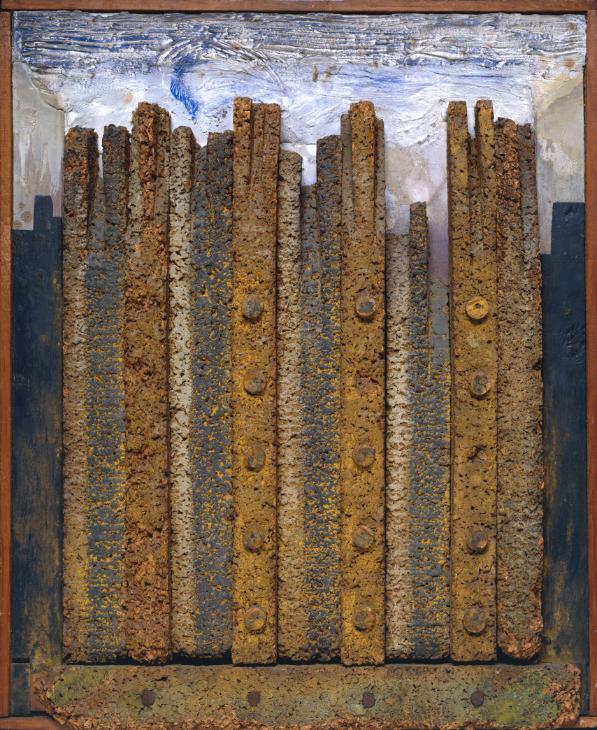
Dadaville c.1924 Max Ernst 1891-1976 Purchased 1983 http://www.tate.org.uk/art/work/T03707

Dadaville c.1924 Max Ernst 1891-1976 Purchased 1983 http://www.tate.org.uk/art/work/T03707

Dadaville is a musical response to the painted relief by Max Ernst shown above. What appears to be an iron wall in the imposing structure is actually made of cork, flimsy enough to be kept behind glass.

Carpenter bases his piece on the notes D – A – as in the first two letters of the painting’s name – and uses the nine letters of the word as the basis for the structure of the piece.

The tuba takes a starring role, allocated a nine bar bass line in the middle that the orchestra build on comprehensively, while towards the end of its 180 bars (20×9!) there is a reference to Beethoven’s Symphony no.9.

Did you know?

Gary was the Associate Musical Director on the film The Wicker Man. Among the many instruments he played during the recording of the film are piano, recorders, ocarina, fife and the Nordic lyre. You can read his recollections of recording here

Initial verdict

A piece obviously composed with the First Night in mind, especially if the surprise pyrotechnics at the end were anything to go by! Yet Carpenter largely succeeded in his musical sketch of Max Ernst’s Dadaville, with a piece that was both fragile and robust – just like the painted relief itself.

It was particularly good to see the tuba and bass clarinet given starring roles, making use of a swinging bass line of jazzy syncopations, while some of the string lines recalled Debussy and, at the opening, Britten.

Second hearing

There is an air of tension at the beginning of this piece in the cold string lines, but soon the energy begins to be released. The orchestral textures are crisp and clear.

The piece really acquires its direction once the tuba and bass clarinet are called into action from 6:55, and this low bass line generates the energy for the rest of the piece, which really starts to swing, all the while leading towards the fireworks at the finish. It completes a score with an impressive array of sounds and an appealing, uplifting mood.

Where can I hear more?

From Gary’s Soundcloud page, here is his Saxophone Quartet The North: