In concert – Nash Ensemble @ Wigmore Hall: Side by Side & Nash Inventions

Side by Side

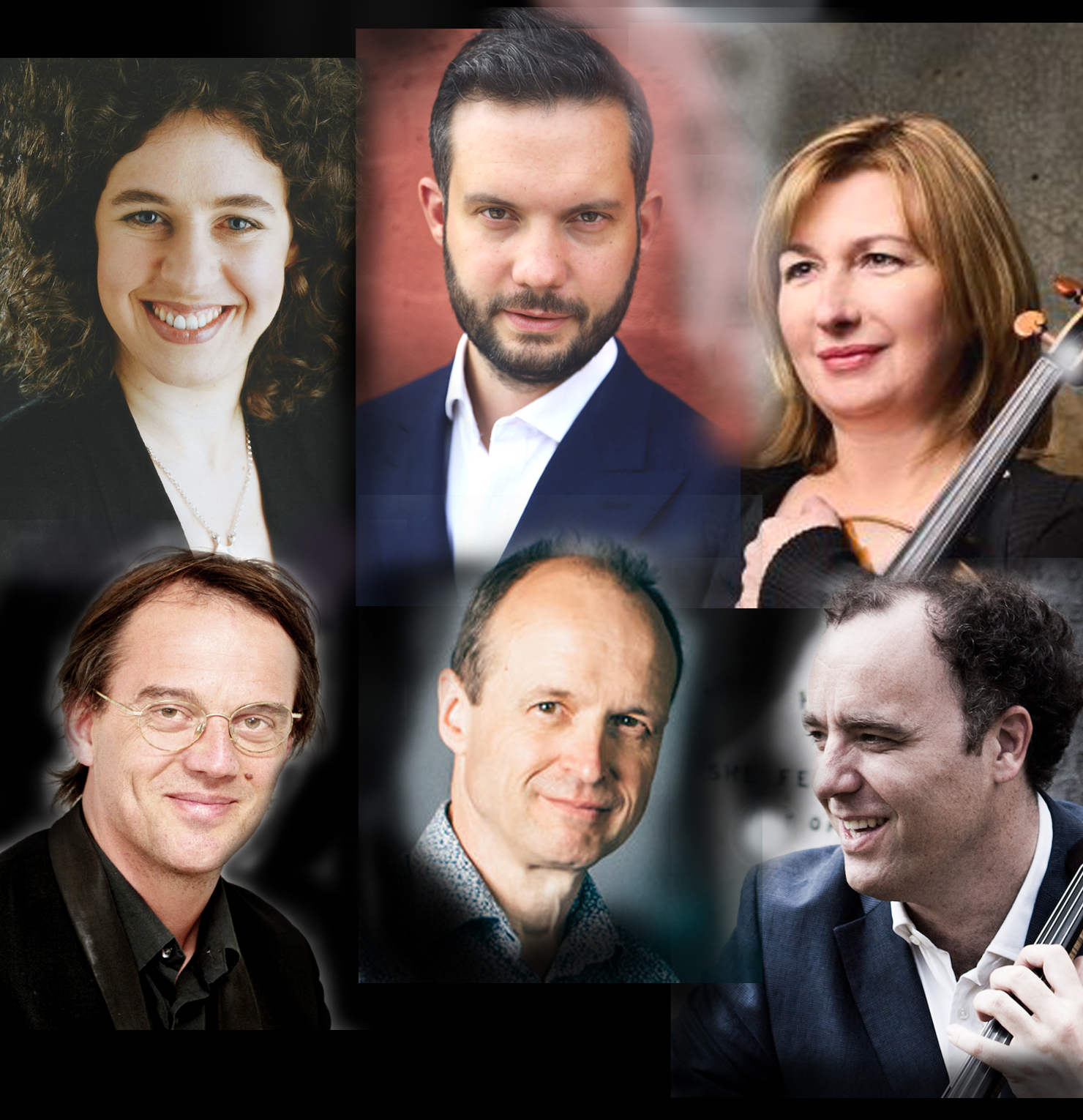
Royal Academy of Music Students [Christopher Vettraino (oboe), Silvia Bettoli, Johan Stone (horns), Magdalena Riedl (violin), Gordon Cervoni (viola)], Members of the Nash Ensemble – Adrian Brendel (cello), Alasdair Beatson (piano)

Colin Matthews Time Stands Still (2004)
Balency-Bearn Entre-Deux (2022)
Alberga No-Man’s-Land Lullaby (1996)
Keting before we were ocean (2021)
Colin Matthews Dual (2021)
Abrahamsen Congratulations Greeting (2022)

Nash Inventions

Claire Booth (soprano), Mark Padmore (tenor), Nash Ensemble [(Philippa Davies (flute), Gareth Hulse (oboe), Richard Hosford, Marie Lloyd (clarinets), Richard Watkins (horn), Sally Pryce (harp), Benjamin Nabarro, Michael Gurevich (violins), Lars Anders Tomter, Jennifer Stumm (violas), Adrian Brendel (cello), Graham Mitchell (double bass), Alasdair Beatson (piano)] / Martyn Brabbins

Casken Misted Land (2017)
Colin Matthews Seascapes (2021)
Anderson Van Gough Blue (2015); Three Songs (2018-22) [World Premiere of THUS]
Benjamin Viola, Viola (1997)
Turnage A Constant Obsession (2007)

Wigmore Hall, London
Tuesday 28 March 2023 (5pm and 7.30pm)

Reviewed by Richard Whitehouse

It has become such a fixture on the London calendar that Nash Inventions, given annually by the Nash Ensemble at Wigmore Hall, could easily be taken for granted. As tonight’s concert proved, however, the range and quality of those works performed is anything but predictable.

His long-time drawing inspiration from the landscape of the North-East might suggest Misted Land as a ready-made title for John Casken. Yet this quintet for clarinet and strings focusses on emotion as much, if not more than evocation by unfolding from the intangible impressions of its initial movement, via impulsive contrasts of its intermezzo, to a finale whose visceral progress is curtailed by a timely return to the initial equivocation. Richard Hosford made the most of his alternately insinuating and forceful writing in a piece that well deserved revival.

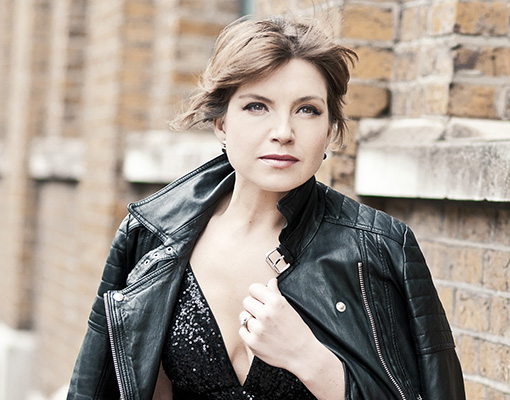
Although settings by Michael Tippett early on confirmed the musicality of his verse, Sidney Keyes (1922-43) has been relatively little set – making this selection by Colin Matthews in Seascapes the more welcome. From the unforced rhetoric of The Island City, it takes in the fleeting sensations of From : North Sea and the tense rumination of Night Estuary; a brief Interlude leading to the heartfelt expression of Seascape – one of Keyes’s greatest poems, in which Claire Booth’s commanding eloquence (above) more than vindicated the cycle as a whole.

Last in an informal trilogy centred on the colour, Van Gough Blue sees Julian Anderson pay tribute to this artist in a sequence traversing dawn to night. A speculative emergence of sound and texture in l’Aube, soleil naissant precedes the heady rhythmic and melodic interplay of Les Vignobles then mounting animation of Les Alpilles. Nothing, though, prepares for the inward rapture of Eygalières or the dance toward destruction of la nuit, peindre les étoiles: pieces wholly characteristic of this composer and as finely realized as anything he has written.

Further music by Anderson followed the interval – three in an ongoing series for soprano and ensemble identical to, but very different in usage from, that of Schoenberg’s Pierrot Lunaire. The viscerally sensual overload of Mallarmé’s Le Tombeau d’Edgar Poe (here made a tribute to Debussy in the centenary of his death) contrasted with the disarming sincerity of le 3 Mai – an email by composer Ahmed Essyad written during the pandemic, then lines by Longfellow in THUS – Claire Booth here enacting what is less a setting than a musical riposte to its text.

Writing what had become a tribute to Takemitsu 18 months after his death, George Benjamin turned what might have reflected the viola’s innate introspection into an intensive exploration by two of these instruments of how they might discover rhythmic then melodic and harmonic accord. Music diverse in content and logical in its unfolding, its technical challenges remain considerable – making this performance by Jennifer Stumm (having replaced Timothy Ridout at short notice) and Lars Anders Tomter the more engaging through its audible conviction.

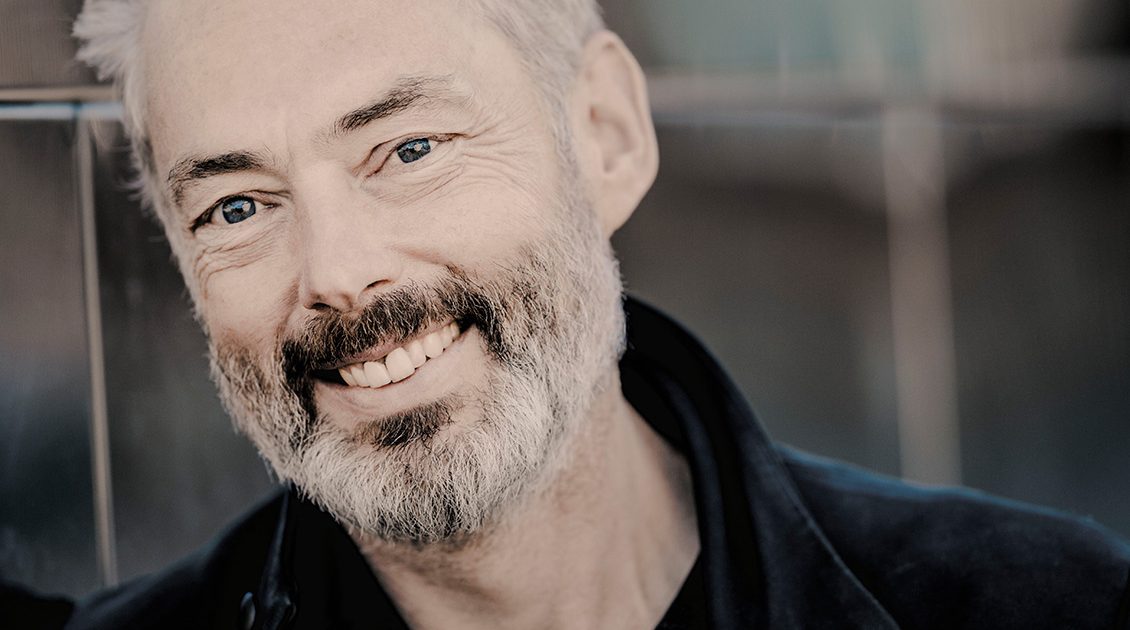
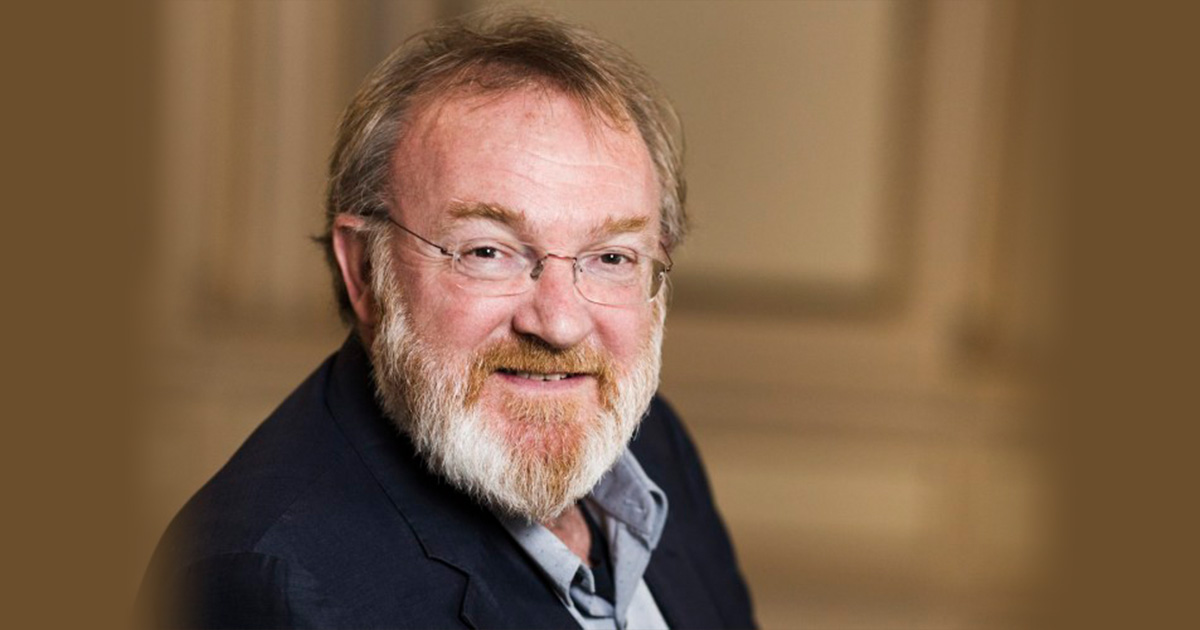
It might come a fair way back in his sizable output, but the song-cycle A Constant Obsession remains among Mark-Anthony Turnage’s finest vocal works. This reflection on ‘love’ – what it might be, what it becomes and what it could have been – is articulated across five settings of Keats, Hardy, Edward Thomas, Graves and Tennyson; its course predicted in a ‘Prologue’ and encapsulated in the bleakly humorous final poem. Mark Padmore (above) conveyed its measure now as 14 years before, as did Martyn Brabbins (below) with his attentive and unobtrusive direction.

The early evening slot brought together players from the Nash and Royal Academy of Music. Entre-Deux saw Andrea Balency-Béarn opening out the timbral and harmonic space between pitches with discreet elegance, and No-Man’s-Land Lullaby found Eleanor Alberga working toward a totemic melody with combative fervency. Sun Keting contributed music laced with nostalgia but also indignation in before we were ocean while, in Congratulations Greeting, Hans Abrahamsen commemorated the RAM’s bicentenary in lively and resourceful terms.

Colin Matthews provided a more quixotic take on that event in the subtle contrasted sections of Dual, with his music also opening and concluding this selection. Time Stands Still marked Simon Rattle’s 50th birthday in (surprisingly?) inward and even inscrutable terms, while 23 Frames marked the 30th anniversary of the Nash through that number of miniatures whose character felt as distinctive as their order was random. The outcome found this composer as his most entertaining, with no complaints if several ‘frames’ exceeded their 30-second remit.

A lengthy evening, then, and an impressive showcase for the Nash in term of marking those achievements past or present. Now is hardly the time for any complacency regarding events such as this, which remains a template for what is possible in matters of artistic excellence.

Click here for the Nash Ensemble website, and here for the Royal Academy of Music

In concert – Royal College of Music London students – Chamber Spotlight: Different Trains

Ed Driver Fruits Of Their Laboue (world premiere)
Ed Pelham (clarinet), Tabitha Bolter (horn), Aidan Campbell (bassoon), Stone Tung (trumpet), Eddie Curtis (bass trombone), Michal Oren (conductor)
Schoenfield Café Music (1987)
Rubie Besin (violin), Layla Ballard (cello), Alexander Doronin (piano)
Reich Different Trains (1988)
Jordan Brooks, Sara Belic (violins), Scott Storey (viola), Sam Hwang (cello)

Performance Hall, Royal College of Music
Wednesday 15 March 2023, 6pm

by Ben Hogwood

If you live in or around London, it is well worth reminding you that one of the best ways in which to experience classical music is to visit one of the enterprising colleges and academies in the city. They are packed with interesting recitals, with several lunchtime or early evening concerts per week, with interesting programmes and enthusiastic students ready to give them. The two most obvious examples are the Royal Academy of Music and the Royal College of Music, though more can be sought and found.

It was the Royal College of Music in which your reviewer spent an early evening hour. Currently excelling (on the strength of reviews) in a Respighi – Ravel double bill of opera, which sadly this reviewer did not have the time to experience, the college is enjoying a rich vein of musical form. This is due to a strikingly successful renovation of their ground floor space, and a very fine Performance Hall, suited for chamber-sized concerts such as this one. Here we had the chance to appraise the talent within the college, both at composer and performer levels.

The first piece was a world premiere, Ed Driver’s quintet Fruits Of Their Labour. Born in 2000, Driver is a composer of some repute, with recent accolades from the Birmingham Contemporary Music Group and a new piece for the Hermes Experiment just two of his recent notable attributes. Fruits of Their Labour proved an attractive curtain raiser for this concert, Driver enjoying the unusual quintet combination of clarinet, horn, bassoon, trumpet and bass trombone.

Based on a Czech folk song, the piece has a springlike feel as it alternates between dynamism and relative stillness, making the most of the colourful textures available. The energetic sections were contagious, but the slower passages made an arguably greater impact, their chorale-like figures filling the room.

In the latter stage Driver instructed that trumpet and bass trombone should pour water into their instruments, resulting in a sound between a gargle and something of a plumbing malfunction. While effective, the combination with the other instruments was a little superfluous, and when the music returned to its chorale figure the warmer colours were more attractive. On this evidence Driver is a composer of imagination and flair, one to keep in our sights. He received an excellent premiere performance, too, brilliantly played and conducted with authority by Michal Oren.

Next up was a piano trio with a difference. Paul Schoenfield wrote Café Music for the Saint Paul Chamber Orchestra in 1987, looking to bridge the gap between the music you might hear at Murray’s steakhouse in Minneapolis and that heard at the Minnesota ensemble’s home. He achieves his aim with music of great virtuosity and considerable humour, with a great number of enjoyable and quirky themes crammed into a three-movement, 15-minute piece. Rubie Besin, Layla Ballard and Alexander Doronin played these with considerable brio, the pianist in particular impressing with his combination of technical skill and rhythmic drive. The technical demands on the players meant there was not always room to bring the humourous sleights through at their fullest, but Besin and Ballard ensured the music had a smile on its face and a spring to its rhythms, their attractive tones bringing the melodies across with room to spare. The performance that had many flourishes, while allowing time for occasional reflection.

The main work of the evening, Steve Reich’s Different Trains, has become established as a lynchpin of the string quartet repertoire, a reflection of its strength and originality. Inspired by childhood journeys to visit his parents during the Second World War, the piece uses a collection of recordings of trains before, during and after the war – spliced together with interviews from a retired porter, Reich’s governess and two survivors of the Holocaust. Their speech patterns are taken up by the stringed instruments in performance.

This performance had a few balance issues, due to the complexity of balancing loud train noises with live strings in a small performance space, and as a result the words themselves were difficult to hear at times. Yet the quartet gave a fine performance, viola player Scott Storey and cellist Sam Hwang shaping the speech melodies with expression and guile. Violinists Jordan Brooks and Sara Belic added colourful and characterful phrases themselves, bringing rich treble to the train whistles and to some of the motifs generated by the interviews.

Different Trains lasts nearly half an hour, but it says much for the musical content that it passes in the blink of an eye. The quartet here should be congratulated for their musicality and concentration, bringing Reich’s music to energetic and often poignant life.

A fine concert, then – and a reminder to make the most of all this wonderful music if it’s on your doorstep!

For information on concerts at two of London’s central music education hubs, click on the names for concerts at the Royal College of Music and the Royal Academy of Music. Meanwhile you can listen to the premiere recording of Different Trains below

In Concert – Silesian Quartet & Wojciech Świtała: Bacewicz, Weinberg & Zarębski

Wojciech Świtała (piano, below), Silesian Quartet [Szymon Krzeszowiec and Arkadiusz Kubica (violins), Łukasz Syrnicki (viola), Piotr Janosik (cello)]

Bacewicz String Quartet No. 4 (1951)
Weinberg String Quartet No. 3 in D minor, Op. 14 (1944)
Zarębski Piano Quintet in G minor, Op. 34 (1885)

Wigmore Hall, London
Monday 17 October 2022

Reviewed by Richard Whitehouse

In existence now for 44 years and with only a change of leader during that time, the Silesian Quartet has amassed a broad repertoire taking in the extent of the Austro-German tradition along with that of its Polish heritage – as was evident from this latest Wigmore Hall recital.

The rapid upsurge of interest in women composers has been of real benefit to those such as Grażyna Bacewicz, whose sizable output of essentially abstract music went too long under the radar and not least a minor masterpiece as her Fourth Quartet – its first prize at the Liège Competition in 1951 vindicated. Its three movements are dominated by the first of these – a sombre Adagio introduction as variously infiltrates the lively ensuing Allegro, such that the coda essentially becomes a stretto between such contrasted expression. The central Andante finds this composer at her most lyrical, with the ‘giocoso’ marking of the final Allegro not necessarily implying any lessening of formal and emotional focus, as this builds toward an impetuous conclusion that clinches the unorthodox if methodical design of the whole work.

The Silesian gave a superb account of a piece it knows well – having recorded all Bacewicz’s quartets – as it did of Mieczysław Weinberg’s Third Quartet. On a similar scale, this also has a similarly overarching intensity – not least when attacca markings between movements were scrupulously observed as to give the overall design its unity within diversity. The unchecked energy of the initial Presto is by no means offset by the bittersweet poise of the Andante – its taciturn unease continued in an Allegretto affording only the most tenuous, even provisional closure. One reason, surely, why the composer restructured this piece when recasting it more than three decades later as his Second Chamber Symphony, which is hardly to deny the sheer fascination of the music at a crucial stage on the way to Weinberg’s mastery of this medium.

Had he died before writing his last work, Juliusz Zarębski would barely have been a footnote in musical history. His Piano Quintet confirms an acute feeling for Lisztian harmony, allied to a commanding formal sense as should have been the springboard into an eventful maturity and is not so far behind those by Brahms, Dvořák and Franck in being a major contribution to its medium. The Silesian had the measure of the first movement’s quirky take on sonata form – its vividly contrasted ideas merged in a tensile development then varied reprise and dynamic coda. The Adagio frames its lilting central section with a melody of rapt fervency, as is itself framed by music of ‘Forest murmurs’ aura, while the Scherzo likewise frames its wistful trio with music of an intently rhythmic propulsion. The final Presto is essentially a cyclical reprise of earlier ideas as this picks up where its predecessor left off, before pursuing a sonata-rondo trajectory such as culminates in a fervent recollection of the work’s opening theme. That this piece remains the summa of Zarębski’s creativity does not lessen the extent of its attainment.

The Silesian and Wojciech Świtała had prepared no encore, instead reprising the final pages of the Zarębski to close this programme in fine style. It is part-way through a recorded cycle of Weinberg’s quartets, another of which will hopefully feature in a future Wigmore recital.

For more information on the performers, click on the names to visit the websites of the Silesian Quartet and Wojciech Świtała – and for more on the composers, click on the names of Juliusz Zarębski, Mieczysław Weinberg and Grażyna Bacewicz

In concert – Alison Balsom & Anna Lapwood @ Chapel of St Augustine, Tonbridge School

Trad. arr. Oskar Lindberg Old Swedish Folk Song (unknown)
Kristina Arakelyan Modal Reeds (2021, world premiere)
Albinoni arr. Balsom / Lapwood Concerto in D Minor (1722)
Debussy arr. Lapwood Clair de Lune (1905); Syrinx (1913); The Girl with the Flaxen Hair (1910)
Britten arr. Lapwood Sunday Morning from Peter Grimes (1945)
Eben Okna (Windows): Green Window ‘Issachar’; Gold Window ‘Levi’ (1976)
J.S. Bach arr. Balsom / Lapwood Chorale Erbarm dich BWV 721 (unknown)
Owain Park Images (2018)
Alain arr. Balsom Litanies (1937)

Alison Balsom (trumpet), Anna Lapwood (organ), Sam Mendes (lighting director)

Chapel of St. Augustine, Tonbridge School, Tonbridge

15 October 2022

by Ben Hogwood

This was an inspirational evening of music, cleverly conceived and executed as the first in an impressive set of concerts to celebrate the 60th anniversary of the Tonbridge Music Society. In its existence the society has attracted a stellar cast of classical and jazz artists to the Kent town, where they have a number of fine performing venues at their disposal. Even by their standards, however, this was an auspicious event.

Powered by a series of common musical denominators (and a shared love of Chelsea buns!), trumpeter Alison Balsom and organist Anna Lapwood created an immersive sequence of music for the striking Chapel of St Augustine in Tonbridge School. One of the many inspirations behind this was Alison’s teacher from the Guildhall School of Music, and her thank you gift took the form of an inspiring and memorable evening for many young performers, who in a ceremony afterwards were presented with a series of Diamond Music Awards given by TMS to support local musicians between the age of 5 and 18.

Both performers have a strong belief in giving back to their communities and passing on to the next generation of performers. The week leading up to the concert featured a master class given by Balsom for students of the school, and Lapwood’s continued personal and virtual encouragement for her many followers under the #playlikeagirl hashtag is bearing fruit if the young audience was anything to go by. Both showed why they can be lasting inspirations, their craft borne of a shared passion for the music they play.

Complementing the music was a lightshow, under the direction of Sam Mendes – Balsom’s husband, clearly relishing a more vocational night away from his film director profession. Running smoothly and logically, the music began with solo organ – and few would have been prepared for the immediate and bare emotion of the Old Swedish Folk Song arranged by Oskar Lindberg. We heard a counterpoint from Kristina Arakelyan, who was present for the world premiere of her similarly moving Modal Reeds. A cinematic piece led by Balsom, this had striking parallels to the film music of Thomas Newman in its rich harmonic palette and distinctive, bright textures. It made a strong impression.

The chapel was bathed in blue at this point, a subtle counterpoint to the music. Balsom then fell under the spotlight, moving to the organ loft for a spirited account of Albinoni’s Oboe Concerto in D minor, its natural arrangement for trumpet making much of the heartfelt second movement, proving there is more than one Adagio bearing the composer’s name! Lapwood’s choice of registrations on the organ throughout the evening was ideal, but here especially she found a rewarding balance and sensitive phrasing.

A Debussy triptych followed – a mellow-voiced Clair de Lune, in the organist’s own arrangement, segueing neatly into Balsom’s account of Syrinx, the solo flute piece taking flight in its arrangement for trumpet. Both instruments combined in a plaintive account of The Girl With The Flaxen Hair.

The evening’s centrepiece was to follow, prefaced by a fiendishly difficult arrangement of Sunday Morning, second of Britten’s Four Sea Interludes from Peter Grimes. The longest stop on the organ came into play, rumbling beneath a vividly pictorial account where Balsom added a treble line. From here we moved to two substantial segments from Petr Eben’s Okna (Windows), a 1976 piece inspired by four of Marc Chagall’s stained glass windows. Coincidentally, only three miles down the road stands Tudeley parish church, the only site in England to feature original windows by the artist.

This piece is clearly special to Balsom, and the two gave a penetrating insight into Eben’s writing, taking two substantial excerpts. Lapwood exploited the organ’s colour, the mottled Green Window gathering intensity with some raucous interventions against Balsom’s fluid line. The steady build in the Gold Window was something special indeed, reaching an apex in what Balsom termed ‘the loudest B flat chord ever for non-amplified instruments’. It certainly left its mark here!

Great control was required for the floated melody of Bach’s chorale Erbarm dich before the evocative Images from Owain Park, to which the trumpet added a playful yet poignant treble line. Jehan Alain’s Litanies also benefited from this, the organ piece given an extra-ceremonial air to close proceedings. We were not fully done, however, as a softly played encore arrangement of Shenandoah held the audience rapt a little while longer.

Both artists should be applauded for their creativity and collaboration here, two words that sit towards the forefront of their thinking. The balance was ideal, a notable achievement given the familiar problems of tricky sightlines and the distance between the two performers. Mendes, too, should be credited for a sensitive response that cast a spell on those in the chapel, moving from cool blue hues to dramatic outlines in gold. A special evening indeed – how about reproducing it as a late-night Prom?

For more information on Anna Lapwood’s new Images album, featuring the piece from Owain Park, click here. Meanwhile for more on Alison Balsom’s recent release Quiet City, click here – and for more information on her debut album for EMI Classics (latterly Warner), containing a complete account of Petr Eben’s Okna, click here

In concert – CBSO Centre Stage: Beethoven & Schumann string quartets

Schumann String Quartet no.3 in A major, Op.41 No. 3 (1842)
Beethoven
String Quartet no.11 in F minor, Op.95 ‘Serioso’ (1810-11)

CBSO Soloists [Jonathan Martindale and Stefano Mengoli (violins), Christopher Yates (viola), Helen Edgar (cello)]

CBSO Centre, Birmingham
Friday 6 May 2022

Written by Richard Whitehouse

The Centre Stage series, featuring members of the City of Birmingham Symphony Orchestra, continued this afternoon with a coupling of string quartets which, written just three decades apart, could hardly be more contrasted in terms of their aesthetic stance or emotional impact.

It made sense to reverse the advertised playing order. Schumann’s Third Quartet may be the last of his trilogy, but the initial movement is an ideal means of ushering in any programme – its gentle introduction then ruminative Allegro segueing with an unforced eloquence amply conveyed by these players. Most impressive was the ensuing scherzo – its variations on an agitated theme maintaining impetus right through to the restive closing bars. In his opening remarks, Jonathan Martindale spoke of the anguish beneath this music’s seeming sanguinity as is confirmed by those stealthy episodes that twice disrupt the Adagio’s repose before its main ideas find uneasy accord. No such issue affects the final Allegro, its rhythmic dexterity faltering a little but its determined progress towards an affirmative outcome never in doubt.

Whereas Schumann’s quartet typifies the mid-Romantic zeitgeist, Beethoven’s Serioso finds the latter composer’s late-Classicism at its most provocative – not least in terms of a formal concentration that barely exceeds 20 minutes. The present account underlined this in a lithe take on the opening Allegro which exuded a volatility such as (rightly) carried over into the next movement – its Allegretto marking indicative of a restlessness made more poignant by the extended coda’s burgeoning lyricism. Yet, as the ambiguous final cadence attests, there can be no let-up with a scherzo whose ‘serioso’ marking reinforces this as music-making in earnest. Its tense angularity is hardly less evident in the lurching progress of a finale whose breezily nonchalant conclusion is as unexpected as it was vividly realized on this occasion.

An arresting and persuasive juxtaposition which will hopefully be evident (if a little less starkly) in the next Centre Stage concert just over a month from now, when several of this afternoon’s players reassemble for early chamber works by Vaughan Williams and Fauré.

You can find further information on CBSO Centre Stage concerts on the CBSO website