Meredith Four to the Floor (2005) Heather Ryall, Emily Wilson, Beth Nicholl, George Blakesley (bass clarinets)
Mason Heaven’s Chimes Are Slow (2010) Rebecca Speller (flute), Joe Howson (piano)
Howard Cloud Chamber (2006) Emily Wilson (clarinet), Mikaella Livadiotis (piano)
Anderson Scherzo with Trains (1993) Heather Ryall, George Blakesley (clarinets), Beth Nichol (basset horn), Emily Wilson (b-clarinet)
Jennifer Blackwell Performance Space @ Symphony Hall, Birmingham Thursday 17 March 2022 (1pm)
Written by Richard Whitehouse
BCMG NEXT may have had a major role in tonight’s concert at CBSO Centre, itself marking the culmination of a major project that has already featured events in Bologna and Hannover, but it was a worthwhile move to include more of these young musicians in a lunchtime recital.
Anna Meredith has written numerous chamber pieces, among which Four to the Floor has an immediate appeal – not least through the uniform line-up of its clarinet quartet in music whose methodical exploration of timbre almost inevitably results in the descent intimated by its title. It may have been a transcription of the final item from his song-cycle after Christina Rosetti, but Christian Mason’s Heaven’s Chimes Are Slow felt no less evocative in this incarnation for flute and piano – not least as rendered with such poise by Rebecca Speller and Joe Howson.
Emily Howard’s composing career has unfolded parallel to her scientific research, such that Cloud Chamber bridges any likely divide through its iridescent timbral interplay for clarinet and piano – realized here with precision and verve by Emily Wilson and Mikaella Livadiotis. The recital ended with Scherzo (with trains), one of Julian Anderson’s most engaging shorter works whose inspiration in Thoreau as well as rhythms of high-speed trains puts its diverse clarinet quartet through an unpredictable discourse here ensuring a characterful performance.
This diverse and enjoyable recital was also the second BCMG-related event to be held at the Jennifer Blackwell Performance Space, adjacent to the Circle level at Symphony Hall – itself much improved as a setting with the overhead promotional screen turned off for the duration.
Granados Goyescas: Quejas, o La maja y el ruiseñor (1909-12) Albéniz Iberia (Book 3): El Albaicín (1907) Ravel Miroirs (1904-5) Rachmaninov Moments musicaux Op.16: no.2 in E flat minor, no.3 in B minor, no.4 in E minor (1896) Prokofiev Piano Sonata No. 8 in B flat major Op. 84 (1939-44)
Boris Giltburg (piano, above)
Wigmore Hall, London Monday 14 March 2022
Written by Ben Hogwood
Boris Giltburg
14 March 2022 22:19
This was the second concert in Boris Giltburg‘s Ravel series at the Wigmore Hall – but as he eloquently explained in the programme and from the stage, it was impossible to proceed without responding to the situation in Ukraine.
Born in Russia but of Israeli nationality, Giltburg’s judgement in this was carefully considered. Reminding us that music has the overwhelming ability to reflect conflict as well as providing an appropriate response to it, in Prokofiev‘s Piano Sonata no.8 he had found the most accurate reflection imaginable. Ukrainian-born Prokofiev wrote the piece during the Second World War, and it was premiered by Sviatoslav Richter in Moscow in 1944. Here its resonance was unmistakable, the work unfolding with a mixture of uncertainty and resolve, with searing outbursts and anguished thoughts that spoke of oppression and tragedy. Prokofiev’s trademark dissonances were descriptive, the percussive rhythms laden with military power. The second movement relented a little in search of lyricism, Giltburg finding parallels with the composer’s ballet scores of the period, with hints of Romeo & Juliet carried on the air. Meanwhile the third movement, a powerful presto, tore up the tarmac in its relentless drive forward while finding time to consider the repercussions. Giltburg’s precision and power were beyond reproach here, his performance incisive but deeply reflective of current events. The Wigmore Hall listened closely, moved to silence throughout but responding with sympathetic applause.
Because of this performance the rest of the concert could have paled into insignificance, but that would reckon without some powerhouse performances of music from earlier in the century. It was refreshing to hear two Spanish works for starters. The music of Granados and Albéniz does not get enough exposure, and it should do – both wrote under the influence of Debussy but had something of the French master’s gift for picture painting. Giltburg caught the baleful tones of Quejas, o La maja y el ruiseñor (Lament, or the maiden and the nightingale), while the sultry El Albaicín was vividly descriptive and alluring.
Ravel may have written Miroirs in 1905 but in these hands it still sounded so modern. Noctuelles (Moths), a remarkable piece of picture painting from the French composer, found its match here, Giltburg delighting in its irregular contours, while the cleaner lines of Oiseaux tristes were no less effective. The much-loved duo of Une barque sur l’océan and Alborada del gracioso were brillianly performed – the former capturing the rocking of the boat with uncanny accuracy, surging forward before checking against the spray – and the latter exploring syncopations and dynamic variations to thrilling effect. Finally La vallée des cloches was both reverent and mysterious, notable for meticulous pedal work from Giltburg to maintain the atmosphere.
Immediately before the Prokofiev we heard three of the young Rachmaninov‘s six Moments Musicaux, a breakthrough collection that helped establish him as a serious composer for the piano in 1896. They are of similar design to the pieces of the same name by Schubert, in a group of six but giving the pianist freedom through varying dimensions and moods. These are pieces Giltburg holds close to his heart, and a whirlwind account of the second piece was checked by the darker hues of the third, a funeral march. This provided much food for thought with its nagging motifs, the music returning to the same itch with ominous regularity, before the fourth piece took off at a rate of knots, fearsome virtuosity tempered by immaculate melodic phrasing.
After the Prokofiev had made its mark we heard the ideal foil as an encore, Giltburg playing the Bagatelle no.1 by Valentin Silvestrov. A Ukrainian composer, Silvestrov was born in 1937 and – according to a conversation between Giltburg and a member of the audience – appears to have safely relocated to Poland. The simplicity of this piece, after the crunch of the Prokofiev, was doubly moving.
For more information on Boris Giltburg you can visit his website
Laura van der Heijden (cello), Jâms Coleman (piano)
Janáček Pohádka (1910, rev. 1912-23) Dvořák Gypsy Songs Op. 55: Songs my mother taught me (1880) Kaprálová Navždy from Navždy Op. 12 (1936-7) Mihály Movement for cello and piano (1962) Kodály 3 Songs to Poems by Bela Balazs Op. posth.: Why are you saying that you do not love me (1907-9); Énekszó Op. 1: Slender is a silk thread (1907-9) Sonatina for cello and piano (1909) Janáček Violin Sonata (1914-15, rev.1916-22)
Wigmore Hall, London, 9 March 2022
reviewed by Ben Hogwood Pictures (c) Olivia Da Costa (Laura van der Heijden), Sim Canetty-Clarke (Jâms Coleman)
It bears repeating that times are tough for new artists in music. Competition is fierce, while opportunities for live performance and recording have been severely hampered over the last two years of lockdown and pandemic restrictions. How refreshing, then, to talk about two new artists, a long term agreement with Chandos and a chamber music album notable for its originality and depth of expression.
The new artists, cellist Laura van der Heijden and her musical partner, pianist Jâms Coleman, have been performing together since 2017. Their debut album, for which this concert was an official launch, looks at music from Central and Eastern Europe with its roots in folk, either written directly for cello and piano or falling naturally into a vocal range.
The album shares its title, Pohádka, with a three-part fairy tale for cello and piano by Janáček, based on a Russian tale. This began the concert, a picture book performance bringing the story to life with sharp characterisation and flair. Janacek used a good deal of his music to explore macabre storylines and this was no exception, though the lighter, more lyrical moments were good fun. van der Heijden’s tone was sonorous and projected easily to the back of the hall, while Coleman’s stylish playing was capped with limpid work in the second section.
We then heard arrangements of two songs from Dvořák and Vítězslava Kaprálová as an idea complement, the former transcribing beautifully from voice to cello, with tasteful ornamentation from the cello. It was good to hear more of Kaprálová, a talented Czech composer who tragically died from tuberculosis when she was just 25. Her music immediately cast a spell, Coleman’s mysterious chords matched by a remote but moving line from the cello in its higher register.
Different qualities were required for the music of Hungarian composer and conductor András Mihály. His Movement for cello and piano was a dramatic rollercoaster, and rather volatile at times – reflecting perhaps the differing styles at play in modern music when it was written in 1962. While there were undoubtedly elements of Bartók and even Webern in the music’s contours, which veered into atonality at times, there was a fierce expression suggesting Mihály’s music should be explored further. Both players responded with a terrific performance, mastering the technical demands.
Zoltán Kodály was also an influence on Mihály, and his music suits the cello hand in glove, whether in large-scale sonatas or shorter, folk-informed songs. We heard two songs here, the cello a doleful voice for Why are you saying that you do not love me, while Slender is a silk thread found Coleman beautifully spinning out the silvery tale. However the single-movement Sonatina for cello and piano, at just under 10 minutes, made a lasting impression with its passion, profound lyricism and subtle melancholy. The performers’ love for this piece was clear, and the high voltage account found them finishing each other’s musical sentences.
The same could be said for Janáček’s Violin Sonata, a pungent piece whose proximity to World War One is evident in the rapid fire of its phrases. The composer’s unusual musical language was once again wholly compelling, with broad lyrical statements countered by strange, abrupt full stops to his melodies. The parallels with the current situation in Ukraine were impossible to ignore, especially with the emotion both players brought to the second movement Ballada, its sweeping melodies reaching skyward. Ultimately the acidic third and fourth movements cast a cloud over the mood, the players vividly depicting the distant sound of gunfire alongside more thoughtful introspection. van der Heijden was commendably modest about her own arrangement of the Sonata, for cello and piano, an extremely successful version losing none of the intensity or fractious treble phrases. Both players were superb, their virtuosity and togetherness notable throughout.
This was an extremely rewarding concert, energetic and romantic in turn but also thought-provoking through its wartime undercurrents. Laura van der Heijden and Jâms Coleman deserve great credit for their refreshing take on a chamber music album, which bodes well for their ongoing relationship with one of Britain’s best classical independents. Theirs is a partnership to watch closely.
Recital Hall, Royal Birmingham Conservatoire, Birmingham Friday 25 Febuary 2022
Written by Richard Whitehouse
The second half of Birmingham Contemporary Music Group’s current season got off to an intriguing start with this collaboration between BCMG:NEXT and the Paris-based L’Instant Donné. All four of the pieces were by Frédéric Pattar (b1969), the Dijon-born composer who studied in Lyon with Gilbert Amy and who has worked extensively with this latter ensemble – building an extensive output over the past three decades which is audibly in the lineage of French post-war modernism, not least through its emphasis on timbral and colouristic facets.
Such qualities were uppermost in La Nuit Remue, a homage to surrealist poet Henri Michaux whose traversal from Boulezian fastidiousness to Lachenmann-like ‘concrète instrumentale’ was accomplished elegantly if anonymously. Melvin Tay drew a committed response from NEXT, who made a similarly fine impression with Acte. Inspired by a late poem of typically studied fatalism from Arthur Rimbaud, the interplay of its three wind instruments made for stark tonal contrasts such as were variously abetted and mediated by dextrous piano writing.
The remaining works were the latter two instalments from the trilogy Miroirs Noirs, each of which offered a striking take on its chamber format. In Miroir Noir III, the stealthy dialogue between string trio was pointedly offset by interjections from celesta and toy piano in a stern test of coordination the NEXT players met head-on. Members of L’Instant Donné then took the stage for Miroir Noir II, a more extended piece which teased out the possibilities of the ‘clarinet quartet’ with a keen sense of momentum sustained through to its deadpan ending.
A fine performance, then, from a group whose appearance this evening (as at the lunchtime recital in Symphony Hall) was made possible through Diaphonique, a funding body whose support is the more necessary in these post-Brexit times. Hopefully more of Pattar’s music will make its way to the UK (his Second String Quartet is well worth hearing onYouTube), but this collaboration was a worthy means of introducing it to Birmingham listeners in skilful and sympathetic performances.
Further information on BCMG events can be found at theirwebsite. To read an interview with Frédéric Pattar click here, while his biography can be found here). For more on L’Instant Donné click here, and for Diaphonique here
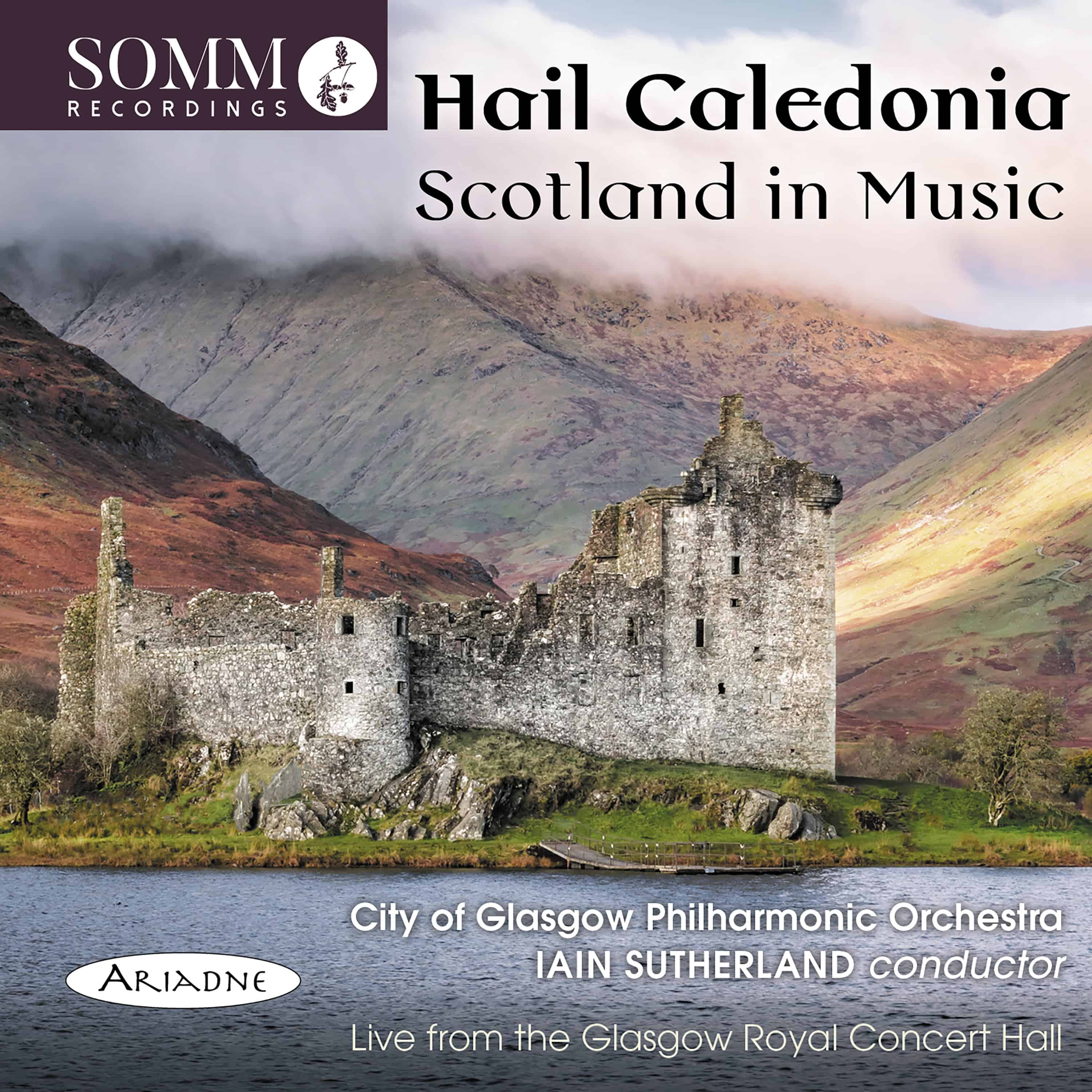
Trad. arr. Sutherland The Black Bear Salute Docker Abbey Craig (1974) Tomlinson Cumberland Square (1960) Coates The Three Elizabeths – Elizabeth of Glamis (1944) Mendelssohn Symphony No. 3 in A minor, Op. 56, ‘Scottish’ – Vivace non troppo (1842). Blake Take the High Road (1980) MacCunn (arr. Sutherland) Sutherland’s Law (1886/1973) Docker Faery Dance Reel (1958) Sutherland Three Scottish Castles (1966) MacKenzie (arr. composer) Benedictus, Op. 37 No. 3 (1888/1895) Bantock Two Heroic Ballads – Kishmul’s Galley (1944) Arnold Four Scottish Dances, Op. 59 (1957) Williamson (arr. Sutherland) Flower of Scotland (1967) Trad. arr. Sutherland Amazing Grace Whyte Donald of the Burthens – Devil’s Finale/Reel o’ Tulloch (1951)
David Wotherspoon, Iain MacDonald (bagpipes), City of Glasgow Pipe Band, City of Glasgow Chorus, City of Glasgow Philharmonic Orchestra / Iain Sutherland
SOMM Ariadne 5014 [79’32”]
Digital Remastering Paul Arden-Taylor
Live performances at Royal Concert Hall, Glasgow in 1995 and 1996
Written by Richard Whitehouse
What’s the story?
SOMM releases via its Ariadne imprint this compilation of shorter pieces and arrangements which, between them, afford a wide-ranging and not at all hackneyed overview of ‘Scotland in Music’, realized with great flair by Iain Sutherland and the City of Glasgow Philharmonic Orchestra.
What’s the music like?
Whether or not the fastest regimental march in the British army, The Black Bear Salute duly launches proceedings with a gusto continued by Robert Docker’s breezy take on battle-song Scots Wha Hae in Abbey Craig. Ernest Tomlinson furthers the jollity with his amalgam of traditional Borders tunes in Cumberland Square, to which the quiet rapture of Eric Coates’s ‘Elizabeth of Glamis’ (central panel of The Three Elizabeths triptych) provides an admirable foil. The scherzo from Mendelssohn’s Scottish Symphony makes for an ideal interlude in its rhythmic vivacity and formal ingenuity, then come pieces made famous through association with television series – Arthur Blake’s atmospheric theme-tune for the soap drama Take the High Road and the corresponding sequence for crime drama Sutherland’s Law, derived from Hamish MacCunn’s overture Land of the Mountain and the Flood as has regained its place in the concert hall. Docker’s contribution to the light-music repertoire is typified by his Faery Dance Reel, a lively and infectious medley of traditional tunes that wears its heritage lightly.
Iain Sutherland displays his compositional skills (with respective nods to Arnold and Coates) in Three Scottish Castles with its evocative tribute to those of Stirling, Dunvegan (Skye) and Edinburgh. Next comes a contrasting brace of pieces – the burnished eloquence of Alexander MacKenzie’s Benedictus here followed by the unfailing extroversion of Kishmul’s Galley by Granville Bantock, whose immersion in all things Scottish was enduring. Malcolm Arnold’s Four Scottish Dances are then given a memorable reading which points up the trenchant gait of ‘Strathspey’ or the latterly inebriated progress of ‘Reel’, before ‘Hebrides’ casts a suitably rapturous spell that is summarily curtailed with the headlong energy of ‘Highland Fling’. One half of influential folk duo The Corries, Roy Williamson created his own standard in Flower of Scotland, here given an opulent arrangement comparable to that of the ubiquitous Amazing Grace – after which, the closing section from the ballet Donald of the Burthens by Ian Whyte (founder conductor of the BBC Scottish Symphony Orchestra) makes for a scintillating finale.
Does it all work?
Yes. Compilations such as this are often no more than the sum of their parts, however enticing those parts may be, but Hail Caledonia is one to sample at leisure as well as worth playing at a single sitting. It helps when the City of Glasgow Philharmonic renders all these pieces with alacrity and enthusiasm, aided by being captured on various live occasions, and owing in no small part to its founder Iain Sutherland. A familiar radio presence over several decades, he brings an authority to music whose outward flair is not without its corresponding substance.
Is it recommended?
Indeed. The remastered sound lacks nothing in realism or immediacy, while there are detailed and informative notes by composer, critic (and no doubt ecosophile) Robert Matthew-Walker. Any listeners who are looking to add such a compilation to their collections need not hesitate.
Listen & Buy
You can discover more about this release and listen to clips at the SOMM Recordings website, where you can also purchase the recording.



 Arcana.fm