In concert – CBSO Centre Stage: CBSO Percussion Ensemble

Daugherty Lounge Lizards (1994)
Mazzoli
Volume (2006)
Reich
Dance Patterns (2002)
John Luther Adams
Qilyaun (1998)

City of Birmingham Symphony Orchestra Percussion Ensemble [James Keefe, Clíodna Shanahan (pianos), Adrian Spillett, Toby Hearney, Andrew Herbert, Matthew Hardy, RBC Students (percussion)

CBSO Centre, Birmingham
Friday 3 December 2021

Written by Richard Whitehouse

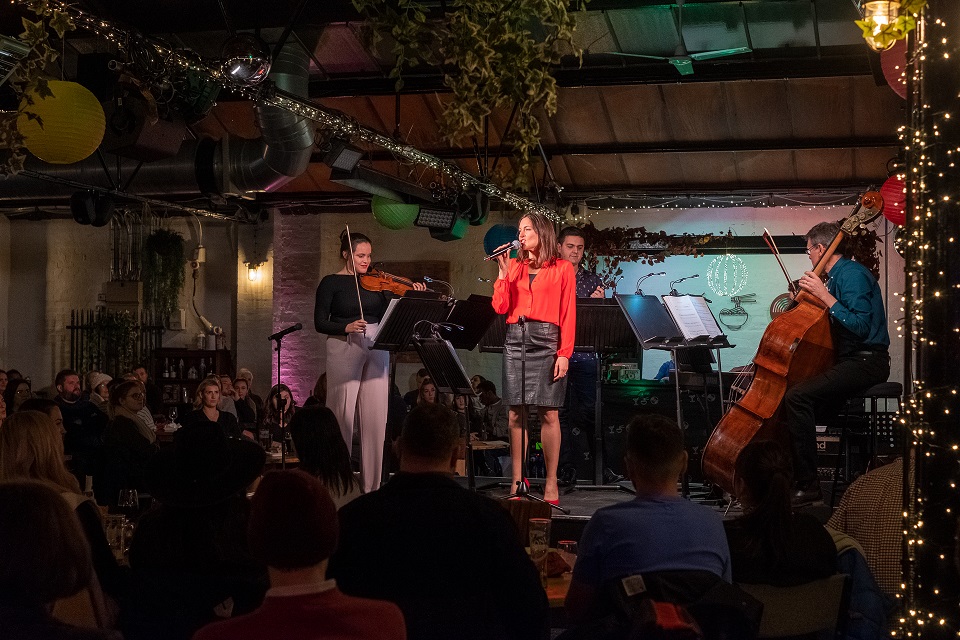
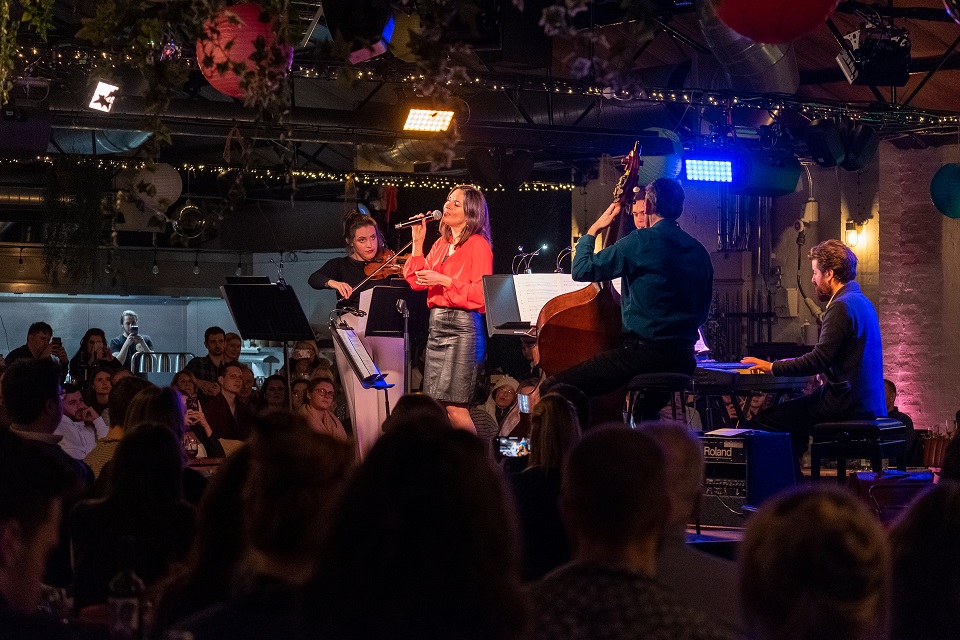
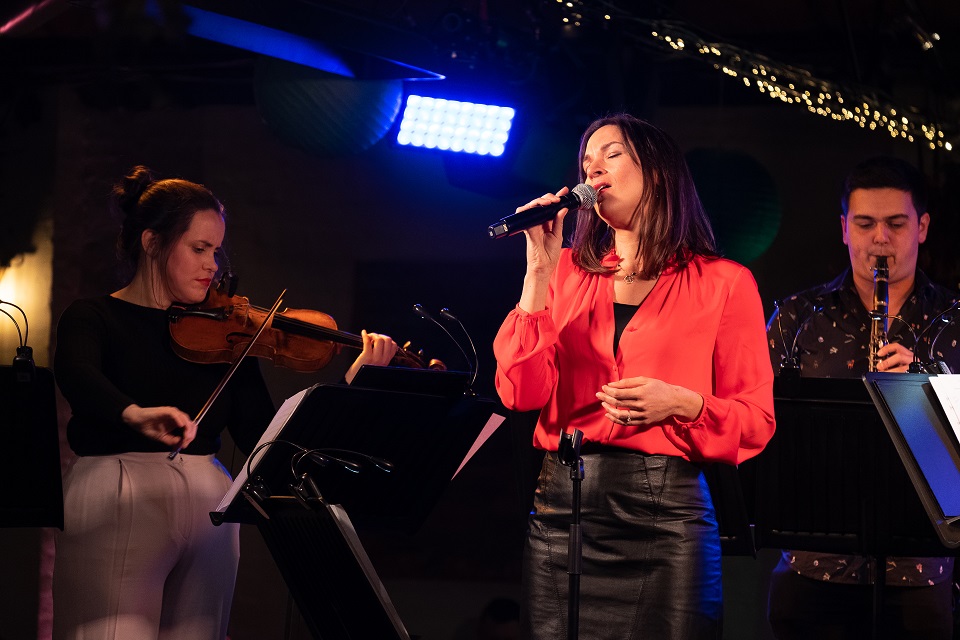
This last Centre Stage recital for 2021 brought a welcome return from the CBSO Percussion Ensemble for a programme such as demonstrated the sheer variety possible in the percussion medium even with the relatively small number of musicians required in most of these pieces.

Although he has written extensively for larger forces, Michael Daugherty is often at his best with chamber groupings as the two pianos and two percussion of Lounge Lizards, whose four sections keenly evoke the composer’s student years playing jazz piano – whether Sip ‘N’ Stir at Cedar Rapids, Dennis Swing Club at Hamburg, Ramada Inn on the New Jersey Turnpike and Bamboo Bar in Amsterdam. A range of ‘cool jazz’ idioms and practitioners is alluded to, with the deadpan humour as has long been a Daugherty hallmark never far below the surface.

Those who heard Missy Mazzoli’s Violent, Violent Sea at a CBSO concert in May will know of her vivid timbral sense, and Volume is no exception. Inspired by the inventive and highly charismatic playing of musicians from Trinidad, it can be performed (as here) with a second vibraphone replacing steel drum and which, heard alongside intricate exchanges for two kick drums and five bottles of water is, to quote the composer, ‘‘a raucous and joyful … homage to the … spirit of innovative music-making’’ – this performance certainly being no exception.

As Adrian Spillett remarked during a platform change, the music of Steve Reich has never been absent from a Centre Stage programme by this group – and Dance Patterns finds this composer at his most dextrous. Written for pairs of pianos, vibraphones and xylophones as part of the Dutch dance-film Counterphrases, its content does no more while no less than is indicated by its title, though such is the deftness and understatement of its interplay that the six-minute duration passes as though in an instant and all too soon dissolves into the ether.

‘Understatement’ is hardly apposite to describe Qilyaun by John Luther Adams – the Iñupiaq word for ‘shaman’s drum’ also ‘device of power’ graphically evoked in this visceral workout for four bass drums. Its gradual deceleration of activity to a midpoint of isolated strokes then reverse acceleration back to the initial rhythmic continuum was executed with a formidable unanimity by Royal Birmingham Conservatoire students, even if the need to keep listeners at a remove from the drums at the rear of the auditorium rather compromised social distancing.

That said, the piece was likely a revelation to those who know JLA only through his recent (and rightly acclaimed) orchestral works and concluded this recital in unequivocal fashion. Centre Stage resumes on January 21st with an all-Poulenc programme including the Sextet.

Further information on future CBSO Stage concerts can be found here

In concert – Vilde Frang, BBC Symphony Orchestra / Sakari Oramo: Beethoven Violin Concerto & Dora Pejačević Symphony

Sakari Oramo

Beethoven Violin Concerto in D major Op.61 (1806)
Pejačević
Symphony in F# minor Op.41 (1916-17, rev. 20)

Vilde Frang (violin, below), BBC Symphony Orchestra / Sakari Oramo

Barbican Hall, London
Friday 26 November 2021

Written by Richard Whitehouse. Pictures (c) Mark Allan

The latter-day uncovering of music from the past two centuries by female composers has not always been determined by its intrinsic quality yet, on the basis of this evening’s account by the BBC Symphony Orchestra, the Symphony by Dora Pejačević was certainly worth revival.

Born in Budapest and growing up within the Croatian nobility, Pejačević (1885-1923) early on evolved an idiom whose pivoting on the cusp between late-Romanticism and Modernism was well suited to those large-scale instrumental and, latterly, orchestral works that dominate an output curtailed by her death – from kidney failure – at just 37. Certainly, there is nothing at all cautious about her Symphony in F sharp minor, composed during the later stages of the First World War and a piece audibly indebted to though never merely beholden to its times.

The BBC Symphony Orchestra conducted by Sakari Oramo with Vilde Frang on violin perform Ludwig van Beethoven’s Violin Concerto and Dora Peja?evi?: Symphony in F-sharp minor, op. 4 in the Barbican Hall on Friday 26 Nov. 2021. Photo by Mark Allan

Surprisingly, the opening movement is in most respects the weakest – its main Allegro failing to sustain the impact of its impressive slow introduction (Brahms’s First Symphony the likely precursor), in terms of questing harmonic trajectory or purposeful momentum, once the lyrical if rather flaccid second theme has taken hold. The development relies more on rhetoric than motivic ingenuity over its too brief course, followed by an awkwardly modified reprise then a coda whose glowering intensity reveals an intermittent tendency to overscore for the brass.

Such failings are largely absent from what follows. Centred on a soulful melody given to cor anglais, the Andante builds methodically while irresistibly to its pathos-laden climax before subsiding into the lower reaches of the woodwind; while the Scherzo (better placed second in context) utilizes tuned percussion to underpin a progress whose rhythmic vitality is unusual in symphonies from this era. The final Allegro revisits the first movement’s emotional angst, but its relative succinctness on the way to an ultimately cathartic peroration feels securely judged.

Such, at any rate, was the impression left by this performance – the BBCSO responding with alacrity to Sakari Oramo’s belief in music scored, for the most part, with no little imagination for forces including triple woodwind, six horns and four trumpets. If not the masterpiece some might like to believe, Pejačević’s Symphony is evidently worth revival as frequently as, say, that by Korngold – a potent of what this composer would surely have gone on to create. That she enjoyed only a short-lived maturity need not detract from extent of her legacy as it stands.

The BBC Symphony Orchestra conducted by Sakari Oramo with Vilde Frang on violin perform Ludwig van Beethoven’s Violin Concerto and Dora Peja?evi?: Symphony in F-sharp minor, op. 4 in the Barbican Hall on Friday 26 Nov. 2021. Photo by Mark Allan

Despite sustaining a hand injury, Vilde Frang took the stage in the first half for a reading of Beethoven’s Violin Concerto (replacing that by Stravinsky) as brought the genial and restive aspects of its expansive first movement into effortless accord; after which, the variations of the Larghetto were exquisitely delineated then the humour of the final Rondo shot-through with an incisiveness through to the emphatic close. Among the most astute of accompanists, Oramo drew felicitous playing from the BBCSO’s woodwind and a reduced string-section.

As encore, Frang gave an eloquent take on Gott erhalte Franz den Kaiser, Haydn’s theme for the variations in his ‘Emperor’ Quartet. Hopefully those still trying to reconcile the movement-headings of the Pejačević as given erroneously for the Beethoven were not unduly distracted.

For the repertoire in this concert, listen to the Spotify playlist below:

For further information on the concert, click here For more on Dora Pejačević, click here – and for more on soloist Vilde Frang, here

On record – Dmitry Smirnov: Bach, Bartók & Schneeberger – Works for solo violin (First Hand)

dmitry-smirnov

Dmitry Smirnov (violin)

J.S. Bach Partita no.2 in D minor BWV1004 (c1720)

Bartók Sonata, BB124 (1944)
Schneeberger Sonata (1942)
First Hand Records FHR117 [61’45”]

Producer / Engineer Jean-Daniel Noir

Recorded 8-10 February 2021 at ‘Il Poggio’, Montecastelli Pisano, Italy

Written by Richard Whitehouse

What’s the story?

The violinist Dmitri Smirnov makes his debut for First Hand Records with this release of unaccompanied works from Bach and Bartók, together with a first commercial recording    for the wartime sonata by Schneeberger in what proves an astute and instructive coupling.

What’s the music like?

The Solo Violin Sonata by Bartók is the pre-eminent work of its kind in the twentieth century – Smirnov setting out his credentials in a forthright though never over-wrought account of its initial Tempo di ciaccona, followed by a tensile reading of the Fuga which still admits a bracing humour into its methodical construction. The Melodia is the emotional core of this work, and here Smirnov avails himself of a wide variety of timbre in its heartfelt unfolding, then the Presto makes for a coruscating finale that ultimately heads to its decisive ending.

Its famous finale can easily dwarf the initial four movements of Bach’s Second Solo Partita, but Smirnov is mindful to accord due emphasis to this succession of capricious Allemande, trenchant Courante, eloquent Sarabande then cavorting Gigue, whose jazzy syncopation provides a telling foil for what follows. Attacca in this instance – Smirnov heading directly into the Chaconne which here eschews rhetorical grandeur for an impulsive traversal of its motivically close-knit variations, sustained through to an unexpectedly taciturn conclusion.

Interest understandably focusses on a Solo Sonata by Swiss violinist Hansheinz Schneeberger (1926-2019), with whom Smirnov was personally acquainted. The present work is structured in three compact movements: a powerfully sustained Adagio – entitled Introduzione (quasi cadenza) – followed by an alternately humorous and suave Allegro, then a closing Allegro which is barely half the length of its predecessors, while compensating for any formal short-windedness with an unflagging energy which is maintained right through to its final cadence.

Does it all work?

Yes, whether in terms of a collection whose constituents can be enjoyed separately or as a straight-through recital. There are many other recordings of both the Bach and Bartók, but Smirnov brings his own interpretative approach to bear on each work while, at least for the present, has the field to himself in the Schneeberger. The repertoire for solo violin is wider than supposed, and Smirnov will hopefully continue with its exploration – maybe tackling one of those sonatas by Mieczysław Weinberg, Benjamin Frankel, or Bernard van Dieren.

Is it recommended?

Indeed. The focussed while never constricted sound provides an ideal ambience for Smirnov, whose playing is complemented by his informative annotations. Both CD and booklet cover feature one of Scheeberger’s paintings, The Forest, dating from two years before his Sonata.

Listen & Buy


You can get more information on the disc at the First Hand website. 

In concert – Johan Dalene & Nicola Eimer play Ravel, Rautavaara & Prokofiev @ Wigmore Hall

johan-dalene-fredrik-schlyter

Ravel Violin Sonata in G major (1923-27)
Rautavaara Notturno e danza (1993)
Prokofiev Violin Sonata no.2 in D major Op.94b (1944)

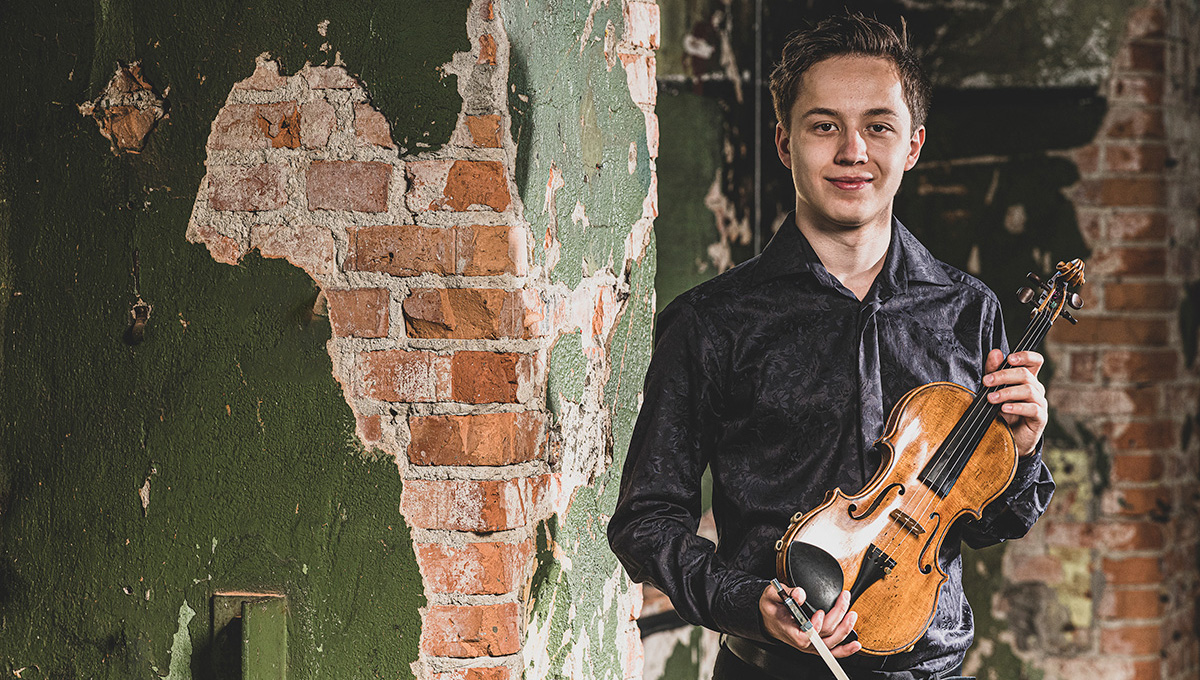
Johan Dalene (violin, above), Nicola Eimer (piano, below)

Wigmore Hall, London
Monday 22 November 2021

Written by Ben Hogwood. Photos by Fredrik Schlyter (Johan Dalene) and Hedley Dindoyal (Nicola Eimer)

This was the first Wigmore Hall recital for talented Swedish violinist Johan Dalene, the BBC New Generation Artist performing a lunchtime concert with British pianist Nicola Eimer. It was a programme matching the music to the bright November sunlight visible through the roof of the hall.

Unfortunately the concert programme did not contain any biographical artist information, which was a shame as Dalene has already achieved a great deal by the age of 21. By no means the least of his achievements is a fine album for BIS Records with Christian Ihle Hadland, Nordic Rhapsody – where he juxtaposes fine works for violin and piano by Grieg, Stenhammar, Sinding, Sibelius and Rautavaara.

The latter composer provided the Notturno e Danza at the centre of today’s programme, an appealing piece for students that is deceptively difficult to get right. Dalene’s tone carried an atmospheric Notturno capturing the composer’s depiction of changing light patterns, and shaded the quick Danza beautifully and with impressive volume.

Before the Rautavaara we heard an excellent performance of Ravel’s second Violin Sonata, as it is now recognised. This work was completed in spite of the composer’s frank admission that he didn’t think violin and piano were a good match – but here they united in a compelling account. This was in spite of the first movement, where both instruments essentially go their own way. The musical material is elusive, worrisome even, but with the clarity of Dalene’s bow strokes, Ravel’s thoughts were never anything less than convincing. Eimer’s attentive piano part pulled the music towards different tonalities, as Ravel would have wished.

The second movement relocated us to New York with bluesy incantations and jazzy rhythms. It fell naturally under Dalene’s spell, with a wide range of colours and shades on display, while Eimer provided beautifully judged punctuation to bring the syncopations to the fore. Only the last movement was able to break free of these sleights of hand, its moto perpetuo brilliantly judged and fearlessly executed, both players brilliant in their virtuosity.

Another sonata formed the third work in the programme. Prokofiev’s Violin Sonata no.2 in D major may be an arrangement, being a re-edit of his Flute Sonata at the request of David Oistrakh in 1944, but it is a most genuine work for the two instruments. Dalene and Eimer gave a sunlit performance, enjoying the melodic abundance Prokofiev lends the violin, but were wary too of the shadowy presence beneath the surface of the scherzo and the slow movement in particular. Dalene’s tone was ideally suited to the occasionally barbed lyricism of the former, while the lyrical slow movement had a sunlit warmth to go with the weather. So, too, did the finale, capping a wonderful performance where the rustic theme stayed in the mind for long after the concert had finished.

As a thoughtful encore Dalene and Eimer included Lili Boulanger’s Nocturne, a starry-eyed diversion of subtle beauty, the harmonic shifts tastefully secured. Both players made a very strong impression throughout the concert, their natural partnership blossoming on the stage. Watch it online if you can!

You can watch this concert on the Wigmore Hall website for the next 28 days – and you can hear the music played by Mischa and Lily on the Spotify playlist below, including Johan’s recording of the Rautavaara:

On record – Peter Cigleris: Dedication – The Clarinet Chamber Music of Ruth Gipps (Somm Recordings)

gipps

Ruth Gipps
The Kelpie of Corrievreckan Op.5b (1939)
Quintet Op.16 (1941)
Rhapsody in E flat major Op.23 (1942)
Clarinet Sonata Op.45 (1955)
Prelude, Op.51 (1958)

Peter Cigleris (clarinet) with Gareth Hulse (oboe); Duncan Honeybourne (piano); Tippett Quartet [John Mills and Jeremy Isaac (violins), Lydia Lowndes-Norcott (viola) Bozidar Vukotic (cello)]

SOMM Recordings SOMMCD0641 [67’37”]

Producer Siva Oke
Engineer Michael Wright

Recorded 1 and 2 November 2020 at Menuhin Hall, Stoke d’Abernon, Surrey

Written by Richard Whitehouse

What’s the story?

SOMM Recordings marks the 100th anniversary of the birth of Ruth Gipps (1921-99) with this collection of her chamber music featuring clarinet, all of which was written with Robert Baker (her husband for 57 years) in mind and all of which here receives its first recordings.

What’s the music like?

A gifted oboist, pianist and conductor, Gipps was an all-round artist whose accomplishment was matched by a feisty temperament (as this writer recalls) laced with bitterness at the lack of recognition latterly accorded her, though nothing of this is audible in the music heard here.

The Rhapsody in E flat for clarinet and string quartet is one of this composer’s most lyrical pieces – its single movement twice alternating ruminative content and trenchant interplay, if without losing sight of the music’s essential poise, for all that a deeper and more ambivalent vein of expression comes to the fore – to be encapsulated by the clarinet cadenza at its close. Inspired by a poem from Charles Mackay’s 1851 collection, The Kelpie of Corrievreckan for clarinet and piano evokes its source in lively and often wryly humorous terms – its capering progress evidently not intent on taking this tale of the ill-fated protagonist unduly seriously.

Most substantial here is the Quintet for oboe, clarinet and string trio. Its four movements open with an Allegro of elegant restraint, whose modally inflected writing denotes allegiance to an English pastoralism prevalent over its deftly wrought and self-effacing course. There follows an Adagio whose calmly methodical progress admits of appealingly wistful emotion, then the Energico injects a welcome degree of wit into proceedings; before the final Allegro returns to more serious matters as it steers this work to a close the more affecting for its understatement.

British music for solo bass clarinet is not abundant, but Gipps’s Prelude is a notable addition to a mainly radical repertoire; its stealthy unfolding informed by an acute sense of continuity across this instrument’s timbral and registral extent, so it unfolds as an unbroken melodic arc. Finally, the Sonata for clarinet and piano – its initial Allegro starting with a Maestoso gesture which has a pervasive influence over what follows. If this opening movement feels relatively impersonal, the Andante must rank among Gipps’s most eloquent in its unforced pensiveness, then the Scherzando abounds in a quizzical humour continued by the final Allegro – its stern Maestoso prefacing music whose limpid asides do not offset the carousing energy at its close.

Does it all work?

Yes, on its own terms. As with many composers who took against the more radical aspects of British cultural policy after 1960, Gipps was inherently a conservative whose music is often less reactionary than often supposed. It certainly provides a stern test of musicianship which the present artists – not least clarinetist Peter Cigleris – meet head-on, in performances that bring out the idiomatic feel of Gipps’s writing for the instrument(s) at hand while conveying the reticent, yet discernible and often appealing personality that comes through in her music.

Is it recommended?

Indeed, not least given detailed and realistic sound, along with informative notes from Robert Matthew-Walker. Hopefully the cycle of Gipps’s symphonies will be completed by Chandos – but, for now, the present release marks her centenary as she would doubtless have wished.

Listen & Buy

You can discover more about this release and listen to clips at the SOMM Recordings website, where you can also purchase the recording. For more information on Ruth Gipps, click here – and for more on Peter Cigerlis, click here. More information on the Gipps symphonies, as recorded by Chandos, can be found here