In Concert – Leila Josefowicz & John Novacek @ Wigmore Hall: Debussy, Szymanowski, Bray & Stravinsky

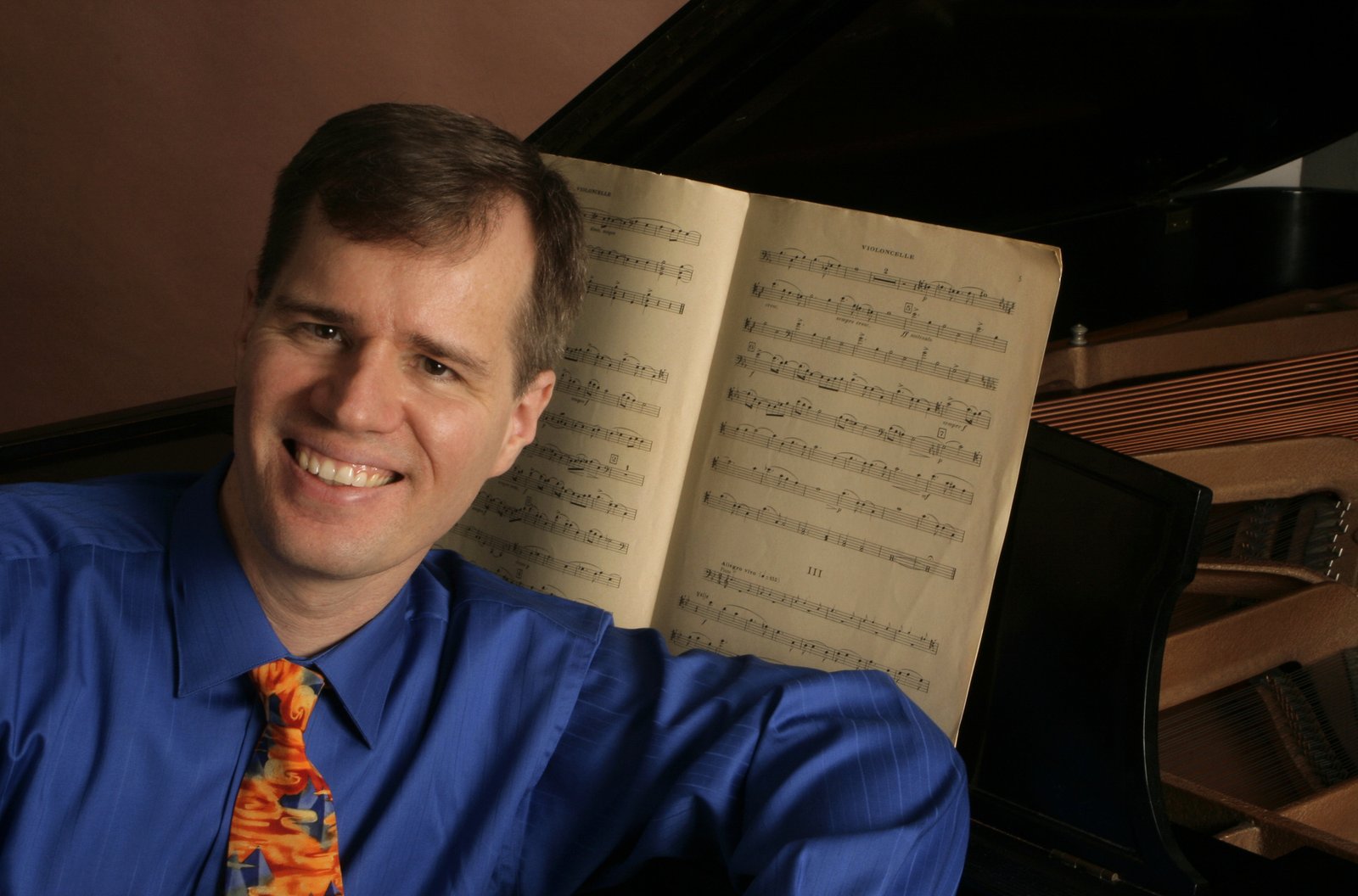
Leila Josefowicz (violin, above), John Novacek (piano, below)

Debussy Violin Sonata in G minor L140 (1916-17)
Szymanowski 3 Myths Op.30 (1915)
Bray Mriya (2023) [Wigmore Hall commission: World premiere]
Stravinsky Divertimento from Le Baiser de la fée (1928, arr. 1934, rev. 1949)

Wigmore Hall, London
Saturday 21 September 2024

Reviewed by Richard Whitehouse

Long among the more adventurous violinists from her generation, this latest Wigmore recital found Leila Josefowicz focussing on music traversing the boundary between Impressionism and neo-Classicism, together with a recent piece such as conveyed a meaningful relevance.

It might not be such a good idea to launch a recital with Debussy’s Violin Sonata, as this last and conceptually most fluid of its composer’s late chamber works is essentially a culmination rather than starting-point. Having rather harried its opening Allegro, Josefowicz brought keen imagination to its Intermède which none the less lacked that fantasy and lightness intended. Most convincing was its finale, the headlong succession of ideas deftly propelled to a payoff not merely decisive but of all-round conclusiveness – whatever Debussy may have intended.

Whereas this piece was admired but initially found relatively few exponents, Szymanowski’s Myths was early recognized as a milestone in its medium and has latterly regained that initial eminence. Josefowicz duly recognized these innovative qualities with an impulsive yet never wayward take on La fontaine d’Arethuse, its capriciousness finding an ideal complement in the simmering emotion and alluring poise of Narcisse – self-aware rather self-regarding as to expression – or increasingly recalcitrant playfulness of Dryades et Pan with its teasingly delayed – even almost avoided – close. Just occasionally, Josefowicz’s snatching at a rhythmic gesture denied the music its high-flown eloquence but, overall, this proved a perceptive and involving account where her interaction with John Novacek’s attentive pianism was absolute.

Those who hear the Szymanowski as a ‘sonata malgré-lui’ might feel likewise about Mriya by Charlotte Bray, which tonight had its first hearing. Its Ukrainian title variously implying ‘dream, vision, ambition and vow’, this four-movement work charted a course of terror but also resolve. The first of these infused its disparate while distinctive ideas with a momentum as merged directly into the feline capering of its successor; after which, a slower movement offered a measure of sustained if hardly serene calm, before the finale once again marshalled its disjunct gestures towards a culmination which was pointedly withheld. A symbol, perhaps, of the Ukrainian people’s struggle as is far from reaching closure let alone victory? Whatever the case, this is absorbing and deeply felt music that received a suitably committed response.

From here to Stravinsky’s Divertimento from The Fairy’s Kiss was some conceptual leap. One of several such adaptations its composer made during its career as a duo-recitalist with Samuel Dushkin, this takes in most of the ballet’s initial two-thirds – the Sinfonia by turns pensive and restive, while the rumbustious Danses suisses was irresistibly despatched. The Scherzo exuded a capering charm and the Pas de Deux moved effortlessly from its soulful Adagio, via nimble Variation, to an initially dextrous then increasingly uproarious Coda.

This recital ended in a wholly different aesthetic world from which it began, but Josefowicz’s acuity could not be gainsaid. ‘Uproarious’ was also the watchword of the encore – Novacek’s Intoxication Rag, arranged by Itzhak Perlman no less and rendered with appropriate abandon.

For more on the Autumn season visit the Wigmore Hall website – and for more on the artists, click on the names Leila Josefowicz and John Novacek

Published post no.2,309 – Sunday 22 September 2024

In Concert – Sean Shibe @ Wigmore Hall: A Celebration of the Guitar

Sean Shibe (guitar)

J.S. Bach Prelude in C minor, BWV999 (c1727)
Barrios Mangoré La Catedral (1921, rev. 1939)
Villa-Lobos Prelude no. 3 in A minor (1940); Études (1929) – no.1 in E minor, no.5 in C major, no.8 in C sharp minor, no.10 in B minor
Barrios Mangoré Barcarola in D major, ‘Julia Florida’ (1938)
Mompou Suite compostelana (1962) – nos. 1, 2, 5 and 6
Martin Quatre pieces brèves (1933)
Adès Forgotten Dances (2023)

Wigmore Hall, London
Thursday 19 September 2023

Reviewed by Richard Whitehouse

Expecting the unexpected has become synonymous with Sean Shibe, who tonight began his season-long residency at Wigmore Hall with this recital which deftly blurred any perceived demarcation between improvised or notated music in a compulsively absorbing programme.

One of a surviving handful of pieces probably written for lute, Bach’s C minor Prelude began proceedings – its elegantly methodical unfolding here rendered with real liquidity by Shibe. It segued seamlessly into La Catedral as is among a relative few of Agustín Barrios Mangoré’s extended compositions: the subdued fervour of (belatedly added) Preludio saudade heading into the hieratic processional of Andante religioso, before the lively yet disquieting motion of Allegro solenne brought this vividly yet understatedly illustrative sequence to its close.

Here, as across this recital, Segovia was a pervasive presence – not least on the guitar output of Heitor Villa-Lobos. From his Five Preludes, Schiebe opted for the Third – a Homage to Bach whose echoing open strings summon an opulence, even majesty, out of all proportion to its length. Then came four of his 12 Études – the intensive arpeggio workout of the First, the stark contrasts between melody and accompaniment of the Fifth, the playful alternation of registers in the Eighth, then rounded off with the exacting rhythmic fluidity of the 10th.

The first half closed with more Barrios – his Júlia Florida a barcarolle of melting tenderness whose allure carried over a second half that commenced with four of the six movements from Federico Mompou’s Suite compostelana. One of the Catalan’s handful of works for other than piano, the distanced evocation of Preludio complemented the austere spirituality of Coral as surely as did the folk-tinged pathos of Canción the ingratiating allure of Muñeira – this latter bringing the Galician environs which had inspired this music into greatest prominence.

Shibe’s including music by Frank Martin was more than welcome in the 50th anniversary of the Swiss composer’s death as has passed largely unnoticed in the UK. His only work for solo guitar, Quatre pieces brèves has been championed by many guitarists in Segovia’s wake and Shibe duly left his mark with his quizzical take on its Prélude, the chaste witfulness of Air then the barely contained emotional impetus of Plainte, before Comme une gigue provided a pointedly ‘contemporary’ vantage on the Baroque dance by turns quixotic and invigorating.

That both Martin and Thomas Adès have written operas on Shakespeare’s The Tempest seems as good a link as any into Forgotten Dances, the latter composer’s first work for guitar. Its six vignettes traverse the restless Overture and Buñuel-influenced speculation of Berceuse, via the Ligetian propulsion of Courante and tenuous repose of Barcarolle, to the cumulatively effusive homage to Berlioz of Carillon de Ville then rather more equable homage to Purcell of Vesper – its allusions emerging, Dowland-like, over what becomes an affecting farewell.

An intriguingly varied recital duly afforded focus not least by the calmly assured presence of Shibe – his appearance this evening redolent of the long-gone, much-missed Billy Mackenzie. A limpid rendering of an as yet unidentified encore provided a brief if wholly appropriate envoi.

To read more about Sean Shibe’s residency at the hall, visit the Wigmore Hall website – and click here to visit the guitarist’s own website

In concert – Dawn Landes @ Komedia (Studio), Brighton

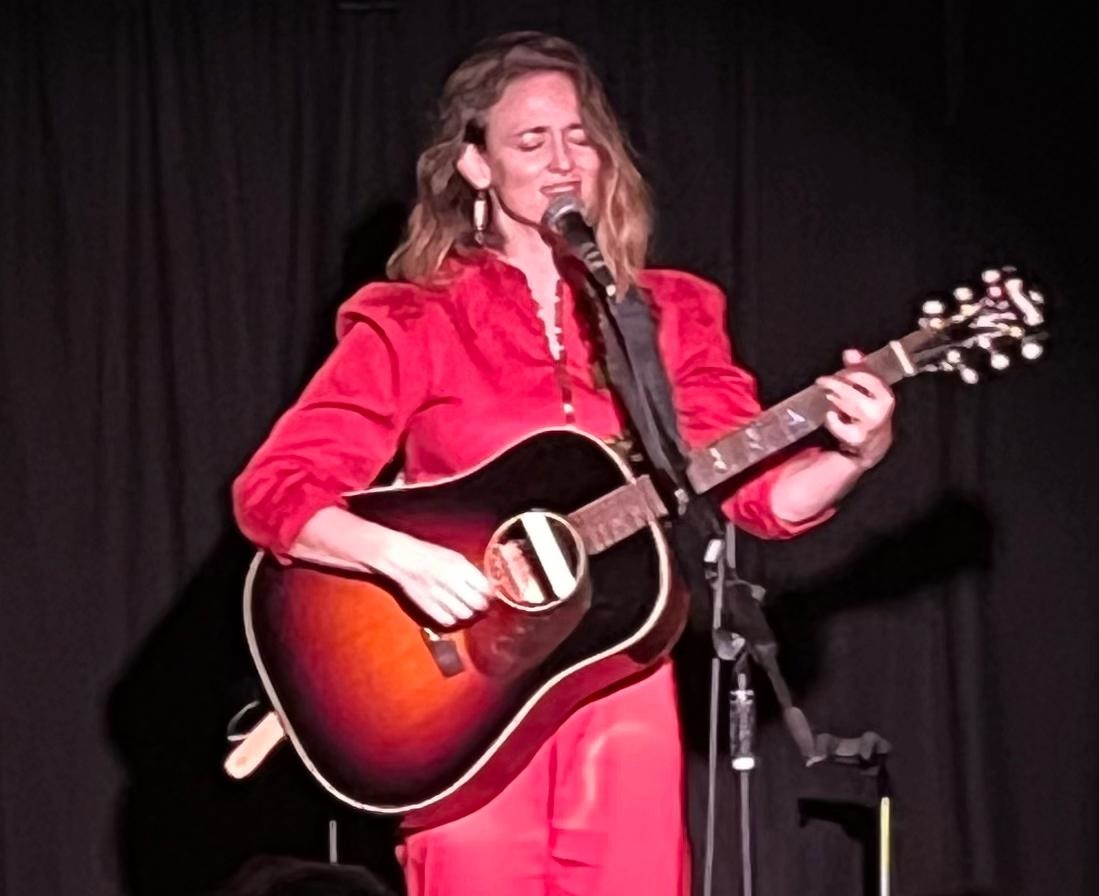
Dawn Landes (vocals, guitar) @ Komedia (Studio), Brighton, 8 September 2024

by John Earls. Photo (c) John Earls

Dawn LandesThe Liberated Woman’s Songbook is a remarkable album and project. It is Landes’ re-imagining of the book of the same title, originally published by folk singer, guitar teacher and author Jerry Silverman in 1971.

The night before this performance it was the subject of a major concert at London Barbican’s Milton Hall, where Landes was joined a number of special guests including folk legend Peggy Seeger and poet Jackie Kay.

Tonight it was a central (but by no means exclusive) feature of this solo acoustic set at the much smaller Studio space of Brighton’s Komedia. Telling the stories and highlighting the voices of women through songs spanning over 200 years, this section of the evening had the feel of the best kind of musical history lesson.

Hard is the Fortune of All Womankind, a traditional ballad from 1830, is the earliest of the collection  and was deeply affecting, as was The Housewife’s Lament (1866), whose lyrics come from the diary of a woman named Sarah A. Price in Ottawa, Illinois. She had seven children, all of whom died in her lifetime.

Bread and Roses (1912) was one of the songs for which Landes was ably joined by Sylvie Lewis. Along with The Mill Mother’s Lament (1929) – “Let’s stand together workers and have a union here”  – and Florence Reece’s Which Side Are You On (1931), it emphasised that many of these songs are not just based on women’s liberation but workers’ and trade union rights also. This was apposite given that the annual meeting of the Trades Union Congress was taking place just up the road (in which I declare an interest as an attendee).

This may all sound rather earnest, but whilst the seriousness of the issues was never diminished, there was plenty of humour throughout the evening. This was helpfully illustrated by this section’s ending with Meredith Tax’s adaptation of the children’s song There was a Young Woman Who Swallowed a Lie (1970). These songs and these women still need to be heard.

This Liberated Woman’s section of the performance was bookended by songs from some of Landes’ other albums. The show opened with Bluebird, from the album of the same name celebrating its 10th anniversary, which set the tone perfectly. From the start it was clear this was going to be intimate, beautiful and ultimately joyous.

Heel Toe was captivating and smoky, Wind and Rain – “Hands up if you’ve had enough”was fabulous, and there was an absolutely cracking version of Why They Name Whiskey After Men.

Dawn Landes has a gorgeous voice. The singing was clear and expressive, the guitar plucking deft and there were even some sparkling golden boots (“glitter makes things better!”) which were removed at times for some barefoot stomping or appended with tambourine.

All in all one genuinely got the sense that after the excitement of the previous night’s extravaganza this smaller club outing was a back to basics affair. Landes seemed to enjoy it and absolutely held the room.

John Earls is Director of Research at Unite the Union and tweets / updates his ‘X’ content at @john_earls

Published post no.2,296 – Tuesday 10 September 2024

In concert – Chaka Khan’s Meltdown: Bruce Hornsby @ Royal Festival Hall

Bruce Hornsby (vocals, piano), Olivia Chaney (vocals, harmonium)]

Royal Festival Hall, London
Tuesday 18 June 2024

Reviewed by Ben Hogwood Photos (c) Ben Hogwood

Bruce Hornsby likes to challenge his audience. When I was fortunate enough to interview him for musicOMH, he went into some detail – with great feeling – about how the gig experience should not be a mere reproduction of his recorded output.

In reality, the opposite is the truth. While he presents his best-known material, he coats it in new clothes, pairing it in some cases with modern classical piano works. Ligeti, Webern, Elliott Carter and Schoenberg all make themselves known in the course of this solo piano set, their chromatic compositions a direct contrast to the pop songs with which they are juxtaposed.

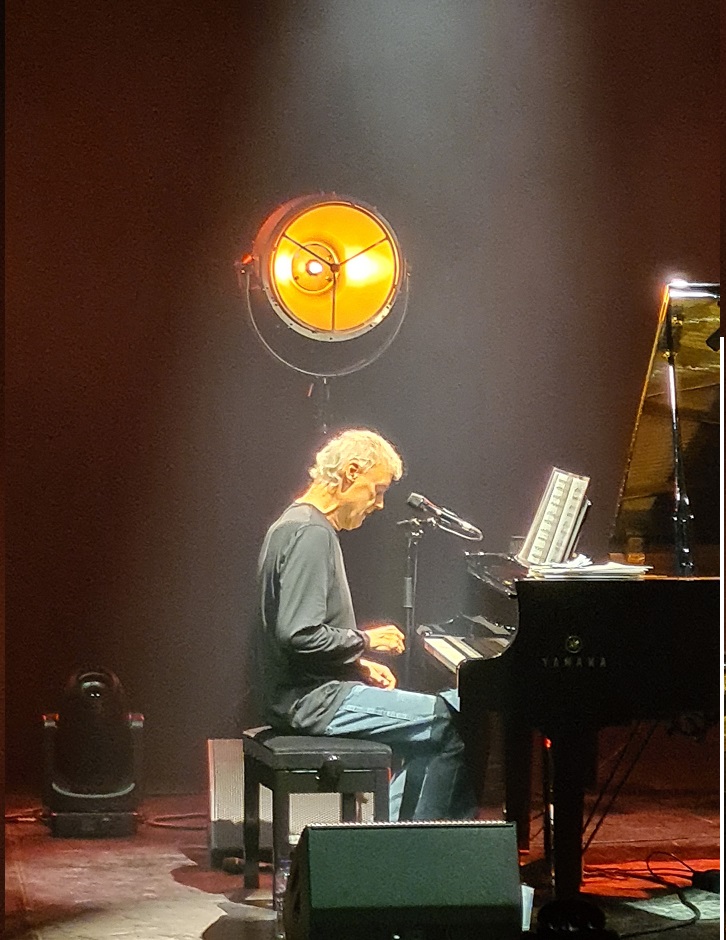
Hornsby is a natural raconteur in between, his stories told with a glint in the eye but also with a good deal of meaning and emotion. The piano is his closest relative, for sure – and the feeling is that not a day goes by without Hornsby spending at least a few hours seated at the keyboard. Watching this gig is akin to eavesdropping on a practice session in the room next door. Sure, there are some rough edges, but they are all part of the charm – moments where the voice has to travel higher than it might normally go, or where there are too many notes to fit into the available meter at the end of a particularly fulsome improvisation.

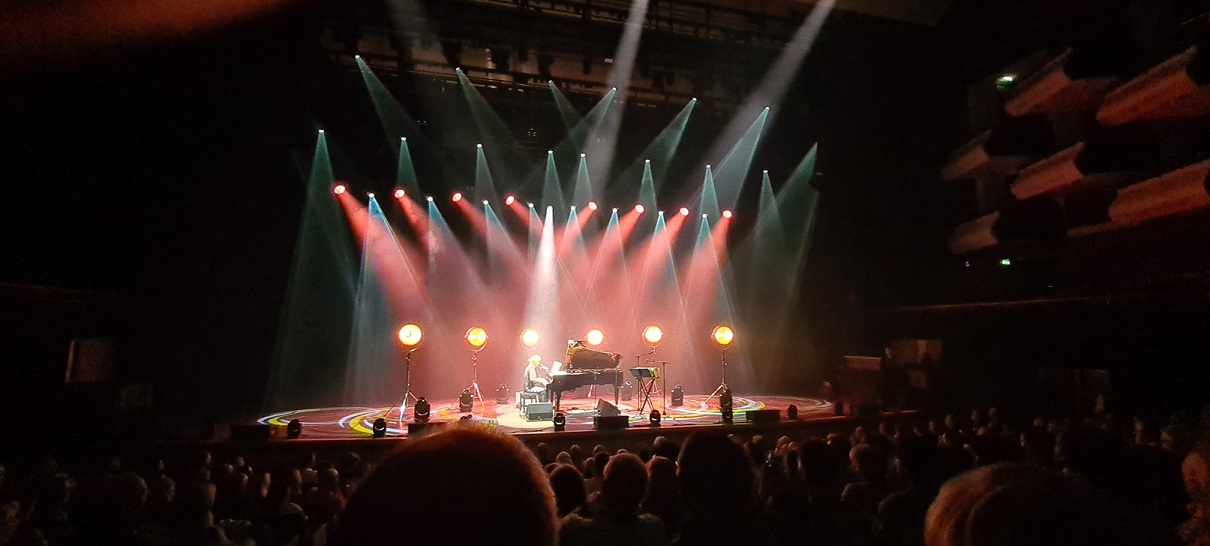
For these performances are very much in the moment, and for that the audience is grateful. The Royal Festival Hall stage is an oversized living room, the audience effectively sat around the fire as the host tells his musical stories. The narration is kept brief, as the generous host ‘only has 90 minutes’ in which to fit the music he wants to play.

Ten minutes in and we have already had our money’s worth, in the form of elegant versions of Days Ahead and Soon Enough. In these songs Hornsby uses the piano as a miniature orchestra, creating colours through the unusual density of the left-hand part but giving us memorable melodies and lyrics too. The voice is in good shape, the piano even more so.

Cast-Off is the first to showcase his more recent musical directions, the co-write with Bon Iver’s Justin Vernon a humourous tale of a man addicted to break-ups but one with a lingering sadness. The melodic profile is now angular, but the tunes still make sense, while the harmonies strain at the leash leaving their audience behind.

At times it seems Hornsby is determined to challenge and even rile the audience, with provocative one-liners and musical about-turns. The Way It Is now comes without its principal riff – but it still reaches deep into the soul, a moment for the audience to think and check themselves, assess their life direction even. It remains a special song, one of the ‘80s best, and the mark of a good song is that it can work in several guises. The same can be said for The End Of The Innocence, a Hornsby composition for Don Henley, which by its end inhabits the air of a Brahms intermezzo.

The co-writes are a source of constant surprise and wonder. There are songs written with Chaka Khan (the moving Love Me Still), performed with Sting, Eric Clapton and Bruce Springsteen (Halcyon Days), or with Elton John (Dreamland), where the piano line is recognisably the work of Hornsby.

He sings affectionately of his son’s dislike of school (Hooray For Tom) and ventures into ‘the curiously American genre of the murder ballad’ for the Pat Metheny collaboration Country Doctor, where wondrous things happen beneath the floorboards – aka the piano’s lowest register. This is the song with the most rhythmic drive.

At two points in his set Hornsby is joined by fellow singer-songwriter Olivia Chaney, who also plays harmonium. Their version of The PoguesFairytale In New York is on the quaint side, and feels under rehearsed, but works thanks to the musicianship on show, even if the harmonium is low in the mix. Balance is restored for Mandolin Rain, one of the best songs on show, where Hornsby’s deadpan emotional guard almost slips.

He is a true entertainer, able to get the crowd eating out of his hand while they marvel at the skill and guile of a performer who has not yet been fully appreciated in his time. Fifteen albums into his career, Hornsby is more adventurous on his approach to 70 than he ever has been, set to challenge his audience even further with time. More power to his elbow, for a great pianist such as him deserves this stage on a much more regular basis. The crowd, discussing a memorable night, would surely agree.

Published post no.2,214 – Wednesday 19 June 2024

In concert – Summer Music in City Churches: Tier3 Trio @ St Giles Cripplegate

Tier3 Trio [Joseph Wolfe (violin), Jonathan Ayling (cello), Daniel Grimwood (piano)]

Liszt arr. Saint-Saëns Orpheus
Tchaikovsky arr. Grimwood Andante non troppo (second movement of Piano Concerto no.2 in G major Op.44) (1880)
Arensky Piano Trio no.1 in D minor Op.32 (1894)

St Giles Cripplegate, London
Thursday 13 June 2024, 1pm

Reviewed by Ben Hogwood

‘Love’s Labours’ is the title of this year’s Summer Music in City Churches festival, based opposite the Barbican Hall in St Giles Cripplegate. The ten day-long enterprise is proving ample consolation for the much-missed City of London Festival, which once captivated audiences in the Square Mile for three weeks and offers music of equal range and imagination.

For the second year in succession the Tier3 Trio visited for a lunchtime recital, following up last year’s tempestuous Tchaikovsky Piano Trio with an attractive programme subtitled From Russia with Love. They began with a curiosity, playing Saint-Saëns’ little-known arrangement of Liszt’s symphonic poem Orpheus for piano trio. A highly effective transcription, it retained its dramatic thread in this fine performance, notable for its attention to detail and well-balanced lines when reproducing Liszt’s slow-burning music. Pianist Daniel Grimwood successfully evoked Orpheus’ lyre, while Jonathan Ayling’s burnished cello sound probed in counterpoint to Joseph Wolfe’s violin.

Tier3 was formed during lockdown, and in the same period when he was performing Tchaikovsky’s Piano Concerto no.2 in Germany, Grimwood realised the suitability of the work’s slow movement for trio. He rightly complemented ‘the extent to which Tchaikovsky was an experimenter in form’, a trait found in many works but at its inventive peak in the second concerto, whose slow movement is in effect a piano trio with orchestra. Here the arrangement was just right – balanced, elegant and fiercely dramatic towards the end. Clarity of line was secured through sensitive pedalling from Grimwood, the trio using the resonant acoustic to their advantage, while the individual cadenzas were brilliantly played.

These two notable curiosities linked beautifully into one of the best-known works of Anton Arensky, his Piano Trio no.1 in D minor. Arensky is not a well-known composer, fulfilling in part an unkind prophecy from his teacher, Rimsky-Korsakov. However that does not mean his music is without merit – far from it, as in his brief life of 45 years he wrote two symphonies, four orchestral suites, a substantial output of piano and high quality chamber music, of which the first piano trio is the pick.

Dedicated to the cellist Karl Davidov, it is equal parts elegy, drama and ballet – with a powerful first movement setting the tone. The balletic second movement Scherzo demands much of the piano, but Grimwood was its equal, sparkling passagework from the right hand dressed with twinkling figures for cello and piano. The emotional centre of the trio was in the slow movement, with a heartfelt tribute to Davidov in Ayling’s first solo, while the finale rounded everything up in a highly satisfying payoff, a return to the first movement’s profound theme capped with an emphatic closing section.

These were very fine performances from a trio at the top of their game, navigating the resonant acoustic of St Giles with power and precision. On this evidence, Rimsky-Korsakov would have had to eat his words!

You can read more about Summer Music in City Churches at the festival website – and you can listen to a Spotify playlist below, containing the music heard in this concert – with the original version of the Tchaikovsky:

Published post no.2,209 – Friday 14 June 2024