In concert – Ian Bostridge, CBSO / Gergely Madaras: Thorvaldsdottir, Britten & Tchaikovsky

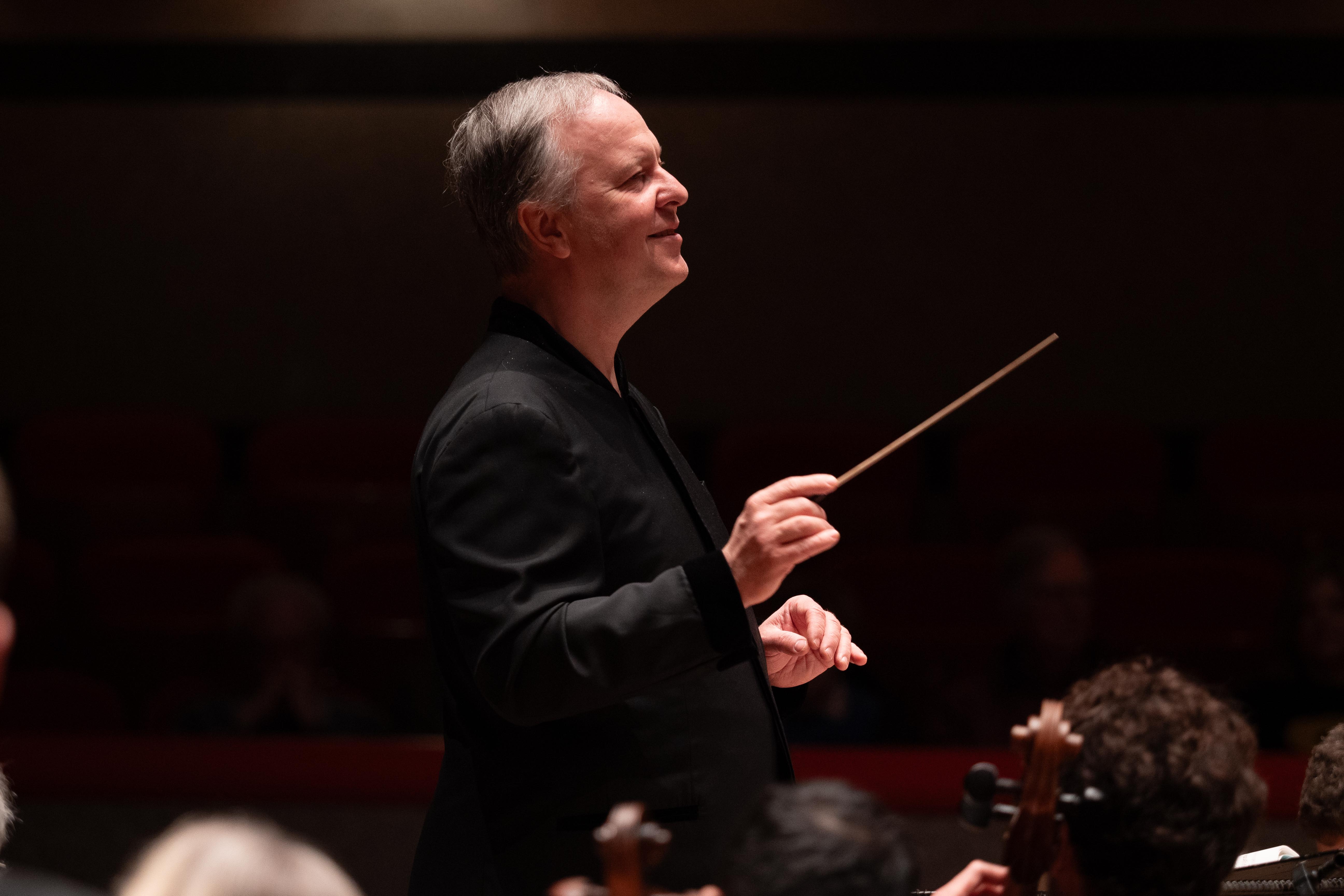
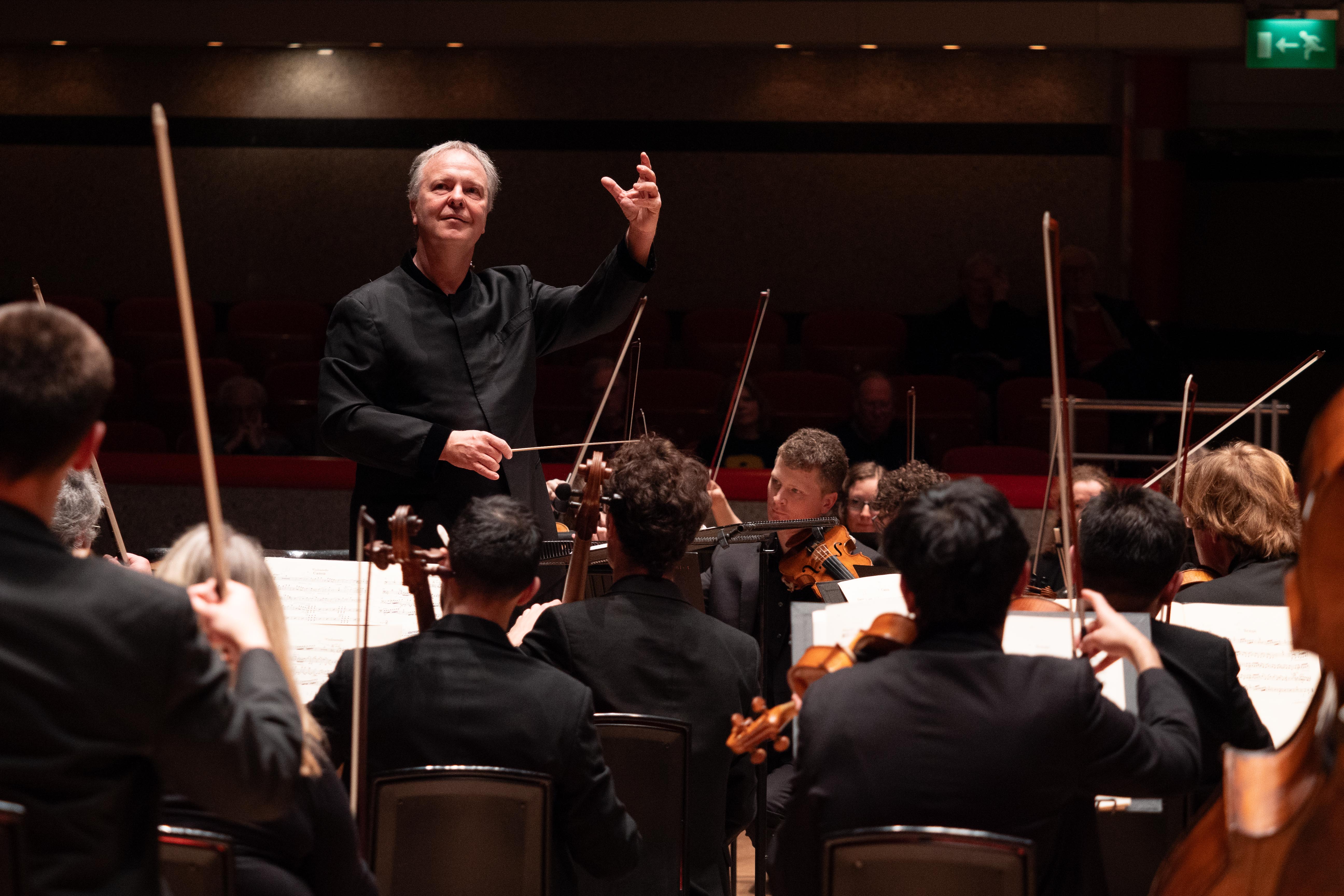
Ian Bostridge (tenor), City of Birmingham Symphony Orchestra / Gergely Madaras (above)

Thorvaldsdottir Dreaming (2008)
Britten Les Illuminations Op.18 (1939)
Tchaikovsky Symphony no.1 in G minor Op.13 ‘Winter Daydreams’ (1866, rev. 1883)

Symphony Hall, Birmingham
Wednesday 17 April 2024

Reviewed by Richard Whitehouse Picture of Gergely Madaras (c) Hannah Fathers

This evening’s concert with the City of Birmingham Symphony Orchestra comprised what was an unusually cohesive programme centred on the concept of ‘dreams’, assembled and directed with consistent empathy and insight by the Hungarian conductor Gergely Madaras.

Dreaming was the title as well as the watchword of the piece by Anna Thorvaldsdottir which opened proceedings. Her first major work for orchestra is already characteristic in its eliding between evocations arcadian and desolate, with an undeniable sense of the ominous coming through as the final stages take on an extemporized quality; musicians gradually exiting the sonic frame with just the capricious asides of a cellist remaining. Eduardo Vassallo made the most of this brief spotlight, and the CBSO made its collective presence felt to striking effect.
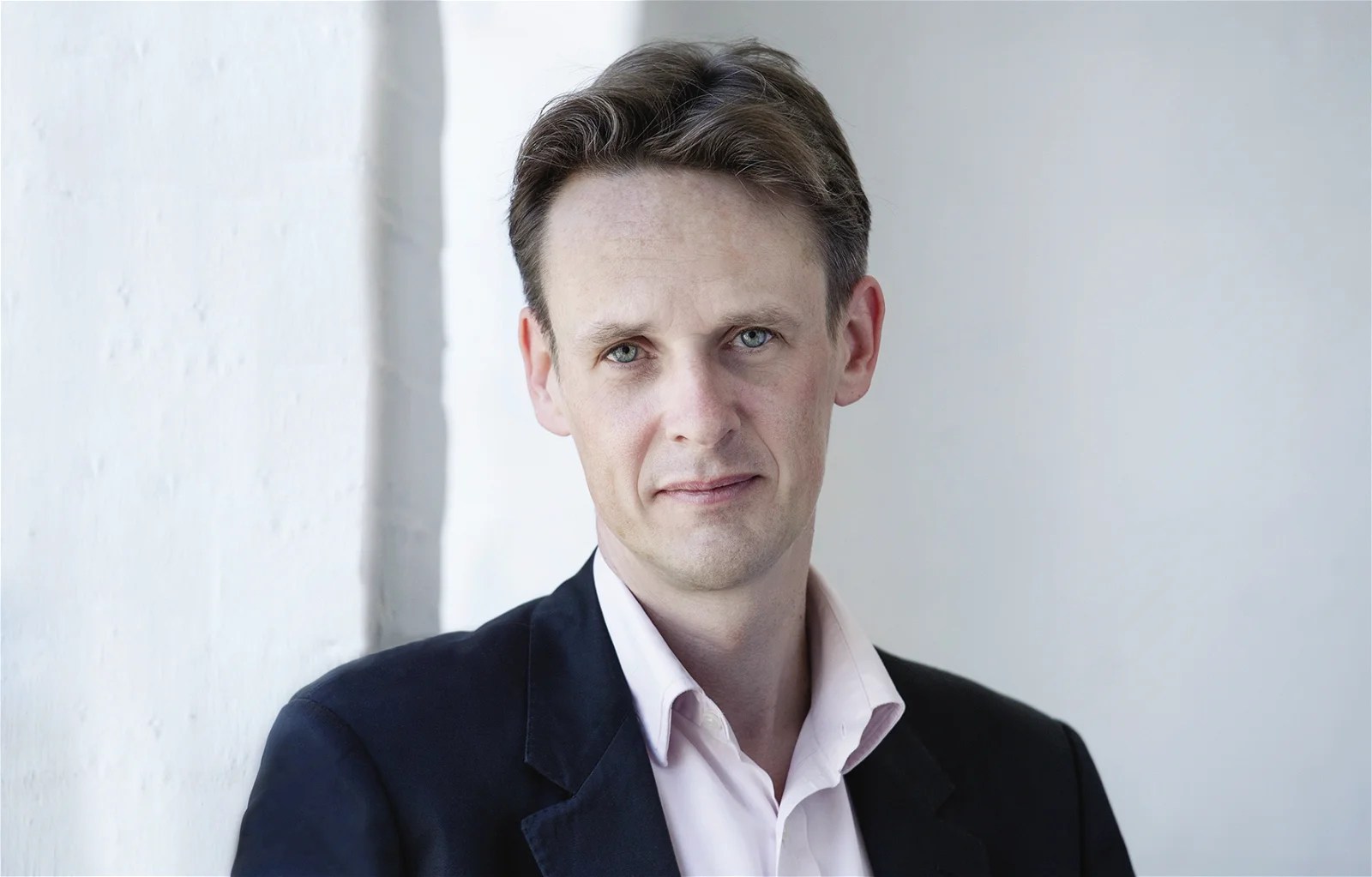
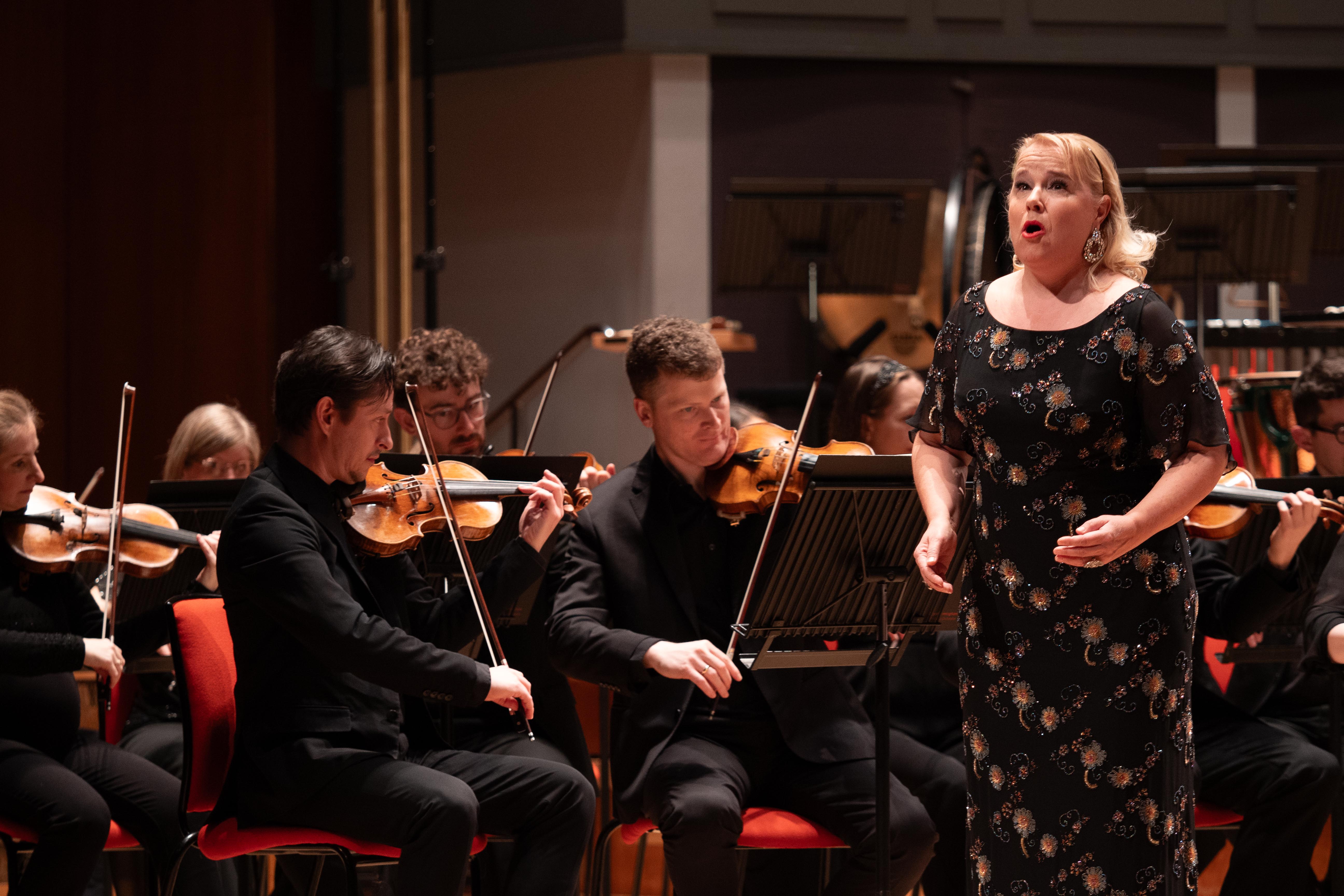
Arthur Rimbaud’s brief but meteoric spell as a poet in the early 1870s had belated if decisive impact on numerous composers and none more than Britten, his song-cycle Les Illuminations among his finest achievements in any medium. Having sung it many times, Ian Bostridge (above) still manages to point up the growing anticipation of ‘Fanfare’ or breathless excitement of Villes; his wide-eyed wonder in Phrase then graceful musing in Antique matched by the resolute irony of Marine or glancing wit of Royauté. Madaras drew languorous playing from the CBSO strings in Interlude and brought out the ecstatic longing of Being Beauteous, before the fervid imagining of Parade brought this sequence full circle. It remained for Départ to offer a fulfilled exit as poet – and composer – resignedly bids farewell to the realm of dreams.

This gripping account should not have needed Bostridge to address members of the audience after the fourth song, asking they refrain taking pictures on their mobiles while the music was in progress. An overhaul of the management’s current laissez-faire approach might be in order.

After the interval, a comparatively rare outing for Tchaikovsky’s First Symphony. The ‘Winter Daydreams’ of its subtitle implies an unforced though rarely contrary take on formal precepts, as in an opening movement (oddly marked Allegro tranquillo) whose often portentous pauses were well integrated by Madaras into the cumulative symphonic flow. The CBSO woodwind came into own with the Adagio – its oboe melody among its composer’s most affecting, and not least when it returns at the movement’s climax in a mood of expansive if fateful grandeur.

Partly drawn from an earlier piano sonata, the Scherzo exudes a pert animation that Madaras judged to a nicety, as he did the wistful ruminations of its trio. Much the hardest movement to make cohere, the Finale unfolded persuasively from its sombre introduction to a celebratory Allegro replete with fugal episodes; the ensuing build-up (its effect not lost on Shostakovich) to the resounding restatement of its main theme duly capped by an apotheosis whose overkill was (rightly) kept well within limits, thereby setting the seal on this persuasive performance. For imaginative programming and convincing execution, Madaras is at the forefront among conductors of his generation – his rapport with the CBSO evident throughout. This should be equally true when Markus Stenz returns next week for a pairing of Schumann and Bruckner.

Click on the link to read more on the current CBSO concert season, and on the names for more on tenor Ian Bostridge and conductor Gergely Madaras. Click here for an interview Arcana conducted with composer Anna Thorvaldsdottir in 2023

Published post no.2,153 – Friday 19 April 2024

In concert – Simon Desbruslais, English Symphony Orchestra / Kenneth Woods: Sibelius, Sawyers, Dvořák, Fribbins & Elgar

Simon Desbruslais (trumpet), English Symphony Orchestra / Kenneth Woods

Sibelius Rakastava Op.14 (1893, arr. 1912)
Sawyers Concerto for Trumpet, Strings and Timpani (2015)
Dvořák Notturno in B major Op.40 (1870, arr. 1883)
Fribbins Soliloquies (2012, arr. 2017)
Elgar Introduction and Allegro for strings Op.47 (1905)

Hall One, Kings Place, London
Sunday 15 April 2024

Reviewed by Richard Whitehouse

Concerts by the English Symphony Orchestra in the London Chamber Music Society’s season are always a worthwhile fixture and this early-evening event, in its mixing established classics with contemporary pieces, demonstrated the stylistic range and sympathies of this ensemble.

A pity that Sibelius’s Rakastava has never been taken up by many British conductors – John Barbirolli and Sir Colin Davis excepted – as this extensive reworking for strings and timpani of an early choral work should be a staple of its repertoire. Kenneth Woods duly brought out the wistful poise of The Lover, and if the stealthiness which underpins The Way of the Lover seemed just a little tentative, the bittersweet pathos that permeates Good evening, Farewell then came through unabated in what is as moving a leave-taking as its composer ever penned.

The music of Philip Sawyers has been a constant feature of the ESO’s programming this past decade, and his Trumpet Concerto more than deserved revival. The outward Classicism of its formal trajectory should not belie the deftness by which Sawyers modifies the sonata design of its opening Allegro, the impetus and reflectiveness of its main themes finding accord prior to a trenchant cadenza with timpani at the fore, or a central Andante that exuded an emotional breadth and fervour in advance of the excellent recording by these artists. Among the leading trumpeters of his generation, Simon Desbruslais – placed high to the rear of the auditorium, to potent effect – was wholly unfazed by its demands; nor those of a final Allegro in which more reflective elements leaven the initial energy, only to be outdone in the virtuosic closing bars.

Next, a welcome hearing for the Notturno that Dvořák salvaged from an early (and reckless) quartet. Its relative swiftness here recalled its intermediate reworking as an intermezzo in the second of his string quintets, so emphasizing its appealing lilt over any more ethereal quality.

Desbrulais (above) returned after a brief hiatus for Soliloquies by Peter Fribbins. A composer as adept on a symphonic as on a miniature scale, these brief if affecting pieces draw on three earlier songs – the recasting of whose vocal line encourages the soloist to an eloquence that, after the relative restraint of the initial Adagio and central Tranquillo, comes to the fore in a final Adagio where evocation takes on an almost cinematic aura. With impressive concertos for piano and violin to his credit, Fribbins ought to consider a full-length work for trumpet.

Elgar’s Introduction and Allegro has not unexpectedly been key to the ESO’s repertoire since its founding some 45 years ago, and this performance did not disappoint. Most admirable was the variety and depth of string tone that Woods (a one-time professional cellist) secured from only 19 players, so ensuring a vitality and impact in the more animated sections together with the requisite delicacy in those passages where the composer’s ruminative mood is uppermost. Both aspects were brought into thrilling accord at the close of the powerfully projected coda.

Beforehand, Woods spoke of the changing nature of commissions and the current difficulties in securing the necessary funding. This season has not been easy for the ESO though, on the basis of this programme, these players are commendably taking it all in their collective stride.

Click on the link to read more on English Symphony Orchestra, and on the names for more on their conductor Kenneth Woods, and trumpeter Simon Desbruslais. Click on the names for more on the new composers featured, Philip Sawyers and Peter Fribbins

Published post no.2,150 – Tuesday 16 April 2024

In concert – Seong-Jin Cho, London Philharmonic Orchestra / Edward Gardner: Wagner, Beethoven & Tippett

Seong-Jin Cho (piano), London Philharmonic Orchestra / Edward Gardner

Wagner Parsifal – Prelude to Act One (1878)
Beethoven Piano Concerto no.4 in G major Op.58 (1805-6)
Tippett Symphony no. 2 (1956-7)

Symphony Hall, Birmingham
Wednesday 10 April 2024

Reviewed by Richard Whitehouse

Although the London Philharmonic Orchestra’s ongoing season might not have been among its most enterprising, this evening’s concert confirmed how Edward Gardner is influencing both this orchestra’s programmes and its approach to standard repertoire as well as modern classics.

Beginning with the Prelude from Wagner’s Parsifal is certainly playing for high stakes and, while it afforded no revelations, this performance seemed nothing if not aware of the piece’s searching grandeur where the placing of motifs and those silences between them is crucial to its overall cohesion. A pity, perhaps, that Gardner opted for the ‘concert ending’ in which the close of the first act is laminated onto what went before instead of merely allowing the music to remain in expectancy, but this detracted only slightly from the majesty of what was heard.

Beethoven’s Fourth Piano Concerto then provided a perfect foil, not least in a performance so attentive to the interplay between soloist and orchestra. It helped that Seong-Jin Cho, winner of the Chopin International Competition in 2015, had an innate feeling for that ‘give and take’ necessary in this most integrated of the cycle; his fastidious while never uninvolving pianism heard to advantage over an initial movement where gradual evolution was uppermost, though his take on Beethoven’s earlier and less capricious cadenza was not lacking virtuosity. He and Gardner were at one in conveying the elemental call-and-response of the Andante, a brief but profound entry into a final Rondo whose vivacity was judiciously balanced with a ruminative poise, where lower woodwinds and strings emerged at the fore prior to the exhilarating close.

Some 66 years following its problematic premiere (restarted after a collapse of ensemble just minutes in), Tippett’s Second Symphony now enjoys regular revival though it could hardly be said to play itself. A keen advocate of this composer (witness his acclaimed recording of The Midsummer Marriage), Gardner paced the opening Allegro unerringly – pointing up contrast between its vigorous and yielding themes, while securing the requisite impetus in its lengthy development then a surging energy in its coda. Punctuated by Paul Beniston’s superb trumpet playing, the Adagio was almost as fine even if a slower underlying tempo might have brought even more depth to some of Tippett’s most evocative and spellbinding music; not least during its central build-up in the strings to a climax whose stark curtailing feels more than prescient.

Reservations as such centred on the Presto – undeniably well articulated in terms of rhythmic precision, while lacking the swiftness or velocity for its obsessive interplay and its Dionysiac culmination really to hit home. By contrast, the final Allegro was far from the anti-climax it can seem. Gardner had its measure from the jazzy introduction, via an inventive sequence of variations then sensuously descending melody on strings against shimmering woodwinds, to those cumulative ‘gestures of farewell’ that ended this performance in ecstatic ambivalence.

If not definitive, this was certainly an absorbing and memorable account as will hopefully be made available on the LPO’s own label (the concert having been broadcast live on Radio 3): one that rounded off what proved to be a judiciously planned and finely executed programme.

Click on the link to read more on the current LPO concert season, and on the names for more on pianist Seong-Jin Cho, conductor Edward Gardner and a website devoted to composer Sir Michael Tippett. The LPO’s new recording of The Midsummer Marriage can be found here

Published post no.2,148 – Sunday 14 April 2024

In concert – Stewart Goodyear, CBSO / Ilan Volkov: Ives, Zappa, Lewis & Gershwin

Stewart Goodyear (piano), City of Birmingham Symphony Orchestra / Ilan Volkov (above)

Ives Three Places in New England (1911-14, rev. 1929)
Zappa Bob in Dacron and Sad Jane (1982-3)
Lewis Memex (2014)
Gershwin orch. Grofé Rhapsody in Blue (1924, rev. 1942)

Symphony Hall, Birmingham
Wednesday 27 March 2024

Reviewed by Richard Whitehouse

Ilan Volkov is always a welcome presence on the Symphony Hall podium, and this evening he conducted the City of Birmingham Symphony Orchestra in a fascinating programme of works by American composers – three of them established in music notably removed from classical.

The concert was framed by what have now become repertoire pieces, but Ives’s Three Places in New England had to wait over half a century to be accorded this status. Using what sounded to be the most recent edition, Volkov stressed its late-Romantic impulsiveness and rhetorical eloquence, though some over-emphatic pauses or phrasing slightly undersold the cumulative majesty of The Saint Gaudens and coursing energy of Putnam’s Camp – which latter still teetered (rightly) on chaos at its close. If the build-up in The Housatonic at Stockbridge felt unduly precipitate, Rachel Pankhurst’s rendering of its cor anglais melody had ideal pathos.

The three decades since Frank Zappa’s untimely death have brought into focus his sheer range of musical preoccupations, though his pair of early 1980s albums with the London Symphony Orchestra made plain that being one of rock music’s finest guitarists and leading provocateurs was never enough. Despite their linkage via a ballet with its somewhat dubious scenario, Bob in Dacron and Sad Jane are individual entities and their respective two movements underline Zappa’s concern for musical and expressive diversity – whether in the reckless overkill of the male protagonist or halting fatalism of the female. Volkov secured dedicated playing from the CBSO as brought out Zappa’s debt to ‘third stream’ jazz as much as his modernist forebears.

George Lewis is another figure whose creativity ranges over multiple media – not least that of the orchestra which, thanks not least to Volkov’s advocacy, has gained some familiarity in the UK. Its title referring to a theoretical device for establishing connections across an otherwise unregulated body of information, Memex is typical of the composer through its complexity of textures which affords a heady virtuosity but also a measure of subtlety and inwardness, not least in those final stages when the earlier volatility gradually coalesces into something akin to resolution; as if all that information was, if not dispersed, at least finding discipline. Such, at least, was the impression left by this committed reading of a striking and absorbing piece.

It might have been a conceptual leap too far from here to Gershwin’s galvanizing of the ‘jazz age’ aesthetic almost a century earlier, though Rhapsody in Blue has lost relatively little of its edge during the interim – especially when Stewart Goodyear projected the steely spontaneity of its solo part with such gusto. Admittedly the large orchestral forces (a feature of each work heard tonight) lacked a degree of co-ordination in tutti sections, but Volkov was at one with his pianist in conveying the breezy and often brittle excitement of music which sounded as   if evolving in real-time – not least the final stages that emerged as a high-octane apotheosis.

No little excitement, then, was generated over the course of this performance as of this concert overall: just the sort of event the CBSO should be putting on each season, which latter would certainly be the poorer were artists such as Volkov not encouraged to follow their convictions.

Click on the link to read more on the current CBSO concert season, and on the names for more on pianist Stewart Goodyear, conductor Ilan Volkov and composers Frank Zappa and George Lewis.

Published post no.2,133 – Saturday 30 March 2024

In concert – Anu Komsi, CBSO / Sakari Oramo: Sibelius Tempest Suite & Sypmhony no.7; Richard Strauss & Merikanto

Anu Komsi (soprano), City of Birmingham Symphony Orchestra / Sakari Oramo (above)

Sibelius The Tempest (1925-6) – Suite no.1 Op.109/ 2
Richard Strauss Vier letzte Lieder, AV150 (1948)
Merikanto Ekho (1922)
Sibelius Symphony no.7 in C major Op. 105 (1923-4)

Symphony Hall, Birmingham
Wednesday 28 February 2024

Reviewed by Richard Whitehouse Pictures (c) Hannah Blake-Fathers

Could it really be 15 years since Sakari Oramo last conducted the orchestra of which he was music director for a decade? Time has passed, but his rapport with the City of Birmingham Symphony Orchestra was evident throughout what proved a well-planned and finely executed concert.

Sibelius featured prominently during Oramo’s tenure, with recorded and live cycles of the symphonies, so it was natural his music frame this programme. His music for The Tempest is the most diverse of his theatre works – the First Suite drawn from this lavish score opening with a searing evocation of The Oak Tree, before heading into a characterful Humoreske then Caliban’s Song with its telling bizarrerie. The Harvesters reminded of Sibelius’s gift for ‘light music’, as too the animated Canon and insinuating Scene, to which the plangent Berceuse then ominous Interlude made for startling contrast. A truncated version of The Tempest music that provided the prelude followed on with due seamlessness – its teetering on the metaphorical edge brought up abruptly if convincingly in this gripping performance.

Anu Komsi (above) then joined the orchestra for Richard Strauss’s Four Last Songs – a sequence which often gains emotional gravitas as it proceeds, though a slight edginess in Frühling gave it greater expressive ambivalence prior to the fatalism of September – the most perfectly realized of these songs. The growing rapture of Beim Schlafengehen featured a poised violin solo from Eugene Tzikindelean, then Komsi gave of her eloquent best in Im Abendrot – its euphonious postlude accorded suitably spacious treatment by Oramo as this evanesces towards eternity.

Komsi returned after the interval with what must have been a first hearing in Birmingham for Ekho, a short but arresting scena by Finnish composer Aarre Merikanto. Written just after his opera Juha, at the start of his most innovative period, this draws on the example of Sibelius’s Luonnotar along with the post-Impressionism of Koechlin and Roussel. Its intricately detailed textures complement a vocal line as virtuosic technically as it is audacious expressively, one with which Komsi was in her element as this music heads almost intuitively to a furtive close.

Fascinating to recall while Merikanto was pursuing so fractured a musical discourse, Sibelius was working towards his most integrated statement. Oramo has given many performances of the Seventh Symphony, but the present one felt exceptional in the ease and inevitability of its formal follow-through. The eliding from one section to the next was realized with a rightness which, as with the motivic constituents from which this work emerges, never drew attention to itself other than during moments of greatest expressive focus – notably those appearances of the trombone theme which ensure unity, even when the music retreats from its emotional apex into a coda not so much final as immovable. Nor was this achieved through conscious interpretation, Oramo setting a course that allowed the musicians simply to play the music.

This impressive performance rounded off a no less impressive evening. Before the last work, Oramo spoke about the significance his CBSO tenure had for his conducting and his regret this ‘reunion’ had taken so long. Hopefully his next appearance will not be so long in coming.

Click on the link to read more on the current CBSO concert season, and on the names for more on soprano Anu Komsi and conductor Sakari Oramo.

Published post no.2,106 – Sunday 3 March 2024