In concert – Seong-Jin Cho, London Philharmonic Orchestra / Edward Gardner: Wagner, Beethoven & Tippett

Seong-Jin Cho (piano), London Philharmonic Orchestra / Edward Gardner

Wagner Parsifal – Prelude to Act One (1878)
Beethoven Piano Concerto no.4 in G major Op.58 (1805-6)
Tippett Symphony no. 2 (1956-7)

Symphony Hall, Birmingham
Wednesday 10 April 2024

Reviewed by Richard Whitehouse

Although the London Philharmonic Orchestra’s ongoing season might not have been among its most enterprising, this evening’s concert confirmed how Edward Gardner is influencing both this orchestra’s programmes and its approach to standard repertoire as well as modern classics.

Beginning with the Prelude from Wagner’s Parsifal is certainly playing for high stakes and, while it afforded no revelations, this performance seemed nothing if not aware of the piece’s searching grandeur where the placing of motifs and those silences between them is crucial to its overall cohesion. A pity, perhaps, that Gardner opted for the ‘concert ending’ in which the close of the first act is laminated onto what went before instead of merely allowing the music to remain in expectancy, but this detracted only slightly from the majesty of what was heard.

Beethoven’s Fourth Piano Concerto then provided a perfect foil, not least in a performance so attentive to the interplay between soloist and orchestra. It helped that Seong-Jin Cho, winner of the Chopin International Competition in 2015, had an innate feeling for that ‘give and take’ necessary in this most integrated of the cycle; his fastidious while never uninvolving pianism heard to advantage over an initial movement where gradual evolution was uppermost, though his take on Beethoven’s earlier and less capricious cadenza was not lacking virtuosity. He and Gardner were at one in conveying the elemental call-and-response of the Andante, a brief but profound entry into a final Rondo whose vivacity was judiciously balanced with a ruminative poise, where lower woodwinds and strings emerged at the fore prior to the exhilarating close.

Some 66 years following its problematic premiere (restarted after a collapse of ensemble just minutes in), Tippett’s Second Symphony now enjoys regular revival though it could hardly be said to play itself. A keen advocate of this composer (witness his acclaimed recording of The Midsummer Marriage), Gardner paced the opening Allegro unerringly – pointing up contrast between its vigorous and yielding themes, while securing the requisite impetus in its lengthy development then a surging energy in its coda. Punctuated by Paul Beniston’s superb trumpet playing, the Adagio was almost as fine even if a slower underlying tempo might have brought even more depth to some of Tippett’s most evocative and spellbinding music; not least during its central build-up in the strings to a climax whose stark curtailing feels more than prescient.

Reservations as such centred on the Presto – undeniably well articulated in terms of rhythmic precision, while lacking the swiftness or velocity for its obsessive interplay and its Dionysiac culmination really to hit home. By contrast, the final Allegro was far from the anti-climax it can seem. Gardner had its measure from the jazzy introduction, via an inventive sequence of variations then sensuously descending melody on strings against shimmering woodwinds, to those cumulative ‘gestures of farewell’ that ended this performance in ecstatic ambivalence.

If not definitive, this was certainly an absorbing and memorable account as will hopefully be made available on the LPO’s own label (the concert having been broadcast live on Radio 3): one that rounded off what proved to be a judiciously planned and finely executed programme.

Click on the link to read more on the current LPO concert season, and on the names for more on pianist Seong-Jin Cho, conductor Edward Gardner and a website devoted to composer Sir Michael Tippett. The LPO’s new recording of The Midsummer Marriage can be found here

Published post no.2,148 – Sunday 14 April 2024

In concert – Stewart Goodyear, CBSO / Ilan Volkov: Ives, Zappa, Lewis & Gershwin

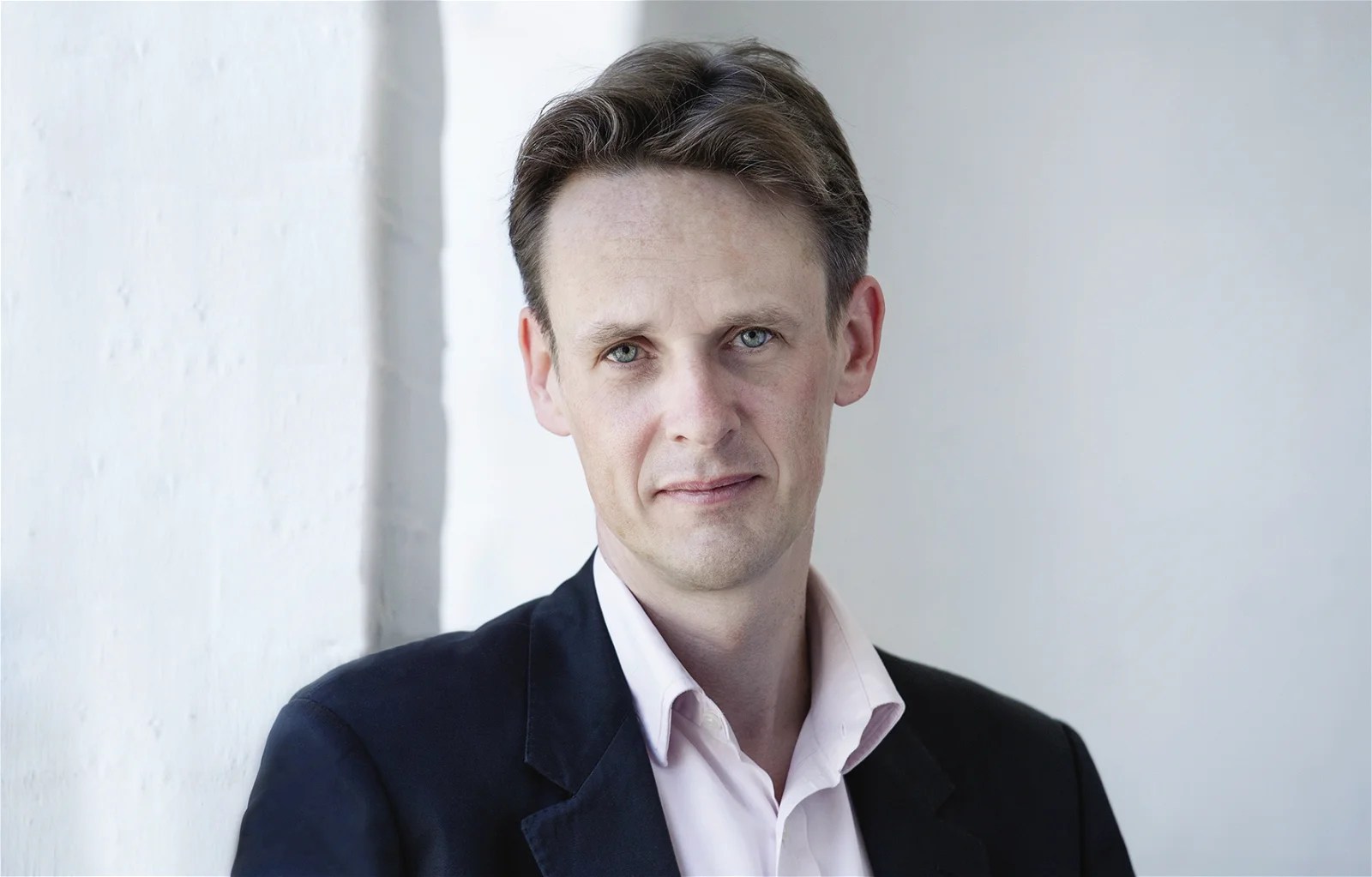
Stewart Goodyear (piano), City of Birmingham Symphony Orchestra / Ilan Volkov (above)

Ives Three Places in New England (1911-14, rev. 1929)
Zappa Bob in Dacron and Sad Jane (1982-3)
Lewis Memex (2014)
Gershwin orch. Grofé Rhapsody in Blue (1924, rev. 1942)

Symphony Hall, Birmingham
Wednesday 27 March 2024

Reviewed by Richard Whitehouse

Ilan Volkov is always a welcome presence on the Symphony Hall podium, and this evening he conducted the City of Birmingham Symphony Orchestra in a fascinating programme of works by American composers – three of them established in music notably removed from classical.

The concert was framed by what have now become repertoire pieces, but Ives’s Three Places in New England had to wait over half a century to be accorded this status. Using what sounded to be the most recent edition, Volkov stressed its late-Romantic impulsiveness and rhetorical eloquence, though some over-emphatic pauses or phrasing slightly undersold the cumulative majesty of The Saint Gaudens and coursing energy of Putnam’s Camp – which latter still teetered (rightly) on chaos at its close. If the build-up in The Housatonic at Stockbridge felt unduly precipitate, Rachel Pankhurst’s rendering of its cor anglais melody had ideal pathos.

The three decades since Frank Zappa’s untimely death have brought into focus his sheer range of musical preoccupations, though his pair of early 1980s albums with the London Symphony Orchestra made plain that being one of rock music’s finest guitarists and leading provocateurs was never enough. Despite their linkage via a ballet with its somewhat dubious scenario, Bob in Dacron and Sad Jane are individual entities and their respective two movements underline Zappa’s concern for musical and expressive diversity – whether in the reckless overkill of the male protagonist or halting fatalism of the female. Volkov secured dedicated playing from the CBSO as brought out Zappa’s debt to ‘third stream’ jazz as much as his modernist forebears.

George Lewis is another figure whose creativity ranges over multiple media – not least that of the orchestra which, thanks not least to Volkov’s advocacy, has gained some familiarity in the UK. Its title referring to a theoretical device for establishing connections across an otherwise unregulated body of information, Memex is typical of the composer through its complexity of textures which affords a heady virtuosity but also a measure of subtlety and inwardness, not least in those final stages when the earlier volatility gradually coalesces into something akin to resolution; as if all that information was, if not dispersed, at least finding discipline. Such, at least, was the impression left by this committed reading of a striking and absorbing piece.

It might have been a conceptual leap too far from here to Gershwin’s galvanizing of the ‘jazz age’ aesthetic almost a century earlier, though Rhapsody in Blue has lost relatively little of its edge during the interim – especially when Stewart Goodyear projected the steely spontaneity of its solo part with such gusto. Admittedly the large orchestral forces (a feature of each work heard tonight) lacked a degree of co-ordination in tutti sections, but Volkov was at one with his pianist in conveying the breezy and often brittle excitement of music which sounded as   if evolving in real-time – not least the final stages that emerged as a high-octane apotheosis.

No little excitement, then, was generated over the course of this performance as of this concert overall: just the sort of event the CBSO should be putting on each season, which latter would certainly be the poorer were artists such as Volkov not encouraged to follow their convictions.

Click on the link to read more on the current CBSO concert season, and on the names for more on pianist Stewart Goodyear, conductor Ilan Volkov and composers Frank Zappa and George Lewis.

Published post no.2,133 – Saturday 30 March 2024

In concert – Anu Komsi, CBSO / Sakari Oramo: Sibelius Tempest Suite & Sypmhony no.7; Richard Strauss & Merikanto

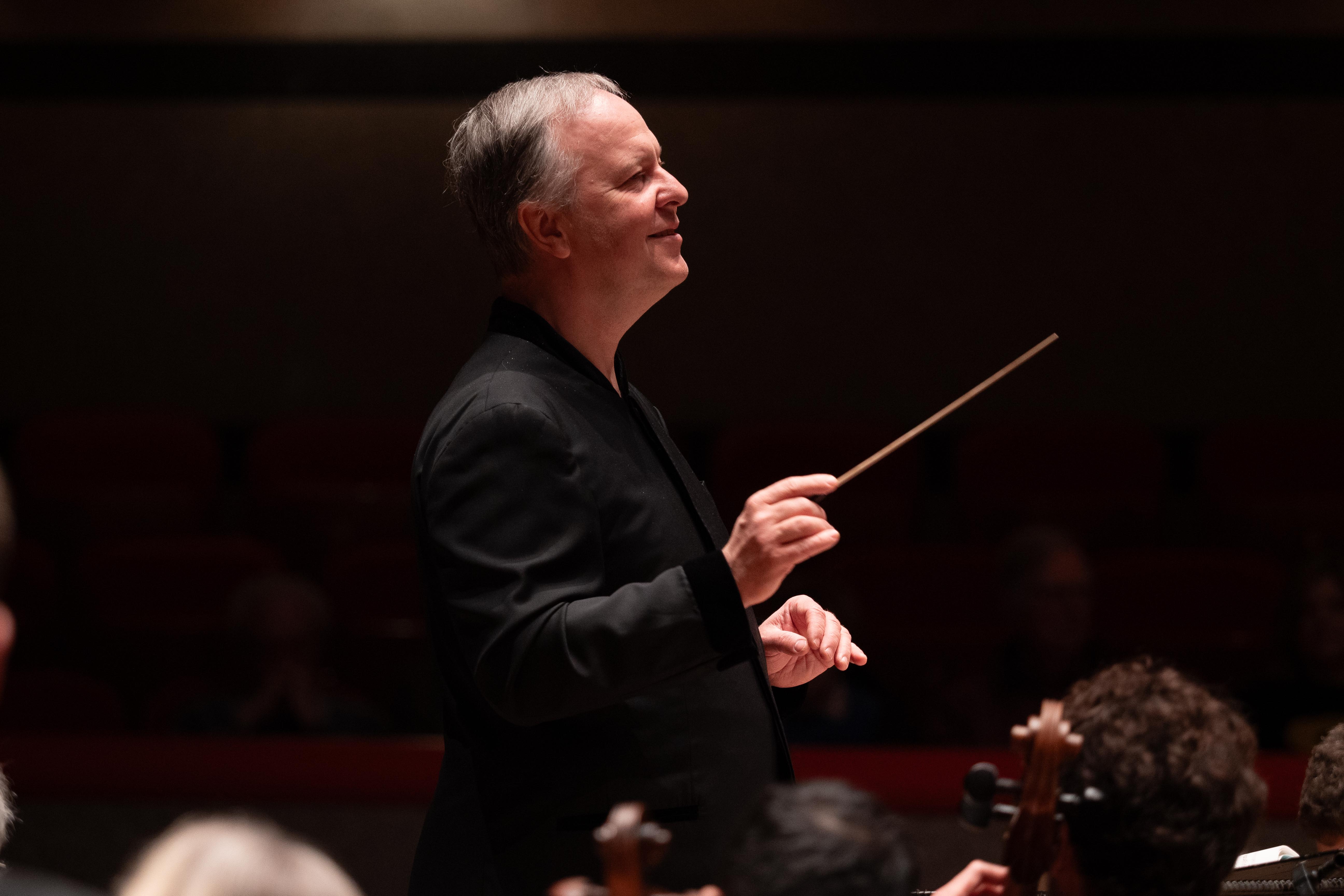
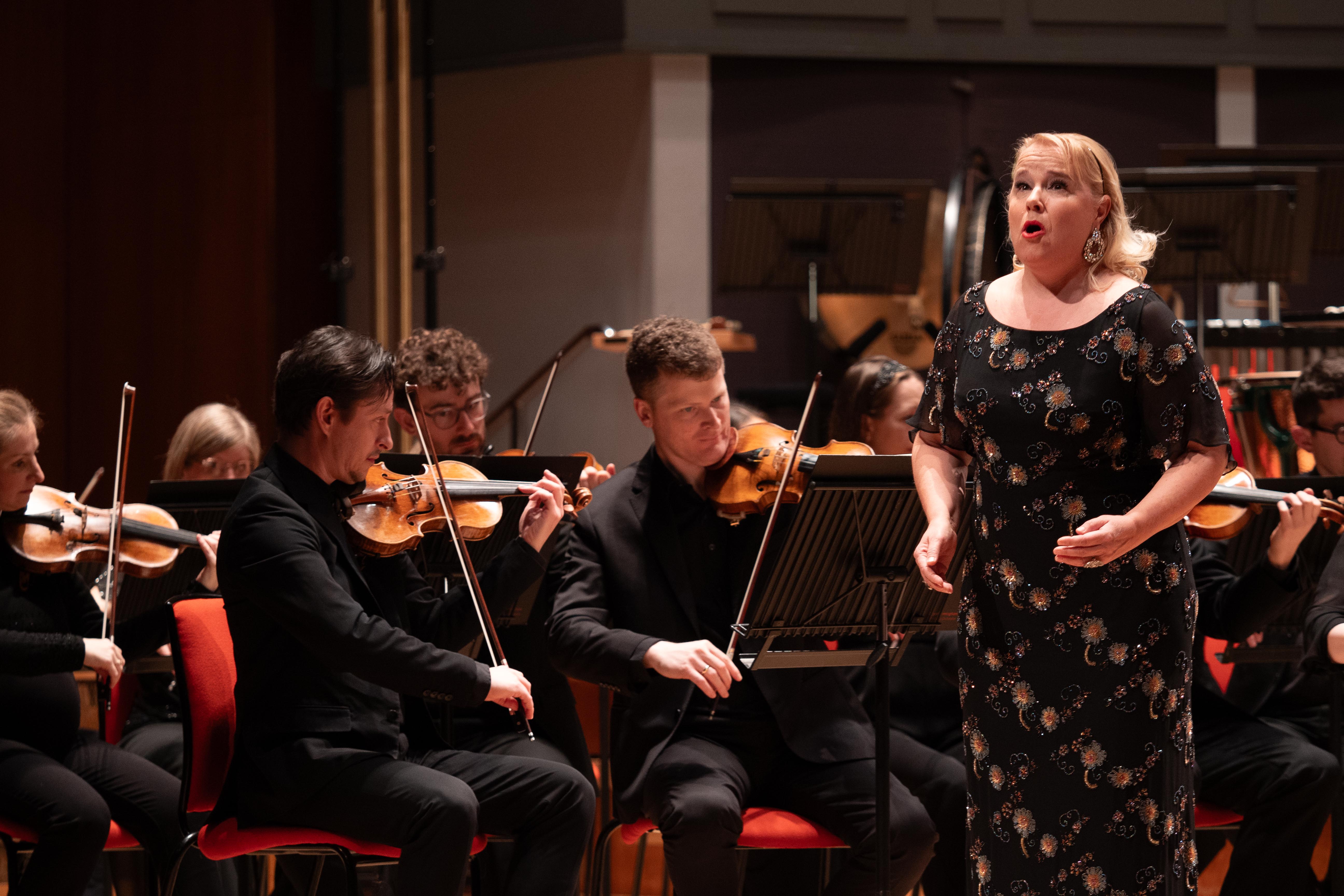
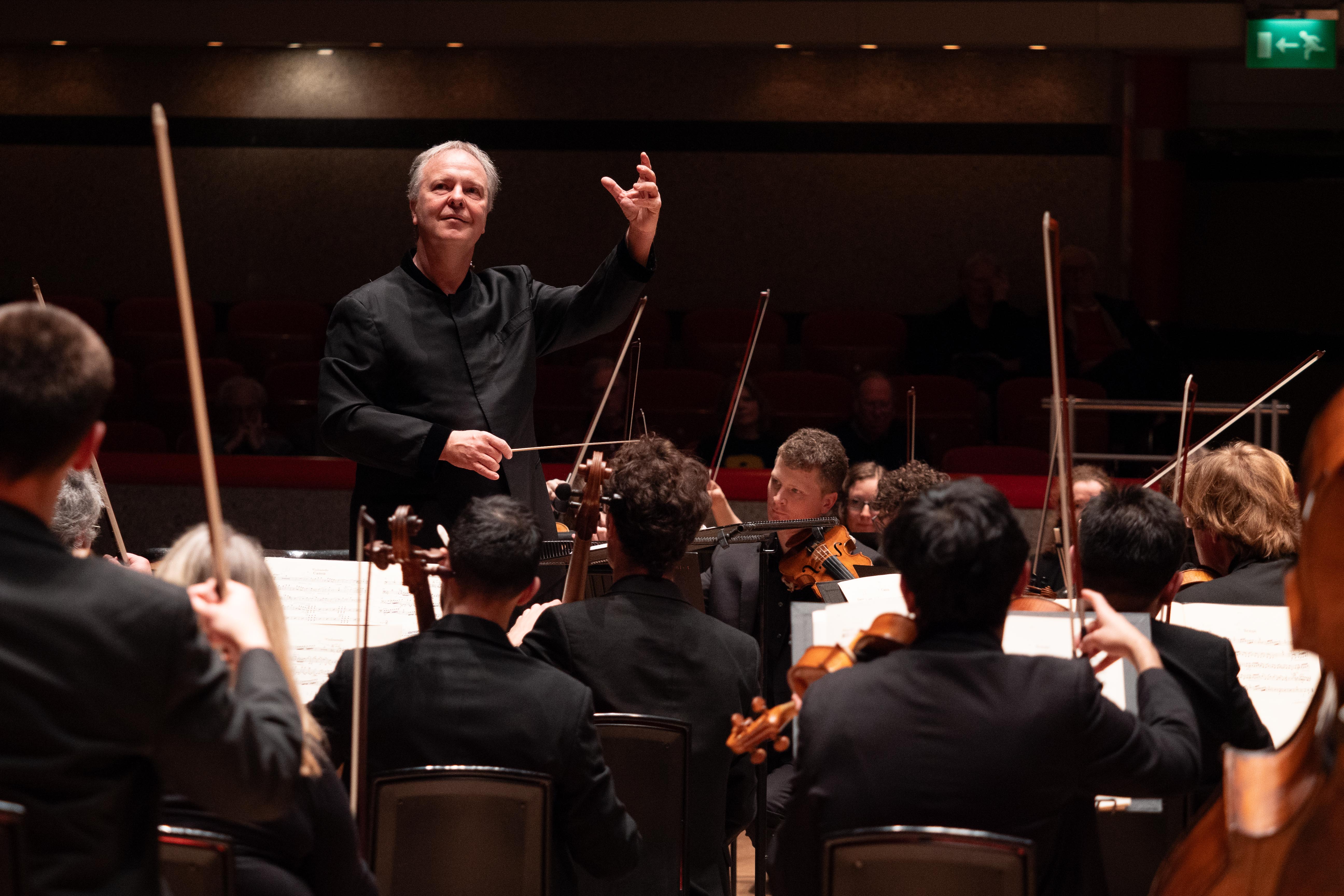
Anu Komsi (soprano), City of Birmingham Symphony Orchestra / Sakari Oramo (above)

Sibelius The Tempest (1925-6) – Suite no.1 Op.109/ 2
Richard Strauss Vier letzte Lieder, AV150 (1948)
Merikanto Ekho (1922)
Sibelius Symphony no.7 in C major Op. 105 (1923-4)

Symphony Hall, Birmingham
Wednesday 28 February 2024

Reviewed by Richard Whitehouse Pictures (c) Hannah Blake-Fathers

Could it really be 15 years since Sakari Oramo last conducted the orchestra of which he was music director for a decade? Time has passed, but his rapport with the City of Birmingham Symphony Orchestra was evident throughout what proved a well-planned and finely executed concert.

Sibelius featured prominently during Oramo’s tenure, with recorded and live cycles of the symphonies, so it was natural his music frame this programme. His music for The Tempest is the most diverse of his theatre works – the First Suite drawn from this lavish score opening with a searing evocation of The Oak Tree, before heading into a characterful Humoreske then Caliban’s Song with its telling bizarrerie. The Harvesters reminded of Sibelius’s gift for ‘light music’, as too the animated Canon and insinuating Scene, to which the plangent Berceuse then ominous Interlude made for startling contrast. A truncated version of The Tempest music that provided the prelude followed on with due seamlessness – its teetering on the metaphorical edge brought up abruptly if convincingly in this gripping performance.

Anu Komsi (above) then joined the orchestra for Richard Strauss’s Four Last Songs – a sequence which often gains emotional gravitas as it proceeds, though a slight edginess in Frühling gave it greater expressive ambivalence prior to the fatalism of September – the most perfectly realized of these songs. The growing rapture of Beim Schlafengehen featured a poised violin solo from Eugene Tzikindelean, then Komsi gave of her eloquent best in Im Abendrot – its euphonious postlude accorded suitably spacious treatment by Oramo as this evanesces towards eternity.

Komsi returned after the interval with what must have been a first hearing in Birmingham for Ekho, a short but arresting scena by Finnish composer Aarre Merikanto. Written just after his opera Juha, at the start of his most innovative period, this draws on the example of Sibelius’s Luonnotar along with the post-Impressionism of Koechlin and Roussel. Its intricately detailed textures complement a vocal line as virtuosic technically as it is audacious expressively, one with which Komsi was in her element as this music heads almost intuitively to a furtive close.

Fascinating to recall while Merikanto was pursuing so fractured a musical discourse, Sibelius was working towards his most integrated statement. Oramo has given many performances of the Seventh Symphony, but the present one felt exceptional in the ease and inevitability of its formal follow-through. The eliding from one section to the next was realized with a rightness which, as with the motivic constituents from which this work emerges, never drew attention to itself other than during moments of greatest expressive focus – notably those appearances of the trombone theme which ensure unity, even when the music retreats from its emotional apex into a coda not so much final as immovable. Nor was this achieved through conscious interpretation, Oramo setting a course that allowed the musicians simply to play the music.

This impressive performance rounded off a no less impressive evening. Before the last work, Oramo spoke about the significance his CBSO tenure had for his conducting and his regret this ‘reunion’ had taken so long. Hopefully his next appearance will not be so long in coming.

Click on the link to read more on the current CBSO concert season, and on the names for more on soprano Anu Komsi and conductor Sakari Oramo.

Published post no.2,106 – Sunday 3 March 2024

In concert – Carolyn Sampson & Joseph Middleton @ Wigmore Hall – Album für die Frau: Eight scenes from the Lieder of Robert and Clara Schumann

Carolyn Sampson Photo: Marco Borggeve

Carolyn Sampson (soprano, above), Joseph Middleton (piano, below)

Songs and piano music by Robert and Clara Schumann – full list at bottom of review

Wigmore Hall, London
Wednesday 14 February 2024

by Ben Hogwood Photos by Marco Borggreve (Carolyn Sampson) and Sussie Ahlberg (Joseph Middleton)

This was a Valentine’s Day concert with a difference. No orchestra, no Romeo & Juliet – but rather an intimate presentation of a musical marriage, that of composer / pianists Robert and Clara Schumann, whose relationship has been increasingly under the microscope in the past few years.

This is a good thing, for when Robert and Clara married on 12 September 1840 the concept of equality within marriage, let alone classical music, was very different indeed. Robert, in the outpouring of song that he experienced in that year, completed the song cycle Frauenliebe und -leben, to poetry by Adelbert von Chamisso attempting a depiction of marriage from a woman’s perspective. It is certainly not how we recognise the institution of marriage today, which soprano Carolyn Sampson acknowledged in a Guardian article around the release of her Album für die Frau, the title of this concert, in 2021. In that article she put forward a strong case for continuing to sing the cycle, identifying with a good deal of the verse and even more of the music – but with her musical partner, pianist Joseph Middleton, she has recast the cycle.

Now the Schumanns’ marriage is given in four parts – love, marriage, parenthood and death – viewed through the prism of Frauenliebe but balanced through songs by Clara and Robert, or one of the latter’s piano pieces. Each song from the cycle had two accomplices, the context achieved through what must have been a painstaking selection process that, in this concert, bore much fruit. The coherent end piece was bisected by well-chosen text from the couple’s diaries and more.

With sadness inevitably looming towards the end it was a difficult structure for the duo to pitch, but they made it work through selections that made emotional sense and which, crucially, were harmonically linked. Sampson’s clarity of line was the clincher, her ability to carry not just a melody but the words with great diction, while the same could be said of Middleton’s phrasing, which as Sampson said in the introduction ‘could express what words cannot’. The postlude from Frauenliebe was the keenest example, exquisitely played.

The song cycle itself contained a great deal of emotion, especially in Du Ring an meinem Finger (You ring on my finger), where Sampson’s powerful crescendo was all-consuming. Clara’s songs proved the ideal complement, a little more Schubertian in style perhaps but harmonically more daring, often ending in suspension.

The first half included five settings of Rückert and felt slightly giddy in the intoxication of falling in love and wedded bliss, almost too good to be true – and so it proved, with the settings of Heinrich Heine bringing with them furrowed brows and family responsibilities, the music increasingly worrisome. Robert and Clara had eight children in all, and this section gave a glimpse of the weight of responsibility that would surely have left.

The masterstroke of this program, however, was not to finish with the end of the song cycle but to offer Robert’s Requiem, from his 6 Gedichte von N Laneu und Requiem Op.90, as a much-needed consolation, then the piano piece Winterzeit I, from the Album für die Jugend. Finally, as an encore, Clara’s Abendstern, a beautiful postscript with her love taken up to the stars, turned our gaze upwards once more.

It capped an unexpectedly moving account of two lives intertwined, offering a timely reminder of Clara’s torment at her husband’s untimely demise. One of the power couples of 19th century music they must have been, but this was a tender account of two lives entwined and enriched by beautiful song.

You can hear Album für die Frau, as released on BIS, below:

Carolyn Sampson and Joseph Middleton performed the following music:

Robert Schumann Langsam und mit Ausdruck zu spielen from Album für die Jugend Op. 68 (piano, 1848)
Clara Schumann Liebst du um Schönheit Op. 12 No. 2 (1841)
Robert Schumann Seit ich ihn gesehen from Frauenliebe und -leben Op. 42 (1840)
Volksliedchen Op. 51 No. 2 (1840)
Clara Schumann Liebeszauber Op. 13 No. 3 (1840-3)
Robert Schumann Er, der Herrlichste von allen from Frauenliebe und -leben Op. 42
Clara Schumann An einem lichten Morgen from 6 Lieder aus Jucunde Op. 23 (1853)
Warum willst du and’re fragen Op. 12 No. 3 (1841)
Robert Schumann Ich kann’s nicht fassen, nicht glauben from Frauenliebe und -leben Op. 42
Clara Schumann Die stille Lotosblume Op. 13 No. 6 (1840-3)
Robert Schumann Du Ring an meinem Finger from Frauenliebe und -leben Op. 42
From Myrthen Op. 25 (1840): Lied der Braut I • Lied der Braut II
Glückes genug from Kinderszenen Op. 15 (piano, 1838)
Interval
Robert Schumann
Helft mir, ihr Schwestern from Frauenliebe und -leben Op. 42
Die Lotosblume from Myrthen Op. 25
Lust der Sturmnacht from Kerner Lieder Op. 35 (1840)
Süsser Freund, du blickest from Frauenliebe und -leben Op. 42
Hochländisches Wiegenlied from Myrthen Op. 25
Der Sandmann from Lieder-Album für die Jugend Op. 79 (1849)
Kind im Einschlummern from Kinderszenen Op. 15 (piano)
An meinem Herzen, an meiner Brust from Frauenliebe und -leben Op. 42
Ritter vom Steckenpferd from Kinderszenen Op. 15 (piano)
Dein Angesicht Op. 127 No. 2 (1840)
Nun hast du mir den ersten Schmerz getan from Frauenliebe und -leben Op. 42
Requiem from 6 Gedichte von N Lenau und Requiem Op. 90 (1850)
Winterzeit I from Album für die Jugend Op. 68 (piano)
Clara Schumann
Abendstern

Published post no.2,088 – Thursday 15 February 2024

In concert – Mimi Doulton, Thando Mjandana, BCMG: Songs at Day, Songs at Night

Mimi Doulton (soprano), Thando Mjandana (tenor), Birmingham Contemporary Music Group / Vimbayi Kaziboni

Kidane Primitive Blaze (2022)
Birtwistle Today Too (2004)
Birtwistle …when falling asleep (2018)
Kendall Tuxedo: Between Carnival and Lent (2022)
Kidane Cradle Song (2023) [BCMG Sound Investment commission: World premiere]
Anderson Mitternachtslied (2020) [UK premiere]
Anderson THUS (2023) [World premiere of final extended version]

Elgar Concert Hall, University of Birmingham
Wednesday 18 October 2023

Reviewed by Richard Whitehouse

A varied programme greeted attendees at tonight’s concert from Birmingham Contemporary Music Group (to be repeated in Bristol on October 29th), consisting largely of vocal pieces and directed with precise assurance by the highly regarded (justifiably so) Vimbayi Kaziboni.

Equally well regarded at present, Daniel Kidane (recently signed to Schott) was represented by two works – of which Primitive Blaze made for an effective curtain-raiser with its array of interlocking rhythmic patterns whose elaboration brought greater emphasis on a linear continuity in its wake. Both the electric guitar and tenor saxophone were prominent within this ensemble – the latter instrument emerging at the forefront in the final stages, when its plangent tones signified a closure as decisive formally as it sounded decidedly equivocal.

Next came settings by Harrison Birtwistle. To a text by the 18th-century Japanese poet Tanko (translated by Joel Hoffman), Today Too found tenor, flute and guitar evoking a twilit scene whose ominous elements are subsumed into an aura of shimmering, even sensuous stillness.

Rehearsal considerations necessitated exclusion of the David Harsent setting From Vanitas (hopefully not in Bristol) but not of …when falling asleep – Birtwistle’s last completed work, which intersperses lines by Rilke (translated by Jochen Voigt) with those by Swinburne in a sequence the more affecting for its understatement. Mimi Doulton brought a keen eloquence to the sung component, though Thando Mjandana seemed a little tentative with those spoken in parallel, and quite why the final lines of his contribution had been excluded was unclear.

Doulton returned for Between Carnival and Lent – one of Hannah Kendall’s ongoing Tuxedo series drawing on the art-print of that name by Jean-Michel Basquiat; abrupt juxtaposition of keening melisma with spoken polemic rather tending to cancel out each other as it proceeded.

Mjandana duly came into his own with the premiere of Cradle Song, Kidane’s setting of verse from the poem by Blake, though an evident desire to avoid the winsomeness associated with ‘innocence’ led to a highly rhetorical vocal line surely at odds with the semantics of this text.

The evening closed with two settings by Julian Anderson, both from his song-cycle In statu nascendi and drawing on a linguistic variety of verse in the context of an ensemble similar in line-up while not in usage to that of Schoenberg’s Pierrot Lunaire. Nietzsche (in the original German) was the basis for Mitternachtslied, familiar lines here exuding an anguished elation wholly different from that encountered in Mahler or Delius. Longfellow at his most visionary was the starting-point for THUS, building gradually from speculative beginnings towards a climactic section whose visceral impact felt less a setting than an intuitive riposte to its text. This premiere of the ‘final extended version’ drew a forceful though slightly self-conscious response from Doulton, in what seems the likely culmination of the song-cycle in question.

It certainly brought to a striking close a programme whose relative short measure was more than outweighed by its variety or its intrinsic interest. Hopefully those who hear it in Bristol will be equally responsive to its enticements as those who were present at Elgar Concert Hall.

For ticket information on the forthcoming Bristol concert on Sunday 29 October, click here, and click here for more information on the Birmingham Contemporary Music Group. Click on the artist names for more information on Vimbayi Kaziboni, Mimi Doulton and Thando Mjandana, and on the composer names for more on Julian Anderson, Harrison Birtwistle, Hannah Kendall and Daniel Kidane

Published post no.1,986 – Sunday 22 October 2023