In concert – Carolyn Sampson & Joseph Middleton @ Wigmore Hall – Album für die Frau: Eight scenes from the Lieder of Robert and Clara Schumann

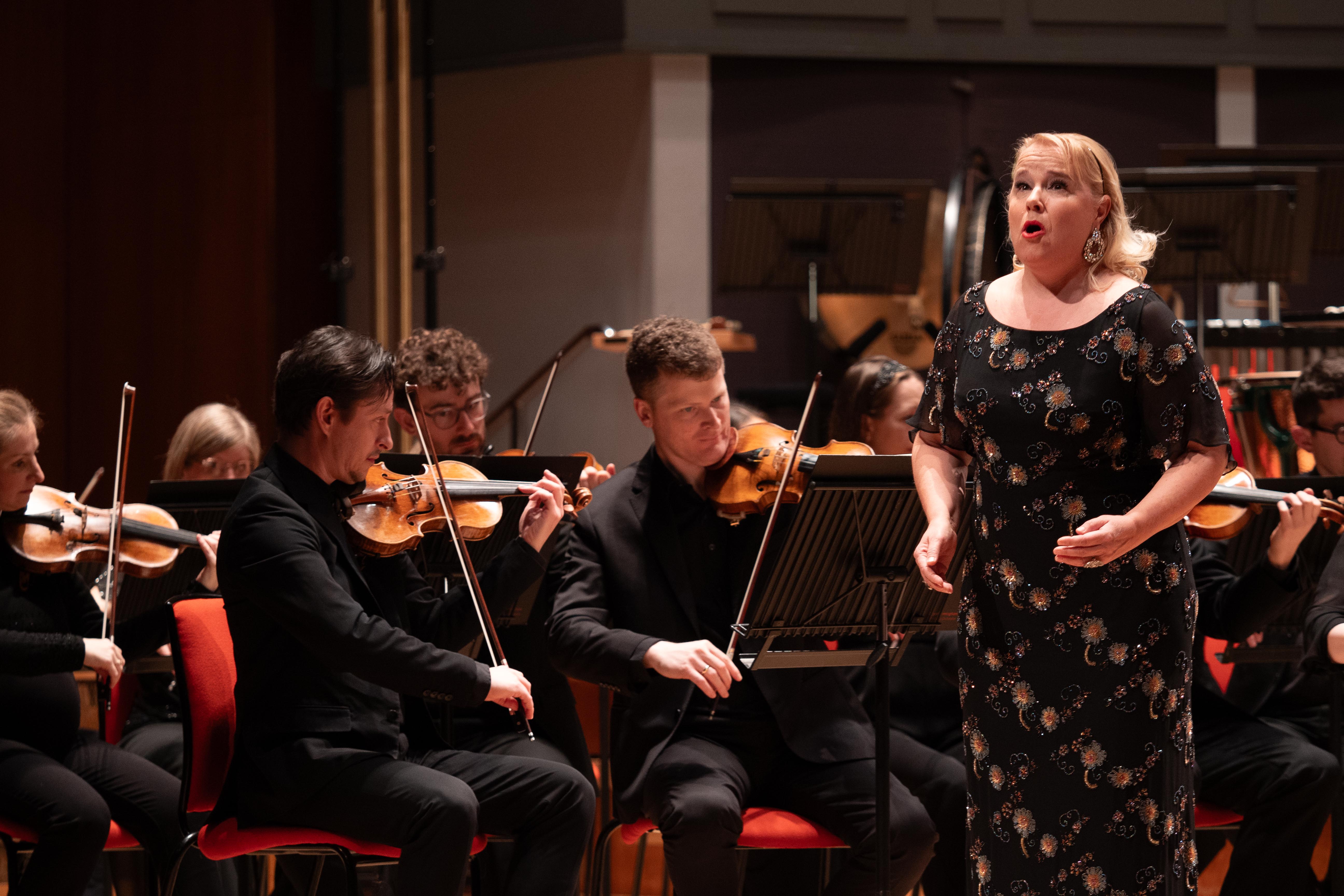
Carolyn Sampson Photo: Marco Borggeve

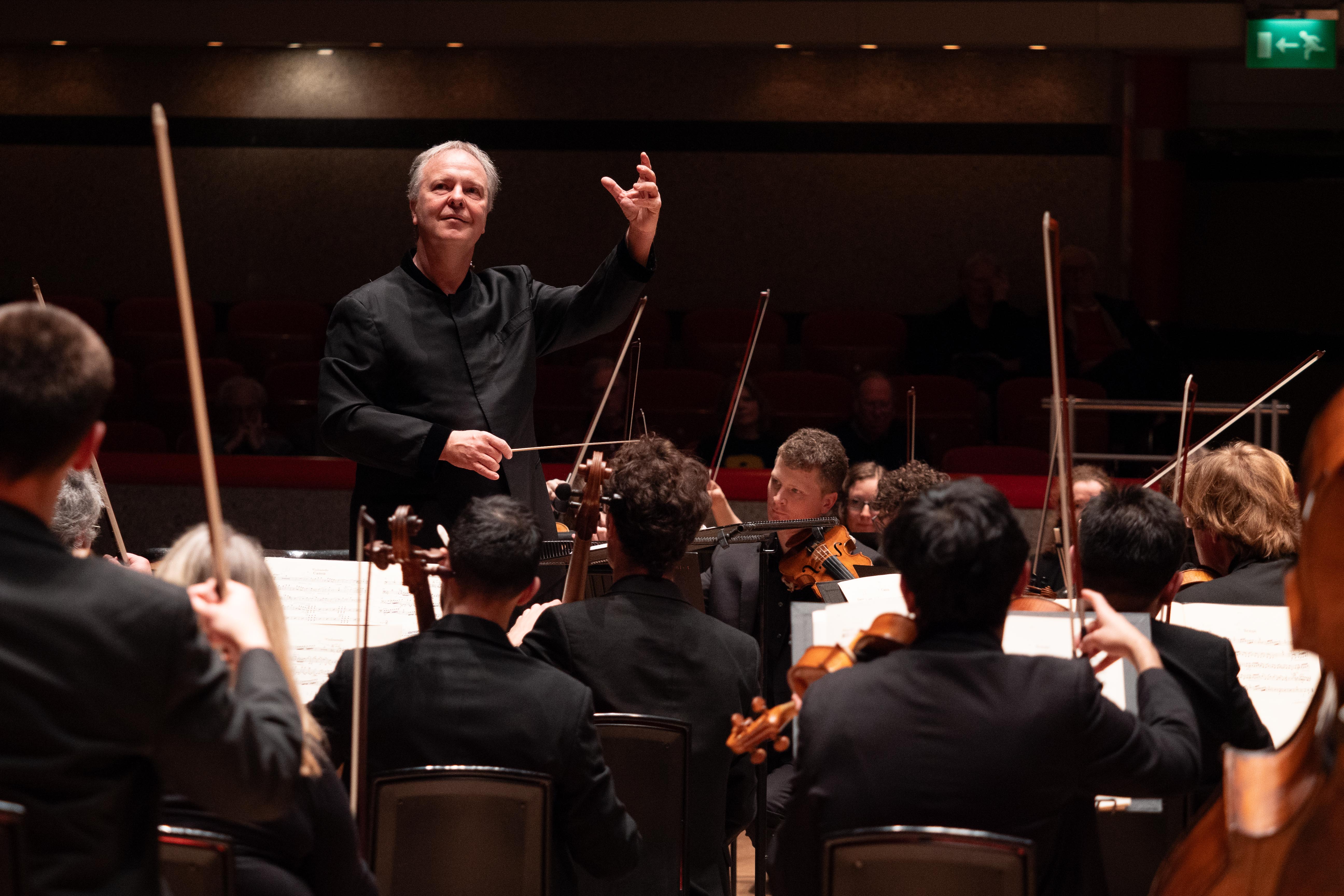
Carolyn Sampson (soprano, above), Joseph Middleton (piano, below)

Songs and piano music by Robert and Clara Schumann – full list at bottom of review

Wigmore Hall, London
Wednesday 14 February 2024

by Ben Hogwood Photos by Marco Borggreve (Carolyn Sampson) and Sussie Ahlberg (Joseph Middleton)

This was a Valentine’s Day concert with a difference. No orchestra, no Romeo & Juliet – but rather an intimate presentation of a musical marriage, that of composer / pianists Robert and Clara Schumann, whose relationship has been increasingly under the microscope in the past few years.

This is a good thing, for when Robert and Clara married on 12 September 1840 the concept of equality within marriage, let alone classical music, was very different indeed. Robert, in the outpouring of song that he experienced in that year, completed the song cycle Frauenliebe und -leben, to poetry by Adelbert von Chamisso attempting a depiction of marriage from a woman’s perspective. It is certainly not how we recognise the institution of marriage today, which soprano Carolyn Sampson acknowledged in a Guardian article around the release of her Album für die Frau, the title of this concert, in 2021. In that article she put forward a strong case for continuing to sing the cycle, identifying with a good deal of the verse and even more of the music – but with her musical partner, pianist Joseph Middleton, she has recast the cycle.

Now the Schumanns’ marriage is given in four parts – love, marriage, parenthood and death – viewed through the prism of Frauenliebe but balanced through songs by Clara and Robert, or one of the latter’s piano pieces. Each song from the cycle had two accomplices, the context achieved through what must have been a painstaking selection process that, in this concert, bore much fruit. The coherent end piece was bisected by well-chosen text from the couple’s diaries and more.

With sadness inevitably looming towards the end it was a difficult structure for the duo to pitch, but they made it work through selections that made emotional sense and which, crucially, were harmonically linked. Sampson’s clarity of line was the clincher, her ability to carry not just a melody but the words with great diction, while the same could be said of Middleton’s phrasing, which as Sampson said in the introduction ‘could express what words cannot’. The postlude from Frauenliebe was the keenest example, exquisitely played.

The song cycle itself contained a great deal of emotion, especially in Du Ring an meinem Finger (You ring on my finger), where Sampson’s powerful crescendo was all-consuming. Clara’s songs proved the ideal complement, a little more Schubertian in style perhaps but harmonically more daring, often ending in suspension.

The first half included five settings of Rückert and felt slightly giddy in the intoxication of falling in love and wedded bliss, almost too good to be true – and so it proved, with the settings of Heinrich Heine bringing with them furrowed brows and family responsibilities, the music increasingly worrisome. Robert and Clara had eight children in all, and this section gave a glimpse of the weight of responsibility that would surely have left.

The masterstroke of this program, however, was not to finish with the end of the song cycle but to offer Robert’s Requiem, from his 6 Gedichte von N Laneu und Requiem Op.90, as a much-needed consolation, then the piano piece Winterzeit I, from the Album für die Jugend. Finally, as an encore, Clara’s Abendstern, a beautiful postscript with her love taken up to the stars, turned our gaze upwards once more.

It capped an unexpectedly moving account of two lives intertwined, offering a timely reminder of Clara’s torment at her husband’s untimely demise. One of the power couples of 19th century music they must have been, but this was a tender account of two lives entwined and enriched by beautiful song.

You can hear Album für die Frau, as released on BIS, below:

Carolyn Sampson and Joseph Middleton performed the following music:

Robert Schumann Langsam und mit Ausdruck zu spielen from Album für die Jugend Op. 68 (piano, 1848)
Clara Schumann Liebst du um Schönheit Op. 12 No. 2 (1841)
Robert Schumann Seit ich ihn gesehen from Frauenliebe und -leben Op. 42 (1840)
Volksliedchen Op. 51 No. 2 (1840)
Clara Schumann Liebeszauber Op. 13 No. 3 (1840-3)
Robert Schumann Er, der Herrlichste von allen from Frauenliebe und -leben Op. 42
Clara Schumann An einem lichten Morgen from 6 Lieder aus Jucunde Op. 23 (1853)
Warum willst du and’re fragen Op. 12 No. 3 (1841)
Robert Schumann Ich kann’s nicht fassen, nicht glauben from Frauenliebe und -leben Op. 42
Clara Schumann Die stille Lotosblume Op. 13 No. 6 (1840-3)
Robert Schumann Du Ring an meinem Finger from Frauenliebe und -leben Op. 42
From Myrthen Op. 25 (1840): Lied der Braut I • Lied der Braut II
Glückes genug from Kinderszenen Op. 15 (piano, 1838)
Interval
Robert Schumann
Helft mir, ihr Schwestern from Frauenliebe und -leben Op. 42
Die Lotosblume from Myrthen Op. 25
Lust der Sturmnacht from Kerner Lieder Op. 35 (1840)
Süsser Freund, du blickest from Frauenliebe und -leben Op. 42
Hochländisches Wiegenlied from Myrthen Op. 25
Der Sandmann from Lieder-Album für die Jugend Op. 79 (1849)
Kind im Einschlummern from Kinderszenen Op. 15 (piano)
An meinem Herzen, an meiner Brust from Frauenliebe und -leben Op. 42
Ritter vom Steckenpferd from Kinderszenen Op. 15 (piano)
Dein Angesicht Op. 127 No. 2 (1840)
Nun hast du mir den ersten Schmerz getan from Frauenliebe und -leben Op. 42
Requiem from 6 Gedichte von N Lenau und Requiem Op. 90 (1850)
Winterzeit I from Album für die Jugend Op. 68 (piano)
Clara Schumann
Abendstern

Published post no.2,088 – Thursday 15 February 2024

In concert – Mimi Doulton, Thando Mjandana, BCMG: Songs at Day, Songs at Night

Mimi Doulton (soprano), Thando Mjandana (tenor), Birmingham Contemporary Music Group / Vimbayi Kaziboni

Kidane Primitive Blaze (2022)
Birtwistle Today Too (2004)
Birtwistle …when falling asleep (2018)
Kendall Tuxedo: Between Carnival and Lent (2022)
Kidane Cradle Song (2023) [BCMG Sound Investment commission: World premiere]
Anderson Mitternachtslied (2020) [UK premiere]
Anderson THUS (2023) [World premiere of final extended version]

Elgar Concert Hall, University of Birmingham
Wednesday 18 October 2023

Reviewed by Richard Whitehouse

A varied programme greeted attendees at tonight’s concert from Birmingham Contemporary Music Group (to be repeated in Bristol on October 29th), consisting largely of vocal pieces and directed with precise assurance by the highly regarded (justifiably so) Vimbayi Kaziboni.

Equally well regarded at present, Daniel Kidane (recently signed to Schott) was represented by two works – of which Primitive Blaze made for an effective curtain-raiser with its array of interlocking rhythmic patterns whose elaboration brought greater emphasis on a linear continuity in its wake. Both the electric guitar and tenor saxophone were prominent within this ensemble – the latter instrument emerging at the forefront in the final stages, when its plangent tones signified a closure as decisive formally as it sounded decidedly equivocal.

Next came settings by Harrison Birtwistle. To a text by the 18th-century Japanese poet Tanko (translated by Joel Hoffman), Today Too found tenor, flute and guitar evoking a twilit scene whose ominous elements are subsumed into an aura of shimmering, even sensuous stillness.

Rehearsal considerations necessitated exclusion of the David Harsent setting From Vanitas (hopefully not in Bristol) but not of …when falling asleep – Birtwistle’s last completed work, which intersperses lines by Rilke (translated by Jochen Voigt) with those by Swinburne in a sequence the more affecting for its understatement. Mimi Doulton brought a keen eloquence to the sung component, though Thando Mjandana seemed a little tentative with those spoken in parallel, and quite why the final lines of his contribution had been excluded was unclear.

Doulton returned for Between Carnival and Lent – one of Hannah Kendall’s ongoing Tuxedo series drawing on the art-print of that name by Jean-Michel Basquiat; abrupt juxtaposition of keening melisma with spoken polemic rather tending to cancel out each other as it proceeded.

Mjandana duly came into his own with the premiere of Cradle Song, Kidane’s setting of verse from the poem by Blake, though an evident desire to avoid the winsomeness associated with ‘innocence’ led to a highly rhetorical vocal line surely at odds with the semantics of this text.

The evening closed with two settings by Julian Anderson, both from his song-cycle In statu nascendi and drawing on a linguistic variety of verse in the context of an ensemble similar in line-up while not in usage to that of Schoenberg’s Pierrot Lunaire. Nietzsche (in the original German) was the basis for Mitternachtslied, familiar lines here exuding an anguished elation wholly different from that encountered in Mahler or Delius. Longfellow at his most visionary was the starting-point for THUS, building gradually from speculative beginnings towards a climactic section whose visceral impact felt less a setting than an intuitive riposte to its text. This premiere of the ‘final extended version’ drew a forceful though slightly self-conscious response from Doulton, in what seems the likely culmination of the song-cycle in question.

It certainly brought to a striking close a programme whose relative short measure was more than outweighed by its variety or its intrinsic interest. Hopefully those who hear it in Bristol will be equally responsive to its enticements as those who were present at Elgar Concert Hall.

For ticket information on the forthcoming Bristol concert on Sunday 29 October, click here, and click here for more information on the Birmingham Contemporary Music Group. Click on the artist names for more information on Vimbayi Kaziboni, Mimi Doulton and Thando Mjandana, and on the composer names for more on Julian Anderson, Harrison Birtwistle, Hannah Kendall and Daniel Kidane

Published post no.1,986 – Sunday 22 October 2023

BBC Proms 2023 – Dame Sarah Connolly, BBC Philharmonic Orchestra / John Storgårds – Weber, Pejačević, Alma Mahler-Werfel & Rachmaninoff

Prom 33 – Dame Sarah Connolly (mezzo-soprano), BBC Philharmonic Orchestra / John Storgårds

Weber Oberon – Overture (1825-6)
Pejačević Zwei Schmetterlingslieder Op.52 (1920); Verwandlung Op.37b (1915); Liebeslied Op.39 (1915). [Proms premieres]
Mahler-Werfel orch. Colin & David Matthews Die stille Stadt (pub. 1915); Licht in der Nacht (pub. 1915); Bei dir ist es traut (pub. 1910)
Rachmaninoff Symphony no.1 in D minor Op.13 (1895)

Royal Albert Hall, London
Wednesday 9 August 2023

by Richard Whitehouse photos by Chris Christodoulou / BBC

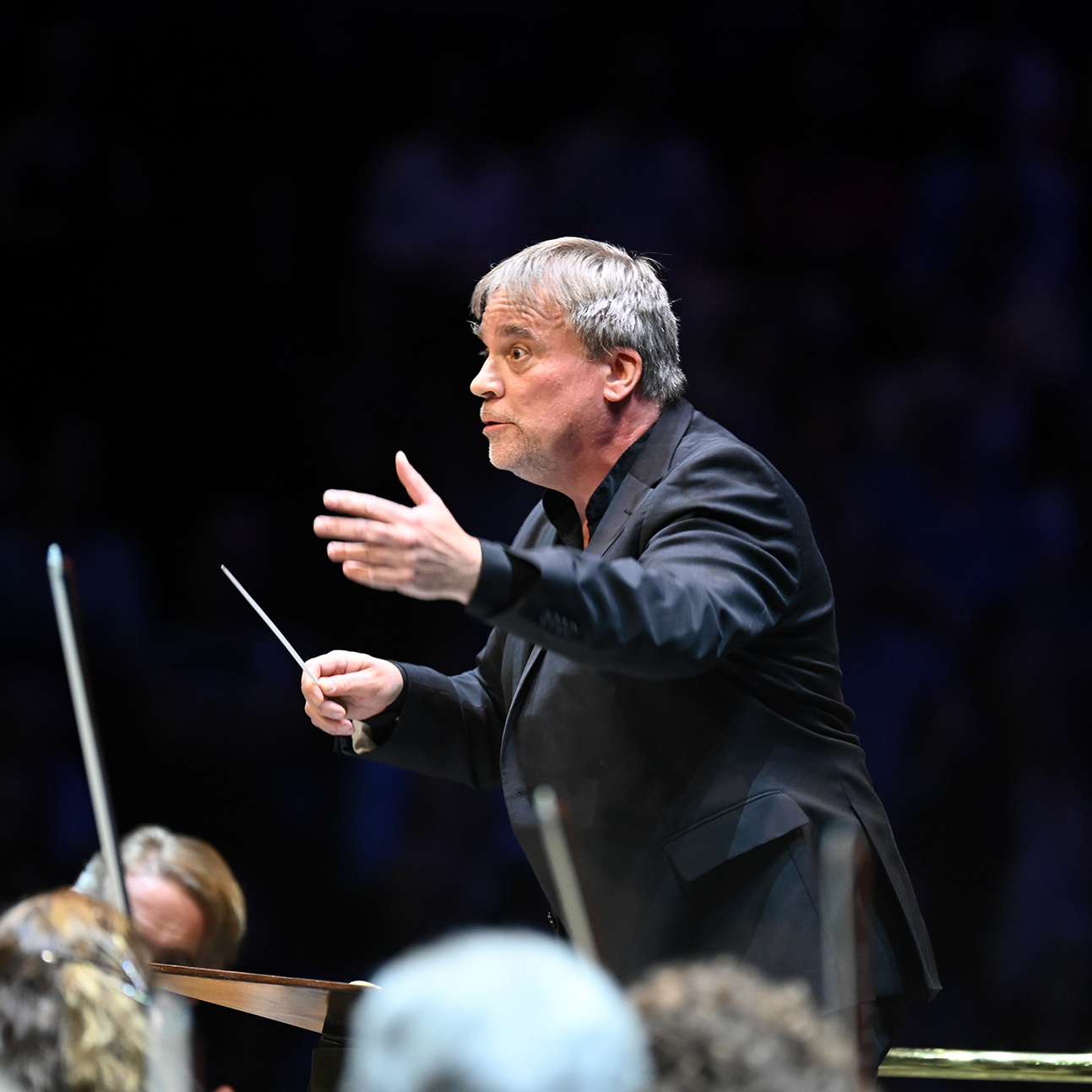
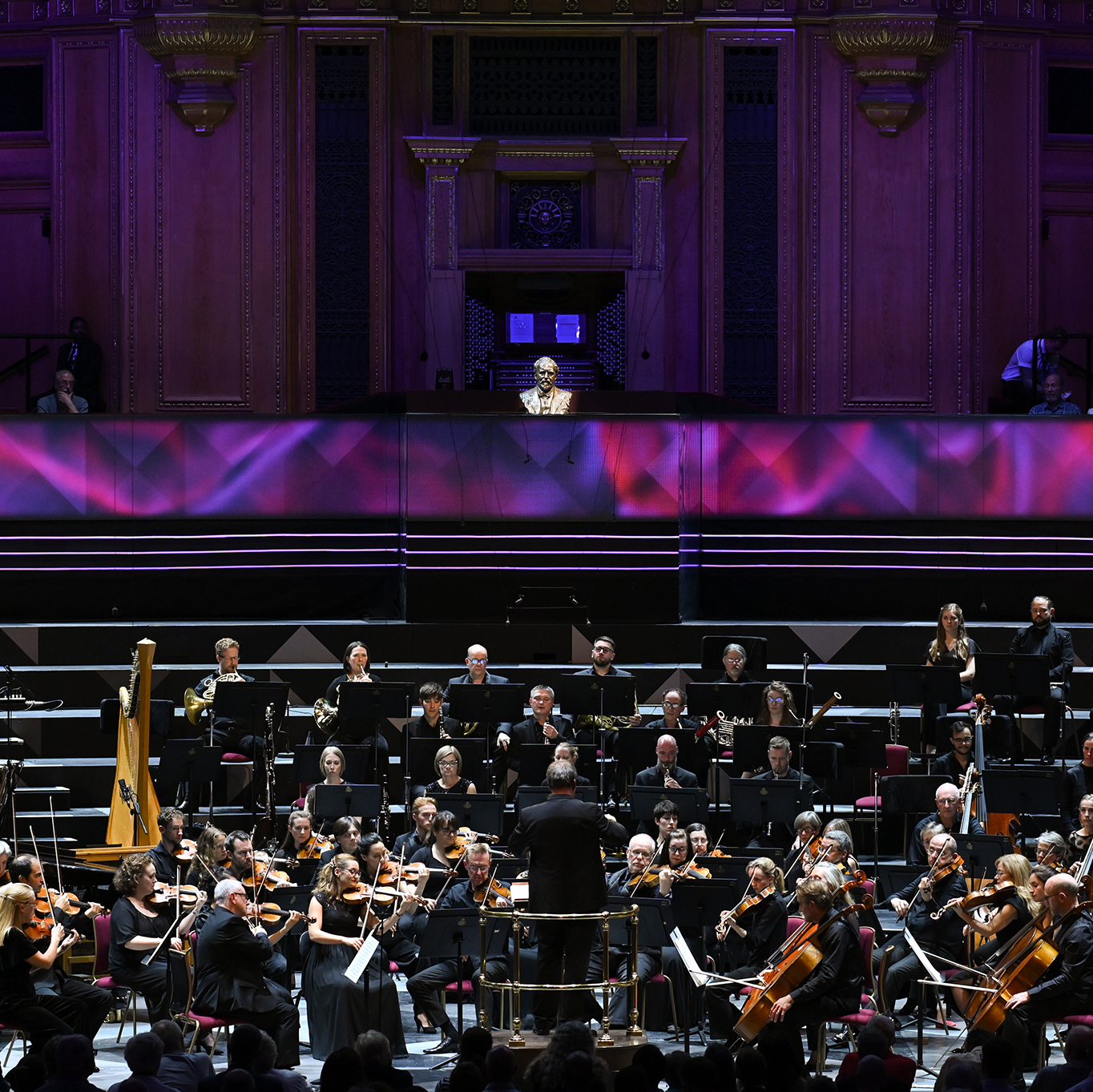
This evening’s Prom brought a welcome appearance by the BBC Philharmonic with its chief conductor John Storgårds, in what was a typically enterprising programme that continued this season’s emphasis on the music of Dora Pejačević in the centenary (last March) of her death.

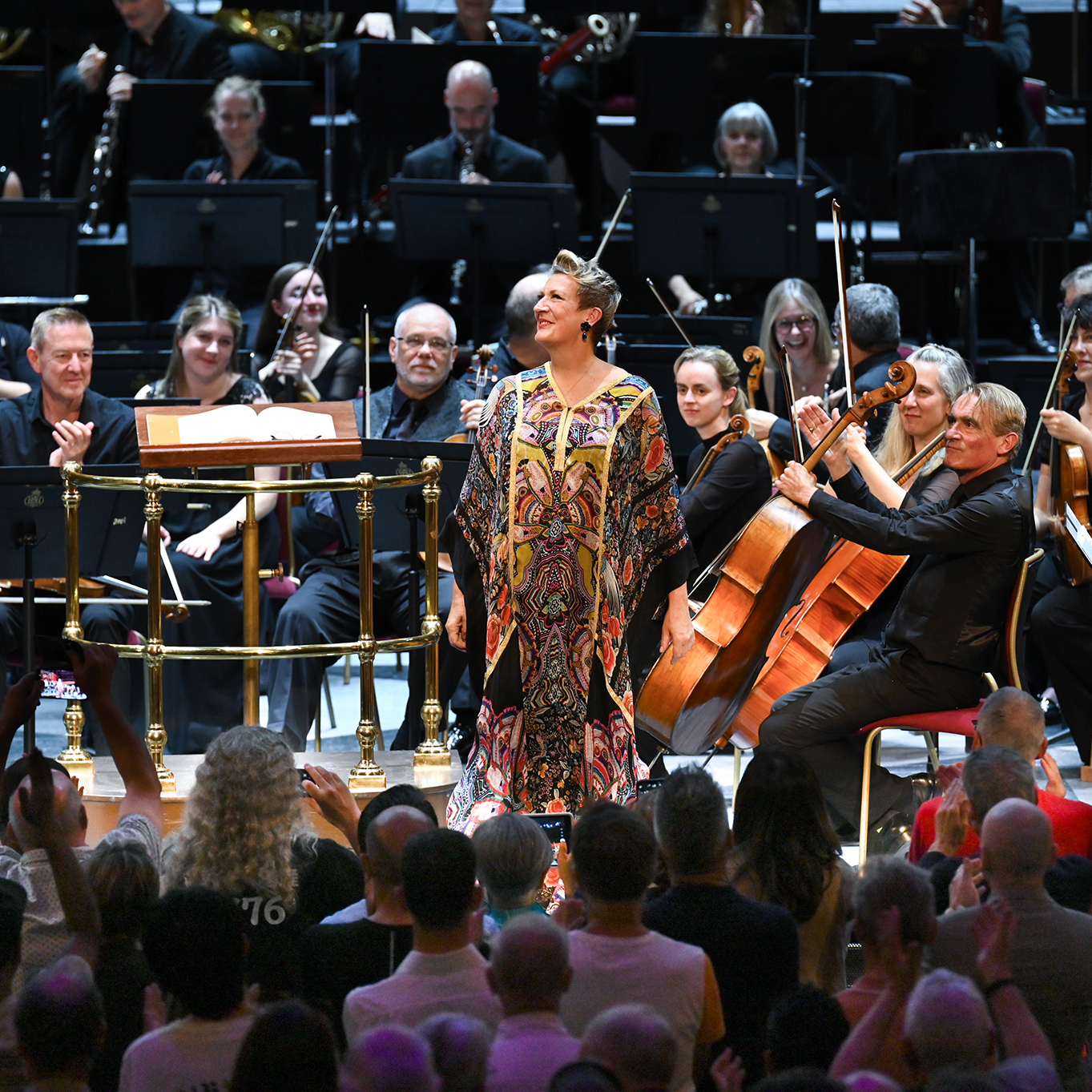
Among Pejačević’s sizable output of songs are four with orchestra, making a viable sequence in its own right. Dame Sarah Connolly (above) brought out the searching whimsicality from Karl Henckell’s Butterfly Songs, whether the fanciful imaginings of ‘Golden stars, little bluebells’ or the more concrete thoughts of ‘Flutter, o butterfly’ with delicate contributions by flute and glockenspiel. The setting of Kael Kraus’s Transformation taps deeper emotion, not least with those ecstatic violin solos between stanzas (eloquently rendered by Yuri Torchinsky), whereas that of Rainer Maria Rilke’s Love Song is notable less for the gently undulating phrases of its vocal writing than for the soaring ecstasy of its central interlude which only double one’s regret that neither composer nor poet lived long enough to collaborate on an opera project as had been mooted.

Making up this sequence were three songs by Alma Mahler-Werfel, taken from sets published in 1910 and 1915. Neither those contrived sentiments of Richard Dehemel’s The Silent Town or self-conscious emoting of Otto Julius Birbaum’s Light in the Night summons an especially personal response; only the winsome poise of Rilke’s I feel warm and close with you implies any individuality. The orchestrations by Colin and David Matthews are sensitive and apposite, but the latter might reasonably have expected more from the Proms in his 80th birthday-year.

Opening this concert was a beautifully judged reading of the overture to Weber’s final opera Oberon – less often heard now that overtures are no longer the automatic curtain-raisers they once were but which, in its deft interplay of evocative and energetic, still casts a potent spell.

By contrast, Rachmaninoff’s First Symphony has come much more into its own now that the composer’s orchestral output has moved to the centre of the repertoire. Unheard for 48 years after its disastrous premiere in 1897, it remains a testament to the young composer’s ambition – not least in an opening Allegro whose implacable ‘motto’ sets the course for this movement overall. Storgårds had its measure, not least in the mounting fervency of its development, then delivered a probing account of a scherzo the more ingenious for its pervasive understatement.

Although it will never supplant that of its successor in audience affection, the slow movement is a minor miracle of thematic subtlety and emotional restraint as came through via felicitous playing by the BBC Philharmonic woodwind. Launching the finale in suitably visceral fashion, Storgårds (rightly) made the most of its contrasts between the celebratory and the speculative – any remaining ambivalence not so much resolved as forced into submission through a coda which renders the fatalism of Tchaikovsky’s Pathétique from a distinctly personal vantage.

So, an unlikely programme which worked well as a concert – the more so given it proceeded without an interval. Those in the audience surreptitiously eating or drinking between pieces might have preferred otherwise, but for both music and performances it was nothing but gain.

For more on the 2023 BBC Proms, visit the festival’s website at the BBC. Meanwhile click on the names for more information on artists Dame Sarah Connolly, John Storgårds and the BBC Philharmonic Orchestra – and for information on the composers Dora Pejačević and Alma Mahler-Werfel

In concert – Gramophone 100th Anniversary Concert @ Wigmore Hall

Reviewed by Ben Hogwood

There is a famous, unattributed quote that ‘writing about music is like dancing about architecture’. How, then, to interpret a concert in celebration of a magazine? The conclusion, when that magazine is 100 years old, is that surely its writers are doing something right!

The magazine is the esteemed Gramophone, formed in 1923 and reaching its centenary without a break, not even an issue missed during the Second World War. Gramophone has reflected the growth of the classical record industry, proving something of a bible for classical music listeners and buyers, with its recommendations of recordings and interviews / thought pieces to put them in context. Music old and new is covered, and not all of it classical – indeed, as we found out during James Jolly’s revealing and entertaining narration, the magazine reviewed pop music in the 1960s.

Jolly is the magazine’s Editor in Chief, and has been with the magazine since starting as editorial assistant in 1985. He gave a debt of gratitude to the Gramophone founder Sir Compton Mackenzie and the Pollard family, where the large part of the night’s story lay. Modestly, the magazine did not dwell on their current state, which would have been easy – for Gramophone is one of those rare things, a publication where subscription is done without the bat of an eyelid, and each issue read cover to cover – either physically or online, where you can enjoy the entirety of its archive in digital form.

How to celebrate such a publication in a concert? Choosing the Wigmore Hall was a smart move, honing resources and ensuring the celebrations were done with quality as well as quantity. The move did of course eliminate larger scale forms – opera and orchestral – but it retained the magazine’s sense of musical exploration through five centuries of music.

Violinist Alina Ibragimova and pianist Cédric Tiberghien began with a concentrated performance of Debussy’s Violin Sonata, completed just six years before the magazine’s first edition. This was a thoughtful and virtuosic performance, Ibragimova fully inhabiting each phrase while Tiberghien successfully harnessed Debussy’s coloristic effects and sleights of harmony. The spectre of war was close at hand – as it was in Gramophone’s early years.

Next up was countertenor Iestyn Davies, a late replacement for soprano Fatma Said. It was a privilege to hear his Purcell, refracted through the eyes of modern composers, showing how access to the composer’s music has boomed since Gramophone started. Davies had a particularly arresting delivery for Britten’s Lord, what is man, before a deeply passionate vocal in the Thomas Adès setting By beauteous softness, Malcolm Martineau phrasing its postlude with exquisite shaping. Britten reappeared for a jubilant I’ll sail upon the Dog Star.

In Gramophone’s tenure the guitar has established itself as a central part of the classical repertoire. We heard two very different soloists – Milos in Mathias Duplessy’s bluesy Amor Fati, which though originating in France seemed to be looking over the Spanish border on occasion. Its full bodied chords were brilliantly declaimed. Sean Shibe, meanwhile, cast his eyes further east as partner for tenor Karim Sulayman in three songs of Arabic origins. Here was a striking alliance, Shibe’s exquisitely quiet playing a match for the tenor’s husky delivery. The two finished each other’s sentences, reflecting a musical chemistry of unusual quality found on their recent album Broken Branches.

We also heard three very different pianists, dazzling with virtuosity but also showing impeccable control. Nearest to the edge was Jean-Efflam Bavouzet, whose compelling excerpts from Ravel‘s suite Miroirs revealed rougher contours. These suited the storm of Une barque sur l’océan, while Alborada del gracioso was rustic and danced at quite a pace, the pianist relishing its whirling figurations.

Martin James Bartlett showed a painter’s touch to a pair of Liszt arrangements – the composer’s keyboard paraphrase of his son-in-law Wagner’s Liebestod especially fine. Bartlett’s phrasing was immaculate, each tune clear as a bell in spite of the myriad accompanying colours. The Schumann transcription Widmung also retained a songful air, powerful at its climactic passages.

Bisecting the keyboard soloists was soprano Carolyn Sampson and regular partner Joseph Middleton. Sampson will shortly reach her 100th album release, a remarkable achievement in a discography adorned with Gramophone accolades. We heard a well-chosen and varied selection taking us from Purcell and Britten to Saariaho via Poulenc and Régine Poldowski, the latter composer indicative of record companies’ efforts to include more female composers at last. Daughter of Polish composer Henryk Wieniawski, Poldowski made a very strong impression with L’heure exquise, while Sampson gave a ringing endorsement for Saariaho’s Parfum de l’instant, due in a future recording. Here she was aided by a fountain of cascading treble notes from Middleton.

Finally we heard Bernard Chamayou in a tour de force account of Liszt’s Venezia e Napoli, an apt choice in its inclusion of the city of Naples, looking out to a former home of Sir Compton Mackenzie on the island of Capri. Liszt added the Venezia e Napoli triptych as a footnote to the second book of his cycle Années de Pèlerinage, reflecting the impact of his travels around Europe as a virtuoso pianist. Its music is far from trivial and Chamayou, who recorded the complete cycle in 2010 brought unusually clear definition to the undulating figures of Gondoleria. The Rossini-themed Canzone was deeply intoned, majestically voiced with a sense of wonder projecting right to the back of the hall. Finally the Tarantella was a virtuoso affair, but Chamayou never lost sight of the thematic material in the tempestuous surroundings.   

It was the ideal way to conclude a high-quality concert, though an encore saw the assembled artists sing ‘Happy birthday’ to the publication that has served them so well. Here’s to another 100 years, Gramophone!

List of repertoire

Debussy Violin Sonata in G minor (1917)

Alina Ibragimova (violin), Cédric Tiberghien (piano)

Purcell, realised Britten Lord, what is man (1945); Purcell, realised Adès By beauteous softness (2017); Purcell, realised Britten I’ll sail upon the Dog Star (1943)

Iestyn Davies (countertenor), Malcolm Martineau (piano)

Duplessy Amor Fatí (2022)

Miloš (guitar)

Ravel Miroirs: Une barque sur l’océan; Alborada del gracioso (1904-5)

Jean-Efflam Bavouzet (piano)

Trad arr. Sulayman & Shibe La prima vez; Arab-Andalusian Muwashsha arr. Shibe Lamma Bada Yatathanna; Sayed Darwish arr. Shibe & Sulayman after Ronnie Malley El helwa di

Karim Sulayman (tenor), Sean Shibe (guitar)

Wagner arr. Liszt Isoldens Liebestod (1867); Schumann arr. Liszt Widmung (1848)

Martin James Bartlett (piano)

Purcell realised Britten Sweeter than roses (c1945); Britten Fancie (1965); Poulenc Fancy (1959); Régine Poldowski L’heure exquise (1917); Saariaho Parfum de l’instant (from Quatre Instants) (2002)

Carolyn Sampson (soprano), Joseph Middleton (piano)

Liszt Venezia e Napoli S162 (1859)

Bertrand Chamayou (piano)

In concert – BCMG: T R E E Concert

Neue Vocalsolisten [Johanna Vargas (soprano), Truike van der Poel (mezzo-soprano), Martin Nagy (tenor), Guillermo Anzorema (baritone), Andreas Fischer (bass)]; Finchley Children’s Music Group, Birmingham Contemporary Music Group / Michael Wendeberg

Mason The Singing Tree (2020-3) [BCMG Sound Investment commission: World premiere]
Lachenmann Concertini (2005)

Town Hall, Birmingham
Friday 12 May 2023

Reviewed by Richard Whitehouse

Birmingham Contemporary Music Group’s final concert this season also saw the conclusion of Tree City, a 16-year project that has seen Birmingham’s tree coverage increased by some 10% and an occasion marked by this Sound Investment commission from Christian Mason.

Among the leading UK composers, Mason (b1984) has written ambitious works before but none more so than The Singing Tree, a cantata whose seven movements unfold to a suitably arboreal text by Paul Griffiths. Despite its inclusion as an enlarged format in the programme, this was not easily readable under concert conditions (as its author wryly remarked), but of greater concern was its inaudibility during the actual performance; the intricacy of Mason’s writing for solo voices, children’s choir and large ensemble rather offsetting any such clarity.

A pity when Griffiths’ text, growing from the word ‘Tree’ such that each part multiplies by four (thus 1-4-16-64-256-1024), pertinently evokes the growth process alongside temporal and experiential evolution. Not that balance between the five solo voices, positioned centre-right of the platform, a 13-strong choir arrayed in the organ gallery, and an ensemble rich in timbral or textural possibilities seemed at fault, yet any sense of the music gaining gradually in emotional intensity to complement that of its musical complexity felt intermittent at best.

Most absorbing were those movements when Machaut’s rondeau Puis qu’en oubli threaded through the texture with tangible expressive intent, bringing to mind passages of comparable immediacy in seminal choral works by Berio, Kagel or Pousseur. Mason is demonstrably in that European lineage, making it more regrettable when despite its laudable intent – plus the commitment of Neue Vocalsolisten, Finchley Children’s Music Group and BCMG under the assured direction of Michael Wendeberg – his new piece made only an equivocal impression.

What it lacked in overall impact was given context in the second half, with a performance of Concertini by Helmut Lachenmann. Once notorious for (supposedly) predicating the gestural quality of sound, the composer’s more recent larger works exude a determination to align this with a tangible organic development – as heard in those climactic passages when the disparate sources coalesce for music sustained and visceral in its intent. Comparisons with the ataraxic progress of the lengthy final movement from Mason’s work were not to the latter’s advantage.

Once again, BCMG responded with conviction and no little finesse to Wendeberg’s direction – not least in the last third of this piece which had previously seemed to lose focus, but here readily conveyed the ensemble coming together in an audible while, this being Lachenmann, decidedly oblique resolution. Whatever else, the present work confronts and then overcomes those formal and expressive challenges it encounters to a degree that intrigues, frequently provokes but always engages the listener: something that should never be taken for granted. BCMG: NEXT earlier took the stage – pianist Rob Hao evincing due sensitivity in extracts from Lachenmann’s Ein Kinderspiel and in the eddying resonances of Wiegenmusik, before joining with flautist Emily Hicks for the plaintiveness of Mason’s Heaven’s Chimes are Slow.

You can read all about future events at the BCMG website. For more on the composers, visit sites dedicated to Christian Mason and Helmut Lachenmann – and for more on the performers, click on the names to read about Neue Vocalsolisten, Finchley Children’s Music Group and Michael Wendeberg