In concert – Jennifer Johnston, Royal Liverpool Philharmonic Orchestra / Vasily Petrenko – The Divine Poem

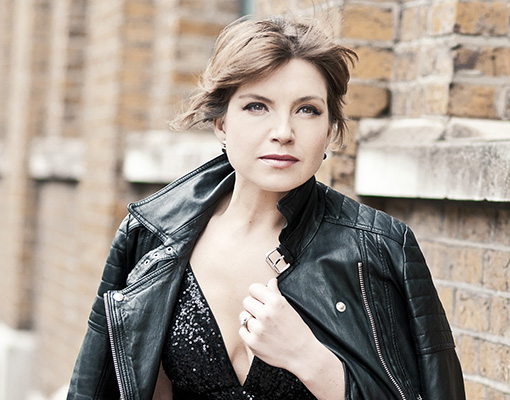
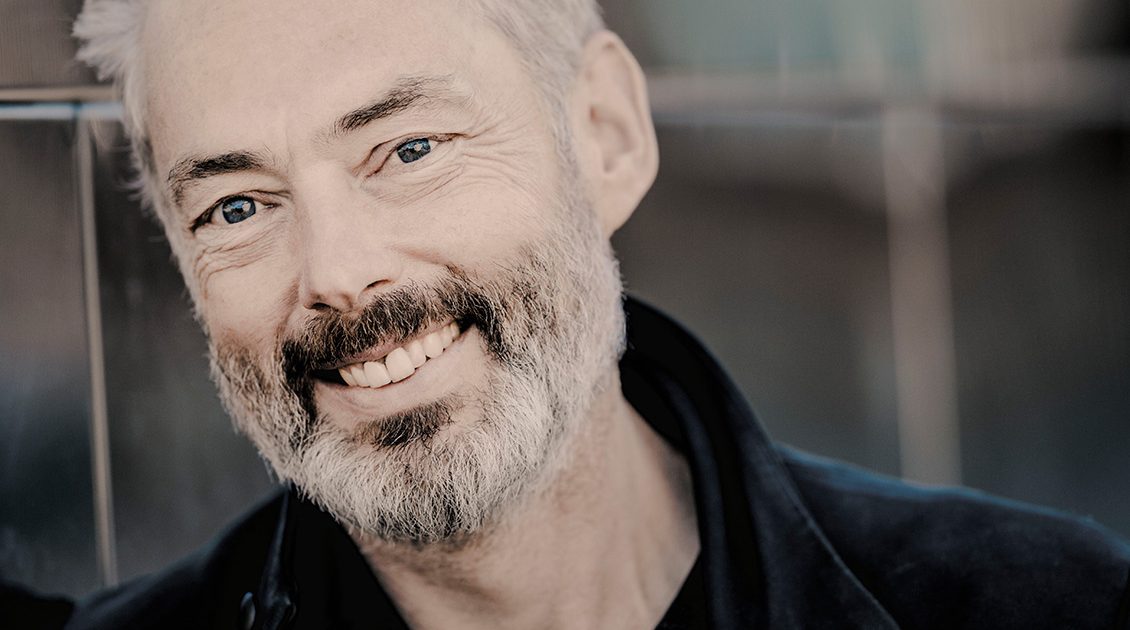
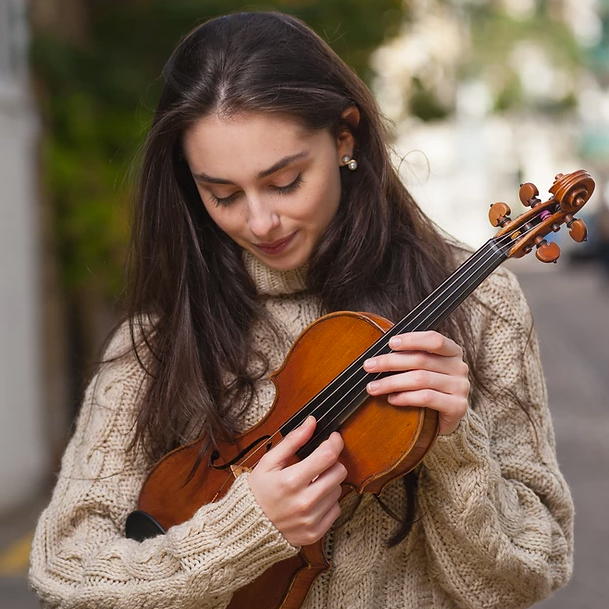
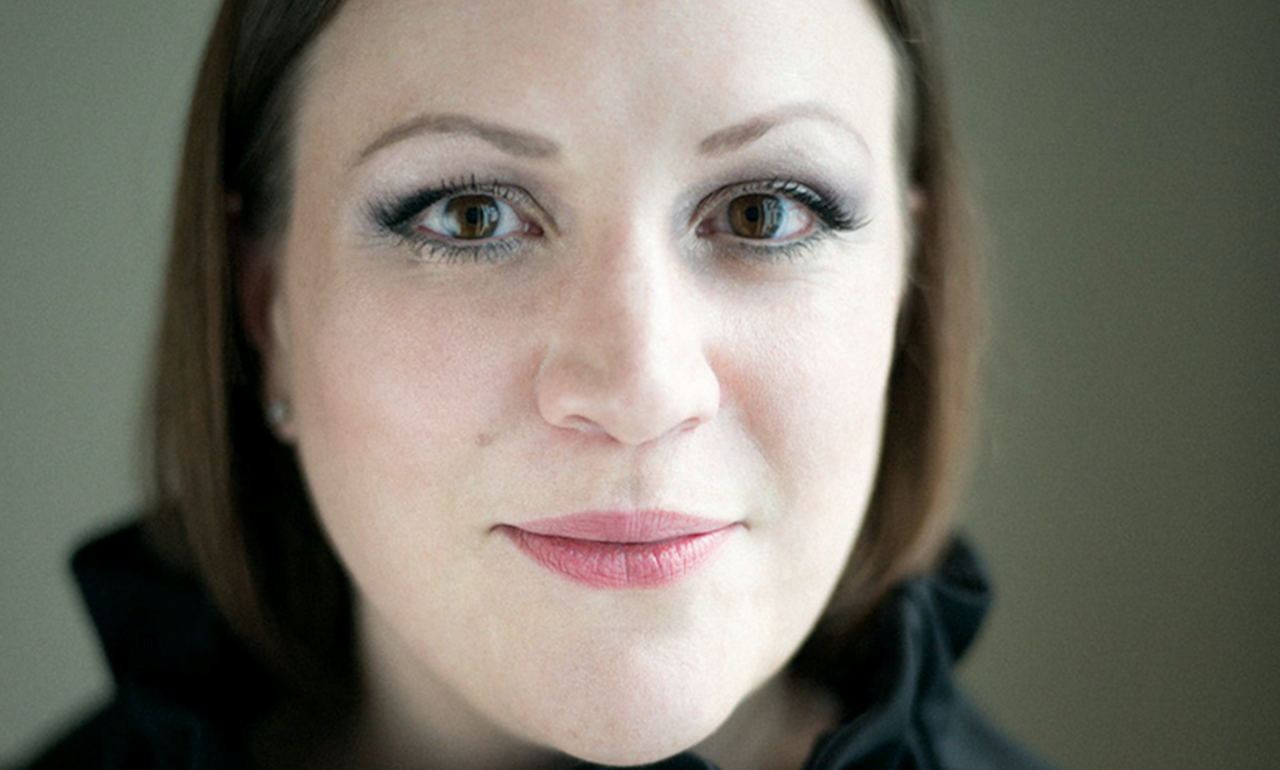
Jennifer Johnston (soprano, above), Royal Liverpool Philharmonic Orchestra / Vasily Petrenko (below)

Deutsch Phantasma (2022) [RLPO co-commission: UK premiere]
Mahler Lieder eines fahrenden Gesellen (1884-5)
Scriabin Symphony no.3 in C minor Op.43 ‘The Divine Poem’ (1902-4)

Philharmonic Hall, London
Thursday 4 May 2023

Reviewed by Richard Whitehouse

He may now be the orchestra’s conductor laureate, but the 15-year partnership between Vasily Petrenko and the Royal Liverpool Philharmonic Orchestra was always tangible in this evening’s concert – its refreshingly different programme summoning the best from both orchestra and conductor.

Co-commissioning music by Bernd Richard Deutsch was an astute move – the Vienna-based composer now in his mid-40s and among the leading composers of his generation. Taking its cue from the Beethoven Frieze which Gustav Klimt devised for the 14th Vienna Secessionist Exhibition in 1902, this 15-minute piece takes a pointedly dialectical route as it evolves from the fractured uncertainty of yearning and suffering, via the cumulative intensity of a struggle against hostile forces, to the attainment of happiness through poetic creation. To what degree this might be a commentary on Beethoven’s Ninth Symphony (as embodied in the three parts of Klimt’s opus) is uncertain, but the motivic ingenuity and orchestral virtuosity of Deutsch’s response can hardly be doubted – not least in a performance as assured and committed as this.

If the indisposition of Adela Zaharia meant the regrettable omission of Strauss’s rarely heard Brentano-Lieder from tonight’s concert (though Petrenko has scheduled them with the Royal Philharmonic next season), hearing Jennifer Johnston in Mahler’s Gesellen-Lieder was by no means a hardship. The four songs, to the composer’s own texts, comprise an overview of his preoccupations (creative and otherwise) in his mid-20s with numerous anticipations of what became his First Symphony. Outlining a delicate interplay of pensiveness and wistfulness in the initial song, Johnston was no less attentive to its successor’s mingling of innocence with experience, and if the surging histrionics of the third song bordered on the melodramatic, the fatalistic procession of the final number felt the more affecting for its restrained eloquence.

Petrenko (above) set down a highly regarded cycle of Scriabin Symphonies over his tenure with the Oslo Philharmonic, and if the RLPO lacked any of that orchestra’s fastidious poise, the sheer verve and energy of its playing more then compensated. Not least in an opening movement whose unfolding can seem longer on ambition than attainment, but which was held together with unforced conviction – the most often prolix development duly emerging with a tautness to make it more than usually emblematic of this work’s metaphysical Struggles as a whole.

Outwardly more compact, the remaining movements require astute and cumulative handling such as these received here. The alternately enchanting and ominous Delights melded into an enfolding yet never amorphous entity, out of which the more animated motion of Divine Play gradually brought together earlier ideas on its way to an apotheosis whose amalgam of the work’s principal themes yielded grandiloquence without undue bathos. Scriabin’s cosmic aspirations thereby seemed the more ‘real’ for being the expression of purely musical forces. An expanded RLPO (its nine horns arrayed across the upper tier of the platform) was heard to advantage in the ambience of Philharmonic Hall, contributions by trumpeter Richard Cowen and leader Thelma Handy enhancing what was an authoritative and memorable performance.

You can read all about the 2022/23 season and book tickets at the Royal Liverpool Philharmonic Orchestra website. Click on the artist names for more on Jennifer Johnston and conductor Vasily Petrenko, and for more on composer Bernd Richard Deutsch – who also has a dedicated page at his publisher Boosey
In concert – Noriko Ogawa, English Symphony Orchestra / Kenneth Woods – Brahms, Grieg & Sibelius

Noriko Ogawa (piano), English String Orchestra / Kenneth Woods

Brahms Tragic Overture, Op. 81 (1880)
Grieg Piano Concerto in A minor, Op. 16 (1868)
Sibelius Symphony No. 5 in E flat, Op. 82 (1915-19)

Town Hall, Cheltenham
Sunday 16 April 2023

Reviewed by Richard Whitehouse

The English Symphony Orchestra’s latest concert had no English (or British) connection and no premieres or unfamiliar music. In short, a mainstream sequence of overture, concerto and symphony which worked as a programme simply because these pieces went so well together.

Although it has never lacked for performances, Brahms’s Tragic Overture remains among his more unusual conceptions: a concert overture whose deftly modified sonata design admits an element of evocation as if some intangible drama were being played out. It was to the credit of this performance when such subjection offset an otherwise unwavering formal trajectory, Kenneth Woods integrating the speculative central episode with a conviction that made the heightened reprise of the main theme the more telling for its implacably wrought fatalism.

Brahms’s writing of an overture with components as if ‘in the wrong order’ made an unlikely link to the Piano Concerto by Grieg, which still offers a wealth of surprises in a sympathetic reading. This it received from Noriko Ogawa – bringing out the unforced eloquence of what, the opening Allegro in particular, is much more than a loose sequence of enticing melodies in search of coherence. As her imaginative take on its cadenza underlined, Grieg left nothing to chance as the movement turns decisively full circle. With its easeful horn melody (courtesy of James Topp) and alluring solo response, the Adagio exuded an understated allure, and if the finale lacked for any rhythmic verve, the central section with its rapt flute melody (courtesy of Laura Jellicoe) sounded as affecting as its heightened peroration at the close was majestic.

The ESO and Woods are currently working towards a Sibelius cycle and their account of the Fifth Symphony had all the hallmarks of complete identity with, here again, a determination not to take to take anything in so familiar a work for granted. This was especially notable in the opening movement – its segueing between what began as two separate entities rendered with due seamlessness. Not least that central climax, out of which the scherzo emerged then proceeded to accrue motion imperceptibly through to a coda whose velocity was irresistibly evident. Much more than a whimsical interlude, the Andante had keen appreciation of those ambiguous shadows which inform its progress at crucial junctures, yet without undermining that guileless essence to the fore in the closing pages with their felicitous woodwind playing.

Making an attacca (and rightly so) directly into the finale, Woods brought out the productive contrast between its ideas – thus, the initial theme with its onrushing strings, then the ‘swan melody’ with its harmonic allure and intricate textural layering abetted here by the up-front acoustic of Cheltenham Town Hall. Just how so tensile and compact a movement generates an apotheosis of such grandeur cannot easily be explained, yet such an outcome was tangible as those concluding chords emerged with an inevitability as undeniable as it was heartening.

They certainly set the seal on an impressive performance which was warmly received by the sizable house. The ESO can be heard in Worcester early next month with assistant conductor Michael Karcher-Young, then with Woods in June for the latest edition of The Elgar Festival.

For more information on the artists in this concert, click on the links to read about Noriko Ogawa Kenneth Woods and the English Symphony Orchestra.

In concert – Nash Ensemble @ Wigmore Hall: Side by Side & Nash Inventions

Side by Side

Royal Academy of Music Students [Christopher Vettraino (oboe), Silvia Bettoli, Johan Stone (horns), Magdalena Riedl (violin), Gordon Cervoni (viola)], Members of the Nash Ensemble – Adrian Brendel (cello), Alasdair Beatson (piano)

Colin Matthews Time Stands Still (2004)
Balency-Bearn Entre-Deux (2022)
Alberga No-Man’s-Land Lullaby (1996)
Keting before we were ocean (2021)
Colin Matthews Dual (2021)
Abrahamsen Congratulations Greeting (2022)

Nash Inventions

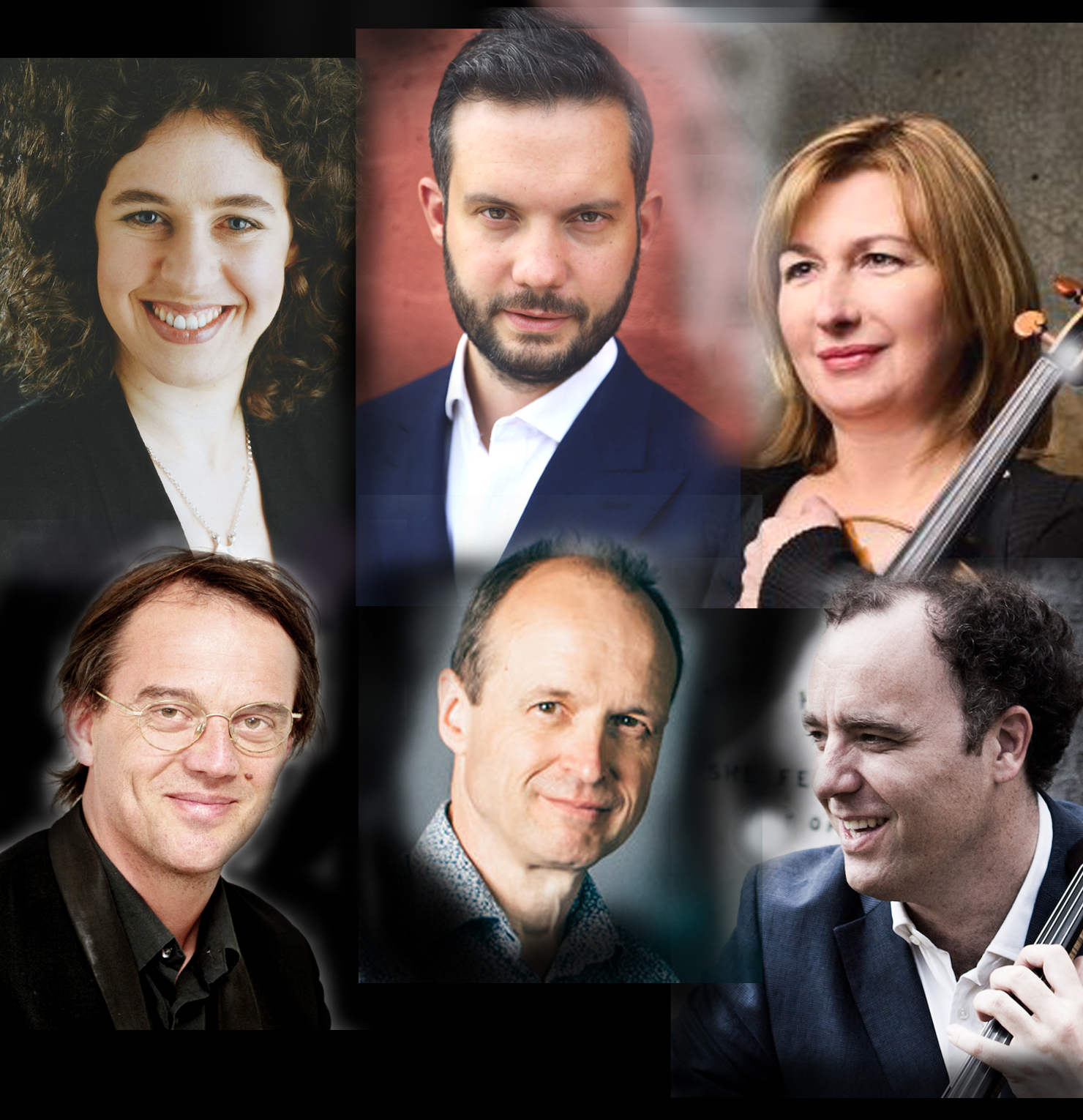
Claire Booth (soprano), Mark Padmore (tenor), Nash Ensemble [(Philippa Davies (flute), Gareth Hulse (oboe), Richard Hosford, Marie Lloyd (clarinets), Richard Watkins (horn), Sally Pryce (harp), Benjamin Nabarro, Michael Gurevich (violins), Lars Anders Tomter, Jennifer Stumm (violas), Adrian Brendel (cello), Graham Mitchell (double bass), Alasdair Beatson (piano)] / Martyn Brabbins

Casken Misted Land (2017)
Colin Matthews Seascapes (2021)
Anderson Van Gough Blue (2015); Three Songs (2018-22) [World Premiere of THUS]
Benjamin Viola, Viola (1997)
Turnage A Constant Obsession (2007)

Wigmore Hall, London
Tuesday 28 March 2023 (5pm and 7.30pm)

Reviewed by Richard Whitehouse

It has become such a fixture on the London calendar that Nash Inventions, given annually by the Nash Ensemble at Wigmore Hall, could easily be taken for granted. As tonight’s concert proved, however, the range and quality of those works performed is anything but predictable.

His long-time drawing inspiration from the landscape of the North-East might suggest Misted Land as a ready-made title for John Casken. Yet this quintet for clarinet and strings focusses on emotion as much, if not more than evocation by unfolding from the intangible impressions of its initial movement, via impulsive contrasts of its intermezzo, to a finale whose visceral progress is curtailed by a timely return to the initial equivocation. Richard Hosford made the most of his alternately insinuating and forceful writing in a piece that well deserved revival.

Although settings by Michael Tippett early on confirmed the musicality of his verse, Sidney Keyes (1922-43) has been relatively little set – making this selection by Colin Matthews in Seascapes the more welcome. From the unforced rhetoric of The Island City, it takes in the fleeting sensations of From : North Sea and the tense rumination of Night Estuary; a brief Interlude leading to the heartfelt expression of Seascape – one of Keyes’s greatest poems, in which Claire Booth’s commanding eloquence (above) more than vindicated the cycle as a whole.

Last in an informal trilogy centred on the colour, Van Gough Blue sees Julian Anderson pay tribute to this artist in a sequence traversing dawn to night. A speculative emergence of sound and texture in l’Aube, soleil naissant precedes the heady rhythmic and melodic interplay of Les Vignobles then mounting animation of Les Alpilles. Nothing, though, prepares for the inward rapture of Eygalières or the dance toward destruction of la nuit, peindre les étoiles: pieces wholly characteristic of this composer and as finely realized as anything he has written.

Further music by Anderson followed the interval – three in an ongoing series for soprano and ensemble identical to, but very different in usage from, that of Schoenberg’s Pierrot Lunaire. The viscerally sensual overload of Mallarmé’s Le Tombeau d’Edgar Poe (here made a tribute to Debussy in the centenary of his death) contrasted with the disarming sincerity of le 3 Mai – an email by composer Ahmed Essyad written during the pandemic, then lines by Longfellow in THUS – Claire Booth here enacting what is less a setting than a musical riposte to its text.

Writing what had become a tribute to Takemitsu 18 months after his death, George Benjamin turned what might have reflected the viola’s innate introspection into an intensive exploration by two of these instruments of how they might discover rhythmic then melodic and harmonic accord. Music diverse in content and logical in its unfolding, its technical challenges remain considerable – making this performance by Jennifer Stumm (having replaced Timothy Ridout at short notice) and Lars Anders Tomter the more engaging through its audible conviction.

It might come a fair way back in his sizable output, but the song-cycle A Constant Obsession remains among Mark-Anthony Turnage’s finest vocal works. This reflection on ‘love’ – what it might be, what it becomes and what it could have been – is articulated across five settings of Keats, Hardy, Edward Thomas, Graves and Tennyson; its course predicted in a ‘Prologue’ and encapsulated in the bleakly humorous final poem. Mark Padmore (above) conveyed its measure now as 14 years before, as did Martyn Brabbins (below) with his attentive and unobtrusive direction.

The early evening slot brought together players from the Nash and Royal Academy of Music. Entre-Deux saw Andrea Balency-Béarn opening out the timbral and harmonic space between pitches with discreet elegance, and No-Man’s-Land Lullaby found Eleanor Alberga working toward a totemic melody with combative fervency. Sun Keting contributed music laced with nostalgia but also indignation in before we were ocean while, in Congratulations Greeting, Hans Abrahamsen commemorated the RAM’s bicentenary in lively and resourceful terms.

Colin Matthews provided a more quixotic take on that event in the subtle contrasted sections of Dual, with his music also opening and concluding this selection. Time Stands Still marked Simon Rattle’s 50th birthday in (surprisingly?) inward and even inscrutable terms, while 23 Frames marked the 30th anniversary of the Nash through that number of miniatures whose character felt as distinctive as their order was random. The outcome found this composer as his most entertaining, with no complaints if several ‘frames’ exceeded their 30-second remit.

A lengthy evening, then, and an impressive showcase for the Nash in term of marking those achievements past or present. Now is hardly the time for any complacency regarding events such as this, which remains a template for what is possible in matters of artistic excellence.

Click here for the Nash Ensemble website, and here for the Royal Academy of Music

In concert – Esther Abrami, English Symphony Orchestra / Kenneth Woods – Robert Saxton, Bruch & Mendelssohn

Avie, London 15 Feb 2011

Esther Abrami (violin), English String Orchestra / Kenneth Woods

Saxton Scenes from the Epic of Gilgamesh (2022-3) [World Premiere]
Bruch Scottish Fantasy in E flat (1880)
Mendelssohn Symphony no.3 in A minor Op.56 ‘Scottish’ (1841-2)

Sheldonian Theatre, Oxford
Friday 10 March 2022

Reviewed by Richard Whitehouse

There cannot be any more historic or atmospheric performance venues than the Sheldonian Theatre in Oxford, which is still going strong after over 350 years and the setting for this latest contribution to the English Symphony Orchestra’s ‘21st-Century Symphony Project’.

Speaking only recently, Robert Saxton stated a reluctance to call his Scenes from the Epic of Gilgamesh a symphony and yet the piece, a result of many years’ thinking about the musical treatment right for one of the oldest written texts, has a formal cohesion and expressive unity comparable to previous instalments in the ESO’s project. Scored for late Classical forces of pairs of woodwind, horns and trumpets with timpani and strings, its textural clarity serves to imbue any illustrative aspect with an abstract focus duly sustained across the five movements.

Charting a deft course over its narrative, the work heads from the fluid motion of a Prologue to The Journey to the Forest of Cedar, whose passacaglia-like evolution finds this composer at its most harmonically alluring, then to From dawn to dusk and a scherzo as tensile as it is evocative. Lament distils a tangible emotional force into its gradual yet inexorable build-up, moving straight into an Apotheosis which opens out the melodic content of earlier ideas and so brings a powerful culmination as the hero is forced to seek his immortality by other means.

More overtly tonal it may have become, Saxton’s music still presents considerable challenges technical and interpretive. Suffice to add these were met with finesse and no little conviction by Kenneth Woods (above) and the ESO who, having previously recorded this work for future release, were fully conversant with its elusive while always approachable idiom. Almost four decades on from the flamboyant pieces which helped establish his name, Saxton revealed an orchestral mastery that will hopefully find an outlet in further such pieces – whether or not ‘symphonic’.

Tonight’s concert was also notable for featuring the ESO’s new Creative Partner and Artist in Residence – violinist Esther Abrami (above), her presence on social media enhanced by the release of her eponymous debut album for Sony. Stylishly attired (with an image that, for older readers, might recall Audrey Hepburn), she gave an account of Bruch’s Scottish Fantasy at its best in the transition from sombreness to eloquence of its Introduction and high-flown sentiments of an Andante in which the composer’s recourse to folk melodies is at its most felicitous. Before it, the Scherzo ideally needed more incisiveness for its engaging humour fully to register, with the final Allegro (given in abbreviated form) rather less than ‘warlike’ – though its mellifluous second theme enabled Abrami to conjure a tonal warmth which was never less than appealing.

After the interval, the ESO came fully into its own with an impressive take on Mendelssohn’s ‘Scottish’ Symphony. Whatever its genesis in his tour of that country when just 20, the work is demonstrably that of a composer who, having reached a creative mid-point, surveys his many successes but also failings. Hence the fatalistic aura such as informs the opening movement’s introduction or the tense agitation of its main Allegro – both of which were palpably brought out by Woods, who then gave the brief if scintillating scherzo its head. The highlight was an Adagio whose constant pivoting between pathos and anguish was graphically stated – aided by an orchestral discipline no less evident in the final Allegro, its martial overtones carrying through to a pause in which the decision to opt for tragedy or triumph is held in the balance.

That the work closes in triumph has often been felt its downfall but, as conveyed by Woods at a swift if not inflexible tempo, such an apotheosis is one of determination or even defiance in the face of whatever is to come. It certainly brought this concert to a memorable conclusion.

For more information on the artists in this concert, click on the links to read about Esther Abrami, Kenneth Woods and the English Symphony Orchestra. Click on the name to read more about composer Robert Saxton – who also has a page from his publisher here

In concert – English Symphony Orchestra / Kenneth Woods – American & Canadian Sounds 2

Roman Kosyakov (piano), Rebecca Wood (cor anglais), Stuart Essenhigh (trumpet), English String Orchestra / Kenneth Woods

Barber Adagio for strings Op.11a (1936)
Still (arr. Zur) Dismal Swamp (1935)
Gershwin (arr. Farrington) Rhapsody in Blue (1924)
Copland Quiet City (1941); Appalachian Spring (1945)

Kings Place, London
Sunday 19 February 2022

Reviewed by Richard Whitehouse

London appearances by the English Symphony Orchestra being so infrequent, it was good to see an (understandably) scaled-down orchestra returning to Kings Place for the series American & Canadian Sounds that is taking place under the auspices of London Chamber Music Society.

The ubiquitous Adagio that Samuel Barber arranged from his only string quartet almost had to feature here, but that was no hardship given the excellence of the ESO’s playing – the silence after its climax rightly made the focal-point around which this whole performance revolved.

Although his music never entirely went away, the extent of William Grant Still’s output has barely been explored so all credit to Kenneth Woods for championing Dismal Swamp (heard here in an effective reduction by Noam Zur). Taking its cue from a short yet intense poem by playwright Verna Arvey (Still’s second wife), this 15-minute tone poem evokes the no-man’s land between Virginia and North Carolina across which escaped slaves once fled to freedom. Its concertante role for piano subtly embedded into the orchestral texture, the music charts a progression from sombre desperation to outward elation through a subtly extended tonality (Still having studied with composers as distinct as Chadwick and Varèse) whose apotheosis elides resolve and equivocation with a fervency which was tangibly in evidence.

Roman Kosyakov was the admirable pianist here as in George Gershwin’s Rhapsody in Blue. This also was heard in reduction, Iain Farrington’s arrangement combining the immediacy of Ferde Grofé’s original scoring with the Europeanized grandeur of his later orchestration. Placing the piano rear-centre of the platform likely accounted for any occasional failings of coordination, but Kosyakov’s characterful playing – not least in the lengthy developmental cadenza and ensuing ‘big tune’ – held one’s attention through to the indelible closing bars.

The play by Irwin Shaw for which he wrote incidental music might have passed into history, but Quiet City is among Aaron Copland’s most effective shorter pieces – its halting dialogue between cor anglais (Rebecca Wood) and trumpet (Stuart Essenhigh) given context by the modal plangency of its string writing.

The programme ended with Copland’s Appalachian Spring – heard here in the familiar suite but in the original orchestration with its prominent part for piano, along with solo woodwind contributions that stand out more clearly against the string nonet. Familiar as this music may be, its understated harmonic shadings and keen rhythmic ingenuity are never easily realized in performance, and it was testament to the ESO’s playing that the piece emerged as vividly and as cohesively as it did. In particular, the penultimate sequence of variations on ‘Simple Gifts’ had an unforced eloquence (the last statement of the Shaker hymn eschewing any hint of bathos) which carried through into the coda – its evocation of community no less affecting for being so idealized, and in music such as more than warrants that misused term ‘iconic’.

A rewarding programme and a welcome London appearance by the ESO, which will be back in action next month with (inter alia) a concert at Oxford’s Sheldonian Theatre that features a major new work by Robert Saxton as part of the orchestra’s ‘21st Century Symphony Project’

For more information on the artists in this concert, click on the links to read about Roman Kosyakov, Kenneth Woods and the English Symphony Orchestra. For more on the London Chamber Music Society, click here – and for more on composer William Grant Still, click here