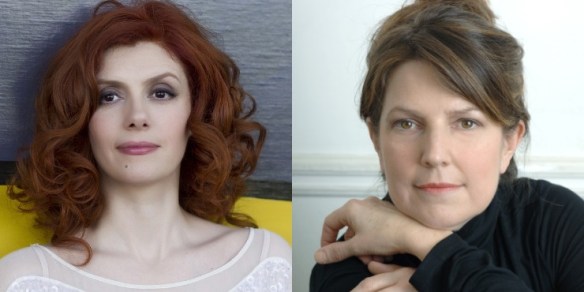
Wigmore Mondays – Pavel Kolesnikov plays Debussy

pavel-kolesnikov

Pavel Kolesnikov (piano) plays Debussy’s first book of Préludes

Wigmore Hall, London

Monday, 11 January 2016

written by Ben Hogwood

Audio (open in a new window)

http://www.bbc.co.uk/programmes/b06tx85v

Available until 10 February

What’s the music?

Debussy (1862-1918): Préludes, Book 1 (1909-1910); L’isle joyeuse (1904)

Spotify

Pavel Kolesnikov has not yet recorded any of this repertoire, but a reproduction of his program using available versions can be accessed below, for listeners who cannot hear the BBC broadcast:

About the music

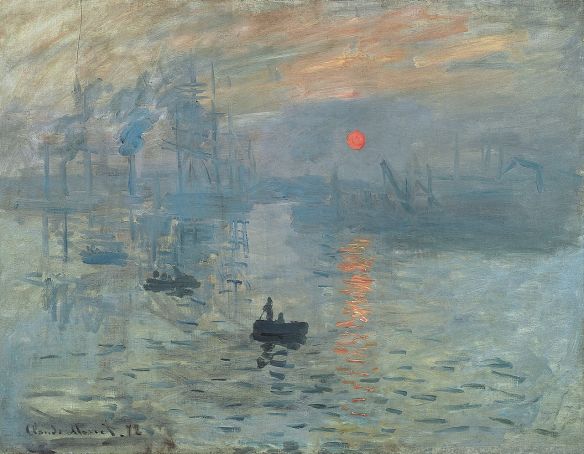
Debussy wrote 24 Préludes for piano, collected in two books but did not approach them in the same way as Chopin, who wrote one in each key. Instead he looked for character pieces, and the first book of Préludes are a fine example of what is often called the composer’s ‘impressionist’ style. By that we mean Debussy would often shade his music in a form that matches the paintings of artists such as Monet and Renoir, leaving them less defined.
impression-sunrise

Impression: Sunrise by Claude Monet (1872)

Perhaps because he wanted the listener to form their own pictures in their mind’s eye, Debussy left the title of each Prélude until the end of the piece – and even then was not at all conclusive in his naming. La cathédrale engloutie (The submerged cathedral), Ce qu’a vu le vent d’ouest (What the West Wind has seen), Danseuses de Delphes (Dancers of Delphi) – all are subject matters that need an active imagination to complete the picture.

L’isle joyeuse is a little more defined but not much, being a homage to Jersey, where Debussy holidayed with his new love in the summer of 1904.

These pieces make great technical demands on the pianist but also allow freedom of interpretation, both for player and listener.

Performance verdict

Having already established a reputation as a Debussy interpreter in his Wigmore Hall debut in 2014, BBC New Generation artist Pavel Kolesnikov returned to dazzle with more of the composer’s music.

Yet his approach was not obviously virtuosic, and he often took sensitive liberties with his tempo choices in the Préludes, drawing out the slow pieces especially effectively. These approaches were shown to be completely valid, setting an atmosphere of quiet intensity where I found myself subconsciously leaning forward on several occasions, literally hanging on Kolesnikov’s next note.

Les collines d’Anacapri (The Hills of Anacapri) was especially convincing, as was a totally unhurried Des pas sur la neige (Footsteps in the Snow). La danze de Puck was brilliantly done, an irresistible glint in the jester’s eye, while the stumbling rhythm of Minstrels was expertly controlled. Kolesnikov opened up the detail of Debussy’s inner part writing but never at the expense of his overall impression of each piece, and in L’isle joyeuse this led to painstakingly produced trills, part of an incredibly secure performance that still created a vivid picture of the island.

Full marks to the pianist, too, for overcoming the considerable distraction of latecomers arriving directly in his eye line after a poised account of Danseuses de Delphes. All that was required was a pertinent pause, and he was back in the zone.

What should I listen out for?

1:35 – Danseuses de Delphes (Dancers of Delphi) – immediately a sultry atmosphere is cast, the slow moving music rather mysterious but at the same time oddly enchanting. The block chords create an essence of calm.

There is then a pause while the latecomers are admitted…before…

5:41 – Voiles (Veils) – if anything the heady atmosphere is heightened by this deeply intimate impression, with suggestively chromatic lines in the right hand over a sustained held note in the left. The boundaries are blurred here, the ‘impressionism’ all too evident.

9:31 – Le vent dans la plaine (The Wind in the Plain) – a blustery outlook is set by the left hand oscillations, though this piece proves just as elusive as the wind. Debussy once again uses melodies in a ‘pentatonic’ form (if you played C-Eb-F-G-Bb ascending on the piano those are the notes of the pentatonic scale). Sudden gusts of wind threaten to knock the music off course but it stays true to form, just.

11:47 – Les sons et les parfums tournent dans l’air du soir (The sounds and fragrances swirl through the evening air) This is an enchanted piece, and indeed is heavily perfumed, as though at the end of a very hot summer’s day. The sustain on the piano means notes can blur together in the listeners’ mind, but there is still a distinct four note theme heard at the start. Kolesnikov really draws out the tension at the end of this piece.

16:20 – Les collines d’Anacapri (The Hills of Anacapri) After a short, nervy start this piece bursts from its cover, with melodies exchanged between the top and bottom of the piano, with sustained but energetic chords in the middle. Then the music gradually ascends to a thrilling end which seems to be in mid-air, with a massive set of five notes high up on the piano at 19:09.

19:21 – Des pas sur la neige (Footsteps in the Snow) Debussy paints some incredibly vivid images on the piano, and the depiction of snow here is cold in the extreme! The quiet dynamic aids this, and the very slow tempo, though the melody does have a forlorn nature, as though in memorial or loss.

24:36 – Ce qu’a vu le vent d’ouest (What the West Wind has seen) – again Debussy mobilises the piano to portray the unpredictable gusts of the West Wind, through suddenly loud figures in the right hand and rumblings in the bass. Soon we hear crashing octaves high in the right hand, then a rush of notes, leading to a snappy end at 28:21.

28:23 – La fille aux cheveux de lin (The Girl with the Flaxen Hair) – one of Debussy’s best-loved pieces, this charming portrait uses the pentatonic scale as a basis for its melody (see above) – which sounds rather folk-like in nature. It is an affectionate picture.

30:38 – La sérénade interrompue (Interrupted Serenade) – from simplicity it’s back to a stop-start affair, as though Debussy were portraying the wind again. The whole piece seems to have a short attention span, moving through its thoughts very quickly as though on edge, but ends quietly.

33:13 – La cathédrale engloutie (The Submerged Cathedral) – one of the most famous Préludes, and certainly one of the most mysterious, with blurred imagery in the sustained left hand notes of the piano and a clear melody in the right hand. It is based on an ancient Breton myth in which a cathedral, submerged underwater off the coast of the Island of Ys, rises up from the sea on clear mornings when the water is transparent. Debussy catches the shimmering water as well as the ghostly outlines of the building – and there are suggestions of plainchant too. Eventually a massive toll of bells is reached (35:38) There is some magical quiet playing when this music reappears at 38:26.

39:49 – La danse de Puck (Puck’s Dance) – pure impudence in this piece of music, darting about elusively and never sitting still anywhere. There are some cheeky melodies but also some brief and profound asides.

42:31 – Minstrels – another stop start piece, but one where the melody is very clearly defined. It is as though the performers are slightly drunk and moving from side to side! After several runs at getting a long-lasting theme, the piece ends crisply and emphatically at 44:52.

45:34 – L’isle joyeuse – this character piece starts with extended trills in the right hand, creating a watery atmosphere but also one with latent energy. By 47:26 the open-air mood has been set and we hear another distinctive melody at 47:32. From 49:44 the music takes on the character of a march, becoming faster and louder until a final joyous theme at 50:15. The piece ends on the lowest end of the piano at 50:56.

Encore

52:08 For an encore Pavel Kolesnikov goes back two centuries to give Debussy’s compatriot – and one of his greatest influences – Jean-Philippe Rameau. The piece in question is L’Egyptienne, from the Nouvelles suites de pièces de clavecin (New Suites of Harpsichord Pieces) Suite in G major.

Further listening

A natural next port of call for listening is the second book of the Préludes, for they follow on naturally from the first. On this album the French pianist Pierre-Laurent Aimard plays both books:

Wigmore Mondays – Benjamin Appl & Graham Johnson

benjamin-appl-graham-johnson

Benjamin Appl (baritone) and Graham Johnson (piano) perform settings of the poetry of Joseph von Eichendorff

Wigmore Hall, London

Monday, 4 January 2016

Audio (open in a new window)

http://www.bbc.co.uk/programmes/b06tkp3w

Available until 3 February

What’s the music?

Schumann (1810-1856): Frühlingsfahrt Op.45/2 (1840); Der Einsiedler Op.83/3 (1850; Der frohe Wandersmann Op.77/1 (1840)

Mendelssohn (1809-1847): Pagenlied (1832); Nachtlied Op.71/6 (1847); Wanderlied Op.57/6 (1841)

Brahms (1833-1897): In der Fremde Op.3/5; Mondnacht; Parole Op.7/2; Anklänge Op.7/3 (all 1852-1853)

Pfitzner (1869-1949): In Danzig Op.22/1 (1907); Der Gärtner Op.9/1 (1888-9); Zum Abschied meiner Tochter Op.10/3 (1901)

Wolf (1860-1903): Nachruf (1880); Das Ständchen; Der Musikant; Der Scholar; Der Freund (all 1888)

Spotify

Benjamin Appl has not yet recorded any of this repertoire, but a reproduction of his program using available versions can be accessed below, for listeners who cannot hear the BBC broadcast. Where possible I have used recordings made by Appl’s mentor, Dietrich Fischer-Dieskau:

About the music

Joseph_Eichendorff

Joseph von Eichendorff (picture used courtesy of Wikipedia)

With around 5,000 song settings of Joseph von Eichendorff’s poetry from the 19th century alone – with thanks to BBC Radio 3 announcer Sara Mohr-Pietsch for the info! – Benjamin Appl and Graham Johnson had no trouble making up a concert of 18 ‘lieder’ for the first Wigmore Hall lunchtime concert of the year.

Their choice gives an intriguing insight into different approaches to the poet. Broadly speaking, Schumann ranges from love-laden to thoughtful and a little morose (though his selection comprises three prayers), Mendelssohn is either forthright or reflective in his three songs; the youthful Brahms is surprisingly relaxed, while Pfitzner emerges as an inventive painter. Perhaps the most striking examples here come from Hugo Wolf, who wanted to focus on the ‘comparatively unknown humourously and robustly sensual side’ of von Eichendorff’s poetry.

Performance verdict

A slightly downbeat return for the WIgmore Hall in 2016, but a concert that was beautifully performed. The pairing of an incredibly experienced pair of hands in Graham Johnson and a singer starting out on his artistic voyage in Benjamin Appl was a good match and yielded many rewards.

Several songs left lasting impressions from the program, among them two from Brahms, with Appl’s control throughout Mondnacht and the picture painting from Johnson in Parole especially notable.

It was good to hear some rarely-sung lieder of Hans Pfitzner, whose use of the piano’s lowest end brought a wholly new texture to In Danzig, while the Wolf selection reminded us how original he could be in his song settings, the piano cast in a prominent role of scene setting, one that Johnson relished and used to his great advantage.

What should I listen out for?

Schumann

2:06 – Frühlingsfahrt (A spring journey) – the initial optimism of this march is quite bracing, but it soon subsides as the poet thinks of old age.

5:31 – Der Einsiedler (The hermit) – quite a sad song, solemn and lost in thought. Again old age is a preoccupation, the piano supporting the vocal melody as a walking stick might support the physical frame.

9:02 – Der frohe Wandersmann (The happy wanderer) – a much more positive, open-air march that talks of streams ‘rushing down the mountains’ and larks that ‘soar heavenwards’. More spring than winter!

Mendelssohn

11:03 – Pagenlied (Page’s song) – a tentative detached figure in the piano part adds to the tension of this song, which is relatively subdued and distracted.

13:11 – Nachtlied (Night song) – there is a withdrawn feel to this song also, until the Nightingale is encouraged to sing out at 14:39.

16:12 – Wanderlied (Song of travel) – a typically busy piano part from Mendelssohn gives the impression of rapid movement, the traveller set on his way with the minimum of fuss – and happily so!

Brahms

20:49 – In der Fremde (In a foreign land) – a rather downcast setting in a minor key, the poet in reflective mood. The piano hints at a major key near the end but such thoughts are quickly forgotten.

22:12 – Mondnacht (Moonlight) – dappled piano lines suggest moonlight in the branches, and there is a more romantic mood, with yearning vocal lines.

25:03 – Parole (Password) – again Brahms thinks privately, using vivid picture painting from the piano that depicts the huntsman through distant calls but also the ‘one last shot’ (26:44), where Johnson adds extra emphasis.

28:02 – Anklänge (Echoes) – a short but evocative song of two halves, the first depicting a lonely house in a forest, the second greeting the maiden inside.

Pfitzner

30:07 – In Danzig – the mood changes dramatically in this darkly coloured song exploiting the lower range of both piano and singer. The mysterious and faintly menacing mood is aided by elusive harmonic movements.

34:38 – Der Gärtner (The Gardener)­ – this song is more conventional in its language, looking back to Schumann and Brahms. The mood is positive and quite dreamy, but reaches a very impressive climax at the end with the words ‘Viel schöne, hohe Fraue, Grüss ich dich tausendmal’ (‘I, lovely gracious lady, greet you a thousand times’)

38:08 – Zum Abschied meiner Tochter (Farewell to my daughter) – a positive farewell, and an expansive setting that reaches another impressive climax at 40:07.

Wolf

42:58 – Nachruf (In memoriam) – the piano imitates the lute in this song as Appl sings a gentle lament

47:06 Das Ständchen (The serenade) – a watery piano introduces an adventurous setting that contains the tune of a serenade but some unconventional dissonances between voice and piano. There is a great deal of sadness in this song.

50:27 – Der Musikant (The minstrel) – the choice of music over marriage is made here by the singer! As if to emphasise his decision there is a rather lovely piano introduction that proves to be the bedrock of the song.

52:14 – Der Scholar (The scholar) – there are a number of examples of picture painting in the piano part for this song, depicting the ‘little birds’ and the rain that ‘rattles on the leaves’. Again the singer extols the virtues of making music but occasionally with a few too many wines! (53:40)

54:55 – Der Freund (The friend) – The joy of friendship is celebrated here, though not without travelling through a storm or two (55:30) where the crushing piano and loud voice descend into brief turmoil before emerging triumphant.

Encore (not heard on the broadcast)

Verschwiegene Liebe (Silent Love) The twinkling piano introduction was followed here by a sensitive and grateful rendition from Appl.

Further listening

As a complement to the concert, how about a recital based on poems by Heinrich Heine? Anothre great influence on 19th century vocal music, Heine’s music was set by a number of composers – and here the great tenor Christoph Prégardien and fortepianist Andreas Staier look at songs by Schubert, Schumann and Mendelssohn:

Patricia Petibon and Susan Manoff at the Wigmore Hall – La Belle Excentrique

petibon-manoff

Patricia Petibon (soprano) and Susan Manoff (piano) – La Belle Excentrique, Wigmore Hall, Wednesday 16 December 2015

Review by Ben Hogwood

It isn’t often you see a rubber chicken as part of a song recital, and I would wager one has not been seen on the Wigmore Hall stage for quite some time. If ever! But this wasn’t just any song recital, this was a concert where soprano Patricia Petibon and pianist Susan Manoff asked questions of their audience, expanding the format but making them laugh and cry in the process.

The concert, a memorable Wigmore debut for Petibon, reminded us how regimented and serious some song recitals can be. Not a criticism you understand, for sometimes it is only right and proper to sit and listen to a singer and pianist making music of raw emotion. It can be one of the very best live experiences in classical music. But this was so very different, Petibon and Manoff marrying humourous music with songs of deep emotion, punctuated with well-chosen piano pieces.

La Belle Excentrique was the title given to the recital, which fell neatly into two parts. Part one began with understated beauty, the crystalline music of one of Reynaldo Hahn’s finest songs A Chloris a daring way to start, especially when sung so quietly. Yet gradually it became clear Petibon was here to have some fun, the actions at the end of the third Hahn song Quand je fus pris au pavillon a notice of intent. Soon the soprano was barking (Manuel Rosenthal’s Fido, Fido) and then Manoff donned a trunk for the same composer’s story of L’éléphant du Jardin des Plantes, both brilliantly done. Hats were donned for songs by Satie and Poulenc, while charm and heart-rending emotion took hold in two wonderful songs by Fauré.

The second half also moved between extremes. France, Spain and the Swiss Alps dovetailed beautifully for songs of powerful impact from lesser-known composers such as Henri Collet and Fernando Obradors, as well as underrated song composers Joaquín Turina and Joseph Canteloube, whose Chants d’Auvergne have fallen out of fashion in the last few decades. Petibon’s performance of La delaïssádo (The forsaken girl) proved this to be an oversight, matched by exceptional playing from Manoff who effortlessly deconstructed the orchestral parts. Then we moved back to farce, and an exaggerated performance of Leonard Bernstein’s song cycle La Bonne Cuisine. For this, Petibon and Manoff went the whole hog by dressing up as chefs and using props relating to the food they were describing. It was hilarious! The recital ended with a no holds barred performance of Lara’s popular song Granada, before two encores – the popular French song Parlez-moi d’amour and a short excerpt, The Cat, from Ravel’s opera L’enfant et les sortileges.

These two performers were a breath of fresh air on the Wigmore Hall stage, heightening our appreciation for 20th century song while questioning the conventional format of the song recital. The strongest possible recommendation I can give lies in the fact I have since purchased two of Petibon’s albums on Deutsche Grammophon, La Belle Excentrique and Melancolia (see Spotify below!) – and would wholeheartedly recommend and Susan Banoff as a concert experience to completely blow away the cobwebs.

Wigmore Mondays – Elizabeth Watts and Julius Drake

Elizabeth Watts, Photo : Marco Borggreve

Elizabeth Watts, Photo : Marco Borggreve

Elizabeth Watts (soprano), Julius Drake (piano) – Wigmore Hall, London, live on BBC Radio 3, 26 October 2015

Listening link (open in a new window):

http://www.bbc.co.uk/programmes/b06kb0f0

on the iPlayer until 25 November

Spotify

In case you cannot hear the broadcast, here is a Spotify playlist of the music in this concert, from available versions on Spotify (which do not include the Liszt song Quand tu chantes bercée).

What’s the music?

Liszt: 6 settings of poetry by Victor Hugo (dates are for first versions only): Enfant, si j’étais roi (1849); S’il est un charmant gazon (1844); Comment, disaient-ils (1842); La tombe et la rose (1844); Quand tu chantes bercée (c1844-45); Oh! quand je dors (1842) (21 minutes)

Debussy: Ariettes oubliées (1885-1887) (17 minutes)

Hahn: 4 Hugo settings: Rêverie (1888); Si mes vers avaient des ailes (1888); L’Incrédule (1893); Fêtes galantes (1892) (9 minutes)

What about the music?

A recital bringing together some richly varied settings of two French poets, Victor Hugo and Paul Verlaine.

It also gives us the opportunity to listen to some of the large output of Franz Liszt, who is best known for his piano music but whose songs have enjoyed greater prominence in recent years. He and the poet Victor Hugo were friends, meeting in Paris in the 1830s, and Liszt went on to set a number of his poems to music.

Debussy’s Ariettes oubliées (Forgotten Songs) is a cycle of six songs for voice and piano, based on a poem written by Paul Verlaine, who the composer knew and whose verse was a profound influence throughout the composer’s career.

We return to Victor Hugo for several settings by the Venezuelan-born French composer Reynaldo Hahn, who is best known for his song settings. This group of four includes Si mes vers avaient des ailes, the song that really brought Hahn to public attention and which, in the words of Graham Johnson, ‘has become his motto song’.

Performance verdict

A note first of all to say Arcana did not attend this concert, so the review is directly from the radio performance.

What is abundantly clear is that Elizabeth Watts is becoming a soloist of real repute, and one who has a very impressive and diverse repertoire. It was especially gratifying to hear her accounts of the Hugo settings by Liszt, not heard much in the concert hall but invested with real passion here, Watts floating effortlessly through the high notes as Julius Drake set the scene. Drake is an experienced pianist in Liszt songs, and is in the process of recording his output for Hyperion – and his ability to find the detail to point up alongside the vocal line was a real asset.

The Debussy had an essential mystique that Drake was quick to create in his piano part, Watts controlling her voice wonderfully well in the tricky melodic intervals. Meanwhile the Hahn selection sparkled, showing off this composer’s flair for word setting as well as the natural chemistry between Watts and Drake.

What should I listen out for?

Liszt

1:57 Enfant, si j’étais roi (Child, if I were king) translation here – a typically grand setting from Liszt, with a big piano part, while the soprano sings boldly above. A brave piece with which to start a recital! In the second verse the piano adopts a more threatening bass line as the soprano extols the virtue of a kiss from her lover.

5:13 S’il est un charmant gazon (If there’s a lovely grassy plot) translation here – a more gentle and loving song, this, with a similar mood to the opening of Brahms’ Violin Sonata no.2. The music flows with a mood of relative contentment.

7:41 Comment, disaient-ils (How then, asked he) translation here a nervy piano accompaniment immediately puts this song on each, though the floated higher vocal counters that somewhat. This is a short song but the high note at the end from the soprano carries a lasting impact.

9:49 La tombe et la rose (The tomb says to the rose) translation here This time we hear the soprano in a much lower range and with a fuller voice as Liszt takes on the much heavier text. There is weight in the piano part, too, though here as with a couple of the other songs it feels like Liszt has a short attention span.

13:44 Quand tu chantes bercée (When you sing in the evening) translation here This song has much softer contours, with a restful piano part and a relatively smooth vocal line for the soprano. That is not to say passion is lacking though, especially when the soprano sings ‘Chantez, ma belle’ (‘Sing, my pretty one’)

16:17 Oh! quand je dors (Oh! When I sleep) translation here As the title suggests here is a lullaby, though this one doubles as a love song. Again the soprano has to sing high, especially given the passion of Hugo’s text. The piano immediately sets the scene of rapture.

Debussy

The words for Ariettes oubliées are here

24:12 – C’est l’extase langoureuse (It is ecstasy) A heady song as you might expect from the title, which hangs on the air heavily. This whole impression is helped by Debussy’s chromatic writing, with soprano and piano right hand often in unison. The rich harmonies and melodies might sound awkward in isolation but, in a performance such as this, they are totally natural.

27:28 – Il pleure dans mon cœur…(It weeps in my heart) One of Debussy’s most celebrated early songs, delighting – or finding sorrow, rather – in the sound of the rain ‘on the ground and on the roofs’. A wide range is called for on the part of the soprano, not to mention the restless yet easily flowing piano part.

30:28 – L’ombre de arbres (The shadow of the trees) ‘The shadow of the trees, in the mist-covered river’ find the soprano beginning in a lower range, the air thick with humidity. This is a more sorrowful lament, the piano essentially standing by while the singer emotes – nowhere more so than the high note of 32:06.

33:14 – Chevaux de bois (Merry-go-round) A brilliant evocation of the fairground, the merry-go-round burling around dizzily on the piano, over which the soprano sings of the hurrying horses. Debussy’s quick moving harmonies are ideally suited to this sort of setting. The song ends quietly.

36:31 – Green A love song. The soprano has to travel quite a way in the course of this song, from low asides to higher outpourings of intense feeling. The twinkling of the piano’s right hand provides an effective counterpoint.

38:36 – Spleen A downcast song, reflecting on how ‘all my despair is reborn’. This does still take place over some exotic harmony on the part of the composer, the song moving far and wide in its melodic and harmonic reach.

Hahn

43:09 – Rêverie – translation here A halting figure on the piano feels like an offbeat waltz, accompanying the soprano as she sings, lingering on the word ‘kiss’. The song is relatively conventional in its structure.

45:11 – Si mes vers avaient des ailes (If my verses had wings) – translation here – a bright and positive love song, the singer clearly lost in thoughts of her beloved – and reaching some beautifully spun high notes along the way, with twinkling piano account. The last notes need particularly impressive control as the music slows.

47:52 L’Incrédule (The Sceptic) – translation here – a softly coloured but rather moving song, which has its conviction in the last lines, where the singer declares ‘And my faith is so deep in all that I believe in that I live for you alone’

50:11 Fêtes galantes – translation here – one of Hahn’s most endearing songs to close, the sparkling piano introduction keeping a detached feel as the singer spins higher notes above. The ‘shivering breeze’ is brilliantly evoked in the piano.

Encores

53:32 An encore of a Victor Hugo setting, L’Attente, (1840) from Richard Wagner. As Elizabeth Watts says to the audience, it’s not exactly easy – whether it’s the full bodied, high register vocal or the heavily congested piano part!


Further listening

Something completely different to complement Elizabeth Watts’ artistry, and also to show just how versatile she is. This is a recently released album of vocal works by the Baroque composer Alessandro Scarlatti, given with The English Concert and Laurence Cummings:

https://open.spotify.com/album/1Crx7DHWHCAqV7za0K80oX


Wigmore Mondays – Dreams in the night with Sandrine Piau and Susan Manoff

sandrine-piau

Sandrine Piau (soprano), Susan Manoff (piano) – Wigmore Hall, London, live on BBC Radio 3, 5 October 2015

Listening link (open in a new window):

http://www.bbc.co.uk/programmes/b06fljk4

on the iPlayer until 4 November

Spotify

In case you cannot hear the broadcast, here is a playlist of the music in this concert, from available versions on Spotify. Where possible the versions used are those recorded by Sandrine and Susan themselves.

https://open.spotify.com/user/arcana.fm/playlist/4cTJZxw7IZDoP2W2Mrs3H5

What’s the music?

Mendelssohn: Neue Liebe (1834); Nachtlied (1847); Hexenlied (1827) (8 minutes)

Vincent Bouchot: Galgenlieder (1991-92) (9 minutes)

Richard Strauss: Die Nacht (1885); Morgen! (1894); Ständchen (1888) (10 minutes)

Debussy: Chansons de Bilitis (1898) (9 minutes)

Trad, arr. Britten: The Salley Gardens (1940); There’s none to soothe (1945); I wonder as I wander (c1940-41) (9 minutes)

What about the music?

Sandrine Piau and Susan Manoff begin with songs by Mendelssohn, an area of his output that doesn’t get a great deal of exposure in the concert hall, especially when you consider he wrote dozens of them! However the first song, Neue Liebe, shows an instance where the poetry of Heinrich Heine bought out the best in him.

Equally intriguing is the inclusion of music by Vincent Bouchot. Galgenlieder means ‘gallows songs’, dedicated to ‘the child that is within the man’, and Bouchot here uses some curious poems by Christian Morgentern, who appears to be writing about visions of hanged kings. They are strange and expressionist in nature, on occasion sounding like something the Second Viennese School of composers (especially Schoenberg) might write.

Debussy’s Chansons Bilitis are a relatively early work, setting the Sapphic poetry of Pierre Louys, who claimed these texts were adapted from the Greek – but Debussy knew otherwise. The flute of Pan was a topic that was particularly close to the composer at this time, and he used it as a basis for the famous orchestral piece Prélude a l’après-midi d’un faune.

Like Mendelssohn, Richard Strauss wrote a good number of songs, but apart from a few celebrated examples many of them lie undeservedly in the doldrums where the concert hall is concerned. Happily the recent celebrations of 150 years since the composer’s birth have brought many of the songs, which are highly original in form, back into the spotlight. Piau and Manoff give three of the most popular examples here, tending towards Strauss’s earlier work.

Britten amassed some 65 folksong arrangements for voice and piano so that he could perform them with his partner Sir Peter Pears. Often the piano parts are reinvented, casting the original melody into a very different light. The three examples in this concert are some of the very best.

Performance verdict

A note first of all to say Arcana arrived late due to a prior engagement, and so took in the Mendelssohn and Bouchot from the BBC iPlayer link above.

However even in half a concert Sandrine Piau showed just why she is one of the finest sopranos around today. While we often hear her in 18th century repertoire (Baroque operas, mostly) she has a voice perfectly suited to the recital hall.

What really shone through about this concert was that she had clearly taken time to get to know the resonance of the Wigmore Hall, for in Britten’s setting of I wonder as I wander, where she is largely unaccompanied, the high notes found an echo from the roof perfectly. This completed a spellbinding trio of Britten folksong arrangements, Piau sitting at the piano with Susan Manoff for There’s none to soothe.

Manoff, despite apparently not feeling her best, clearly enjoyed the Richard Strauss selection, where her full bodied piano parts were beautifully shaded in their portrayal of nocturnal scenes. The Debussy Chansons de Bilitis were heady, perfumed songs that spoke of sultry nights of passion.

Beginning the concert were the Mendelssohn songs, showing a natural writer at work and enjoying the unhinged Hexenlied especially. The Bouchard was intriguing, for although the text was very strange indeed at times, there was much to commend the musical language of this little known composer. Piau and Manoff brought out the expressive elements of his work.

What should I listen out for?

Mendelssohn

1:53 – a challenging start for any singer, Neue Liebe is full of big leaps, high notes and jumpy chords from the piano.

4:15 – a much calmer scene is set for Nachtlied, though this reaches a peak of intensity and a rapturous high note, as the singer beckons the Nightingale to strike up.

7:09 – there is no mistaking the devilish edge to Hexenlied (Witches’ Song) as the piano begins with an urgent figure that the singer takes up. Hers is an unhinged vocal, while the piano depicts the lightning and wind that whisk the witch away ‘through the howling gale to the Brocken’.

Bouchot

10:06 Mondendinge (Moon things) – quite a spooky intro from the piano, and an otherworldly atmosphere even when the singer comes in.

12:20 – Der Hecht (The Pike) – another surreal story, one that finds the singer leaping about like a distressed fish at the start. Seemingly random movements but an effective finish

13:40 – Die Mitternachtsmaus (The Midnightmouse) – another eerie song of the night time, the scene set by the higher right hand of the piano, which seems to be enacting the midnight chimes. The singer’s voice is also high and quite tense.

16:45 – Das Wasser (Water) – Bouchot’s style is loosely tonal, and even here where the rippling textures of the piano obscure pure harmony there is a clear centre. Again the soprano voice is high and pretty tense, but it is arguably the piano that is the more descriptive of the two here.

17:51 – Galgenkindes Wiegenlied (Gallows child’s lullaby) – this is a song with much less movement, but the piano part still suggests the darkness of the night with the odd beam of moonlight.

Richard Strauss

22:34 – Die Nacht – Strauss immediately captures the rarefied atmosphere of the night. At 24:22 the mood darkens as Strauss turns the music towards the minor key – though this mood does not prevail, with soaring notes from the soprano before a soft close from the piano.

25:44 – Morgen! – Possibly Strauss’s most famous song, this begins with an extended prelude. Here the twilight hours are exquisitely rendered by the piano, before the hushed voice enters at 26:56. The song is totally unrushed, reaching the utmost serenity when the piano adds a postlude from 29:02, fading into stillness.

29:48 – Ständchen – here the piano is much more active, portraying the rustling wind Highest note reached at 31:42 before a jubilant postlude.

Debussy

32:51 – La flûte de Pan – the piano immediately casts the spell of this poem through an enchanted and elaborate melody in the right hand. It is a beautiful intro and the mystery deepens with the soprano’s entry.

35:21 – La Chevelure – a sensual and heady poem, and the music wanders in a distracted state, almost falling under its own spell as the senses take hold.

38:39 – Le Tombeau des naiads – whereas the previous song was all about the sensuality of long hair, this song has icy tendrils and spreads a wintry chill, thanks to Debussy’s piano writing. There is however a more optimistic upturn near the end.

Trad, arr Britten

42:44 – The Salley Gardens – the first and one of the most popular of Britten’s folksong settings, The Salley Gardens has a powerful pull through its harmonies, which lie at the heart of the song, sitting underneath the simple melody.

45:18 – There’s none to soothe – Britten is one of the masters of economy, and that is clear in this simple yet deeply affecting setting, set in triple time but with an unusual stress on the second beat of the three. Piau’s voice soars beautifully above.

46:51 – I wonder as I wander – talking of economy, Britten splits the voice and piano for this incredibly powerful setting, keeping the purity of the melody on its own without accompaniment. You may be able to hear on headphones how Sandrine Piau moves around the stage while singing it, delivering the last verse with her back to the audience.

Encores

53:10 – Fantoches by Debussy, from the first book of Fêtes galantes. A lively, blustery encore lasting just a minute and a half.

55:47 – Le secret by Fauré, a lovely song whose two minutes are both intimate and serene.

Further listening

With such a variety of music in the concert it is difficult to know what to suggest next. Perhaps a good next move is to hear Sandrine in her ‘day job’, as a soprano of real class in earlier music. Even the music of Mozart is quite late for her – but here is a link to her Desperate Heroines release, featuring high voice arias by the composer:

https://open.spotify.com/album/3beRQIuFsm82SecRUz8GyY

To go back a little further, here she is in an album from 2012 of music by J.S. Bach:

https://open.spotify.com/album/1eqvWZu0VVPszG1PGXXQoC