
Songs for Europe – Ukrainian duo Olena Tokar and Igor Gryshyn perform a selection of songs by Brahms, Rimsky-Korsakov, Dvořák and Richard Strauss
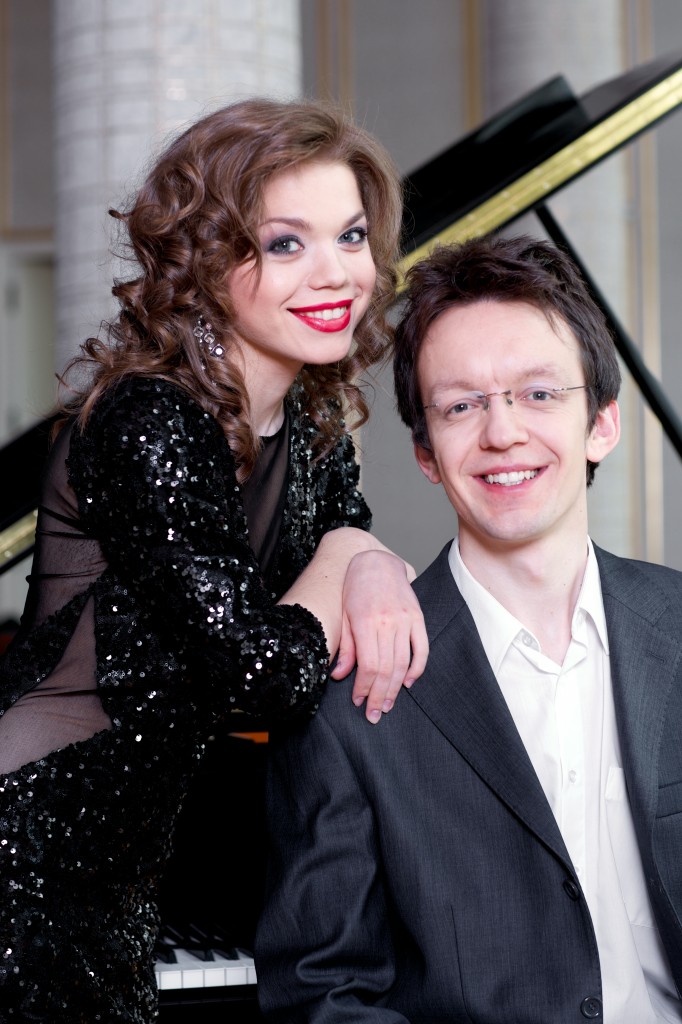 Olena Tokar and Igor Gryshyn – Wigmore Hall, live on BBC Radio 3, 9 February 2015. Photo © Jörg Singer
Listening link (opens in a new window):
http://www.bbc.co.uk/programmes/b051chkl
on the iPlayer until 10 March
For non-UK listeners, this Spotify playlist is available:
For those unable to hear the broadcast I have put together a Spotify playlist. Olena and Igor have not recorded this repertoire, so I have chosen suitable available versions:
What’s the music?
Brahms – a selection of four songs (1868-1877) (10 minutes)
Rimsky-Korsakov – a selection of four songs (1897) (7 minutes)
Dvořák – Gipsy Songs (1880) (14 minutes)
Richard Strauss – a selection of four songs (1885-1918) (11 minutes)
What about the music?
This recital was a reminder of the power of music as a universal language – a Ukranian duo performing works from across Europe in the languages in which they were written. The intriguing hour-long recital alighted in some diverse parts of the continent, exploring song writing from the 19th century.
Brahms and Richard Strauss are no strangers to a recital such as this, but Dvořák and especially Rimsky-Korsakov are less commonly heard. It was interesting to hear Rimsky’s brief songs and Dvořák’s equally concise cycle, placed alongside some well-chosen Brahms and some of Richard Strauss’s most popular output, four of some 200 songs he wrote through his career – culminating in Cäcilie, the song that became a wedding present to his wife.
Performance verdict
Olena Tokar has a bright tone, sometimes a little on the shrill side – for Richard Strauss in particular – but singing the notes with commendable security and expression. Her communication with the audience was good, helped by the fact she had memorised the program – no mean feat given its use of three languages.
The Dvořák was especially good, harnessing the dance rhythms with pianist Igor Gryshyn’s springy accompaniment while finding a little melancholy in some of the slower songs. The Brahms was unexpectedly light. He is often cast as a composer who writes music of dense texture but that was not the case here, and Gryshyn gave some nice, light touches to Über die Herde (Over the Heath) as well as a turbulent, frothy seascape for Verzagen.
The Strauss selection had a curious order – and I couldn’t help but feel that Mörgen would have worked better in last position. It was nice to hear a young singer tackle the big songs, though at the same time a more experienced voice can lend the depth this music often thrives on.
The encore – and its massive piano part – was a bit breathless, but this was a spirited and often invigorating recital.
What should I listen out for?
Brahms
4:10 – Über die Herde (Over the Heath) – this song has palpable uncertainty, particularly in the third stanza when ‘Bravende Nebel geisten umher’ (‘Swirling mists ghost about’)
6:25 – Es träumte (I dreamed) – a song full of longing. Tokar’s floated vocal is lovely, while Grysyhn gives the piano part plenty of sustain (maybe a bit much for some tastes!)
Rimsky-Korsakov
13:29 – Of what I dream in the quiet night – a good illustration of the simplicity of Rimsky’s songwriting, with a basic yet effective piano part to support Tokar’s clear singing.
15:32 – Cool and fragrant is thy garland – heady words, but an airy song, from the gentle piano arpeggios to the top ‘G’ from the soprano at the end.
Dvořák
22:12 – My Song of Love Rings Through the Dusk – there is an immediate indication from the piano part that we have changed countries. Tokar’s clear voice and the piano exchange a melancholy motif.
29:25 – Songs my mother taught me – one of Dvořák’s best-loved songs, laced with nostalgia and with a rather beautiful melody.
31:29 – Come and join the dance – an energetic dance song with a distinctive call.
Richard Strauss
37:26 – Mörgen (Morning) – the most serene intro to one of Strauss’s most performed songs. It’s easy to hear how this song works so well in orchestral guise too – though Tokar and Gryshyn are a bit fast here.
41:20 – Schlechtes Wetter (Dreadful weather) – a later song. The tumbling piano part paints a picture of the elements, and it’s easy to imagine an umbrella blown inside-out to this song!
43:25 – Allerseelen (All Souls’ Day) – another of Strauss’s famous songs, the last from his set of eight. Again it has an expansive piano intro.
46:37 – Cäcilie (Cecily) – the rapturous birthday love letter from Strauss to his wife, Pauline de Ahna.
Encore
50:18 – Tchaikovsky’s Whether day dawns – another bold song, with something of a piano concerto as a postlude! Very expansive and romantic.
Want to hear more?
It’s difficult to know what to suggest next after such a varied program – but one disc that comes to mind early on is Bernarda Fink and Roger Vignoles’ relatively recent disc of Dvořák songs, including the Gipsy Songs alongside several other song groups. It can be heard on Spotify here:
Meanwhile one of Brahms’ very best vocal works is also recommended, the Alto Rhapsody available on Spotify here:
For more concerts click here
 Arcana.fm