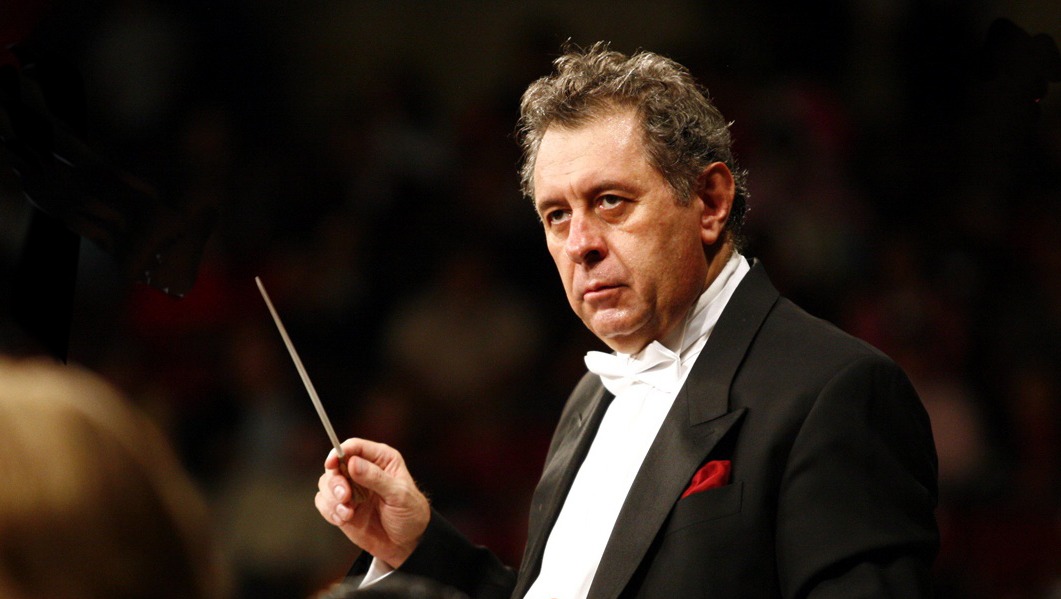
Yesterday we learned of the sad news of the death of Mexican conductor Enrique Bátiz. A flourishing pianist, Bátiz soon turned to conducting, and in 1971 was founder of the State of Mexico Symphony Orchestra. where he worked until 1983, at which point he became music director of the Mexico Philharmonic Orchestra. In 1984 he became principal guest conductor of the Royal Philharmonic Orchestra, a post he held for several years.
Below is a link to a Tidal playlist containing a number of his colourful orchestral recordings, including an important series devoted to Mexican classical music on ASV in the 1980s:
Eight years after Blue Maqams, Anouar Brahem returns with a poignant project, titled after a line of verse by poet Mahmoud Darwish, which asks “Where should the birds fly, after the last sky?” Graceful chamber pieces for oud, cello, piano and bass subtly address the metaphysical question and its broad resonances in a troubled time. While drawing upon the traditional modes of Arab music, Brahem has consistently sought to engage with the wider world, too, and found inspiration in many sources from different cultures.
Bassist Dave Holland and pianist Django Bates are again part of the Tunisian oud master’s international quartet, joined now by cellist Anja Lechner. Brahem’s rapport with Holland – first established on the Thimar album of 1998 – is meanwhile legendary. “Dave’s playing gives me wings,” Anouar has said, an observation that materializes repeatedly across the record. Django Bates’ piano, an important supportive force throughout, contributes swirling solos.
The album marks the first time that Anouar has included a cellist in his group music. Anja Lechner, a leading voice in the recording, has long been conversant with Brahem’s compositions and included them in her own recitals. The cello is given the first and last statements here. After the Last Sky was recorded at Lugano’s Auditorio Stelio Molo RSI in May 2024, and produced by Manfred Eicher. The album is issued as the Brahem quartet embarks on a European tour with concerts in France, Germany, the Netherlands, Switzerland and Belgium.
Watch the title track below:
You can discover more about the album and explore purchase options at the ECM Records website
adapted slightly from a press release received earlier today:
After a special release in Japan, Bach: The 6 English Suites by Francesco Tristano will be released globally on May 23rd on naïve, a label of Believe Group, under his imprint intothefuture. As a first glimpse into this highly anticipated album, the Prelude from the English Suite no.2 is released today.
Following Bach: The 6 Partitas, the new recording continues Tristano’s deep exploration of J.S. Bach’s keyboard works. With his distinctive style, he brings a dynamic and immersive interpretation, capturing the rhythmic vitality and expressive depth of these suites, composed in the 1710s. Listen here:
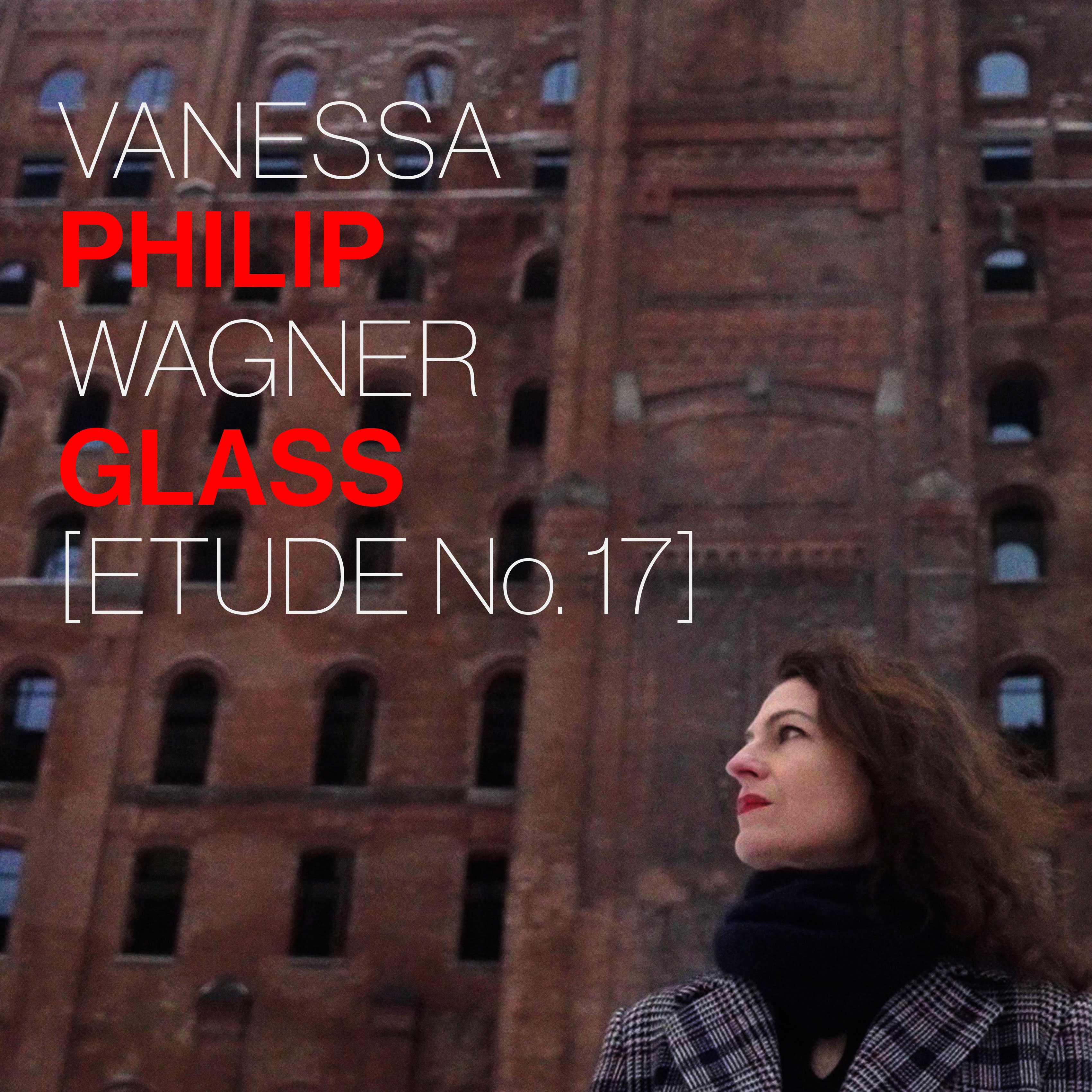
Today brings us news of an important project from Vanessa Wagner, a favourite of these pages. Étude No. 17 is the first excerpt from her complete recording of Philip Glass’s Études for Piano, set for release later in 2025 on the InFiné label.
The InFiné press release goes into detail on Glass’s etudes, which are fast becoming the most recorded area of his music:
“Through her approach, Vanessa Wagner helps establish these two books as a major cycle within the grand repertoire, on par with the études of Ligeti, Pascal Dusapin, and, before them, Chopin and Liszt.
While the first book was conceived as an instructional manual to push Glass’s technical limits with a piano, the second book envisions an imagined virtuoso pianist, demanding both precision and dexterity. Glass himself has rarely performed more than a few pieces from the second volume.
Legend has it that while working on his final four études, Glass pulled a collection of poetry by Allen Ginsberg from his bookshelf. A mythical figure of the Beat Generation, Ginsberg inspired a whole generation’s desire for travel—journeys that took the young Glass across Europe (notably France) and India, infusing his work with a singular tone. As he flipped through the book, he reportedly rediscovered a personal manuscript for a piece titled Magic Psalm, which would later become his Etude No. 17.
Through her interpretation, Vanessa Wagner brings to light the delicate balance between serenity and tension in this mesmerizing composition, capturing both its poetic, wistful quality and its cinematic contrasts—inviting listeners on a journey that is as reflective as it is unsettled, much like the ever-shifting landscapes of the Hudson River.”
by Ben Hogwood photo (c) Peter Hundert Photography/Deutsche Grammophon
Last week we learned of the sad news that the great Russian composer Sofia Gubaidulina had died at the age of 93, in her home city of Hamburg.
Gubaidulina was a true original, a composer of intensely dramatic and often spiritual music that was both distinctive and innovative. A more detailed obituary has been penned by Gavin Dixon for Gramophone magazine. Rather than do a playlist in appreciation, I have chosen a couple of albums that help illustrate some of her musical achievements.
One of Gubaidulina’s biggest early successes was Offertorium, a concerto for violin and orchestra recorded by Gidon Kremer for Deutsche Grammophon back in 1988:
On a smaller scale, Gubaidulina wrote chamber music of striking originality, using unusual instrumental combinations to achieve rarefied colours. A good range of her writing can be found on a collection from the Lockenhaus festival, released on Philips Classics in 1992:
Her early works are equally intriguing, including a number of pieces for solo guitar:
Few composers have written for low instruments quite like Gubaidulina, as her Concerto for bassoon and low strings illustrates:
At the other end of the scale is her St. John Passion, a vast setting over 90 minutes completed in 2000 to mark the 250th anniversary of the birth of Johann Sebastian Bach: