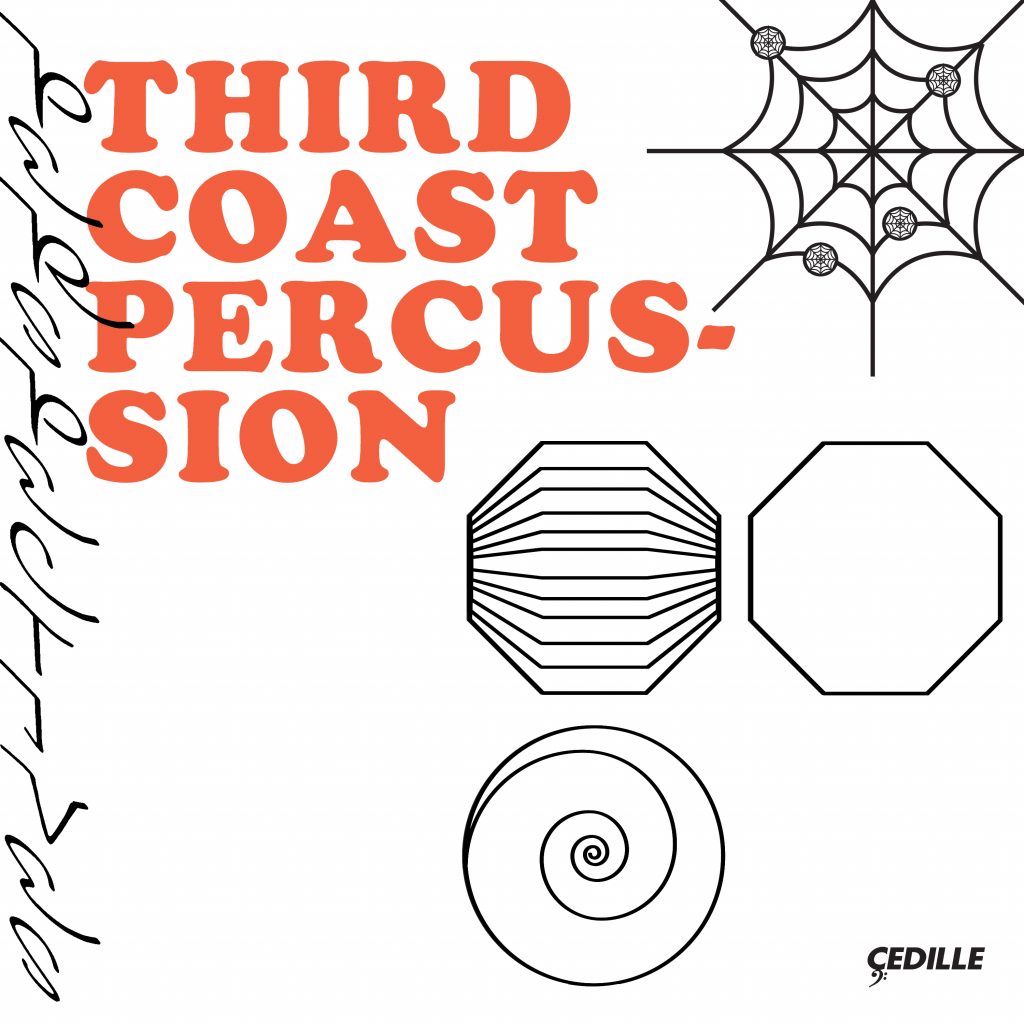
The ever-inventive Third Coast Percussion have another album in the bag – and they are ready to share Perspectives with us in two weeks’ time.
Furthering the ensemble’s links with Cedille Records, the new album contains four new works, headed by a new four-movement Percussion Quartet from Danny Elfman. This substantial 20-minute work was written for Third Coast Percussion at the behest of Philip Glass, whose Metamorphosis no.1 is next up in an arrangement by the quartet themselves. Electronic composer Jlin has been commissioned to write a new piece, Perspective, a large-scale suite comprising seven contrasting viewpoints. Finally Rubix, a collaboration with flute duo Flutronix, signs off the album with its three sections, Go, Play and Still.
Have a listen to the latest edition of the Cedille podcast, where Third Coast Percussion’s Robert Dillon talks through the album and plays clips from it:
Arcana will cover the album in full next month…but before then you can read more about it and hear short clips on the Cedille website
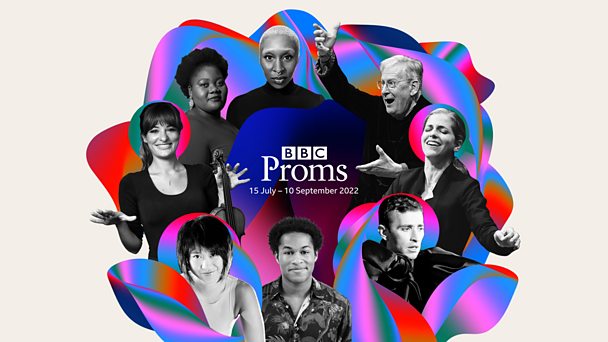
How heartening it is to report on the announcement of a full-to-bursting BBC Proms season once again. The festival, now in its 127th year, is able to spread its wings post-pandemic, reaching out to the four corners of the British Isles to include large orchestral concerts and overseas artists once again.
There are of course far too many concerts to mention in full here, but some deserve an extra thick highlighter pen. From the small scale (Sir András Schiff playing Beethoven‘s last three piano sonatas) to the large (Sir Simon Rattle leading us and the London Symphony Orchestra from death to life in Mahler’s Resurrection Symphony) there looks to be something for almost everyone.
Concerts are spread much further afield this year, and an especially welcome move is the multi-region approach to the weekly chamber concerts, which will be broadcast from Belfast, Birmingham, Bristol, Cardiff, Glasgow, Liverpool, London and Truro. Outside of those appealing concerts, there really is such a huge variety
At a glance, the most appealing events include a tribute to Aretha Franklin curated by Jules Buckley, the wholly appropriate choice of Public Service Broadcasting to celebrate the centenary of the BBC in a newly commissioned piece, This New Noise, and concerts that bring centurion George Walker to the fore.
Lovers of British music will not be disappointed either. John Wilson conducts his Sinfonia of London band in Bax, Walton, Vaughan Williams, Elgar and the new Flute Concerto by Huw Watkins. The BBC Philharmonic Orchestra and Omer Meir Wellber will compare and contrast the Fourth Symphonies by Tippett and Vaughan Williams. Dame Ethel Smyth and Doreen Carwithen will get long-overdue appraisals – the Glyndebourne production of Smyth’s opera The Wreckers looks set to be essential, but so does her Mass in D major and Concerto for horn and violin. Meanwhile Carwithen’s String Quartet no.2 and Bishop Rock are welcome, though we could perhaps have done with one more piece from her.
Visitors from Germany (Berlin Philharmoniker), Austria (Vienna Radio Symphony Orchestra), Finland (Finnish Radio Symphony Orchestra) and Norway (Oslo Philharmonic Orchestra) provide four must-see concerts. To them we can add the Philadelphia Orchestra and Yannick Nézet-Séguin, who will perform Florence Price‘s Symphony no.1.
The music of Shostakovich will surely take on greater poignancy this season in the light of the awful tragedies unfolding in Ukraine – the Fifth, Tenth and Fifteenth Symphonies will all be loaded with extra meaning. The establishment of the Ukrainian Freedom Orchestra, however, will trump even these when they play the music of recently exiled composer Valentin Silvestrov, his Symphony no.7. Brought together by the Metropolitan Opera, New York, and the Polish National Opera, the brand new orchestra will by led by Canadian-Ukrainian conductor Keri-Lynn Wilson and will include recently refugeed Ukrainian musicians, Ukrainian members of European orchestras and leading musicians from Kyiv, Lviv, Kharkiv, Odesa and elsewhere in Ukraine.
This is just a flavour of the season, from which you will see that from first night Verdi to final night Sheku Kanneh-Mason and Lise Davidsen, there is so much to appreciate. Get over to the BBC Proms websiteand start planning!
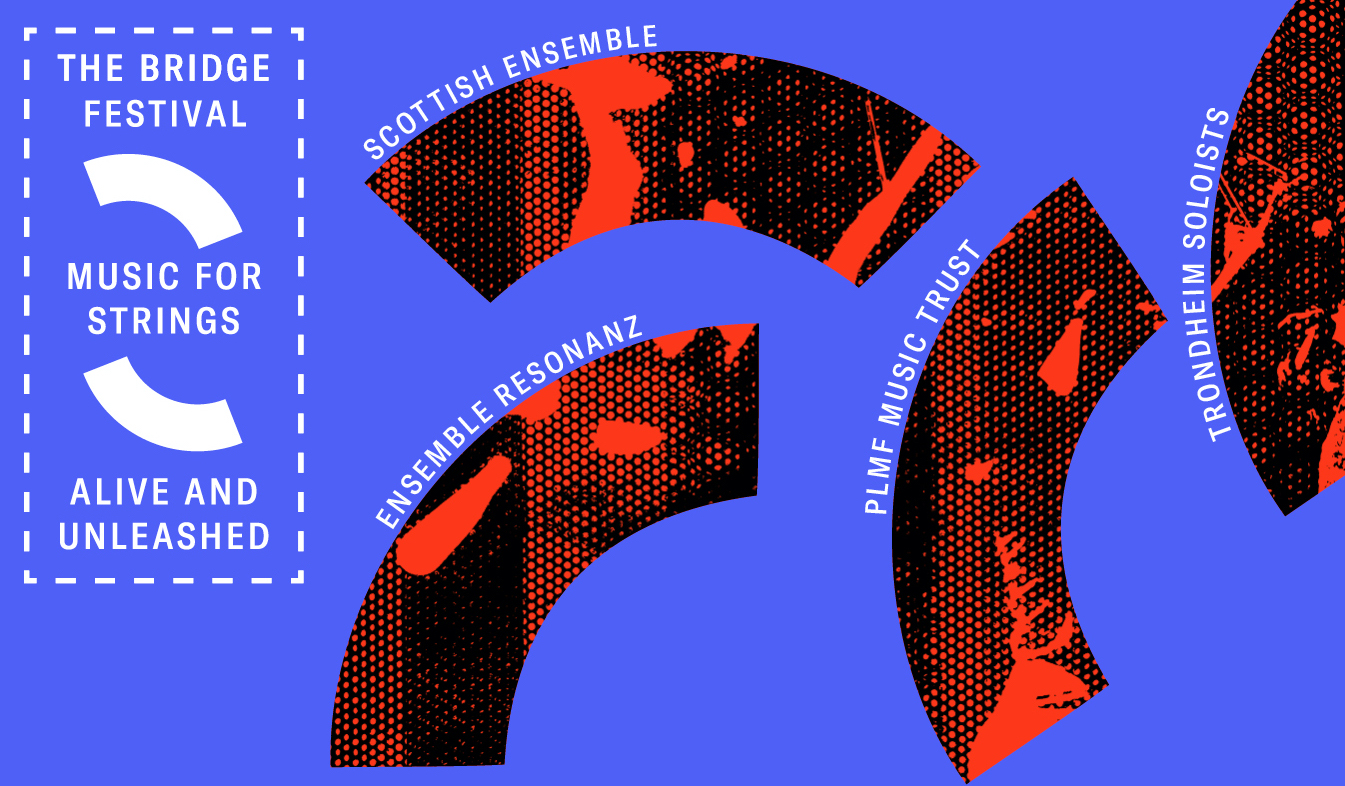
We bring news of an exciting new festival coming to Glasgow this week. The Bridge Festival, originally scheduled for May 2020, is bringing some of Europe’s finest string-playing ensembles together for a four-day program of inspiring music.
Hosting the event are the Scottish Ensemble, who will be joined by the Trondheim Soloists, Ensemble Resonanz and the Estonian PLMF Music Trust, a talent development organisation offering opportunities for musicians without setting age limits.
The concerts are fascinating. Thursday 21 April will see a combined opening concert, all ensembles joining for a programme of Nachtmusik at the Barrowland Ballroom, with music from Hildegard von Bingen to Jonny Greenwood by way of two world premieres. These are commissions from Mica Levi (Flag) and Erkki-Sven Tüür (Deep Dark Shine), and the works are complemented by Penderecki’s Polymorphia – for 48 solo strings – and Greenwood’s 48 Responses to Polymorphia.
On Friday 22 April a lunchtime concert from the PLMF Music Trust showcases their home country. The trust, now nearly 20 years old, supports the development of talented professional musicians by organizing master classes, opportunities to perform and by introducing them internationally. Estonia! will include more Tüur (Symbiosis) and the Concerto for Chamber Orchestra from Jaan Rääts, while looking at the Estonian classical heritage through the eyes of Artur Lemba’s String Sextet and Heino Eller’s Five Pieces for Strings.
Later that day the Scottish Ensemble will perform Anna Meredith’s Anno at Tramway, with performances at 6pm and 8pm. Anno was written for the group, after an observation by the ensemble’s artistic director Jonathan Morton that Meredith’s style had similarities to Vivaldi. In response she wove an original work into Vivaldi’s Four Seasons, a clever interpolation that provides an invigorating live experience. The performances will be complemented by work from visual artist Eleanor Meredith, the composer’s sister.
Later still – at 9.30pm – there will be a chance to enjoy Ensemble Resonanz’s club night urban string, which will transform the Glad Café into a hotbed of minimalism. Music by Lou Reed, John Cage, Julia Wolfe and Glaswegian DJ Charlie Knox is promised.
Saturday 23 April offers what looks like a special concert of Nordic music old and new, given by the Trondheim Soloists. The ensemble will bring with them more traditional Nordic classical fayre – Grieg’s Two Nordic Melodies and Peer Gynt Suite, with the latter in a version featuring the sounds of the Norwegian national instrument, the Hardingfele. Sibelius’s Valse Triste will also appear, contrasted with Britta Byström’s A Walk To Gade.
Finally, on Sunday 24 April, comes a fascinating musical melting pot in Saint Lukes at 8pm. Ensemble Resonanz will be joined by guest performers including Hamburg-born bağlama player and vocalist Derya Yildirim and duduk player Deniz Mahir Katal. Twelve composers were asked to write a new work, with new compositions incorporating traditional Turkish, Anatolian, Kurdish and Greek songs, as well as new works for Derya’s voice, the bağlama (a Turkish stringed instrument, similar to the lute) and the string players of Ensemble Resonanz.
The result is a new, trans-cultural song cycle, combining old folk songs and new music, performed in modern cultural settings and creating a new experience of music from across Europe and across the centuries.
It should be a fascinating and inspiring four days of music – and for more information and tickets for each of The Bridge Festival concerts, you can head to the dedicated website
It is so gratifying to see all the musical initiatives currently underway to raise money for Ukraine. One that I particularly wanted to draw attention to is a concert taking place at the Leonard Wolfson Auditorium in Wolfson College, Oxford, on 9 June.
British-Ukrainian mezzo-soprano Rozanna Madylus will be joined in a celebration of Ukrainian song by pianist and Oxford Lieder Festival founder Sholto Kynoch. Rozanna is a former Oxford Lieder Young Artist, and the programme will be introduced by Philip Bullock, setting the history of Ukrainian music in cultural context.
The program includes songs by the 19th-century Ukrainian composer Mykola Lysenko, as well as music by Yakiv Stepovyi, Kyrylo Stetsenko and Stefania Turkewich. The commentary for the concert reveals that Turkewich studied with Joseph Marx and Arnold Schoenberg, before fleeing the Soviets for England in 1946, where she stayed until her death in 1977. Some of her songs have only recently been discovered. With the inclusion of Ukrainian folk songs, the concert promises to be an eye-opening occasion, bringing the music and poetry of Ukraine to the forefront at such an awful time for the country.
The concert will be presented in support of the DEC Ukraine appeal. With generous support from Breckon & Breckon, all costs of the concert are covered and 100% of ticket sales will go directly to the DEC. Although seating is unreserved as usual, tickets are priced at £15, £20 and £25 to help raise as much as possible. If you would like to donate further, please click here to give directly to DEC.
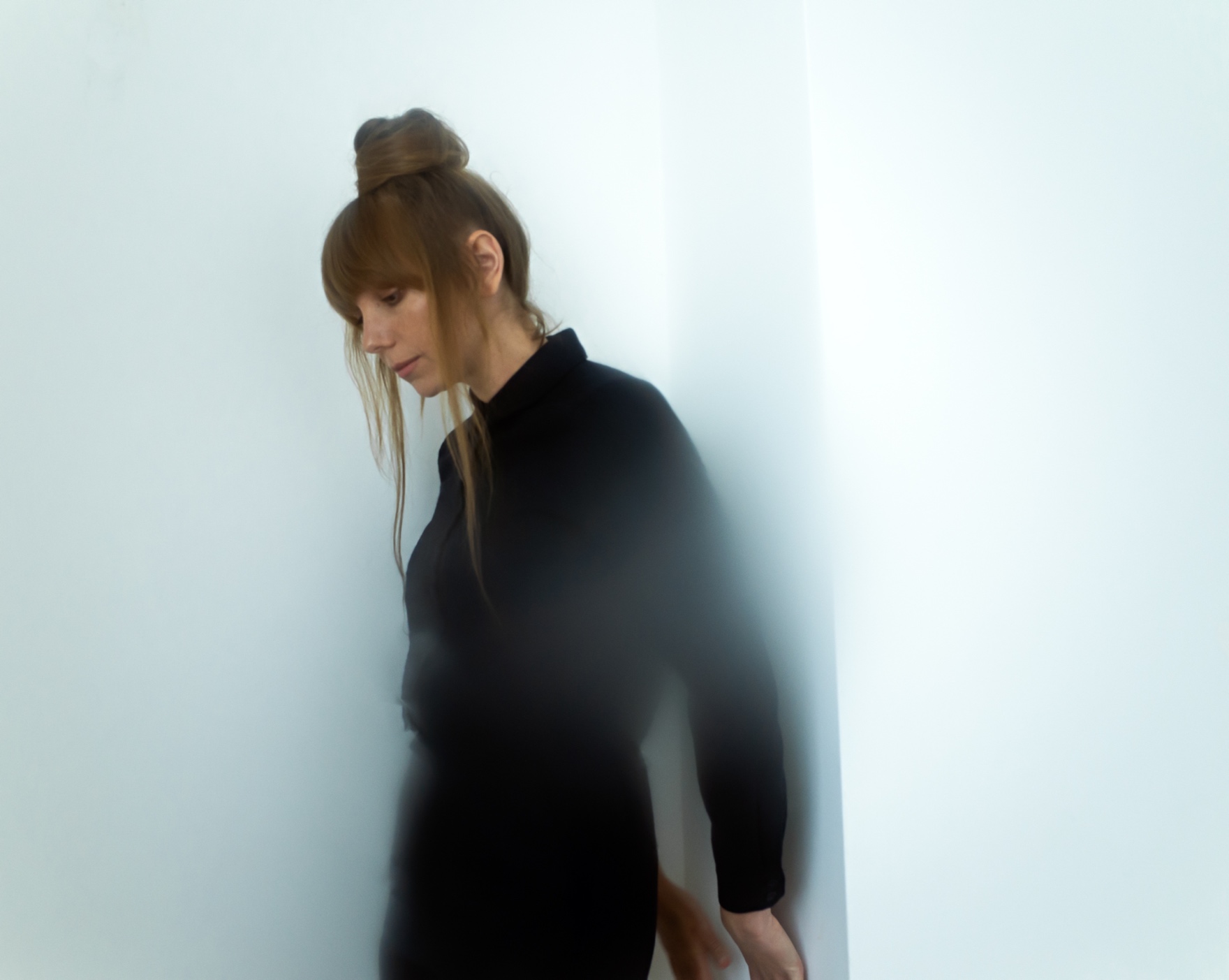
One Little Independent have today announced the return of Poppy Ackroyd with new music for piano. Her fourth album Pause, set to be released in November, is a collection of ten pieces for the keyboard which, in the label’s words, ‘utilize the full instrument, with a mixture of inside piano strumming and playing the keys’.
Evidence of this can be seen in the new track Seedling, and its accompanying video directed by Jola Kudela. She collected small pieces of plants and leaves, submerged them in water and put them in her freezer, then observed the process of defrosting, filming it in time-lapse. The second part of the video was filmed with infrared camera. “I was trying to imagine the process of nature waking up, beginning with a seed, that then slowly transforms itself into a seedling”, says Kudela. “So, we begin with a frozen environment that encapsulates the seed – it seems trapped and immobilised by the icy world. Then gradually it starts to warm up and defrost, fighting with the power that has been holding it frozen.”
Poppy gave some background to Pause. “For previous albums almost as much of the creative process was spent editing and manipulating recordings as it was composing at the piano, however after having my son, I struggled to spend time sat in front of a computer. The only thing I wanted to do while he was still small, if I wasn’t with him, was to play the piano. In fact, much of the album was written with him asleep on me in a sling as I used any quiet moment to compose.
It therefore made sense that this album should be a solo piano album. I used extended technique – playing with sounds from inside the instrument – like I do in my multi-tracked recordings, however it was important to me that every track on the album could be entirely performed with just two hands on the piano.”
Watch and enjoy below…while looking forward to Poppy’s full-length return.


 Arcana.fm