There is a strong feeling around Utopia that this is the record Gwenno has been leading towards in her previous three solo albums.
As if to emphasise the fact she has recorded much of the album in English, a departure from the Cornish and Welsh songs she has been writing to date – as though she needs to communicate her message and feelings more immediately and with greater bandwith.
She regards her first three albums as ‘childhood records’, while Utopia is set to capture ‘a time of self-determination and experimentation’.
What’s the music like?
In a subtle way, Gwenno’s music on Utopia is deeply expressive. As always, her winsome voice is a big draw, but here the sense is that she is going emotionally deeper. War is a great example, a darker song with a lower vocal that leaves a lasting effect. 73, too, gets more emotional, while St Ives New School feels like a meditation on motherhood, with a coda of real substance.
Dancing On Volcanoes is a great pop single, while Ghost Of You is beautifully song. The Devil may be serious and relatively dark in lyrical content but again it has a dreamy side. Y Gath, a collaboration with Cate Le Bon and H. Hawkline, feels multilayered, a song to return to for full discovery. Finally Hireth is a spectral beauty, its cascading guitars complementing another excellent vocal.
Does it all work?
It does – the more personal side reaping rewards in longer songs that are as expressive as they are colourful.
Is it recommended?
It is, enthusiastically. Gwenno writes great pop songs, for sure, and has the voice to communicate them well, but intensive listening ensures the compositions are bound together, both in message and music. Gwenno’s best album yet.
For fans of… Cocteau Twins, Cate Le Bon, Gruff Rhys, Wolf Alice
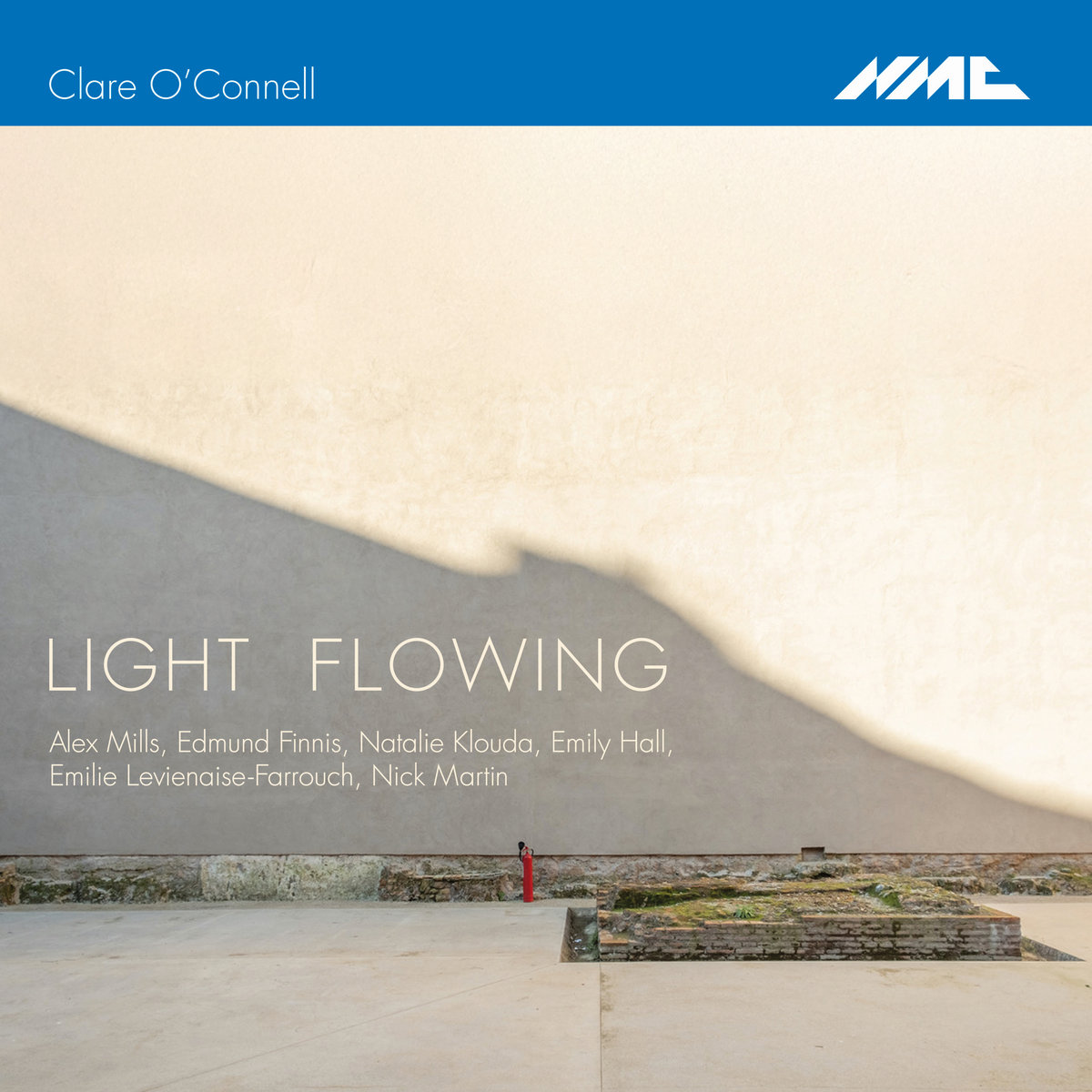
Cellist Clare O’Connell releases the Light Flowing album, which, in the words of the press release, is “inspired and tied together conceptually by ideas of light, depth, simplicity, the search for a perfect line, and capturing an otherworldly beauty that these carefully chosen composers represent within their different sound worlds.”
She looked for an ‘introverted introspective simplicity’, which is found through new compositions from five composers.
What’s the music like?
The music here is rather bewitching, in the best examples drawing the listener into a spell, with O’Connell playing beautifully.
Edmund Finnis contributes two examples, beginning with the Three Solos, expressive miniatures that O’Connell inhabits easily, especially the playful second solo with its pizzicato. Finnis allows for expansive thought in the outer two movements.
Meanwhile Emilie Levienaise-Farrouch contributes the imaginative four-part suite Opened, its movements based on the pitch of each of the cello’s four strings. Although it starts from the lowest ‘C’ string and works up, the pitches are closely linked and longer, sustained drones are used. The colours are subtly shaded, the musical motifs rich in thought and execution.
Natalie Klouda’s Uhteare is an excellent piece, packing a strong emotional punch but also falling naturally under the scope of the instrument, with a terrific end – O’Connell’s tone in the high register as sure and pure as it could be.
Emily Hall’s You Sail To The Sky is a meditative space, while Nick Martin’s two Vocalises find a hypnotic and compelling train of thought. The first floats down with delicate harmonics like a feather falling slowly through the sky, while the second floats most attractively, O’Connell’s cello ideal for its songlike profile. Prayerful, and lost in thought towards the end in contemplation, it disappears beyond the horizon.
Zenith introduces a timely change of sonorities, introducing the harp of Eleanor Turner, which has a more Japanese feel. An engaging discourse between the two instruments, it grabs the listener especially towards the end where O’Connell’s cello climbs higher. Then the sound descends to the depths as Marianne Schofield’s grainy double bass winds through a shadowy encounter as the first of three Figures Of Eight, Finnis writing a slight but compelling second movement drawing in the listener’s ear. The two instruments circle each other with pizzicato figures that get more insistent but stay largely quiet in the second movement, while the third has a richer, mellow sound
Does it all work?
It does, a thoughtfully planned recital executed with no little technical expertise.
Is it recommended?
Yes. The literature for solo cello is a rich body of work, right back to Bach in the 18th century, but this wide range of works illustrates how, with imagination, it is still possible for composers to explore new paths. Clare O’Connell proves a compelling communicator in bringing the pieces to life.
Ernest Bloch Schelomo (1918) Suite for Viola and Orchestra (1919; arr. Rejtő/Baller, 1969)
Parry Karp (cello), BBC National Orchestra of Wales / Kenneth Woods
Signum Classics SIGCD932 [60’58”] Producer Phil Rowlands Engineer Andrew Smilie
Recorded 29-30 July 2024 at BBC Hoddinott Hall, Wales Millennium Centre, Cardiff
Reviewed by Richard Whitehouse
What’s the story?
Signum Classics issues its first release devoted to Ernest Bloch (1880-1959), comprising what is his best-known work alongside a piece that receives its first recording in a version for cello and orchestra – making for a representative introduction to this now under-appreciated figure.
What’s the music like?
Considered in his lifetime to be on a par with such contemporaries as Bartók and Stravinsky, Bloch duly suffered that almost inevitable falling off of reputation from which his music has never quite recovered, but almost all his major works have now been recorded and often on several occasions. Among his sizable output, those with a concertante element are especially notable for their redefining the relationship between soloist and orchestra as holds good for the present works, written as they were either side of the composer’s emigration to the USA.
Its title might translate as Solomon, but Schelomo is by no means a portrait of the Biblical monarch nor is the solo part merely a ‘translation’ of lines from Ecclesiastes such as Bloch had initially intended to set. This ‘Hebraic Rhapsody’ is the last and most representative, if not necessarily the finest, of his Jewish Cycle, its three contrasting sections amounting to a concerto (or maybe a Konzertstück) in terms of their encompassing a gradually cumulative ‘exposition’, then an impulsively tense ‘development’ whose impassioned climax subsides into a ‘reprise’ which takes in a musing accompanied cadenza prior to the starkly fatalistic close. Parry Karp is a perceptive interpreter – one who never over-emphasizes its eloquence or rhetorical overkill, while rendering the piece as a cohesive and an audibly unified whole.
Conceived for viola and piano, the Suite was orchestrated soon afterward then arranged for cello a half-century on by cellist Gábor Rejtő and pianist Adolph Baller. The layout, though not so integrated as to make it a concerto, is none the less striking. Its lengthy initial Lento (originally entitled ‘In the Jungle’) pits soloist against orchestra in a fantasia-like evolution that finds effective contrast in an alternately capricious and ruminative Allegro ironico, then the songfulness of an equally compact Lento; its searching inwardness pointedly dispelled by the lively and playful Molto vivo which brings about an affirmative conclusion. Karp is fully attuned to its understated charm and Kenneth Woods, who directed the likely premiere of this version in 2008, secures playing of sensitivity and imagination from the BBC NOW.
Does it all work?
Almost always. As his introductory note makes plain, Karp has been an enthusiastic advocate for this music throughout his career and there is no doubting the extent of his commitment in either piece. Schelomo remains Bloch’s most recorded work such that those who have any one of Gregor Piatigorsky (Testament), Pierre Fournier (DG), Mstislav Rostropovich (Warner) or, more recently, Sol Gabetta (Sony) can rest content; yet this newcomer is worth a place on any shortlist and a first recording of the Suite in this guise makes the release self-recommending.
Is it recommended?
It is. Balance between cello and orchestra could not be bettered in the spacious yet analytical ambience of Hoddinott Hall, while Woods contributes his customary insightful observations. Aficionados and newcomers alike will find much to delight and absorb them on this release.
Recorded 13-14 April 2024 at St Mary’s Church, St Marylebone, London
Reviewed by Richard Whitehouse
What’s the story?
Although the Taiwanese violinist Chu-Yu Yang and the American pianist Eric McElroy have found success independently, their appearances as a duo have firmly established them before the public across a wide repertoire, not least the music which is featured on this new release.
What’s the music like?
The title of this album might be thought to speak for itself, yet An English Pastoral amounts to more than an exercise in wanton nostalgia. Alongside early if not wholly uncharacteristic music by Ivor Gurney and Arthur Bliss – contemporaries whose outlooks were transformed through war service – it takes in one of Gerald Finzi’s most affectingly realized instrumental pieces and works by Ian Venables whose 70th birthday is just weeks away at time of writing. A programme, moreover, as cohesive in recorded terms as it would be heard as a live recital.
The centrepiece here is a sequence of pieces by the teenage Gurney such as demonstrates no mean assurance in this testing medium. Hence the Elgarian wistfulness of Chanson Triste or respectively poetic and bittersweet evocations as are In September and In August. A winsome Romance is the most elegantly proportioned of these eight pieces, with the elaborate Legende more discursive in its (over-) ambition. The poignant A Folk Tale and an engaging Humoreske have a succinctness to confirm that, with Gurney as with most composers, less is often more.
The players seem as emotionally attuned to this music as they are when mining the expressive subtleties of Finzi’s Elegy which, composed barely a year into the Second World War, offsets its yielding nostalgia with passages of simmering anxiety. Nor do they disappoint in the single movement that was all Bliss completed – if, indeed, he ever envisaged any successors – of his wartime Violin Sonata; its cautious if never inhibited handling of ‘phantasy’ form implying a transition from his earlier Pastoralism to the innovation of those pieces which came afterward.
Venables proves no less adept combining violin and piano, not least when adapting what was previously his Flute Sonata as to emphasize the pensive raptness of the first movement or its alternately playful and plaintive successor. Witness, moreover, the astutely judged trajectory of his Three Pieces as it moves from the blithe lyricism of its initial Pastorale, through the unforced eloquence of its central Romance, to the incisive energy of its final Dance – thus making for a sequence that could have been a ‘sonatina’ had the composer designated it thus.
Does it all work?
Pretty much always. Nothing here sounds less than idiomatic in terms of being conceived for this medium, a tribute to the skill of these players in realizing the intentions of the composers in question. For those listeners who still (rightly) attach importance to such things, the layout is viable but it might have been improved by interpolating the Gurney pieces – most of which are what might be termed ‘medium slow’ – across the release as a whole rather than grouping them all together at its centre, but this is relatively less of a consideration in streaming terms.
Is it recommended?
Indeed it is. The recorded ambience could hardly be bettered in terms of this medium, while Yang contributes detailed and informative annotations. Hopefully he and McElroy will have a chance to record further such collections, whether or not in the ‘English Pastoral’ tradition.
Listen / Buy
You can read more about this release and explore purchase options at the Somm Recordings website
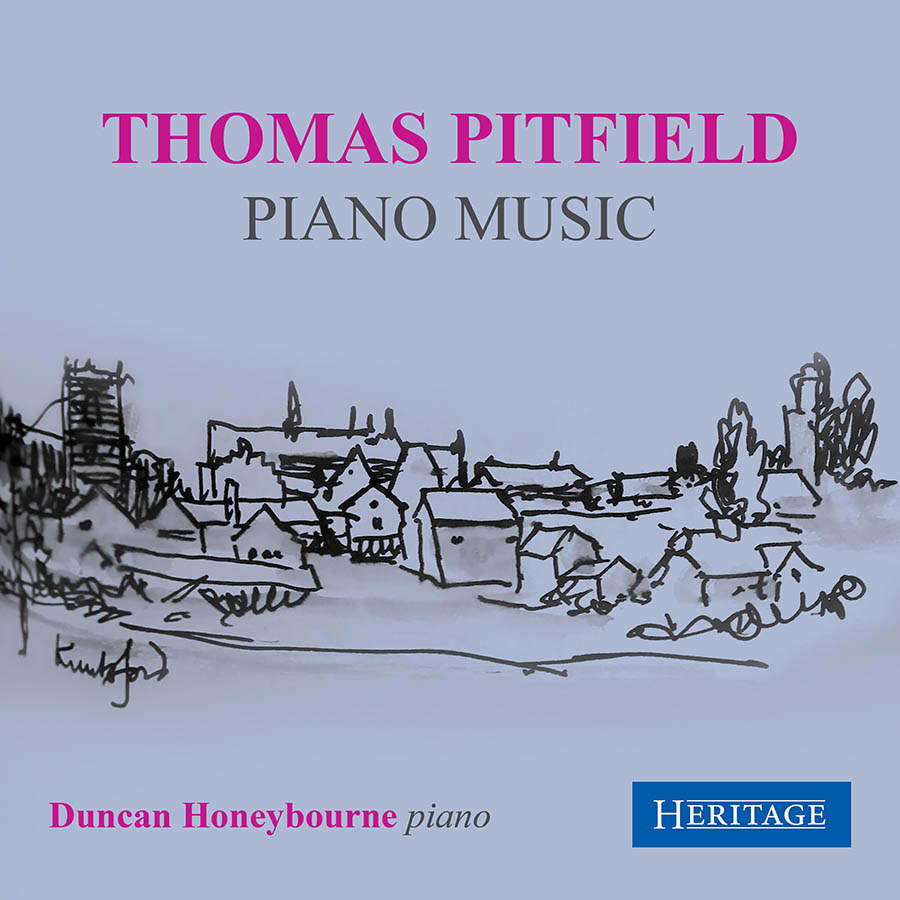
Thomas Pitfield Toccata (1953) Solemn Pavane in F minor (1940) Circle Suite (1938) Capriccio (1932) Diversions on a Russian Air (1959) Novelette no.1 in F major (1953) Bagatelles – no.1 in E flat major (1950); no.2 in C major (1952); no.3 in F major (c1995) Impromptu on a Tyrolean Tune (1957) Two Russian Tunes (1948) Sonatina no.2 (c1990) Five Short Pieces (1932) Prelude, Minuet and Reel (1932) Little Nocturne (c1985) Humoresque (1957) Homage to Percy Grainger (1978) Cameo and Variant (1993)
Duncan Honeybourne
Heritage Records HTGCD132 [68’40”] Producer / Engineer Paul Arden-Taylor
Recorded 7-8 September 2024 at Wyastone Concert Hall, Wyastone Leys, Monmouth
Reviewed by Richard Whitehouse
What’s the story?
Heritage continues its coverage of Thomas Pitfield (1903-99), following a reissued volume of chamber music (HTGCD210)) with this well-rounded and representative overview of his piano output, performed with his customary flair and conviction by Duncan Honeybourne.
What’s the music like?
The programme launches in fine style with a Toccata whose sheer rhythmic incisiveness and unforced joie de vivre makes it an ideal encore, and to which the pensive understatement of Solemn Pavan affords pertinent contrast. Written as homages to (and likely evocations of) a close-knit group of musical colleagues, The Circle Suite draws on Baroque dance forms in characterful and always personable terms; while the Capriccio underlines that, throughout his composing, Pitfield allied a deft pianistic technique to a highly appealing musical voice.
Centred on a Russian folksong ‘The Blacksmith’, no doubt conveyed to the composer by his Russian wife, Diversions on a Russian Air packs a diverse range of variants into its modest duration, while the Novelette (at 4’36’’ the longest single item here) unfolds as a rumination audibly in the English ‘pastoral’ tradition. Although they were not written concurrently, the Three Bagatelles amount to an effective sequence – their respectively nonchalant, capering then genial demeanours evoking more than a touch of early 20th century French influence.
The Central European-ness of Impromptu on a Tyrolean Tune makes it surprising this lively tune was encountered in a collection housed at a stately home in Chesire, while Two Russian Tunes comprise a playful ‘Nursery Song’ and plaintive ‘Cossack Cradle Song’. Actually, the third of three such works, the Second Sonatina separates its lively Allegro and rumbustious Finale with a ‘Threnody’ as finds the composer at his most confiding, whereas the engaging Five Short Pieces are pithy miniatures whose pedagogical function is anything but didactic.
Prelude, Minuet and Reel was Pitfield’s earliest success and has (rightly) retained a degree of popularity through its melodic insouciance and rhythmic verve. From among the remaining four pieces, Little Nocturne is most likely an intimate reflection from its composer’s old age, while Humoresque contrasts its expected levity with a surprisingly plangent middle section. Homage to Percy Grainger is a ‘take off’ idiomatic and engaging, while the alternate poise then suavity of Cameo and Variant rounds off this collection in the most disarming fashion.
Does it all work?
It does, accepting those formal and expressive limits within which Pitfield operated. For all that his performers comprised a significant roster of pianists (among them John Ogdon and John McCabe), this is music written for the composer’s pleasure and it eschews profundity without thereby lacking in depth. That he was invited to record this selection by the Pitfield Trust and researched the manuscripts at Manchester’s RNCM says much for Honeybourne’s dedication to the Pitfield cause, reinforced with playing of unfailing perception and finesse.
Is it recommended?
It is and not least as these pieces, few of them previously recorded, offer much of interest to performers and listeners alike. John Turner contributes extensive notes while Honeybourne adds his own observations, enhancing a release that warrants the warmest recommendation.
Listen / Buy
You can read more about this release and explore purchase options at the Heritage Records website




 Arcana.fm