
On record – Joly Braga Santos: Chamber Music Volume One (Toccata Classics)

Joly Braga Santos
String Quartet no.1 Op.4 (1945)
String Quartet no.2 Op.27 (1957)
String Sextet Op.65 (1986)*

Quarteto Lopes-Graça [Luis Pacheco Cunha, Maria-José Laginha (violins), Isabel Pimentel (viola), Catherine Strynckx (cello)] with *Leonor Braga Santos (viola) and Irene Lima (cello)

Toccata Classics TOCC0207 [78’48”]

Producer Brian MacKay
Engineer Romain Zémiri

Recorded 1-3 November 2017, 4-6 April 2018* at Live recording, 26 April 1993 at Centro Cultural de Belém, Lisbon, Portugal

Written by Richard Whitehouse

What’s the story?

Toccata Classics now turns its attention to Joly Braga Santos (1924-88), arguably the leading Portuguese composer from the twentieth century, for what looks certain to be an engrossing traversal of his chamber output and in the company of his native country’s leading musicians.

What’s the music like?

Like the Catalan composers Roberto Gerhard or Argentinian Alberto Ginastera, Braga Santos followed an eventful trajectory from folk-inflected traditionalism to purposeful engagement with mid-century modernism – a trenchant and engaging musical personality emerging in the process.

Cast on a sizeable scale, the First String Quartet opens with a moderately paced Allegro with ample indication of this work’s stylistic indebtedness to Debussy and Ravel, even Koechlin. An eloquent viola solo takes the place of any expected development, besides complementing that for first violin prevalent elsewhere. Next comes a tensile scherzo with much recourse to additive rhythm and contrapuntal agility, then an Andante whose long-limbed melodic lines highlight each of the instruments within a harmonic context of suffused modality. At almost 13 minutes, the finale is a culmination in every sense as it elides between sonata and rondo designs before heading into an expansive coda which brings the work elegiacally full circle.

At little more than half the length of its predecessor, the Second String Quartet enriches its modal tendencies with a harmonic astringency and rhythmic impetus derived from – if not indebted to – Bartók. The latter’s final quartet might be sensed in the opening movement’s soulful introduction then an unhurried course informed by underlying anxiety. The central movement is a scherzo-cum-intermezzo that alternates inwardly speculative passages with more animated episodes, each having recourse to soloistic writing or the deftest polyphony, while the finale pointedly revisits the work’s opening prior to an impulsive Allegro whose dance-like ideas underpin this movement through to its headlong and decisive conclusion.

Among its composer’s last works, the String Sextet finds Braga Santos mining an idiom that now incorporates atonal and even twelve-note elements (though never deployed serially) with considerable finesse. Alternately sombre and desolate, the initial Molto Largo must rank with his most impressive statements as it builds towards a culmination of probing intensity. There follows a trenchant scherzo notable for its textural intricacy and range of playing techniques that open-out rather than inhibit the music’s expressive range, and if the finale feels intent on inhabiting the same emotional terrain as at the beginning, the (overly?) compressed Allegro that ensues leaves no doubt as to the determined resolve confirmed by that concluding chord.

Does it all work?

Yes, in that the stylistic changes between the pieces are determined solely by the composer’s personal and emotional evolution rather than merely wanton desire to follow trends. Certainly, the latter two works are equally well deserving of a place in the post-war chamber repertoire.

Is it recommended?

Indeed. Performances by Quarteto Lopes-Graça (et al) could not be bettered for commitment or insight, despite a rather too resonant and unfocussed sound balance, while the overview by Piedade Braga Santos and notes on each work by Bernardo Mariano are highly informative.

Listen

Buy

You can discover more about this release at the Toccata Classics website, where you can also purchase the recording.
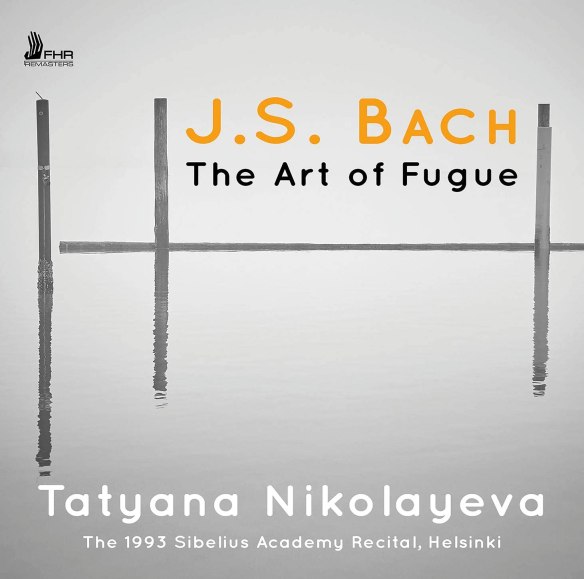
On record – Tatyana Nikolayeva plays Bach: Die Kunst der Fuge (First Hand)

Johann Sebastian Bach
Die Kunst der Fuge (The Art of Fugue) BWV1080 (c1740-50)

Tatyana Nikolayeva (piano)

First Hand Records FHR95 [87’58”]

Producer/Engineer Pekka Purhonen

Live recording, 26 April 1993 at Sibelius Academy, Helsinki

Written by Richard Whitehouse

What’s the story?

First Hand Records follows its earlier release of Tatyana Nikolayeva (Athens 1989, FHR46) with this performance of The Art of Fugue, recorded in Helsinki just seven months before her death and capturing her singular perspective on Bach’s unfinished swansong to potent effect.

What’s the music like?

Fanciful notions of Bach labouring over this compendious sequence literally on his deathbed may have long been put to rest, but The Art of Fugue remains the last in a succession of ‘late’ works – following on from the Goldberg Variations and The Musical Offering – in which the ageing composer sought to distil a lifetime’s accrued knowledge into music of rigorous, some would say arcane abstraction. Certainly, what Bach himself seems initially to have envisaged as a technical manual for the perfecting of fugal technique duly became a treatise as has been likened to Cicero’s codifying of Latin – beyond which, no further evolution seemed possible. Even the means of realization has remained conjectural, but a keyboard instrument arguably ‘translates’ the content of these increasingly intricate constructions with the greatest clarity.

Uncertainty also surrounds the exact order of the individual components: specifically whether the four canons should be placed immediately prior to the final fugue, favoured by C.P.E. Bach in the first published edition, or interspersed between those fugues at regular intervals so as to demarcate actual groupings – as indicated by surviving autograph sources and followed with increasing frequency in recital. Nikolayeva rightly opts for this latter premise, and while one might have preferred for the Canon alla decima to have been situated after Contrapunctus 13 (itself rendered prior to Contrapunctus 12), the formal focus and cumulative expressive intensity of her performance cannot be gainsaid. Bach clearly intended a methodical increase of complexity to be perceptible ‘in real time’, and this is exactly what Nikolayeva conveys.

As to Contrapunctus 14, that likely quadruple fugue left unfinished by Bach at his death and which has been completed by numerous composers and musicologists (notably Donald Tovey from among the latter), Nikolayeva plays this as it appears in Bach’s manuscript – breaking off at bar 239 as though any continuation might be sensed though not realized. It is a credit to her sustained conviction that the audience, which has stayed with her for almost one-and-a-half hours, is momentarily caught unawares by the sudden silence which ensues – thereafter responding enthusiastically. Credit, moreover, to FHR in utilizing the extended duration that has long been feasible on CD and so presenting this account as the uninterrupted span it was experienced as at the time. Few musical works need to be heard thus, but this is one of them.

Does it all work?

Yes, despite a smattering of memory lapses (as detailed by Jonathan Summers in his booklet note) and rather dry sound whose perspective nonetheless renders Nikolayeva’s pianism with commendable naturalness. Those wanting her interpretation of the work need look no further.

Is it recommended?

Indeed. David Murphy has done an excellent job in opening out the original recording without detriment to the rapport between pianist and audience during what was a memorable occasion. Hopefully, there may be other such Nikolayeva performances still to be found in the archive.

Listen

Buy

You can discover more about this release at the First Hand Records website, where you can also purchase the recording.

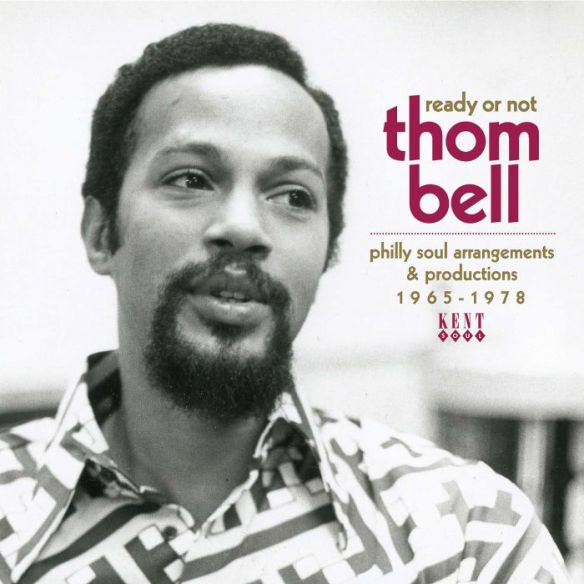
Various Artists – Ready Or Not: Thom Bell’s Philly Soul Arrangements & Productions 1965-1978 (Ace Records)

reviewed by Ben Hogwood

What’s the story?

Ace Records’ Producer Series is looking to recognise the people behind some of the landmark records in pop music – arguing along the way that music studio personnel are not recognised in the way film directors are. They have a particularly strong point in the case of Thom Bell, whose arrangements have helped enhance a good number of Philadelphia soul hits from the 1960s and 1970s. A lot of them are still household regulars, and this compilation takes the stance of a greatest hits set in its quest to recognise Bell’s genius.

Bell, a classically trained musician, became bored with his initial three-chord efforts at songwriting – and was soon looking to bring more of his musical education into his work, with increasingly adventurous techniques and tricks. He often worked in tandem with Kenny Gamble and Leon Huff, but has tended to languish in the background when it comes to recognition alongside their contributions. With reference to his musical training, hiss scoring became more imaginative, transforming the songs of some of the biggest names in soul – The Stylistics, The O’Jays, Johnny Mathis and The Delfonics all beneficiaries of his touch.

What’s the music like?

Invigorating and inspiring – and a real pick me up in the current times. The fact that this series of songs is paying tribute to an arranger and orchestrator means the listener is compelled to listen beyond the lyrics – and once you do that a whole host of treasures await. The songs themselves are instantly recognisable in many cases – The O’Jays’ peerless Backstabbers, The Stylistics’ People Make The World Go Round, New York City’s I’m Doin’ Fine Now. But where would The O’Jays’ be without that distinctive rumbling on the piano that starts the track, or New York City without the punchy block brass chords – or The Stylistics without their shimmering strings?

Bell can take credit for all and more besides. Among the many highlights here are the airy orchestration to the winsome Connie Stevens song Tick Tock, the brilliant matching up of violins and bass guitar on Archie Bell & The DrellsHere I Go Again, and the brassy Delfonics classic Ready Or Not Here I Come (Can’t Hide From Love).
Topping even these moments is the atmospheric introduction to Johnny MatthisLife Is A Song Worth Singing, which tells a story in itself with a swirling wind and grainy strings, the music up close and vividly personal. Meanwhile the other Delfonics inclusion, You’ve Been Untrue, benefits from Bell’s imaginative use of harpsichord and zither.

Does it all work?

Very much so. The only slight regret here is that The O’Jays’ Love Train – which Bell appears to have had a hand in – is not included. One of the finest soul songs around, it is notable for its brilliant string arrangement. To be honest, though, that is a minor quibble as all of the 23 songs chosen here are examples of how to boost a song with imaginative orchestral writing.

Is it recommended?

Yes, on several levels. Producers like Thom Bell deserve all the recognition they get and more, for what they bring to soul and pop music is so much more than mere window dressing. They are able to elevate a song from merely good to fantastic, providing those extra touches that we latch on to when the songs appear on the radio. Bell does all that and more, an imaginative mind whose rewards are rich and varied, and who enhances all of these songs.

Stream

You can hear all the songs on this compilation in this pre-created Spotify playlist from Timo Kangas:

Buy

You can buy Ready or Not from the Ace Records website

Switched On – Daniel Avery: Love + Light (Phantasy)

reviewed by Ben Hogwood

What’s the story?

A surprise release from Daniel Avery, Love + Light started out as an EP – but as he worked on it under lockdown it soon became clear the piece of work was flourishing into something much more substantial – which become his third album. It is an ambitious piece of work, with 14 tracks split into two distinct halves.

What’s the music like?

Every bit as mesmerising as Song For Alpha, Avery’s previous album from 2018. It doesn’t matter that he put this one together so quickly, as his mastering of an album structure is on the money, treating it like a DJ set of his own music. He nails the ebb and flow of the work, moving between full bodied dance tracks like Dusting For Smoke and the metallic textures of Dream Distortion, which complement each other, and broad brushes of ambience that we see more of in the second half, where tracks like A Story In E5 have a magical quality.

The first half is into its stride quickly with the two big hitters referred to above, before Avery creates a blissful open air secen on the brief Katana. This acts as a prelude to the bubbling, classic techno of Darlinnn, before Searing Light, Forward Motion provides an absolute blast of sound to end the first half, Avery following up the opening salvo with a heavy breakbeat.

The second half could hardly start in a better vein, with the stunning Infinite Future, which is several tracks in itself, beautifully voiced and structured. Avery explores cathedral-like resonance in the thick textures of After The Fire, before panning even further out for the remote standpoint of Into The Arms Of Stillness. Fuzzwar offers greater intimacy and comfort, as does the warm and hazy Pure Life, before A Story In E5, the jewel in the album’s crown, a majestic piece of ambience. After that, One More Morning offers a postlude with its clock-like chimes and featherweight beat, which hints at Aphex Twin in its textures.

Does it all work?

Yes – and if anything Love + Light improves with repeated hearings. Although the album was put together quickly it has a cool intensity throughout, is carefully structured and brings out several wonderful soundscapes. Avery’s take on techno is wholly individual, spacious and unusually emotive.

Is it recommended?

Without hesitation. One of the best electronic albums you’ll hear this year.

Stream

Buy

Switched on – Bibio: Sleep On The Wing (Warp Records)

Reviewed by Ben Hogwood

What’s the story?

Bibio has timed this release rather well. Sleep On The Wing is essentially a short album or a long EP, depending on your view – but it is an exploration of life in the wake of a loss, as well as a study of escaping the city to find peace in the countryside. In that sense Bibio – real name Stephen WIlkinson – is uncannily reflecting what many city commuters have found during the Coronavirus lockdown period, that an extended period in the country can shift the patterns of the mind considerably.

Sleep On The Wing is a deepening of Bibio’s folk connections too, using field recordings to bring the pure sounds of the countryside into the music, but also continuing his love of acoustic instruments. It has ten tracks and lasts just under half an hour.

What’s the music like?

Blissful. If you were indeed looking for music to help you escape the city, or as a distraction from the overwhelm brought on by electronic media in recent times, then this is definitely for you.

The music feels like a carefree celebration of the countryside, respectfully done but beautifully voiced. The pastoral language is soft but never too twee, and feels as green and pleasant as the beautiful cover from Joe Giacomet.

There is a slightly woozy feel about Bibio’s vocals, and when applied to the title track they give an appealing and slightly whimsical air. On Oakmoss they complement the rich acoustic guitar lines and ruminative violin,

The instrumentals are rather lovely. The Milky Way Over Ratlinghope spins a picturesque tale with the silvery tone of a viola and treble lines that include brief reveries for flute and wordless vocal. By contrast Awpockes is led by a softly picked guitar, while A Couple Swim follows the ripples of the water with the lazy lapping of its guitar,

The field recordings add to the charm. With what sounds like a thrush singing over running water, Bibio ensures Lightspout Hollow is bursting with life, while Crocus has a murkier profile.

Does it all work?

Yes, beautifully. Bibio’s songs or instrumental threads never outstay their welcome – if anything they could easily be stretched out for at least half their length, for his compressed way of working means time is never wasted.

Is it recommended?

Yes. Sleep On The Wing gets a strong recommendation, adding to the full to bursting Bibio discography a half-hour of pastoral charm. He is a remarkably consistent producer, but even so this is up there with his best work.

Listen

Buy

You can buy Bibio’s new release from the Warp Records website