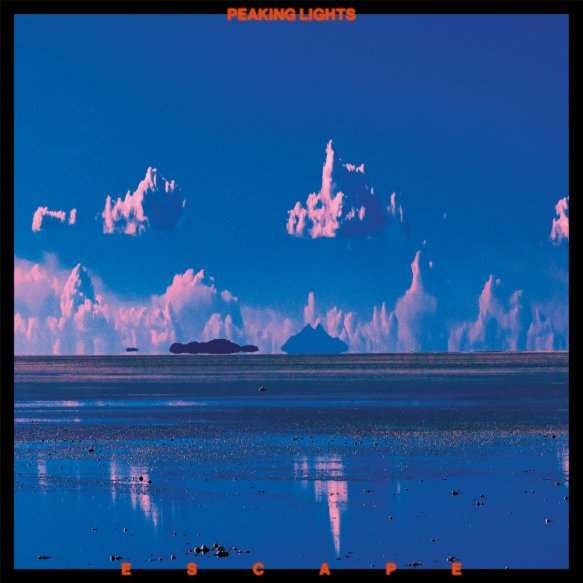
Switched on – Peaking Lights: E S C A P E (Dekmantel)

What’s the story?

Peaking Lights are easy to take for granted – but when you delve into their recent output you realise how remarkably consistent it has been. Since moving further into the mainstream with the rather wonderful 936 album of 2011, the husband and wife duo of Aaron Coyes and Indra Dunis gained momentum with Lucifer, Cosmic Logic and The Fifth State of Consciousness, all exploiting their talents for grooves infused with dub and psychedelia.

The title of E S C A P E is a pertinent one for their sixth album proper, since they have moved label (to Amsterdam’s Dekmantel imprint) and celebrate a return to the long-playing format for the first time in three years.

What’s the music like?

Put it this way, fans will be happy. Coyes and Dunis have been remarkably consistent in the quality of their album releases and E S C A P E is no different.

There is more upfront activity though, suggesting they have been energised by their new surroundings. Dharma has beguiling vocals but the beat is relatively fast and the psychedelic leanings are heavy – in a good way. Likewise for Soft Escape (Moonman Mix), with some heavy distortion, and Innerterrestrial with its fat bass line, while Traffic adds a punchy guitar. Oddly, the enchanting vocal Dunis brings to The Dammed has quite a similar melodic profile to R.E.M.’s Losing My Religion, with appealing block synths that blossom into a glorious wall of sound.

It is one of many moments for the listener to lose themselves in, as are Peace and Dreams – the ideal counterparts to the dark world climate in the last few weeks, with soothing textures. Meanwhile The Caves has more than a touch of Stranger Things with its bubbling synth lines. Perhaps the most reassuring sentiment of all is saved for last, the lush Change Always Comes devoid of beats and left for Dunis to star, part of a multilayered dreamscape.

Does it all work?

Yes. There is no need to change their approach, yet the music still sounds fresh, and there is a generously filled album here. Peaking Lights never re-tread the same ground on their music, yet they hit a familiar and very welcome combination of relaxation and stimulation unerringly.

Is it recommended?

Yes. A new Peaking Lights album is just what we need in these troubled times, drawing a veil over the world outside and allowing us to dabble with some positively blissful vibes for once.

Listen

Buy

Switched on – Erland Cooper: Hether Blether (Phases)

What’s the story?

With Hether Blether, Erland Cooper reaches the end of his Orkney trilogy. What began as a relatively modest concept, a set of music to help him deal with the morning commute into his studio in London, has blossomed into a colourful portrait of the elements of his home island, a trilogy that tugs at the heartstrings of even the most benign observer. After Solan Goose (air) and Sule Skerry (water) comes Hether Blether (earth), where Cooper explores his upbringing through not just his own voice but those close by in the Orcadian community.

What’s the music like?

The music on Hether Blether is every bit as enchanting and intoxicating as that for Solan Goose and Sule Skerry, but it has a human element that reaches even further than its predecessors. There is a stronger vocal element here, making the stories that bit more human. Where Solan Goose evoked the bird on the wing, and Sule Skerry revelled in the power of the sea, Hether Blether – as its name implies – is about meaningful conversation, thankfulness for upbringing, and a deep respect for the joy of community.

The most immediately memorable of the ten tracks is Peedie Breeks, written with Benge. Its melody becomes a round, a softly lilting tune going round in circles that feel simultaneously old and new. Noup Head, the first track, sets the scene perfectly, giving once again the perspective of Orkney’s small place in the wide open North Sea that surrounds it. Skreevar is a study in serenity that gains power as Cooper adds melodic layers and voices, perfectly matched by the video where its author launches himself fully clothed into the North Sea!

Meanwhile the shimmering lights and recollections of Longhope – with Kathryn Joseph, John Burnside, Hiroshi Ebina and Hinako Omori – are beautifully wrought and paced.

The spoken voices bring life to the record too. You can hear the life experience, sense the twinkle in the eye. The same can be said of the violin, cello and soprano lines, but these are at a bigger distance.

Does it all work?

Yes. On the title track guest Astra Forward sings of how ‘you gave me the best days of my life’, and this heartfelt sentiment runs through the music and lyrics in Hether Blether, shouting thanks from the rooftops but also whispering in the quietest room.

The broader range of music works well here too, as does the interplay between vocals and instruments. Cooper uses quite a few guests but he has a discerning ear, and the textures never get too crowded. His scoring of the strings is beautifully judged, too, not overlaying them as many do but allowing each melodic line room to breathe. The same can be said for the voices, who add an enchanting air.

Is it recommended?

Again, as with the first two albums, there is no hesitation for putting Hether Blether forward as a wonderful piece of work. When lots of us are looking for solace in the music we listen to in these strange times, Erland Cooper gives us just that. However the poignant reminders of home add a tinge of sadness, as well as reminding of how our upbringing is what underpins our very existence. These are heady words for sure, but Hether Blether is worthy of them!

Listen

Buy

You can buy Hether Blether from Erland Cooper’s website here

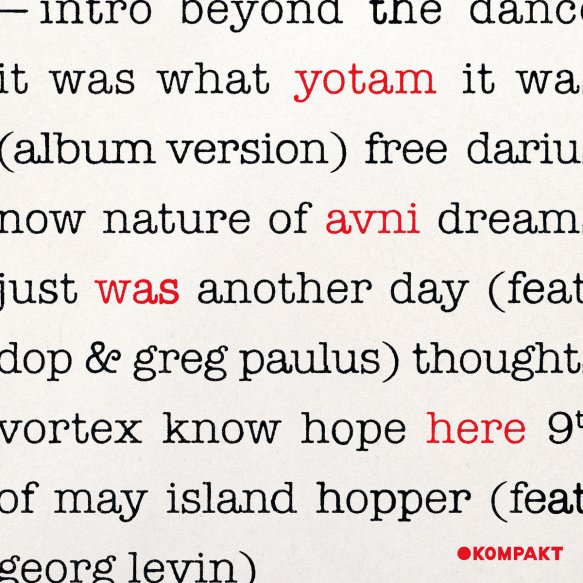
Switched on – Yotam Avni: Was Here (Kompakt)

What’s the story?

For his debut album, Tel Aviv producer Yotam Avni is looking to combine two of his deep musical loves – Detroit techno and the sort of jazz you might hear on the ECM label. With that in mind, Kompakt is his ideal label home, and the Cologne label have been encouraging his solo output through a succession of well-received tracks and remixes. Avni is honing his sound, bringing it back to the elements – and Was Here, his first album after almost a decade of recording, is a clear statement of his musical identity.

What’s the music like?

The priority here is the rhythm, which Avni often sets out at the start of the track – but melody and texture come through as each piece develops to assume equal importance. There are some sultry atmospheres here, especially when the jazzier elements are introduced. The muted trumpet of It Was What It Was works very well, as does Free Darius Now.

A sparing use of vocals is also effective, meaning the guest appearances of Georg Levin (Island Hopper) and dOP (with trumpeter Greg Paulus on Just Another Day) really stand out. So too does Vortex, a really fine track that grows into its main feature, a hypnotic chant, creating a smoky atmosphere.

Does it all work?

Yes. This is classy deep techno but with a hot-weather twist, very atmospheric and with a few really nice elements worked in from other musical forms. Avni gets his rhythm tracks on the deep side and they provide a solid foundation on which he can always build.

Is it recommended?

Yes. Another good find for Kompakt! Highly recommended.

Listen

Buy

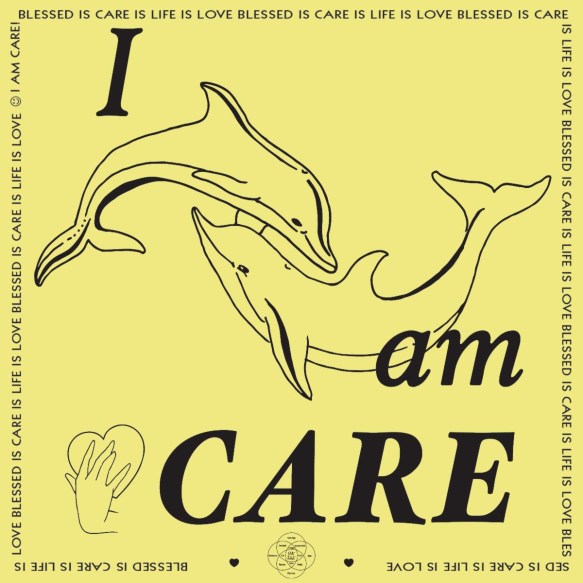
Switched on – Matthewdavid’s Mindflight: Care Tracts EP (Leaving Records)

What’s the story?

Matthewdavid’s Mindflight is the incredibly ambient extension of producer Matthewdavid‘s output. As a composer used to working across genres, this is the area where he really kicks back and lets things evolve at a very natural pace.

The EP comes with a message from Matthewdavid, saying that ‘With your help we will overthrow corrupt capitalistic systems of greed and exploitation in favour of life and love for the benefit of all beings. We will end all war and hierarchy. Love is the gateway to paradise. Love is your way.’

What’s the music like?

The above sentiments come through with the music – but to be honest this is music that is best experienced with the objective of getting a completely empty head. Previous albums from this source have been capable of doing exactly that – and this half-hour set of three continuously mixed and evolving tracks hits the spot unerringly.

It always takes a little while for the dust to settle, but when it does the sonic beauty of these electronics can be appreciated. The sound world is definitely an outdoor one, with a soft breeze and cool blue colours. Best to treat this is one continuous composition with three blissful ‘movements’, and the music will make its most effective impact.

Does it all work?

Yes. With no beats in sight and no specific harmonic movement, this is nonetheless music that continues to evolve. It is the aural equivalent of sitting on the beach and staring at a calm sea, inducing all sorts of stationary and soothing thoughts.

Is it recommended?

Yes, effortlessly. Previous visitors to this source will know just what to expect – and they won’t be disappointed. If you’re new and fancy some warm-weather tranquillity in musical form, then look no further!

Listen

Buy

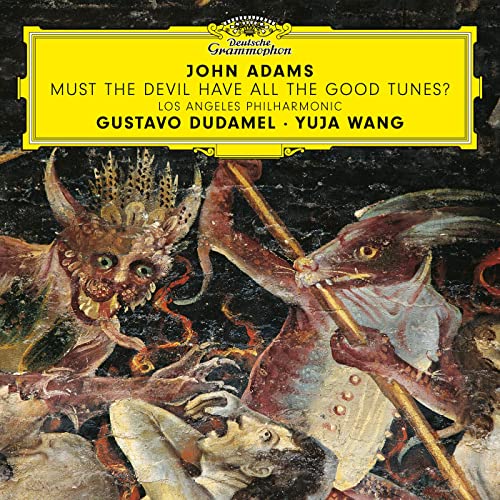
On record – Yuja Wang, LAPO / Gustavo Dudamel: John Adams – Must The Devil Have All The Good Tunes? (DG)

Yuja Wang (piano), Los Angeles Philharmonic Orchestra / Gustavo Dudamel

John Adams
Must The Devil Have All The Good Tunes? (2019)
China Gates (1977)

Deutsche Grammophon 4838289 [32’05”]

Recorded November 2019, Walt Disney Concert Hall, Los Angeles, USA

Written by Ben Hogwood

What’s the story?

Must the Devil Have All the Good Tunes? is John Adams’ first major work for piano and orchestra since 1997. Its world premiere took place in 2019, with dedicatee Yuja Wang taking the solo part in the Walt Disney Concert Hall, Los Angeles, the city’s Philharmonic Orchestra conducted by Gustavo Dudamel. The same team are on the money here with the first recording of the substantial new piece – with a contrasting makeweight, as Wang offers one of Adams’ much loved shorter works, the solo piano composition China Gates.

What’s the music like?

In a word, dynamic. The composer’s direction for the first of the three movements of Must the Devil…says a lot – Gritty, Funky, But in strict Tempo; Twitchy, Bot-Like. It describes the music perfectly, for as Yuja Wang drives the music forward with big, block chords there is a great deal of positive mechanical energy – and indeed a bit of funk. The ‘good tunes’ are not quite so obvious, with the through-composed nature of the piece masking any obvious hooks, but there is a strong and assertive drive forward, like the relentless surge of traffic along a Californian freeway.

The frenetic activity subsides towards the end of the first movement and we get a closer look at Adams’ soul, glimpsed through luminous string textures and sensitive, nocturnal piano writing. The mechanical grind is temporarily forgotten and a tender, thoughtful mood evolves. This leads to the Gently, Relaxed direction, which effectively becomes the concerto’s slow movement, with music of serenity and beautiful colours. As the movement progresses the lines become a little more angular, the strings and piano working together while complemented by softly spoken wind and brass choirs.

Then the energy returns, and we move into the finale with clumps of percussive chords from Wang, leading the orchestra in a section marked Obsession / Swing. The cross rhythms sway, generating exciting momentum between piano and orchestra, and Wang throws her all at the piano as it issues massive, repetitive statements, the obsession growing ever greater towards the end and the sound of a bell, with which Adams brings an end to the three rounds.

China Gates is a much-needed repose, its meditative thoughts given in an unbroken, fluid stream.

Does it all work?

Yes, and is hard to fault in this performance. The musical language is familiar – recognisably John Adams in its long lines of busy activity – and it could be argued some of these statements are familiar too, closely related to previous large-scale utterances. But the performance is ideal, a white knuckle ride in the faster sections and a cool reverie in the memorable slower parts. China Gates is the ideal foil.

Yuja Wang is brilliant throughout, a whirlwind of energy in the fast music of Must the Devil…and a model of sensitivity in the quieter music.

Is it recommended?

Fans of Adams’ music will not hesitate – and nor should newcomers either, for not only is the music very listenable it is presented in terrific recorded sound. A DG release with all the fireworks for sure, and if there are no recognisably good tunes to hum afterwards there is plenty to enjoy. John Adams’ positive energy wins through once again.

Listen

Buy

You can purchase this recording from various digital outlets via the Deutsche Grammophon website