On record: Elizabeth Watts, BBC Symphony Orchestra / Martyn Brabbins – Vaughan Williams: A Pastoral Symphony & Symphony no.4

Elizabeth Watts (soprano)*, David Butt Philip (tenor)**, BBC Symphony Chorus & Orchestra / Martyn Brabbins

Vaughan Williams
A Pastoral Symphony (Symphony no.3)* (1921)
Symphony no.4 in F minor** (1931-4)
Saraband, ‘Helen’ (1913-4)

Hyperion CDA68280 [80’57”]
English text included
Producer Andrew Keener
Engineer Simon Eadon

Recorded 26 & 27 November (Symphonies), 2 December 2018 (Helen), Watford Colosseum, UK

Reviewed by Richard Whitehouse

What’s the story?

Martyn Brabbins and the BBC Symphony Orchestra continue their cycle of the symphonies by Vaughan Williams with the Third and Fourth, two ostensibly very different pieces whose equally equivocal reception at their premieres now seems testament to their expressive reach.

What’s the music like?

No longer the relative rarity it once was, A Pastoral Symphony remains the most elusive of this cycle – its arcadian rapture shot-through with imagery of war and transience.

Brabbins sets a well-nigh ideal tempo for the opening movement, its deceptively passive interplay of landscape and evocation informed by eddying agitation made more explicit in its successor – whose distanced solos for horn and (offstage) trumpet afford concrete recollections of VW’s wartime experience, made the more poignant by being sensed on the edge of consciousness. For all its greater physicality, the third movement is no conventional scherzo in its eliding between moods with an agility finely conveyed here through Brabbins’s judicious pacing – not least that eerily flitting coda which forms an unerring transition to the finale. Its remote outer sections enhanced by Elizabeth Watts‘s yearning vocalise, this unfolds as a necessary culmination; the composer bringing to the fore emotions earlier half-glimpsed on the way to a powerfully wrought climax, leaving in its wake a catharsis more potent for its intangibility.

From here to the seismic eruption of the Fourth Symphony is to set forth on a very different journey, one of absolute expression in combat with force of circumstance. Brabbins keeps a firm yet flexible grip on the initial Allegro, its violent opening balanced by the fugitive calm into which it withdraws. He then finds the right ‘walking’ tempo for the Andante, this sombre if never featureless landscape underpinned by angular harmonic progressions that twice break out in ominous outbursts prior to the flute’s lamenting soliloquy towards its close. Perhaps the Scherzo’s outer sections could have evinced greater sardonic humour, though the overbearing pomposity of its trio is as finely judged as is the pulsating transition into the finale. Brabbins duly brings out its martial swagger and if tension during the earlier stages could be even more acute, the ghostly throwback at its centre yields a wan rapture and how persuasively he draws the thematic elements together in the epilogo fugato for a stretto of mounting tension whose denouement is a return to the work’s fateful opening gesture and a four-letter clinching chord.

As makeweight, Saraband ‘Helen’ proves an enticing discovery. Left unfinished towards the outbreak of the First World War, this setting of lines from Marlowe’s Doctor Faustus may be off-balance in its utilizing tenor and chorus for what surely needed to become a larger entity, though both David Butt Philip and the BBC Symphony Chorus acquit themselves ably, while Brabbins secures playing of real elegance and finesse in orchestral writing that inadvertently yields what emerged as the main theme of Serenade to Music almost a quarter-century later.

Does it all work?

Almost entirely. Those who have acquired the earlier releases in this series (A Sea Symphony and A London Symphony) will be aware of the qualities which Brabbins brings to VW, and so it proves here with what is among the finest recent accounts of the Pastoral. Others have evinced a more visceral response in the Fourth, but there is no lack of impact – allied to a methodical sense of purpose that pays dividends in those densely contrapuntal passages over which the composer laboured before ultimately getting them right.

Is it recommended?

Indeed. Sound has the sense of perspective but also immediacy necessary in this music, with Robert Matthew-Walker once again contributing a detailed and informative note. Hopefully the next instalment, featuring the Fifth (and Sixth?) Symphony, will not be long in coming.

For further information on this release, visit the Hyperion website, or the BBC Symphony Orchestra. You can also read Arcana’s interview with the conductor here
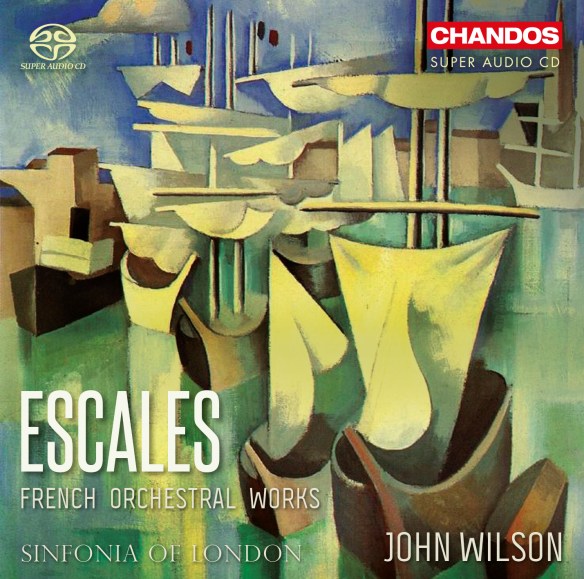
On record – Sinfonia of London / John Wilson – Escales: French Orchestral Works (Chandos)

Escales – French Orchestral Works

Chabrier España (1883)
Duruflé Trois Danses (1932)
Saint-Saëns Le Rouet d’Omphale Op.31 (1871)
Debussy Prélude a l’apres-midi d’un faune (1891-94)
Ibert Escales (1922)
Massenet Meditation from Thaïs (1894)
Ravel Rapsodie espagnole (1907-08)

Adam Walker (Debussy), Andrew Haveron (Massenet), Sinfonia of London / John Wilson

Chandos CHAN 5252 [78’19”]

Producer Brian Pidgeon
Engineer Ralph Couzens

Recorded 6-7 September 2019 (Trois Danses nos.1 & 3), 16-18 January 2019 (other works), Church of St. Augustine, Kilburn, London

Written by Ben Hogwood

What’s the story?

The Sinfonia of London, an orchestra from the 20th century given a new lease of life by conductor John Wilson, makes its second release for Chandos.

In fact we could term it as a series of Sinfonia of London buses, for you wait two decades and then two come along at once! The orchestra’s renaissance began with a stunning account of Korngold’s Symphony in F sharp last year, but now they turn their attention to France, and an imaginatively chosen program celebrating the elusive but immediately recognisable French orchestral sound.

What’s the music like?

A complete pleasure. Although irresistibly French, the music in the collection does remind us of the close bond between France and Spain, thanks to classics of the repertoire from Chabrier and Ravel and a relative rarity from Ibert.

Chabrier‘s España begins the collection and it is an absolute delight, a feel good piece given even more of a lift in this brilliant account. Wilson’s instincts for the stage come to the fore immediately, the bouncy rhythms and cheeky asides proving irresistible when presented with this much colour and warmth.

At the other end Ravel’s Rapsodie Espagnole is no less characterful. The atmospheric Prélude à la nuit ghosts in from silence, Wilson delighting in the orchestral textures and Ravel’s masterly sense of line. The persuasive rhythms of the Feria are expertly judged, the silky strings giving way as the music surges forward with terrific momentum.

Between these two gateposts are works of colour and élan. It is so good to see the inclusion of relative rarities in Duruflé’s Trois Danses, one of only two completed orchestral works in his output, and Ibert’s underrated Escales (Ports of Call) which gives the collection its name. The Duruflé sparkles in Wilson’s hands, violins caressing the longer melodies of the Divertissement, first dance of the three. Much of the composer’s relatively small output is for organ, which he effectively uses as his orchestra, but a persuasive Danse lente and thrilling Tambourin give us further proof of his prowess with large forces, harnessing the influence of Dukas. The latter features a particularly enticing saxophone solo, the recording indulging the colour and scope of Duruflé’s writing.

The Ibert, meanwhile, is a treat. Just over a minute into Escales‘ first movement, Palermo, there is what can only be described as a murmuration of violins, the music fluttering upwards in a bold sweep. Meanwhile Wilson secures a terrific drive to the description of the third ‘port’, Valencia, which ends with a flourish.

Before Escales comes a fresh faced account of Debussy’s Prélude a l’apres-midi d’un faune, the piece that effectively changed the face of music on the eve of the 20th century. Wilson and his charges capture the sense of newness, but also the enchanting and harmonies, with seductive playing from flautist Adam Walker. By contrast the Méditation from Thaïs, Massenet’s most famous orchestral excerpt, is more conventional. It could have felt misplaced here in terms of mood and musical language, but orchestra leader Andrew Haveron invests it with plenty of affection and never overdoes the romantically inclined melodies.

The packed release also finds room for a symphonic poem by Saint-Saëns. Le Rouet d’Omphale (The Spinning Wheel of Omphale) is a relatively early work and a great example of the composer’s melodic flair and ability for musical programming in thrall to Liszt. Wilson has its measure fully, pacing the music’s build ideally in arguably the finest modern recording since Charles Dutoit’s classic account with the Philharmonia in 1980.

Does it all work?

Yes. This is a brilliantly played and really well-chosen program, suiting both the curious listener and the familiar Francophile. What comes through most of all is the sheer enthusiasm and flair of the players, galvanized by Wilson in accounts that are both instinctive and incredibly well prepared.

From the opening notes of España it is immediately clear how this collection is going to go, and with the changes in mood suitably well planned and ordered – save arguably the Massenet – it is a listening experience you will want to return to often.

Is it recommended?

Wholeheartedly. This is music making as it should be, celebrating great orchestral music packed full of good tunes, instrumental colour and the ability to paint vivid pictures of its subjects. Wilson and his charges should be congratulated for an achievement which will surely land them with a glut of awards in the next few months – and only heightens the anticipation for their third release on Chandos, later this month, when they will return to Korngold for the Violin Concerto and String Sextet. In the meantime, make the most of this wonderful set of French fancies!

Listen

Buy

You can listen to clips from this disc and purchase a copy at the Chandos website here

Switched On – Air Texture VII compiled by Rrose & Silent Servant (Air Texture)

reviewed by Ben Hogwood

What’s the story?

The innovative Air Texture compilation series reaches the magnificent seven, staying true to its principles. The idea is that two producers with a connection hook up for a double compilation, whose only proviso is that the music should not be ‘straight ahead club music’. Early volumes in the series tended to be much more ambient, with some completely devoid of beats, but as the canon has developed so has the open and inclusive approach.

This is one of the more upfront releases so far, from Californian Seth Horvitz – now using his Rrose alias – and Silent Servant, aka Los Angeles resident Juan Mendez.

What’s the music like?

The great thing about each Air Texture release is the opportunity for musical discovery, and this is no exception. Both contributors have clearly given the collection a lot of thought, and the range of musical styles here extends from thick muffled ambience from the likes of Octo Octa, where time stands virtually still, to the other end of the scale and the relentless bass drum of JS Aurelius.

Along the way we hear fascinating ideas. The first set of twelve tracks includes probing sounds from Anthony Child and nice, spectral effects from Laurel Halo, whose Dies Ist Ein sounds great on headphones. Ron Morelli’s Psychic Harms of Economic Deprivation has dense and foreboding ambience, while AGF’s HUM-iLiTY displaces reality with eerie vocal effects,

The second set has the wonderfully cinematic Luke Slater track When It Twists, yet another example of his techno mastery, but backs this up with Mara’s Rebellion, a fascinating track which moves from sumptuous widescreen sounds to distorted, extraterrestrial fragments. Silent Servant’s own New World has a propulsive drum track but broad ambience behind, while the ever-reliable Phase Fatale offers the excellent Nightmare in LA, a bubbling and moody synth cauldron. Finally Zahlensender (ssb), from Function, takes us to the other end of the aural spectrum with glittering treble sounds.

Does it all work?

Yes. Some of the more confrontational sounds here mean the compilation is not one of outright ambience, as previous volumes have been, but at this point it is worth remembering the Air Texture philosophy of challenging as well as soothing. In that respect the pairing of Rrose and Silent Servant works a treat, fulfilling the brief while introducing new names as the best compilers should.

Many of the tracks here led to further exploration, but they hang together really well as a pair of sets.

Is it recommended?

Yes, without reservation. This may be the seventh release in the series but it is another feature in the cap of Air Texture’s bow, a compilation series where it really pays to immerse yourself in each instalment. For a listener to be challenged and soothed in equal measure is just how a series like this should be.

Stream

Buy

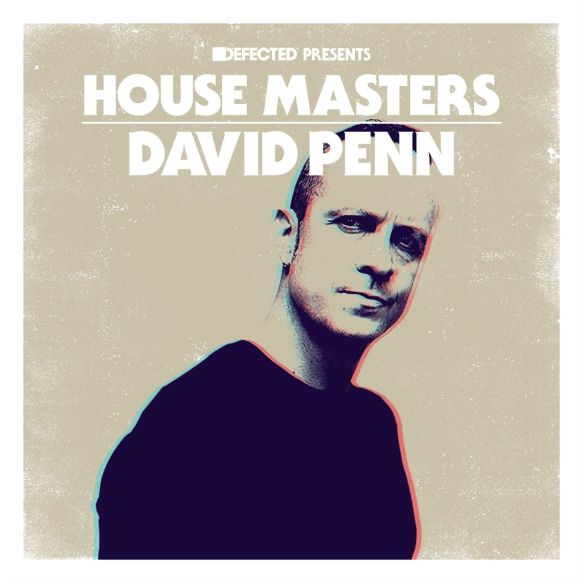
Let’s Dance – House Masters: David Penn (Defected)

Various ArtistsHouse Masters: David Penn (Defected)

reviewed by Ben Hogwood

What’s the story?

Spanish DJ David Penn gets this very welcome career retrospective from Defected, a chance for fans to appreciate not just his original, Latin-flavoured house tunes and his teamwork with DJ Chus, but a whole host of remixes. Penn has in the past bravely taken on classics like Pete Heller’s Big Love and Sophie Lloyd’s Calling Out, but as this collection shows he always comes out on top.

What’s the music like?

Excellent, and brimming with good vibes. The original productions include Penn’s uplifting Nobody, which sets the tone from the off, but also What Is House, with Rober Gaez, and Stand Up, a piano-led, gospel-tinged winner with Ramona Renea. The collection has a really good ebb and flow between these productions and Penn’s remixes, so early on we get the rolling beats and bass of Jack Back’s (It Happens) Sometimes and a brilliant take on Candi Staton’s Hallelujah Anyway, smooth as silk in the production but still hitting the essence of the song. Later on the same can be said for Ron Hall & The MuthafunkazThe Way You Love Me, which Penn treats just right, and also Todd Terry’s Babarabatiri, which plays right into his Latino strengths.

Speaking of which, Penn’s El Sur, with Jabato, is a highlight later on – as is Esperenza, the long-established anthem made with regular sparring partner DJ Chus. Both appear later with a remix of Lenny Fontana’s The Way, before teaming up with Concha Buika to bring the house down on Will I (Discover Love).

Does it all work?

Yes. Penn’s remixing style is uncomplicated – which is an underrated quality, because it means the quality of the original still shines through in spite of the new clothing. The Mediterranean warmth is ever-present in his own productions, which flow beautifully and are consistently classy. A good piano riff is rarely far away from a David Penn production!

Is it recommended?

Yes. It’s great to see Penn getting the spotlight in this way, and he deserves his place alongside the hall of fame Defected have built up in their House Masters series. He understands what makes house music work so well in the hotter European climes, and this compilation shows off his output beautifully.

Stream

Buy

You can buy David Penn’s House Masters compilation from the Defected website here

Switched On – Ultramarine: Meditations (Real Soon)

reviewed by Ben Hogwood

What’s the story?

Exactly as it appears. Meditations is a companion piece to last year’s long player Signals Into Space, which Arcana particularly enjoyed. Lasting not long over half an hour, it is what Ultramarine main man Paul Hammond describes as ‘two long-form episodic ambient pieces performed with a reduced palette of kalimba, treated guitar, wavetable & analogue synths and hardware effects; recorded in London with Andy Ramsay (of Stereolab).

Meditations includes field recordings made in Brazil, engineered and mastered as part of the main recording process.

What’s the music like?

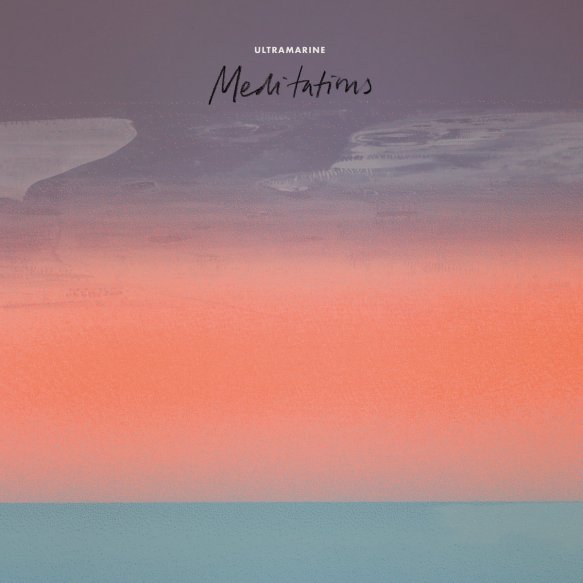
Very easy on the ear, as you can imagine – and very like the cover in terms of musical colour.

Both Meditations are best experienced on headphones or on a widescreen system in a quiet environment. Speaking from experience, they have only limited success on public transport, as the large amount of background noise means the sounds occasionally drop out of earshot unless turned up loud. Of course this music would never really be intended for such listening.

Instead, find the right environment to tune in and you will be quickly transported into Ultramarine’s world. It is a warm, watery place, out of doors and with soft, consoling noises both close up and far away, depending on where you want to focus your listening.

Meditation I settles on a dreamy sequence of two chords that follow each other without having any obvious rules, before moving to a section where the kalimba can cast its watery magic. Gradually this builds its energy, the sounds rippling outwards very pleasantly over a long pedal note.

Meditation II feels slightly closer to people, with distant snatches of dialogue audible from the field recordings. There are more obviously electronic interpolations here too, with ambient noises and subtle oscillations to guitar and keyboard. Again there are no drum beats, and virtually no bass – and the calm sonic environment casts a lasting spell, ending on a consonant, rippling chord.

Does it all work?

Yes. Ultramarine have plenty of experience in the ambient music area, and are masters at slowing down the mind while still giving it enough beneficial stimulation. You will emerge from an encounter with these two pieces with a calmer outlook for sure.

Is it recommended?

Yes. The listening environment is crucial to the success of any encounter with Meditations, just as it would be for proper meditation – so bear that in mind. As far as cancelling out the fast pace of modern life goes, or enhancing an already relaxing day, you really can’t go wrong with this one.

Stream and Buy