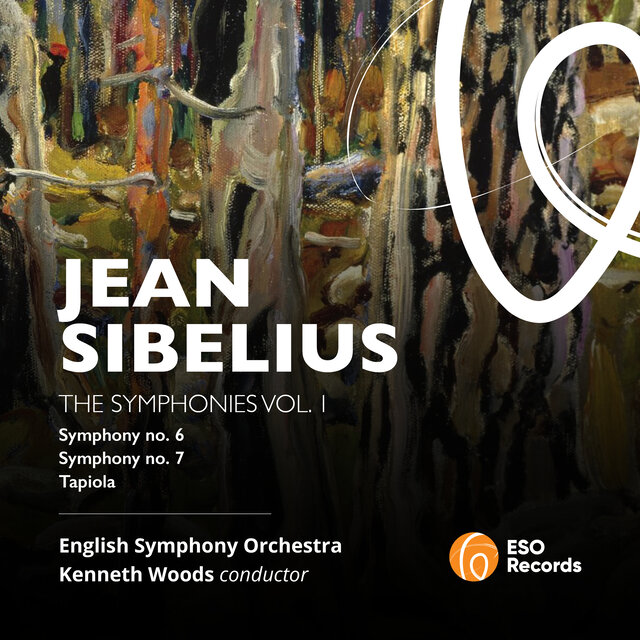
On Record – English Symphony Orchestra / Kenneth Woods – Sibelius: Symphonies 6 & 7, Tapiola (ESO Records)

Jean Sibelius
Symphony no.6 in D minor Op. 104 (1918-23)
Symphony no.7 in C major Op. 105 (1923-4)
Tapiola, Op, 112 (1926)

English Symphony Orchestra / Kenneth Woods

ESO Records ESO2502 [67’16”]
Producers Phil Rowlands, Michael Young Engineer Tim Burton

Recorded 1-2 March 2022 (Symphony no.6 & Tapiola); 2 May 2023 (Symphony no.7) at Wyastone Concert Hall, Monmouth

Reviewed by Richard Whitehouse

What’s the story?

Good to find the English Symphony Orchestra issuing the follow-up release on its own label (after Elgar’s First Symphony and In the South), launching an ambitious project to record all seven symphonies and Tapiola by Sibelius prior to the 70th anniversary of his death in 2027.

What are the performances like?

Only if the Sixth Symphony is considered neo-classical does it feel elusive, rather than a deft reformulation of Classical precepts as here. Hence the first movement unfolds as a seamless evolution whose emotional contrasts are incidental – Kenneth Woods ensuring its purposeful course complements the circling repetitions of the following intermezzo, with its speculative variations on those almost casual opening gestures. Ideally paced, the scherzo projects a more incisive tone which the finale then pursues in a refracted sonata design that gains intensity up to its climactic mid-point. Tension drops momentarily here, quickly restored for a disarming reprise of its opening and coda whose evanescence is well conveyed; a reminder that Sibelius Six is as much about the eschewal of beginnings and endings in its seeking a new coherence.

A decisive factor in the Seventh Symphony is how its overall trajectory is sensed – the ending implicit within the beginning, as Sibelius fuses form and content with an inevitability always evident here. After an expectant if not unduly tense introduction, Woods builds the first main section with unforced eloquence to a first statement of the trombone chorale that provides the formal backbone. His transition into the ‘scherzo’ is less abrupt than many, picking up energy as the chorale’s re-emergence generates requisite momentum to sustain a relatively extended ‘intermezzo’. If his approach to the chorale’s last appearance is a little restrained, the latter’s intensity carries over into a searing string threnody that subsides into pensive uncertainty; the music gathering itself for a magisterial crescendo which does not so much end as cease to be.

Tapiola was Sibelius’s last completed major work, and one whose prefatory quatrain implies an elemental aspect rendered here through the almost total absence of transition in this music of incessant evolution. A quality to the fore in a perceptive reading where Woods secures just the right balance between formal unity and expressive diversity across its underlying course. Occasionally there seems a marginal lack of that ‘otherness’ such as endows this music with its uniquely disquieting aura, but steadily accumulating momentum is rarely in doubt on the approach to the seething climax, or a string threnody whose anguish bestows only the most tenuous of benedictions. A reminder, also, that not the least reason Sibelius may have failed to realize an ‘Eighth Symphony’ was because he had already done so with the present work.

Does it all work?

Pretty much throughout. Whether or not the cycle unfolds consistently in reverse order (with a coupling of the Fourth and Fifth Symphonies having already been announced), this opening instalment is the more pertinent for focussing on Sibelius’s last years of sustained creativity.

Is it recommended?

Indeed. The ESO is heard to advantage in the spacious ambience of Wyastone Hall, and there are detailed booklet notes by Guy Rickards. Make no mistake, these are deeply thoughtful and superbly realized performances which launch the ESO’s Sibelius cycle in impressive fashion.

Listen / Buy

You can read more about this release and explore purchase options at the Ulysees Arts website. Click on the names to read more about the English Symphony Orchestra and conductor Kenneth Woods, and for the Ernest Bloch Society

Published post no.2,622 – Sunday 10 August 2025

On Record – Various Artists: Histoire De Couer (Caroline True Records)

by Ben Hogwood

What’s the story?

In the words of the press release:

France-the 1980s. A local radio and studio system almost unsurpassed in Europe – add brilliantly inventive labels and producers with a sense of fun & adventure & the result?

A golden age of Synth-Pop – Post-Disco..inventing the future…celebrating the chanson of the past. Updating that for a new generation & a new dancefloor. Virtually neglected until now – only the heads knowing…

Presented in the classic 45 (Quarante Cinq) 7″ format – the way that these great records were produced for the radio & were meant to be heard at that moment. Curated & with sleeve notes By John Kertland Of CTR, in English and French.

Now, the “savoir” is yours also. Hard to find 7″s by elusive artistes…Tangui/Kelly Way/Generation Egoiste & More…Glorious vocals ,soaring synths and irresistible basslines it’s all here ..

Bon écoute !

What’s the music like?

Tres bien! There is a lot of fun in store here, with some brilliantly bonkers synth pop, bursting with tunes and good vibes. The title track from Corinne Tell gives us a flavour of what to expect, before the brilliantly mad chorus of Fabienne Stoko’s Poupee.

Valene’s Sauve Moi has a great riff, while Tangui’s Amour Combat has a big chorus Kim Wilde would be proud of. Generation Egoiste (Tout Tout D’Suite) Egoiste is a lot of fun, from Generation Egoiste, while Kira’s Vacances A Deux is an appealing and humourous quicker disco march. The compilation signs off with Nani Antoni’s excellent Faites Vos Jeux.

Does it all work?

It does. There are some rough edges here, too, which only add to the listening appeal.

Is it recommended?

Enthusiastically. Loads of smiles and good times to be had with this compilation! Packed with riffs and a lot of dance appeal.

For fans of… Desireless, Brigitte Bardot, Imagination, Shakatak

Listen / Buy

Published post no.2,618 – Wednesday 6 August 2025

On Record – Gwenno: Utopia (Heavenly Recordings)

by Ben Hogwood

What’s the story?

There is a strong feeling around Utopia that this is the record Gwenno has been leading towards in her previous three solo albums.

As if to emphasise the fact she has recorded much of the album in English, a departure from the Cornish and Welsh songs she has been writing to date – as though she needs to communicate her message and feelings more immediately and with greater bandwith.

She regards her first three albums as ‘childhood records’, while Utopia is set to capture ‘a time of self-determination and experimentation’.

What’s the music like?

In a subtle way, Gwenno’s music on Utopia is deeply expressive. As always, her winsome voice is a big draw, but here the sense is that she is going emotionally deeper. War is a great example, a darker song with a lower vocal that leaves a lasting effect. 73, too, gets more emotional, while St Ives New School feels like a meditation on motherhood, with a coda of real substance.

Dancing On Volcanoes is a great pop single, while Ghost Of You is beautifully song. The Devil may be serious and relatively dark in lyrical content but again it has a dreamy side. Y Gath, a collaboration with Cate Le Bon and H. Hawkline, feels multilayered, a song to return to for full discovery. Finally Hireth is a spectral beauty, its cascading guitars complementing another excellent vocal.

Does it all work?

It does – the more personal side reaping rewards in longer songs that are as expressive as they are colourful.

Is it recommended?

It is, enthusiastically. Gwenno writes great pop songs, for sure, and has the voice to communicate them well, but intensive listening ensures the compositions are bound together, both in message and music. Gwenno’s best album yet.

For fans of… Cocteau Twins, Cate Le Bon, Gruff Rhys, Wolf Alice

Listen / Buy

Published post no.2,604 – Wednesday 30 July 2025

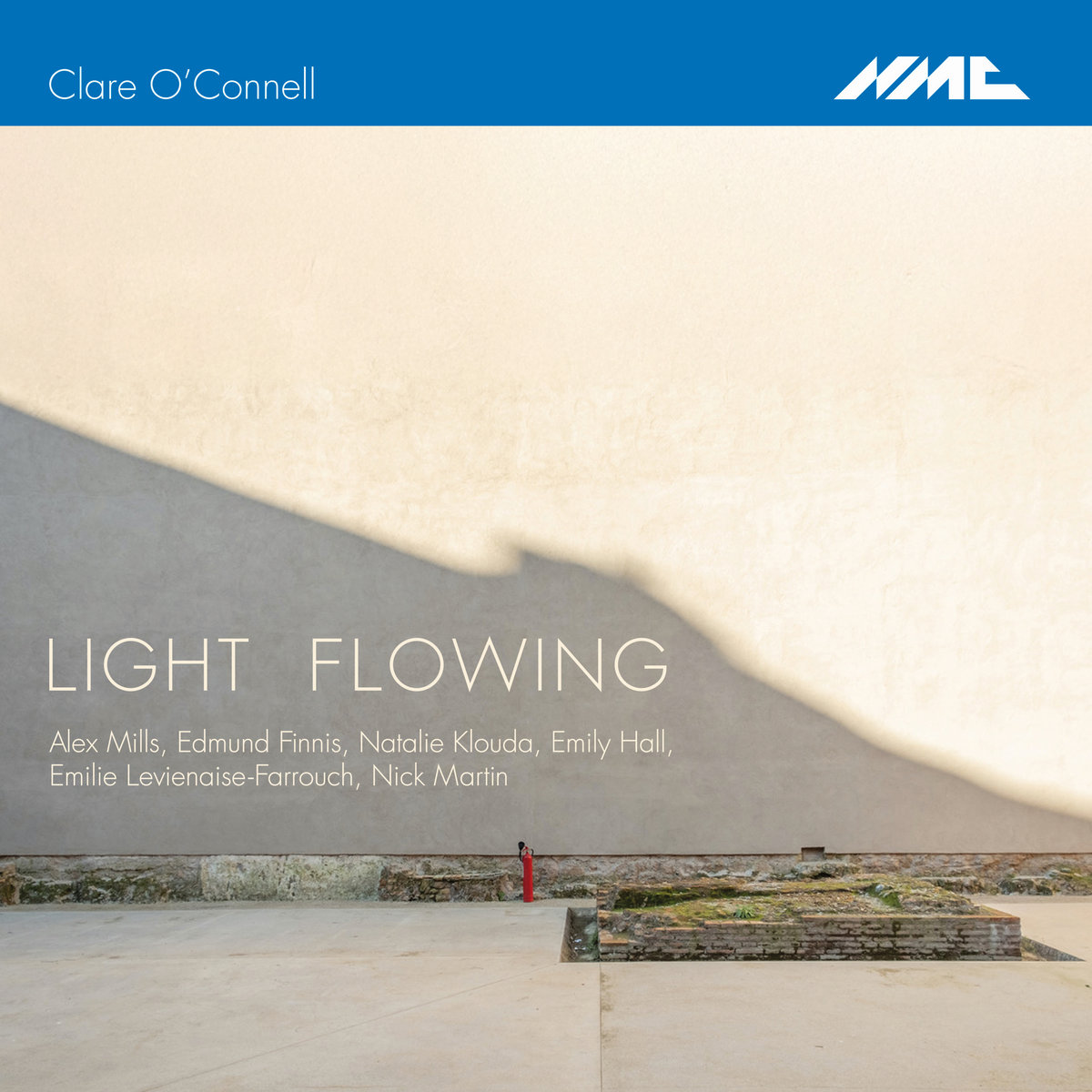
On Record – Clare O’Connell: Light Flowing (NMC Recordings)

by Ben Hogwood

What’s the story?

Cellist Clare O’Connell releases the Light Flowing album, which, in the words of the press release, is “inspired and tied together conceptually by ideas of light, depth, simplicity, the search for a perfect line, and capturing an otherworldly beauty that these carefully chosen composers represent within their different sound worlds.”

She looked for an ‘introverted introspective simplicity’, which is found through new compositions from five composers.

What’s the music like?

The music here is rather bewitching, in the best examples drawing the listener into a spell, with O’Connell playing beautifully.

Edmund Finnis contributes two examples, beginning with the Three Solos, expressive miniatures that O’Connell inhabits easily, especially the playful second solo with its pizzicato. Finnis allows for expansive thought in the outer two movements.

Meanwhile Emilie Levienaise-Farrouch contributes the imaginative four-part suite Opened, its movements based on the pitch of each of the cello’s four strings. Although it starts from the lowest ‘C’ string and works up, the pitches are closely linked and longer, sustained drones are used. The colours are subtly shaded, the musical motifs rich in thought and execution.

Natalie Klouda’s Uhteare is an excellent piece, packing a strong emotional punch but also falling naturally under the scope of the instrument, with a terrific end – O’Connell’s tone in the high register as sure and pure as it could be.

Emily Hall’s You Sail To The Sky is a meditative space, while Nick Martin’s two Vocalises find a hypnotic and compelling train of thought. The first floats down with delicate harmonics like a feather falling slowly through the sky, while the second floats most attractively, O’Connell’s cello ideal for its songlike profile. Prayerful, and lost in thought towards the end in contemplation, it disappears beyond the horizon.

Zenith introduces a timely change of sonorities, introducing the harp of Eleanor Turner, which has a more Japanese feel. An engaging discourse between the two instruments, it grabs the listener especially towards the end where O’Connell’s cello climbs higher. Then the sound descends to the depths as Marianne Schofield’s grainy double bass winds through a shadowy encounter as the first of three Figures Of Eight, Finnis writing a slight but compelling second movement drawing in the listener’s ear. The two instruments circle each other with pizzicato figures that get more insistent but stay largely quiet in the second movement, while the third has a richer, mellow sound

Does it all work?

It does, a thoughtfully planned recital executed with no little technical expertise.

Is it recommended?

Yes. The literature for solo cello is a rich body of work, right back to Bach in the 18th century, but this wide range of works illustrates how, with imagination, it is still possible for composers to explore new paths. Clare O’Connell proves a compelling communicator in bringing the pieces to life.

Listen / Buy

Published post no.2,597 – Thursday 17 July 2025

On Record – Parry Karp, BBC National Orchestra of Wales – Bloch: Schelomo & Suite (Signum Classics)

Ernest Bloch
Schelomo (1918)
Suite for Viola and Orchestra (1919; arr. Rejtő/Baller, 1969)

Parry Karp (cello), BBC National Orchestra of Wales / Kenneth Woods

Signum Classics SIGCD932 [60’58”]
Producer Phil Rowlands Engineer Andrew Smilie

Recorded 29-30 July 2024 at BBC Hoddinott Hall, Wales Millennium Centre, Cardiff

Reviewed by Richard Whitehouse

What’s the story?

Signum Classics issues its first release devoted to Ernest Bloch (1880-1959), comprising what is his best-known work alongside a piece that receives its first recording in a version for cello and orchestra – making for a representative introduction to this now under-appreciated figure.

What’s the music like?

Considered in his lifetime to be on a par with such contemporaries as Bartók and Stravinsky, Bloch duly suffered that almost inevitable falling off of reputation from which his music has never quite recovered, but almost all his major works have now been recorded and often on several occasions. Among his sizable output, those with a concertante element are especially notable for their redefining the relationship between soloist and orchestra as holds good for the present works, written as they were either side of the composer’s emigration to the USA.

Its title might translate as Solomon, but Schelomo is by no means a portrait of the Biblical monarch nor is the solo part merely a ‘translation’ of lines from Ecclesiastes such as Bloch had initially intended to set. This ‘Hebraic Rhapsody’ is the last and most representative, if not necessarily the finest, of his Jewish Cycle, its three contrasting sections amounting to a concerto (or maybe a Konzertstück) in terms of their encompassing a gradually cumulative ‘exposition’, then an impulsively tense ‘development’ whose impassioned climax subsides into a ‘reprise’ which takes in a musing accompanied cadenza prior to the starkly fatalistic close. Parry Karp is a perceptive interpreter – one who never over-emphasizes its eloquence or rhetorical overkill, while rendering the piece as a cohesive and an audibly unified whole.

Conceived for viola and piano, the Suite was orchestrated soon afterward then arranged for cello a half-century on by cellist Gábor Rejtő and pianist Adolph Baller. The layout, though not so integrated as to make it a concerto, is none the less striking. Its lengthy initial Lento (originally entitled ‘In the Jungle’) pits soloist against orchestra in a fantasia-like evolution that finds effective contrast in an alternately capricious and ruminative Allegro ironico, then the songfulness of an equally compact Lento; its searching inwardness pointedly dispelled by the lively and playful Molto vivo which brings about an affirmative conclusion. Karp is fully attuned to its understated charm and Kenneth Woods, who directed the likely premiere of this version in 2008, secures playing of sensitivity and imagination from the BBC NOW.

Does it all work?

Almost always. As his introductory note makes plain, Karp has been an enthusiastic advocate for this music throughout his career and there is no doubting the extent of his commitment in either piece. Schelomo remains Bloch’s most recorded work such that those who have any one of Gregor Piatigorsky (Testament), Pierre Fournier (DG), Mstislav Rostropovich (Warner) or, more recently, Sol Gabetta (Sony) can rest content; yet this newcomer is worth a place on any shortlist and a first recording of the Suite in this guise makes the release self-recommending.

Is it recommended?

It is. Balance between cello and orchestra could not be bettered in the spacious yet analytical ambience of Hoddinott Hall, while Woods contributes his customary insightful observations. Aficionados and newcomers alike will find much to delight and absorb them on this release.

Listen / Buy

You can read more about this release and explore purchase options at the Signum Records website. Click on the names to read more about cellist Perry Karp, the BBC National Orchestra of Wales and conductor Kenneth Woods, and for the Ernest Bloch Society

Published post no.2,585 – Friday 4 July 2025