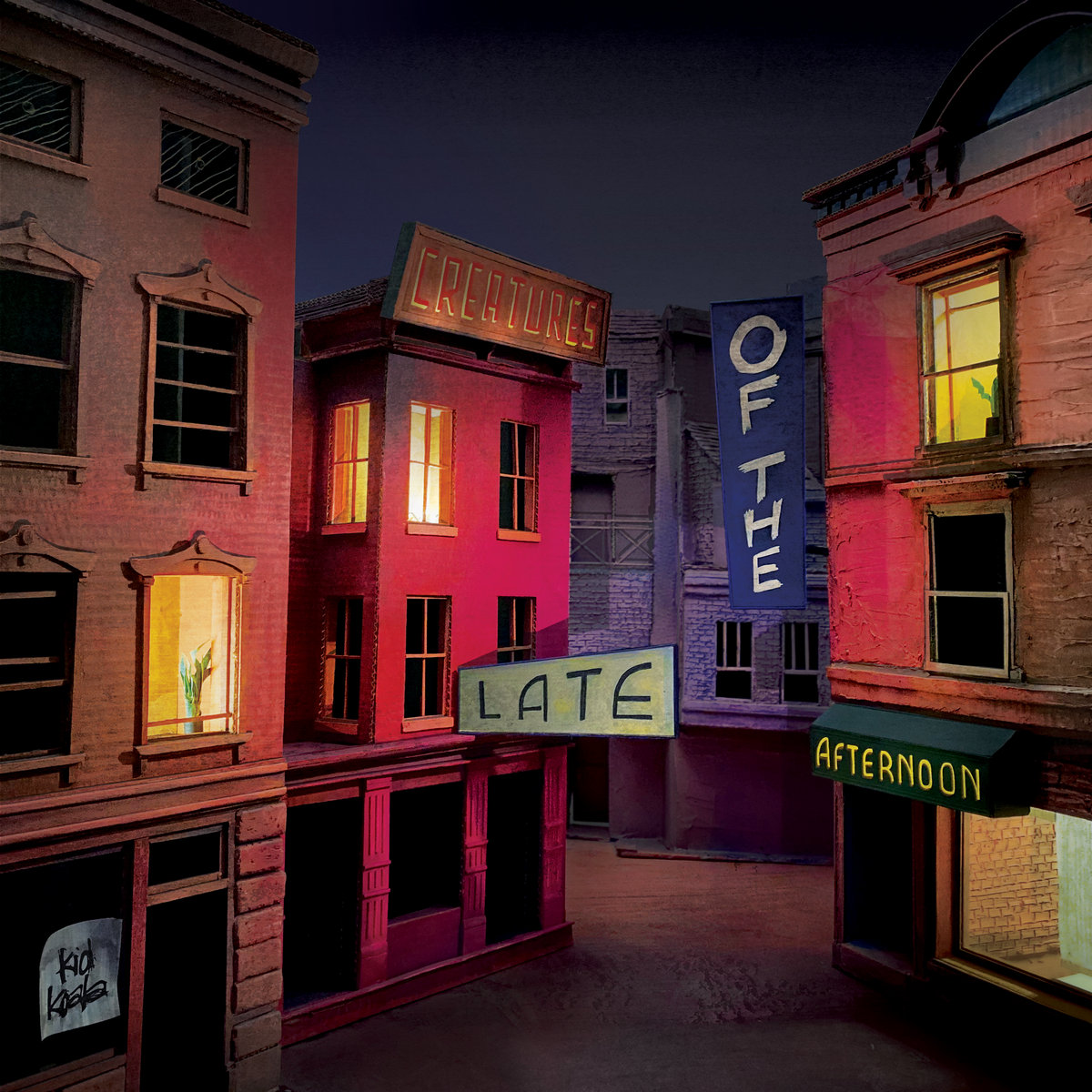
KidKoala is truly a one-off. Not content with making inventive hip hop beats infused with scratching, quirky if well chosen samples and catchy hooks, he matches his music with distinctive visual art.
Such is the case with MusicForTheLateAfternoon, whose LP is accompanied by a board game. Typically for Koala – real name Eric San – the album tells a selection of stories that move quickly between musical sources.
As with a number of established beat makers, he is amassing a considerable body of work, this being his ninth album.
What’sthemusiclike?
Both psychedelic and charming! There is no limit to the imagination here, with a veritable kitchen sink of riffs, beats and speech samples, but it all comes together just like the colourful animations Kid Koala does so well.
Some of the songs here are crowd scenes, children’s voices calling out mottos on the likes of Things Are Gonna Change, supported by walls of guitar and white noise. 1,000Towns is a slightly macabre waltz, weird but winsome.
The blasts of musical adrenalin are complemented by slower, thoughtful asides where there is touching vulnerability, or charming and often amusing dialogue, in this case a couple of scenes in a robot hotel.
There is more variety here than on previous records, but plenty of scratching prowess throughout, Koala’s turntable work so subtle that you’ll oftem miss it.
Does it all work?
Yes. As ever there is a lot of fun to be had here, with a lot of musical twists and turns that might reflect a short attention span but keep the listener engaged.
Is it recommended?
Yes. An album that proves energising, touching and celebratory in equal parts. Closing track Til We Meet Again provides the ideal final sentiment, as hopefully Kid Koala will continue in this rich vein of form.
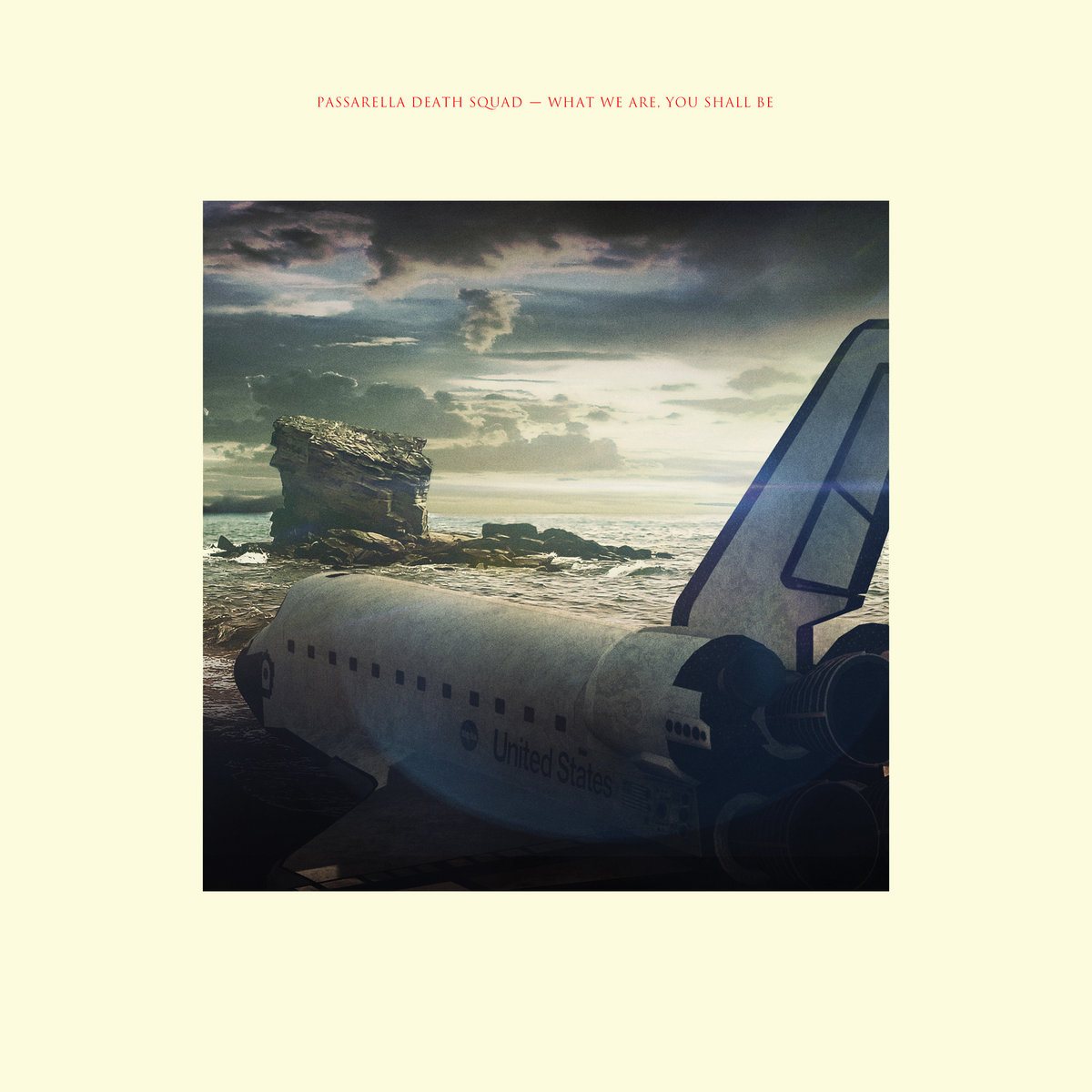
Thirteen years might seem like an age in music, but Danny Passarella and Emilie Albisser have not been idle since the release of their first album.
As Passarella Death Squad they have established themselves as cutting edge clothing designers in London, following the lead of Andy Warhol’s Factory. Simultaneously they have been busy raising important human rights issues through their RAISE publication.
Though the two have their hands full, music has always been front and centre of their world – and here the duo release their first album since their self-titled opus in 2010.
What’s the music like?
Atmospheric and impressive. Passarella and Albisser make slow burning songs that gradually open out like exotic flowers. Their music crackles with atmosphere, and on cuts like Creatures it sports a strong four to the floor beat to go with a song that grows impressively.
Emilie Albisser’s voice is cool and sometimes deadpan, but it gets the ideal backing with lean, bass-led grooves that bring the work of Gus Gus to mind while maintaining a wholly distinctive voice.
Just Like Sleep is one of the standout songs, a nocturnal lament that is beautifully structured and executed. No Mas has a sharper bass shadowing a semi-operatic vocal, with a recurring theme that gathers momentum as the song kicks into gear.
Often the music sets the scene of a club with very dark corners, exploring ghostly and gothic themes with lyrics that are similarly low in temperature. The title track is a good example of this, Albisser’s voice threatened by a robotic intervention but the music continuing on its coolly detached path.
Does it all work?
Yes. The minimal production gives the songs – and in particular Albisser’s voice – enough room to make a strong impact.
Is it recommended?
It is. A smoky second album to lose yourself in. Make sure you give it several listens to fully cast the spell.
Daughter have something of a cult following, and it’s easy to see why. They have the ability to build strong connections with their listeners, through subtle music that can often be interpreted as downward looking but actually turns out to have a positive undercurrent beneath.
Their last album, Not To Disappear, was perhaps too dark especially given its January release in 2016, but seven years on from that the group have released a couple of strong singles with their collective eye firmly on the long playing game.
What’s the music like?
Both elegant and profound. Where Not To Disappear carried a weathered expression, Stereo Mind Games looks upward with more kinetic energy, alternating between urgent thoughts and slow tracks acting as a musical comfort blanket. There is a really pleasing contrast of light and shade, and their songs have an attractive poise this time around.
Be On Your Way is a standout song that hits home a few listens in, flickering with promise for the future while telling the first part of a story to be continued. Dandelion has a crisp urgency that is the ideal foil for the vocal, while Neptune gives the voice free reign, climbing up to emotional heights thanks to Elena Tonra‘s input as a breathy but meaningful vocalist. Swim Back makes a lasting impression, its driving bassline and swirling production complemented by strong vocals and enigmatic lyrics.
Tonra’s voice dominates proceedings, but in the intervening years it has become a more versatile instrument, operating in slightly glacial tones but also capable a more direct approach.
Does it all work?
Yes, it does – because Daughter reach their listeners with subtle, elegant songs and few frills.
Is it recommended?
It is. Give it a few listens and Stereo Mind Game will set up its own corner in your head.
Isang Yun Silla (1992) Violin Concerto III (1992) Chamber Symphony I (1987)
Sueye Park (violin), Seoul Philharmonic Orchestra / Osmo Vänskä
BIS 2642SACD [67’13″]
Producer Robert Stiff Engineer Jin Choi
Recorded 30 August-3 September 2021, Lotte Concert Hall, Seoul, South Korea
Reviewed by Richard Whitehouse
What’s the story?
BIS makes a notable contribution to the growing Isang Yun discography with a judiciously chosen collection of orchestral pieces from his last years, performed with commitment and insight by the Seoul Philharmonic Orchestra under its recently departed music director Osmo Vänskä.
What’s the music like?
Most famous for his fractious relationship with the then military dictatorship of South Korea, Yun (1917-95) resided mainly in West Berlin from 1964 and built a sizable catalogue which effected a far-reaching synthesis of European modernist techniques with traditional Korean elements. At the forefront of the Western avant-garde during the 1960s, he latterly embraced more traditional genres – composing numerous symphonies, concertos and ensemble works such as extend and enrich this synthesis with engaging while frequently provocative results.
The First Chamber Symphony premiered in Güttersloh by the Deutsche Kammerphilharmonie Bremen and scored for early-Classical forces with pairs of oboes and horns alongside strings. Its three continuous sections outline an expected fast-slow-fast format – offset by the interplay of string groupings in the first section, then the emphasis on solo or chamber formations and contrasts of motion in those that follow. The final section moves towards a sustained passage of exquisite poise, before a sudden upsurge concludes the whole piece with terse decisiveness.
Premiered in Amsterdam by Vera Beths, the Third Violin Concerto follows a similar formal trajectory whose continuity is largely determined by greater or lesser contrasts in motion and emotion between its constituent episodes. Those of the opening section build to an intensive central climax, subsiding into a restive calm which takes on greater serenity in its successor; before the final section unfolds impulsively and with martial undertones towards the closing series of exchanges between violin and orchestra: the soloist has the conciliatory last word.
Subtitled ‘Legend for Orchestra’, Silla was Yun’s final such piece and premiered in Hanover by the Niedersächsisches Staatsorchester. Its title evokes connotations of home and origin – not least Korean court music from the earlier Medieval era, here alluded to within a context of nocturnal celebration. There are again three sections, though here the follow-through feels all but seamless while the orchestration enables a wide range of timbral and textural nuances – not least in a peroration as suggests an affirmation (understandably) rare in this composer.
Does it all work?
It does. Many of Yun’s latter works evince sufficient connections with the Western classical music of earlier eras to be accessible for mainstream audiences, with the pieces here being no exception. Sueye Park is assured and insightful in the concerto, while Vänskä secures playing that emphasizes the allure and iridescence of Yun’s orchestral writing. Over a quarter-century after the composer’s death and his music remains on the periphery of the modern repertoire, but releases such as this will secure it greater advocacy from younger musicians and listeners.
Is it recommended?
Very much so. The recording is as commendable in its clarity and definition as expected from BIS, as are Walter-Wolfgang Sparrer’s notes. One can only hope a follow-up release, perhaps featuring Konturen, the Oboe Concerto and the Second Chamber Symphony, is forthcoming.
Elgar Violin Sonata in E minor Op.82 (1918) Salut d’Amour Op.12 (1888) Chanson de Nuit Op.15/1 (c1889) Chanson de Matin Op.15/2 (c1890) Gurney ed. Marshall Luck Violin Sonata in D major (c1918-19)
Producer Rupert Marshall-Luck Engineer Oscar Torres
Recorded 29-30 March 2021, Wyastone Concert Hall, Wyastone Leys, Monmouth
Reviewed by Richard Whitehouse
What’s the story?
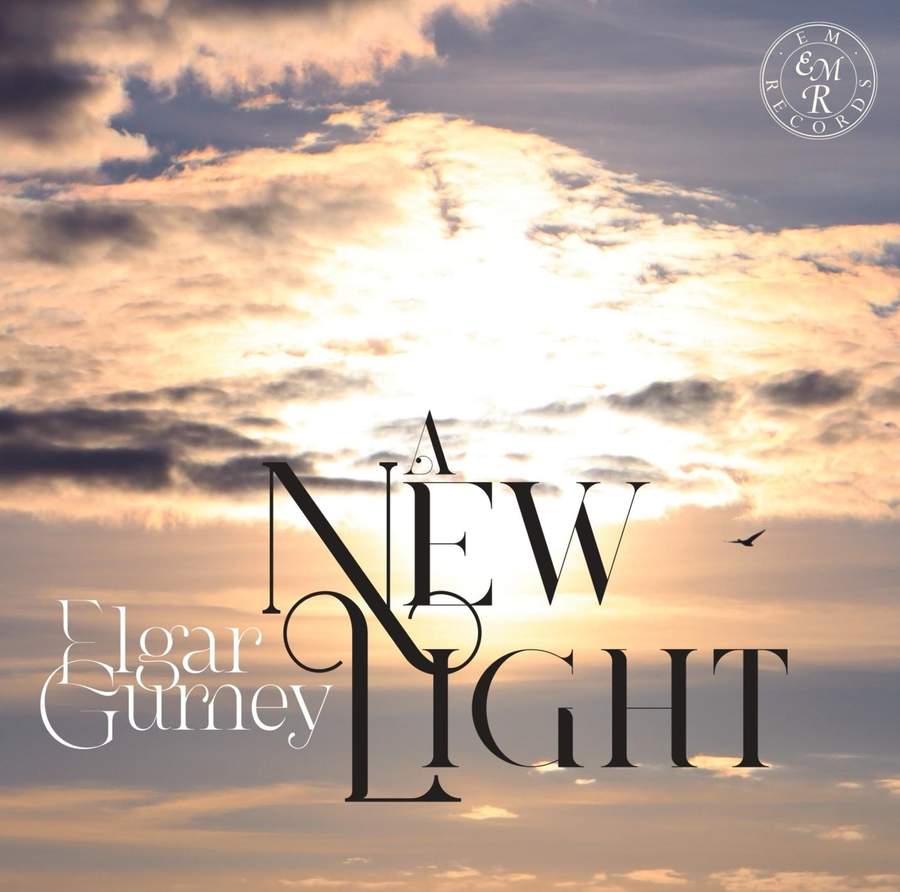
Rupert Marshall-Luck here continues his exploration of British music for violin and piano with this coupling of sonatas by Elgar and Gurney, the former performed in a new critical edition as prepared by the violinist and the latter receiving its first commercial recording.
What’s the music like?
The Violin Sonata was the first of a series of ‘chamber’ pieces Elgar wrote near the close and in the aftermath of the First World War, distilling his musical language while accentuating a pathos seldom far beneath the surface during his maturity. Outwardly traditional in overall design, none of its three movements is yet beholden to formal precedent. Thus, the opening Allegro alternates its subtly differentiated themes to halting and even uncertain effect; the Romance contrasts the flowing eloquence of its middle section with the restrained poignancy of those either side, while the final Allegro centres on an ardently expressive melody as this unfolds with increasing purposefulness toward a tersely decisive close. Marshall-Luck’s edition was published by the Munich firm of Henle in 1919, a century after the work’s first performance.
His Violin Sonata in D marks another stage in the reclamation of Ivor Gurney’s voluminous output. Composed near the start of that period between his discharge from the army and his admittance to a psychiatric hospital, it is less overt in its emotional intensity than the later E flat Sonata but more cohesive formally – due, in part, to Gurney’s advocate Marion Scott in having preserved a near-complete score as has subsequently been realized by Ian Venables. Despite its Allegro marking, the first movement is often understated in its expressive range and motivated more by tonal fluidity than by its rhythmic animation. The Scherzo exudes a capering humour complemented by the winsome poise of its trio, then the largely literal ‘da capo’ ends in teasing ambivalence. The Lento builds from its initial reticence to a climax of acute plangency before subsiding into regretful calm; after which, the Finale sets out with a renewed determination, offset by its elegant second theme and energized by its development, on the way to a coda whose resolution is the greater for its almost offhand sense of closure.
Placed between these sonatas are several of Elgar’s duo miniatures – Salutd’Amour with its effortlessly ingratiating charm, then the Chansons which make for an ideal diptych in terms of their respective pathos and ardency. Marshall-Luck plays all three with unfailing artistry.
Does it all work?
Pretty much. Comparison with his earlier recording of the Elgar (EM Records EMRCD011) finds Marshall-Luck more expansive in each movement, notably a finale that now has greater depth and insight. Here and in the Gurney, Duncan Honeybourne (most recently heard in a deeply impressive account of Frank Bridge’s Sonata on EMRCD070-71) contributes pianism as sensitive yet impulsive as this music requires and which adds much to the persuasiveness of these accounts. Hopefully the Gurney will go on to receive the public hearings it deserves.
Is it recommended?
Yes. The sound has the focus and clarity needed for this difficult medium, while Marshall-Luck contributes detailed overviews on each piece within the extensive booklet notes. As a programme it adds considerably to one’s appreciation of the music – ‘A New Light’ indeed.


 Arcana.fm