On record – Param Vir: Wheeling Past the Stars (NMC Recordings)

param-vir

cPatricia Auchterlonie (soprano); cUlrich Heinen (cello); aSoumik Datta (sarod), aKlangforum Wien / Enno Poppe; bLondon Chamber Orchestra / Odaline de la Martínez dSchönberg Ensemble / Micha Hamel

Param Vir

Raga Fields (2014)a
Before Krishna (1987)b
Wheeling Past the Stars (2007)c
Hayagriva (2005)d

NMC Recordings NMC D265 [69’07”] 

Producers aFlorian Rosensteiner, bStephen Plaistow, cDavid Lefeber, dAnneke van Dulken, dWim Laman
Engineers aFritz Trondel, dDick Lucas

Recorded b14 December 1988 at BBC Studios, Maida Vale, London; d13 December 2005 at Muziekgebouw, Amsterdam; a23 May at Konzerthaus, Vienna; c10 October 2020 at Henry Wood Hall, London

Written by Richard Whitehouse

What’s the story?

Not a little surprisingly, this release from NMC is the first devoted to Param Vir (b1952), his music a welcome though undervalued presence in the UK over the almost four decades since relocating here from his native India and making for a ‘portrait’ whose appearance is timely.

What’s the music like?

Right from his earliest pieces written in the UK, Vir possessed a distinctive and engaging idiom – as can be heard in Before Krishna, subtitled an ‘Overture for Strings’, in which the narrative leading up to the deity’s birth is evoked through an intensive development of the ‘Krishna row’; heard in the context of string writing as is audibly influenced by (if never beholden to) the sonorist techniques from previous decades. Especially striking are those deftly enveloping chordal harmonics into which the music diffuses during the final bars.

Hayagriva is demonstrably more personal in approach – not least in its evoking the horse-headed being and mythological archetype behind a work whose headlong rhythmic energy gradually moves, via an intricately detailed transition, to a closing section whose subdued manner does not preclude music of fastidious textural variety and expressive nuance from emerging. The colour sequence ‘red/crimson-green/gold-blue’ evolves in parallel, but the aural trajectory pursued by this ‘mixed ensemble of 15 players’ is appreciably more subtle.

The song-cycle Wheeling Past the Stars draws on four poems by Rabindranath Tagore (sung in widely praised translations by William Radice). ‘Unending Love’ opens the sequence with its ecstatic vocal melisma and cello glissandi, while ‘Palm-tree’ portrays night-ride and storm with no mean resourcefulness. The unaffected charm and vivacity of ‘Grandfather’s Holiday’ then provides an admirable foil to ‘New Birth’, its frequently impassioned contemplation of those ‘who come later’ making for an earnest yet always eloquent conclusion to this cycle.

Raga Fields is outwardly a concerto for sarod but one where the orchestral contribution can be perceived as growing out of the soloist – whether in the gradual textural proliferation of ‘Void’; the comparable melodic interplay, notably through a variety of insinuating solos for woodwind, of ‘Tranquil’; then the stealthy rhythmic accumulation of ‘Vibrant’, in which the constant shifting between notated and improvisatory passages is heard at its most intensive. As the coming together of differing concepts, this is a productive and engrossing synthesis.

Does it all work?

Yes, in that Vir’s music exhibits its Indian antecedents distinctly yet always subtly. Allied to unforced harmonic clarity and a keen feeling for textural finesse is a sure sense of where each piece is headed formally, such that the considerable emotional intensity never risks becoming turgid or self-indulgent. It helps that these performances are attuned to the work at hand – not least Patricia Auchterlonie with Ulrich Heinen in the song-cycle, or the three ensembles that are heard in the remaining items. Whatever else, Vir has been well served by his performers.

Is it recommended?

Indeed. The sound has, in some cases, been remastered to mitigate the considerable time-span between performances, while Paul Conway pens his customary reliable notes. Hopefully, a follow-up release, maybe of Vir’s wide-ranging orchestral output, will not be long in coming.

Listen & Buy


You can get more information on the disc at the NMC website, where you can also purchase the album. For more on Param Vir, you can visit the composer’s website

On Record – Squid: Bright Green Field (Warp Records)

squid

reviewed by Ben Hogwood

What’s the story?

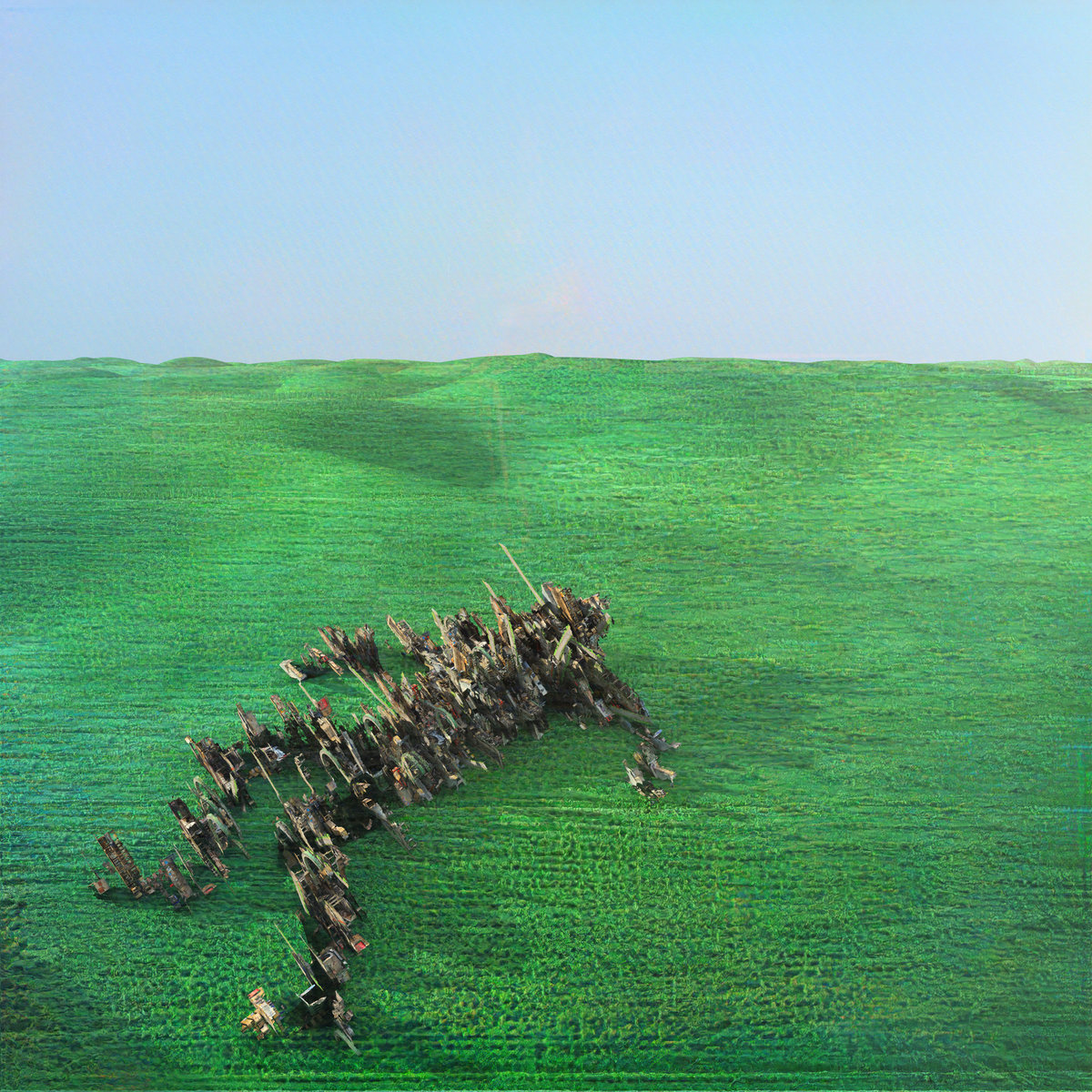
Squid are a fascinating proposition. The cover of Bright Green Field promises much in terms of pastoral beauty and optimistic music, but the reality is often at complete odds with the picture. While there are indeed pastoral moments, found in field recordings of bees and church bells, there are moments of outright anger at the direction in which society, and British society in particular, is going.

This reflects the quintet’s position in Brighton, from where they can see both the attractive and vulgar elements of living in Britain, and the corporate traps too. G.S.K., for instance, details the chemical conglomerate GlaxoSmithKline as being so big you can now tell the time by them.

What’s the music like?

As fascinating and multi-layered as the lyrics. It is not possible to pin Squid down to a single style; rather it is instructive to say what they are capable of doing and how they communicate. What really strikes the listener is how assured it all is, and that no matter what style they use to communicate, they do it with great intensity.

Drummer and vocalist Ollie Judge has a glorious unpredictability, moving from wry observations to excited yelps at the flick of a switch. Several Squid songs change mood like the weather, and the music follows suit – but always in thrall to the lyrics, never for the sake of it. At times they channel the calculated rock of Battles, while the style of Narrator brings reminders of The Rapture, building up into a ritualistic frenzy. Some of the tracks are left as unkempt, but in a good way – and Boy Racers definitely falls into this category, its cheery punk pop grinding to a halt before a woozy interlude starts to blur the senses.

As Bright Green Field progresses, there continues to be a refreshing willingness to disregard the musical rules. Paddling is brilliant, an oblique melody dominating until Judge’s repeated cry of “Don’t push me in!” Rich brass sonorities open up in The Flyover, while Global Groove proves an effective snapshot of the album, building tension with a brass and guitar payoff as Judge gets more and more animated. Finally the lyrical content of Pamphlets emphasises the Britishness of the band in spite of the krautrock influences deployed here, working up a lather as the song progresses.

Does it all work?

Unexpectedly, and in spite of the listener’s expectations. Squid challenge our perceptions of genre on a regular basis, stomping all over the dividing lines. They have such a firm confidence in what they do that their musical workings are instinctive, and their rebellious nature is countered by pastoral asides. There is plenty of seething anger here, too, but none of it is misplaced.

Is it recommended?

Yes, without hesitation. Pretty Green Field contains some of the most original pop music you will hear from a new band in 2021.

Stream

Buy


On Record – Sarah Neufeld: Detritus (One Little Independent)

sarah-neufeld

reviewed by Ben Hogwood

What’s the story?

Violinist Sarah Neufeld adds to her solo canon with Detritus, her third album. It is a substantial piece of work dating back to 2015, when Neufeld met and collaborated with choreographer Peggy Baker. The two struck up an intense understanding, but the short time working together was ultimately unfulfilling. This led to a reunion in 2019, where Arcade Fire member and Bell Orchestre co-founder Neufeld effectively faced off in improvisation with Baker, and the seeds of Detritus were sown.

What’s the music like?

As striking as the cover art. This is a powerfully affecting piece of work in which the violin is only a part of the story. Although it is a lead character, Neufeld has plenty going on around the loops and cells of the stringed instrument, with wide open effects and textures and a substantial body of percussion, inspired and executed by Arcade Fire bandmate Jeremy Gara. Bell Orchestre‘s Pietro Amato brings rich horn textures, while flautist Stuart Bogie adds deep woodwind colour.

The violin is played with the poise of a dancer, with an airborne feeling to the instrument’s commentary on Stories. With Love And Blindness has impressive depth and again a tension between the slow moving vocals and the urgency of Neufeld’s melodic cells. The Top is propulsive, flickering figures dancing up and down. Tumble Down The Undecided is a very impressive piece of work, the violin dancing across the strings as long, noble notes go across the music like tracers, all to the accompaniment of rolling percussion and the swell of cymbals. Shed Your Dear Heart is also a substantial structure, with the violin looping constantly while rolling drums march forward, more than a little ominously.

Does it all work?

Yes – and the more you listen, especially on headphones, the more you appreciate the expert layering of parts and intersection of the musical motifs.

Is it recommended?

Yes, enthusiastically. It is great to have Miller and Jones committing their friendship to record in this way, and the musical chemistry between them is clear. Hopefully this will lead to further installments!

Stream

Buy


Switched On – Sunroof: Electronic Improvisations Vol. 1 (Mute)

sunroof

reviewed by Ben Hogwood

What’s the story?

Sunroof is surely the longest running collaboration in electronic music yet to have released an album….until now. The duo, Daniel Miller and Gareth Jones, have long traded Improvisations in private using modular synths, a practice dating back to 1982 when the pair worked together on Depeche Mode’s Construction Time Again.

Miller, who has run the Mute label for four decades, and Jones, a prolific producer, engineer and artist, used Sunroof as a remix project from the 1990s onwards but now, with their friendship about to begin its fifth decade, we finally hear the fruits of their original electronic labours.

What’s the music like?

Timeless – in the sense that this is music borne of the 1980s but feels like it was only made yesterday. The easy style in which the two composers work leads to music that unfolds naturally but still has a keen structure.

Each title is marked by the date of its inception, and the eight tracks vary between deep, moody drones (1.1 – 7.5.19 and 1.3 – 30.5.19) to flickering lights of treble, which we get in 1.2 – 30.5.19 and 1.6  – 7.5.19.

The drones have a little interference around them with white noise, but the harmony is generally consonant. The lighter tracks have more wandering melodies and move on a whim, 1.6 with a motorised movement that becomes more probing and then vanishes into thin air. 1.7 – 30.5.19 a Star Trek like noise on a loop, burning a trace on headphones, then.
1.4 – 18.6.19 is really excellent and could develop into a powerful club track twice its length, while 1.8 – 2.3.19 is the closest we get to a drum beat, a squelchy thud beating moments in time, underneath a bubbling bass and busy treble.

Does it all work?

Yes – and the more you listen, especially on headphones, the more you appreciate the expert layering of parts and intersection of the musical motifs.

Is it recommended?

Yes, enthusiastically. It is great to have Miller and Jones committing their friendship to record in this way, and the musical chemistry between them is clear. Hopefully this will lead to further installments!

Stream

Buy


Switched On – Jas Shaw: Sollbruchstelle 1-3 (Delicacies)

sollbruchstelleI

reviewed by Ben Hogwood

What’s the story?

The conditions brought on by the pandemic in the last year have shifted the goalposts for many composers. Working under lockdown has changed perspectives, often through necessity – and few people have experienced this more than Jas Shaw. A highly productive composer and producer, Shaw was confined to base by the risk of catching Covid and an operation on his cell disorder AL amyloidosis.

Typically his response to spending so much time in one room was a productive one, an album comprising three EPs of luminous ambience, sitting squarely between acoustic and electronic. He chose the title Sollbruchstelle (the German for ‘breaking point’) himself, interpreting that as a mixture of sadness and hope – but reflecting the difficulty he and many others have had to overcome in the last year.

What’s the music like?

Easy to listen to, but with emotive depth. Shaw’s resilience is immediately clear in the surefooted confidence of his writing, and everything unfolds at a natural pace, as instinctive for him as breathing it would seem.

The first EP begins with a really lovely piece of music, Hålla tummarna – a Swedish phrase meaning ‘to hold one’s thumbs’, to wish someone luck. In this case there are single, harp-like lines tracing shapes in the sky, with reassuring harmonies around. It turns into a she, meanwhile, occupies a lower part of the spectrum, with slow moving ambience in sonorous tones, like the slowed-down pealing of bells.

Volume 2 sharpens the tones, and The revenge of noise on harmony and I wig on a cone have serrated edges, the first compressing into a woolly pile at the end. The friendly bleeps of Felt compute, might delete contrast with this, as does the thick timbres of Absent and incorrect, with slowly moving chords that could describe the motion of an iceberg.

Each of the volumes have seven tracks, and the third begins with the absentminded thoughts of Rhyme undisturbed and the appealing minimalism of Snacks of carelessness, with its mottled piano sound. Shaw is always on the move in this section, and the brief Norwegian Blue and more substantial Double stop generate surprising energy, the latter twinkling at the edges. Finally Made not to fade gives some welcome solace, a reassurance surely for Shaw himself.

The three EPs that make up the full Sollbruchstelle album, work equally well as standalone units or as part of an 80-minute whole. Shaw used a piece of artwork by Leafcutter John for each, representing the music – as you can see on this page.

sollbruchstelleII

Does it all work?

Yes. Because of Shaw’s natural approach, the music here has plenty of room, and doesn’t try to do too much – but its understated impact is lasting. Shaw has a natural way with minimal loops without ever sounding contrived, and the continual changes of colour, light and shade form vivid patterns in the listener’s eye.

sollbruchstelleIII

Is it recommended?

Enthusiastically. If you’ve heard Shaw in his more energetic guise as half of Simian Mobile Disco, the electronic project with James Ford which is currently on hold, you will warm to this softer side of his musical personality – which is wholly convincing, albeit in much more ambient clothing. Shaw makes slowly evolving gems that dance in the half light.

Stream

Buy