Switched On – Matthew Herbert: Musca (Accidental)

musca

reviewed by Ben Hogwood

What’s the story?

With more than 25 years’ worth of experience in making house music, Matthew Herbert knows more than most how to make people dance. He has done so in a wide variety of ways, none more so than in his so-called ‘domestic’ albums Around The House and Bodily Functions – where the music was made from home appliances and the human body respectively.

Musca completes a trilogy of these albums, as far as the production goes – with added vocals from eight singers who Herbert had not met at the time of recording. It is, in effect, the ultimate lockdown album.

What’s the music like?

If you liked Herbert’s 1990s deep house, with its experimental tendencies and intimate language, you’ll love this. To get his musical sounds the composer manipulated a number of sounds from around the farm where he lives – so there are cameos from the pigs, dogs and foxes to name just a few. This being Herbert the sounds are expertly treated and fashioned into the language of house music, which on this occasion is a soulful model, especially with some of the vocalists involved.

Bianca Rose stands out for her contributions to Chain Reaction, Gold Dust and Let Me Sleep. The first of these has a lovely choral effect that Herbert secures as part of his word painting, while the last is a dreamy, piano-led nocturnal number with a wide sonic scope. Verushka is another to stand out on Fantasy, which has a clunking beat reminiscent of mid-90s Herbert and a sublime vocal.

Allie Armstrong is also an ideal foil for Herbert’s music, with the sombre but curiously moving The Horror a standout among her three contributions, its lyrics especially moving. The Impossible, meanwhile, has the backdrop of what sounds like a dripping tap in a barn, but the multi-tracked vocals are like a warm blanket in the coda.

Meanwhile Hypnotised, with Mel Uye-Parker, works really well thanks to deep keyboards and lovely layered vocals to dive into. It comes off the back of the treated vocals of Joy Morgan in Two Doors, with shuffling beats the backdrop to quite an eerie experience.

Only one of the 14 tracks is instrumental, The Slip positioned in the centre of the album and taking a jazzier profile, with flute solo and plucked bass.

Does it all work?

It does, largely. Part of this will depend on your approach to Herbert, for if you started listening to him because of his house music ventures you will definitely warm to this. It has an urban and soulful charm, with its beautifully layered textures, and its songs are constantly shifting, never too repetitive.

Is it recommended?

Very much so – for Musca is an album that is at turns relaxing, hypnotic, moving and subtly inspiring. Herbert’s command of the beats ensures there is never a moment wasted.

Stream

Buy


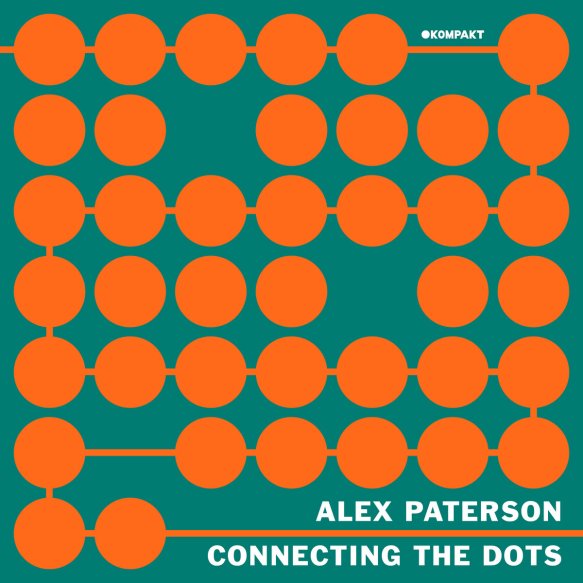
Switched On – Connecting The Dots mixed by Alex Paterson (Kompakt)

reviewed by Ben Hogwood

What’s the story?

In a little less than a year, Kompakt’s Connecting The Dots series has proved remarkably popular, as the label explore their substantial catalogue of electronic music. Now Alex Paterson, original founding member of The Orb, steps up to mine the more ambient side of the warehouse, pulling 17 out of the 15,000 available recordings to make a mix that would fall naturally into Kompakt’s Pop Ambient division.

The mix has been out for a while digitally, but has found its way on to Arcana’s early morning playlist in the last few weeks!

What’s the music like?

Extremely restful, providing a blissful 90-minute time out when needed – but also rewarding the closer listener, who can follow Paterson’s thought patterns as the meditative mood grows.

The Orb lynchpin starts with big, loping beats from Mohn, Schwarzer Schwan imposing a subtly menacing mood on proceedings. It doesn’t last, for the expansive Milk from Klimek is on hand. This track has like a series of long, slow breaths, taking its sweet time as each repetition leads gradually to a bigger, thicker sound.

Regular beats arrive once more with Markus Guentner’s mix of label founder Michael Mayer, Pensum held in place by a lovely suspended chord that you can dive into completely. The Orb’s own mix of Because Before by Ulf Lohmann is next, with lush slowly moving chords like a warm weather system. This blissful mood holds through the Fresco & Pfeiffer remix of Christian Löffler’s Pigment to ex-Orb member Thomas Fehlmann, and Treatment.

Each of the tracks is a good four and half minutes long at least, the slowly shifting mix paced just right. As it progresses we hear from Simon Scott, who spaces out his musical thoughts beautifully in Für Betty, and Andrew Thomas, static but meditative in I Am Here Where Are You. The mix reaches its zenith, however, with the quarter-hour penultimate track from Klimek. Music To Fall Asleep is a thing of beauty, drifting into a slow trance with a spatially altered guitar, against a background of softly pitched white noise. The coda is The Orb’s own Glen Coe, a cotton-wool glow of positive ambience and spoken word.

Does it all work?

It does – and a sure sign of this on the first few listens was that I couldn’t be bothered to check my player to see what the tracks were, or if indeed at some points we had even changed track! Such is the vibe behind Paterson’s choices, mixing and presentation.

Is it recommended?

Without hesitation. Paterson has so much experience in making fully immersive ambient music, and he clearly knows the corners of the Kompakt catalogue where the best possible mindful examples can be found. The artists not mentioned above – such as Gas and Walls – are testament to that. Nothing more need be said – just go and listen!

Stream

https://open.spotify.com/album/46L9tNr4y1nCwpwDkYIyIT?si=2MDlseB5SyKzFvQHf1ZmMw

Buy

You can listen to clips from the mix and purchase from the Kompakt website


On record – Dmitry Smirnov: Bach, Bartók & Schneeberger – Works for solo violin (First Hand)

dmitry-smirnov

Dmitry Smirnov (violin)

J.S. Bach Partita no.2 in D minor BWV1004 (c1720)

Bartók Sonata, BB124 (1944)
Schneeberger Sonata (1942)
First Hand Records FHR117 [61’45”]

Producer / Engineer Jean-Daniel Noir

Recorded 8-10 February 2021 at ‘Il Poggio’, Montecastelli Pisano, Italy

Written by Richard Whitehouse

What’s the story?

The violinist Dmitri Smirnov makes his debut for First Hand Records with this release of unaccompanied works from Bach and Bartók, together with a first commercial recording    for the wartime sonata by Schneeberger in what proves an astute and instructive coupling.

What’s the music like?

The Solo Violin Sonata by Bartók is the pre-eminent work of its kind in the twentieth century – Smirnov setting out his credentials in a forthright though never over-wrought account of its initial Tempo di ciaccona, followed by a tensile reading of the Fuga which still admits a bracing humour into its methodical construction. The Melodia is the emotional core of this work, and here Smirnov avails himself of a wide variety of timbre in its heartfelt unfolding, then the Presto makes for a coruscating finale that ultimately heads to its decisive ending.

Its famous finale can easily dwarf the initial four movements of Bach’s Second Solo Partita, but Smirnov is mindful to accord due emphasis to this succession of capricious Allemande, trenchant Courante, eloquent Sarabande then cavorting Gigue, whose jazzy syncopation provides a telling foil for what follows. Attacca in this instance – Smirnov heading directly into the Chaconne which here eschews rhetorical grandeur for an impulsive traversal of its motivically close-knit variations, sustained through to an unexpectedly taciturn conclusion.

Interest understandably focusses on a Solo Sonata by Swiss violinist Hansheinz Schneeberger (1926-2019), with whom Smirnov was personally acquainted. The present work is structured in three compact movements: a powerfully sustained Adagio – entitled Introduzione (quasi cadenza) – followed by an alternately humorous and suave Allegro, then a closing Allegro which is barely half the length of its predecessors, while compensating for any formal short-windedness with an unflagging energy which is maintained right through to its final cadence.

Does it all work?

Yes, whether in terms of a collection whose constituents can be enjoyed separately or as a straight-through recital. There are many other recordings of both the Bach and Bartók, but Smirnov brings his own interpretative approach to bear on each work while, at least for the present, has the field to himself in the Schneeberger. The repertoire for solo violin is wider than supposed, and Smirnov will hopefully continue with its exploration – maybe tackling one of those sonatas by Mieczysław Weinberg, Benjamin Frankel, or Bernard van Dieren.

Is it recommended?

Indeed. The focussed while never constricted sound provides an ideal ambience for Smirnov, whose playing is complemented by his informative annotations. Both CD and booklet cover feature one of Scheeberger’s paintings, The Forest, dating from two years before his Sonata.

Listen & Buy


You can get more information on the disc at the First Hand website. 

On record – Peter Cigleris: Dedication – The Clarinet Chamber Music of Ruth Gipps (Somm Recordings)

gipps

Ruth Gipps
The Kelpie of Corrievreckan Op.5b (1939)
Quintet Op.16 (1941)
Rhapsody in E flat major Op.23 (1942)
Clarinet Sonata Op.45 (1955)
Prelude, Op.51 (1958)

Peter Cigleris (clarinet) with Gareth Hulse (oboe); Duncan Honeybourne (piano); Tippett Quartet [John Mills and Jeremy Isaac (violins), Lydia Lowndes-Norcott (viola) Bozidar Vukotic (cello)]

SOMM Recordings SOMMCD0641 [67’37”]

Producer Siva Oke
Engineer Michael Wright

Recorded 1 and 2 November 2020 at Menuhin Hall, Stoke d’Abernon, Surrey

Written by Richard Whitehouse

What’s the story?

SOMM Recordings marks the 100th anniversary of the birth of Ruth Gipps (1921-99) with this collection of her chamber music featuring clarinet, all of which was written with Robert Baker (her husband for 57 years) in mind and all of which here receives its first recordings.

What’s the music like?

A gifted oboist, pianist and conductor, Gipps was an all-round artist whose accomplishment was matched by a feisty temperament (as this writer recalls) laced with bitterness at the lack of recognition latterly accorded her, though nothing of this is audible in the music heard here.

The Rhapsody in E flat for clarinet and string quartet is one of this composer’s most lyrical pieces – its single movement twice alternating ruminative content and trenchant interplay, if without losing sight of the music’s essential poise, for all that a deeper and more ambivalent vein of expression comes to the fore – to be encapsulated by the clarinet cadenza at its close. Inspired by a poem from Charles Mackay’s 1851 collection, The Kelpie of Corrievreckan for clarinet and piano evokes its source in lively and often wryly humorous terms – its capering progress evidently not intent on taking this tale of the ill-fated protagonist unduly seriously.

Most substantial here is the Quintet for oboe, clarinet and string trio. Its four movements open with an Allegro of elegant restraint, whose modally inflected writing denotes allegiance to an English pastoralism prevalent over its deftly wrought and self-effacing course. There follows an Adagio whose calmly methodical progress admits of appealingly wistful emotion, then the Energico injects a welcome degree of wit into proceedings; before the final Allegro returns to more serious matters as it steers this work to a close the more affecting for its understatement.

British music for solo bass clarinet is not abundant, but Gipps’s Prelude is a notable addition to a mainly radical repertoire; its stealthy unfolding informed by an acute sense of continuity across this instrument’s timbral and registral extent, so it unfolds as an unbroken melodic arc. Finally, the Sonata for clarinet and piano – its initial Allegro starting with a Maestoso gesture which has a pervasive influence over what follows. If this opening movement feels relatively impersonal, the Andante must rank among Gipps’s most eloquent in its unforced pensiveness, then the Scherzando abounds in a quizzical humour continued by the final Allegro – its stern Maestoso prefacing music whose limpid asides do not offset the carousing energy at its close.

Does it all work?

Yes, on its own terms. As with many composers who took against the more radical aspects of British cultural policy after 1960, Gipps was inherently a conservative whose music is often less reactionary than often supposed. It certainly provides a stern test of musicianship which the present artists – not least clarinetist Peter Cigleris – meet head-on, in performances that bring out the idiomatic feel of Gipps’s writing for the instrument(s) at hand while conveying the reticent, yet discernible and often appealing personality that comes through in her music.

Is it recommended?

Indeed, not least given detailed and realistic sound, along with informative notes from Robert Matthew-Walker. Hopefully the cycle of Gipps’s symphonies will be completed by Chandos – but, for now, the present release marks her centenary as she would doubtless have wished.

Listen & Buy

You can discover more about this release and listen to clips at the SOMM Recordings website, where you can also purchase the recording. For more information on Ruth Gipps, click here – and for more on Peter Cigerlis, click here. More information on the Gipps symphonies, as recorded by Chandos, can be found here

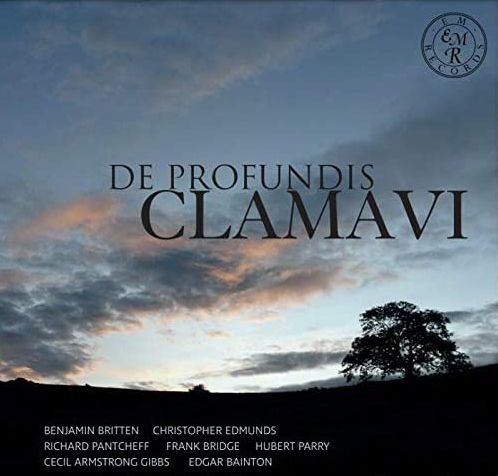
On record – Duncan Honeybourne: De Profundis Clamavi (EM Records)

de-profundis-clamavi

Armstrong Gibbs An Essex Rhapsody Op.36 (1921); Ballade in D flat (1940)
Bainton Variations and Fugue in B minor Op.1 (1898); The Making of the Nightingale (1921); Willows (1927)
Bridge Piano Sonata H160 (1921-4)
Britten Night Piece ‘Notturno’ (1963)
Edmunds Piano Sonata in B minor (1938)
Pantscheff Nocturnus V: Wing oor die Branders (2015); Piano Sonata (2017)
Parry Shulbrede Tunes (1914)

Duncan Honeybourne (piano)

EM Records EMRCD070-71 [two discs, 156’46”]

Producer Oscar Torres & Richard Pantcheff
Engineer Oscar Torres

Recorded 20 & 21 August 2020 at Potton Hall, Westleton, Suffolk

Written by Richard Whitehouse

What’s the story?

Never a pianist to pull his punches, Duncan Honeybourne adds to his expanding discography with this extensive survey of British piano music which, written across almost 120 years and evincing a range of styles, more than reinforces the descriptive heading of the overall project.

What’s the music like?

The first disc begins with the Piano Sonata by Christopher Edmunds. Birmingham-born and long active at the School of Music there, he left a sizable output from which the present work impresses through its wide expressive range within modest formal dimensions. The opening Allegro recalls Medtner in its pivoting between fervency and repose, then the Lento strikes a note of heartfelt emotion underlined by its ‘mesto’ marking. Utilizing aspects of scherzo and finale, the closing Allegro returns to more extrovert concerns as it arrives at a virtuosic close.

Edgar Bainton was still in his teens when composing the Variations and Fugue which became his first acknowledged work. Brahms is a key influence, but the music’s motivic and textural discipline ensures a formal focus throughout the nine deftly contrasted variations then into a tensile and vividly cumulative fugue. Remembered primarily for his songs, Cecil Armstrong Gibbs wrote idiomatically for the piano as is demonstrated by the intricate passagework and often bravura writing of An Essex Rhapsody, while the later Ballade exudes deeper emotion – not least an ominous central section with undeniable overtones of war. Part of a compendious sequence exploring different aspects of night, Richard Pantcheff’s Nocturnus V: Wind on the Waves follows a trajectory of impending marine turbulence that duly regains its earlier calm.

Written at the home of his daughter’s family, Shulbrede Tunes finds Hubert Parry reflecting on domestic environs in a methodically constructed cycle – the 10 pieces taking in evocations of the priory and people within. A lively humour informs Bogies and Sprites that Gambol by Nights, with a ruminative pathos to the fore in Prior’s Chamber by Firelight. Here, as in the exuberant Father Playmate, the aging composer’s devotion to Austro-German romanticism results in music which is as affecting as Parry’s orchestral and choral works from this period.

The second disc opens with two further pieces by Bainton. From among his many miniatures, Willow is a limpidly impressionist album-leaf of no mean poignancy, then The Making of the Nightingale evokes this bird’s creation in imaginative terms that are appealingly realized here. Written for the first Leeds International Piano Competition, Benjamin Britten’s Night Piece is the only acknowledged piano work from his maturity – a study in dynamic and timbral nuance of a finesse as to make one regret his stated antipathy for the modern piano on its own terms.

It is the Piano Sonata by Frank Bridge (placed before the Britten) which inevitably dominates this collection, not least as this recording is among the finest from recent years. Testimony to the composer’s response to the carnage of war as well as its impact on his evolving idiom, the three movements unfold as a single cumulative entity – the sizable opening Allegro preceded by a slow introduction whose main motivic elements are gradually elaborated for the ensuing opposition between anguish and eloquence. The savage rhetoric of its close makes the contrast with the Andante’s consoling rumination more acute, the music as if surveying a landscape of memories which elides straight into the final Allegro with its renewed confrontation of earlier motifs – on the way to a stark denouement then a resigned and almost confessional epilogue.

Pantcheff’s almost contemporary Piano Sonata rounds off this collection. Its three movements each carries an inscription from the epic poem The Axion Esti by Odysseus Elytis that sets the tone for a restive and increasingly tumultuous Inquieto, followed by an Elegia whose sombre imagery might feel almost nihilistic were it not for the plaintive expression that emerges in its latter stages, then a finale whose Alla Vortice marking aptly indicates the gradual intensifying of mood which carries this movement – and the work as a whole – towards its explosive close.

Does it all work?

Undoubtedly, when heard as a collection. Honeybourne has been astute in his planning so that each disc can be appreciated as a stand-alone recital in its own right, or as independent halves of an ‘uber-recital’ which even he would be unlikely to undertake in a live context. All except the Bridge, Britten and Parry are receiving their first recordings, and it would be surprising if some pieces did not enjoy greater exposure in future. For his dedication in championing them, and for putting together such an ambitious anthology, Honeybourne can only be commended.

Is it recommended?

Very much so. The piano sound is a shade hard at climaxes, while spacious and wide-ranging elsewhere, with detailed notes on each work and composer from various sources including the pianist. It adds up to an impressive release and a highlight of the EM Records catalogue so far.

Listen & Buy

You can discover more about this release and listen to clips at the EM Records website, where you can also purchase the recording. For more on Duncan Honeybourne, visit his website – and for more on Richard Pantcheff click here