
On record – Peter Fisher & Margaret Fingerhut: Malcolm Arnold – A Centenary Celebration (Somm Recordings)

arnold-centenary

Malcolm Arnold
Violin Sonata no.1 Op.15 (1947)
Violin Sonata no.2 Op.43 (1953)
English Dances (arr. Harris) – Set 1 Op.27 (1950): nos.1 & 3; Set 2 Op.33 (1951): nos.1-3
4 Scottish Dances (arr. Gedge) Op.57 (1957)
5 Pieces Op.84 (1965)
Miscellaneous Pieces (all arr. Poulton): Hobson’s Choice – Suite (1954); Solitaire – Sarabande (1956); Trapeze – Lola’s Theme (1956); The Chalk Garden – Madrigal (1964); Thème pour mon Amis (1965, rev 1985)

Peter Fisher (violin), Margaret Fingerhut (piano)

SOMM Recordings SOMMCD0640 [69’03”]

Producer / Engineer Michael Ponder

Recorded 21 November and 4 December 2020 at Henry Wood Hall, London

Written by Richard Whitehouse

What’s the story?

SOMM Recordings marks the centenary of the birth of Malcolm Arnold with this collection of his music for violin and piano, including a number of arrangements as are here receiving their first recordings, in what is an (unexpectedly?) wide-ranging overview of his creativity.

What’s the music like?

The three original pieces find Arnold gradually evolving a distinctive personality. If his First Sonata is indebted in many aspects to Bartók or Shostakovich, the tensile expressive contrasts of its opening Allegretto then the plaintive melancholy giving rise to wrenching anguish of its central Andante posits an emotional disjunction that the final Allegro’s stealthy tarantella can only waylay prior to a scabrous close. Its tensile single movement unique in Arnold’s output, the Second Sonata unfolds as oblique variations on a pensive theme whose speculative final guise implies much more than is being said. Playable separately, the Five Pieces (for Yehudi Menuhin) is a cannily integrated sequence that moves from an acerbic Prelude, via an edgy Aubade and a bittersweet Waltz, to an impassioned Ballad then a jazzy Moto perpetuo.

The arrangements from Arnold’s sets of dances provide ready-made encores. David Gedge’s take on the Scottish Dances is wholly idiomatic – hence the strutting gait of the Pesante with its ‘Scotch snap’, careering toward inebriation of the Vivace, wistful naivety of the Allegretto and whirling energy of the final Con brio. The English Dances selected by Paul Harris makes for a viable collection as it moves from the insouciant Op.33/2 and wistful Op.27/1, via the melancholic Op.27/3 and ruminative Op. 33/2, to the resolute Op.33/1.

The miscellaneous arrangements were all done by Alan Poulton – who, as Arnold’s manager during the 1980s, played a vital role in his rehabilitation as a composer. One of two specially written additions for Kenneth MacMillan’s ballet Solitaire, Sarabande is a mellifluous gem – as, in its rather more sensuous way, is Lola’s Theme from Carol Reed’s film Trapeze. Nor is a ‘Suite’ derived from David Lean’s Hobson’s Choice found wanting as a breviary of this inimitable film (Arnold’s favourite from his more than 120 scores), and the suave Madrigal from Ronald Neame’s The Chalk Garden gives no hint of that film’s ominous subject-matter. Conceived as a jingle for Player’s cigarettes then refitted for BBC2’s My Music series, Thème pour mon Amis is a delightful jeu d’esprit with which to recall this much-missed personality.

Does it all work?

Yes – given that Arnold, a professional trumpeter and skilled composer for brass, had ‘across the board’ mastery of instruments such that his writing for strings is hardly less idiomatic, as is witnessed by the original pieces. The arrangements should not be regarded as mere pièces d’occasion, given that these include several of Arnold’s most appealing melodic ideas and are worthwhile recital additions. The performances by Peter Fisher and Margaret Fingerhut, both long-time advocates of British music, could hardly be improved on for sensitivity and insight.

Is it recommended?

Indeed. The recording is well-nigh ideal in terms of the balance between these instruments, with Alan Poulton’s booklet notes highly readable and informative, though note the correct running-order of the English Dances as discussed above. Great booklet-cover artwork too!

Listen & Buy

You can discover more about this release and listen to clips at the SOMM Recordings website, where you can also purchase the recording. For more information on the Malcolm Arnold society, click here – and for more on the artists, click here for Peter Fisher and here for Margaret Fingerhut.

On record – Aurora Trio: Crépuscule (EM Records)

crepuscule

Alwyn Two Folk Tunes (1936). Crépuscule (1955). Naïades (1971)
Bax Elegiac Trio (1916)
Lewis Divertimento (1982)
Lipkin Trio (1982)
Patterson Canonic Lullaby (2016)
Rawsthorne Suite (1968)

Aurora Trio [Emma Halnan (flute), Jordan Sian (viola), Heather Wrighton (harp)]

EM Records EMRCD069 [76’52”]

Producer Tom Hammond
Engineer John Croft

Recorded 15-16 February, 13 August 2020 at St John the Evangelist, Oxford

Written by Richard Whitehouse

What’s the story?

The Aurora Trio makes its debut for EM Records in a collection of British music featuring flute, viola and harp that spans exactly 100 years and encompasses a variety of approaches with regards to the combining of these distinct yet undeniably complementary instruments.

What’s the music like?

If not the most elaborate of his numerous works for ensemble, Arnold Bax’s Elegiac Trio is among his most affecting as an in-memoriam for those friends who died in the course of the Easter Uprising in Ireland. Although the overall mood rarely moves far from that implied by the title, the undulating emotion filtering through the textural ‘weave’ proves as subtle as it is elusive. Scored for just flute and harp, William Alwyn’s Naïades unfolds on a larger scale and inhabits a wider range of expression as it evokes both the eponymous spirits of antiquity and the environs of the Suffolk village of Blythburgh where it was written, while also being    a ‘fantasy sonata’ whose instruments interact with more than a little improvisatory freedom.

By contrast, the Suite that Alan Rawsthorne wrote for the Robles Trio is typical of his later music in its harmonic astringency and oblique while never abstruse tonal follow-through. A highly personal use of serial elements underpins the elegant opening Andantino as surely as it does a graceful, intermezzo-like Allegretto then the more demonstrative Allegro vigoroso. All these other works are here receiving their first recordings. Alwyn’s Crépuscule for harp offers a foretaste of that masterly concerto Lyra Angelica in its ethereal poise, whereas his Two Folk Tunes emerges as an appealingly contrasted duo – viola and harp as ruminatively combined in Meditation as they are animatedly juxtaposed in Who’ll buy my besoms?

The highlight is undoubtedly the Trio by Malcolm Lipkin, a composer yet to receive his due and who, as the present work affirms, was unafraid to elide between tradition and innovation with strikingly personal results – whether in the terse emotional contrasts of its Variations, tense and increasingly soulful inwardness of its Intermezzo or purposeful onward progress of a Finale whose impetus subsides towards the pensively fatalistic coda. Canonic Lullaby has Paul Patterson bring flute and harp into limpid accord, while Paul Lewis’s Divertimento puts all three instruments through their paces in a lively March, before embracing them in the lyrical Love Song then cordially sending them on their way in the nonchalant Waltz.

Does it all work?

Yes, given the relative stylistic range of the music featured and, moreover the quality of these performances. Care has evidently been taken to assemble the eight works into a cohesive and satisfying sequence such as this ensemble might tackle at one of its recitals, and which flows well as an overall programme. The playing leaves nothing to be desired in terms of accuracy, while the relative personality of each composer cannot be gainsaid. Ideally the release would encourage composers from the middle and younger generations to write for this combination.

Is it recommended?

Indeed. The recording is excellent, with the frequently awkward balance between instruments expertly judged, and there are detailed annotations on both the works and their composers. It all adds up to a worthwhile release which deserves to be followed up, hopefully on this label.

Listen & Buy

You can discover more about this release and listen to clips at the EM Records website, where you can also purchase the recording. For more on the Aurora trio, you can visit their website

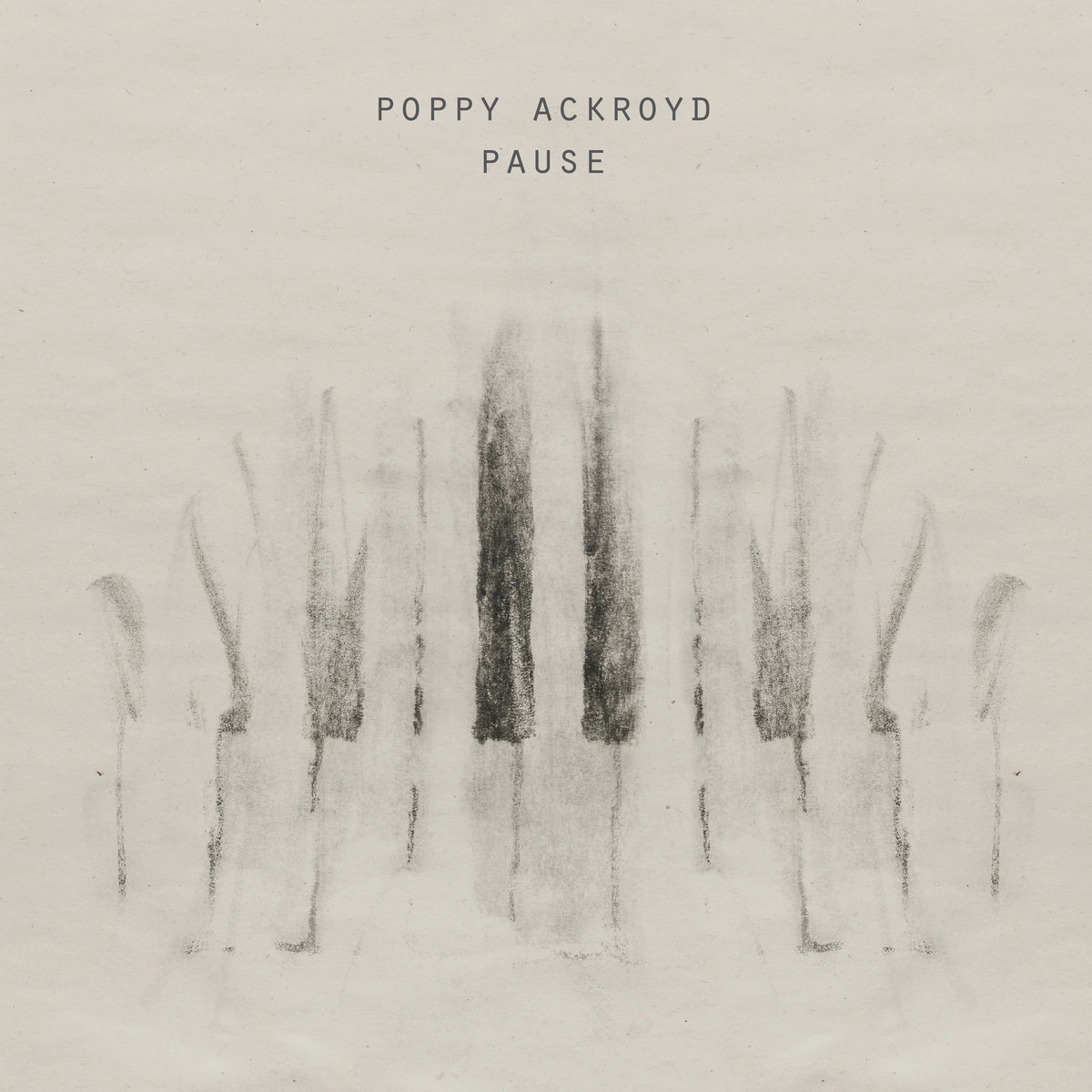
On Record – Poppy Ackroyd: Pause (One Little Independent Records)

poppy-ackroyd

reviewed by Ben Hogwood

What’s the story?

Poppy Ackroyd’s fourth album could hardly be a more personal document. Written during the pandemic, it is a first-hand account of life being put on hold – but at the same time tells the story of the birth of her son. Often the newborn was asleep on the composer as she wrote at the piano, while other work was done in the rare free moments the new mother was allowed.

What’s the music like?

Ideal for this time of year. Although a piano album there are a lot of imaginative sounds and colours not normally associated with the instrument, as Ackroyd stretches its capabilities. Not content with using the conventional white and black keys, she leans into the piano to utilise the taut strings, creating effects like that of a harp or harpsichord.

Suspended, for instance, is performed with both hands inside the piano, using a mysterious tapping sound like someone knocking on the window. Meanwhile Muted was recorded using cloth to dampen the strings in the piano’s lower half. The resultant pinpricks of melody are rather beautiful. Pause itself is a combination of conventional sounds and the inner strings, the music effectively set for two instruments as it extends its icy tendrils.

Impulse uses a wider range of the keyboard, with an easily flowing discourse that suggests it was written with a white flash of inspiration, using simple but expressive figurations that become gradually more expansive. Release enjoys its freedom, showing how Ackroyd’s titles are accurate descriptions of what happens in the music.

Perhaps the most vivid imagery can be found on Murmurations, which captures the rediscovered love for nature a lot of us have felt in recent times. The swirly give and take is compelling to the listener, especially on headphones.

Does it all work?

It does. Ackroyd’s work as a pianist is completely free of any mannerisms or clichés. It is a purely instinctive and personal piece of work, which means it flows beautifully as an album.

Is it recommended?

It is. Pause is an accurate reflection of the emotions we all felt during the pandemic, but it is an ultimately positive piece of work, making the most of freedom where it has been allowed. Ackroyd gets the balance of natural piano work and manipulation just right, her instrument blessed with some lovely autumnal textures but also an intensely personal communication.

Stream

Buy


On Record – The Limiñanas & Laurent Garnier: De Película (Because Music)

liminanas-garnier

reviewed by Ben Hogwood

What’s the story?

This is the tale of a friendship, a musical spark and the concept album that came out of it. Laurent Garnier met Lionel and Marie Limiñana back in 2017, and the three bonded initially over Lionel’s ringtone, The Kingsmen’s Louie Louie.

They stayed in touch, hooking up to make an album following a 1960s’ couple on a road trip. We join the pair, Juliette and Saul, at the southern border of France, near Spain, and we pass – in the words of the trio – through ‘squalid brothels, third-rate dance clubs, ‘60s vintage caravans, smack, Roger Harth and Donald Cardwell productions, distortion and fuzz-pedal sound effects. Gilles Deleuze, Professor X and the preacher from ‘The Night of the Hunter’ are some of the characters that inhabit the world of this drama-inspired record’.

Initially Lionel included some electronic beats in the album, leaning towards Garnier’s long-established techno workings, but the Frenchman rejected these in favour of keeping the Spanish duo’s psychedelic sound at the front of the mix.

What’s the music like?

Prepare for some adrenalin-fueled highs as the music of De Película takes shape. The three musical protagonists have harnessed their love of Krautrock – and especially Can – to make a set of driving musical grooves that are by turns thrilling and mesmeric.

They express themselves through propulsive rhythms on tracks which often choose a single pitch as a bass and stick to it, creating a hypnotic groove for the listener. When pared with a spoken word narrative the music works really well. Je rentrais par le bois…definitely falls into this category with its slowly creeping melody and psychedelia, as does Juliette dans le caravane, which adopts a similar profile. Steeplechase speeds off into the distance, a thrilling rush of sound over a pulsating groove, If anything Que Calor! is even better, with the attitude of Edi Pistolas’ spoken word coursing through its veins.

Some of the slower rhythm tracks hark back to the big beat sound emanating from Brighton in the late 1990s, but ultimately go beyond that to ape the cavernous sound of late 1960s’ psychedelia . Tu tournes en boucle is one such example, while Juliette adds a smoky texture and atmospheric commentary.

Does it all work?

It does. De Película is a lot of fun, flexing its muscles but not wanting to be taken too seriously. It is easy to sense the fun Garnier and the Limiñanas had in each others’ company

Is it recommended?

Yes. Laurent Garnier’s fascinating musical evolution continues, but this collaboration reflects well on both sides, bringing out their strongest musical identities in music that gives its listener plenty of thrills and spills.

Stream

Buy


Switched On – Quivver: Revelate (Bedrock)

quivver

reviewed by Ben Hogwood

What’s the story?

Quivver, the alias of John Graham, has been held in high regard by lovers of house music for more than two decades now, channelled through the decks of top level DJs including Paul Oakenfold, Sasha and John Digweed. Graham’s moniker stands for high quality house, occasionally known as ‘progressive’ or even ‘trancey’, but never regarded as anything other than consistently good.

Graham has overseen a stream of good singles releases that have been lapped up in the clubs, and occasionally he has put them together in album format. Revelate is the third of those, delivered for his good friend John Digweed’s Bedrock label – the two DJs having been acquainted for a good three decades now.

What’s the music like?

Everything Quivver has already established is present here – and yet he always manages to make music that sounds both old and new. By that I mean that some of the tracks could easily fit on a Renaissance compilation from the mid-1990s, but equally they sound fresh out of the studio.

The chunky beat and flickering electronics for Altered are a great example of his craft, while Funkfly sounds like a classy update of one of those Renaissance tracks. Hold has some lovely washes of sound while Crystals has a similarly deep warmth, a flicker of heat at the edge of its synth lines. The disposition of the album is gloriously moody, but fully supports an extended session on the dancefloor.

Rather than do what many house albums do and opt for tracks of 7-8 minutes, Graham has gone for tightly formed tracks, almost all of which clock in after 5. Just occasionally – Funkfly especially – the track could easily go on for double its length, but other than that the Quivver instinct for punchy and effective material is rewarded.

Does it all work?

Yes. It’s great to see such a long-established name back with a high-quality album like this. Graham’s structure is impeccably cast and tells its own story, acting a bit like a DJ mix by one artist.

Is it recommended?

Definitely. If you’ve had even a passing acquaintance with the music of Quivver in the past, you need not waste any more time in adding Revelate to your collection. If his is a new name to you, it’s also a great place to start!

Stream

Buy