In concert – Steven Isserlis and Friends – Fauré at the Wigmore Hall (3)

Steven Isserlis (cello) – with Joshua Bell, Irène Duval (violins), Blythe Teh Engstroem (viola), Jeremy Denk, Connie Shih (pianos)

Fauré Violin Sonata no.1 in A major Op.13 (1875-6)
Saint-Saëns Piano Trio no.2 in E minor Op.92 (1892)
Ysaÿe Solo Violin Sonata in D minor Op.27/3 ‘Ballade’ (1923)
Fauré Piano Quintet no.2 in C minor Op.115 (1919-21)

Wigmore Hall, London
Sunday 3 November 2024

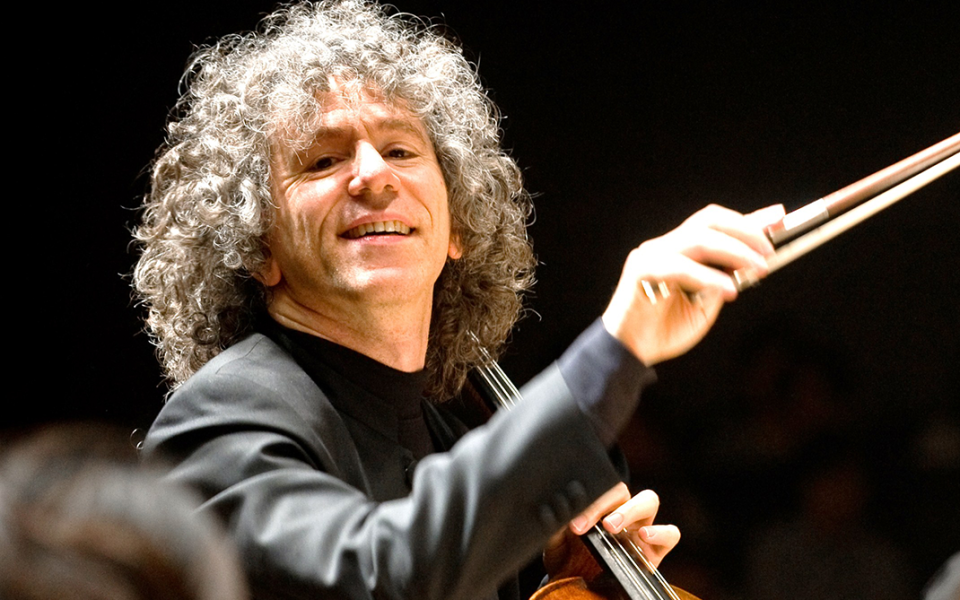
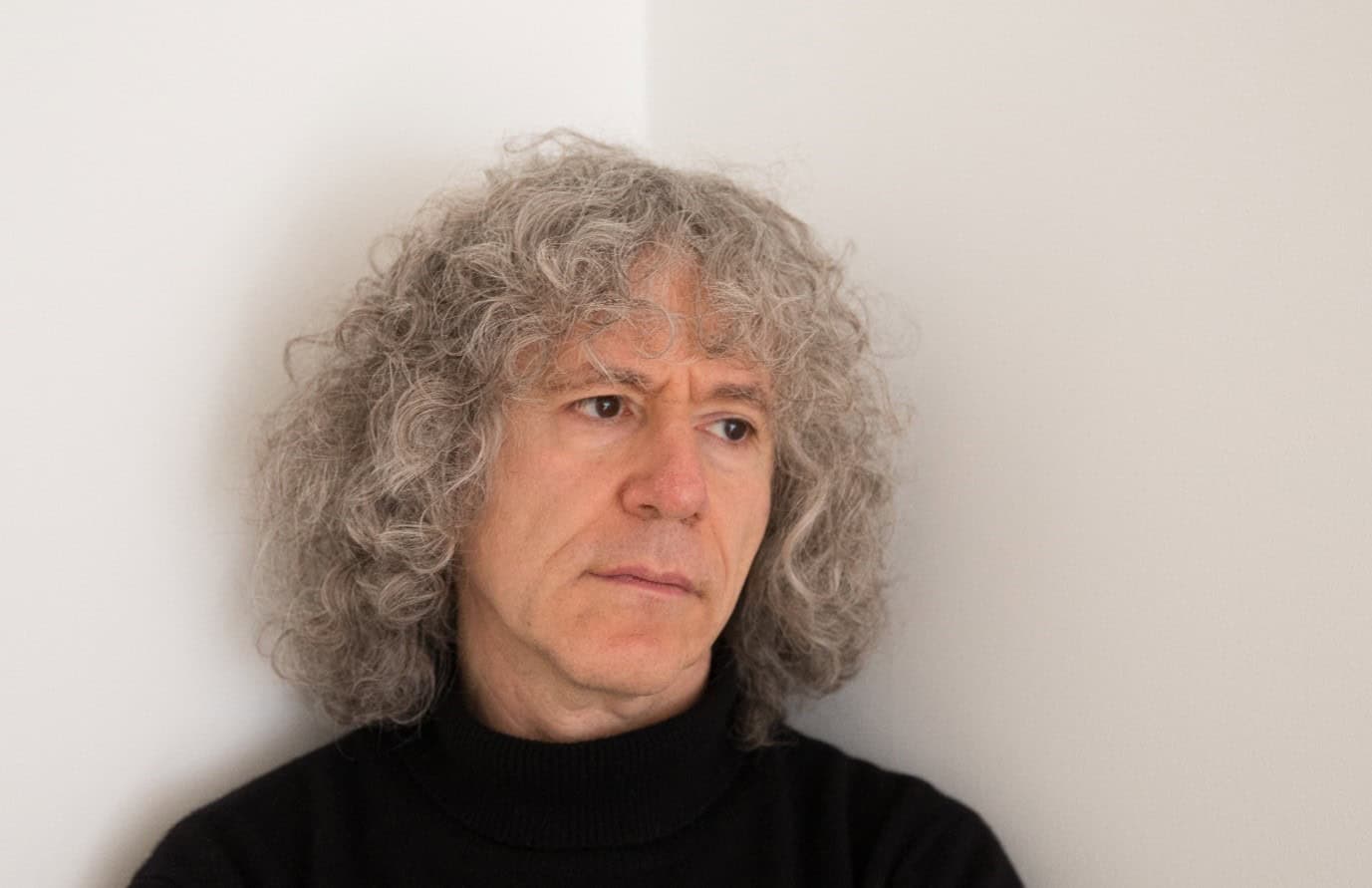
Reviewed by Richard Whitehouse Picture (c) Joanna Bergin

This third instalment of the Wigmore Hall’s journey through Fauré’s larger chamber works, as overseen in typically understated fashion by Steven Isserlis, took in works from (almost) either end of this composer’s output alongside pieces by two very different contemporaries.

It was Joshua Bell’s recovering illness that brought a switch in programme such that tonight began with the First Violin Sonata which established Fauré’s reputation and remains among his best-known works (also the only one of these pieces in a major key). The melodic verve of its initial Allegro responded well to Bell’s tonal warmth, despite marginal loss of focus as the development ran its cumulative course, then the Andante lacked little in lyrical intimacy nor the scherzo in nimble dexterity. That the final Allegro felt less than animated (not much evidence of ‘quasi presto’) was understandable in context and, even if it meant rounding off this performance with less than ideal decisiveness, there could be no doubting the sense of epiphany as its main theme returns transformed for an apotheosis of heightened eloquence.

At a time when Fauré was grappling with the implications of what became his Second Piano Quintet, Saint-Saëns was writing his no less substantial Second Piano Trio with relative ease. Its stylistic retrenchment is not hard to discern, witness the opening movement’s prolonged and ultimately doomed struggle to break free of a main theme riven with doubt and anxiety. Tensions relax appreciably in the sequence of middle movements – a lithe and ingratiating Allegretto, an Andante of ‘song without words’ lyricism, then a Grazioso with more than its touch of quixotic humour – during which, interplay between Bell, Isserlis and Jeremy Denk was at its most felicitous. Returning to weightier issues, the finale takes in some intensively contrapuntal passages prior to a conclusion whose headlong impetus came to the fore here.
After the interval came the third of Ysaÿe’s solo sonatas – the Ballade dedicated to Enescu but, as Bell pointed out, premiered by his teacher Josef Gingold who had been the last pupil of its composer; its ‘introduction and allegro’ format incisively delineated on this occasion.

Thence to Fauré for his Second Piano Quintet. Although written relatively quickly compared to its predecessor, it is no less fastidious in content or elusive in character – witness the initial movement whose harmonic subtlety is accentuated by the flexibility of its rhythmic contours, which latter aspect comes to the fore in a scherzo whose angularity betrays more than a touch of malevolence. Is there a more consummate instance of this composer’s art than its Andante? Once characterized as a synthesis between Beethoven and Wagner, it exudes a transcendent calm entirely its own in which the eloquence of Irène Duval and Blythe Teh Engstroem added appreciably to the underlying affect. If the finale is less remarkable, it injects an impetus that propelled the work to a headily affirmative close which was conspicuous by its presence here. An impressive performance of a masterpiece that, while it will never achieve in popularity what it has in respect, could never seem other than communicative when realized with this empathy – something that should be no less evident in the remaining concerts of this series.

You can watch the concert below, thanks to the Wigmore Hall YouTube channel:

For more information on the Fauré series, visit the Wigmore Hall website – while you can also read Arcana’s interview with Steven Isserlis about the French composer

Published post no.2,353 – Tuesday 5 November 2024
In concert – Steven Isserlis and Friends – Fauré at the Wigmore Hall (2)

Steven Isserlis (cello) – with Joshua Bell, Irène Duval (violins), Blythe Teh Engstroem (viola), Jeremy Denk, Connie Shih (pianos)

Hahn Variations chantantes (1905)
Fauré Piano Quartet No. 2 in G minor, Op. 45 (1885-6)
Fauré Piano Quintet No. 1 in D minor, Op. 89 (1887-1905)

Wigmore Hall, London
Saturday 2 November 2024

Reviewed by Richard Whitehouse

If it did not get off to quite the start intended due to illness, this Wigmore series centred on Fauré’s chamber works certainly hit its stride with two such pieces from crucial junctures in their composer’s output.

Providing a degree of context was music by Reynaldo Hahn – remembered primarily for his operettas and songs, but whose chamber output is considerable. Hardly a defining statement, Variations chantantes sur un air ancien (its full title) draws on the aria ‘Beato chi può’ from Cavalli’s 1655 opera Xerses for what feels less a set of variations than a sequence of variants of unwavering restraint amply reflecting that blithe detachment of its theme. Steven Isserlis conveyed this in full measure, heard alongside some ingratiating pianism from Connie Shih.

Having achieved a successful balance between formal density and expressive eloquence in its predecessor, his Second Piano Quartet has Fauré laying even greater emphasis on the cyclical transformation of motifs which, hitherto associated with Liszt and Frank, is here imbued with a new cohesion. This is evident from an opening movement whose sonata design unfolds in a constant yet methodical state of change, Isserlis and Joshua Bell restlessly trading exchanges with Blythe Teh Engstroem a lyrical counter-balance and Jeremy Denk the deft anchor-point.

This approach served no less well the ensuing scherzo, with its engaging alternation between pizzicato and bowed playing as well as a tangible mordancy that never quite surfaces. Nor is it entirely absent from a slow movement whose vernal eloquence is informed by more than a little equivocation, and which only waylays continued motivic evolution in the finale. Here the music’s striving towards a decisive while hardly affirmative resolution seemed palpably in evidence, confirming this work to be a triumph of human resilience over existential odds.

If this work marks the culmination of Fauré’s earlier creative maturity, his First Piano Quintet effectively straddles its central phase given the near-on two decades between conception and completion. What had started out for four instruments in four movements ended up as five in three, yet there is nothing tentative about an initial movement whose pervasive introspection belies an emotional eddying no less subtle than the motivic intricacy these players uncovered, and in which the expressively effulgent playing of Irène Duval was an undoubted enrichment.

Less formally involved, the central Adagio prefigures the introspection of its composer’s last years – not least through a seamlessness of texture which, as here, never precludes variety of nuance. After this, the finale can seem less remarkable merely by fulfil its function within the overall scheme, but those thematic elements (of which one the songwriter Bart Howard was evidently aware) that evolve from the previous movements are assuredly realized on route to an apotheosis no less affecting for having delayed its resolution almost until the last moment.

Never neglected but rarely received with more than guarded admiration, Fauré’s late chamber works rely on an advocacy central to such music-making as was heard tonight. Hopefully this will prove no less evident throughout the remaining three programmes in this important series.

You can watch the concert below, thanks to the Wigmore Hall YouTube channel:

For more information on the Fauré series, visit the Wigmore Hall website – while you can also read Arcana’s interview with Steven Isserlis about the French composer

Published post no.2,352 – Monday 4 November 2024

In concert – Steven Isserlis and Friends – Fauré at the Wigmore Hall (1)

Steven Isserlis (cello), Joshua Bell, Irène Duval (violins), Blythe Teh Engstroem (viola), Jeremy Denk, Connie Shih (pianos)

Fauré Violin Sonata no.2 in E minor Op.108 (1916-7)
Saint-Saëns Piano Trio no.1 in F major Op.18 (1863)
Nadia Boulanger 3 pièces for cello and piano (1914)
Fauré Piano Quartet no.1 in C minor Op.15 (1876-9, rev. 1883)

Wigmore Hall, London
Friday 1 November 2024

Reviewed from the online stream by Ben Hogwood Photo (c) Satoshi Aoyagi

As the saying goes, the best laid plans of mice and men often go awry. And so it was that this five-part festival at the Wigmore Hall, two years in the planning to mark 100 years since the death of Gabriel Fauré, was compromised by bad fortune that had violinist Joshua Bell suffering from sickness, unable to perform the first work on the programme.

Yet, as cellist and curator Steven Isserlis announced from the platform, there was a silver lining, thanks to Irène Duval – who stepped in to head the Violin Sonata no.2, programmed instead of its predecessor. Thus we heard the first chamber work of the French composer’s celebrated late period, dating from the middle of the First World War, when Fauré had lost his hearing and his son Philippe had been sent to the frontline. Not surprisingly the sonata is invested with concentrated feeling, brought straight to the surface by Duval’s searching tone and Connie Shih’s assertive piano, both fully inside the music. The first movement found brief consolation in its third principal theme, though this was a brief respite in music of passionate and occasionally fraught discourse. The second movement was initially bittersweet in these hands but more obvious serenity was achieved in the long melody of the second theme, beautifully phrased by Duval. The finale, where Fauré finds positivity in the face of his troubles, was sunlit in these hands, with a thoroughly convincing surge to the finish.

Rewinding just over 50 years, we heard music from Fauré’s teacher and long time friend Saint-Saëns – his first major chamber work. The Piano Trio no.1 is full of charm and good humour, and the trio of Shih, Duval and Isserlis enjoyed the cross rhythms of the first movement. Shih met the demands of the composer’s inevitably tricky piano part head on, with some sparkling passages in the right hand. The captivating second movement took us outside, evoking the French mountain regions with a memorable folk-derived theme, recounted by the strings in a solemn unison. Contrasting with this was the light-footed Scherzo, the players enjoying Saint-Saëns’ playful syncopations, and the confident finale, surging forward with a conviction confirming the composer would have many more such moments in his compositional career. The players’ enjoyment was abundantly clear.

After the interval came music from Fauré’s pupil Nadia Boulanger, usually renowned as a teacher but increasingly recognised as an accomplished composer. The 3 Pièces for cello and piano fully deserve their more frequent airings in concert halls today, for they are brilliantly written and full of originality. Isserlis enjoyed the singing high register of the Modéré, its melody gradually descending to ground like a butterfly. The two players enjoyed the canon of the second piece before the bold outlines of the quickstep third, a little prophetic of Debussy’s Cello Sonata a year later. Isserlis and Shih were brilliant throughout.

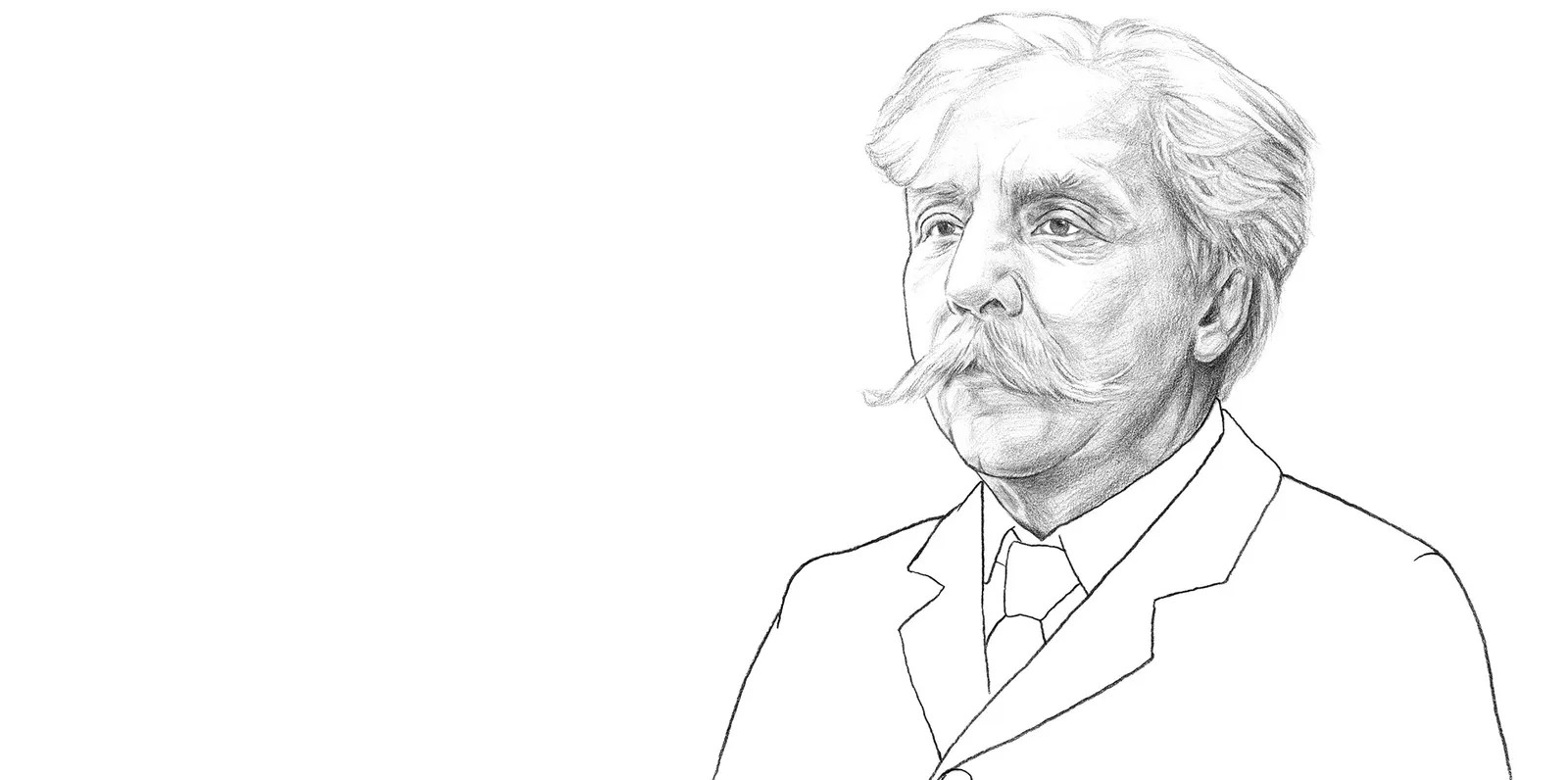
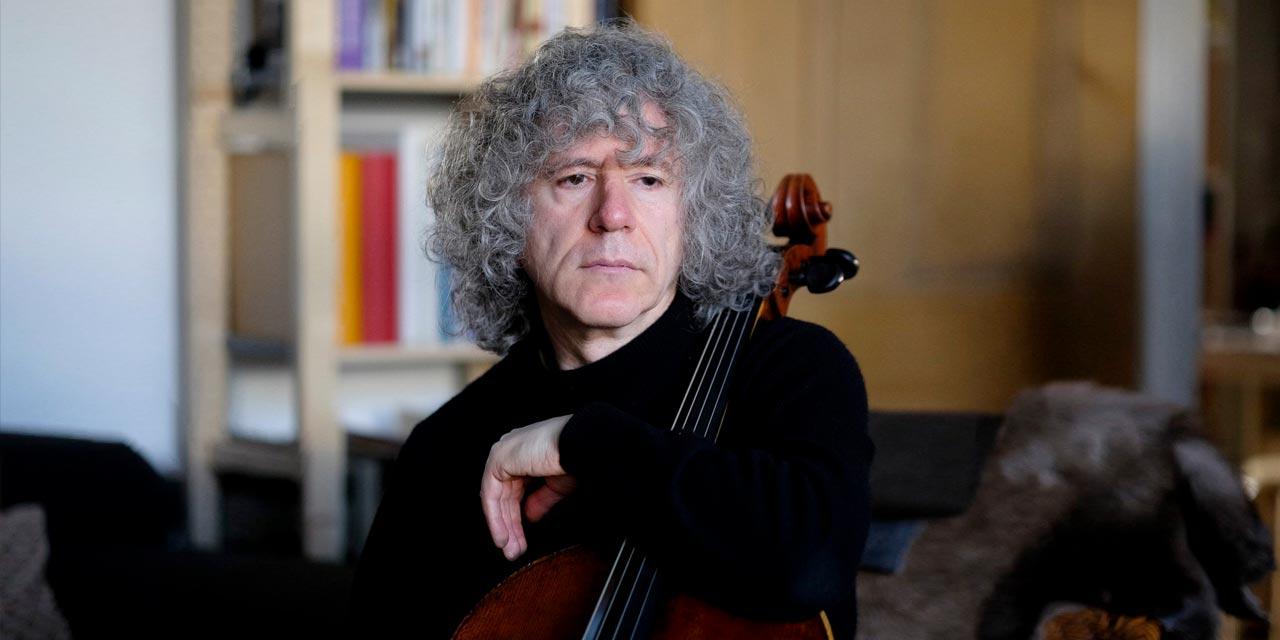
The Piano Quartet no.1 in C minor is one of Fauré’s (above) best-loved works, though it experienced a turbulent composition period in the wake of the dissolution of the composer’s engagement. This is however rarely evident in the music, constructed with elegance and control – though there is plenty of room for expression, as the four players found here.

The first principles of chamber music were on show from the start – for this quartet were playing as one, very much a team rather than a collection of soloists. Such a quality is of great importance in Fauré, his music often containing long and thrilling melodies such as that found at the outset, beautifully played.

Joshua Bell showed commendable energy in spite of his ill health, his sweeter violin tone complemented by Jeremy Denk’s authoritative piano playing, the burnished tone of Blythe Teh Engstroem’s viola and Isserlis’ cello, with lovingly phrased melodies as part of the all-important counterpoint. The syncopations of the second movement, one of Fauré’s calling cards, were deftly handled by the trio and brilliantly led by Denk, the players watching each other closely. Meanwhile the Adagio found time for contemplation, laden with sadness but with an enduring brightness led by Bell’s brighter tone.

The finale found renewed strength in its assertive unison themes, winning through to a thrilling and jubilant finish in spite of the occasional shadow cast in the quieter passages. The closing flourish put the seal on a wonderful first concert which bodes well for the series, providing – as Isserlis said – that the players stay in good health. Should they do so a whole series of treats await.

For more information on the Fauré series, visit the Wigmore Hall website – while you can also read Arcana’s interview with Steven Isserlis about the French composer

Published post no.2,350 – Saturday 2 November 2024

Online concert – English Symphony Orchestra / Kenneth Woods: Elgar Festival 2023 – Symphony no.1

Elgar Symphony no.1 in A flat major Op.55 (1907-08)

English Symphony Orchestra (leader Zoë Beyers) / Kenneth Woods

Filmed at Worcester Cathedral, Saturday 3 June 2023

Recording, editing and video direction by Tim Burton

Reviewed by Richard Whitehouse

The revival these past four years of the Elgar Festival has provided a boost to music-making in the Midlands, with the present account of that composer’s First Symphony a reminder of the English Symphony Orchestra’s prowess right across the spectrum of symphonic writing.

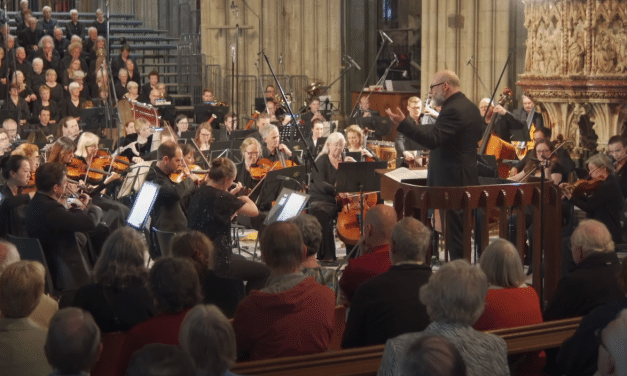
It may not have had the usual number of strings to complement the triple woodwind or brass, but the resonance of Worcester Cathedral ensured any such disparity was not evident in terms of internal balance. Not least an opening movement whose motto-theme was thoughtful while never indulgent, setting the tone for a main Allegro where expressive variety was never at the expense of its formal focus. Especially felicitous was a hushed transition into the reprise, and a coda which ably distilled the equivocal mood overall as it subsided into a ruminative calm.

Kenneth Woods was mindful to invest the scherzo and its trio with a consistency of pulse so, if the former felt a little reined-in at its return, the latter unfolded with an ideal blend of poise and wistfulness. Nor was that lengthy transition into the slow movement other than seamless as a harbinger of this Adagio’s understated if undeniable profundity, Woods duly negotiating its interplay of soulful main theme and wistful asides with unerring rightness through to the artless closing bars where the music seems not so much to cease as recede beyond earshot.

If the finale represents a falling-off of inspiration, it was not apparent here. Sombre yet shot through with expectancy, its introduction launched an Allegro whose alternating incisiveness and suavity held good during an impulsive development, then a transformation of the codetta whose pathos returned for an apotheosis where the motto-theme carried all before it. Not that these closing pages felt at all bombastic or even grandiloquent in import; rather, they set the seal on a work whose affirmation is the greater for its having been so purposefully attained.

An impressive performance as must have seemed even more so in the context of this concert, not that anyone hearing it via ESO Digital is likely to feel short-changed in emotional terms. Hopefully more performances from the Elgar Festival will be made available at this platform.

This concert could be accessed free until 3 September 2024 at the English Symphony Orchestra website, but remains available through ESO Digital by way of a subscription. Meanwhile click on the names for more on the English Symphony Orchestra and Kenneth Woods

Published post no.2,305 – 19 September 2024

Online review – BBC Radio 2’s Piano Room: Pet Shop Boys

by Ben Hogwood

If you’ve been keeping an eye on Arcana lately you will know that we in turn have been keeping a close eye on the month of largely superb music we’ve enjoyed from the BBC Radio 2 Piano Room.

Having watched Bruce Hornsby, and recommended a further five ‘best’ songs from the month, I finally got round to watching the Pet Shop Boys‘ trio of tracks from the Maida Vale studios and the BBC Concert Orchestra. Neil Tennant and Chris Lowe are no strangers to the orchestra, with a Proms performance and a ballet score under their belts – so this was an obvious and welcome choice to close a season that has shown – again – how pop and orchestral music can complement each other so well in the right environment.

They started with the most obvious candidate – Left To My Own Devices, probably the most orchestral of their hits to date. Now fully realised with the BBC forces, it sounded wonderful, and I always wish someone would make a remix based around the chord they reach where Neil sings about setting “Che Guavara and Debussy to a disco beat”. This was a joyous performance.

The next was a likely candidate too, the most recent single Loneliness, transposed down a tone but still sounding mighty fine to these ears. Neil Tennant’s voice still has the purity it had in the 1980s but on a song like Loneliness the aching emotion in the song felt clearer, with excellent support from the backing singers and the exquisitely voiced BBC Concert Orchestra, piquant woodwind to the fore.

The big surprise was saved until last. Mott The Hoople‘s All The Young Dudes was completely reinvented in this performance. I have to be honest and say I’m still not sure about the final version – but that’s on me, not Tennant or Lowe! The reason for my lack of wholesome praise at this point is because the original is so well known, and this cover is a more or less complete reinvention – making you hear the song in a whole new light. Tennant obviously loves the track and his vocal was powerful and on point, while the electronic / acoustic balance was thick and fuzzy but in a way that looks set to suit the chromatic harmony. An effective cover version for sure…and hopefully one to grow into!

You can watch the whole Pet Shop Boys piano room session on the BBC iPlayer

Published post no.2,100 – Monday 26 February 2024