Online review – BBC Radio 2’s Piano Room: Five of the best

by Ben Hogwood

Today (23 February) saw the conclusion of BBC Radio 2’s Piano Room month, which has been taking place every weekday for the last month.

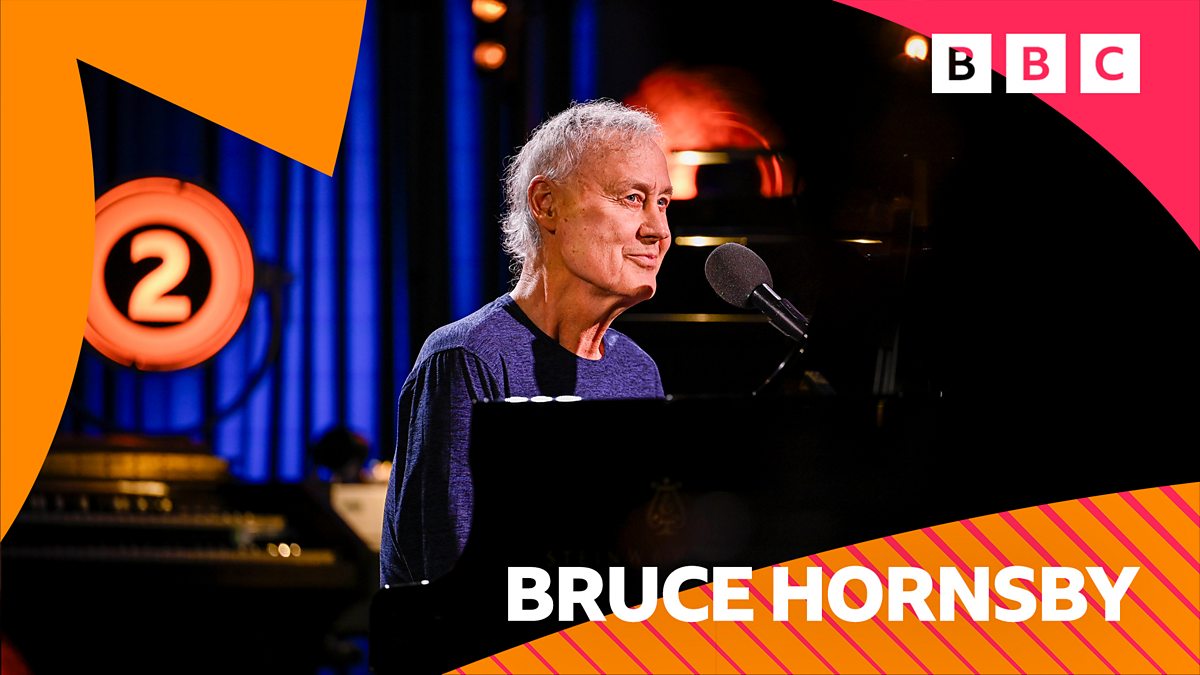
For anyone new to the concept, it consists of a well-known pop artist delivering three songs in the company of a piano and the BBC Concert Orchestra. Generally they follow the format of something old, something new and something borrowed (which may of course be blue!) in the form of a cover version. We began with Bruce Hornsby on Monday 31 January (a performance already appraised by Arcana) and ended today with Pet Shop Boys.

The Piano Room has proved to be an enormously uplifting spectacle over the last few years, and a fascinating one too – the equivalent of watching a famous actor appearing on the West End stage. There are two things that often shine through in the course of a session. One is obvious, being the artistry of the main act in question, and their ability to breathe new life into their songs or well-chosen covers. The other is not so immediate, being the quality of the orchestral arrangements and the sheer ability of the BBC Concert Orchestra, who deliver their lines with incredible poise and great expression.

Here, then, are five top performances Arcana has had the pleasure to hear this month, in addition to the Bruce Hornsby already reviewed…bearing in mind that as I type this I haven’t yet heard Pet Shop Boys doing Left To My Own Devices!

Rick Astley – Never Gonna Give You Up

The sign of a song with ultimate staying power is its versatility – and when it can be sung like this, in a version that bears very little resemblance to the original, you realise again just what a brilliant song this is. Somehow the arrangers and Rick have worked in a pizzicato part for the violins that comes from Ed Sheeran’s Shape Of You – a very different love song, but one that fits this template hand in glove.

It also shows how Rick Astley has grown as a vocalist, making music that matches his experience but also his youthful approach:

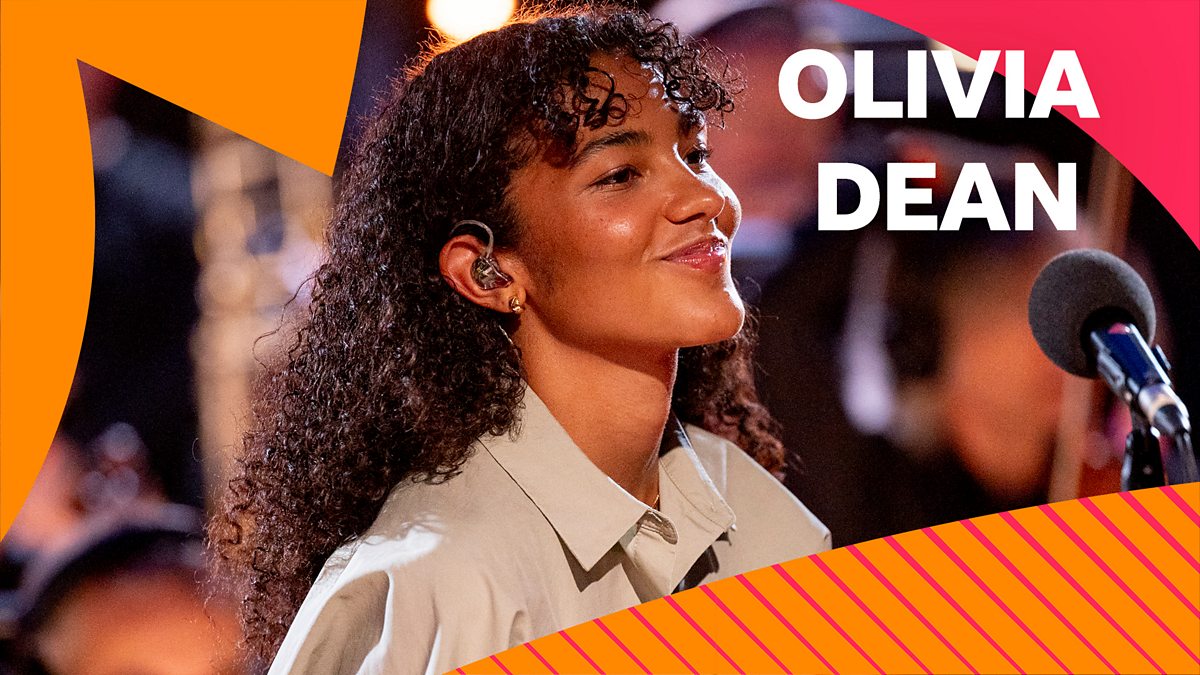
Olivia Dean – Suzanne (Leonard Cohen cover)

This is an extraordinary cover version from Olivia Dean. Sumptuous strings begin and end the arrangement (made by Sam Gale) and Dean sings in a way that recognizes Leonard Cohen’s ability to wring great emotion from relative simplicity. She intones the verse and brings a swell to the chorus, giving the song a deep resonance. This is capped by the fragility of the closing violin solo, a moment of pure but devastating clarity (played – I am almost sure – by Charles Mutter). I haven’t been able to keep a dry eye watching it yet!

Jess Glynne – Everywhere (Fleetwood Mac cover)

This was a very pleasant surprise. I find I respect Jess Glynne rather than connecting directly with her music, though her Rather Be collaboration with Clean Bandit and her own Don’t Be So Hard On Yourself have shown their staying course, and Hold My Hand is on a TV advert several times a day. I wasn’t prepared for how much I would warm to this cover – sensitively done, a lovely ‘less is more’ vocal sung with evident affection, and some great work from the band (especially bass player Dishan Abrahams). Casting aside a well played but rather unnecessary reference to David Bowie’s Under Pressure towards the end, this is a beautifully made cover, which you can view from 16’50” on this link

Crowded House – Four Seasons In One Day

This short song gains an unexpectedly emotive orchestral prelude, made possible through a broad cello solo to set the scene before the song comes in. Neil and Tim Finn’s evocative songwriting makes an effortless leap from intimate voice and guitar to band and orchestra, telling the story in just as much detail as before – yet boosted by a beautiful string arrangement. You can view from the start of this link

Gabrielle – A Place In Your Heart

How does Gabrielle do it?! For 30 years now she has held the keys to an increasing array of radio friendly songs, and under the guise of an orchestra they blossom into even fuller colours. This, her most recent single, is a beauty – and touchingly sung, too, in an arrangement that adds a great deal of depth to the song. You can view from 7’23” on this link

And finally…what a lovely tribute the orchestra gave to Radio 2 DJ Steve Wright, playing his Big Show jingle in tribute to the DJ who died unexpectedly on 13 February:

You can watch the full set of Bruce Hornsby in the Radio 2 Piano Room by clicking here

Published post no.2,097 – Friday 23 February 2024
Online Concert – Ensemble Apparat @ Ultraschall 2024

Poppe Zug (2007)
Bailie Night Scenes I & II (2023) [World Premiere]
May Multiplayer Instrument (2023) [World Premiere]
López Brass Quintet (2003-04)

Ensemble Apparat (Mathilde Conley and Rike Huy (trumpets), Samuel Stoll, Morris Kliphuis and Elena Kakaliagou (horns), Weston Olencki and Wojciech Jeliński (trombones), Eliot Duschmann (tuba)] / Max Murray

Radialsystem V, Berlin
Sunday 21 January 2024

by Richard Whitehouse

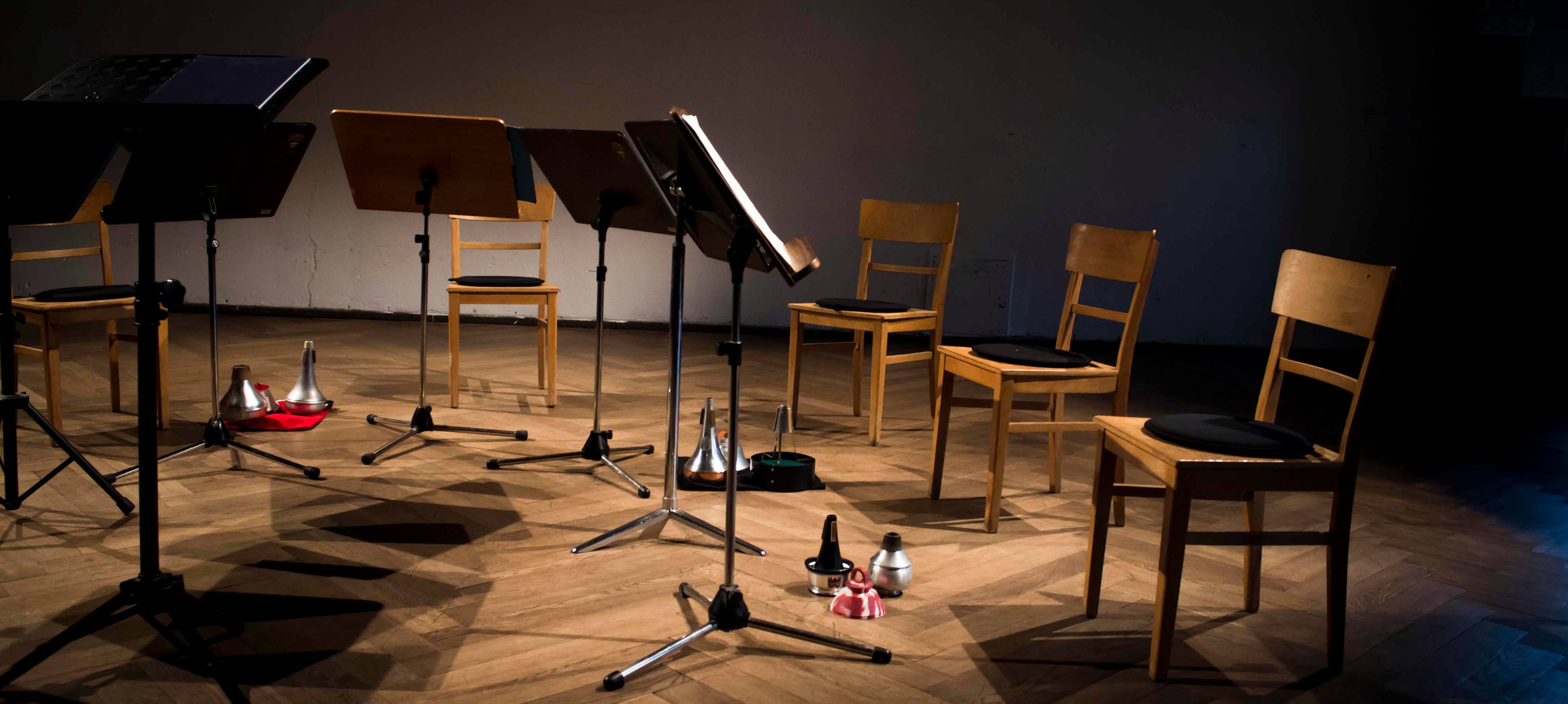
Heading into its second quarter-century, Berlin’s annual Ultraschall festival put together some typically wide-ranging programmes – not least this Sunday afternoon concert, which featured Ensemble Apparat in a sequence of diverse pieces for various ensembles of brass instruments.

Among the leading German composers of his generation, Enno Poppe (1969-) has now built a sizable catalogue – from which Zug, whether it refers primarily to a train or a procession (or the capital of a Swiss canton), continually diverts and intrigues with its interplay for brass septet. Unfolding as three intensifying waves of activity, the music elides between sometimes playful and at other times ominous moods. While the expressive outcome is left in the balance, there can be no doubting the formal cohesion of a work whose technical dexterity never draws undue attention to itself.

Its comparable number of players aside, there could scarcely have been greater contrast than with Night Scenes by Joanna Bailey (1973-). Much of her recent output features audio-visual or installation elements, the present diptych setting its instrumental component in the context of a soundtrack whose incrementally changing ambience likely reflects those places specified. Hence the luminous if distanced activity of Geneva and atmospheric if never claustrophobic confines of Schwarzwald, with these two complementing each other in an evocative totality.

From here to installation pure if not so simple. Visual artist Ragnhild May (1988-) has made a feature of human and mechanical amalgams, with Multiplayer Instrument her most ambitious such project yet by fusing the ensemble into a ‘meta-brass instrument’ whose sonic and even constructional qualities are in a constant state of change. While its overall impact inevitably depends on being seen as well as heard (see the photographs on the Ultraschall website), the stark and even hieratic nature of this undertaking is undeniable even to those ‘just’ listening.

The combining of sound-sources was heard at its most graphic in the Brass Quintet by Jorge E. López (1955-). Here the instrumental music is interpolated with concrète episodes such as evoke respectively the sonic overlap between an alpine crevice and industrial powerplant, the tortuous process of mountain rescue down a vertical cliff-face, then its effortful continuation over a field of scree. In each case, the contextual emergence and resolution of these episodes has been provided by the music for brass out of which they come then into which they return.

That brass writing has all the visceral immediacy associated with this composer, not least in its emphasis on those lower sonorities of Wagner tuba and contrabass tuba. The preludial first section vividly contrasts its contrasting musical-types, while the second is an incisive toccata and the third a plangent threnody, then the fourth section resembles an introduction and fugue in which a lively jig earlier insinuated by trumpet rapidly comes to the fore – dominating the closing stages as it draws all five instruments into a recessional of jocular yet wanton inanity.

Such was the impression made by this performance, superbly rendered by the musicians of Ensemble Apparat under the astute direction of Max Murray. It set the seal on a programme of engrossing music and music-making – these being characteristic of Ultraschall at its best.

You can watch this concert via the Ultraschall website Click on the names to read more about Ensemble Apparat and Max Murray – and for the composers Enno Poppe, Joanna Bailie, Ragnhild May and Jorge E López, whose 65th birthday tribute can be read on Arcana

Online review – Bruce Hornsby in the BBC Radio 2 Piano Room

by Ben Hogwood

Anyone listening to Bruce Hornsby‘s music over the last five years will know he is a restless artist in the best possible way, pursuing a direction taking him ever closer to the 20th century classical music he has come to know and love.

With that in mind, his billing at the very front of BBC Radio 2’s Piano Room month was always likely to provide something special – and so it proved.

Hornsby is a fascinating personality, one I was lucky enough to interview for an hour in 2022. We talked about his love of the music of Messiaen and Ives, and how his musical explorations with the New York chamber ensemble yMusic are taking him ever closer to those composers, without forgetting his earlier musical persona as writer of one of the 1980s all-time classic songs, The Way It Is.

His performance with the strings of the BBC Concert Orchestra showed how far that song has journeyed, finding new life through Tupac Shakur and now sounding more relevant than ever in troubled times. What struck here was the lightness of touch Hornsby applied to the piano, softer than the steely edge he used to apply. There was room, too, for thoughtful asides, departing from the song almost completely with the help of the orchestra – whose musicianship should never be undervalued, for they are one of the unsung jewels in the BBC’s creative crown.

Hornsby’s next song was Cast Off, co-written with Bon Iver frontman Justin Vernon. It is one of the many highlights from 2019’s outstanding album Absolute Zero, a quiet number but a frisson of resentment. “Is my back for stabbing?”, Hornsby asks, tellingly.

Then, by way of an enlightening mini interview with host Vernon Kay, Hornsby played The End Of The Innocence, a co-write with Don Henley who originally sang it in 1989. It is a wistful but moving song, and Hornsby did it full justice here, even breaking up the verses for tasteful improvisations with soloists from the orchestra.

His piano playing speaks with even greater conviction than his words, and the mood – while warm and cosy in the studio – reflected a stand against the troubled world outside the studio doors. Hornsby’s piano offers an escape from that, and if you haven’t watched it yet then you will find half an hour in his company wholly beneficial.

You can watch the full set of Bruce Hornsby in the Radio 2 Piano Room by clicking here

Online Concert – April Fredrick, Stacey Rishoi, Brennen Guillory, Gustav Andreasson, Colorado MahlerFest Orchestra / Kenneth Woods: Mahler’s Liederabend

Mahler’s Liederabend: A Recreation of Mahler’s Concert in Vienna on 29th January 1905

Mahler
Des Knaben Wunderhorn – selection (1892-1901)
Kindertotenlieder (1901-4)
Vier Rückert-Lieder (1901)

April Fredrick (soprano), Stacey Rishoi (mezzo-soprano), Brennen Guillory (tenor), Gustav Andreasson (bass), Colorado MahlerFest Orchestra / Kenneth Woods

Macky Auditorium, 1595 Pleasant Street, Boulder CO (Links to concert sections embedded below)
Saturday 20th May 2023

by Richard Whitehouse

In an event as inclusive as Colorado’s MahlerFest, it was happily inevitable the Liederaband Mahler gave in Vienna on 29th January 1905 be recreated and, while the decision to distribute these songs between four singers was not strictly ‘authentic’, it yet emphasized their variety of thought and expression more readily than had one vocalist been present throughout. What remained consistent was the creative zeal of Mahler at a crucial juncture in his composing, as he left behind the fantastic realm of his earlier music for greater realism and even abstraction.

The first half was of seven songs from Des Knaben Wunderhorn, which collection dominated Mahler’s thinking the previous quarter-century. Two of them are ostensibly dialogues, but the absence of a second singer mattered little when April Fredrick rendered that interaction of the yearning woman with her condemned lover in Lied des Verfolgten im Turm so graphically; as too the more wistful imaginings of separated lovers in Der Schildwache Nachtlied. She also underlined the glancing irony of Des Antonius von Padua Fischpredigt and the playful whimsy of Rheinlegendchen with understated assurance. Brennen Guillory pointed up the deadpan humour of Trost im Unglück and if Der Tamboursg’sell felt a little too earnest, the stridency that increasingly borders on aggression of Revelge was bracingly delivered.

Here, as elsewhere, adherence to Mahler’s scoring, with its emphasis on woodwind and brass, brought out its evocative quality which outweighed any passing thinness of tone in the strings. This was even less of an issue during the sparser textures of Kindertotenlieder, whose songs find universal truths in Friedrich Rückert’s intimate ruminations. Gustav Andreasson seemed a little raw of timbre in Nun will die Sonn’ so hell aufgeh’n, though the yearning fatalism of Nun seh’ ich wohl, warun so dunkel Flammen was tangibly conveyed, as too was the aching poignancy of Wenn dein Mütterlein. The bittersweet elegance of Oft denk’ ich, sie sind nur ausgegangen felt slightly undersold, but not those contrasts of In diesem Wetter as this final heads from fraught anguish toward a repose from which all dread has been wholly eradicated.

Kenneth Woods directed the Colorado MahlerFest Orchestra with that unforced rightness evident from his earlier Mahler performances. Never more so than the four Rückert-Lieder which ended this programme – albeit in a discreet but effective reordering from that of 118 years before. Thus, the capricious whimsy of Blicke mir nicht in die Lieder! preceded the deft enchantment of Ich atmet einen Linden duft; Stacey Rishoi proving as responsive to these as to Um Mitternacht, with its crepuscular winds and majestic climax with swirling arpeggios on harp and piano. Fittingly, the sequence closed with Ich bin der Welt abhanden gekommen – the finest of Mahler’s orchestral songs in its rapt serenity, Rishoi’s conveying of Rückert’s otherworldly sentiments more than abetted by Lisa Read’s eloquent cor anglais. If recreating the Liederabend meant no place for Liebst du um Schönheit (now available in a far more idiomatic orchestration by David Matthews), which might have made a pertinent encore), its absence did not lessen the attractions of this enterprising and successful concert.

Click on the name for more information on Colorado MahlerFest 2024, and on the artist names for more on Kenneth Woods, April Fredrick, Stacey Rishoi, Brennen Guillory and Gustav Andreasson

Online Concert: Jean-Guihen Queyras @ Wigmore Hall – Bach, Saygun & Britten

Jean-Guihen Queyras (cello)

J.S. Bach Cello Suite no.1 in G major BWV1007 (c1720)
Saygun Partita for solo cello Op.31 (1955)
Britten Cello Suite no.1 Op.72 (1964)

Wigmore Hall, Monday 20 November 2023 1pm

by Ben Hogwood

There is now a wide variety of repertoire from which the unaccompanied cellist can choose, yet this was emphatically not the case in the days of Johann Sebastian Bach. His six suites opened the door for the instrument to become a purveyor of melody and emotion, even if those facets were left largely unexplored until the 20th century.

Writing for solo stringed instruments went out of fashion in the Romantic period, until the rediscovery of Bach’s works by Pablo Casals towards the end of the 19th century – from which this highly original music reached its rightful platform. The First Cello Suite of the six is a delightful work, written at a standard rewarding those of an intermediate ability with music that repays decades of listening and practising.

Jean-Guihen Queyras brought to it a freshness bringing the most from the music. His unaffected manner with the Prelude found serenity amid a relatively relaxed sequence of string crossing, the cellist’s careful thought giving the music space. This set a theme maintained by the nicely voiced Allemande, then a bracing and rustic Courante reminding us of the dance origins of these pieces. The elegant Sarabande was particularly beautiful, with tasteful ornamentation applied on the section repeats, before a spirited first Minuet was offset by the brief but contemplative second in the minor key. A lively Gigue concluded an excellent performance. Bach will always be work in progress for cellists, but it was clear just how enjoyable that process is for Queyras.

From the well-known Bach we travelled to Turkey to experience the relatively unheard Partita of Ahmet Adnon Saygun, a composer regarded as the first exponent of Western classical music in the country, and whose orchestral music has travelled relatively well. Queyras removed the fourth movement of five from this performance, which nonetheless made a powerful impact. Starting with a drone in the lower reaches, the Lento first movement climbed melodically to an expressive outpouring, totally secure in the French cellist’s hands. A restless, edgy Vivo followed before emotive inflections were found in the Adagio, the melodic lines alternately probing or softly turning inwards. The Allegro moderato was deceptive to start with, initially meandering in mid-register before crossing the cello with emphatic lines, before the music relented to the drone of the opening once more. On this evidence, the chamber music of Saygun – a composer with a prolific output – is definitely worth exploring in more detail.

Like Bach, Britten also based his first cello suite in G major – the third of his works dedicated to the great cellist Mstislav Rostropovich, after the Cello Sonata and Cello Symphony. With a mixture of contrasting dances and tempi, the work has a recurring Canto section, on which Britten typically writes a number of varied repeats. This performance began in commanding fashion, before Queyras repeated the melody in a plaintive voice, getting closer to the true heart of the suite.

For although there was music of immense power this is essentially nervy night-time music. In this performance the Fuga often retreated to the shadows, offering some furtive if slightly playful harmonics at the end. The Lamento was lost in thought to begin with while the Serenata, played pizzicato throughout, evoked another world. So too did the Marcia, its ghostly evocations of flute and drum cutting to assertive, red-blooded music. The Bordone was troubled, the pitches of its drone creating great tension in this interpretation – before the scurrying finale found sure-footed ground.

This was a technically flawless recital from Queyras, a captivating trio of pieces atmospherically cast in half light on the Wigmore Hall stage. His encore was music from György Kurtág, a master of solo instrument composition. His typically compressed but intense Az Hit, where a diatonic melody developed outwards before drawing back in, finished with a charming two-note signature.

For more livestreamed concerts from the Wigmore Hall, click here