On Record – English Symphony Orchestra / Kenneth Woods – Adrian Williams: Symphony no.1, Chamber Concerto (Nimbus Alliance)

Adrian Williams
Symphony no.1 (2020)
Chamber Concerto: Portraits of Ned Kelly (1998)

English Symphony Orchestra / Kenneth Woods

Nimbus Alliance NI6432 [70’31’’]
Producers/Engineers Phil Rowlands, Tim Burton
Recorded 8 April 2021 (Chamber Concerto), 1-2 December 2021 (Symphony) at Wyastone Concert Hall, Monmouth

Reviewed by Richard Whitehouse

What’s the story?

This latest release in the English Symphony Orchestra’s 21st Symphony Project features its most ambitious instalment yet in the First Symphony by Adrian Williams (b1956), coupled with a no less eventful piece by this ‘dark horse’ among British composers of his generation.

What’s the music like?

Although having written various orchestral works, Williams had never tackled the symphonic genre before prior to being the ESO’s John McCabe Composer-in-Association in 2019 (he is currently its Composer Emeritus) but has confronted the challenge head-on. Playing almost 50 minutes and scored for an orchestra including triple woodwind, five horns, four trumpets and four percussionists with harp, piano and celesta, the work is evidently a summation of where its composer felt he had reached over the course of his musical odyssey. Yet for all its textural complexity and its pervasive richness of thought, this is music created out of basic motifs; the initial three notes generating the first movement’s main themes, as well as essentializing that longer term tonal goal as remains a focal point towards which intervening activity is directed.

From its imposing Maestoso epigraph, the opening Stridente unfolds against the background of (without necessarily adhering to) sonata-form design – its motivic components drawn into a continuous and frequently combative evolution purposefully unresolved at the close. There follows a Scherzando that eschews ternary design for a through-composed format proceeding by tension and release to a decisive ending. The expressive crux of the whole work, the Lento evinces a plangent and desolate tone whose sparse textures and elliptical harmonies re-affirm that ‘less is more’ maxim. Despite its Energico marking the finale unfolds with slow-burning momentum, made the more cumulative by channelling its motivic evolution toward a Dolente apotheosis whose outcome proves as inevitable formally as it feels transcendent emotionally.

The artist Sidney Nolan was latterly a neighbour of Williams, his powerfully un-romanticized evocations of famed Australian outlaw Ned Kelly directly influencing this Chamber Concerto. Its pungent opening sets wind quintet against string quartet, with double-bass and harp adding subtle contributions as the piece unfolds. The inward central section builds towards a febrile culmination – after which, wind and strings are drawn into a monody which brings a resigned though hardly serene ending. A purposeful overall trajectory ensures cohesion at every stage.

Does it all work?

Absolutely. These are impressive piece in terms of their ambition but also realization. There are considerable technical challenges on route, but they are met with conviction and no little resourcefulness by an expanded ESO which is often tested but never fazed. Kenneth Woods directs with his customary attention to detail as goes a long way toward clarifying music that is ‘complex and luminous’ in spirit as by design. Williams has evidently been waiting for this opportunity to contribute to the symphonic tradition and his execution rarely, if ever, falters.

Is it recommended?

Indeed. The recording is as focussed and spacious as is necessary, and there are informative notes from composer and conductor. Next from this source is a release of concertos by Philip Sawyers, then one of symphonic works by the current Composer-in-Association Steve Elcock.

This recording is released on Friday 7 October 2022.

You can watch the world premiere of Adrian Williams’ Symphony no.1 on the English Symphony Orchestra website, and you can listen to clips from the recording at the Presto website. For more information on the composer, visit the Adrian Williams website – and for more on Sidney Nolan click here. Click on the names of Kenneth Woods and English Symphony Orchestra for their websites.
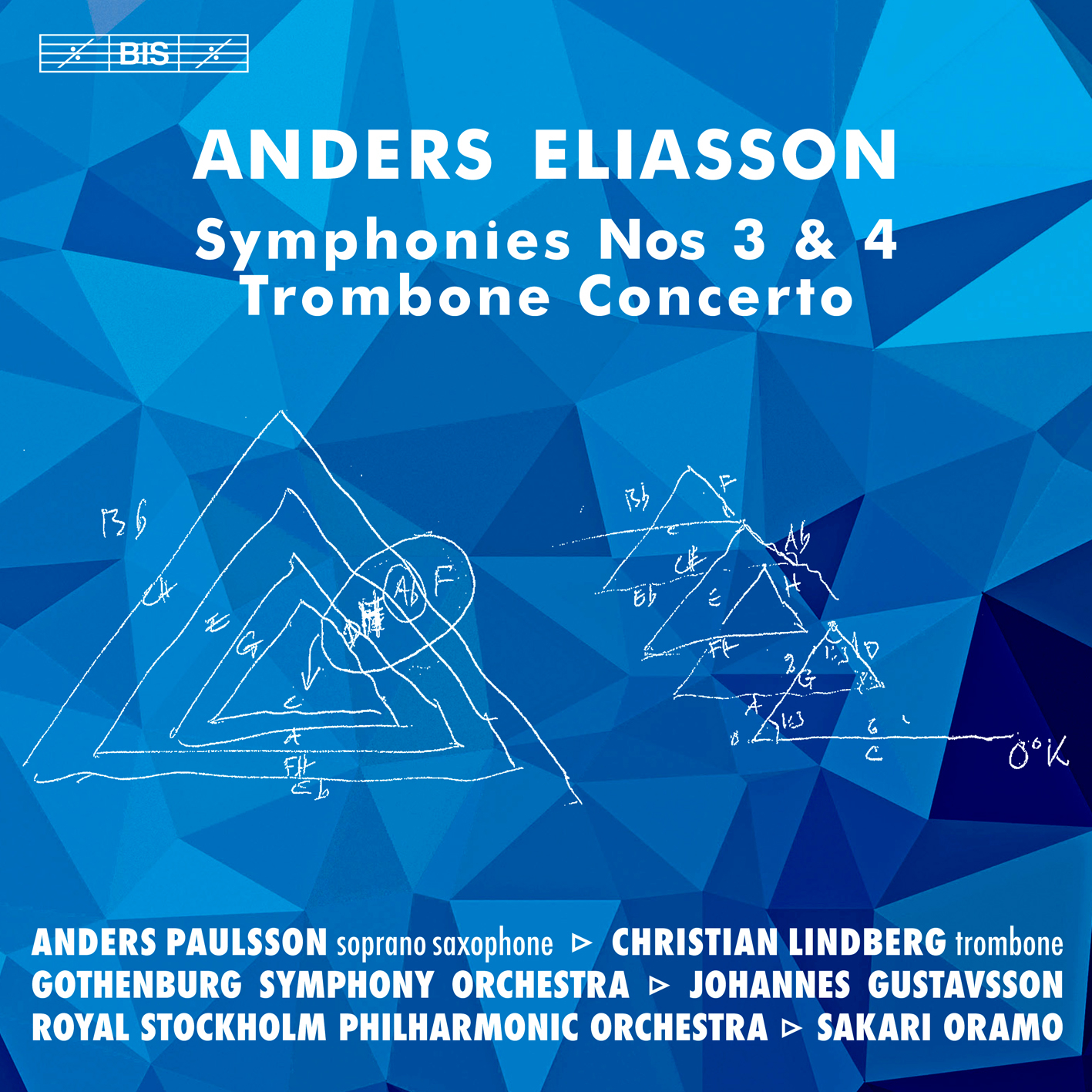
On Record – Anders Paulsson, Christian Lindberg – Anders Eliasson: Symphonies 3 & 4, Trombone Concerto (BIS)

Anders Eliasson
Symphony no.3 (1989/2010) (a)
Symphony no.4 (2005) (b)
Trombone Concerto (2000) (c)

Anders Paulsson (soprano saxophone) (a), Christian Lindberg (trombone) (c), Gothenburg Symphony Orchestra / Johannes Gustavsson (a), Royal Stockholm Philharmonic Orchestra / Sakari Oramo (b) and (c)

BIS 2368SACD [77’03”]

Producers Thore Brinkmann (a) Hans Kipfer and Mats Engström (b) and (c) Engineers Andreas Ruge (a), Fabian Frank (b), Mathias Spitzbarth (c)
Dates: (a) – 8-10 November 2017, Concert Hall, Gothenburg; (b) 23 September 2011, (c) 11 January 2020, Konserthuset, Stockholm

Reviewed by Richard Whitehouse

What’s the story?

BIS issues a follow-up to its ‘4 X Anders Eliasson’ (BIS2270) in this no less fine collection of his Third and Fourth Symphonies – together with a first recorded outing for the Trombone Concerto and featuring musicians who have long been associated with the Swedish composer.

What’s the music like?

Anders Eliasson (1947-2013) enjoyed an ambivalent relationship with the symphony. Among the most notable debuts in the genre of the post-war era, his First Symphony (1986, recorded on Caprice under CAP 21381) prompted a successor as failed to progress beyond sketches, with the Fourth intended as initial part of a trilogy that never materialized due to his untimely death, though the Fifth was commissioned with a date set for its premiere. There are also two chamber symphonies, with the violin concerto Solitary Journey (2010) arguably a symphony in all but designation.

Written for and frequently performed by American-born saxophonist John-Edward Kelly, the Third Symphony was written for alto (Neos NEOS11301) but later revised for soprano sax. Despite Kelly’s objections, this latter instrument undeniably merges even more effectively within its orchestral context. Anders Paulson has its measure as he traverses its five continuous sections – from an agitatedly expectant Quest, via the guardedly expressive Solitude and assaultive Shudders, to a plaintively affecting Sad before dissolving into the postlude that is Mists.

A decade on and the Trombone Concerto continues this integrative and inherently symphonic approach. As with Eliasson’s earlier concertos there are three continuous movements, though here a slow-fast-slow sequence opens with a ruminative Adagio that acts as ‘prologue’ to an extensive Allegro moderato whose frequent restraint yet requires a dexterity and incisiveness such as dedicatee Christian Lindberg typically meets head-on. A keen momentum is no less evident across its eventful course, prior to the ruminative Lento that duly serves as ‘epilogue’.

One of Eliasson’s most often heard works since its Munich premiere, the Fourth Symphony is among his most characteristic in its formal and expressive aims. Here a powerfully wrought Allegro summons up some of this composer’s most uninhibited music; evolving with no little motivic ingenuity to an Adagio whose concertante role for flugelhorn, eloquently rendered by Joakim Agnas, exudes a wistfully evocative tone. A scherzo-like section marked ‘threatening’ then builds to a climax, from where a brief Adagio returns the flugelhorn for a subdued envoi.

Does it all work?

Yes. Although his music could never be mistaken for that of his predecessor Allan Pettersson, Eliasson was similarly unequivocal in a musical language whose seriousness of purpose does not preclude lightness of touch or barbed humour. The latter two pieces here find his idiom at its most refined, unfolding with a cumulative inevitability that could be thought Nordic in its ethos. Performances are uniformly committed, and hopefully Sakari Oramo might yet take the Fourth Symphony to London in his ongoing association with the BBC Symphony Orchestra.

Is it recommended?

Indeed. The sound is on a par with BIS’s numerous other recordings from its Gothenburg and Stockholm venues, with Peter Kislinger’s annotations as informed and insightful as expected given his long-time advocacy of Eliasson’s music. Further such releases would be welcome.

For further information and purchasing options, visit the BIS website For more information on Anders Eliasson, click here, while you can click on the artist names for the websites of Anders Paulsson, Christian Lindberg, Johannes Gustavsson and Sakari Oramo, the Gothenburg Symphony Orchestra and the Royal Stockholm Philharmonic Orchestra

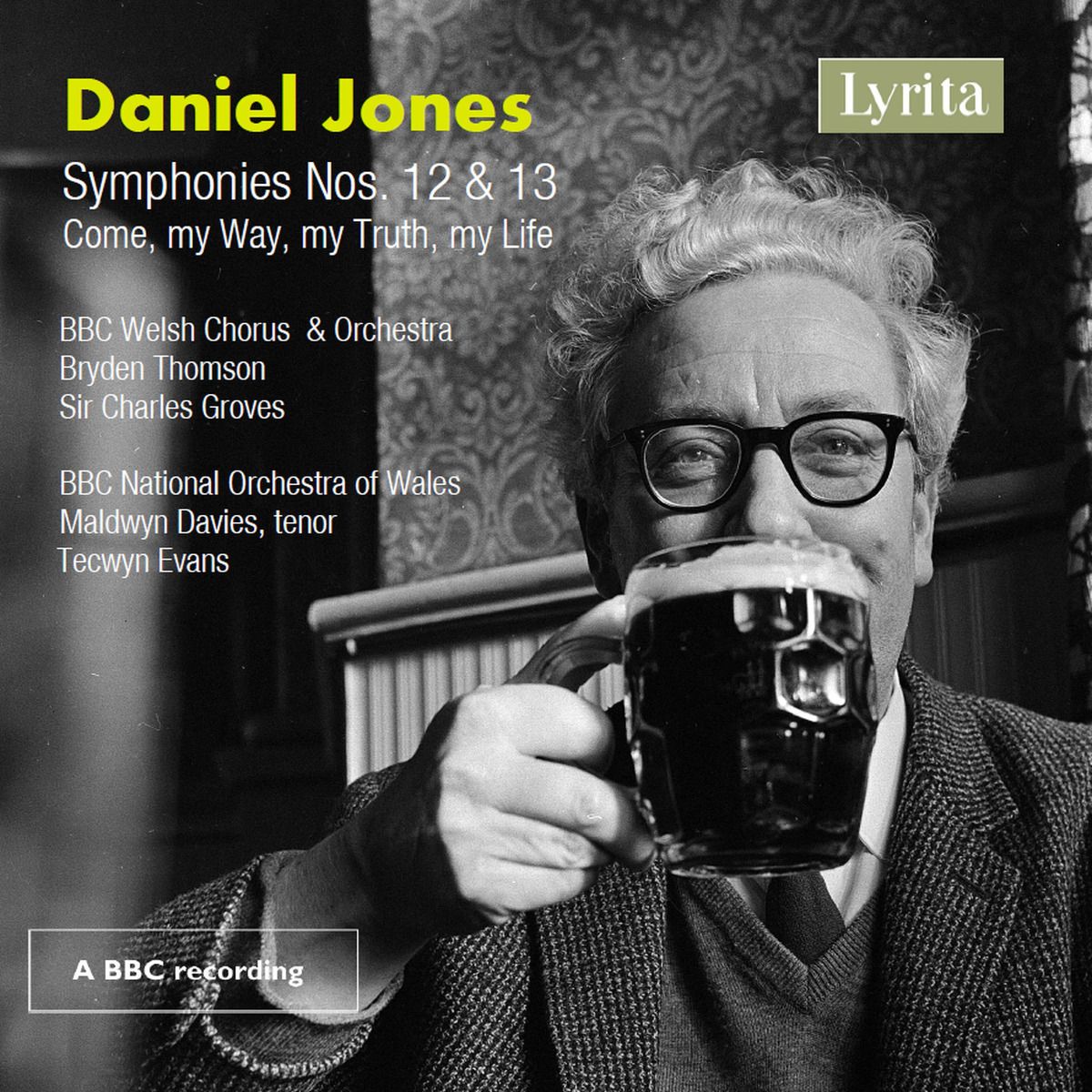
On Record – BBC Welsh Chorus & Orchestra / Bryden Thomson & Sir Charles Groves – Daniel Jones: Symphonies 12 & 13 (Lyrita)

Daniel Jones
Symphony no.12 (1985)a
Symphony no.13 ‘Symphony in memory of John Fussell (1992)b
Come, my Way, my Truth, my Life (1987)c

Maldwyn Davies (tenor) (c), BBC Welsh Chorus (c, BBC Welsh Symphony Orchestra (a) and (c) / Bryden Thomson (a), Sir Charles Groves (c); BBC National Orchestra of Wales (b) / Tecwyn Evans (b)

Lyrita SRCD391 [65’35”] English text included
Dates: (a) – BBC studio recording 22 March 1990; (b) – BBC concert broadcast 23 January 2017; (c) – BBC broadcast from Swansea Festival, 10 October 1987

Reviewed by Richard Whitehouse

What’s the story?

Lyrita completes its coverage of symphonies by Daniel Jones (1912-1993) with this coupling of his final two such works, alongside the premiere performance of his last cantata, heard in readings by artists who identified closely with the composer’s music throughout their careers.

What’s the music like?

It was only midway through this cycle that Jones realized he could start a symphony on each note of the chromatic scale. The Twelfth Symphony thus completes this process – its overall structure being among the composer’s most concentrated. At barely six minutes, the opening movement seems relatively expansive with the tensile sonata-form of its Agitato bookended by affecting Tranquillo passages. There follows a rumbustious Giocoso the more potent for its brevity, a Serioso such as might almost be thought a ‘song without words’ with its lyrical understatement, then a Risoluto which extends just long enough to round off the whole work by effecting an oblique return to its initial bars. Four decades on from his first so-designated piece and Jones can be said to have brought his symphonic cycle decisively to its conclusion.

That, however, was by no means the end of the story: the death, in 1990, of Jones’s friend the organist and administrator John Fussell prompted a Thirteenth Symphony as proved to be his last completed work (an Eighth String Quartet being realized by Malcolm Binney and the late Giles Easterbrook). Relatively expansive next to those later such pieces, with some especially imaginative writing for percussion (allocated to no less than seven players), this unfolds from the restless and eventful Solenne – at almost 10 minutes a worthy ‘memorial’ in itself – via an animated and nonchalant Capriccioso then a Lento whose plangent woodwind writing makes it among his most searching slow movements, to a finale whose Agitato-Tranquillo trajectory is pursued twice as this intensifies inexorably towards an ending as powerful as it is eloquent.

Coming between the two symphonies, Come, my Way, my Truth, my Life is the last of Jones’s four cantatas and again has recourse to metaphysical poetry – in this instance George Herbert, the seven short movements being arranged as to chart the spiritual progress of the author (by extension, that of John Aeron-Thomas – founder-member of the Swansea Festival, for whom this is a memorial). Intersected with a fervent orchestral Fantasia, the six choruses traverse contrasted and even conflicted emotions before attaining an unforced affirmation at the close.

Does it all work?

It does. As has previously been noted in these reviews, Jones was not a composer who sought or attracted easy plaudits – opting for an idiom whose methodical evolution is consistent and absorbing. The performances reflect this thinking, Sir Charles Groves and Bryden Thomson both focussed on capturing the essence of works whose integrity is abetted by deftness and no little humour. Tecwyn Evans’s conducting suggests he, too, is primarily concerned with projecting the spirit of this music. Nor does Maldwyn Davies’s contribution leave anything to be desired.

Is it recommended?

Indeed. The broadcasts have been expertly remastered (No. 13 understandably sounding the best), with Paul Conway contributing detailed and insightful annotations. Job done by Lyrita, which will now hopefully complete a similar intégrale of the symphonies by Alun Hoddinott.

For further information and purchasing options, visit the Lyrita website For more information on Daniel Jones, click here

BBC Proms #44 – Soloists, BBC Symphony Chorus & Orchestra / Sakari Oramo: Ethel Smyth ‘Mass’ & Debussy ‘Nocturnes’

Prom 44 – Nardus Williams (soprano), Bethan Langford (mezzo-soprano), Robert Murray (tenor), Božidar Smiljanić (bass), BBC Symphony Chorus, BBC Symphony Orchestra / Sakari Oramo

Debussy Nocturnes (1897-9)
Smyth Mass in D (1891, rev. 1924) [Proms premiere]

Royal Albert Hall, London

Saturday 20 August 2022

Reviewed by Richard Whitehouse Photos (c) Chris Christodoulou

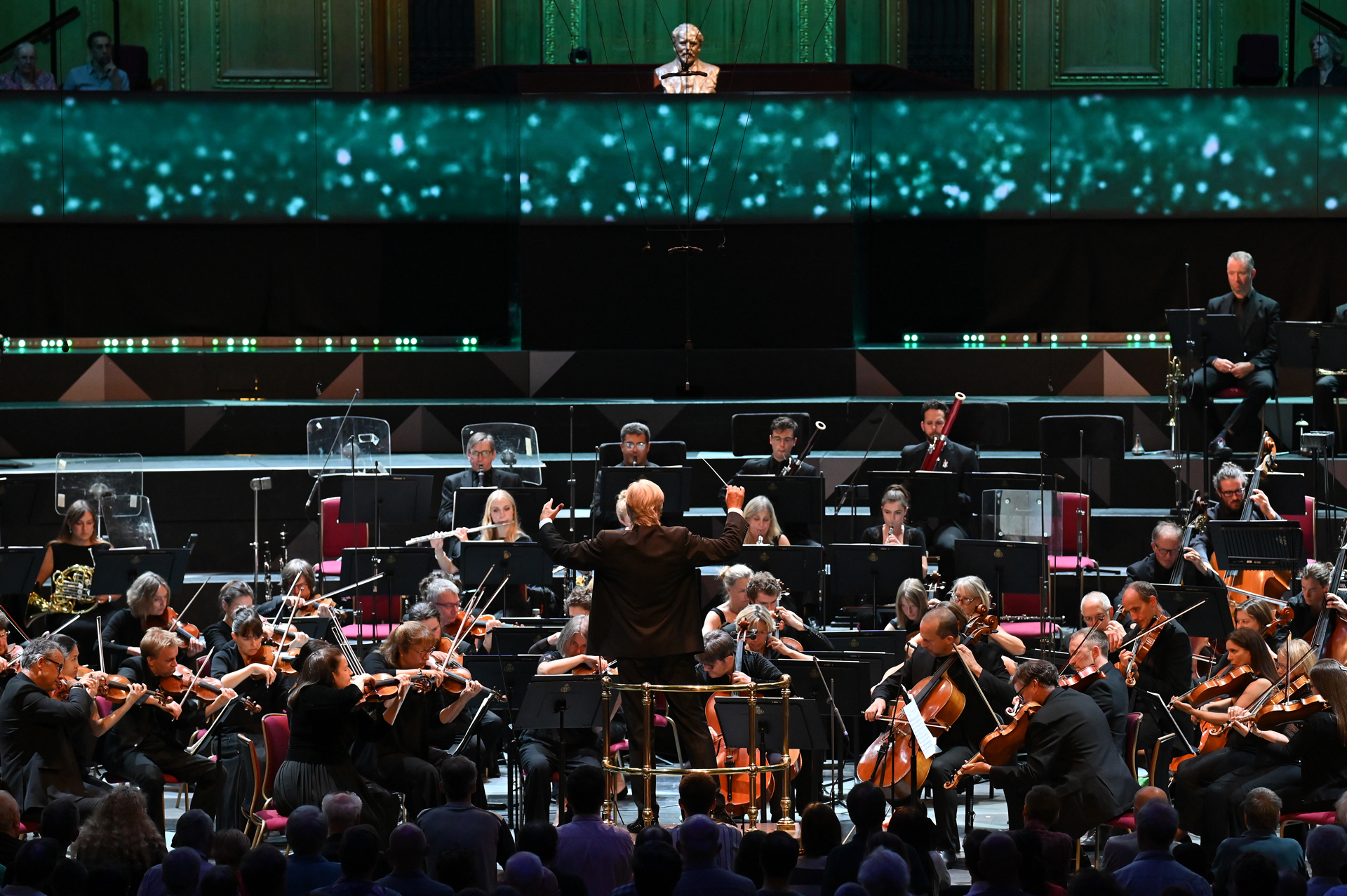
His third Prom this season found Sakari Oramo conducting the BBC Symphony Orchestra in an unlikely yet, in the event, thought provoking double-bill of pieces composed at either end of the same decade and which duly played to the strengths of all those who were taking part.

The music of Ethel Smyth has been a prominent feature of this season and while her Mass in D comes too early in her career to be considered ‘mature’, it does evince many of those traits as defined the operas that followed. Written during a brief flush of adherence to Anglicanism, this is demonstrably a concert rather than liturgical setting (which makes its apparent status as the first Mass heard publicly in England for almost 300 years the more ironic) and, moreover, one of a ‘symphonic’ rather than ‘solemn’ conception despite the audible debt to Beethoven.

Smyth reinforces this aspect by placing the Gloria at the close – thereby making it the finale of a sequence in which the Kyrie, building gradually to a baleful climax before returning to its initial sombreness, becomes an extended introduction to the Credo whose numerous sub-sections facilitate a sonata-form design of no mean formal cohesion and expressive breadth. For their part, the Sanctus, Benedictus and Agnus Dei function as extended slow movement whose (for the most part) emotional restraint enables the soloists to come to the fore – after which, the Gloria takes its place as a finale not least in terms of drawing on previous themes and motifs through to the forceful though never merely bathetic culmination. That Smythe did not essay a symphony given her evident structural command seems the more surprising.

Tonight’s performance was no less assured than that which Oramo gave at the Barbican (and subsequently recorded, albeit with different soloists) three seasons ago. The soloists made the most of their contributions – Nardus Williams bringing a plaintiveness and elegance that was ideally complemented with Bethan Langford’s warmth and understated fervency, and though Robert Murray’s ardency showed signs of strain, he was no less ‘inside’ his part than Božidar Smiljanić, whose solo was more affecting for its burnished eloquence. The BBC Symphony Chorus responded as one to the full-on contrapuntal writing of those main movements, while Richard Pearce ensured the (too?) extensive organ part did not muddy the orchestral textures. Oramo directed with clear enjoyment a work that, for the most part, justified its 62 minutes.

In the first half, Oramo presided over a searching account of Debussy’s Nocturnes – its three movements still sometimes encountered separately but far more effective heard as a complete entity. Not its least impressive aspect was the ease with which these followed on from each other with a cumulative inevitability – the fugitive shading of Nuages (melting cor anglais playing by Helen Vigurs) leading to the half-lit activity of Fêtes, with its darting gestures and a central march-past of vivid understatement, then on to the sensuous allure of Sirènes.

As enticing as the women’s voices of the BBCSC sounded in this closing movement, it was the fervency with which Oramo infused its recalcitrant content such as made it the natural culmination of the sequence – the final bars dying away with a tangible sense of fulfillment.

Click on the artist names for more information on Nardus Williams, Bethan Langford, Robert Murray, Božidar Smiljanić and Sakari Oramo and for more information on the BBC Symphony Orchestra head to their website. For more on composer Dame Ethel Smyth, click here

BBC Proms #42 – Jan Lisiecki, BBC Scottish Symphony Orchestra / Thomas Dausgaard: Nielsen, Beethoven & Sibelius

Prom 42 – Jan Lisiecki (piano), BBC Scottish Symphony Orchestra / Thomas Dausgaard

Sibelius Symphony no.7 in C major Op.105 (1924)
Beethoven Piano Concerto no.4 in G major Op.58 (1804-6)
Nielsen Symphony no.4 FS76 ‘The Inextinguishable’ (1914-16)

Royal Albert Hall, London
Thursday 18 August 2022

Reviewed by Richard Whitehouse Photos (c) Chris Christodoulou

Ending his tenure as Chief Conductor of the BBC Scottish Symphony Orchestra, Thomas Dausgaard directed this programme which once again played to both his and the orchestra’s strengths – in the process underlining just what they have achieved together over the past six seasons.

He might not have scheduled Sibelius quite so assiduously as his one-time predecessor Osmo Vänskä, but Dausgaard is hardly less perceptive in this composer as was proven with his take on the Seventh Symphony. If not a tale of two parts, the first half that resonated more deeply – an introduction shot through with expectancy that preceded a powerful build-up to the first emergence of the trombone theme, and an effortlessly accelerating ‘scherzo’ as made feasible a central climax of rare intensity. From here tension dropped a little over the course of a lucid yet (in this context) over-extended ‘intermezzo’, and if the approach to the final return of the trombone theme had the right inexorability, the strings’ climactic response was a little reined-in emotionally. Nor did the fraught cadence into the home-key have the desired inevitability.

Whether or not the Sibelius should open a concert, Beethoven’s Fourth Piano Concerto made for an ideal continuation. Stepping in at the eleventh hour, Jan Lisiecki is no stranger to this music such that his lightly articulated if rarely insubstantial tone complemented Dausgaard’s incisive but never headlong accompaniment. Just occasionally in the opening movement this jewel-like pianism felt a little self-defeating, though not with a lucid rendering of the (more familiar) cadenza or transition from the Andante into the finale of heart-stopping eloquence. The latter movement had the necessary vigour but also an appealing intimacy, as in the lower strings’ transition towards the final return of the rondo theme or those ruminative woodwind asides before the decisive coda. Chopin’s C minor Nocturne (1838) made for a limpid encore.

Keen to get on with proceedings, Dausgaard launched Nielsen’s Fourth Symphony after the interval before applause had subsided. Often a conductor willing to modify his approach, he might have steered the opening Allegro less forcefully given the textural detail that was lost in the Albert Hall’s ample expanse, but the twofold appearances of the ‘motto’ theme were magisterially rendered – the shocked transition into the intermezzo proving as mesmeric as this latter movement was affecting through its deft combination of winsomeness and pathos.

Equally memorable was Dausgaard’s handling of the slow movement, here exuding fervency without undue histrionics both in the searching string threnodies and the confiding passages either side – the latter of which provided a stealthy transition into the final Allegro. Here the placing of a second timpani set front-left in the arena made stretched the antiphonal contrast a little too obviously, but the music’s overall intent came across unscathed as the ‘motto’ made its climactic final appearance then those closing bars hit the ground as they should – running. Whether or not Dausgaard intended ‘Inextinguishable’ to sum up his music-making with the BBCSSO, or whether anything might be read into his wearing a Covid mask throughout, this concert was a worthy leave-taking. Hopefully he will not be absent from the UK for too long.

Click on the artist names for more information on Jan Lisiecki and Thomas Dausgaard, and for more information on the BBC Scottish Symphony Orchestra head to their website