Switched on – Apparat: Soundtracks: Dämonen (It’s Complicated Records)

What’s the story?

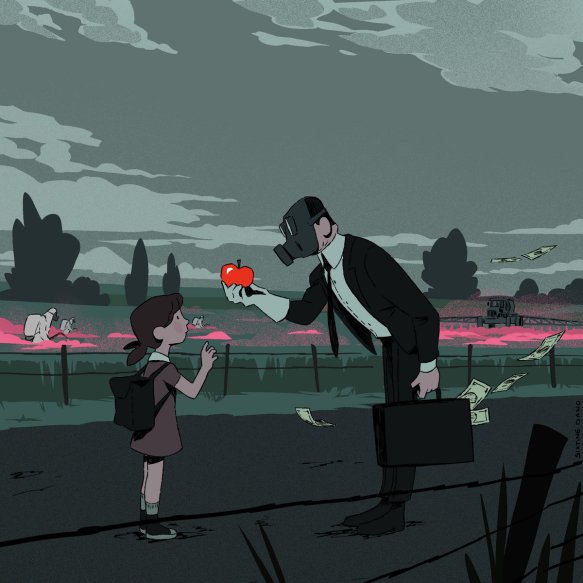
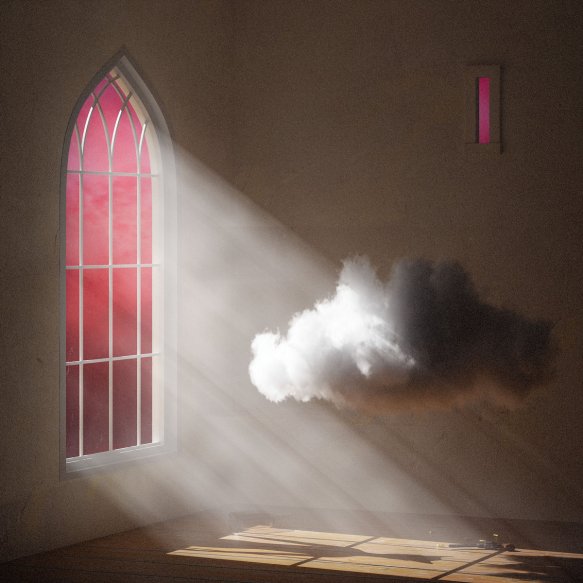
This is the third release in a series of soundtrack recordings from Apparat, aka Sascha Ring – who has made a name of himself as an accomplished instrumental music writer. This piece of work dates from 2015, when Apparat wrote and performed the score to a theatre play of Dostoevsky’s Demons, directed by Sebastian Hartmann.

Sascha wrote the sound- track and performed live in Frankfurt with Philipp Thimm and Christoph Hamann as Apparat. He then re-recorded and arranged this release with Thimm in his Berlin studio.

Dämonen is Apparat’s second collaboration with Hartmann – the first, Krieg und Frieden (Leo Tolstoy’s War and Peace), has been released on Mute.

What’s the music like?

Hartmann described Apparat’s working style as ‘no beating about the bush, no fussing about frills – just working together and getting something done – staying inspired.

That approach comes across in the music for Dämonen, setting the scenes with economy and effectiveness, and never resorting to overindulgence. There are some moments where Apparat invokes the spirit of Hans Zimmer, for example in the closing scene Amos where the radiant textures are boosted by intelligent writing for the organ. Habakuk, too, has a swell and shimmer that we would associate with the older composer, but it is never derivative – Apparat’s harmonic language is very clearly his own.

The cello plays a leading role here, taking charge in Hosea and Jona, where it adds a strong melodic profile. By contrast Sacharja is a lovely, intimate scene with plucked strings, drawing the ear with its changing in mood and colour. The piano plays a subtle but important part in Maleachi, setting a slightly ominous pulse.

Does it all work?

It does. Less is definitely more in the writing here, and Apparat uses texture and harmony to get many of his deeper thoughts. The cello elevates the music wherever it appears, while the more brooding numbers such as Hosea do make a strong impact without obvious melodic material to match on to.

Is it recommended?

Yes. Sascha Ring has always written music of great depth under his Apparat alias, and he is perfectly suited to film or theatre – or both. Even if you don’t know the story of Dämonen, the music will tell you a good deal of what you need to know.

Listen

Buy
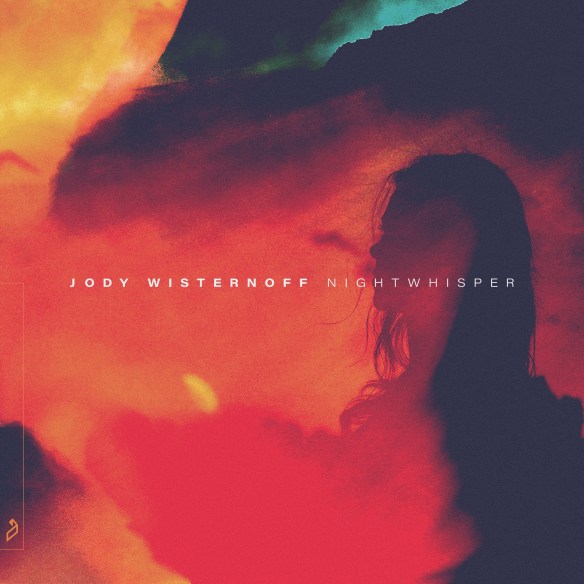
Let’s Dance – Jody Wisternoff: Nightwhisper (Anjunadeep)

Jody Wisternoff Nightwhisper (Anjunadeep)

reviewed by Ben Hogwood

What’s the story?

Jody Wisternoff is dance music royalty, being one half of Way Out West where he is joined by Nick Warren. The two have made powerful and progressive albums since the mid-1990s, sitting squarely between house and trance music, but are free to run their own solo projects alongside the duo. Nightwhisper is Jody’s second solo album, his first since 2012, and it has served as an outlet to express conflicting emotions felt through the death of his father, with a sustained period of caring for him beforehand.

Written in 2019, it faces those sorrowful events in the context of weekends where Wisternoff was involved in the ‘day job’, as it were, DJing at exotic party locations.

What’s the music like?

The conflict between the different areas of Wisternoff’s life is certainly felt here, but the overall impression is firmly positive. The songwriting here is direct and so it is easy to relate to. For example when the loop ‘don’t go away, don’t leave me now’ starts up on Here To Stay, the combination is just right – some introspective thoughts but presented through a really good vocal hook.

Wisternoff chooses his vocalists well, with the husky tones of Rondo Mo working well on Lately, or James Grant and Jinadu on the ultra cool Blue Space, singing how ‘I’ve been looking everywhere for a sign’. Grant also appears on the title track, a blissful number tapping into the spirit of The Beloved. The varied rhythms that Way Out West have always used are in evidence, too – Andromeda marshals its breakbeats well, Story Of Light works a sharper bassline, and the lovely soft timbres on For Those We Knew are really nicely done. Mimi Page’s vocal adds a beautifully weighted tribute here, an apt memorial piece.

Does it all work?

Yes – Wisternoff uses his experience to provide exactly what is needed for a pool soundtrack or for the dancefloor. To be honest each of these twelve tracks can move effortlessly between the two, and since the vocals are good they stand up well to repeat plays.

Is it recommended?

Yes. This is classy, hot weather music which works really well on the beats front, but has music of substance to go with it. Because of that, Nightwhisper works equally well as foreground and background listening – and it stays with you emotionally too.

Stream

Buy

Switched on – Aārp – Propaganda (InFiné)

What’s the story?

Aārp is an intriguing figure. Having started out as a viola player in an orchestra, the producer – whose real name is elusive – found his head turned by electronic music, specifically the likes of Squarepusher, Amon Tobin and Oneohtrix Point Never. His love of classical and exploratory electronic music spills over into a full length record for InFiné, his first album Propaganda.

With a title like that it is no surprise to report a political slant to Aārp’s thinking. It is a response to the tragedy of a young festival-goer in Nantes who drowned following a police altercation – and specifically a response to how that tragedy was reported and spun by the press. Aārp was inspired to create a series of tracks, each given the title of an important quote from world news that was treated in a similar way.

What’s the music like?

While it sounds like he is working with a heavy subtext, it is great to report that Aārp does not get too weighed down by his subject matter. In fact the opposite is true, as Propaganda has moments of light and shade, seriousness and humour. It is a restless piece of work, full of riffs that never quite stay still but go really well with his beat making. Nothing is off the table here and there is a lot of excellent work by instinct.

Ca fuit de partout sets the tone with a descending motif that has a quirky edge, which Condamnez-vous les violences? runs with, the riffs becoming more oblique. The Axis of Evil is a thrilling ride, glitchy beats preceded by a blast of rich organ chords. Meanwhile on The Herbicide That Gets To The Root Of The Problem, riffs flit across the stereo picture like birds not quite settling, the music hyperactive and uneasy.

Not all Aārp’s writing is as packed with events as the opening trio. His descending motif gets a different perspective in the more introspective Less than 1% of Patients Become Addicted, while darkness descends with the low threat of Nada es gratis en esta vida, a short but heavily loaded track.

Some of his soundscapes are really impressive – try the breadth of vision from I Prefer a Liberal Dictator to Democratic Government Lacking Liberalism, or Les malheureux sont les puissances de la Terre, which moves from what sounds like electronic steelpans to pinball-style beats and shimmering chords.

Does it all work?

As an album, yes – because Aārp has a distinctive style that constantly asks questions of its surroundings. The duration might be relatively short but a lot happens in 35 minutes! The bursts of hyperactivity might also be a bit too much for some, with a short attention span meaning some of the ideas don’t get developed as fully as they might, but the album follows a compelling path which rewards repeated listening.

Is it recommended?

Yes. Aarp has a fresh approach to electronic music that works rather well, and although the topics covered by Propaganda are pretty weighty, the responses to them offer blasts of fresh air.

Listen

Buy

On Record – Hats Off Gentlemen It’s Adequate – Nostalgia for Infinity (Glass Castle)

reviewed by Richard Whitehouse

Four decades or more since its heyday and progressive (prog) rock continues to be at the thin end of the wedge when it comes to critical respect (if hardly public acclaim), which is unfair to music featuring as much stylistic variation and aesthetic nuance as any comparable genre.

Formed around a decade ago, Hats Off Gentleman It’s Adequate is in essence the joint project of Malcolm Galloway and Mark Gatland – who, between them, have put together a catalogue fairly permeated by imagery of dystopian futures and human catastrophe. Such is evident on this fourth album, Nostalgia For Infinity duly taking its cue from the novels of astrophysicist Alastair Reynolds in which the very notion of scientific ‘progress’ is poised, now more than ever, on a knife-edge between the enhancement of civilization and its wholescale destruction.

Something to bear in mind when traversing a lengthy and impeccably realized album that, if it springs few genuine surprises, is rarely less than appealing in its seriousness and eloquence. While most of these 12 tracks might inhabit a sound-world of resonant synths and mid-tempo rumination – tracks such as Arc, a heady evocation of the triumphs and ultimate tragedy of HMS Ark Royal; Inhibitors, with its imaginatively treated flute from Kathryn Thomas; and Sixth Extinction, in its driving impetus, absorb the mind as surely as they arouse the senses.

Warmly recorded but not lacking in impact, with a booklet that explains the aim behind each track and includes lyrics of those with vocals, Nostalgia For Infinity testifies to the dedication of those who created it and a reminder that progressive need not be at the expense of integrity.

Stream

Buy

Switched on – Bruce Brubaker & Max Cooper – Glassforms (InFiné)

What’s the story?

The music of the so-called ‘minimalists’, led by Philip Glass and Steve Reich, has always provided a strong link between classical and electronic music, and has naturally inspired a number of artists positioned at that junction.

Reinterpretations of Glass and Reich have varied considerably though, from those who like to perform the music straight with no added frills to those who have added drum tracks and remixed them beyond almost all recognition. In that sense the music has been an inspiration, but it has on occasion proved difficult to get the balance right.

Pianist Bruce Brubaker and scientist / electronic music producer Max Cooper have teamed up for their own reinterpretation of the music of Philip Glass, approaching it with a view to adding subtle enhancements rather than radically changing its essence. Cooper has developed his own system for musical expression with Alexander Randon, taking live feeds from the piano to drive his own systems.

What’s the music like?

Brubaker performs well-known Glass piano pieces such as Mad Rush, Two Pages and Metamorphosis 2 with great sensitivity, to which Cooper adds the expressive studio touches and atmospherics. That may seem like straightforward solution, but both performers have to be careful to avoid over-egging what Glass has already done.

The pair link the originals with improvised music of their own. This is through a series of five preludes where Brubaker channels the spirit of Glass but brings in external influences from the likes of Liszt and Bach to galvanizing effect.

There are so many notes in the busy keyboard pieces such as Mad Rush that to do too much would not work – but here the judgement of both performers is right on the money. The piano parts are essentially the same, but Cooper cleverly highlights elements of the busy lines with his own spotlit textures, putting shards of white noise on the top of the likes of Mad Rush and opening out the sound with long bass notes, taking us from intimate beginnings to cinematic, big-venue textures. He does this without compromising the solitary world of a piece like Metamorphosis 2, and each one makes an unexpectedly weighty emotional impact.

While the reinterpretations of pieces like Tirol Concerto are excellent, Brubaker and Cooper’s interpretation of Two Pages is outstanding. It is ideally paced, the tracer lights of the keyboard operating over great waves of synthesizer pads, the chords shifting simply but with a devastatingly effective emotional payoff. So far each listen to this particular track has left a tear in the eye!

Does it all work?

Yes. It is immediately clear that Brubaker and Cooper hold the music of Glass in the utmost respect, but also that they know how to bring it forward and point it towards a slightly more club-orientated audience. There are no beats at any point, but the electronic sounds and textures bring them much closer – and Glass’s own rhythmic impetus is enough in any case. Each track is carefully woven and lovingly produced, and sounds great on headphones.

Is it recommended?

Very much so. Glass and Reich have had some excellent remix treatment in the last 25 years or so, but Bruce Brubaker and Max Cooper have really raised the game with this album, which is both wholly complimentary to Glass but offers something new in its own right. It is a really fine  achievement.

Listen

Buy