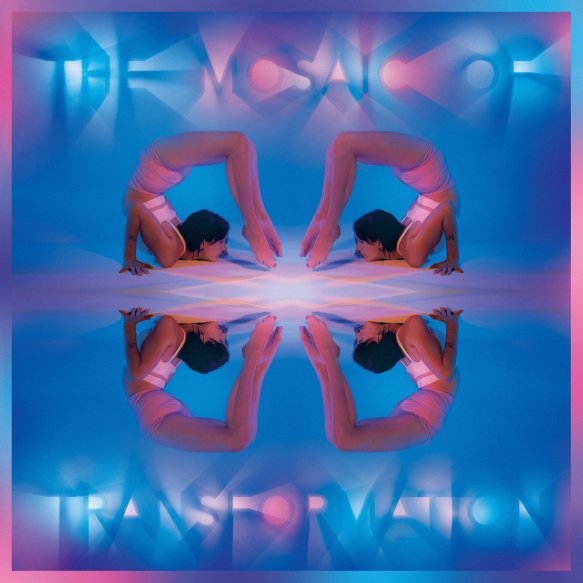
Seachange is the ambient companion to Erland Cooper’s second solo album Sule Skerry. It continues Cooper’s celebration of the raw elements of his Orkney origins, the second of a pair based on the open sea. Behind both albums, and their ambient companions, sit Cooper’s long-standing desire to present Orkney in sonic form, preserving the island’s essential parts to be with him when he is working in the city. Initially these musical thoughts were for private use, but have proved incredibly successful when shared with friends and the listening public.
Seachange is split into three ‘Tides’ but runs as one whole, featuring the guitar work and studio craft of Leo Abrahams. Cooper imagines the music ‘pulled apart by placing recyclable source material into the North Sea and watching it become torn, pulled apart, diluted, stretched, weathered and then reassembled in Orkney Geo’ (the inlet between Orkney and Shetland). ‘It creates a different form, with dissolved and overlapping melodies that eventually disappear into granules like plankton’.
What’s the music like?
The intricacies of Abrahams’ guitar are the perfect foil for Cooper’s ambient workings, giving the music an appropriate perspective to represent the vast North Sea. In the foreground the woozy atmospherics are distorted by wind and spray, yet all the while more expansive drones reveal the wide open spaces as the eye looks further.
Seachange works best on headphones, where its details can be fully appreciated, or on a big system where the depth of the bass gives real depth. There is a deeply personal, awestruck appreciation of the sea, made real through music and complemented with Abrahams’ ever-thoughtful nudges and deft musical phrases.
Those familiar with the wonderful Sule Skerry album will recognise these phrases and appreciate the journey they have been on, with bird-like sounds and the ebb and flow of rippling textures all contributing to the movement of water both close at hand in the inlets and on the vast, open sea.
Does it all work?
Very much so. As with Solan Goose, his first album, Cooper has complemented the main release with an ambient companion allowing time for deeper reflection and peace of mind. In celebrating the elements it is a subtle way of pointing us away from busy urban lives and out to the beauty of nature.
Is it recommended?
Yes. Seachange is a reminder of just how small us listeners are when set in such a vast natural expanse, a reminder not to get too far ahead of ourselves and too absorbed in technology or man-made phenomena. The sheer beauty of nature will always trump that.
Various Artists: Balance presents Soundgarden mixed by Nick Warren (Balance)
What’s the story?
The Soundgarden is an enterprise headed by DJ NickWarren and his partner Petra, and in what seems like no time at all it has evolved from parties and radio shows to compilations and now a record label. This compilation marks a return to the Balance series for Warren, who as half of revered 90s duo WayOutWest has an almost unrivalled pedigree in house music.
His wish was to create a timeless pair of mixes in which each track has involvement from a member of the Soundgarden family, illustrating the community ethics of the label.
What’sthemusiclike?
Warren’s wishes are largely fulfilled, using his components to make a pair of mixes that could easily be listed as two recordings rather than their 27 tracks.
He creates wide open spaces and is careful not to fill them with too much music, so that sometimes the music can sound quite minimal. It always has a forward progression though, and in the course of two and a half hours opens out beautifully.
Warren opens up with a typically airy number, in this case Aārp‘s GemmaIII, and lets the mix establish its own footing with a couple of airy house tracks. Arguably the best of these is Aspen, by Synkro&Arovane, which has a natural feel to it. As time passes a firmer footing and bolder sound are established. Warren’s mixing is typically seamless – it’s difficult to spot the joins at points – with other highlights including Kamilo Sanclamente‘s Urania, dispensing stardust far and wide. Darper‘s Crystal Voyager has broad harmonies and curious bleeps, musing on time and space, then Emi Galvan‘s Embrace flat major has a nice shimmery breakdown before panning out for Ben Archbold‘s SF.
The second mix is dreamy, a little darker but again thoughtfully compiled, starting with the Eastern leanings of SIX‘s Berlin. There are dark hues from Black 8‘s Black Tiger, while Dmitry Molosh’s Note brings a combination of distinctive sharper sounds and an ethereal vocal.
Later on Warren’s own Dreamcatcher, with Black8, is subtly hypnotic, while Eli Nissan‘s Restricted Delusions is tougher. By the time Oliver & Tom‘s Luly comes around the pace has increased slightly but the mood is contented.
Isitrecommended?
Yes. He may be an old hand at this compilation business, but Nick Warren still knows how to pace and mould a mix to perfection.
Larry Gus is one of DFA’s best-established dance acts, and with Subservient he takes his long player count to four. It is easily his most personal album yet, too, dispensing with the sampler and with Larry – real name Panagiotis Melidis – playing every instrument himself. It is an itemised list, with a drum kit, an SM57 (Shure microphone), a guitar, a bass, a Teenage Enginerring OP-1 (synthesizer and sequencer), and a Roland JV1010 synth module.
Melidis sings both in English and his native Greek, with the overriding message based on empathy. He delves deep into recent experience as a father and a husband, as an artist trying to come to terms with the Greek crisis and similarly catastrophic world events. The musical approach is described rather neatly as a combination of ‘crisis funk pop and trad Mediterranean grooves’.
What’s the music like?
Given the circumstances you could forgive him for delivering some cold and rather harrowing tales, but the response to these challenges is one of outgoing warmth, shot through with a dash of humour and wistfulness.
Subservient does indeed feel a lot more organic with Gus playing the instruments, but more importantly the music itself is once again really well written. You’d struggle to find a more effective bass riff than Taped Hands Here this year, but that track is not alone – Ayler The Pilot is close on its heels with the hook ‘it’s not the family you have it’s just the family you know’.
The vocal tracks are indeed very personal, and A Likely Projection has a thoughtful contribution to go with the breezy riffs. Text of Intent is a remarkable piece of work, its rolling percussion taking the music far afield in response to the meditative vocal.
While some of the music is quite laid back, In This Position goes the other way with some incredibly busy and frenetic music, Classifying A Disease strikes out in the direction of space rock and the bass line on The Sun Sections is far out in an enjoyable way. It’s quite likely that Melidis has a short attention span, which he makes very good use of here.
Does it all work?
Yes. Subservient is a really strong blend of Larry Gus’s personal identity, influences and reactions to present day events. At the same time it brings out an undercover homage to 1970s funk and disco, given a fresh lick of paint and a new viewpoint in the studio.
Is it recommended?
Definitely. Larry Gus continues to make fresh sounds for stale ears, and remains one of DFA’s unsung treasures. Subservient finds him getting ever stronger musically on his most personal album yet, in spite of those day to day vulnerabilities.
Ryan Teague’s first album release in three years is an intriguing affair. In keeping with his ability to change tack with each new record, the music sets itself within an algorithmic framework. This has been of great interest to the composer for some time, for his approach to music is as much by way of sound design and architecture as it is melody and harmony. Recursive Iterations, then, takes seven different sets of ‘cells’ and makes a suite from them, bringing together disparate styles and textures.
What’s the music like?
Extremely distinctive, and hard to pin down stylistically. Teague’s different pools of reference – music for TV and film, modern classical, urban, even grime – all come together in fascinating cells that feel like a collision of more than one style at a time.
And yet there is an older style at work, that of the ‘round’ – music like FrèreJacques, where layers would be added to a ‘ground’ bass that stays constant all the way through.
Teague takes those cells, reorders and arranges them, keeps a constant rhythm going, and makes them sound alive and mysterious at the same time. Rich bass sounds can appear – like the start of Recursive Iteration II – in a style that recalls Burial, and yet at the top is a busy, more minimal block that generates energy. Including a Hawaiian guitar adds colour too, and in the middle of the texture there are occasional swoons from a string-like pattern that could be from an old film. A stop-start rhythm holds it all together, while glitches and bugs prevent the music from ever sounding too ordered or inevitable.
At times Teague works with open-ended harmony, so while the melodies are all compact, the music can end up facing outwards. This happens in Recursive Iteration III, which turns out to be semi-orchestral in its concept. While much of the music is instrumental, Recursive Iteration IV uses vocal snippets to good effect, while Recursive Iterations V has a wordless synthesized chorus as its electronics twist and curl at the edges.
In his interview for Arcana, Teague was extremely complimentary of the composer Webern’s ability to work with silence. He uses a similar tactic very well here, effectively placing pauses between musical statements to give the impression that the algorithms in Recursive Iterations were regenerating. Given the concentrated textures it is helpful for the listener to have these slight pauses, like essential punctuation in musical sentences. Recursive Iteration VI – arguably the best iteration – uses silence within a framework of glittering keyboards, rushes of weather-like sounds, a bigger string-based chord and a wavy guitar line. The consonant harmonies give an attractive outlook.
Does it all work?
Yes, in a curious way it does. Teague’s music is definitely worth giving time and attention to, as Recursive Iterations is a lot more dense in content than previous albums. He works the source material really cleverly, despite its pre-programmed elements, and creates some interesting and very curious clashes of sound and style within his carefully aligned structures.
Is it recommended?
Yes. By striking out for something new rather than towing the neo-classical line, Ryan Teague is pushing his music forward in a very interesting way. Recursive Iterations sounds different to anything you will hear this year, part human and part algorithm, yet packing lots of detail and concentrated feeling into its core. A fascinating release which in a few years will almost certainly reveal itself as much more than the sum of its parts we think it is now!
Asked to describe himself, Ryan Teague could easily offer the text of his website biography as a succinct summary. Here the multiple disciplines of composer, sound designer and multi-instrumentalist are listed, with the declaration that the Bristol-based artist ‘combines acoustic sources and arrangements with electronic synthesis and processing to create unique contemporary soundscapes’.
What we could add to that is that over nearly fifteen years of commercially released albums he has travelled through a number of very different styles, rarely visiting the same one twice. We have been able to marvel at his treatment of acoustic instruments in a style that allows the influences of minimalism and the gamelan to be heard. More recently, on the new album Recursive Iterations, he has started to look at algorithms and their use in electronic music.
It is a very distinctive style, as though Teague has joined up a series of different statements that travel round in circles, and each time they pass the listener something has changed. As we talk about his music, he agrees with this first point. “Yes, that’s pretty much it in a nutshell. The algorithm is exactly that, a 360 degree rotation, with every variation possible within the parameters. It’s not always obvious, and some come around more often than others.”
The press release is helpful here, describing how ‘the musical structure is derived from a custom–written algorithmic system that sequences harmonic and rhythmic events in ever-shifting patterns. Hyperreal electro-acoustic phrases and digitally synthesised fragments come and go in continual rotation, re-framed and re-contextualised by their proximity to other events in the sequence as the compositions evolve. The effect evokes a minimalist bricolage, hypnotic and kaleidoscopic in nature, and calls to mind artists such as Oneohtrix Point Never, The Haxan Cloak and Ital Tek‘.
In spite of this detail there is plenty of room for manoeuvre and expression. Some of Teague’s melodies and harmonies are playful, and some are left open-ended, as though he were facing outwards. “I think there’s a sense that it’s constantly leading you somewhere but never quite arriving,” he says. Picking the second iteration as an example, he cites the use of “sounds off an old radio from the 1950s, together with a Hawaiian guitar. They kind of fit together. Getting them to work coherently together is a challenge but one that I really enjoy.”
He has a wealth of experience of music in the longer form – substantial instrumentals on his albums prove that – but also in the shorter attention span world of advertising and TV. Has that helped him with what is a concentrated approach on Recursive Iterations? “It has a bit, but I think the relationship is more derived from exploring certain aspects rather than the film or advert work. It’s getting to the bottom of sound design and pushing sounds to their limits, so that you are finding the very bottom and the very top of each. I guess working in TV stuff you have to get proficient at very broad briefs and sonic requirements, but this was more of a personal point. It helped that I have been working with a really good Hi Fi system and seeing how far I could push it. I have an ARCAM amp and B&W speakers, and on those it has been a real revelation to hear things in such a different way so it informed my work in more recent times.” It also explains why the new album comes into its own on headphones, the full range of its frequencies revealed.
Contrary to expectations, Teague’s training has not been formal. “No, not strictly”, he says. “On my very first press release someone put that I’m classically trained. I’m not, but I went to art school and studied sound intensely. I find that I’m more interested in structures, and I play classical guitar, but I’m not formally trained. I would say I have a good understanding of harmony, and also that I was always ambitious with sound. As a kid I was really making dance music, and that’s what I always thought I would be doing for a while. I have ultimately found beats to be restrictive though. There was a linear path that I had to get off in my early 20s, and I wanted to find ways I could express myself.”
Teague approaches his structures “more through clarity of vision of ideas, and I literally see them visually. I know what I’m going to do before I start. For me the timbre is very visual, so that when I’m working on a metallic piece, I am focused on achieving a particular sonic effect. It’s architectural rather than sitting down at the piano. When you get to constructing harmonies, that’s where you have to sit down and work it out.”
A common mistake from reviewers and interviewers – this one partially included! – is that Teague is influenced primarily by the music of Steve Reich. Yet while he fully respects the work of the master minimalist, Teague’s references spread further afield. “The Reich reference comes up a lot, probably in every review I’ve ever had, but if anything I was much more interested in the work of John Adams, and his sense of structure and development was much more in my early references. Colin McPhee was a big inspiration to me too, because I went on to study the gamelan myself. He achieved things more than 50 years before the likes of John Adams and Steve Reich came along, and is tragically not really credited for that.”
Post-tonal music also exerts a pull, though more in its instrumentation and concentration than its actual harmonies. “Webern is a very strong influence”, says Teague, “distilled down to his element. What he does in his music is not to be afraid of silence, and to use the space between notes to make the maximum impact. For me Webern is incredibly innovative, and massively overlooked. I would also check Morton Feldman, for his use of time, space and colour. A lot of electronic music too. I don’t tend to keep up with what’s going on at the moment, but I do have my comfort music.”
He thinks on, and another name comes to mind. “One reference especially relevant to Recursive Iterations would be Richard Skelton. He pretty much works solely with acoustic instruments, with beautiful strings, drones and treated piano. He sets up a few things that keep happening at various points, using beautiful, shimmering music without being too cheesy. That is a challenge that I set myself, asking how can I set things on their own cycles without getting in their way?”
As befits a composer of several disciplines, Teague is working on a number of different projects concurrently. “I have a TV thing and a film thing, but can’t say too much about either unfortunately. The album was only finished back in July so I’m formulating my next project, which will be very different. I am thinking perhaps of something in the live arena with a different energy. The studio can be a bit lacking on its own so I’m keen to open things up and take in a different energy. I have ideas forming in that area!”
He agrees that Recursive Iterations is very different to previous albums, “I’m never a good judge of that sort of thing, but that’s happened before. It is certainly very different to the kind of guitar-based stuff I did for Causeway or when I worked with the gamelan for Storm Or Tempest May Stop Play. That has been dance music with acoustic instruments.”
“I could almost have different audiences for different projects”, he considers, “because I go through different phases of different styles and I’m quite clear about the sonic worlds those things inhabit. Recursive Iterations sounds more electronic, and thinking back I guess Burial would be another key reference. Sometimes I think I’m not representing myself very well, with such different styles!”
At this point the music of a composer such as Beethoven comes to mind, the composer able to move between such contrasting forms as symphony, string quartet, piano sonata and song. “I think it changes as the scene evolves, thinking of the present day”, says Teague. “With the post-classical scene my involvement was back to 15 years ago, with the Six Preludes but more recently it’s gone nuts. I’m trying to do something else now. Maybe I could cash in and do loads of piano music now, so that we could play it to people in offices and pacify them! These things all get capitalised on and it becomes a business. So many labels are jumping on that and it’s a bit too late now. The album I’ve just finished was a bit of an antidote to that for me, with the idea to do something bolder sonically.”
Ryan Teague‘s new album Recursive Iterations is self-released on Friday October 25. It can be heard and purchased from his Bandcamp site below:
Stay tuned for a special playlist from Ryan, exclusive to Arcana, in the coming days!