Talking Heads: Katharine Dain & Sam Armstrong

by Ben Hogwood

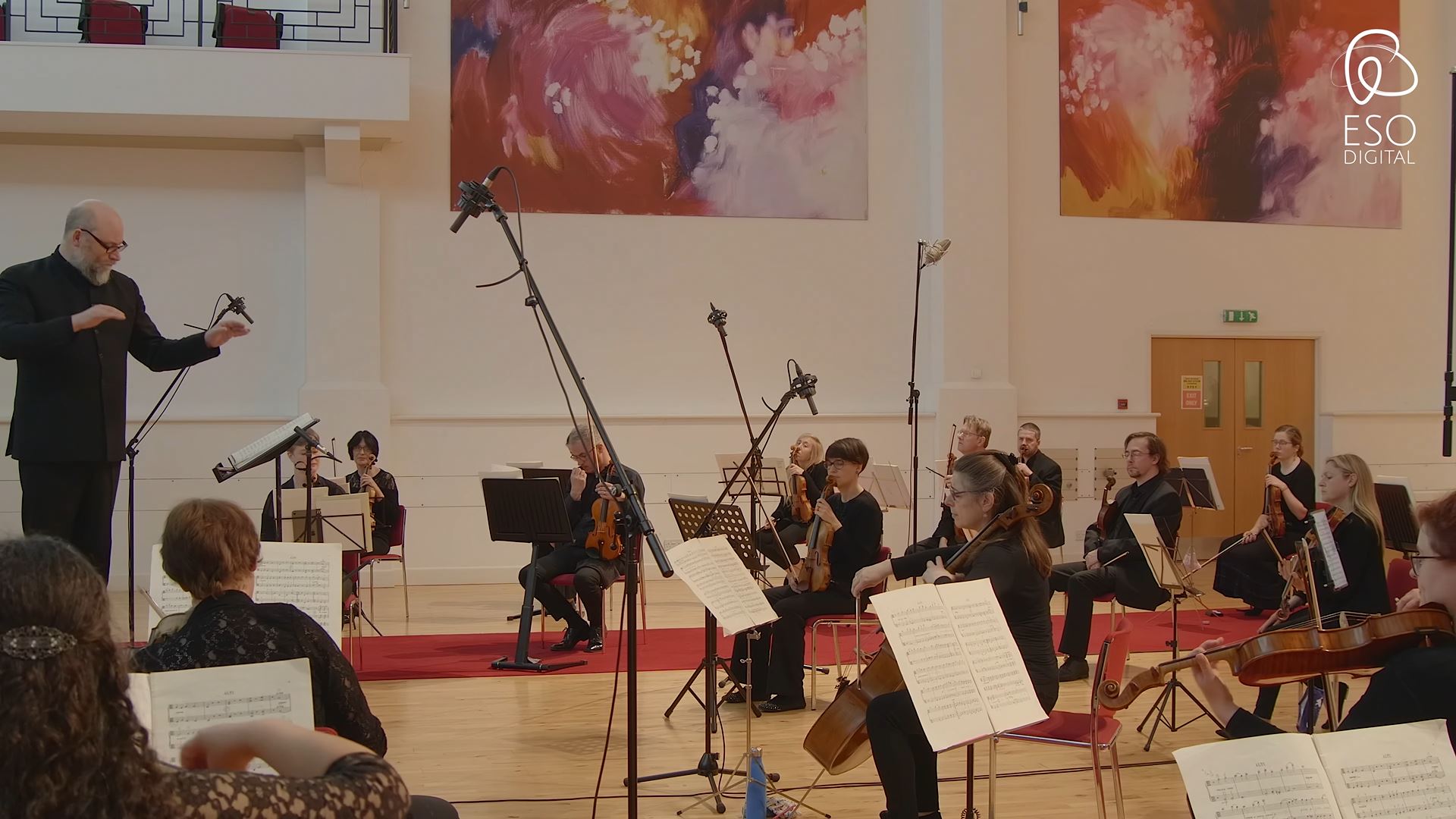
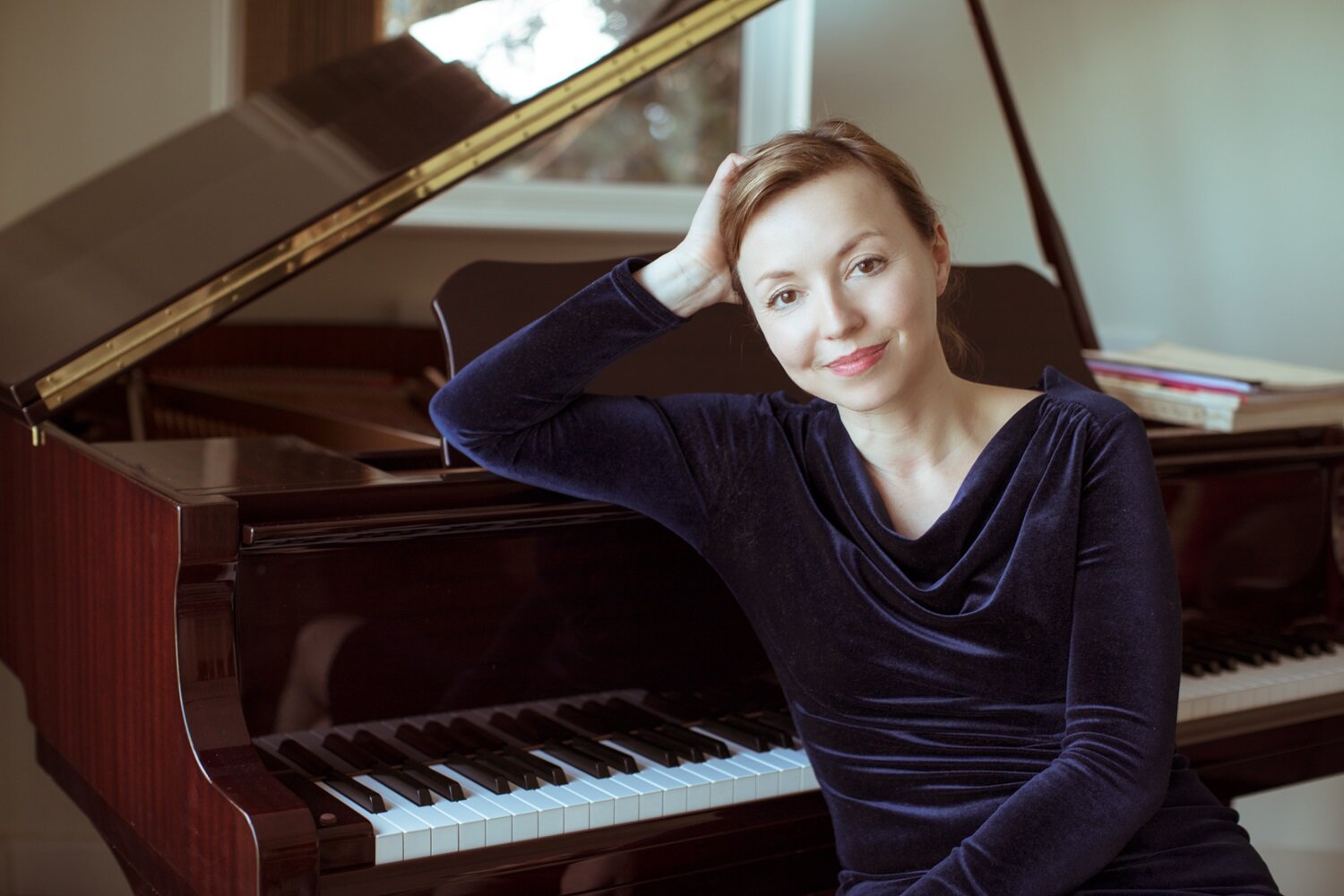
Soprano Katharine Dain and pianist Sam Armstrong are on the other side of a screen, talking to Arcana from the Netherlands – where Katharine lives, and where Sam stayed during lockdown. Their musical partnership blossomed in that time, yielding the intriguing collection Regards sur l’Infini, grouping songs by Messiaen, Delbos, Debussy, Dutilleux, and Saariaho. The sequel – and principal topic of conversation here – is their new recording Forget This Night, a carefully curated selection of songs by Lili Boulanger, Karol Szymanowski, and Grażyna Bacewicz on 7 Mountain Records. Headed by Boulanger’s special cycle Clairières dans le ciel (Clearings in the sky), its subject matter is very different.

“In some ways we were worried that the music was going to be too similar, very thoughtful and intense”, says Katharine, “which the first one also was. As we went along, we realised that no – thematically and musically, it’s very, very different. It is a continuation, we hope, but not anything directly related to the first. It’s all the kind of material that we gravitate to anyway, and of course it’s helpful to be validated in our choices the first time, to realise that people really do respond to them in the same way that we do if it’s presented thoughtfully and at the best level we’re able to give. For us we had already started to think about the next music we wanted to look at, before we knew the kind of reach our first album would have. Yeah. So this Lili Boulanger cycle was really the beginning of the second project, but it’s already something that you begin to think about when you’ve spent so long on one programme. Your brain immediately starts to wander, and both ours had started to do that!”

Given the intensity of the songs chosen, and their heady, emotional content, did the music take a toll on the performers? “The Boulanger cycle is particularly intense,” agrees Sam, “and it’s great to see Boulanger getting much more exposure in concerts and also recordings. With this cycle the emotional scope doesn’t fully reveal itself unless you hear all 13 songs together. The last song is devastating, and Katharine doesn’t always make it with dry eyes. It’s a really intense cycle.”

The fact we have any music at all from Lili Boulanger is remarkable, given her story of life and death from tuberculosis at the age of 24. “I think so too”, agrees Katherine. “Before we embarked on this project, I knew her name and a few pieces, but didn’t really know a lot of her music. I had been influenced, I realised in retrospect, by this idea of her as a fragile flower who died before she could really do anything significant. I couldn’t disagree more with that now that I do, but it took some real investigation of the music itself, of what turned out to be a major work. As Sam said, you don’t know it unless you go into it completely and find out what’s there. It was a real revelation, worth all the intensity and being drained after the performances!”

Throughout Clairières dans le ciel the singer needs an unusual amount of vocal control, with some long notes to master. Katharine laughs, modestly. “That’s very true! It took a long time until I felt I was typically integrated with what she asks. The original singer who premiered it was a tenor, and that gives it a different sound of course, but it’s not easy for a tenor as it’s for a high voice that could be a soprano or tenor. There is an amazing story that I find very touching, which is that when she wrote the piece it was the beginning of World War One. Normal performances weren’t really happening in France, and she was busy with the cycle, doing her best in her first year after winning the Prix de Rome composition prize. She wrote this major piece and had to do a private ‘try out’ of the premiere, where she sang all 13 songs herself and Nadia played the piano. That was the only time she ever heard or experienced her own song cycle live, when she sang it. I thought about that so much because the songs are so challenging to sing, they’re really tough and ask a lot of you. Yet somehow Lili, not a professional singer or even a performer, managed to do it in a home for a few friends as an unofficial premiere. Something about that inspires all of us – professional or not – to try to meet the challenges of these amazing songs!”

The challenges are by no means restricted to the singer, with the pianist battling some quasi-orchestral writing to evoke a whole range of colours. Armstrong smiles. “Towards the end of the cycle it really opens out in scale, and suddenly all these changes and fragments, and the breaking apart of everything to represent what’s happening emotionally give it a bigger scale than the standard song repertoire. It’s emotionally very intense, and a lot of the transitions in the music are directly related to the psychology of the text. They are difficult to navigate and you really have to think about you do that. The counterpoint is not simple, either!”

To complement the Boulanger’s cycle there are two more of her songs and two piano pieces, along with works by Szymanowski and Bacewicz. As Polish composers, their language is a marked but welcome contrast to the French songs. “I’m so glad, if that’s how it feels to you”, says Katharine warmly. “That’s certainly how it felt to me in preparing it. Polish is a really tough language in which to sing. I had done a bit of Szymanowski in the past but not a lot, so it was a big hill to climb, but it also created different chapters in terms of my ability to assimilate the music. It really directly affects how you think about the score, the way the vocal line unfolds. Once you learn about the way sounds travel in Polish through the mouth – vowels and consonants – it’s very different from other languages, but it has the same kind of specificity as French. They both have to be really precise, the position in the mouth, the position of each of the parts of the mouth – the tongue, how the lips are shaped, what the space inside is like – all of these things are super specific, and I had great help with that. Once I began to get a handle on the Polish, not that I am singing it like a native speaker would, I began to understand the music better too. That allowed me to understand the emotional temperature of the songs as a result, so it really was an important part of the preparation. If it feels like differentiated sections on the programme then I’m very glad because that was something we were aiming for.”

The songs are an area of Szymanowski’s output that feel ‘off limits’ in recent times. “I find it so strange”, says Katharine, “as his piano and violin pieces are a lot better known, and his opera King Roger has been done in London not that long ago. It’s a stunning piece, and I think that’s how you got to know it?”, she says, turning to Sam. “Yes”, he confirms. “I’ve done the Myths for violin and piano but that really reignited my imagination for his sound world. It’s really special. “The songs are quite hard to programme though”, says Katharine. “I’ve known songs of Szymanowski for a long time, and I’ve really loved them – but I’ve sung one complete cycle of his which is the Songs of The Infatuated Muezzin, a particularly beautiful piece. Apart from that, I have never done a complete song cycle of his. When we were thinking about what to put on this disc, we loved the music and knew it would be a great pair with Boulanger, but then which cycle or chunks of songs to choose? We figured out that’s probably why we don’t hear the songs more often. Every cycle has a big challenge, a big thematic difficulty, not all of the songs are of equally high quality, or dramatically it doesn’t create the kind of story we look for in song cycles. So we decided what we would love to do is think about the developing theme of the program, which is how do we cope with things that vanish or things that disappear, and pick and choose with that?

Their approach paid dividends. “The whole world of Szymanowski opened up to us in a beautiful way and suddenly many things became possible that are not possible when thinking of his own groupings of songs. I would hope more people can start to think outside the box of just the groupings, the cycles, the opus numbers, because it’s such a rich and beautiful repertoire and you don’t have to think of it that way to make a nice programme.”

It is an easy trap to fall into with songs, thinking they should only be sung in the groups in which they were published. Is it the case of some composers randomly putting songs together but all of them being published at the same time? “That’s exactly it”, confirms Katharine, “and this is the funny thing about the song cycle, this term that we’ve come to associate with anything from 3 to 24, any number of songs. It meant different things at different times, and to different composers. There are some famous 19th century examples of pieces that were conceived complete, but for the most part they were mostly songs published at the same time for a commercial reason, which is that someone could take home a book of songs and get to know them. With Szymanowski he was such a prolific song composer, and some of the groups have a real cohesion and a reason for them being together. We found the songs don’t necessarily suffer if you sample them out of context and are stronger as a result than if you just try to stick to an opus number. For us it was an eye=-opening approach.”

The songs of Bacewicz were an unexpected find. “That was a real discovery. I found out that Bacewicz is a figure known in orchestral circles and in chamber music circles, because she was a violinist and wrote beautiful music for strings. A lot of string players and pianists I know had played her or a few of her pieces. Singers know nothing about her, because she didn’t write very much vocal music at all. She only has 11 songs, I think – a very small number. They were only recorded for the first time as a collection of her complete songs for voice and piano in the year before our recording, so it was luck that I was able to actually hear them.”

There is an intriguing historical context, too, meaning her music fits the collection hand in glove. “I had come across her name, and liked her string music once I started to listen to it, and I found this interesting biographical continuity, because Lili Boulanger and Szymanowski lived at the same time. They didn’t meet each other but they were inspired by many of the same things, writing music that was fearless, imaginative, colourful and with no ceiling on the kind of emotional intensity. There was something really common between them, but then we were hoping to find some sort of cooler composer in terms of the emotional temperature of the music, to mop up all that intensity but still be in the same world. We thought for a while about Lutoslawski, and there are some beautiful ones by him that are more known, but eventually I just bumped into Bacewicz, I came across her almost by accident. A friend mentioned the name of this composer and I said, “Wait, who’s that? That sounds Polish?” “Well, yes, she was Polish.” “Wait, she?! Who is this?!” So that that was how it began.”

Her fascination with the composer deepened. “Once I started looking into it, and found out that the songs had just been recorded, I thought they were fantastic. It turns out she was a student of Nadia Boulanger in the 1930s, so there’s something a little bit different in her influence. She was the generation after Szymanowski, so would have known Szymanowski she was studying at Warsaw when he was the head of the Conservatory. There seemed to be a continuation of the family of music that was coming as a result of all Szymanowski’s innovations and from the Boulanger sisters, but by then she was really doing her own thing. I found it very interesting, very fresh, and the music very beautiful. Although it’s also intense, it does have a different way of interacting with the emotions of the texts, than Szymanowski or Boulanger.”

One poem, Parting by Rabindranath Tagore, appears on the album in contrasting settings by Szymanowski (in German) and Bacewicz (Polish). One wonders when they encountered it in their lives and how that affected them? “I find it so interesting”, says Katharine. “In that one poem that is on the album twice, although in different languages. Szymanowski’s approach is so melancholy and so hopeless, and Bacewicz has no fear in expressing anger. I’ve thought about the pressure on women, and women composers, and then women composers of songs, what kinds of pressure they have to create things that are just very beautiful. For a long time I think that’s what people expected women to produce – songs in a domestic form, rather than a big orchestral form met for the concert hall, things that were beautiful and pleasant to listen to. Bacewicz really broke all those moulds, writing music that is rhythmic and super spiky. That setting of that song I found it very cool that the setting was completely different than Szymanowski’s and was very angry. I really liked that about it.”

Armstrong’s approach to Bacewicz’s music was similarly fresh. “Her music was new to me. Interestingly I was teaching a class of students about the Piano Sonata no.2, which is quite beautiful, and has been played quite a lot in Eastern Europe. Unfortunately there is not much music for piano by Lili Boulanger, though two of her three pieces are on the album – and then with Szymanowski I did some of the chamber music actually. Szymanowski is more familiar to me by ear than stylistically, he is very specific but also quite accessible. With Boulanger the influences are obvious in a sense, certainly Wagner and Fauré I hear in there, but the voice is really her own, especially in the song cycle, where the forms are quite unconventional. It is a question of finding your way in and the prose, the essence of the language. As Katharine was saying, in Bacewicz it’s much more paired down and concentrated, in a way that I think is more expressionist than Szymanowski.”

Dain and Armstrong worked in each other’s company through lockdown, where their creative relationship was cemented – enough for them to have plans for further collaborations. “We always have far more ideas than we can ever implement or use!” laughs Katharine. “Coming up with interesting ideas and music that I love and want to explore further is never the challenge. With this project, because we’re not Covid-locked down anymore, we’ve spent as much time on this as we did on the previous disc, probably more. The question is that in the end it’s going to require a huge investment, so what is going to light such a fire under you that you’re willing to put in the amount of time that we want to? Not everybody approaches recording in the same way, but what’s been so rewarding for us has been giving ourselves as much time as we can until the answers arrive, and you can’t force them. The Boulanger cycle we started by performing live, and did one recital, and it blew our minds how amazing it was – but that only came by performing it. We realised in rehearsal that this is a major piece, more than we realised, but only in performance did it really hit us what an impact it can have. That was already more than two years ago, since when we’ve performed it as much as we could, and every time we do we have to go back and spend another few days or a week revisiting it, uncovering new things, and trying to set aside our old ways of coping with the score’s challenges in order to get to a truer version each time, a version that’s more honest. It’s really hard but it’s also the biggest pleasure of the work.”

Looking forward, “I have an idea – one at the top of my mind – and many others lining up behind that idea! We just have to see as we begin to try music together, and that’ll be the next step. We’re always doing that for fun, thinking about future recital programmes, whether they become recording products or not, and finding out what really makes us so passionate that we have to spend the time and we have to do all that discovery.”

Turning to live performance, Katharine has Finzi’s Dies natalis on her concert schedule in the Netherlands, where they both live. Is the piece a curiosity for Dutch audiences? “It’s my first time performing it, and it’s so amazing, but Finzi is really not very well represented here. I would say in general English language – American and British – is not performed so often. I really jumped at the chance when this opportunity came along. It was going to be a Christmas concert, and the Netherlands Chamber Orchestra – a wonderful orchestra – had their programming already, but when they proposed this and I had to do it! I never get to do Finzi unless it’s on recital, and I choose it for fun with Vaughan Williams or English composers in the same period. Mostly it’s me having to advocate for them, so that was very exciting!”

Is their hope for the new album a similar aim, to bring in new listeners – as well as retaining those who enjoyed the first album? “Both of those are equally important to us”, she says, “and whether we’re thinking about people who are inside or outside of the experience of listening to art song albums already. There’s a very niche market for people who already know what they’re getting when they see this, even within people who like song. We’ve discovered that these are three composers that – although the combination might be intriguing – people really have no idea what they’re going to hear. There are several simultaneous goals. One is that for people who love song, but don’t know that there are good songs by these people, that they will listen and realise that the song repertoire is fantastic. The Boulanger is an overlooked masterpiece, and people don’t know that yet because it’s not heard very often. But then we felt equally passionately about Szymanowski and his songs. If you think you love hearing song recitals, but haven’t heard any of these composers represented on a song recital yet, you can listen on a recording at home and realise there’s really good stuff here. Let’s let’s try to get into performance!”

They have clearly considered their output, for Armstrong nods in agreement as Katharine talks. “In the end”, she says, “we also didn’t want to make something that only would be of cerebral specialist appeal. We hoped to make something that if you know nothing about any of this music at all, you could still listen from beginning to end if you chose, to feel an emotional shape and hear very beautiful songs in a very thoughtfully laid out sequence – the same way you would for anything else, like pop music. That’s why we spend all this time digging up music that people haven’t heard yet, because it turns out to be super emotionally powerful and direct and beautiful.”

She cites a recent event supporting their approach. “Last week we did a release concert for the album, and someone in the audience was a pop musician I know who had seen how passionate I was about this project, though this person had absolutely no experience listening to classical songs. They came to the show with an open mind, and they write pop albums, concept albums, single songs. At the end of the show, they loved it – and said “It’s the same as what I do, they’re songs! They each have a feeling, or series of feelings, and they go on a journey from start to end. There’s no difference in what we do except that the style is different!” To me that felt like such a happy validation, and the work that we do to build bridges. This is actually just music that you haven’t heard yet, but anyone can relate to. We feel equally strongly about these two goals for the album.”

The example adds fuel to the theory that Schubert was, in fact, one of the very first writers of the early pop song. “I completely agree!” says Katharine, “and I didn’t instantly like song when I heard it on recordings. When I was 19 years old and encountered Schubert I had no experience with it before. I liked pop songs and choir music, and that was how I got into singing, not through classical solo singing at all. When I first encountered it I found it strange and stylized, and a bit off putting, but when I heard it live and realised that it’s just about how someone is putting across a story in a different way, I found the music is really beautiful once you get a chance to experience that more easily.” How reassuring – to hear a singer’s own story behind an initial struggle to love song, for this is an area of classical music receiving less column inches than most. The next part of the process is for you, the reader, to get out there and start listening – for the same transformative experience can most definitely be yours.

Katharine Dain and Sam Armstrong present their new album Forget This Album on 7 Mountain Records. You can order the album at the 7 Mountain Records website, or listen below:

Talking Heads: Kenneth Woods – Ten Years After…

Just a decade after he became conductor of the English Symphony Orchestra, Kenneth Woods looks back on his varied career in the US and UK, then considers what might be coming next.

interview by Richard Whitehouse

Autumn customarily sees the start of a new concert season for UK orchestras – except when, of course, the requisite financial support is not forthcoming. That could easily have been the case for the English Symphony Orchestra were it not for its ambitious schedule, as detailed in the document Music for Humans, which reflects the convictions and the vision of several persons who work for and as part of this ensemble – notably its chief executive officer Seb Lovell-Huckle and, above all, its principal conductor and artistic director Kenneth Woods.

With his extensive discography and frequent appearances online or on radio, Woods is not exactly a ‘best kept secret’ among British or – given he hails from the USA – British-based musicians, but his contribution to British musical life during the past two decades is a very substantial one and worth reflecting on for any consideration of music-making in the UK during that period. Speaking to him recently in Worcester, where the ESO has its HQ and gives many of its concerts, brought some of these achievements into closer perspective.

A native of Madison (capital of the state of Wisconsin and which, situated adjacent to five lakes with various historic landmarks including several buildings designed by Frank Lloyd Wright, surely ranks among the most visually striking cities of America’s upper mid-west), Woods did his early academic training here and at Indiana University before doctoral studies at the University of Cincinnati. Here he studied conducting at the College-Conservatory of Music and assisted Jesús López Cobos, music director of the Cincinnati Symphony Orchestra.

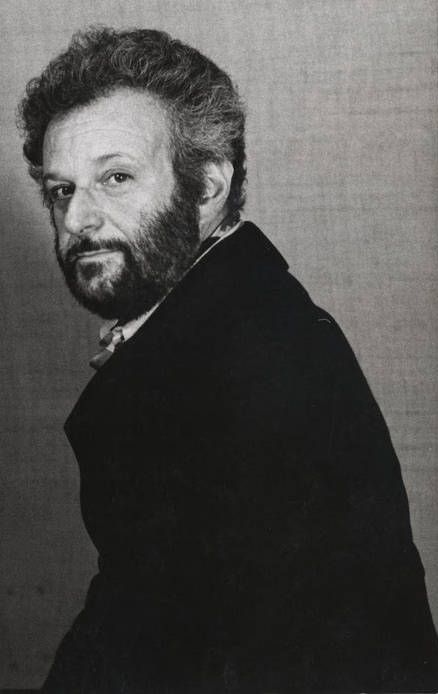
Subsequent mentors included Leonard Slatkin, David Zinman and Jorma Panula, but the most decisive influence was Gerhard Samuel (above) who, in 21 seasons with the Cincinnati Philharmonia, programmed a wide range of unfamiliar and contemporary works. Those who were present are unlikely to forget their London visit in 1989 featuring the UK premiere of the Symphony by Hans Rott, while his later recordings include Larry Austin’s realization of Ives’s Universe Symphony and the entertaining ‘Symphony of 1825’ allegedly by Schubert but now known   to be a publisher’s concoction – on both of which, Woods features in the cello section. Also   a composer, with a distinctly though never inflexibly contemporary idiom, Samuel remains    a totemic musical figure whose undoubted significance Woods continues to acknowledge.

‘‘Working with Gerhard was important not just in terms of honing my conducting technique, but also in helping me to understand that the responsibility of a conductor give audiences a chance to hear works from outside the canon, whether new works or lost works of the past. His long experience of bringing to life pieces such as Hans Rott’s Symphony and Mahler’s orchestration of Beethoven’s Ninth showed me the positive impact a conductor can make simply by giving an unknown work a chance to be heard rather than simply written about.”

The latter was a challenge Woods took on with directorships of the Grande Ronde Symphony and Oregon East Symphony orchestras at the end of the last century then into the new one. During the 2000’s he also maintained an active collaboration as Principal Guest Conductor with the Rose City Chamber Orchestra in Portland. Guest engagements included the BBC National Orchestra of Wales, Northern Sinfonia and the State of Mexico Symphony (a 2004 account of the first movement from Prokofiev’s Fifth Symphony can be heard on YouTube below). He continued (and continues) to appear as a cellist, notably as part of the string trio Ensemble Epomeo with whom he worked widely in the decade from 2008 and made several recordings.

‘‘Playing with Epomeo was a great opportunity to explore a repertoire which is much more extensive than often imagined, and to extend that repertoire through timely revivals and new commissions. It also enabled us to approach the issue of music education a slightly different way, the Auricolae album bringing new music to younger listeners via the retelling of often familiar stories and commissioning composers whose music they’ll more than likely enjoy when they’ve heard it. Any regret at disbanding was tempered by the knowledge of what we achieved over that decade, and what we all learned from that intensity of collaboration with one another. I’d hope we can be proud of what we’ve contributed to the string trio medium’’.

Having relocated to the UK in the mid-2000s and pursued a varied freelance career, Woods’s major break came when he was appointed principal guest conductor of the Orchestra of the Swan in 2009. The following four years brought several notable projects, most significantly a first recorded cycle of the symphonies by Hans Gál. Although he lived out his long life as a respected pedagogue in Edinburgh, Gál never regained the eminence he enjoyed in Germany and Austria prior to the Third Reich. Both as cellist and conductor, Woods has done as much as any musician to bring about fuller reassessment of a composer who not merely continued the Austro-German lineage but took this in often unexpected and intriguing directions. Even the cycle of symphonies had come about through an unlikely succession of circumstances.

‘‘Having conducted the first recordings of Gál’s orchestral music [Violin Concerto, Violin Concertino and Triptych for Orchestra] with the Northern Sinfonia, our producer Simon Fox-Gál [grandson of the composer] and I were excited to do the symphonies together. Thomas Zehetmair and the Northern Sinfonia had already recorded the first two for Avie, so Simon thought it would be diplomatic for me to start with the Third and Fourth to avoid any direct competition. It was my dear friend Melanne Mueller [Managing Director of Avie] and her husband Simon Foster [Avie’s co-founder] who suggested before we’d recorded a note that we announce this project as a complete cycle. It was a big risk as we didn’t have funding in place, but things don’t happen in this business unless you decide to make them happen. I was keen from the start to couple each of these symphonies with one by Schumann, as this gave a relevant context for listeners to approach Gál while allowing me to record interpretations of works that I’d often conducted and about which I felt I had something worthwhile to say’’.

The critical and popular reaction to these releases certainly justified the confidence placed in Woods by label and producer. The resulting cycle, part of the Avie label’s extensive coverage of Gál’s output, was later reissued as a standalone double-set but the originals remain of value for underlining the continuity of thinking across centuries between these composers and their aesthetic connections. Was Woods at all surprised that these recordings failed to translate into public performances of the Gál symphonies, or that other conductors failed to take them up?

‘‘More disappointed than surprised. Much unfamiliar music remains so, not through its lack of appeal for players or listeners but because orchestra managers and promoters simply won’t take any risk – preferring to schedule what they know will attract an audience, without any real thought as to expanding a repertoire that has become more restricted in terms of Baroque or Classical music through notions of authenticity, and in contemporary music because of the failure to commission more substantial pieces as might occupy the second half of a concert’’.

It was just such thinking that Woods was able to put into practice with the English Symphony Orchestra. Founded by William Boughton in 1978 as the English String Orchestra and based in Malvern, it enjoyed a successful spell in the concert hall and recording studio – promoting a wide range of music with an emphasis on British music of the early and mid-20th century. Having stood down in 2006, Boughton was replaced by a sadly ailing Vernon Handley – his death two years later leaving the orchestra in a period of uncertainty until 2013, when Woods became director of its Malvern concert series – becoming principal conductor the following year and its artistic director in 2016. From the outset, he was keen to make commissioning and recording of new pieces central to the ESO’s activities. Its first such undertaking was the 2014 violin concerto Wall of Water by Deborah Pritchard, which also saw the orchestra renew its long-term association with the Nimbus label, but Woods was already thinking in terms of a more ambitious strategy which duly resulted in the ESO’s 21st Century Symphony Project.

‘‘Three events led me to conceive of this project. First, early on in my conducting studies, my experience of learning Brahms’s First Symphony when I found myself imagining the amazing feeling those present at the premiere in 1876 must have had in witnessing a seminal addition to the repertoire. Why shouldn’t it be possible to enjoy a similar experience today? Second, performing Philip Sawyers’s Second Symphony with ’the Swan in 2013 when the musicians, listeners and I all experienced something akin to those at the premiere of the Brahms. Third, having commissioned Philip’s Third Symphony when I joined ESO, I realised that it needn’t be a one-off. My new post with the ESO was the catalyst so here we are over a decade later – the project having come through a pandemic and associated lockdowns, with six symphonies commissioned and premiered, and more to follow as we start on this project’s second phase’’.

Indeed, what started out as the commissioning, performing and recording of nine symphonies in as many years has evolved into a process featuring composers new to and already involved with the project. Following on from Sawyers’s Third, it has seen the premieres and recordings of David Matthews’s Ninth, Matthew Taylor’s Fifth, Steve Elcock’s Eighth, Adrian Williams’s First and Robert Saxton’s Scenes from the Epic of Gilgamesh. Six very different works from six very different composers, all confirming the validity of the symphony in the present day.

Alongside this project, Woods revived the ESO’s Composer-in-Association chair – beginning with John McCabe then, after his untimely death in 2015, the post was re-named in McCabe’s memory and has since been occupied by Philip Sawyers (now Composer Laureate), Adrian Williams, David Matthews and Steve Elcock. Again, the exact nature of this role depends on  the incumbent but Woods is keen these composers represent who the ESO is and what it does.

‘‘It’s not just a matter of commissioning then premiering their new works, but of having their active involvement at the time of composition and rehearsal; of reviving some of their earlier pieces, and maybe getting their input as to how we might schedule their music in the context of an overall concert. Hopefully it also gives audiences the chance to become more familiar with the composer as a ‘real person’ instead of merely a name in the programme. I feel sure that the quality of what these composers have been writing for us is its own justification’’.

In addition to overseeing the ESO’s educational and social activities (not least the ESO Youth Academy with its extensive schedule of courses at beginner, intermediate or advanced levels, performances by ESO musicians at residential care-homes and ‘relaxed’ concerts of a more informal nature), Woods has a longstanding blog A View from the Podium that tackles issues pertinent to the music-world from a wholly non-partisan angle; unafraid to stir controversy on topics of wider relevance than is often evident from their coverage in the mainstream media.

Since 2018 Woods has been in charge of the Elgar Festival – a two-day series of concerts and recitals with related events held on the weekend nearest to the composer’s birthday (June 2nd), while making full use of the various places and venues associated with Elgar’s home county.

‘‘Given the region in which most of our concerts take place, it made sense to revive the Elgar Festival and perform his music at venues associated with his life and work in the region. It’s also been a welcome opportunity to include music by recent and contemporary composers who come audibly within the Elgar lineage, and I’m aiming with next year’s festival to try a reordering of the conventional concert programme to feature familiar pieces by Elgar next to others that might spring a few surprises, but which I hope the audience will enjoy hearing’’.

It would be remiss not to mention the Colorado MaherFest which Woods took over from long -serving founder Robert Olson in 2016, and whose remit he has successfully expanded while remaining true to the spirit of an event endorsed by the International Gustav Mahler Society.

‘‘Taking on directorship of MahlerFest after Robert was a daunting prospect given how many years he had been at its helm and the performance tradition he’d established during that time. Of course, I have my own convictions as to Mahler interpretation, and our performances have been able to utilize recent developments in scholarship such as the new critical edition of the First Symphony [published by Breitkopf and Härtel] we gave in 2019. Here again, I was keen to expand the context in which this music was performed – both in terms of medium, Mahler having left little else apart from symphonies or songs, and in other composers heard here. We think of programming in terms of celebrating Mahler’s influences such as Beethoven, Wagner and Schumann. Also we explore his artistic and creative ties to contemporaries in a variety of media – whether artists like Klimt and Roller, writers, philosophers or, of course, composers. We’ve performed contemporaries like Robert Kahn and Zemlinsky, and last year there was Alfredo Casella [the First Cello Sonata], who was an active supporter of Mahler’s music in Italy when it was all but unknown there.”

The festival also aims to look forward. “Finally, we try hard to raise awareness of the music of composers who were influenced by Mahler. This includes modernists such as Schoenberg, Berg and Webern, together with more tonal composers such as Krenek, Schulhoff and Weill. This opens the door to the music of those composers who were either murdered or forced into exile by the Nazis such as Krása, Gál or Ullmann; not to mention such as Korngold, Waxman and Steiner, who founded the art of film scoring as we understand it today. This can only lead to a wider appreciation of Mahler’s legacy and hopefully encourage others to seek out music they would otherwise not have performed or heard, thereby enriching their own experience’’.

A more recent move has been making the final concerts of MahlerFest available on CD or for download, enhancing a discography that makes Woods among the most recorded of present-day conductors. Along with releases for the Avie, Nimbus, Signum, Somm and Toccata labels, plans are well advanced for the ESO’s own label – drawing on a wealth of material recorded at the Wyastone studios in Herefordshire during the pandemic and its aftermath, besides such as the complete symphonies of Sibelius. Nos. 5, 6 and Tapiola are planned as the first release.

There may be lots to be proud of in terms of achievement, but Woods is hardly one to rest on his laurels, not least because the future of those projects here outlined – indeed, even the very future of the ESO is not something that could, or should, be taken for granted. A full schedule of events is now in place until next spring, with much in the pipeline after that as long as the finances are there to make it happen. Given that his negotiating skills are no less adept than his conducting skills, Woods is quietly optimistic that things will come together as intended.

‘‘It’s not always been an easy process in securing funds to make possible what we’ve wanted to commission and perform, but then nobody working in this field in the UK expects to have it easy, so I’m just pleased that we’ve accomplished as much as we have so far. There’s much more that I want to achieve with the ESO, so we’ll have to keep finding ways to make things happen. What I do know is that there are composers who have much to give an audience, and that these listeners are more than willing to give this music a try given the right conditions’’.

Such things are vital, not least at a time when the value of what might reasonably be called the Western Cultural Tradition is being questioned as never before. This being the case, and while accepting that ‘the situation’ is likely to get worse before getting better, can one look forward to a further 10 years of the English Symphony Orchestra with Woods at the helm? ‘‘It might be best to ask me that in 10 years’ time, but I’d hope the answer would be ‘yes’’’.

Talking Heads: Anna Thorvaldsdottir

by Ben Hogwood

Arcana is very fortunate to have time with one of the finest composers of this generation, Icelandic creator Anna Thorvaldsdottir. With two albums of her new music just released, she has also been enjoying elevated status as a featured composer of the Aldeburgh Festival. We began by talking about her formative experiences of East Anglia’s premier music event.

“I was at the Aldeburgh Festival last year”, she begins, “and the City of Birmingham Symphony Orchestra performed my piece Catamorphosis then. Aldeburgh is such a lovely place, so beautiful, and it has a special aura. It is so focus but also beautifully relaxed. Everybody is there to enjoy music and art, and it’s so special.” The aura of Benjamin Britten, the festival’s founding father, is at every turn, but in a forward thinking way. “It’s beautiful how things grow. Of course he planted all the seeds, and that’s apparent everywhere, but it also feels so open as an event.”

Britten, of course, portrayed his home surroundings of Aldeburgh through incredibly vivid music, music that speaks of a time and place as powerfully as any British music. Is that something Anna is conscious of reflecting with her home country of Iceland? “I have never approached my music from describing nature, or natural phenomena. For me it’s more about the energy, and when I am inspired by nature it’s much more about the energy of nature and the construction – how you can sense details and perspective between them. Of course nature is all around us, and while I come from Iceland – my roots are there – I lived for a while in California, and now here. There are such different atmospheres in the different types of nature, and that’s very inspiring. For myself it has never been about describing that in music, but allowing for the inspiration to seep in when there are things I find musically interesting in the in the atmosphere and the energies.”

She is not aware of having changed her approach in California. “Not so that I know! I think these types of things are perhaps easier to analyse a bit later for oneself, but there are different energies. Also, when I was in California, I was thinking a lot about Iceland because I wasn’t there. I had never lived away from Iceland before, so it was a different kind of energy. I didn’t recognise that I wrote differently but then again you are always evolving and growing, and while wherever you are plays a big part in that growth, it’s hard to identify for yourself specifically.”

The reactions to Catamorphosis have been very strong. “It’s been really wonderful. The circumstances under which that piece was premiered were very unique, because the Berlin Philharmonic managed to have the world premiere at a time where everything was on lockdown, and they could do that over their digital concert hall, in front of an empty hall. That is a very apocalyptic aura that comes with that, and it suited the piece in very strange way. I would have never chosen this of course, but it was a very special aura, even though I was not able to be there! I had so many long talks with Kirill Petrenko, the conductor. I have been really pleased with the reception since then, and now it has now been performed in many concerts with an audience. It’s been a special ride with that piece, for sure!”

The orchestra in Catamorphosis feels like a very big engine, but the light can change according to Thorvaldsdottir’s scoring. “I really enjoy working with different types of energies in my music, and I really spend a lot of time on structuring a piece, getting to know internally how the piece is going to move from one material to the next, and from one atmosphere to the next. In Catamorphosis these polar shifts, that sometimes merge and sometimes separate, is what really drives the energy of the whole piece, and pulsates these different energies and atmospheres throughout the whole structure of the piece. I do this quite a lot in my music, but in this piece it becomes very dramatic in a way, these shifts.”

Talk turns to another new piece, Rituals, written for the Danish String Quartet – which required a different approach. “I do have a passion for writing for larger ensembles and orchestras, but I also have written quite a lot of chamber music. It’s a different approach, a different aura that you embrace, but then again with a string quartet, you can decide whether you’re going to treat it as a chamber ensemble or a bigger string ensemble. In Rituals, I’m really focusing on different kinds of materials. It is written in eleven short parts, but those parts together form one whole. The individual parts focus on their own materials and atmosphere. It’s good to have both, to write chamber music and orchestral music, and I really enjoy writing pieces at the same time in different sizes.”

Like Mahler, Thorvaldsdottir can combine the two forces, possessing the ability to write chamber music within a very large orchestral piece, drawing the ear to the centre of her compositions. “I’m very fascinated with perspective in music”, she says, “and to draw attention to different places at different times, so that you can zoom in and out to get the overall picture and then smaller details of that picture. That’s something I really enjoyed doing.”

Anna played cello as part of her musical education. “I studied a few instruments when I was growing up but I focused a lot on the cello. After I became a teenager I got to know more contemporary music, because when you are studying an instrument, you’re mostly playing older music. When I got to know more and more contemporary music, and I had been always making up songs, I really opened up to all the possibilities that you can work with in music. I started to write down music when I was around 19, and it took over my life – something I couldn’t be without doing. I wrote a lot of pieces before I started studying! Then I studied at the Iceland Academy of the Arts where I had to wait until that department was starting. When I graduated with that degree I, while studying the cello, I went to California and did my masters and Phd there.”

Even then, Anna had a great conviction about her work. “I always knew the reason I was making music – that is I had this open curiosity thirst to create music. I had wonderful teachers who really knew the freedom that I needed, and we had wonderful conversations and discussions. At UCSD I used to see all of the teachers on regular basis because it’s so nice to have conversations with these wonderful composers. As an art student so I was very fortunate to have wonderful people around me, and also in Iceland. All my teachers recognised the space I needed to create my music, which was very special.”

Casting her gaze back a little further, Thorvaldsdottir considers the impact on Icelandic classical music of Jon Leifs, often seen as the founding father in the country. “The history of this sort of Icelandic music is very young”, she considers. Jón Leifs is one of the first Icelandic composers and he was such a big figure. He went to Germany to study and had a very big influence on the music life in Iceland, and the composers coming through at the same time. He’s had a monumental influence, but he had such huge ideas that it was impossible to perform some of his music in his lifetime. Those works have been later performed, but what a great figure to have had in Icelandic music. He did study Western music of course, but for Iceland he was one of the very first composers, and that’s big.”

Does Icelandic music reflect the country from which it comes – young, energetic, in touch with the elements? “It’s really hard when you do come from there. I haven’t lived in Iceland for a while now but my roots there are very strong, and I go back a lot. I understand what you mean, but it’s hard for me to really recognise it in the same way that people can who are not from there. You grow up and live away from Iceland, and you understand the space that is there in a different way than you do when you live there. There is so much space for the individual as well. As I said, we have a young music tradition, and we learn and study the history of music. Being from a place that’s younger, in that sense, has a different kind of freedom. There are great music schools that can play a big part in just how big the scene can actually be, because it’s not a big population but there are so many musicians! So I think it’s a combination of many, many different things.”

The surroundings are key, too. “The fact that untouched nature is so close, wherever you are, is big – it takes half an hour and you are in the middle of a lava field! I grew up surrounded by the ocean and mountains, and that was normal to me. People say they can hear certain things in the music coming from Iceland, but we have very different musical forms – pop music, too. That has the same freedom when you are working outside, in a way that you cannot in the middle of a big city. There is a certain sense of freedom and allowing the individual to be open.”

Talk moves on to Anna’s piece Metacosmos, due for performance at Aldeburgh by the BBC Philharmonic Orchestra and conductor Rumon Gamba soon after we speak. “It was written in 2017, and it’s a piece that orbits a similar aura I work with a lot in my orchestral music. It’s a 13-14 minute-long piece, shorter than Catamorphosis, It’s harder for me to describe, but again it lives in this border between darker energy and brighter energy and this pulling sense of time. The overall inspiration initially was this force that moves between textural material, clusters of harmonies, and very lyrical passages.” She pauses. “It’s hard to describe your own music!”

Writing music is a continuous process and passion for Anna. “Yes, always. I recently had the premiere with the Danish String Quartet, and I handed in another piece that will be premiered in May, for Yeah. Yeah. recently had the premiere with a text request that and I, I handed in another piece that will be premiered in May, which is for Claire Chase in Carnegie Hall. It’s called Density 2036: part x, and it’s a 50-minute long piece, for the whole concert. I am also working on an installation for an orchestra, I have a few pieces lined up.”

Perhaps inevitably, she is approached by TV and film companies for music. “I am, but I haven’t really gone into that medium. It’s a very different way of working for films, and it’s not that I’m closed – I’m open to discussing different projects, but my schedule is planned very far ahead. Yeah. I do get approached but haven’t gone into the medium yet.”

Whichever way she goes, we can be certain of one thing – Anna Thorvaldsdottir’s musical progression will be one to keep a very close eye on. Hers is a talent to nurture in the future, for sure!

Anna Thorvaldsdottir’s album ARCHORA / AIŌN is available on Sono Luminus now – and you can listen below:

Talking Heads: Elena Langer

The composer talks about her new work for the London Philharmonic Orchestra, a revival of her opera Four Sisters and how the Russian-born, UK-based composer channels her feelings on the conflict in Ukraine.

Interviewed by Ben Hogwood

Arcana is in conversation with composer Elena Langer. Born in Russia but moving to study in this country two decades ago, she is full of anticipation at the weekend she has coming up. On Saturday 18 March the London Philharmonic Chorus and Orchestra, together with soloist Kristina Blaumane, will give the first performance of The Dong With The Luminous Nose, a major new piece for the forces.

Exercise is uppermost in Langer’s mind when we are connected to our call, however. “I’m rehearsing with the chorus tonight”, she says, “and after our call, I’m going to have a swim. I love cold water swimming, and I go to Hampstead Heath, where there is a well-known ladies’ pool.” Given the temperature on the day we talk is a little above freezing, this is a brave move. “Yes, it’s cold – but it will be a quick swim, and it gives you a kick for the rest of the day. It means I will be nice and well-behaved with the chorus!”

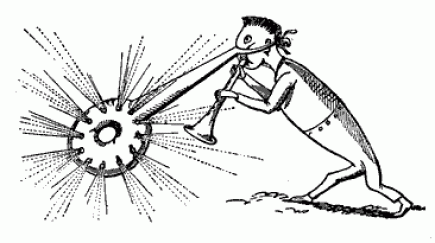
As you will have gathered, Elena has a healthy sense of humour, and a zest for life too. The primary reason for our conversation is to talk about a major new choral piece receiving its world premiere in the Royal Festival Hall soon. The Dong With The Luminous Nose is a setting of a nonsense poem by Edward Lear (illustrated below), though as we quickly establish it is a work of several layers. “It’s not nonsense as such, it is a love story”, she explains. “The Dong is broken hearted, and went mad – but it’s told in the right way.”

She recalls her first encounter with the poem, “maybe about 10 years ago. A journalist friend introduced me to it, and I really liked it – and then forgot about it. Then at the right time I remembered, because when I was asked to write this piece for chorus and orchestra I found it difficult to find the right text. Often composers set religious texts that don’t resonate, and I love setting poems, but poems for the chorus quite often feel wrong – the words never quite come across as they should. With The Dong it is a poem, but it’s a little opera for chorus. It tells a story, and you follow it, and it felt like the perfect vehicle for the task.”

The opening lines of The Dong set a telling scene: “When awful darkness and silence reign over the great Gromboolian plain”. Elena reveals how she set them to music. “I started with a big solo cello, a concentrated line. The cello represents the Dong or his longing, his soul. She is playing that solo, and that tells the story in music from beginning to end. Then the music continues in the very low registers of the orchestra, tremolo – and tam-tam, with low bassoon and trombones, low double basses too. I only used the basses in the beginning and introduce the timbres of the chorus gradually. The story is told by the basses, and then the tenors, who begin on the word ‘light’, and then all the female chorus only appears when it says “The Dong, The Dong”. We are introduced to every layer of the piece gradually, because there are lots of layers, all with the big chorus and the cello.”

With so many forces at her disposal, is it tempting to use them too much? “I have them and I like using everything a lot, but obviously it should make sense. The cello tells the story and follows the climaxes and moods of the text. It’s a strange genre – a cantata on one hand, but at the same time it’s a cello concerto because sometimes the cello is in competition with the chorus or the orchestra, and there are some instrumental bits which make it slightly symphonic.”

Rather than copy established formats, Elena has sought an original approach. “I tend to not think about what genre I’m writing in, like making new film”, she explains. “It’s not a romantic comedy, or a drama – it has everything – a bit like a good salad! This approach runs through my operatic work, when you have these resources and you use them as tools to make the drama and to have an effect on the audience. I want to tell the story as precisely as I can with my resources.”

The cello part is written for Langer’s good friend Kristina Blaumane, principal cello of the London Philharmonic Orchestra. “She’s an old friend of over 20 years, and she has this passionate, romantic side to her personality, with big emotions. I hope the cello part does that – it’s quite virtuosic, and it requires this soulful, deep, rich sound, which she has in her instrument. She looks wonderful on stage and tells the story in a dramatic way!”

Delving deeper into the story itself, the title – The Dong With The Luminous Nose – brings up a parallel with the young Shostakovich, and his first satirical opera The Nose. Would the story have appealed to him, possibly? “The plot is the opposite, as the nose disappears”, points out Langer, “so you have two noses! But you’re right, I love this in Russian literature where you get this fantastical thing which comes from Gogol, and runs through the work of Daniil Kharms, a Leningrad poet who behaved in a very eccentric way, and who I’m sure was influenced by the English tradition of Lewis Carroll and Edward Lear. It’s fantastical and surreal, but at the same time dramatic and real. All kinds of political, horrible things are happening around us, and I don’t feel like the kind of artist who comments directly on direct events.”

Elena qualifies her observation. “My survival technique is escapism, using music as something that when I write I am in control of my notes. I build this world, but I’m not in control of the rest of the world. The events – the real events – seem like a dream. In a way it’s my lament, to comprehend the world and what’s happening, done through this crazy little creature The Dong, who goes mad and loses what’s important to him.”

Inevitably, talk turns to the conflict in Ukraine. Elena may have lived in the UK for over 20 years, but the links are still strong. “I love being here, and I am in some way detached, but in some way not. I still have friends in both places, but I don’t want to run around with flags. I want to express how I feel in my own way.”

Langer’s music is indeed deeply expressive, as attendees to the Royal Philharmonic Society Awards, heard at the Queen Elizabeth Hall recently, will attest. Soprano Anna Dennis, oboist Nicholas Daniel and pianist John Reid gave a moving performance of her song Stay, Oh Sweet. It confirmed Langer’s intensely vocal approach to composition – even when writing for voices. “Yes, I think so”, she agrees, “and my cello writing for Kristina proves that. I see every instrument of the orchestra as a voice, rather than some composers who work the other way round.”

Coincidentally, on the night The Dong receives its premiere, Langer’s one-act opera Four Sisters will be performed in a new production by the Royal Conservatoire of Scotland in Glasgow. It is part of an appealing program, the 2012 opera paired with César Cui’s A Feast in Time of Plague.

“It should be fun!” she says with amusing understatement. “Four Sisters was commissioned 12 years ago by Dawn Upshaw, who had a class at Bard College in the Fisher Arts Centre, in upstate New York. They have a conservatoire there, and Dawn had a nice class there, mostly of girls. She asked me to write something that would involve more girls, as they needed parts for everyone. I thought of a funny mix of Three Sisters by Chekhov and something like Sex And The City! Each part is equal, there are no prima donnas!”

Langer studied briefly with Upshaw, but the pair’s connection goes back still further. “In 2009 I was invited to participate in the project writing for Carnegie Hall writing songs with Dawn Upshaw and Osvaldo Golijov, the Argentinian-American composer. I spent a week or more with Dawn and some singers, and she liked my work – hence the commission. She is a very good teacher, she teaches to sing and to understand what you are doing, what you are thinking about – not just the notes.”

Elena does not sing herself. “Oh no, I have a terrible voice!” she laughs. “I can play on the piano and play my pieces if I need to show them to directors or to performers, but never singing!”

On her arrival in the UK from Moscow, Langer spent one year studying with Julian Anderson, and then moved to the Royal Academy of Music for her PhD. “I saw Simon Bainbridge there, and he was very encouraging, a pleasant presence. That’s also where I met Anna Dennis, who has been my muse since then. When I write for sopranos, I have her timbre in my ears. She is very versatile, and a good musician too. She can play cello and piano.”

After the recent flurry of activity, “like a wave”, Langer is planning to take a short break. “I wanted to have a short break to stop the conveyor”, she says, as I have only just finished the arrangement that we made of Stay My Sweet for the awards. It was originally written for string trio, harpsichord and voice, and I arranged it for voice, oboe and piano. The original is recorded on Harmonia Mundi.”

Her musical thoughts are still active, mind. “It is my week off, but I’m already thinking about a Trumpet Concerto! I was working in November, and had a fantastic concert with the Boston Symphony Orchestra, who were doing a suite from my opera Figaro Gets A Divorce. They have a fantastic, very bright brass sound, polished and very smart. Their trumpeter asked me if it is possible to write a Trumpet Concerto for him and the chamber orchestra, so I agreed – and now I imagine a kind of quasi-Baroque piece, bright and energetic. I will probably write that next.”

Is the Baroque period an inspiration for her work? “It’s one of the colours which I have. My taste, as you can probably tell from my music, is very eclectic. I like all kinds of music, like Baroque and Rossini, Donizetti, Strauss, Wagner and Handel. I get excited by music! The Baroque period I like, and have written a lot for harpsichord and oboe, partly because Anna has sung a lot of Baroque music. I have been commissioned through her – and soon in Aldeburgh, at Snape, they will perform another of my compositions, Love and Endings. They are three songs based on Middle English poems, and they’re written for Anna, Mahan Esfahani and Nick Daniel. It’s going to be performed at Easter.”

She is intrigued by Esfahani’s approach. “It’s going to be the first time that I work with him. While I was writing the new songs, I went to Oxford to visit his harpsichord, and I played the instrument which was specially built for him. It is much more resonant than your normal Baroque instrument, and has more notes. It has a very thick and groovy bass!”

As well as the wide range of classical music above, Langer also encounters pop music through her son. “He’s 17, and sometimes when he’s in a good mood he shares some music that he listens to. I love a lot of it, rap and RnB. He played something that was a crossover between Muslim prayer, and rap, and something else, made in East London. I like this kind of thing, and also older jazz from the 1920s to 1950s. My favourites are Ella, Miles Davis, Coltrane and my favourite, Oscar Peterson.”

Returning to her own compositions, a glance at Langer’s list of works on her website reveals that The Dong has the biggest orchestral group she has used so far. “I’ve never used chorus and orchestra like this, it’s the first time, other than in my operas. I was a bit worried about it, as it’s completely different.”

She will hear the piece in full two days before the concert, “but tonight I’ll rehearse with the chorus. We are rehearsing in bits, to give the chorus more time to prepare – and then Kristina will join the chorus, and only then will we have everyone. I hope it works!”

She laughs, nervously – but also modestly. “This whole thing, you spend so much time orchestrating, doing the parts and this and that, and you just hope it sounds right!” With experience, she is less often surprised by the results. “The older I get, the more close it is to the initial idea. I think it’s a part of being a bit more skilful, although when I studied at the Tchaikovsky Conservatoire some of our teachers would say we must take risks and write something where we don’t know what the sound will be. I don’t want that, as I have a vision. I want it to be like a well-built house, it should not have anything unpredictable.”

The Dong With A Luminous Nose will receive its world premiere on Saturday 18 March at the Royal Festival Hall. For ticket information and purchase, visit the London Philharmonic Orchestra website. Meanwhile you can find information about the performance of Four Sisters at the Royal Conservatoire of Scotland website

Talking Heads: Leif Ove Andsnes

interview by Ben Hogwood

Arcana has time with celebrated Norwegian pianist Leif Ove Andsnes, appearing via Zoom from his home in Bergen. A recent winner of the ‘Special Achievement’ at the Gramophone Awards for his inventive Mozart Momentum series for Sony Classical, Andsnes is now extolling the virtues of a discovery he made during lockdown, which forms his latest release on the label.

To many listeners and fans of classical music, Antonin Dvořák is best-known for his symphonies (especially the Ninth, the New World), other orchestral works and then perhaps his chamber output, headed by the American string quartet. He certainly hasn’t – until now, at least – received many column inches devoted to his piano music.

Yet this is the realisation made by Andsnes over the last couple of years, that Dvořák’s set of Poetic Tone Pictures, published in 1889, are long-lost gems of the Romantic piano repertoire. Before we get to the pieces specifically, the pianist tells me how they represented an unlikely first encounter with the composer’s music. “Funnily enough I think my introduction might have been with these pieces, which is strange because they are so neglected in the world. It so happened that my father brought with him a random collection of LPs once he was in London. He was just shopping, and I don’t think he knew what had come home with really – although one of the LPs was the Dvořák Tone Pictures, with the pianist Radoslav Kvapil. I listened to these pieces when I was very little, and I mostly listened to the first three or four. I liked them very much, and played the first one in a youth competition when I was 12. Strangely enough, that might be my first memory of Dvořák. I might have played the famous Humoresque when I was seven or eight, but before I got to know his famous music this was part of my world, though I didn’t think of playing the whole cycle until three or four years ago.”

Until now, Dvořák’s entire solo piano output has languished in the shadows, with other character pieces, waltzes and a Theme and Variations barely played. This doesn’t seem right to Andsnes. “For me, this cycle is exceptionally good”, he says. “It really stands out. Some of the other music is also interesting, but you do feel sometimes that maybe the piano wasn’t his natural idiom. Dvořák was not a natural pianist. When you come to these pieces, though, it’s like his imagination is freed. One theory is that it has to do with the idea of programme music, because he started writing much more of that around this time. I am thinking of the Eighth Symphony, which was originally going to have a program, and then later come all the symphonic poems. He is much more about imagery and stories, and so it is like he is finding his real personal voice at the piano.”

The personal significance is artistic, too. “For me, it’s a real joy that I find consistently through the 13 pieces. I was so happy than to find this quote from him a few years ago, where he said that he had tried to be a poet in the form of Schumann, though it didn’t sound like Schumann, and he hoped that somebody would play all 13 pieces of this cycle together – though he doubted anybody would have the courage to do that. So I took it up! He meant it as a cycle, for sure – and even if they are 13 short stories, and very different pieces, he builds it very cleverly, so that you have some of the climactic pieces towards the end and this wonderful farewell with the last piece, At The Holy Mountain. It is a wonderful journey as a whole, even if there are many, many different characters.”

The characteristics of Dvořák revealed here are very different to those found in his orchestral or chamber works. “I think so”, Andsnes agrees. “It’s like he is opening a book and saying, “Let me tell you a story. I have something interesting to tell you.” It’s a very intimate and magical world, and he was right in the way that it is reminiscent of Schumann, with something you open – along the lines of a cycle such as Kinderszenen.”

One of the pieces in this cycle is The Old Castle – which draws parallels with another cycle to use this imagery around the same time, Mussorgsky’s Pictures at an Exhibition. “It has this bell like quality”, enthuses Andsnes, “and the kind of space it gives brings out the grandeur of the castle. At the same time it’s full of pedal, and you could imagine it in the fog or mist. It’s interesting you mention Mussorgsky, I hadn’t really thought about that. I’ve been thinking more about the piece called Tittle Tattle, which I was thinking could be a little reminiscent of the woman at the marketplace in Pictures. Who knows? It would be interesting to know, if he knew those pieces.”

Is it too far-fetched to hear premonitions of 20th century Czech piano music, such as Janáček, in the distance of Dvořák’s writing? “I think that is true. Of course the folk music is always there. I haven’t been thinking so much about the direct connection to Janáček, but it’s there also, I had a Czech piano teacher when I was a student, who was really important to me – Jiří Hlinka, who lives in Bergen. He came here in the 1970s and was on a contract from the communist regime in Prague, and had 10 years before deciding to stay and become a Norwegian citizen He’s still with us here, and he’s been a very crucial part of my life. I suddenly discovered Janáček through him, but he was also very much in to Dvořák’s piano music. I remember he would have certain pieces like the Silhouettes. He would emphasise more of Smetana’s piano music, and as a student I played several of the pieces. The big Concert Etude and On The Seashore were two of the pieces I played – and with his piano music it is clearly written by a very accomplished pianist. They are wonderful things, but maybe not with the same strong signature of Dvořák.

Leif has been able to play the cycle as part of a European tour, and when we spoke he was contemplating the upcoming performance at the Rudolfinium in Prague. “I’m actually playing the pieces until the middle of February, so it is spread out a little bit. These pieces are in the second half in each concert, so in three or four months I will have very much more experience on how it works for the audience. Before I made the recording I had the opportunity to play a few times for audiences in Scandinavia, and it was very heartwarming to see how they reacted to hearing the whole cycle. There is something special about having time to get into that world, which I felt the audience really appreciated. That convinced me that it really works as a as a cycle, even if it’s a long one at 55 minutes.

Typically for Dvořák, the cycle contains a great deal of memorable melodic content. “It’s fantastic”, agrees Andsnes, “and for me it’s the blend of textures and colours. The chamber music of Dvořák that I have played the most is the Op.81 Piano Quintet, which is also written around this time by the way, it’s one or two years before. Often I ask why it is so extremely attractive, and I think it is the blend of the instrument, the way he uses them together. It is very imaginative, using these bell like qualities and fluid qualities of the treble of the piano, which mixes with the strings in a very original way.”

He gives examples. “I have to say he achieves that in several of these pieces for solo piano – there are very original textures. The second piece called Joking has a middle section which is so fluid and wonderful, and there is something very original about that sort of writing from him for the piano. In other places you feel that he is taking from other composers things that he knows will work, like the Spring Song. You could imagine that is a very Mendelssohnian or Lisztian way of developing the piano texture, the accompaniment and the melody. In the Bacchanale it is very clear that he was inspired by Chopin, the Third Scherzo in the trio section, it is very reminiscent of that. You can see that he takes from things he knows will work for the piano, but there is a very original voice there in the piano writing itself. Part of the attraction, in addition to the melodies and these wonderful harmonies, is the blend of voices and the textures he creates, even on the solo piano.

Andsnes has recorded solo piano music by composers such as Nielsen and Sibelius, bringing forward these private aspects of composers not necessarily known with the piano as their primary form of expression. “I recorded the Sibelius a few years ago”, he recalls. “There I did feel that I had to very consciously select pieces that represented him in the best way. He wrote at least 150 piano pieces, most of them short character pieces, and I have to say it is very uneven. He didn’t particularly like the piano himself, he said terrible things about it! But he wrote all those pieces, and of course you can’t deny that he was a great composer. I think the 25 pieces or so that I chose really represent him in a wonderful way.”

“This is so different though, because there is a whole cycle of pieces that are ‘prime time’ Dvořák, the best period. It’s very strange that you have such a famous composer, with such a cycle, and that it’s not known in the world. We have piano students, sitting in their practice rooms playing the same Beethoven sonatas and the same Chopin pieces over and over again. You can ask 1,000 of them, and maybe two or three would know these pieces. That’s a kind of mystery and shows how imaginative we are sometimes.”

Does this highlight a lack of imagination in concert programmes? “Sure. We all want to play the great music, and I had this Mozart project recently where I dive into the really famous and most incredible piano concertos. But that’s only so much, and I was always thinking that it has an added value to bring forward something that people don’t know. There is such a wealth of repertoire that you can have something totally underrated like this to bring forward. I’m very grateful that I’m playing this instrument and have the possibilities to find these works.”

With the Mozart releases, Andsnes has presented the concertos with contemporaneous pieces, allowing different explorations of how Mozart writes with the piano. The series wrapped up with a concert in Salzburg, completing an examination of 1785 and 1786. “We had three cancelled tours during the pandemic”, he reveals, “but we were also able to do things. When it came to recording we had already done the chamber pieces, but we were able to miraculously meet in Berlin and do the first recordings of the 1785 concertos.”

Andsnes clearly drew much creative impetus from the project. “It was very interesting thing to look at just these two years and see what happened in Mozart’s life, to see the diversity and see how things were affecting his writing, particularly with the piano concertos and the operas. He was writing The Marriage of Figaro at the time, and you see how operatic the piano concertos become after a while. In the Piano Concertos nos. 22-24 the use of wind instruments is like singers, and bringing the clarinet into the orchestration. We also learned about the relationship with Freemasonry and how the music is influenced by it. I think the C minor fantasy, the Funeral Music for orchestra – this is a very different side of Mozart, not the seductive melodies but more about an atmosphere. It’s been really interesting to play the different music from these years.”

Is Mozart as difficult to play as is often famously claimed? “I think the piano concertos are the greatest joy to play”, he says, “and especially these concertos, because they are so alive and there are always things happening. There is not a foreground and background only approach, there are middle voices with things for the viola, the bassoon. It is bubbly and full of ideas, and is such a joy to work on. Of course Mozart is sometimes challenging in terms of finding the right expression, he can be more ambiguous than Beethoven. With Beethoven you always feel that he has a goal in sight, and we go through a struggle and find answers, but with Mozart, there is more theatre, and it is psychologically more complicated. Sometimes there is a feeling that you just need to trust, you know? I liked the expression ‘heavenly boredom’, because it is part of his music – simply it is just beauty. How do you define beauty, and how do you give expression to it? Sometimes there is a childlike quality to that which one just has to trust. Earlier I found that difficult but now on stage I feel these are some of the great musical moments.”

Extra insight came from Andsnes’ decision to conduct the concertos from the keyboard. “For me that is the best way of doing these concertos, because they are so full of dialogue, and one has to be so conscious of who is talking with whom. If you are sitting in the normal soloist position, with a conductor in between the orchestra and yourself, it can work wonderfully, but you are further away from each other and the orchestra don’t hear you so well. When I sit inside the orchestra, with the piano lid off, there is a heightened awareness of what the other one is doing, and the sort of quicksilver response that you need in Mozart is easier to achieve.”

Dvořák wrote a single, large-scale piano concerto in 1876, which Andsnes has also encountered. “My teacher, Jiří Hlinka, played a recording of that when I was 16 and in his class. He played the Firkusny recording, and got very teary about it because he was missing Prague and everything. I got to love that music so much, and I got to know the famous recording with Richter and Kleiber, where he plays the original version:

The others used to play modified versions of it, because again that comes down to Dvořák having this strange reputation as not writing really well for the piano. I do think it’s wonderful music, but I never got around to studying it. I think I have also have been slightly afraid of that piece! Of course it does have its challenges, with the piano writing having to cut through the orchestra and to make sense with an orchestra. I do remember also hearing Richter having said that he hadn’t thought it would be such a problem to study this piece, but it took him half a year just to learn it because it was so complicated pianistically. He compared it to Bartok second piano concerto which he thought would be very challenging, and which he learned in three weeks! That made an impact on me, and I really have respect for that piece. You should never say never, but the Poetic Tone Pictures became the project. I do like it a lot though, and I think it’s an underrated piece, as is the Violin Concerto which is an absolutely fantastic piece.

As to future projects, Andsnes is in dialogue with Sony about what to do next. “It has been rather productive with recordings, so I am taking a little bit of time to think about what to do next. I don’t have any projects in mind for the next few years, but there is a great freedom in that as well. I am thinking about several things but too early to tell where we will end up. It can be a good thing!” For now, though, he has the Dvořák to play live. “So much colour in the music, so you can come in from the rain and enjoy it!”

Leif Ove Andsnes’ recording of Dvořák’s Poetic Tone Pictures is out now on Sony Classical. To listen and for purchasing options, go to the Presto website