Talking Heads: Steven Isserlis

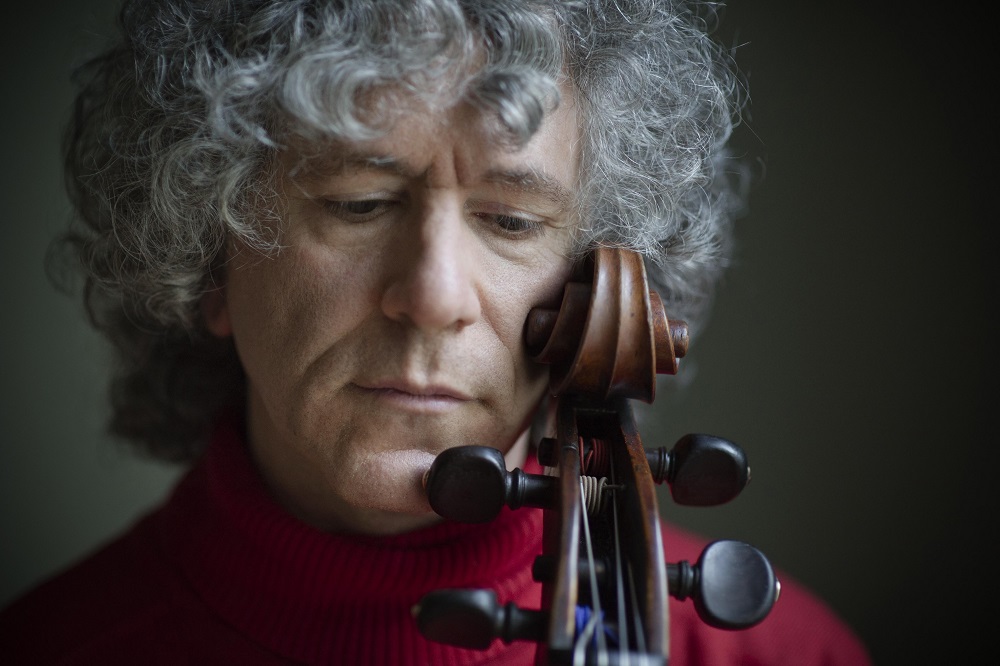
The cellist talks to The cellist talks to Ben Hogwood about his Wigmore Hall residency, celebrating the music of Fauré, and his new Boccherini album Music of the Angels.

For cellist Steven Isserlis, November 2024 is all about two composers. From the first day of the month he is taking up residence at London’s Wigmore Hall for a five-day exploration of the late chamber music of Gabriel Fauré, who died on 4 November 1924. He has given a valuable insight into his thoughts on the composer in an article just published for the Guardian newspaper, but was generous to spend some time answering specific questions about Fauré’s late music for Arcana.


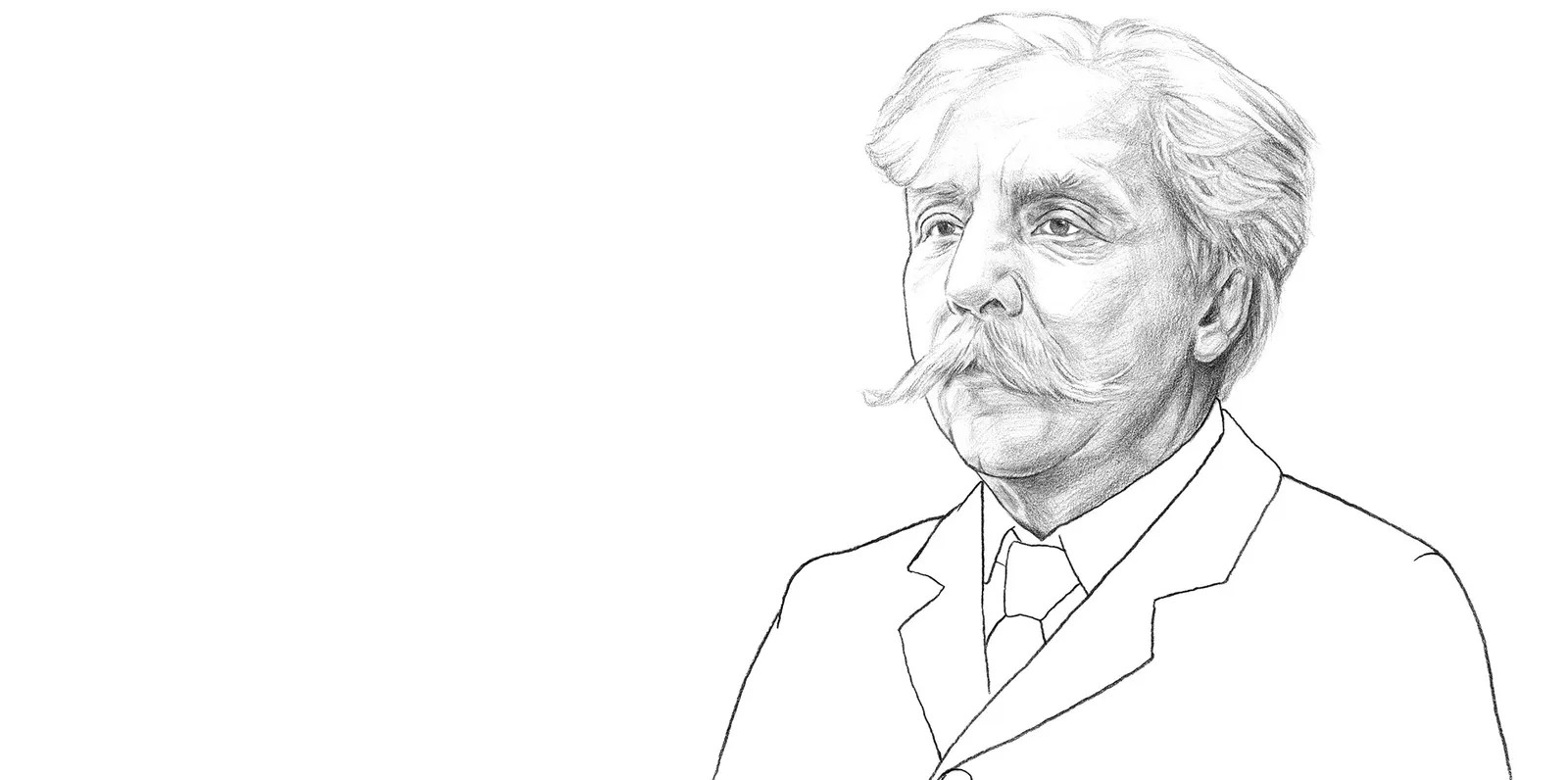
Arcana: The Wigmore Hall concerts put Fauré (above) in context with his contemporaries
– how did you plan them? It’s especially good to see the music of Nadia
Boulanger, Saint-Saëns and Koechlin included.

Steven: Well, first came the idea of doing the complete (major) chamber music of Fauré for the centenary; then everything else had to be worked out around that. It took some time for the programmes to fall into place – and then I was amazed that the Wigmore said yes to all five of them!

How does Fauré’s writing for the cello develop through his works?

I don’t think of his cello writing as such developing – it’s more the musical content. His first work for cello was the Élégie, which is of course wonderful; but if you compare it to the most similar subsequent piece of his, the slow movement of the second sonata, you see how much more profound his music has become. Which is not to put down the Élégie – any more than saying that Beethoven’s last piano sonata in C minor, op 111, is on a higher level than the Pathétique sonata op 13, also in C minor, is a criticism of the Pathétique.

What are the challenges and ‘do nots’ of performing his music in an ensemble such as a piano quartet or quintet?

We just have to agree on our approach – but we do! I call our team – Joshua Bell, Irène Duval, Blythe Teh Engstroem, myself, Jeremy Denk, Connie Shih – Team Fauré. We’re all in love with his music!

Fauré’s late period has some similarities with that of Brahms. Would you say there is anything in common between their approach, late in life?

I suppose, in that there is a ‘new simplicity’; but I think there’s much more in common between late Fauré and late Beethoven. And not just because both men were profoundly deaf!

There is something very special about Fauré’s melodic writing, and the chromatic harmonies he uses. It must be a joy to play!

It is! So long as one understands the chromatic harmonies – one has to be absolutely sensitive to each change of tonal colour.

Would you say Fauré is a composer where repeated listening brings ever
greater rewards?

Well – yes, of course; but I’d say that of any great composer! But perhaps with Fauré’s late works in particular, familiarity with the style is especially helpful.


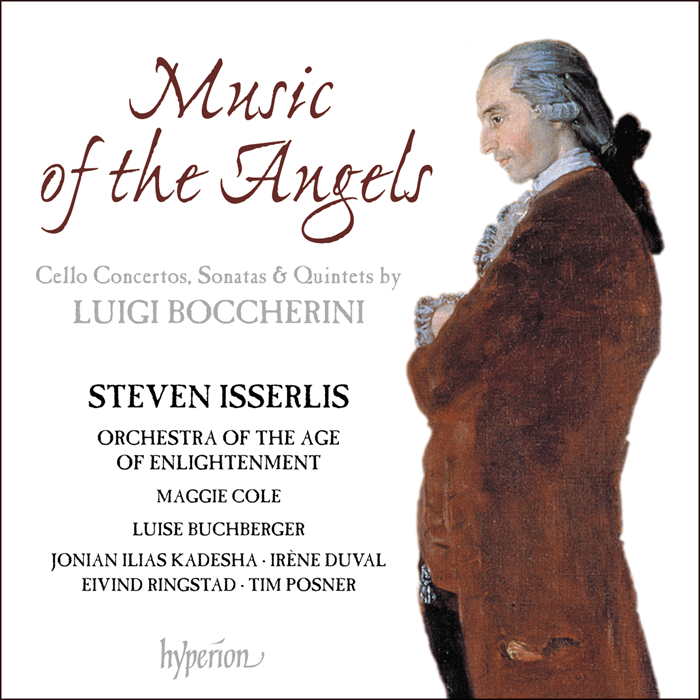
The other composer occupying Steven’s uppermost thoughts in the next month is Luigi Boccherini, with Hyperion releasing Music of the Angels, a generous anthology of the composer’s works for cello with members of the Orchestra of the Age of Enlightenment and harpsichordist Maggie Cole. The album explores the very different forms of Cello Concerto, Cello Sonata and String Quintet – where the composer adds an extra cello to the traditional string quartet line-up. Boccherini is a lesser-known light from the 18th century, and his cause has been close to Steven’s heart right through his recording career.

It’s great to see your Boccherini album. Was it most important for you to present the different types of work – concerto, quintet, sonata – in context?

Thank you! Again, the programme just worked out that way; but yes, I was happy to show different facets of Boccherini’s unique world.

You’ve been playing and recording the music of Boccherini for a good while – what was it that first attracted you to his music?

Well, my teacher Jane Cowan was a great Boccherini fan, which I’m sure influenced me. (She was also a great Fauré fan!) But I’ve always loved his elegance, the otherworldly beauty of his music, his gentle, kind musical soul.

At a guess, I think it might have been the Orchestra of the Age of Enlightenment’s first exposure to Boccherini. Did they enjoy it as much as you?

I think they MIGHT have done some of the symphonies; but I’m not sure. They were certainly lovely to work with – committed, enthusiastic and supportive.

You talk in your notes about the virtuosity Boccherini requires from his soloist – he must have been quite a player. Is it quite intimidating using such a high register of the cello to start with?

Yes! He’s among the most demanding composers for cello, because there’s nowhere one can hide. One can’t just add mounds of vibrato to mask the intonation, for instance. And one has to be able to shape the delicate curves of the music in a way that is naturally graceful; a challenge indeed.

Would you say his music is an ideal ‘next step’ for lovers of Haydn and Mozart?

I think that he’s very different from either Mozart or Haydn – roughly contemporaneous, yes, but another personality entirely. In a way, I think he’s more analogous to Domenico Scarlatti – not because they’re that similar, but because they were both Italians who spent much of their lives in Spain where, relatively cut off from the centre of European musical life, they created their entirely individual compositional worlds.

How does Boccherini’s cello writing contrast with that of Haydn?

Very different! Both can make the cello sing, true; but Haydn uses virtuosity for purposes of excitement, whereas Boccherini uses it much more subtly – usually for lightness and delicacy, frequently evoking birdsong.

With your Boccherini album set for release, are you inclined to record the Fauré trio, quartets and quintets?

Actually, yes; we were originally set to record straight after the festival; but we decided that that would be just too much. So nowthe plan is to record at least the late chamber works (which is the Fauré most in need of advocacy, I feel) next summer in the US. We hope…”

You can book the last remaining tickets for Steven Isserlis and friends’ Fauré residency at the Wigmore Hall website, and explore purchase options for the new Boccherini album Music of the Angels at the Hyperion website. The Wigmore Hall are streaming the Fauré concerts live from their YouTube site

Published post no.2,344 – Sunday 27 October 2024

Talking Heads: Claire Booth

The leading British soprano talks to Ben Hogwood about her duo of new albums celebrating the music of Schoenberg, as well as a fascinating career that touches on Mussorgsky and her meaningful friendship with Oliver Knussen. Photos (c) Sven Arnstein (above), Mark Allan (Oliver Knussen)

It is no understatement to state that Claire Booth is a national singing treasure. She would be too gracious to admit this, but the British soprano has played a leading role in classical music on these shores, particularly in league with composer and conductor Oliver Knussen as a leading exponent of new compositions.

Yet Booth’s pioneering spirit extends to music of the classical canon, and after Knussen’s sad death in 2018 her work has continued apace. In 2024 she has included a special emphasis on the music of Arnold Schoenberg, 150 years on from the composer’s birth. His music remains a challenge today – but as Booth revealed in an enjoyably candid chat, it is a challenge well worth accepting for the performer and ultimately the listener.

Before we discuss Booth’s new Pierrot Portraits album on Onyx Classics, where she is joined by Ensemble 360 to put Schoenberg’s melodrama Pierrot Lunaire in the context of composers inspired by the Pierrot, I ask her if she can remember her first encounter with Schoenberg’s music. It turns out to be a milestone she will never forget. “The first time I did Pierrot Lunaire, which was the first piece of Schoenberg that I did, was with Pierre Boulez at the Lucerne Festival. I was a young artist on the inaugural Festival Academy. The first year that they did that was just the Ensemble Intercontemporain and Pierre Boulez. Every instrumentalist had one student, so there was basically a student ensemble, the Ensemble Intercontemporain, Pierre Boulez and Hilary Summers, who was effectively the singing consultant. I was the student singer, so Pierre Boulez basically taught me Pierrot Lunaire! I sort of went, bowed at his feet and said, “Sprechtgesang – how do you do it?”, thinking this is the master of 20th century composition, I’ll get this incredible insight – and he must have been about 70, I suppose, and he just looked at me and said, “You sing a bit, you speak a bit. That’s it.” And actually, he’s so right – because you just learn it like any other piece of music, and you do sing a bit and speak a bit! How you do that is up to you. Like a lot of very, very good musicians, they’re very keen to leave it up to the performer. He wasn’t a micromanager,  and when you’re working with really good people they assume you’re as good as them – I mean, the nice ones do. So he just let me get on with it, and those were the parameters.”

Does the straightforward approach remove a temptation to micromanage Pierrot Lunaire itself? “That’s interesting, because you definitely need to put a lot of time in, and by that, you might think, “Gosh, I’m micromanaging this”. But I can think of any Mozart aria that actually, if you pull it apart, you are micromanaging how you are working. There is a certain sense of micromanagement, but there’s quite a negative connotation with that phrase. With Schoenberg’s music people often get stuck in the realm of thinking very carefully and complexly, but ultimately we do that with all repertoire. After that, we free ourselves up and employ our musicality and our professionalism. Once you get to that stage with Pierrot, then it does feel very innate and characterful, you just have to have done the groundwork.”

Booth has worked with one of Pierrot’s legendary interpreters. “I remember Jane Manning told me, in the way that only Jane could, that she had given the most accurate rendition of the piece ever. She’s absolutely right that there is no excuse not to be accurate pitch-wise, but if you listen to someone like Erwin Schrott do Don Giovanni, when he’s singing the recitatives, he’s not caring about the individual notes – but there’s no way he doesn’t know the notes. He’s inhabiting it completely, and it’s such a wonderful way of listening to the freedom of it. You don’t want to get bogged down in the micromanagement of accuracy. You have to be accurate, but then you get to the next level.”

Schoenberg’s detail of colour in the score reaches descriptive heights with the voice and ensemble, colours that present themselves afresh with each listen. “Absolutely. Obviously there were other vocal pieces before Pierrot Lunaire that employed instruments, but I think Schoenberg really did break up the rule book in how he uses the instrumentalists and voice as one. You’ve got five instrumentalists playing eight instruments, and the singer playing three characters and the narrator in a myriad of different emotional states. The palette is so deft that if the performer understands the text in us, it’s a complete gift. The orchestration is so brilliantly witty, clever, charming and poignant – you know, there are echoes of Bach, Mozart, and elegiac and even aggressive qualities to it. Like all the best music there are no extraneous notes, and his decision to play the note in a certain way is just consummate to me. When people come to this new as an audience member, you might be thinking, “What have I let myself in for?” Within five minutes, though, you are in this sound world, and audiences delight in the sheer virtuosity of the world. As a performer you just have to dive right in, and if you really believe in what is written, it’s just mind blowing!”

Booth has also been recording Schoenberg’s early songs with pianist Christopher Glynn, in a compelling Expressionist Music album released earlier this year on Orchid Classics. It reveals the remarkable breadth to their compositional style. “When you listen to pop music you have the Coldplay sound, the U2 sound, and it’s their thing. But one of the reviews of the Expressionist Music disc said it sounds a bit like Mahler or Brahms. Well, what’s wrong with that? These were people in the musical, historical pedigree that he loved and revered. Why wouldn’t his sound world sound like that? I think one reviewer was almost disappointed that it didn’t all sound like Schoenberg. And you’re like, “What is Schoenberg? Is it a kind of construct that we’ve decided is difficult, atonal?” I think an audience’s appreciation of tonality and atonality now is different than it would have been 40 years ago. We’ve all listened to a lot more music, we don’t hear the jarring qualities that atonality maybe heralded within us. My granny might still think it sounds a little bit risque, but, I think we’re much more open to his world anyway.”

She adds some context. “It’s so important, I think, for everyone to recognize that Schoenberg was a product of his time. He didn’t just parachute in with a pistol aiming to blow a hole in everything. He was absolutely continuing as he felt the tradition, but in the way that the expressionist movement, was going he was continuing a movement by forward motion, taking things on a step. You’ve got folk songs, cabaret songs, love songs – he clearly was a man fascinated by a lot of different aspects of life, you know? He had enormous depth and breadth, and that comes across in his vocal music, in terms of his poetry choices. It also comes through in knowing the man – he was friends with Kandinsky and a tennis partner with Gershwin. The guy was a hoot!”

Booth has been working with the Arnold Schoenberg Center in Vienna – a fascinating resource and museum dedicated to the composer, where it is possible to witness a full scale mock-up of Schonberg’s Hollywood apartment. “I’ve been in touch with them over the last year”, she says, “and we’re going to sing there in December and stay in the apartment. We’re really delighted to have that sort of immersion. Even when you go on the website, with the amount of archival material, you can really geek out on it! I think it’s a shame that he’s been so synonymous with all that is difficult and complex about music when there are composers that have come since Schoenberg that have been far more impenetrable. He’s maintained this aura of unapproachability, which you see in the reticence of festivals and promoters to put on his music, even in this 150th anniversary year, which I just don’t think is justified. So it’s wonderful to get opportunities to be reminded of kind of the breadth of his interests, and how he was a complete part of the kind of wider artistic movement in the 20th century. He’s such a towering figure!”

Booth has explored a vast amount of new music in her performing career to date. Is there the same thrill of discovering new music as there was with Schoenberg? A prime example is Helen Grime’s Folk, a setting of verse by Zoe Gilbert for soprano and orchestra which she is preparing for performance as we talk. “I think that’s what’s so great about music. I am so on the back foot – in my first lesson at college, I heard this piece of music, and I lent to the next person and said, “This is the theme music to Trading Places!” And she said, “No, it’s the Overture to The Marriage of Figaro!” I know so little about music that I am still discovering so much now – the joy of discovering new music that’s in the canon, together with new music that’s being written now.” If what your question is leading to is the same kind of craft in new music as in Schoenberg then Helen (above) is a wonderful affirmation of that.

You can listen to Helen Grime’s Folk, performed by Booth with the BBC Scottish Symphony Orchestra under Ryan Wigglesworth, on BBC Sounds

Booth elaborates on Grime’s qualities. She’s such a craftswoman, and such a great orchestrator. Not for nothing was Oliver Knussen such a big champion of her in her early days, and that’s one of the reasons we got to know each other. It feels special to be kind of continuing Ollie’s work with the composers he loved and rated, because he was such a meaningful figure to me. I wouldn’t want to speak too broadly about compositional trends in general. I think I’m very fortunate that I get to sing an awful lot of music by people that I particularly love. It’s easier to believe in music that you have an immediate connection to, and I’m lucky to have that. As a singer I’ve still got so much to learn, repertoire wise, and I’m still so curious in that.”

She cites her exploration of the songs of Mussorgsky, in league with her regular pianist Christopher Glynn. “I’d heard a couple of songs, but what an absolute deep dive. You wouldn’t think of him as a song composer! We know Songs And Dances of Death, but, that’s a group of five – and he wrote 60-70 songs! There are some absolute beauties in there, and no extraneous notes. His brilliant use of pace and orchestration – with only the piano – and the wonderful opportunities for female protagonists in his songs, which doesn’t come through so clearly in his operas. As a curious artist, that’s just brilliant. Five years ago I didn’t know any of that, and now I’m a bit of a guru. I think my love of music has maintained my curiosity for the repertoire that’s already out there, and hopefully that’s a way of marrying the two.”

Booth is struck by Mussorgsky’s originality. “When you listen to this writing, you think it’s Mahler or Wolf, and this guy was writing these songs in the 1840s-1850s. He really was ahead of his time. Ollie always did the Stokowski orchestration of Pictures at an Exhibition, with lots of bells! I think purists would say it’s less sophisticated than the Ravel, but there’s an earthiness and a gravitas to it, a sort of ridiculous element which he doesn’t shy away from. The piece is such a smorgasbord, and that’s the word I’ve tried to use with a lot of these retrospectives, and with Schoenberg too. It’s wonderful to be able to advocate for a composer’s breadth, because I think people have one or two pieces by somebody that they like, and that’s great, but that can lead to other things.”

With that in mind, the Pierrot Lunaire album places Schoenberg’s work in the context of a number of different and fascinating responses to the central character. “When you look at versions of Pierrot Lunaire, it’s always intriguing as to what people put it with. Usually it’s with another Second Viennese School composer, and I definitely didn’t want that. It did seem the figure of Pierrot himself is such a magnet for creatives. Schoenberg wasn’t even the only one to set the Hartleben translation.”

Joseph Marx went in a completely different musical direction to Schoenberg. Kowalski, another Jewish composer of the early 20th century, was actually a lawyer who advocated for Schoenberg when he was having a problem with one of his publishers. He’s done 12 settings of those heart labor poems, but they’re not the same as the ones Schoenberg did. So even with Pierrot Lunaire, we think of it as this seminal work, and it’s wonderful to see how other people have set it. It’s nice to give people a taste of what other composers thought – and even with the Korngold aria, it is this beautifully elegiac piece and so haunting. It’s the ability of the Pierrot character to be so permeable. It’s called Portraits for a reason I suppose, we wanted to present as many different angles as possible.”

We move on to the demands Schoenberg makes on the voice itself. With such a wide range of dynamics and pitches, does the voice need special preparation? “I’ve always done quite a lot of different repertoire concurrently, and I do remember a performance of Pierrot Lunaire where I performed some Handel arias two days later, and I definitely suffered. I remember thinking I would have to schedule these things a bit better. As I’ve gone on in my career, without blowing my own trumpet, I find increasingly that it doesn’t seem to cost any more than singing anything else. I mean, I did some Mozart concert arias in Prague recently, 20 minutes of singing, and I was bloody knackered! If you can get past the complexity of the score and be quite a seasoned interpreter, there is a freedom that comes with knowing something incredibly well, which then allows you to give just the right amount. I’m doing various ‘Pierrots’ this season, and some of them will be next door to singing Debussy, Marx, these other vocal styles – and obviously you need to be ready for both, otherwise you’re short changing the audience.”

Talk turns again to the much-loved Oliver Knussen. What sort of legacy has he left with Claire, and more widely, with British music? “Happily, I’m part of a large family of people who spent time with Ollie and who he was a massive influence on. When I think about Ollie, and his music making, I think of incredible standards and incredible kindness – which extended to nurturing, sponsorship and facilitating of others’ work. He always put his own compositions second, and he really wanted to facilitate others music. He got to know Harrison Birtwistle, reasonably late in his life, but part of that was because I think he felt really second best to Harry, and he was a bit embarrassed. I heard him say he felt his music wasn’t well crafted enough.”

Humility was one of Knussen’s standout qualities. “He was incredibly modest. I was the recipient of so much of his listening, and I suppose the legacy is that I would like to achieve those same exacting standards in my work, the absolute knowledge about and love of the music, and musicality of a properly high standard. As a professional creative, it matters to me, and it mattered to him hugely. The commission with Helen Grime and also Zoe Martlew, this year, who was also an incredibly close friend of Ollie’s, means a lot. When I am involved I do try to remember kind of that Ollie was so generous in his time to advocate for others work. I like to think that he’d be pretty chuffed that I was working with Helen and Zoe in this way. I think he’ll be having a chuckle when Helen’s piece comes to life!”

She goes into more detail. “Ollie worked with quite a small number of musicians over and over, and the rehearsal process was very positive and open and facilitory. I’ve worked with plenty of eminent musicians where the room is not necessarily positive and quite dictatorial and exacting, and now my job is to deliver when somebody wants to be exacting. I really appreciated Ollie’s understanding that if you have booked the right people, they’re going to be good. Treating people with respect and confidence begets that, and having a positive vibe in the room might sound like an obvious thing, but it’s amazing how often that doesn’t happen. In today’s world there’s a lot of talk about this stuff, but I wouldn’t say that people have nailed how to do it. With Ollie, with his potentially intimidating presence, both physically and musically, he was always incredibly respectful and facilitating off of the artists that he worked with. So I hope that if I could generate half of the vibe that he did, I think I’m going the right direction.”

You can explore purchase options by clicking on the links for Pierrot Portraits and Expressionist Music. Claire will perform Pierrot Lunaire twice in November – click for ticket options for Pierrot in the Moonlight on Saturday 2 November at the Classhouse International Centre for Music, and on Thursday 21 November at the Royal Welsh College of Music and Drama, and also for her multi-composer Wigmore Hall recital with pianist Jâms Coleman on Friday 29 November.

Talking Heads: Paul Wee

by Ben Hogwood

Paul Wee is a true one-off. An in-demand commercial barrister by day, he is also an extraordinary pianist, capable of taking on some of the most demanding pieces in the repertoire. The combination of a passion for his art and thirst for a challenge has led to award-winning recordings of the music of Thalberg and of Beethoven arranged by Liszt, both for the BIS label.

Yet arguably his greatest recording achievement to date concerns the music of Charles-Valentin Alkan, the 19th-century French composer who was one of the great virtuosos of his day. Wee has mastered two massive works by the composer – his Symphony for Solo Piano and the Concerto for Solo Piano. The latter will form an entire lunchtime concert with which he will make his eagerly anticipated Wigmore Hall debut, on Saturday 15 June. A tempestuous hour of music lies ahead – so while he flexes his muscles in preparation, Arcana managed to get some time with him to explore not just Alkan but a number of other irons he has in the fire.

Firstly, Paul recalls vividly his first encounter with Alkan’s music. “It was when I was in high school, in New York City”, he says. “I heard a live recording of Marc-André Hamelin playing the Symphony for Solo Piano, and I was awestruck immediately!”

His decision to take on the concerto was inspired by similar feelings. “I was immediately taken by the Concerto for Solo Piano when hearing it for the first time: it’s an astonishing musical construction, which makes an extraordinary and unforgettable impact. I didn’t know of any other work like it in the repertoire and knew that I had to give it a go myself.”

The piece is notorious for the demands Alkan makes on the performer, but as Wee confirms the rewards are greater still. “The technical challenges are reasonably self-evident; in the numerous passages where Alkan is displaying the ‘virtuosity’ of the (virtual) ‘soloist’, the writing – whilst always remaining very idiomatic and practical, characteristically for Alkan – can sometimes approach the limits of conventional pianism”, he says. “The emotional (or musical) challenges are mainly twofold: first, bringing to life the (extraordinarily theatrical) drama and rhetoric in the second movement Adagio; and second, maintaining the intensity of the Concerto’s narrative arc across its 50-minute wingspan. But when these challenges are met, it makes for one of the most incredible experiences that the piano repertoire has to offer.”

Wee has recorded the concerto for BIS, an album released in 2019. Has his view of the piece changed since then? “Yes – in relation to both the Concerto’s sound world, and also its pacing, especially in the Allegro assai. As ever it’s difficult to explain this in words, so the best thing for anybody interested is to come and hear it live!”

Alkan is a composer who inspires great dedication among his fans, and Wee considers the elements of his music that lead to these feverish reactions. “I think it is the sheer power and quality of his finest works, which offer extraordinary experiences quite unlike anything else that the 19th century has to offer. The fact that Alkan and these works are not as widely known as they should be can often lead to fans of Alkan’s music to (rightly!) encourage others to discover this music for themselves. That’s exactly what I hope to be doing myself when bringing the Concerto to Wigmore Hall.”

Anyone approaching Alkan’s music for the first time is in for a treat. “It depends on what work they are hearing. If the Concerto, they should prepare themselves for an epic, but nevertheless very accessible, musical narrative; a very wide variety of pianistic experiences, from some of the greatest heights of 19th-century virtuoso piano writing, through to tender intimacy and lyricism, with much quasi-operatic dramatic intensity and rhetoric along the way. Overall, the listener should prepare themselves for the extraordinary cumulative impact of the work, which builds across all three movements and which in a good performance can be utterly overwhelming.”

Presenting this work in the Wigmore Hall is something of a dream for Wee, who recalls his most memorable musical experiences in the venue. “Wigmore Hall is probably my most visited concert venue, and my own personal highlights reel would be too long to list in full! But some illustrative examples would have to include recitals by Marc-André Hamelin playing Haydn, Mozart, Liszt, Fauré, and Alkan in November 2009; Benjamin Grosvenor playing Mendelssohn, Chopin, Ravel, and Liszt in June 2016; and Mark Padmore and Paul Lewis in Schubert’s Winterreise in June 2022.”

Expanding from Alkan, Wee has somehow found time to discover and record concertos by two names unfamiliar to many devotees of classical music – Adolph von Henselt and Hans von Bronsart (above). It is another addition to his small but formidably constructed discography for BIS – and not a recent discovery, either. “I discovered the Henselt in my teens,”, he says, “after reading about it in books by Harold Schonberg and David Dubal, and seeking out recordings by Raymond Lewenthal and Marc-André Hamelin. I came to the Bronsart later, after being captivated by Michael Ponti’s recording of the slow movement.”

The recordings Wee mentions were made with a symphony orchestra, but for the new album he is paired with the Swedish Chamber Orchestra, under Michael Collins. “One of the greatest difficulties of the Henselt lies in making the piano part, with all of its detailing and intricacies, audible over the sound of the orchestra”, he explains. “In nearly all cases, large swathes of the passagework (especially in the finale) are simply swallowed and inaudible beneath the weight of a modern symphony orchestra. In teaming up with the Swedish Chamber Orchestra for this recording, I think we have been able to present a different view of the Henselt in particular, which presents Henselt’s (quasi-Mendelssohnian) piano writing with a new immediacy and clarity, whilst maintaining power and heft where needed. Of course, the Swedish Chamber Orchestra is not just any old chamber orchestra; it has a particular reputation for being “the chamber orchestra that can sound like a symphony orchestra”, and I think that anybody hearing (say) the opening tutti of the Bronsart Concerto will be astounded by the vigour and intensity that the Swedish Chamber Orchestra brings to the proceedings. I think they have been the perfect partner for this recording.”

He continues to move forward with recording plans…“but as there are still a few moving pieces here and there, all I will say for now is to watch this space. But my future recording plans with BIS are very exciting, and I’m looking forward to sharing them when I can say more…”

Looking further afield, what other music would he like to explore? “The list is far too long: the piano literature is so wide and so rich, and I find many things to love in nearly every one of its corners. In addition to that, the music that I might want to play and enjoy for myself will not necessarily be the same as the music that might be thought to sell well if I were to record it. So there are many dimensions to this question, which do not necessarily interrelate. Again, I think that all I can say is that there are some very interesting projects in the pipeline, so watch this space!”

In the meantime he will continue with his two complementary disciplines. “Absolutely: I have no desire to give up my legal career and become a full-time musician. I enjoy my work as a commercial barrister; it’s challenging, constantly stimulating, and ultimately very satisfying. On the musical side, I wouldn’t be averse to playing a few more concerts here and there, but probably nothing more than that. I wouldn’t ever want for the piano to become my day-to-day life. I am much happier with the piano being my escape from everyday life, which (for me) is my career at the Bar.”

He expands on how the two very different elements of his life are complementary. “The most important factor is that each presents an escape from the other. When my legal practice is especially demanding (which, as any lawyer will tell you, can frequently be the case), I can take a quick 5- or 10-minute time-out at the piano, and for that window, I am completely disconnected from the strains and stresses of the law: I return to my desk refreshed. In the other direction, my legal career has helped me hugely as a pianist by (perhaps paradoxically) ensuring that the piano is not my day-to-day life, as I mentioned above. Whenever I sit down at the piano, it’s never out of obligation, but out of joy. These days I have a completely different relationship with the instrument than what I used to have when I thought (as a teenager) that I wanted to be a concert pianist. I think the freedom that underpins my relationship with the piano these days has been essential in making me the pianist that I have become.”

Finally, he considers the music he anticipates seeing as a concertgoer this year – when time allows. “As it happens, this year I am going to far fewer concerts than usual, given the demands of family life (our second daughter was born in December and is just six months old). So I’m often going to concerts at shorter notice than usual. That said, I’m hoping to see Benjamin Grosvenor in the Busoni Concerto at the Proms, and I have Igor Levit’s September 2024 recital in my diary, where he’ll be playing the Liszt transcription of Beethoven’s Seventh Symphony: these are fabulous transcriptions that should be played in concert far more frequently, so I’m delighted to see him bringing this to London. I’m also planning to see Nikolai Lugansky at Wigmore Hall in December 2024, where he’ll be playing (among other things) his own stunning transcription of scenes from Götterdämmerung. I’m sure there will be many other concerts along the way!”

For information on Paul’s Wigmore Hall debut, on Saturday 15 June at 1pm, click on this link. You can read more about Paul at his website, and explore his discography at the Presto website

Published post no.2,207 – Wednesday 12 June 2024

Talking Heads: Unsuk Chin & Alban Gerhardt

Composer Unsuk Chin and cellist Alban Gerhardt are featured musicians at the 75th Aldeburgh Festival this year. They have been linked in music since 2009, when Alban was the soloist in the premiere of Unsuk’s Cello Concerto at the BBC Proms in 2009. They talk to Arcana about how the piece has evolved and their hopes for this year’s festival.

by Ben Hogwood

The 75th Aldeburgh Festival of Music and the Arts is upon us – and Arcana is in the very fortunate position of talking simultaneously with two of its Featured Musicians, Korean composer Unsuk Chin and German cellist Alban Gerhardt. Unsuk is checking in from her Berlin residence, where she is deeply ensconced in composition work – of which more later. Gerhardt, as is often the case, is touring – and is about to join us from his hotel lobby in Spain, where he played the Lalo concerto the previous night. 

The two have a strong musical bond, cemented by the Cello Concerto Unsuk composed for Gerhardt, first performed at the Proms in 2009 with the BBC Scottish Symphony Orchestra. Gerhardt will bring it to Aldeburgh in 2024 with the same orchestra, under Ryan Wigglesworth, on 20 June.

Firstly, however, we welcome Unsuk to the chat. Her youthful countenance is complemented by an intense focus on her music – which comes to the fore as soon as we begin to discuss Alaraph, a quarter-hour piece for orchestra receiving its first UK performance at Aldeburgh this season. Subtitled Ritus des Herzschlags (Rite of Heartbeat), it is a powerful and dramatic piece, in which Unsuk is drawn to the concept of so called ‘heartbeat stars’, that have a regular pulsation.

“I’m very interested in science”, she says, “and I was very interested in the different types of stars. These heartbeat stars have a certain rhythm of changing the brightness, and immediately I imagined a certain type of rhythm where I could compose a piece with this idea. The second idea in Alaraph came from Korean traditional music. We have very vivid, dynamic folk music, and I was always very impressed by its rhythms and melodies, and I wanted to bring them all into one piece. Lots of percussion instruments will be needed there!”

In spite of the large percussion section, the piece ends quietly, which if anything heightens the drama. “The piece is a kind of ritual,” she explains, “and the six percussionists play a very big role. The sound is moving from left to right and right to left, and at the end of the piece they repeat the cymbal sound. Then they should stand and show the cymbals, as a kind of ritual.”

On a much smaller scale, we will hear a group of Chin’s Piano Etudes, in concerts from Joseph Havlat and Rolf Hind. Talking about the Etudes almost inevitably draws parallels with Unsuk’s teacher György Ligeti, whose own Etudes for piano have proved revelatory in the course of the instrument’s recent development. Were they intimidating when she started to write in the form? “When I studied with Ligeti he had just finished the first cycle of six etudes, and I was at the premiere of those pieces”, she says. “On the other hand, I have played the piano since I was four, so it was for me the main instrument. I certainly got some influence from him in writing piano pieces, but even if he had not written piano etudes, I would have written my etudes for sure!”

At this point Alban joins the call, and Unsuk greets him enthusiastically. “Your hairstyle is new!”, she exclaims, but he shakes his head. “No, just less hair!”, he says, smiling. Gerhardt is being modest, for he too looks bright-eyed and in good spirits. Talk inevitably turns to the Cello Concerto Unsuk wrote for him, and they recall their first meeting. “We met first in 1999 in Helsinki”, she says. “It took a couple of years, but then I had some idea of how it would be very nice to write a cello concerto for him. That was the beginning, but then he had to wait almost seven years while I got the piece ready!”

Gerhardt was not impatient for the piece, however. “I am glad you mentioned that, because it proved to me that you are not slow or lazy, but very respectful for the genre of the cello concerto. I remember at first that you were very hesitant, and that’s a wonderful quality, because these days it’s like everybody should be writing a cello concerto. One of the most difficult tasks nowadays, with a big orchestra, is that you want to use it as a composer. But if you use it, then you lose the cello. You were aware of that huge challenge, and you took your time. It got postponed a few times, and at the Proms too, but I’m so happy – because this piece works! The truth is that it was performed in Berlin by another cellist, Alisa Weilerstein, which is fantastic. Which other modern cello concerto can you say that about, that it was performed in the same city at 10 years difference by a top-class cellist? I’m very happy about that!”

Chin smiles in gratitude. “You are always supporting me!” she laughs. “The first time we met was through Lisa Batiashvili”, recalls Gerhardt, “and she is a close friend but also grew up together with Unsuk’s husband, Maris Gothóni. I knew about Maris first, and then I met Unsuk and was shocked by her charisma and aura, and then when I heard the Violin Concerto I thought, “she needs to write a cello concerto!”

The concerto makes some fearsome technical demands, wasting no time in pitching the soloist right to the core of the action – an aspect that Gerhardt applauds. “Actually, the beginning is among the easiest bits of the whole piece! It’s not easy at all, but compared to what comes later, I’m not afraid of the beginning. I’m happy to start right away because if you sit there forever, you start thinking and getting nervous, which is not a good thing.”

“For me the working process was very interesting”, Chin interjects, “because often the artist and composer will have conversations and contacts, but with us it was not like that. I just wrote the piece to the end, and I delivered, and he delivered his playing. It was extremely professional, and there was not a need to change anything because of his technique. I wrote what I wanted, and he played it at the premiere by memory. I couldn’t believe that a human being could do that!”

At this point, Gerhardt has a confession to make. “This is the biggest shame of my life, because I was big headed, and I got lost three times – I was not happy. The most beautiful and difficult part in the last movement, which is like 80 seconds, is very wittily written and difficult to play. It is probably the 80 seconds I have practised most in my life, and I completely missed them in the world premiere. I’m so grateful that I have had 30, 40 more times now to play it. For me that is the biggest thing. I have not played so many world premieres, but each one is the worst performance – it always gets better. You need to give it a chance to grow – not with the memory slips, but the piece settles. With this piece the more I play it the more beauty and intensity I discover, and the more I understand it. There is so much to understand that you cannot grasp it all at first sight.”

He is relishing bringing the piece to the Aldeburgh Festival. “I am very happy to play it there, after 15 years and having premiered it with the same orchestra. It will be a completely different performance, and I would bet my life it will be a much better one!”

As well as the concerto Alban will be teaming up with regular recital partner, pianist Steven Osborne, in a recreation of a legendary recital given by Mstislav Rostropovich and festival founder Benjamin Britten (both above) in July 1961, where the world premiere of Britten’s Cello Sonata took place. Gerhardt considers the rapport both performers have in that recital. “Britten was a fantastic pianist and a wonderful musician, besides being a great composer. I wouldn’t say Steven and I have the same rapport because none of us is as creative as these two guys. Rostropovich was a composer himself, not a great composer, but he wrote some quite witty pieces, and conducted and played the piano. He was really a complete musician, although I don’t agree with everything he did interpretation-wise – which is perhaps bad taste on my part – but they were two giants of music! I think Steven and I understand each other well because we are closer in age and Western, whereas the Russian and the Brit – that’s quite a mix!”

He considers the concert further. “You have no idea how brave I actually am because two nights before I am playing Dvořák in Chicago, and I arrive in the middle of the night at 1am the day of the recital. I’m already very scared of that day!” We agree that Rostropovich would probably be in favour. “Yes, he would approve of doing something stupid like that!”

Both Unsuk and Alban are intensely honoured by their roles this year. “I heard lots of things about Aldeburgh and Benjamin Britten, who I really admire as a composer”, says Chin, “and it’s a really great honour to be played at the festival”. Sadly she won’t be attending in person, due to the composition of her opera Die dunkle Seite des Mondes (The Dark Side of the Moon) getting to the stage where it can’t be left. “It should be finished by the end of this year!” she confirms. “I’m not coming to Aldeburgh, then!” jokes Alban on hearing the news. “For me it’s an honour, but it is also an honour for the festival to have Unsuk, because she is one of the two or three best living composers. Anybody should be honoured to play her music.”

He recalls his first visit to the Suffolk town. “I think I was first there 20 years ago. A few months ago I went to the Red House for the first time, and saw the manuscript of Britten’s Cello Suite no.1, and it was beautiful to see the handwriting. It had a lot of the fingerings and bowings of Rostropovich on it, and I didn’t like that because I wanted to know what Britten actually said.”

He applies the same argument to the newer commission. “That’s why when we made an edition of Unsuk’s concerto I was very hesitant of putting too much of me in there, because I want the next performer to come up with their own ideas. For example, some of the metronome markings of Unsuk I cannot play, but I like that! The question is – should we change them to what I could do? I said no, because it’s good to know that she had that in mind, and the next player should try to get to it. Metronome markings are not the rule of law, but it gives us an idea of what the composer had at some point in their mind. I would hate if people came and took my interpretation as the one to do. The one to do is in the score, and what was in Unsuk’s head. I don’t think it helps much to ask her how to play it!”

Unsuk nods in agreement. “I think you said once it’s like a child you give birth to”, says Gerhardt, “but then it grows, maybe in a direction you’re not happy with!” The only few things you told me”, he recalls, “were about some slides in the first movement, which happened by accident. The great thing is that we have these scores, which are like a protocol, which give us an idea of what to do and then we do it. Every interpretation should by definition be different, if each one is the same then something went wrong. We become in a way an assistant to the composer ourselves, and if the interpretation is always presented the same then that is a job badly done. We have to be different!”

Playing solo Britten at Aldeburgh, as Gerhardt will do with the Cello Suite no.1, presents a special challenge. “It was scary when I did it the first time”, he admits. “but now the scary part is out I’m just going to enjoy it. András Schiff told me once that the older he gets the more nervous he gets. I find the older I get, the less I care about other people and what they think. I want to transmit what I feel about the music, and the older I get the more I dare to really do what I want, and not follow rules or guidelines. I take Gustav Mahler as an example, and where he reduced the Adagietto of his Fifth Symphony from nine minutes to seven minutes when conducting. Less is more!” As a listener, it is good to hear of artistic development in this way. “As a listener, I don’t want to be bored”, says Gerhardt. I hate it when people celebrate something where there is nothing to celebrate, like a dog stopping at every tree!”

Unsuk, meanwhile, will be totally immersed in competing her new opera. “I am writing the libretto myself as well”, she says, “because I created the story. It is based on the relationship between an Austrian physician Wolfgang Pauli and Karl Gustav Jung. It is a very complex story, and I can’t digest it in pure texts. It is about a man who is a genius but who has a very complicated private life and very interesting, wonderful dream every night. He is suffering, and therefore wants to be helped – so goes to Karl Gustav Jung and they start analysing Pauli’s dream. I took this biography as the base and put some fiction in there to write a story like a new version of Faust. I’m writing the music and the libretto myself, in German.”

The opera is due to be premiered in May 2025, at Hamburg State Opera, conducted by Kent Nagano, and staged by the English / Irish team Dead Centre. In the meantime a much smaller piece, Nulla est finis, will act as a companion to Thomas Tallis’ great 40-part motet Spem in alium, in a festival performance from Tenebrae at Ely Cathedral. “It is very small”, she says modestly. “It is not a piece, more a small prelude to the Tallis piece.” Has she listened to much of his music previously? “Not much, but I knew this piece. The commission came from Sweden, and they wanted a small prelude to Spem in alium, so I thought it would be nice to compose a kind of entrance where the choir are whispering, and slowly the tones come in and it goes to Spem in alium.”

Beyond the festival, Gerhardt has a typically busy year – but first a holiday. “I only think up to June”, he says, “and then I think I have three weeks free!” There are recording plans afoot with Hyperion, which remain under wraps for now. The Dvořák concerto, which he is performing in Chicago, would be a wonderful contender. “My view of it has changed, because I had a look at the facsimile of the piece and a lot of new ideas popped out, so it will be quite different. I think it’s more like what Dvořák had in mind, and I have to tell conductors off sometimes now! I find the same with Brahms symphonies, where people do these same, silly rubatos, and they are lacking in inspiration, because they cannot come up with their own!”

Finally, the question has to be asked – might there be a Cello Concerto no.2 from Unsuk Chin? She laughs, a little nervously! “At the moment there is no plan, but you never say never!” she says. “I would never push for a second one,” says Alban, “because the first one is so great, and I’ve never played it that I’m 100% happy with myself. If any other cellist was to ask for a second one, I would urge them to play the first one five or ten times, and then we can talk! For me that is one of the reasons why there are so few concertos added to the repertoire since Dutilleux. There is so much one can do with this piece, so much fine tuning one can do. We as performers should strive for higher, not for perfection necessarily but for musical expression. I don’t think the world needs number two, we should be very happy and blessed that there is a number one!”

Published post no.2,201 – Thursday 6 June 2024

Talking Heads: Paul Agnew

The conductor talks to Ben Hogwood about his forthcoming debut at Garsington Opera, where he will conduct Rameau‘s Platée – a work in which he has also sung the title role. Agnew talks about Rameau but also Handel, considering why now is a good time for British audiences to embrace the music of the French Baroque.

On a dark, dank winter’s day there is something incredibly heartening in having a discussion about the prospect of a summer opera season. Arcana has teamed up with conductor (and former tenor) Paul Agnew to do exactly that, and he is in optimistic mood. “It will arrive quickly, with the spring and the daffodils, and then we’ll find ourselves in Garsington!” he says. It will be his first visit to Wormsley Park, and to the festival. “I’m really looking forward to it. It’s one of those very original places, and it isn’t a dark theatre. It has windows, and so each production has to take into account that you’re going to have a part of that show in the light. I’ve never done that sort of thing, and the team is very nice. We had the model showing so we’ve seen the set, and the concepts, and it looks great. It will be a lot of fun, which it should be – but with that hint of tragedy, which is always lurking in Platée.”

He is talking about Rameau’s comic-tragic opera, which he will lead with a new team of soloists and The English Concert. It is the first excursion for Garsington into the world of French Baroque opera, but Agnew is returning to a piece he knows well. Indeed, he first encountered Platée as a singer. “I didn’t sing Platée – I sang Thespis in the Prologue. I was quite a young thing, and it was a production with the Opera de Paris. It’s a really hard role, extremely high – and obviously you go on at the top of the show. It’s a bit nervy. Then almost immediately I took on the role of Platée in that same production in Japan. That was released on DVD, which had a lot of success.”

He explains why. “Laurent Pelly did a genius job – and they found just the right balance in order that when we get to the end, where the audience have been cheerleading with the rest of the chorus and these horrible characters, and they find themselves in fact implicated in this terrible humiliation. I think he just found the right click. There was a gasp from the audience when they understood quite what a terrible thing this is. I wouldn’t want to exaggerate, but there is something political about it, and within the operas of Rameau – Les Indes galantes and certainly Les Boréades. They tend to have slightly monarchical reflections, and there’s a sense – if you know the film Ridicule – about how close you can get to the king but then you know you made a mistake, you didn’t use the right wig and so on, and you get sent straight back to the back of the queue. There’s a sense of that in Platée and the ridicule, as you would expect Jupiter – who essentially is Louis XIV – to be the hero. In fact, he’s the villain! It’s not exactly dangerous, but not politic either – Louis XV by then.”

Agnew has enjoyed a close affinity with Rameau throughout his career. “The very first thing I did in France, with William Christie and Les Arts Florissants, was record the Rameau Grands Motets. They’re relatively youthful pieces compared with the operas, which he didn’t start until he was about 50 years old. I love Les Grands Motets, partly because it’s surprising to find such incredibly sensual music for the church. They just seemed to suit my voice, and in fact it was one of the very first French Baroque things I did at all. You know you have those lucky things in in a long career where you ‘meet’ a music and you think, “Oh, my goodness, I’m really made for this!” I love the sentimentality of it, in the best sense of the term, I love the melody and I love the sensuality of the harmonies. That leads you through the line and tells you where you’re going constantly, so you can make the music into such a strong experience.”

Things moved quickly. “Almost immediately we started on the operas in the Opera de Paris, so we did Hippolyte et Aricie, then various roles in Les Indes galantes, and then we did Platée, which was with Marc Minkowski and Les Musiciens du Louvre. Then we did Les Boréades, the last opera, which was never staged in his lifetime – he was 80 when he wrote it. It’s amazing to think he lived to 80, but happily he did! It’s an astonishing journey, very much like Platée but in a much more heroic way – he’s a real prince. So I did all those operas, and I’ve sung others – Castor et Pollux for instance – in concert. I’ve done a lot of the ballets, too. I’m a big fan, as you would expect! It’s the most extreme the Baroque gets, even more complicated in some ways than Bach. He was an amazing technician, and he’s stating things relatively clearly, whereas there’s a complexity of emotions in Rameau which really predate going into Gluck and then early Mozart. He didn’t die until 1764, so Mozart has already composed his first piece before Rameau dies. There is a big influence on Gluck, and everything that he says about the reform operas is what Rameau has been trying to do for years.”

Performing the operas as both a singer and a conductor has given Agnew a unique perspective. “It’s very helpful”, he agrees, “for the singers too. I’m naturally a singer’s conductor, as I want them to be able to breathe and recover and so on, because that’s the best for us. I’m not going to push them into a tempo which they can’t do, so we want to find the right tempo for the singer. If you’re a singer you understand that more clearly. It’s a good place to have been, whatever the music – I’ve sung a lot of Handel and Purcell, and now I conduct a lot of Handel and Purcell too. Having sung Platée itself, it makes me smile and I’m not in the least bit jealous about being on stage. I wouldn’t want to sing it again or go through that experience. It’s a long evening, and you’re on stage a lot. There’s a lot to sing, it’s quite hard, and it’s quite physical because it’s a comedy. There’s a lot of running around, and jumping – if you’re a frog! – and I’m happy to leave that to other people. I still absolutely love the piece, and to have that long association is very useful.”

Visitors to Platée’s page on the Garsington Opera website are presented with the image of a flamingo and a beachball (above), an immediately appealing prospect in the depths of winter. “I think it’s going to be a lot of fun. I really like the way it’s being approached. We’re quite used to women playing men – that’s been around in Handel‘s Rinaldo, for instance, but the other way round is very much rarer. The only way in which the piece works is if she’s just a woman, you just get over it. I think Rameau’s idea was to define the strangeness to that person. It’s not about sexual politics, but not a woman as the gods would know – maybe asexual thing rather than being particularly transvestite or drag. I think we’re in the right direction in this production, where we just need to forget that the singer is a man, and just accept that this is a strange woman. She’s a nymph from the marshlands – we don’t know really what she is, a creature from the blue lagoon.”

It is the first time Agnew has encountered the work of director Louisa Miller and designer Christopher Oram. “I’m not sure they’ve done much Baroque before, so I wouldn’t have encountered them as that’s more or less my world. I like them very much. It’s not a very easy piece to approach dry – just to get your head around what Rameau could possibly be thinking about is quite hard. Right from the very first meetings we were clearly on the same page, and Louisa clearly knows the piece, which is very reassuring. As a singer you often get to the first rehearsal and find out the director doesn’t really know the piece very well, and you find yourself having to subtly guide the director through towards a good solution. That’s definitely not the case here! Chris’s designs are very good, it’s funny and relevant and they work throughout the piece. Sometimes at a first rehearsal you think, “This will work great in Act One, and Act Three, but Acts Two and Four will be a disaster because it just simply won’t work in this concept. This concept will work the whole way through, so I’m really encouraged. We’ve got a lovely cast, and also decided at the beginning we would take a cast where nobody had sung it before. Nobody arrives with preconceptions about how their role is, or how they would like to play it.”

There is a sense of great excitement that this is Garsington’s first foray into Rameau’s output. “Yes, and they’ve chosen well!” he says enthusiastically. “We’ve got a great band in the English Concert. I sang with them in my 20s, with Trevor Pinnock, and what an honour it is to direct them.” He expands on the repertoire at hand. “I’ve done French Baroque music with English bands before, and it is quite tricky. They’re technically such fantastic players, but it has a tricky accent, and you can’t get it just by reading the books. Again, it’s useful to be a singer in those situations because you can sing the sensuality of the line much more easily than you can describe it. I always end up singing quite a lot of rehearsals because it’s a visceral, physical reaction to what you hear, which makes it much easier. It will be a challenge for the band to get that accent right, but they’re eminently capable, and I’m massively looking forward to working with them.”

They are complemented by a strong team of soloists, who have equivalent challenges. “Equally, the singers are all English, so we need to get that right – and that’s not just question of pronunciation. There are all sorts of things about how the phrases are constructed, and how the ornamentation helps the grammar of the music. We will have time and we have a good cast, so that doesn’t worry me. You have to go quite deep into these pieces, especially doing this repertoire for the very first time in an opera house. It’s very rare to hear Rameau at all in the UK. I think Platée is the only piece that has been properly staged in the past, and that was a long time ago with the Royal Opera House. It’s very exciting, and there is a lot of interest from the public in French baroque music, so I look forward to that encounter! It is very complicated to put on, you need a ballet, an orchestra that knows their beans, and a cast willing to take risks with the ornamentation. It’s a courageous choice, but not an impossible one.”

Is the boundless supply of great music by Handel (below) in some ways to blame for the relative lack of French baroque music in the UK? Agnew smiles. “Handel’s an interesting one, because he would say, “You do get French Baroque – because if you look at the dances in Alcina, the overtures – you’re not missing out, I’ve written it myself!” In some ways, yes – but you could never say Handel’s at fault, because a house without Handel would be a disaster. You have to think as well that if Purcell had lived longer than the whole history of English music would have been very different. He died in 1695, and then they had a few abortive attempts to create English opera. Then there was an extraordinary moment where Handel arrives, and he creates this strange bastard form of Italian opera for English people, written by a German! You think it’s never going to work but he has this immense success, at least until the early 1740s.”

He goes into more detail behind Handel’s successful formula. “He is much more straightforward, he has the advantage – and I don’t mean to be disrespectful – that what you see on the page is what you get. Twenty to thirty years earlier, the ‘affect’ is everything. Once you start an aria you stay in that in that emotion until the end of the aria, and then a recitative will tell you what kind of emotion you’re going to go to in the next one. With Rameau it’s much, much more fluid than that, because things are changing very fast, and he goes towards complications where the likes of Pergolesi go towards simplicity. You get that break that comes around the time of French Revolution, a time of an immense social and cultural change. Handel is a chancer, isn’t he?! He’s in Italy, and then he knows that George of Hanover is going to be the next king of England, so he immediately goes up and gets a job in Hanover. The first thing the Hanoverians say is go to England, as a sort of spy-come-diplomat or equerry.”

The rest – as they say – is history, and Agnew relishes recounting the events. “And then, of course, George I turns up and it’s all set up for him to have this contact with the nobility, and the prestigious arrival of the king at his operas and so on. He’s bright, and gets it sorted right at the start! The other thing is he turns up in Italy, and produces these works that are effectively for the Catholic nobility and cardinals, and he is a straight, up and up Protestant Lutheran. And yet – business is business, you do what you want! He produces something for a public that don’t know anything about anything. Rameau can produce something much more technically difficult and also psychologically complex, because he’s simply joining the train. We’ve had Lully, Charpentier, Campra, and all the rest – and Handel arrives and takes all that on board, that melange between the original French style – which wasn’t French anyway, because Lully wasn’t French – and then he puts this new Italian virtuosity in. He’s joining this great movement, and dominates England completely!”

We move on from Agnew’s fascinating dissection of Handel and Rameau to talk about one of his mentors and accomplices, conductor William Christie (above). “He’s a theatre man, he wants to pick up the music and shake it and I love that. When you’re a singer, you absolutely want that because you don’t want someone saying, “Careful with the D sharp”, you want someone saying, “Come on, tell me the story!” I always much prefer those people  – and John Eliot Gardiner as well – who pick up the music and shake it, and have enough courage to say this music needs interpreters. The composer wants you to take it and make a show of it. That’s what Bill does, and absolutely what I try to do now as a conductor. You should take risks with it! These people were pragmatists, so if you’ve got someone who can sing this note but not that one, go with it. If you look at the history of Handel’s operas, or Messiah – there’s no definitive Messiah. He changed all the time, because he wanted to get the best out of who he had. It wasn’t saying, “This is my definitive work of art, have some respect and do it correctly”, it was, “Today it’s going to be like this, tomorrow it’s going to be different again, because I need to get the best that you have! I need to get great performance out of you. And that’s why it changes constantly. We don’t quite have that variance, but nonetheless you still have to have that attitude that you have to make a show. That goes straight through to Mozart – he is a show man. You want to start Cosi fan tutte with the overture thinking that you are making a show, not a homage. It’s an entertainment. You should laugh and cry and be frightened and happy, and all those things!”

Turning to Rameau again, he considers the composer’s standing. “He can be very funny, in the likes of Les indes galantes – and Platée is genuinely funny too. Rameau is always known as a surly bugger, when you read about him he is not at all a nice person – but he is really genuinely funny. To do comedy, as everyone knows, it’s much harder than just telling a joke – you have to have that special talent. He has that. It doesn’t mean that Boreades or Hippolyte aren’t amazing pieces, but when he wants to be funny he can be very funny.”

Rameau (above) is a colourful composer, too. “Everything is about colour”, agrees Agnew, “and he’s the first to really properly orchestrate, not just saying to the flutes to play the same as the violins. This is music just for flutes, just for the oboe, and then we’re just going to hear the strings coming in when when we need harmony. And then of course we’ll have a big string moment. It’s the beginning of colour in its best sense, not only harmonic colour but audible colour. The players suddenly find themselves pretty exposed in Rameau, particularly the bassoon parts. He’s a genius of the bassoon writing, and you get these incredible melodies, in Dardanus for example, with these sombre, reedy, mournful qualities. Some amazing colours.”

There is more, too. “And then he’s a great dancer! I think he has to be the best dance composer before Stravinsky. He has this incredible variety, within the ‘stock’ dances. Everyone knows straight away if it’s a Galliard or a Bourree, but they are so incredibly different. It’s a joy when the band understand it, too. I did Platée with the Dresden Staatskapelle, and a more serious orchestra you could not find – but once they got the idea that you could have fun and you could play out and take risks, they really went for it and it ended up great fun. There was a sort of trigger moment where we were doing a dance, and I kept on trying to get them to bow shorter, because they do hugely long bows, with fabulous, resonant instruments – nothing like the English Concert will play in Platée. I was trying to get them to play shorter and closer to the bridge, get a slightly sharper sound out of it. The shorter they got with the bow, the more they understood it and wanted to play out. It took off! Legato is a kind of aberration in this opera, everything else is short – so we charmed them out of certain – very good – habits.”

We bid farewell with one thing clear – Platée is in very good hands and a highly entertaining night is in prospect. “The main thing to say is that it’s a fun evening. You don’t need to worry if you don’t know much about French, or Baroque, or history. Just come and have a ball, it’s a fun evening, a fun piece with some very sharp twists!”

You can read more about the forthcoming production, and book tickets, at the Garsington Opera website