
BBC Proms 2015 – 10 to try

bbc-proms-2015

BBC Proms 2015 – 10 to try

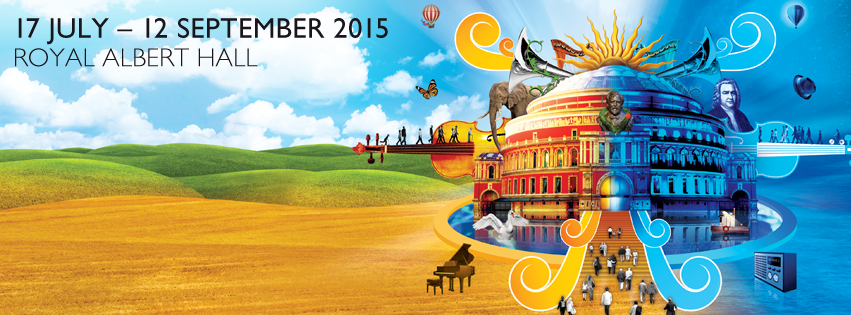
It’s nearly time for the BBC Proms. The world’s biggest classical music festival – which seems to get bigger every year – starts this coming Friday at the Royal Albert Hall.

With so much to choose from Arcana has taken on the task of choosing ten Proms to attend, watch or listen to – which you can read about and preview below. The idea is to mix up a few obvious recommendations and a wildcard or two.

The Arcana coverage of the Proms is going to be a little bit different from your average review site. For a start any Prom reviewed in person will be experienced from the Arena rather than from a seat. This is for two reasons – the Arena has arguably the best acoustic in the notoriously tricky hall, and it’s also the place where the biggest cross section of musical public brush shoulders.

This year in its Proms coverage Arcana will also be focusing on new music, offering an appraisal of each premiere at the festival. This is a surprisingly demanding task, because there are 32 new pieces from the likes of Eric Whitacre, Hugh Wood and even a newly discovered work by Olivier Messiaen. An early interview on Arcana will feature percussionist Colin Currie talking about the new concerto into the open…, written for him by HK Gruber. So here we are then – ten Proms and tasters for you, however you intend to experience them. Happy Promming!

18 July: Ten Pieces Prom (Prom 2 – repeated on 19/7 at 11:00am) (TV)

Ten Pieces is the BBC’s initiative to get classical music into schools – but of course the learning need not stop there! This prom, presented by Dick and Dom, Molly Rainford and Dan Starkey, is comprised of all ten pieces, from John Adams’ Short Ride in a Fast Machine through to the end of Stravinsky’s ballet The Firebird. Here’s a link to a preview of all ten pieces:

http://bbc.in/1HIJOLe

20 July: Thomas Tallis’ Spem in alium (Proms Chamber Music 1)

Once again Proms Chamber Music will visit the Cadogan Hall every Monday lunchtime – but to begin with The Cardinall’s Musick will perform sacred music by Cheryl Frances-Hoad – a world premiere – and the jawdropping Spem in alium of Thomas Tallis, a 40-part choral piece that simply has to be heard. Here is the Tallis Scholars’ conductor Peter Phillips discussing the work:


28 July: Prokofiev – Piano concertos 1-5 (Daniil Trifonov, Sergei Babayan and Alexei Volodin, London Symphony Orchestra / Valery Gergiev (Prom 14)

Not one for the faint hearted, this! Prokofiev wrote for the piano both as a percussion instrument and a lyrical one, so some of his works feature stabbing but often jaunty tunes. The Piano Concerto no.2 is particularly epic:


3 August: MacMillan – Symphony no.4; Mahler – Symphony no.5 (Prom 24)

The world premiere of Sir James MacMillan’s Symphony no.4. Donald Runnicles will also conduct the underrated BBC Scottish Symphony Orchestra in Mahler’s Symphony no.5, which promises to bring new life to the old warhorse:


4 August: Monteverdi – Orfeo (Prom 25)

Described as ‘the first great opera’, Orfeo will be sung in Italian and conducted by Sir John Eliot Gardiner, who will, to quote the BBC Proms website, ‘transform the Royal Albert Hall into the 17th-century Mantuan court of the Gonzagas with some of Monteverdi’s loveliest melodies and most colourful instrumental writing’. Here’s what we have to look forward to:


5 August: Late Night with 6Music (Prom 27)

Following the successful 6Music night two years back, the station returns – this time with Mary Anne Hobbs at the helm to explore new music from two composers on the Erased Tapes label who write with classical music in mind. These are Nils Frahm

…and the duo A Winged Victory for the Sullen:


17 August: Osmö Vänska conducts Sibelius – Symphonies 5, 6 & 7 (Prom 43)

An obvious recommendation perhaps, but if you wanted to see a Sibelius concert and had a choice of conductor, Osmö Vänska would surely be it. His interpretations of the composer are both incredibly detailed and deeply passionate, and the BBC Symphony Orchestra will no doubt fall under his spell for three of the composer’s symphonic masterpieces:


19 August: Elisabeth Leonskaja plays Mozart (Prom 45)

Elisabeth Leonskaja is quite simply one of the best pianists in the world today – and in Mozart’s Piano Concerto no.22 her performance should be sublime. Charles Dutoit and the RPO will no doubt prove sensitive accompanists – but in Debussy (the Petite Suite) and Shostakovich (Symphony no.15) they should also be rather special. Here is Leonskaja in solo Mozart:


9 September: Nielsen and Ives (Prom 72)

This intriguing night of music takes two wildly different forces from twentieth century music – anniversary composer Carl Nielsen, born 150 years ago, and the maverick Charles Ives, gradually revealed as one of the most influential composers of modern times. The former is represented by the impressive Violin Concerto, which will be played by the extravert violinist Henning Kraggerud. The latter by Symphony no.4, which really is best experienced in person. It contains a number of hymns, performed by a choir beforehand. Andrew Litton will be the guiding hand.


11 September: Elgar – Dream of Gerontius with Sir Simon Rattle (Prom 75)

Sir Simon Rattle returns for a second night at this year’s festival, leading the Vienna Philharmonic and a starry trio of soloists in Elgar’s magnificent choral work, with Toby Spence, Roderick Williams and wife Magdalena Kožená. Here’s an excerpt from the Berlin Philharmonic:

A mother’s inspiration

mum

While the object of Arcana is to share music and thoughts, it is also to acknowledge some influential people in the world of music. For many people the most influential people in this field are their parents or grandparents – so I hope you will forgive me for sharing a personal inspiration on all of my work here.

Very sadly my mother Coralie passed away two weeks ago (May 2015). Mum was many things for me, but what I want to praise here is her encouragement of my musical exploits, because without that I would not be writing this piece.

I am fortunate to have grown up in a happy household with brothers Nick and Jonathan and sister Clare, all of us at close quarters in a terraced house in Thetford, Norfolk. Gradually, at the age of four, I was drawn to Mum’s record collection, enjoying the delights of Dvořák’s New World Symphony, Rimsky-Korsakov’s Sheherazade, Tchaikovsky’s Fifth Symphony and Romeo and Juliet and especially Holst’s The Planets. To her credit, though nerves were tested with the frequent repetition of these pieces, Mum encouraged me to keep on listening to them with a patient smile.

Then, at the age of eleven, I started to learn the cello. As anyone that age knows, one of the least attractive things about learning a musical instrument is the practice. Mum nagged me to do scales, arpeggios, proper warm ups, sight-reading and the interminable repetition of the exam pieces themselves, though they must have been driving her crazy. At the time I wasn’t grateful – but I certainly am now!

My cello playing helped get me on to the Music ‘A’ Level course at Norwich City College, where I made it my mission to discover classical music in all its forms – and where Mum and Dad generously invested in a restored cello for me. Then I went on to the University of Surrey at Guildford, where I furthered that education but also discovered a love of dance and electronic music. Then I was fortunate to move on to the jobs I have had since, leading to PPL where I have been for thirteen years – and of course to start with writing about music, which is what I love to do here.

At all these points Mum has been a constant source of encouragement, and we had many long chats about classical music she had heard on Radio 3. If I was reviewing a lunchtime concert at the Wigmore Hall I knew she would be there, on the other end of the radio – which, in a sense, she always will be.

When in Finland recently I was lucky enough to visit the house of Jean Sibelius at Ainola, 20km from Helsinki. Sibelius was Mum’s favourite composer – and is one of mine too. Into this year I hope to start listening to all his works – and at every turn Mum’s smiling face will be there, enjoying the music with me.

So thanks, Mum, from the bottom of my heart. I owe you so much for all you have done for me, and I just hope I can provide similar inspiration for others. I leave below the music played at her funeral service, Farewell to Stromness by Sir Peter Maxwell Davies. It sums up her gentle nature beautifully, and also the sparkle that never left her eyes.

Welcome to Team Arcana!

arcana-purple-25

Welcome to Arcana.fm! It’s great to see you here.

Arcana has been set up to give you the chance to step into classical music with no fear or pressure – just the chance to enjoy and read about good music!

The name Arcana comes from a forward-looking orchestral piece written by the French composer Edgard Varèse in the 1920s. Varèse was a visionary, an early sign of the direction electronic music was to take some fifty years later – and I want to capture something of that sense of discovery and originality in a number of ways through the site.

To do this I am treating all musical styles as equals, enjoying what they take from each other – pop drawing from classical, as in The Borrowers series that will begin with Manfred Mann‘s Joybringer, and vice versa – an example for starters being Philip Glass and his symphonies from the work of David Bowie. If Taylor Swift or Muse suddenly go classical, you’ll be the first to read about it!

There will be an extended look at classical music as used for TV and film in Screen Grab, beginning with the score for the Russell Crowe-led seafaring epic, Master and Commander: The Far Side of the World, and looking at TV adds and promos, too. What’s the music Channel 4 are using to promote The Jump? You’ll find out here (it’s the Polovtsian Dances from Borodin‘s opera Prince Igor!)

There will be a series of guides for online concerts, which in the case of the BBC iPlayer will then be available for 30 days’ enjoyment. There will be interviews – a couple of whom are tenatively lined up for the next week or two in the shape of Emika and John Tejada. There will be reviews of new relevant recordings, both pop and classical. We will go on a Richard Strauss Odyssey, inspired by the composer’s centenary last year – and fellow centurion Sibelius will follow! Later, in a more ambitious series, we will take music year-by-year from 1700, so we can start with the very best the Baroque period had to offer. There is also Under the Surface, a look at underappreciated composers or works.

What matters most at this or any stage is your feedback and suggestions. Arcana is not just for my enjoyment – I want everyone to get as much as possible out of it. So tell me what you would like to see more / less of on this site, what music you like and dislike, or anything else – through Twitter, Facebook or e-mail.

Let’s enjoy the music!

-Ben Hogwood