Online concert – English Symphony Orchestra / Kenneth Woods: Elgar Festival 2023 – Symphony no.1

Elgar Symphony no.1 in A flat major Op.55 (1907-08)

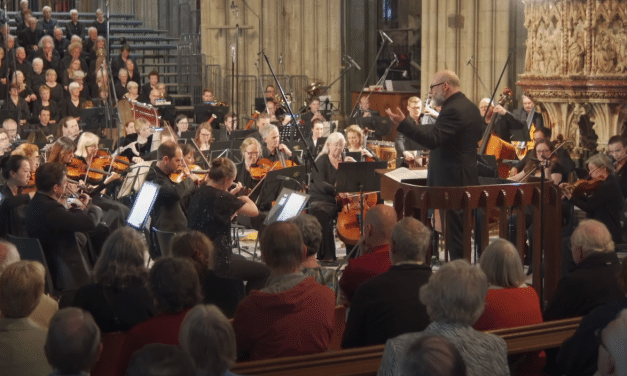
English Symphony Orchestra (leader Zoë Beyers) / Kenneth Woods

Filmed at Worcester Cathedral, Saturday 3 June 2023

Recording, editing and video direction by Tim Burton

Reviewed by Richard Whitehouse

The revival these past four years of the Elgar Festival has provided a boost to music-making in the Midlands, with the present account of that composer’s First Symphony a reminder of the English Symphony Orchestra’s prowess right across the spectrum of symphonic writing.

It may not have had the usual number of strings to complement the triple woodwind or brass, but the resonance of Worcester Cathedral ensured any such disparity was not evident in terms of internal balance. Not least an opening movement whose motto-theme was thoughtful while never indulgent, setting the tone for a main Allegro where expressive variety was never at the expense of its formal focus. Especially felicitous was a hushed transition into the reprise, and a coda which ably distilled the equivocal mood overall as it subsided into a ruminative calm.

Kenneth Woods was mindful to invest the scherzo and its trio with a consistency of pulse so, if the former felt a little reined-in at its return, the latter unfolded with an ideal blend of poise and wistfulness. Nor was that lengthy transition into the slow movement other than seamless as a harbinger of this Adagio’s understated if undeniable profundity, Woods duly negotiating its interplay of soulful main theme and wistful asides with unerring rightness through to the artless closing bars where the music seems not so much to cease as recede beyond earshot.

If the finale represents a falling-off of inspiration, it was not apparent here. Sombre yet shot through with expectancy, its introduction launched an Allegro whose alternating incisiveness and suavity held good during an impulsive development, then a transformation of the codetta whose pathos returned for an apotheosis where the motto-theme carried all before it. Not that these closing pages felt at all bombastic or even grandiloquent in import; rather, they set the seal on a work whose affirmation is the greater for its having been so purposefully attained.

An impressive performance as must have seemed even more so in the context of this concert, not that anyone hearing it via ESO Digital is likely to feel short-changed in emotional terms. Hopefully more performances from the Elgar Festival will be made available at this platform.

This concert could be accessed free until 3 September 2024 at the English Symphony Orchestra website, but remains available through ESO Digital by way of a subscription. Meanwhile click on the names for more on the English Symphony Orchestra and Kenneth Woods

Published post no.2,305 – 19 September 2024

New music – Rival Consoles: Gaivotas (Erased Tapes)

published by Ben Hogwood, with text appropriated from the press release

Rival Consoles returns with genre-blurring new piece Gaivotas, a first taster from his forthcoming ninth studio album, written during an experimental residency in Portugal last year.

“This music feels like one of the most intuitive things I have ever written”, says Ryan Lee West, the man behind the pseudonym. “The momentum that the piece establishes in the first breath pushes forward right until the very end and many of the ideas were created in a first-take moment that were exciting and liberating.”

The powerful accompanying video was directed by Vincent Duluc-David and shot in Kyrgyzstan, where we follow the life of a group of teenagers as one of them mysteriously disappears. You can watch below:

West will be touring as special guest with Kiasmos for select European shows in September, and returns to North America for Slingshot Festival and four headline shows in the Northwest in October.

Published post no.2,304 – 18 September 2024

On Record – Benjamin: Picture A Day Like This (Nimbus)

George Benjamin
Picture a day like this (2021-23)

Woman – Marianne Crebassa (mezzo-soprano)
Zabelle – Anna Prohaska (soprano)
Artisan/Collector – John Brancy (baritone)
First Lover/Composer – Beate Mordal (soprano)
Second Lover/Composer’s Assistant – Cameron Shahbazi (countertenor)
Mahler Chamber Orchestra / Sir George Benjamin

Nimbus NI8116 [60’09’’] English libretto included

Producer & Engineer Etienne Pipard
Live performance, 5 July 2023 at Theâtre du Jeu de Paume, Aix-en-Provence

Written by Richard Whitehouse

What’s the story?

Nimbus continues its long association with the music of George Benjamin by releasing his most recent opera, as recorded during its initial production at the Aix-en-Provence Festival and here featuring an impressive line-up of musicians under the direction of the composer.

What’s the music like?

Surprising as was the emergence of Benjamin as an opera composer, he has consolidated his standing accordingly – the ‘lyric tale’ Into the Little Hill (NI5964) duly followed by the full-length Written on Skin (NI5885) then Lessons in Love and Violence (NI5976). In spite of its greater length, Picture a day like this marks his return to the intimacy and understatement of that first venture in terms of its reduced cast and chamber forces – for all that the underlying ‘theme’ seems nothing if not significant in its consideration of life above and beyond death.

Unfolding across seven scenes, the narrative relates a Woman’s search for a ‘happy person’ to redeem the death of her child – during which she encounters a pair of Lovers, a retired Artisan and a renowned Composer; their happiness and contentment in each case pure self-deception. After a despairing monologue, she meets a Collector whose attempted empathy leads her to a garden where the arcadian aspect proves as illusory as the contentment of Zabelle: one whose ostensibly tragic story still enables her to glimpse a future beyond what she has experienced.

Musically this work finds Benjamin at his most subtle and often rarified though never merely inscrutable. Understandably eschewing those respectively sustained expressive build-ups then jarring histrionics of his previous two stage-works, the present opera focusses on incremental changes of emphasis both vocally and instrumentally to maintain a fluid if always perceptible momentum. Allied to this the texture has a poise and finesse, notable even by the standards of this composer, as largely mitigates any sense of the drama played out at an emotional remove.

It could hardly be bettered in terms of performance. Marianne Crebassa brings eloquence and no little fervour to the Woman, while Anna Prohaska evokes Zabelle with mounting gravitas. The other singers are nothing if not attuned to their doubling of roles – notably John Brancy’s fractured Artisan, Beate Mordal’s unfulfilled Composer and Cameron Shahbazi’s narcissistic Lover. Long an able exponent of his own music, Benjamin secures playing of responsiveness from the Mahler Chamber Orchestra as he steers this work forward with audible inevitability.

Does it all work?

Yes, providing one accepts that Benjamin’s idiom is inward if not necessarily inward-looking and elusive without its being inaccessible. The ethos of this opera is likely to be experienced at a remove from the drama it articulates, with the listener becoming absorbed in the onstage action but never coerced into an intended response. That what one takes from listening to it is no more permanent than it is predetermined is itself testimony to the conviction of Benjamin’s and librettist Martin Crimp’s fashioning a parable simultaneously of its own yet outside time.

Is it recommended?

Indeed, given the fascination of its subject, the nature of its treatment and the assurance of its realization. Hopefully a DVD presentation of this or the subsequent Royal Opera production will be forthcoming. Even if or when it appears, this release can be strongly recommended.

Watch

Buy / Further information

For purchase options and more information on this release, visit the Nimbus website.

Published post no.2,303 – Tuesday 17 September 2024

Switched On – Floating Points – Cascade (Ninja Tune)

by Ben Hogwood

What’s the story?

This is the fifth Floating Points album, and the first since Sam Shepherd’s alias teamed up with Pharoah Sanders and the London Symphony Orchestra for the memorable Promises, one of the very best albums released around lockdown.

That period provided the indirect inspiration for Cascade, for Shepherd had grown frustrated at the lack of opportunities to promote his preceding solo album, Crush, to heaving dancefloors where its potential clearly lay. Seizing the opportunity to write for the club crowds, he delivered an album of speed and complexity.

What’s the music like?

There is some dazzling music on Cascade. A lot happens in the hour in which it unfolds, and while some of the tracks are quite complicated in their arrangements, Shepherd’s trump card lies in his ability to make intricate music that rewards close inspection while making some eminently danceable grooves.

That applies very much to Birth4000, which traverses a number of styles while ensuring there are plenty of hooks for the listener to latch on to. Afflecks Place – named after the Manchester market – bubbles up from the ground, in the power of an elemental force, while Key103 has primal urges taking us right into the middle of the dancefloor.

The larger structures work really well, the album only nine tracks but featuring a couple of bigger constructions such as Ocotillo and Vocoder that develop instinctively and dramatically.

Does it all work?

It does. On occasion Shepherd’s music almost has too much going on, but he seems to pull it back it just the right moment, and adding the closing track Ablaze as a comedown works a treat.

Is it recommended?

Yes, enthusiastically. A dizzying high that delivers on several levels.

For fans of… Squarepusher, Throwing Snow, Mount Kimbie, Jamie xx

Listen & Buy

Published post no.2,302 – Monday 16 September 2024

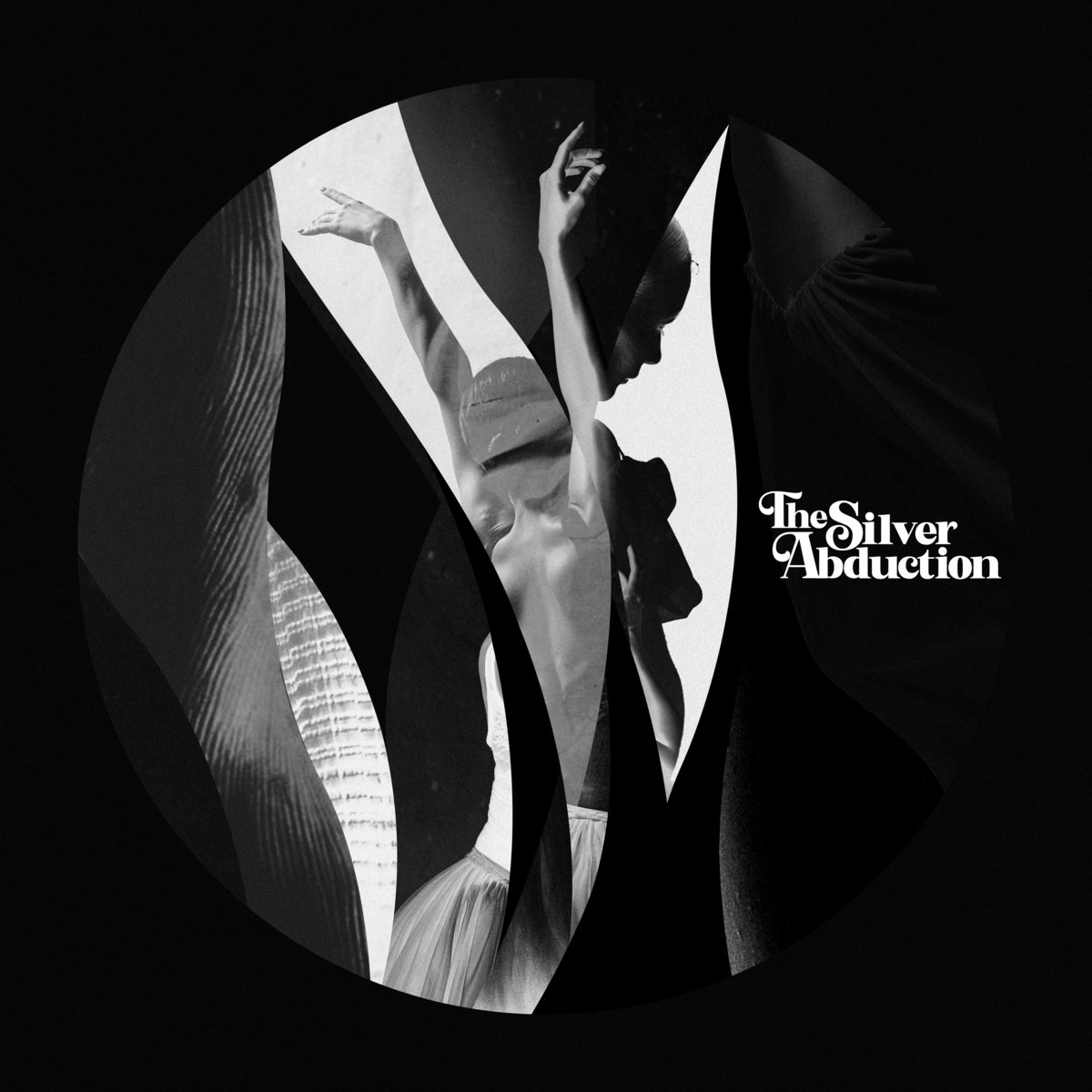
On Record – The Silver Abduction: The Silver Abduction (Lightwell Recordings)

by Ben Hogwood

What’s the story?

Not much is known about The Silver Abduction…but all you really need to know is that this is the first record from a collaboration between Andy Dragazis (the man behind Blue States) and singer Allison Brice (who has previous with The 18th Day Of May and Lake Ruth).

Their short descriptive biography over on Bandcamp suggests a combination of ‘lush orchestral melodies, church reverb drenched drums intertwined with Allison’s haunting vocals and lyrics.

What’s the music like?

This album is a slow burner, and with repeated listens it starts to become a real treasure. Dragazis has a great deal of experience on beautifully voiced pop songs, and here he makes some richly coloured productions over which Brice can work her magic.

The lyrics themselves suggest wistful, lovelorn situations that are given real meaning by Brice, who sings with deep emotion. There is definitely a pop sensibility that suggests Stereolab, Broadcast or Saint Etienne – the latter on Remember My Heart especially, which is a pop treasure.

Thermocline is a winsome combination of Dragazis’ orchestral palette and Brice’s flexible vocals, while Careful On The Ways is a wistful, late summer beauty. Quarter To Two tells a vivid story, while the closing Cecile is a waltz in what feels like an empty fairground.

Does it all work?

It does. These are pop songs with depth and subtle but lasting expression, and the album is ideally structured. Brice could pretty much be singing about stocks and shares and still make a lasting impression – that she’s not makes the album even more meaningful.

Is it recommended?

Definitely. The Silver Abduction are a treasure, and hopefully this is the start of a lengthy musical relationship. A beauty!

For fans of… Saint Etienne, Dubstar, Kinobe, The Sundays

Listen and Buy

Published post no.2,301 – Saturday 14 September 2024