On Record – April Fredrick, Thomas Humphreys, ESO Chorus, English Symphony Orchestra / Kenneth Woods: Sawyers – Mayflower on the Sea of Time (Nimbus)

April Fredrick (soprano), Thomas Humphreys (baritone), ESO Chorus, English Symphony Orchestra / Kenneth Woods

Sawyers Mayflower on the Sea of Time (2018)

Nimbus NI6439 [58’57’’]
Producer and Engineer Tim Burton Engineer Matthew Swan
Live recording, 17 June 2023 at Worcester Cathedral

Reviewed by Richard Whitehouse

What’s the story?

Philip SawyersMayflower on the Sea of Time was to have been launched with performances in Worcester Cathedral four years ago, but the pandemic inevitably derailed this. Happily, the composer’s largest work so far was finally heard last June in the venue as originally intended.

What’s the music like?

Commissioned to mark the 400th anniversary of the sailing of the Mayflower from Leiden to Plymouth, this is an oratorio in concept but equally a choral symphony in design. Its libretto, mainly by the artist Philip Groom, features set-pieces for various Old and New World figures largely for soprano and baritone alongside summative passages for chorus. Self-deprecating about his literary abilities, Groom yet achieves a viable balance between the characterization of individuals as part of a continuous and cumulative trajectory relating that of ‘the journey’.

There are four continuous parts: Persecution and Journey, a sonata design which informs the Pilgrims’ flight from religious persecution and their decision to cross the Atlantic; Arrival in the New World, a slow movement charting their arrival then tentative initial interaction with native cultures; Survival and Making our Community, a brief scherzo in which the Pilgrims’ industriousness and idealism all too soon becomes its own justification; and Our New World, a sizable rondo-finale whose looking to the future is framed by choruses of growing fervour.

Sawyers’ writing for the chorus is expert and resourceful, not least when this elides between a depiction of Pilgrims or Natives with that of a more abstract commentary, while solo sections allow his lyrical impulse free reign – not least towards the end of the second and fourth parts, closing with luminously ecstatic choruses that accentuate an essentially affirmative message. Worth noting is the poignant incorporation of a motet by Thomas Tomkins into its fourth part, which also sets lines by Walt Whitman with a tangible understanding of its expressive syntax.

Does it all work?

Almost always, and not least owing to the persuasiveness of this performance. April Frederick and Thomas Humphreys (the latter after a slightly strained start) can hardly be faulted in their commitment or insight, while the new-founded ESO Chorus evinces a power and immediacy abetted by Worcester Cathedral’s spacious acoustic to belie its modest forces. The ESO gives its collective all throughout, conveying the textural intricacy and the emotional heft of music whose overall formal integration is fully conveyed through Kenneth Woods’ astute direction.

The initial performances might have fallen through, but the associated educational project did go ahead and enabled several hundred youngsters to experience the piece at first hand. This is worth remembering given Mayflower should have a ready appeal for those who know little of the historical background or, indeed, contemporary music. That it can be rendered by around two-dozen singers ought to commend it to enterprising choral societies able to muster the 45 musicians, especially when Sawyers’ writing for both is often exacting but always practicable.

Is it recommended?

Very much so. The sound captures the resonance of its acoustic with no loss of definition, and there are detailed notes by composer, author and conductor. A pity the actual text could not be included, but that this can be scanned via a QR code is another incentive for younger listeners.

Listen & Buy

You can listen to sample tracks and purchase on the Wyastone website. For further information on the artists, click on the names for more on April Fredrick, Thomas Humphreys, the English Symphony Orchestra and their conductor Kenneth Woods. Click on the name for more on composer Philip Sawyers

Published post no.2,157 – Tuesday 23 April 2024

In appreciation – Sir Andrew Davis

by Ben Hogwood

Yesterday we heard the sad news of the death of the British conductor Sir Andrew Davis, at the age of 80.

The warmth of the tributes made on social media to Sir Andrew are an indication of his standing as a highly respected conductor who was for many a friend as well as a fellow musician. As a live performer he excelled at the BBC Proms, becoming the festival’s musical figurehead in the 1990s as chief conductor of the BBC Symphony Orchestra, a post he held from 1989 until 2000. Yet he also made his mark overseas, through posts held with the Toronto Symphony Orchestra (from 1975 until 1988) and the Melbourne Symphony Orchestra (from 2013).

The playlist below attempts to summarise his considerable contribution to recorded music – and in particular his many outstanding discs of British music. The reader is particularly directed towards an extensive and hugely rewarding series of Elgar for Chandos, but the list below includes early Berlioz, Delius, Elgar, a recent highlight of Stravinsky‘s Violin Concerto recorded with James Ehnes and the BBC Philharmonic Orchestra, and an outstanding version of Vaughan WilliamsSymphony no.6, capturing a side of the composer seldom heard at the time of recording.

Published post no.2,156 – Monday 22 April 2024

In concert – Binker Golding @ Ronnie Scott’s

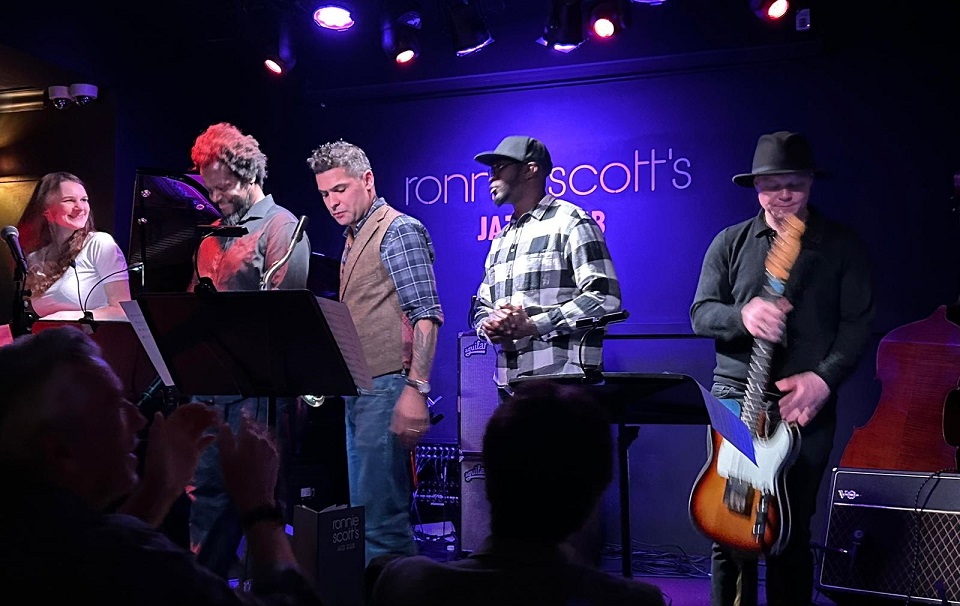
Binker Golding (tenor saxophone), Philip Achille (harmonica), Artie Zaitz (guitar), Sarah Tandy (piano), Dan Casimir (double bass), Jamie Murray (drums)

Ronnie Scott’s, London, 19 April 2024

by John Earls. Photo credits (c) John Earls

The last time I saw Binker Golding at Ronnie Scott’s (June 2021) he and his quintet were performing new material in advance of what was to become the wonderful (and superbly titled) album Dream Like a Dogwood Wild Boy, a collection of tunes traversing across jazz, Americana, country and blues.

Last Friday’s (second house) concert at Ronnie Scott’s was also a showcase for new material, albeit interspersed with a couple of numbers from Dogwood. The new material, played here by a superb sextet, develops the trajectory of Dogwood in innovative and pleasing ways.

Not least is the addition of harmonica player Philip Achille who I’ve previously described as someone “taking his instrument to places you didn’t know it could go”. He did it again here throughout the evening including opening the set with soft, inquisitive and inviting tones. I don’t know if Achille features on the new album (he doesn’t play on Dogwood) but I sincerely hope so.

Of the line-up performing tonight, Sarah Tandy (piano and organ) and recent Arts Foundation Futures Award winner Daniel Casimir (double bass) did play on Dogwood. Artie Zaitz (guitar) and Jamie Murray (drums) completed the sextet. All were excellent, Tandy combining her lyrical piano playing with the organ (sometimes at the same time), Casimir solid and expressive on bass, Zaitz giving an effective guitar edge and Murray particularly impressive with his delicate stick and finger taps (although he can thump too). The Dogwood tracks played were a smoky Love Me Like a Woman and an absolutely captivating version of My Two Dads which saw Golding and Achille engage in a touching call and response of the opening refrain, featuring stunning solos from Casimir, Golding and Tandy. 

The new material is a promising progression and evolution of Golding’s outstanding composing, playing and bandleading qualities. Great tunes with moments of grace and beauty, the last number of the set being a case in point. You don’t always have to finish with an up-tempo banger. Tune titles included I Know I Can Change (whose origin comes from a misconstrued lyric) and Where the Heart Meets the Sky (which might also end up being the title of the new album).

Vocalist Maxine Scott joined Golding (playing piano) and Achille (harmonica) to sing Bob Dylan’s I Shall Be Released for an encore, but it was the sextet’s performance and the prospect of the forthcoming album that truly captured the night.

John Earls is Director of Research at Unite the Union and tweets / updates his ‘X’ content at @john_earls

Published post no.2,155 – Sunday 21 April 2024

Let’s Dance – Alexander Robotnick: Kind of… Robotnick (Hot Elephant)

by Ben Hogwood

What’s the story?

This is the third album in Alexander Robotnick‘s Simple Music series, and presents eight tracks in the Italian producer’s hallmark style.

What’s the music like?

Electronic disco is the name of the game, and Robotnick delivers a set of classy productions that are straight on the dancefloor with no messing.

Moving Light sets the tone, chunky beats and minimal but effective production that gets straight to the point. Robotnick has a sleek delivery, and the likes of A Tech House In Nilwella and Lipstick operate with ease over strong, four to the floor beats, the latter going for a sharper set of timbres. What You Think Of Me is quicker, and the bass has real presence, but arguably the best is saved for last with Rounding About, a really strong groove.

Special mention should also go to A Blow To The Heart, with a fine guest turn from Ludus Pinsky.

Does it all work?

It does. Robotnick hits the groove running and doesn’t stop!

Is it recommended?

Yes, and if you’ve got the other two in the series there is no need for hesitation. If you haven’t, and fancy a set of nocturnal grooves with an electro edge, then look no further.

Listen & Buy

You can listen to the album and explore purchase options on the Beatport website

Published post no.2,154 – Saturday 20 April 2024

In concert – Ian Bostridge, CBSO / Gergely Madaras: Thorvaldsdottir, Britten & Tchaikovsky

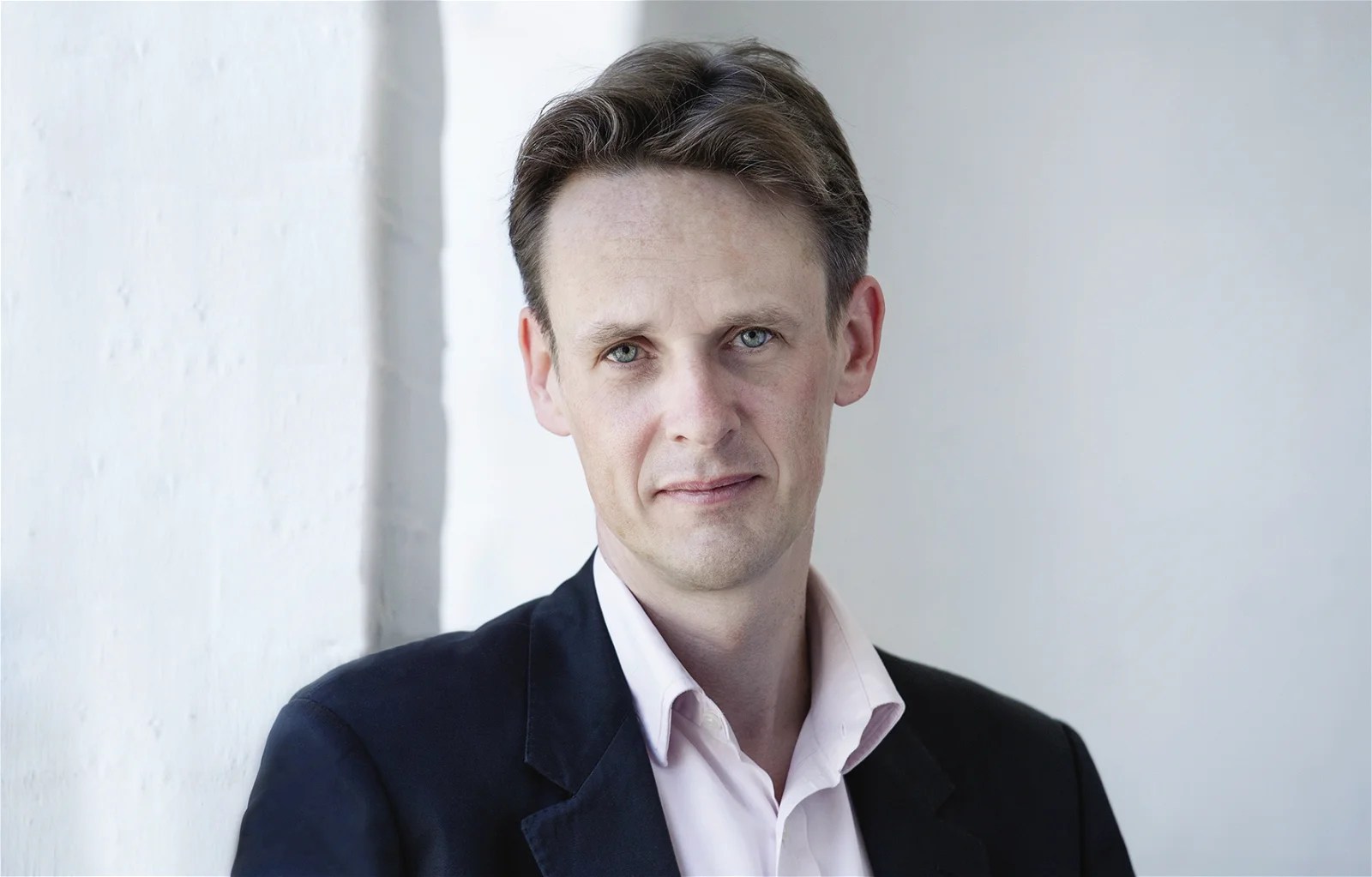
Ian Bostridge (tenor), City of Birmingham Symphony Orchestra / Gergely Madaras (above)

Thorvaldsdottir Dreaming (2008)
Britten Les Illuminations Op.18 (1939)
Tchaikovsky Symphony no.1 in G minor Op.13 ‘Winter Daydreams’ (1866, rev. 1883)

Symphony Hall, Birmingham
Wednesday 17 April 2024

Reviewed by Richard Whitehouse Picture of Gergely Madaras (c) Hannah Fathers

This evening’s concert with the City of Birmingham Symphony Orchestra comprised what was an unusually cohesive programme centred on the concept of ‘dreams’, assembled and directed with consistent empathy and insight by the Hungarian conductor Gergely Madaras.

Dreaming was the title as well as the watchword of the piece by Anna Thorvaldsdottir which opened proceedings. Her first major work for orchestra is already characteristic in its eliding between evocations arcadian and desolate, with an undeniable sense of the ominous coming through as the final stages take on an extemporized quality; musicians gradually exiting the sonic frame with just the capricious asides of a cellist remaining. Eduardo Vassallo made the most of this brief spotlight, and the CBSO made its collective presence felt to striking effect.

Arthur Rimbaud’s brief but meteoric spell as a poet in the early 1870s had belated if decisive impact on numerous composers and none more than Britten, his song-cycle Les Illuminations among his finest achievements in any medium. Having sung it many times, Ian Bostridge (above) still manages to point up the growing anticipation of ‘Fanfare’ or breathless excitement of Villes; his wide-eyed wonder in Phrase then graceful musing in Antique matched by the resolute irony of Marine or glancing wit of Royauté. Madaras drew languorous playing from the CBSO strings in Interlude and brought out the ecstatic longing of Being Beauteous, before the fervid imagining of Parade brought this sequence full circle. It remained for Départ to offer a fulfilled exit as poet – and composer – resignedly bids farewell to the realm of dreams.

This gripping account should not have needed Bostridge to address members of the audience after the fourth song, asking they refrain taking pictures on their mobiles while the music was in progress. An overhaul of the management’s current laissez-faire approach might be in order.

After the interval, a comparatively rare outing for Tchaikovsky’s First Symphony. The ‘Winter Daydreams’ of its subtitle implies an unforced though rarely contrary take on formal precepts, as in an opening movement (oddly marked Allegro tranquillo) whose often portentous pauses were well integrated by Madaras into the cumulative symphonic flow. The CBSO woodwind came into own with the Adagio – its oboe melody among its composer’s most affecting, and not least when it returns at the movement’s climax in a mood of expansive if fateful grandeur.

Partly drawn from an earlier piano sonata, the Scherzo exudes a pert animation that Madaras judged to a nicety, as he did the wistful ruminations of its trio. Much the hardest movement to make cohere, the Finale unfolded persuasively from its sombre introduction to a celebratory Allegro replete with fugal episodes; the ensuing build-up (its effect not lost on Shostakovich) to the resounding restatement of its main theme duly capped by an apotheosis whose overkill was (rightly) kept well within limits, thereby setting the seal on this persuasive performance. For imaginative programming and convincing execution, Madaras is at the forefront among conductors of his generation – his rapport with the CBSO evident throughout. This should be equally true when Markus Stenz returns next week for a pairing of Schumann and Bruckner.

Click on the link to read more on the current CBSO concert season, and on the names for more on tenor Ian Bostridge and conductor Gergely Madaras. Click here for an interview Arcana conducted with composer Anna Thorvaldsdottir in 2023

Published post no.2,153 – Friday 19 April 2024