Monday 15 April saw the 100th anniversary of the birth of Sir Neville Marriner, the beloved conductor who formed and led the Academy of St. Martin-in-the-Fields. Surely one of the most recorded conductors in history, Marriner completed a wonderful discography ranging from early Baroque to 20th century masterpieces, with a good deal in between.
This playlist takes just a fraction of those recordings, mixing a couple of classics with some of the more modern music in which Marriner added some very interesting interpretations. We go from Grieg to Ives with a relative rarity included, Tchaikovsky’s tuneful Orchestral Suite no.3. Hope you enjoy!
The Elgar Festival (27 May – 2 June) is working with a 40% funding cut from Arts Council England
In this short film, Festival Patron Julian Lloyd Webber introduces the Fundraising Campaign:
The Festival is raising money to help deliver its 2024 iteration, due to a 40% funding cut from Arts Council England
Donations are valuable in helping to continue the legacy of one of England’s most revered composers. As the festival’s organisers say, “We believe Elgar is for everyone and our developing range of events are for people of all ages, interests, and lifestyles.”
Simon Desbruslais (trumpet), English Symphony Orchestra / Kenneth Woods
Sibelius Rakastava Op.14 (1893, arr. 1912) Sawyers Concerto for Trumpet, Strings and Timpani (2015) Dvořák Notturno in B major Op.40 (1870, arr. 1883) Fribbins Soliloquies (2012, arr. 2017) Elgar Introduction and Allegro for strings Op.47 (1905)
Hall One, Kings Place, London Sunday 15 April 2024
Reviewed by Richard Whitehouse
Concerts by the English Symphony Orchestra in the London Chamber Music Society’s season are always a worthwhile fixture and this early-evening event, in its mixing established classics with contemporary pieces, demonstrated the stylistic range and sympathies of this ensemble.
A pity that Sibelius’s Rakastava has never been taken up by many British conductors – John Barbirolli and Sir Colin Davis excepted – as this extensive reworking for strings and timpani of an early choral work should be a staple of its repertoire. Kenneth Woods duly brought out the wistful poise of The Lover, and if the stealthiness which underpins The Way of the Lover seemed just a little tentative, the bittersweet pathos that permeates Good evening, Farewell then came through unabated in what is as moving a leave-taking as its composer ever penned.
The music of Philip Sawyers has been a constant feature of the ESO’s programming this past decade, and his Trumpet Concerto more than deserved revival. The outward Classicism of its formal trajectory should not belie the deftness by which Sawyers modifies the sonata design of its opening Allegro, the impetus and reflectiveness of its main themes finding accord prior to a trenchant cadenza with timpani at the fore, or a central Andante that exuded an emotional breadth and fervour in advance of the excellent recording by these artists. Among the leading trumpeters of his generation, Simon Desbruslais – placed high to the rear of the auditorium, to potent effect – was wholly unfazed by its demands; nor those of a final Allegro in which more reflective elements leaven the initial energy, only to be outdone in the virtuosic closing bars.
Next, a welcome hearing for the Notturno that Dvořák salvaged from an early (and reckless) quartet. Its relative swiftness here recalled its intermediate reworking as an intermezzo in the second of his string quintets, so emphasizing its appealing lilt over any more ethereal quality.
Desbrulais (above) returned after a brief hiatus for Soliloquies by Peter Fribbins. A composer as adept on a symphonic as on a miniature scale, these brief if affecting pieces draw on three earlier songs – the recasting of whose vocal line encourages the soloist to an eloquence that, after the relative restraint of the initial Adagio and central Tranquillo, comes to the fore in a final Adagio where evocation takes on an almost cinematic aura. With impressive concertos for piano and violin to his credit, Fribbins ought to consider a full-length work for trumpet.
Elgar’s Introduction and Allegro has not unexpectedly been key to the ESO’s repertoire since its founding some 45 years ago, and this performance did not disappoint. Most admirable was the variety and depth of string tone that Woods (a one-time professional cellist) secured from only 19 players, so ensuring a vitality and impact in the more animated sections together with the requisite delicacy in those passages where the composer’s ruminative mood is uppermost. Both aspects were brought into thrilling accord at the close of the powerfully projected coda.
Beforehand, Woods spoke of the changing nature of commissions and the current difficulties in securing the necessary funding. This season has not been easy for the ESO though, on the basis of this programme, these players are commendably taking it all in their collective stride.
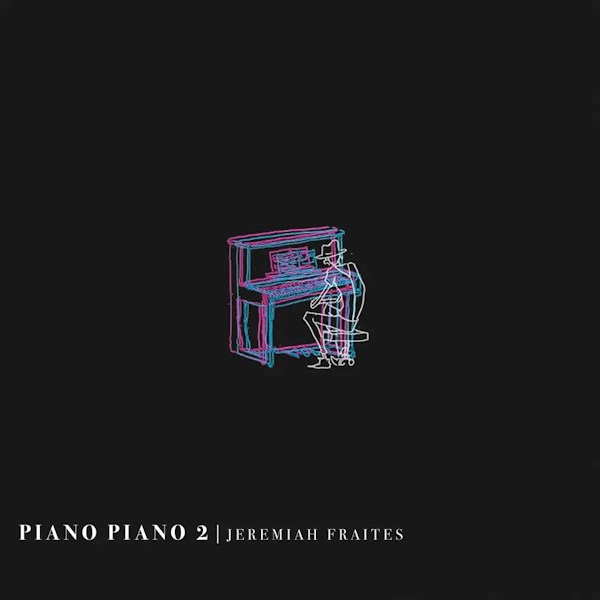
The Lumineers co-founder Jeremiah Fraites has poured a great deal of his soul into Piano Piano 2 – which, as its name suggests, is his second piano album. Whereas its predecessor was a set of relatively minimal compositions, the sequel has added textures, including strings, guitar, percussion and widescreen textural effects.
Extra Life, one of the single releases, was released in the wake of Fraites losing his father Joel, and has taken on a great deal of personal significance.
What’s the music like?
Fraites certainly keeps the music flowing on this album, using a number of different pianos as he strives for different colours and effects. Perhaps as a result of that Piano Piano 2 does have a greater reliance on texture rather than melody, and it is an outpouring of emotions, a stripping away of layers to get to the core.
Yet ironically it is when Fraites reduces the textures that the music has greatest impact. Pluck is an effective and thoughtful meditation, while the descriptive Snow Falling gives that lovely impression of being indoors, nose pressed up to the window pane, while the snow falls outside.
Extra Life is indeed a powerful track, with a beautiful viola solo to counter the piano work. The album finishes with a guest vocal from Gregory Alan Isakov, a version of Radiohead’s No Surprises that adds a good deal of extra music to the simple dressing of the original. The gospel-like harmonies at the end do rather swamp the vocal, though Isakov does hold his poise.
Does it all work?
Largely – though on occasion it does feel as though too much is going on, the listener swimming against a particularly strong current. Fraites, however, digs deep emotionally in his piano playing, and that comes across to the listener.
Is it recommended?
If you liked the soundtrack Michael Nyman wrote for The Piano, Fraites’s music is a logical next step – for he plays with similar energy and feeling. Yet it is when he takes a step back that the listener can feel closer to his true musical soul.
For fans of… Michael Nyman, Erik Satie, Ludovico Einaudi
Seong-Jin Cho (piano), London Philharmonic Orchestra / Edward Gardner
Wagner Parsifal – Prelude to Act One (1878) Beethoven Piano Concerto no.4 in G major Op.58 (1805-6) Tippett Symphony no. 2 (1956-7)
Symphony Hall, Birmingham Wednesday 10 April 2024
Reviewed by Richard Whitehouse
Although the London Philharmonic Orchestra’s ongoing season might not have been among its most enterprising, this evening’s concert confirmed how Edward Gardner is influencing both this orchestra’s programmes and its approach to standard repertoire as well as modern classics.
Beginning with the Prelude from Wagner’s Parsifal is certainly playing for high stakes and, while it afforded no revelations, this performance seemed nothing if not aware of the piece’s searching grandeur where the placing of motifs and those silences between them is crucial to its overall cohesion. A pity, perhaps, that Gardner opted for the ‘concert ending’ in which the close of the first act is laminated onto what went before instead of merely allowing the music to remain in expectancy, but this detracted only slightly from the majesty of what was heard.
Beethoven’s Fourth Piano Concerto then provided a perfect foil, not least in a performance so attentive to the interplay between soloist and orchestra. It helped that Seong-Jin Cho, winner of the Chopin International Competition in 2015, had an innate feeling for that ‘give and take’ necessary in this most integrated of the cycle; his fastidious while never uninvolving pianism heard to advantage over an initial movement where gradual evolution was uppermost, though his take on Beethoven’s earlier and less capricious cadenza was not lacking virtuosity. He and Gardner were at one in conveying the elemental call-and-response of the Andante, a brief but profound entry into a final Rondo whose vivacity was judiciously balanced with a ruminative poise, where lower woodwinds and strings emerged at the fore prior to the exhilarating close.
Some 66 years following its problematic premiere (restarted after a collapse of ensemble just minutes in), Tippett’s Second Symphony now enjoys regular revival though it could hardly be said to play itself. A keen advocate of this composer (witness his acclaimed recording of The Midsummer Marriage), Gardner paced the opening Allegro unerringly – pointing up contrast between its vigorous and yielding themes, while securing the requisite impetus in its lengthy development then a surging energy in its coda. Punctuated by Paul Beniston’s superb trumpet playing, the Adagio was almost as fine even if a slower underlying tempo might have brought even more depth to some of Tippett’s most evocative and spellbinding music; not least during its central build-up in the strings to a climax whose stark curtailing feels more than prescient.
Reservations as such centred on the Presto – undeniably well articulated in terms of rhythmic precision, while lacking the swiftness or velocity for its obsessive interplay and its Dionysiac culmination really to hit home. By contrast, the final Allegro was far from the anti-climax it can seem. Gardner had its measure from the jazzy introduction, via an inventive sequence of variations then sensuously descending melody on strings against shimmering woodwinds, to those cumulative ‘gestures of farewell’ that ended this performance in ecstatic ambivalence.
If not definitive, this was certainly an absorbing and memorable account as will hopefully be made available on the LPO’s own label (the concert having been broadcast live on Radio 3): one that rounded off what proved to be a judiciously planned and finely executed programme.




 Arcana.fm