This week the Dutch conductor Edo de Waart announced his retirement, after six decades at the top of his game. On inspection of his discography, de Waart has conducted a number of important recordings – either in San Francisco, Minnesota or the Netherlands – and a selection of these are included in the playlist below, which begins with a classic recording of Steve Reich‘s Variations for winds, strings and keyboards and ends with the landmark Harmonium, by John Adams:
Sheku Kanneh-Mason (cello), Mirjam Mesak (soprano), Pavel Petrov (tenor), Andrii Kymach (baritone), Philharmonia Chorus, Royal Philharmonic Orchestra / Vasily Petrenko
Elgar In The South (Alassio) Op.50 (1904) Weinberg Cello Concerto Op.43 (1948/1956) Rachmaninoff The Bells Op.35 (1913)
Royal Festival Hall, London Thursday 11 April 2024
Reviewed by Ben Hogwood Pictures (c) Chris Christodoulou
The Royal Philharmonic Orchestra and Vasily Petrenko continued their dual focus on Rachmaninoff and Elgar this season with a deeply satisfying programme. They began with Elgar on holiday, music to match the Mediterranean climate of a rather humid Royal Festival Hall. This was In The South, Elgar’s extended postcard from Alassio, Italy, a sudden burst of inspiration that the composer finished in double quick time. Petrenko and his charges caught the instinctive writing, launching the overture in high spirits that brought the spring sunshine in from outside. Their interpretation grew in stature as it progressed, the central statements from brass given impressive heft. Yet it was the quieter asides that proved most telling, notably a fine viola solo from Abigail Fenna, whose depiction of the ‘canto popolare’ was appropriately reserved and beautifully phrased.
Sheku Kanneh-Mason joined for Weinberg’s Cello Concerto, a fine work sharing the same key (C minor) and elegiac mood of its now neglected equivalent by Nikolai Myaskovsky, completed three years earlier. Sheku’s credentials in Shostakovich (he won the BBC Young Musician prize with a standout account of the Cello Concerto no.1) served him well here, and he was an eloquent guide in the thoughtful first movement. Again this was an interpretation growing in stature, from a silvery first movement to the persuasive habanera of a Moderato that grew increasingly sour in tone, aided by standout solos from trumpeter Matthew Williams. By the third movement Allegro the gloves were well and truly off, incisive solo playing carrying through to an assertive and deeply felt cadenza, before the finale responded with doleful phrases turning us back to the material of the first movement, emotions not fully resolved. The main theme carried more weight second time around, while Kanneh-Mason’s choice of the same composer’s Prelude no.18 for solo cello was ideal as an encore, setting the seal on a fine interpretation. Hopefully his thoughts on the concerto will be set down in the studio by Decca before long.
Rachmaninoff’s four-part choral symphony The Bells formed a dramatic second half, led by an extremely well-drilled Philharmonia Chorus (prepared by Gavin Carr), whose diction and ensemble were most impressive. On first glance the men appeared outnumbered, but when the telling moments came in the third and fourth movements they rose to the occasion with great conviction.
In tenor Pavel Petrov, soprano Mirjam Mesak and baritone Andrii Kymach, Petrenko could call on three excellent soloists, Mesak in particular impressing with her sensitive phrasing and vibrato, passionately singing The Mellow Wedding Bells. Her glittering dress was an ideal match for Poe’s verse, too. Petrov’s ringing delivery set the ideal tone in The Silver Sleigh Bells, while Kymach’s declamation was pitched just right for The Mournful Iron Bells, right after the frenzied scherzo, The Loud Alarm Bells.
The Royal Philharmonic Orchestra gave memorable contributions, with incisive woodwind, plangent brass, strings united as one, and percussion that added punctuation to the choral thunderclaps of The Loud Alarm Bells, Rachmaninoff effectively slamming the door shut on his deepest fears. Following this dramatic high point, the cor anglais solo of Patrick Flanaghan was all the more poignant – and Petrenko made sense of the major key ending, a chink of light in the darkness.
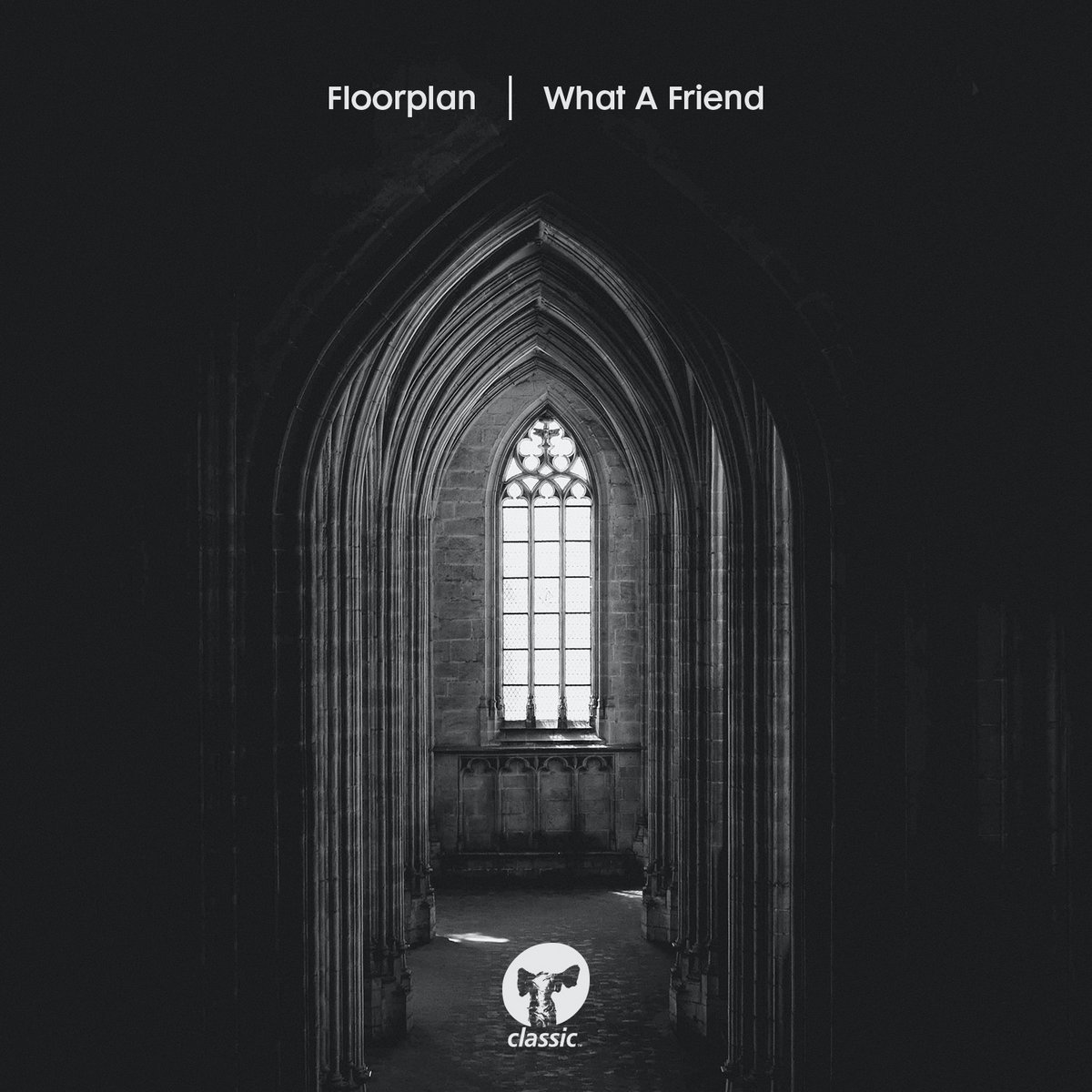
Floorplan take another step along the road in their relationship with Classic with a powerful club track, What A Friend.
Previous releases on Luke Solomon’s label have been well received – WeGiveTheeHonor has done particularly well on UK radio, while LikeDat was a strong club track. Robert and Lyric Hood have also been busy on stage, at Brunch Elektronik in Barcelona, The Warehouse Project in Manchester and Igloofest in Montreal.
WhatAFriend has the familiar chopped vocal samples with tough, four to the floor beats, deliverng a strong blend of tougher techno and gospel tinged woth euphoria. You can listen below:
Charlotte Saluste-Bridoux (violin, above) and Joseph Havlat (piano, below)
Szymanowski 3 Myths Op.30 (1915) Poulenc Violin Sonata (1943) Szymanowski arr. Havlat 3 Kurpian Songs (from Op.58) (1930-32) Schubert Rondo Brillant in B minor D895 (1826)
Wigmore Hall, London Tuesday 10 April 2024 (1pm)
by Ben Hogwood
This recital was given under the umbrella of YCAT (Young Classical Artists Trust), the organisation supporting promising classical talent celebrating their 40th anniversary this year. Violinist Charlotte Saluste-Bridoux is one of the current roster, and with pianist Joseph Havlat she gave a captivating recital.
The two began with the highly perfumed 3 Myths of Karol Szymanowski, ideal concert material that can show off a performer’s virtuosity but also their descriptive potential and range of tonal colour. These pieces, written as part of a highly productive partnership Szymanowski enjoyed with violinist Pawel Kochanski, were declared by the composer to have created ‘a new…mode of expression for the violin’.
There was a sense of the new in this performance, notable for its wide range of instrumental colour. The first ‘myth’, La fontaine d’Aréthuse, was strongly characterised, the fountain vividly evoked by Havlat’s opening phrases before Saluste-Bridoux took control with fearless virtuosity. Both musicians were notable for their convincing melodic phrasing, the violin sound strikingly beautiful both with and without the mute. The musical links back to Wagner and Franck were clear, most notably in Narcisse, where the performers brought clarity to the dense counterpoint. This was descriptive music indeed, and Szymanowski’s sound world – unusually advanced for 1915 – took the audience far from the hall. The hollow piano towards the end of Dryades et Pan was notable, Havlat responding to the ghostly harmonics from the violin.
The excesses of Szymanowski were countered by one of Poulenc’s most substantial chamber works. The Violin Sonata has a very different profile to its more famous counterparts for wind instruments, being a troubled work bearing the imprint of the Second World War and personal bereavement. Completed in 1943, it is a work riddled with dark anxiety, though this performance brought out the bittersweet lyricism of the first movement. The nocturnal Intermezzo evoked the guitar, suggesting the influence of Debussy but soon holding the audience in suspense before the finale took off at quite a pace, as though looking to evade capture. Once again this was a performance of high technical standard, one that got beneath the surface to reveal the loss at the heart of Poulenc’s writing – the composer lamenting the Spanish poet Federico Garcia Lorca, who died in the Spanish Civil War.
We then heard three highly effective arrangements from Joseph Havlat of Szymanowski’s Kurpian Songs, selected from the twelve Polish folk texts set by the composer for singer and piano in 1932. As Prokofiev showed with his arrangements of 5 Poems of Anna Akhmatova for violin and piano, such a transcription can be extremely effective – and Havlat’s arrangements were just that, ideally balanced and equally spread between violin and piano. Saluste-Bridoux played with notable dexterity, the two performers enjoying the rustic Bzicem kunia and the sharp outbursts, tinged with regret, of A pod borem siwe kunie.
The musical outlook changed notably for Schubert’s Rondo brilliant, which was effectively an extended encore. The violin was arguably too full bodied to start with, the piano back in the mix, but as the Rondo progressed the balance was restored and we were able to enjoy Schubert’s humour, expressed through an oft-repeating, stop-start theme. This was successfully lodged in our heads by the end, capping an extremely fine recital. These are two artists to watch out for – especially with the Schubert recorded for Delphian Records.
Six years in, The Utopia Strong continue to spread their wings, a band who are successfully blending the art of studio recording with that of improvisation. The latter is very much in play on The BBC Sessions, a collection of five tracks recorded in session for Marc Riley on 6Music in September 2022.
Arcana have been fortunate to interview Steve Davis and Kavus Torabi from the band, but for now the word goes to Torabi on how the album progressed. “When we hit a point where all three of us really had something going, we would continue while the proverbial tape was rolling, so, the shorter pieces are the result of about ten or fifteen minutes playing that you wouldn’t have heard.”
What’s the music like?
There is a strong unity between the three protagonists here, and the result is a powerful suite of pieces that creates a wide range of ideas. A lot of the action takes place in the company of drones, providing a point of reference for the listener and a strong harmonic base.
Certainly Miniature Citadels establishes its base early on, the drone supporting some melodic jousting above. The lines are angular but there is an impressive amount of energy generated, supplemented by a chunky rhythm section.
Lamp Of Glory is a beauty, with a melodic figure up top dancing in the half life, like an energetic strobe light. Soon the pipes take centre stage, played by Mike York, a virtuoso display The final two tracks are lengthy studies. The Tower Is Locked is highly descriptive music, the structure in question shimmering in the half light, before an increasingly powerful drum track takes hold. Finally Weather All, a tribute to the much loved producer, is underpinned by a strong, bassy drone over which a number of electronic bleeps and psychedelic riffs play out. The confidence with which these two tracks unfolds is both assuring and impressive.
Does it all work?
It does. The Utopia Strong prove difficult to classify, in the best possible way – and their music and its development are compelling throughout.
Is it recommended?
Most definitely. This is a band still very much in development, but the span and content of these tracks gives an indication of what they are capable of. With three very different musical minds that complement each other well, The Utopia Strong have got to that enviable position where everything they do is well worth experiencing.





 Arcana.fm