News – Guy Johnston to give the world premiere of Joseph Phibbs’ Cello Concerto with the BBC Symphony Orchestra on 16th January

from the press release, published by Ben Hogwood

On 16 January 2026, Johnston will give the world premiere of Joseph Phibbs’ Cello Concerto at the Barbican with the BBC Symphony Orchestra conducted by Clemens Schuldt.  In 2021,Johnston previously premiered Joseph Phibbs’ Cello Sonata, partly based on an Elizabethan pavane found in the archive of Hatfield House.

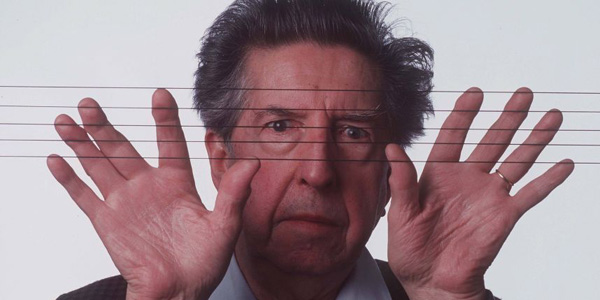
Phibbs (below) says about the work:

“This concerto is in five movements, the first and last scored for cello and strings only. The work opens softly with a short Invocation – a type of prayer – which leads without a break to an ebullient and at times abrasive Aubade, the cello moving from its lowest to highest range. The subdued central Elegy hones in on the celebrated lyrical qualities of the cello, before an agitated Notturno presents an unsettled, ever-shifting dialogue between the cello and orchestra, with a virtuoso cadenza featuring towards its close. A short Vocalise, adapted from a sonata Guy commissioned several years ago, ends the work on a note of resolution.

As one of the very finest cellists of his generation, I wanted to bring out Guy’s extraordinary expressive qualities as well as his dazzling technical prowess. The result was music which is often lyrical and emotionally direct sitting alongside that which is harder-edged, and at times frenetically virtuosic.”

This concerto appearance is part of a wider cello odyssey to record the major British cello repertoire. Following the digital release of the Bliss Cello Concerto with the RLPO on Onyx Classics in July 2025, Guy recorded Tavener’s The Protecting Veil with Britten Sinfonia in St Sophia’s Greek Orthodox Cathedral in October 2025 to be released on Signum in 2026. Early 2027 will see a physical release of the Britten Cello Symphony coupled with the earlier recording of the Bliss Cello Concerto with the RLPO on Onyx Classics. Also to be released in 2027 are recordings of Walton’s Cello Concerto and Barber’s Cello Concerto with the Bournemouth Symphony Orchestra.

The 2025-2026 season coincides with Johnston’s returns to the Royal Academy of Music as a Professor of Cello. This role will see him offer bespoke tuition to cello students throughout the year. Johnston started out as a professor at the Academy in 2011, later becoming visiting professor. The appointment follows Johnston’s recent relocation back to the UK following his tenure at the Eastman School of Music in Rochester, NY, from 2018 to 2024.

Friday 16th January, 07.30pm

Barbican, London

Tchaikovsky Fantasy-Overture, ‘Hamlet’

Joseph Phibbs Cello Concerto

Mel Bonis Ophélie

Richard Strauss Der Rosenkavalier Suite

Published post no.2,755 – Sunday 21 December 2025

2025 in music – Arcana’s 12 albums of Christmas!

by Ben Hogwood

In my humble opinion, 2025 has been a brilliant year for new music. Over the course of the year I have listened to more than a hundred new albums and have been fortunate enough to review a good many of them for musicOMH (Suede, Kae Tempest, Gruff Rhys and Cate Le Bon being just four examples) and here as editor of Arcana.

Rather than restrict our thoughts to numbers or ratings, I wanted simply to present albums that Richard Whitehouse and I have reviewed here and have been returning to frequently. You’ll see the musical variety on show is as broad as this site would like it to be! So, in chronological order…

…try listening to C Duncan’s It’s Only A Love Song without being drawn into his weather-beaten world of romantic expression. This is another beautiful and personal album, Duncan’s voice and musical command only improving with time. Tunng’s return is a cause for celebration, and the band’s lates album Love You All Over Again is a typically winsome mix of quirky musical thoughts and unexpectedly concentrated emotions, all expressed through catchy melody.

At the start of last year, California was in the grip of terrible fire. The musical response was nothing short of extraordinary, not least from Leaving Records, whose massive compilation Staying not only kept a high musical bar of ambience – in spite of the terrors – but raised money for the area’s troubled residents.

Gavin Higgins continues to prove himself to be one of the most interesting voices in classical contemporary music these days. If you wanted a good place to start, think no further than his 2025 album The Fairie Bride, a Lyrita release including the Horn Concerto.

Meanwhile, the Italian-US composer Vittorio Rieti proved himself fully deserving of a recall towards the classical front line. This Naxos release of a good deal of the composer’s music for piano and orchestra revealed a distinctive voice influenced by Stravinsky but finding its own original identity.

Moving sideways into the worlds of shoegaze and electronica, we have a series of rather wonderful releases that graced the headphones in 2025. Guitarist Andy Bell – prior to reclaiming his position in Oasis – released the excellent pinball wanderer album, a record that proved to be “equal parts Krautrock and Manchester”, while over at Castles In Space, Andrea Cichecki found “an inner serenity and brightness” on her album Drawn Into The Edge Effect, bringing positive energy to her ambient music. Speaking of ambience, Pye Corner Audio also found the sweet spot that blends relaxation and invigoration, with the heavenly Lake Deep Memory album.

Bureau B continued their streak of excellence with one of the year’s best compilations. Silberland Vol.3 celebrates the ambient side of Kosmische Musik with music of great colour and charm. Darker worlds were explored by the electronica of the remarkable Cosey Fanny Tutti, whose new chapter 2t2 proved a compelling and occasionally foreboding piece of work. Similarly well-established are the Matmos duo, and like Cosey their spirit for exploration goes undimmed. Metallic Human Nature only allows metallic objects in its discourse, but the imagination of the pair comes through in their use of creaking doors, pots and pans to make a surprisingly moving whole.

Our last visit to classical waters is made by cellist Parry Karp, whose new accounts of music by Ernest Bloch on Signum Classics get to the nub of what makes this composer uniquely expressive:

Baxter Dury has a sort of charm, though you wouldn’t want to get on his wrong side! Allbarone is his finest solo achievement to date, channelling his family influence but raging against city slickers and the like in a series of wickedly funny and extremely catchy songs, ably assisted by JGrrey.

More music of a rhythmic bent comes from Ten City, with their joyous celebration The Next Generation. There are several spiritual highs to be enjoyed within their house music, thanks to a set that frequently hits the highs.

With these albums suitably praised, who should take the album of the year? Well I’m going to give it to the record I’ve revisited most often…which is Andy Bell’s pinball wanderer. Listen to it a few times and you’ll see what I mean!

Published post no.2,754 – Saturday 20 December 2025

In concert – Chaos String Quartet @ University of Birmingham: Haydn, Wallen & Bartók

Chaos String Quartet [Susanne Schäffer & Eszter Kruchió (violins), Sara Marzadori (viola), Bas Jongen (cello)]

Haydn String Quartet in E flat major Op.20/1 (1772)
Wallen Remembering 2012 (2025) [BBC commission: World premiere]
Bartók String Quartet no.3 BB93 (1927)

Elgar Concert Hall @ Bramall Music Building, University of Birmingham
Friday 12 December 2025 (1pm)

Reviewed by Richard Whitehouse

Birmingham University’s regular series of lunchtime recitals came to its close for 2025 with one postponed from earlier this year – the Chaos String Quartet (based in Vienna) being heard in a programme that played to the strengths of this most enterprising among younger ensembles.

Its warmly received debut release having featured the fifth of Haydn’s Op. 20 quartets, it was good to hear this group as persuasive in the first work from that groundbreaking set. Certainly its initial Allegro moderato found the right balance between an underlying elegance with that inquiring spirit such as informs all six of these pieces, and was duly abetted by the deceptive playfulness of its ensuing Minuet. The slow movement was as ‘sustained and affectionate’ as its marking indicates it should be, with the final Presto propelled along on its buoyant course.

There have been numerous commissions in BBC Radio 3’s ’25 for 25’ series, with this latest being by Errollyn Wallen (currently Master of the King’s Music). Howsoever its title might be interpreted, Remembering 2012 packs considerable emotion into its five-minute duration – such that the composer might consider extending it or adding further movements. It hardly needs adding that the year in question, coming mid-way between the world financial crash and Brexit, now seems harbinger of a more positive era which manifestly failed to happen.

The recital ended with a performance of Bartók’s Third Quartet which hopefully commended to those present what is the most difficult to grasp of this cycle – not least given the ingenuity of its formal design, along with its innovative if always constructive use of extended playing techniques. Having pursued a suspenseful course across its ‘Prima parte’, the Chaos ensured a visceral impact to its ‘Second parte’ before securing palpable eloquence from the former’s ‘Recapitulazione’, prior to a ‘Coda’ as carried all before it in an outburst of unbridled energy.

A memorable conclusion to an impressive recital, the Chaos returning with the Minuet from the fourth of Haydn’s Op. 20 quartets as teasing encore. Its sophomore recording scheduled early next year, hopefully this most questing ensemble will be back in the UK before long.

Published post no.2,753 – Friday 19 December 2025

For more on the Barber Lunchtime Concerts, head to the Barber Institute website, and click on the links to read more about the Chaos String Quartet and composer Errollyn Wallen

On this day – the first performance of Tchaikovsky’s ballet ‘The Nutcracker’ in 1892

by Ben Hogwood. Image by Charles Reutlinger, used courtesy of Wikipedia

On this day in 1892, the first performance took place of Tchaikovsky’s popular seasonal ballet The Nutcracker Op.71, a musical and staged interpretation of Alexandre Dumas’s French version of the E.T.A. Hoffmann fairy-tale The Nutcracker and the Mouse-King.

The premiere was staged at the Mariinsky Theatre in St Petersburg, conducted by Riccardo Drigo, and found favour with the Czar, but not so much the public, who preferred the shorter Nutcracker Suite Tchaikovsky fashioned from the ballet.

Here is the full ballet, with the Rotterdam Philharmonic Orchestra conducted by Yannick Nézet-Séguin:

Published post no.2,752 – Thursday 18 December 2025

On Record – Rick Wakeman: Melancholia (Madfish)

by Ben Hogwood

What’s the story?

In the last ten years, we have had much more of an insight into Rick Wakeman’s world as a solo musician. These glimpses are afforded us through the albums Piano Portraits and Piano Odyssey, the start of a trilogy now completed by Melancholia.

Yet there is a greater personal edge to this particular set, started by Wakeman’s wife Rachel who was struck by hearing Rick playing privately and encouraged him to share his musical thoughts. The music she heard would become the track Garo, while the other eleven tracks on the album follow a similar, semi-improvised tread.

The music follows Wakeman’s train of thought, a clear thread running through each piece.

What’s the music like?

Melancholia is easy listening – which is of course both a blessing and a curse. If you listen closely, it is possible to tap into Rick’s mostly reflective moods, and admire the way he develops the source material. Clearly this is a master musician at work, the feeling being that we are eavesdropping on an advanced practice session where Wakeman takes us through his intimate thoughts and feelings.

Yet this does also work as a disadvantage, for the music falls effortlessly into the ‘peaceful piano’ section of any digital playlist. This is great for passive listening of course, but it means some of the deeper meanings within the music can be lost, especially given the similarity between the colours on each track.

Wakeman plays with elegance and attention to detail, with some lovely little ornamentations that have become second nature to him, rather like bringing a Bach invention to the table. Pathos is nicely turned, while Alone is led by an attractive melody. Watching Life has a satisfying balance of light and shade, while the title track fades into the distance, leaving room for thought at the end.

Does it all work?

Yes, providing the caveats above are taken into account.

Is it recommended?

It is – though anyone expecting the physical energy Wakeman brings to most of his keyboard playing will find it channelled for inward thoughts only here. Melancholia does, though, reinforce Rick Wakeman’s status as one of the most versatile British keyboard and piano players around.

Listen / Buy

Published post no.2,751 – Wednesday 16 December 2025