In concert – Gwilym Bowen, Gareth Brynmor John, William Vann, Navarra String Quartet @ Temple Church, London – Ian Venables: Out of the Shadows (a 70th birthday concert)

Gwilym Bowen (tenor), Gareth Brynmor John (baritone), William Vann (piano), Navarra Quartet [Benjamin Marquise Gilmore, Eva Aronian (violins), Sascha Bota (viola), Brian O’Kane (cello)]

Venables Out of the Shadows Op.55 (2023)
Vaughan Williams arr. Vann Fantasia on Greensleeves (1934)
Vaughan Williams On Wenlock Edge (1909)
Vaughan Williams Love Bade Me Welcome (1911)
Venables Portraits of a Mind Op.54 (2022)
Howells An Old Man’s Lullaby (1947)

The Temple Church, London
Tuesday 4 November 2025

Reviewed by Richard Whitehouse

The emergence of Ian Venables as the leading British art-song composer was suitably marked with a 70th-birthday concert, sponsored by the Morris-Venables Charitable Foundation under the auspices of Temple Music Foundation and held in the evocative setting of Temple Church.

Song cycles being at the forefront of Venables’s output, it made sense to start with one of his most recent – Out of the Shadows a wide-ranging overview of male love. From the coyness of Constantine Cavafy’s At the Cafè Door and the barbed humour of Horatio Brown’s Bored, this takes in the fleeting ecstasy of Cavafy’s The Mirror in the Hall and stark soulfulness of Alfred Tennyson’s Dark House, prior to the overt playfulness of John Addington Symonds’s Love’s Olympian Laughter and calm affirmation of Edward Perry Warren’s Body and Soul.

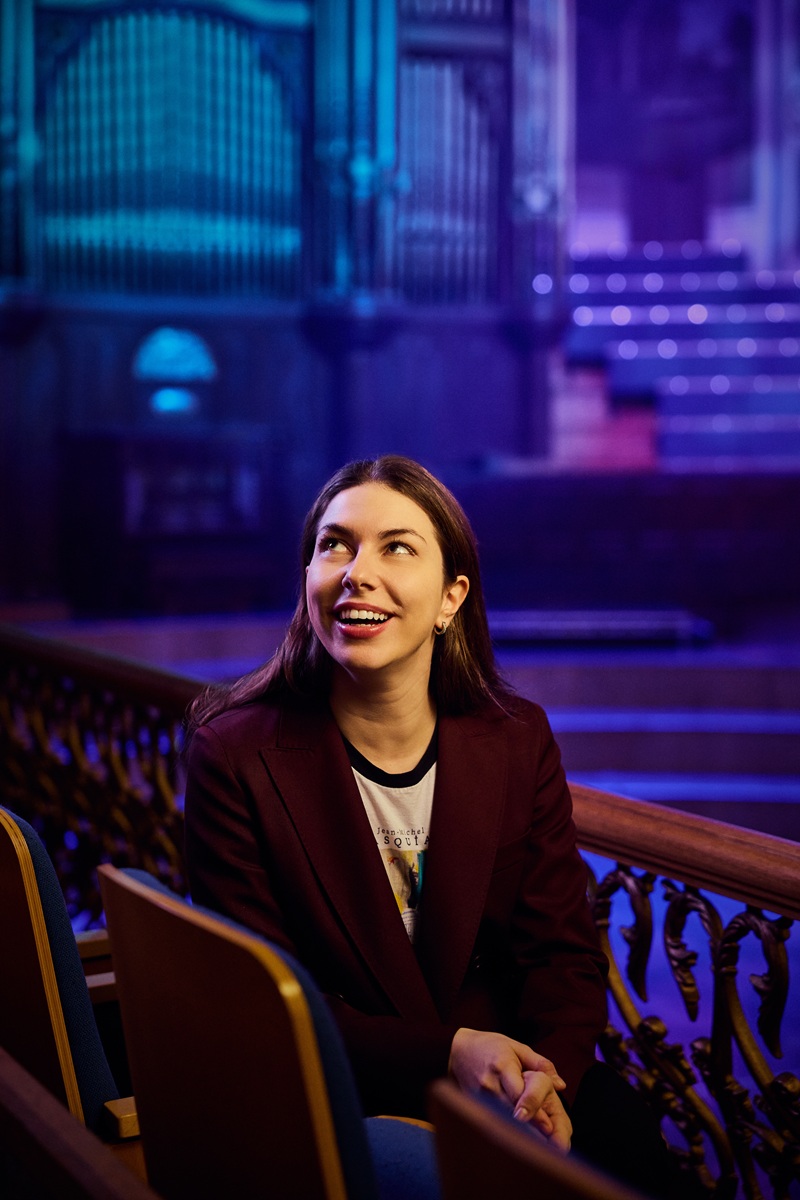
Affectingly sung by Gareth Brynmor John (above), it preceded likely the most influential such cycle in English. A. E. Housman may have disliked his settings, but Vaughan Williams always gets to the heart of the matter in On Wenlock Edge. Hence the volatile imaginings of its title-number or hymnic poise of ‘From Far, from Eve and Morning’, the brooding dialogue of ‘Is My Team Ploughing’ or nonchalant wit of ‘Oh, When I Was in Love with You’; reaching a climax in the innocence to experience of ‘Bredon Hill’, with ‘Clun’ ending the sequence in fatalistic repose.

Gwilym Bowen gave a searching account of this cycle (doubly so having replaced Alessandro Fisher at such short notice), with Brynmor John comparably attuned to the understatement of George Butterworth’s Love Blows as the Wind Blows. These settings of W. E. Henley amount to a cohesive yet subtly contrasted entity – the existential musing of In the Year that’s Come and Gone followed by the deadpan charm of Life in Her Creaking Shoes and effervescence of Fill a Glass with Golden Wine, then On the Way to Kew brings a close of deftest poise.

Bowen duly tackled a further Venables cycle. Written to commemorate the 150th anniversary of Vaughan Williams’s birth, Portraits of a Mind is a notably inclusive one of the composer. Hence the gentle pantheism of George Meredith’s The Lark Ascending and the meditation on creativity of Ursula VW’s Man Makes Delight His Own; the engaging impetus of R. L. Stevenson’s From a Railway Carriage a perfect foil to the resignation of Christina Rosetti’s Echo, before lines from Walt Whitman’s A Clear Midnight conjure a warm transcendence.

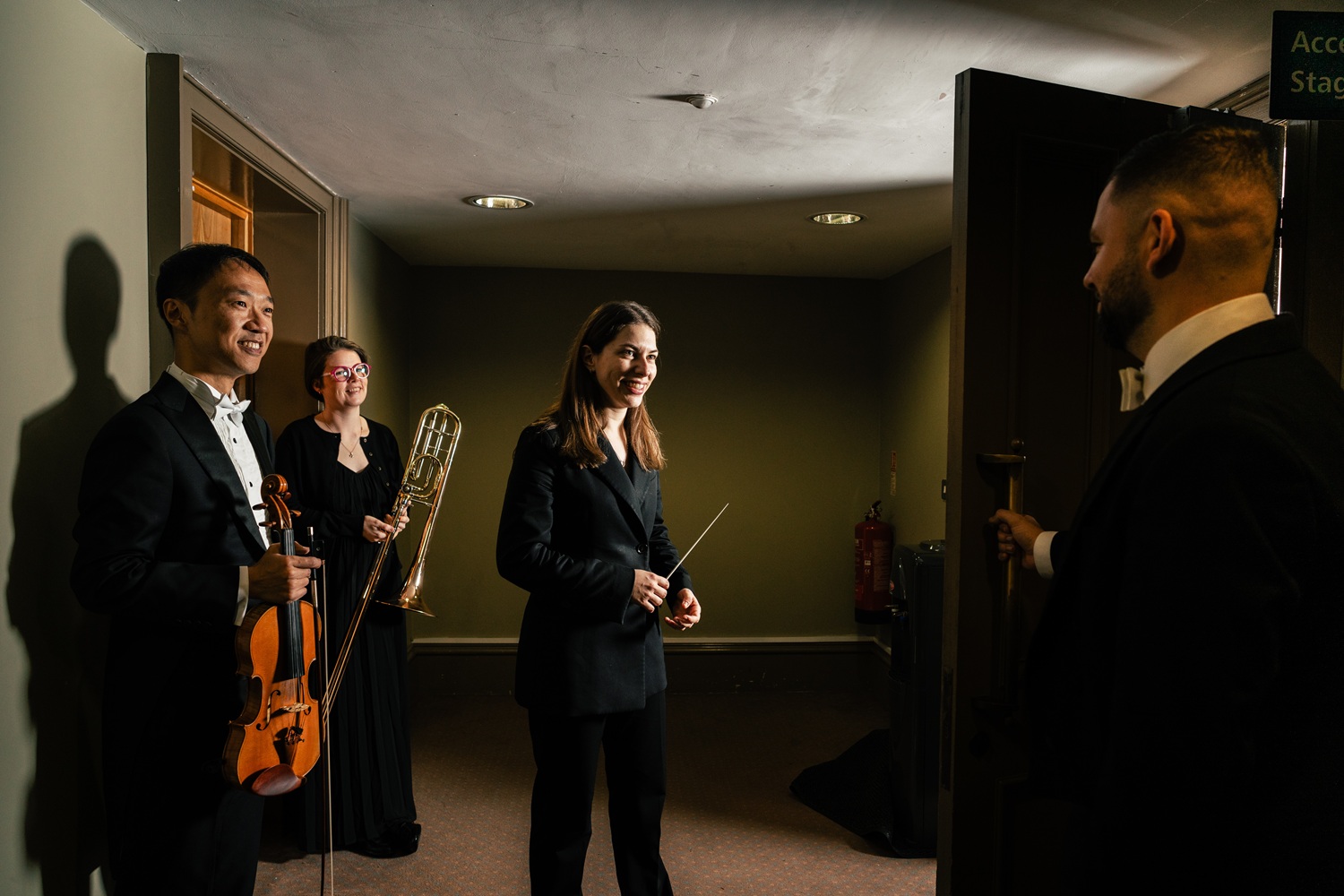
Throughout these performances, the playing of the Navarra Quartet (above) evinced an incisiveness and eloquence always at the service of this music; William Vann’s attentive pianism astutely deployed in his appealing arrangement of VW’s Fantasia on ‘Greensleeves’. Brynmor John opened the second half with that composer’s disarming take on George Herbert’s Love Bade Me Welcome (first of Five Mystical Songs), with both vocalists heard to advantage in An Old Man’s LullabyHerbert Howells’s setting of Thomas Dekker that made for a winsome envoi.

Taken overall, this was a wholly pleasurable evening and welcome confirmation of Venables’ creative prowess – his corpus of songs or song-cycles surely second to none among those for whom the English language is a source of never-ending and always unexpected possibilities.

Click here to read an extensive tribute to Ian Venables on from his husband, pianist Graham J. Lloyd – or click on the names to read more about Gwilym Bowen, Gareth Brynmor John, William Vann, the Navarra Quartet and Temple Music Foundation

Published post no.2,710 – Thursday 6 November 2025

On Record – Kathryn Williams: Mystery Park (One Little Independent)

by Ben Hogwood

What’s the story?

It is now 25 years since Kathryn Williams earned a Mercury Prize nomination for the album Little Black Numbers, and 15 since she started the productive partnership with label One Little Independent. In that time her reputation has persisted as a purveyor of quality folk music, exhibiting the “quiet emotional depth and lyrical precision” the press release for this album accurately describes.

For Mystery Park she strips back the sound, but gathers a high-quality team of musicians in the form of multi-instrumentalist Leo Abrahams (guitar, piano, bass, vocals) and guitarists Neill MacColl and Polly Paulusma, all of whom contribute backing vocals – as does multi-instrumentalist Ed Harcourt. Drummer Chris Vatalaro and harmonica player David Ford are also present, as is Paul Weller, credited with Hammond organ as well as vocals.

Importantly, Williams pinpoints the album as the most personal record she has made, featuring as it does her own painting on the cover, based on her grandmother’s tea sets.

What’s the music like?

There is a strong autumnal feel to Williams’ music this time round, the basis of a strong seasonal attachment running through the record like a thread. This is most obvious in the Polly Paulusma collaboration Goodbye To Summer, where the swallows leave and the inevitable question is asked, “how many more summers do we have?”

The personal attachments range from a celebration of her eldest son in Sea Of Shadows but also This Mystery, where she addresses her father’s dementia in moving clarity. Weller’s guest appearance is saved for the striking Gossamer Wings, where Williams’ talents for spinning quite oblique melodies are exploited – as indeed they are throughout the album.

Does it all work?

It does. Williams exudes a quiet confidence, able to express herself with the minimum of fuss but also in a way that draws the listener in to the middle of her conversational ways – by which point they can also appreciate the detailed and often exquisite instrumentation at work here.

Is it recommended?

It certainly is. Kathryn Williams makes music that is all the more beautiful for its subtlety, beckoning the listener over to spend more time in its company. Once there, it is pretty much guaranteed they won’t leave without seeking out more of her impressive discography. This particular listener will be doing just that!

For fans of… Laura Marling, Unthanks, Lisa Hannigan, Joanna Newsom

Listen / Buy

Published post no.2,709 – Wednesday 5 November 2025

In concert – Wednesday 12 November: English Symphony Orchestra to bring Roaring Twenties to life in opening concert of 2025-26 Malvern Residency

reposted by Ben Hogwood Photo Zoe Beyers leading the English Symphony Orchestra (c) Michael Whitefoot

The renowned English Symphony Orchestra (ESO), under their principal conductor Kenneth Woods, is to make a highly anticipated return to Malvern Theatres, Worcestershire on Wednesday 12 November at 7:30pm with a programme celebrating the adventurous spirit and playful energy of the 1920s, as part of their Autumn-Winter Residency.

LIVELY SPIRIT OF THE ROARING TWENTIES

The evening will feature works by composers who captured the era’s lively spirit, including Erwin Schulhoff’s Suite for Chamber OrchestraDarius Milhaud’s The Ox on the Roof’ and Kurt Weill’s raucous cabaret songs, to be performed by the ESO’s first affiliate artist, soprano April Fredrick. The programme opens with the music of Joseph Haydn and a performance of his Symphony No. 60 entitled The Absent-Minded Gentleman, delighting in the composer’s celebrated wit and humour.
 
Kenneth Woods, Artistic Director and Principal Conductor of the ESO, introduces the programme: “Erwin Schulhoff’s suave Suite for Chamber Orchestra takes listeners on a guided tour of 20s dance crazes, from the shimmy to the tango. Milhaud’s zany ballet score The Ox on the Roof was inspired by the comedy of Charlie Chaplin and the dance music of Brazil, while Kurt Weill’s songs reflect life in and around the cabaret scene in all its humour and sensuality. The programme opens with Haydn’s Symphony No.60, The Absent-Minded Gentleman, quite possibly the funniest and most surreal symphony ever composed.”

ENGLISH SYMPHONY ORCHESTRA – MALVERN RESIDENCY

Wednesday 12 November 2025, 7.30pm
Malvern Theatres Grange Road, Malvern, Worcs. WR14 3HB
English Symphony Orchestra: The Joker’s Wild – Mischief in Music
Haydn Symphony No. 60 (‘Il Distratto’) in C
Weill Cabaret Songs
Schulhoff Suite for Chamber Orchestra
Milhaud The Ox on the Roof

April Fredrick (soprano), English Symphony Orchestra / Kenneth Woods

For more information visit the Malvern Theatres website

Published post no.2,708 – Tuesday 4 November 2025

New music – Various Artists: InFiné New Classical (InFiné)

adapted from the press release by Ben Hogwood

Back in 2006, the French label InFiné started stitching unlikely threads between classical music and club culture, laying early groundwork for what would come to be called “new-classical”, a “new” that felt hybrid and forward-looking rather than the narrower “neo.” The wager was simple: treat the studio like an instrument and let composition, production, and performance bleed into each other.

By early 2007, kindred spirits at Erased Tapes were formalizing a similar impulse in the UK, crystallizing experiments that had flickered across ECM releases and artists like Aphex Twin, Philip Glass, and Brian Eno. The vision also nods to Glenn Gould, the Canadian pianist who famously embraced the studio’s power to do what the concert hall could not, a perfectionism that quietly rewired modern recording practice.

InFiné’s first catalog statement set the tone. Fresh from winning the Orléans International Piano Competition, Francesco Tristano recorded his first “non-classical” album for the sonic alchemy and folding in Autechre, Pascal Dusapin, Jeff Mills, and Tristano himself.

Two years later, in October 2008, the label staged a landmark at the Philharmonie de Paris: Detroit icon Carl Craig with the orchestra Les Siècles under François-Xavier Roth, Tristano’s arrangements, and the discreet touch of Berlin techno pioneer Moritz von Oswald — a bridge between symphonic muscle and machine pulse.

Since then, InFiné has kept walking that ridgeline with artists such as pianists Bruce Brubaker and Vanessa Wagner, cellist Gaspar Claus, percussionist Lucie Antunes, producers Rone, Arandel, Murcof, Labelle, and more recently Japan’s Kaito. In June 2021, Rone’s repertoire, arranged by Romain Allender, took over Lyon with a 90-piece orchestra and choir; the LOOPING project has since sold out philharmonic halls across France and Europe.

In 2019, the label launched a singular series with Paris’s Musée de la Musique, inviting contemporary musicians to “play” the museum’s historic instruments, not as relics, but as living tools. After albums devoted to Bach and to guitars, new chapters focused on harps and the oud are slated for 2025 and 2026. In 2024, InFiné also teamed with IRCAM on a program that fuses research and art: Murcof inaugurates the line with a 360° project spanning an album, ambisonic live performance, and soon, VR.

InFiné’s third and most recent collaboration with Musée de le Musique was for Mary Lattimore and Julianna Barwick’s upcoming project, continuing a shared mission to bridge historical instrumentation with contemporary innovation. “We were so lucky to have access to this experience. There was a lot of reverence, working with people with such warmth and enthusiasm, bringing these instruments into a modern context, literally taken off the shelves of the museum,” says Lattimore. “We wanted to honor the past while making music that we feel is a true expression of ourselves,” adds Barwick.

On October 10th, Vanessa Wagner released the Complete Piano Etudes of Philip Glass as a special 4-LP box set, a format that underscores its significance as a cornerstone for both the pianist and InFiné. Each Étude forms a distinct musical world, complete in itself. But heard as a whole, the cycle unfolds with remarkable depth: motifs and resonances weave through the pieces, revealing a vast emotional architecture where each work amplifies the others, enriching the collection’s overall meaning.

Nearly twenty years in, InFiné remains refreshingly uninterested in borders, geographic or stylistic. True to its roots yet restless by design, the label continues to operate as a laboratory where innovation serves listeners who like their music curious, porous, and resolutely modern. 

Listen / Buy

Published post no.2,7067 – Monday 3 November 2025

On this day – the first performance of Philip Glass: Symphony no.8

by Ben Hogwood Photo of Glass by WNYC New York Public Radio, used from Wikipedia

On this day in 2005, the world premiere of the Symphony no.8 by Philip Glass took place. Generally the symphony has not been a form to fire the imagination of minimalist composers – Steve Reich, for instance, has not written one – but Glass has found a way of integrating symphonic thought and form with subtly repetitive figures.

The Eighth is a more exploratory, chromatic work in three movements, a substantial piece lasting nearly 40 minutes. Here it is with the performers from the premiere, the Bruckner Orchestra Linz conducted by Dennis Russell Davies:

Published post no.2,706 – Sunday 2 November 2025