Online Concert: Vision String Quartet play Shostakovich & Mendelssohn @ Wigmore Hall

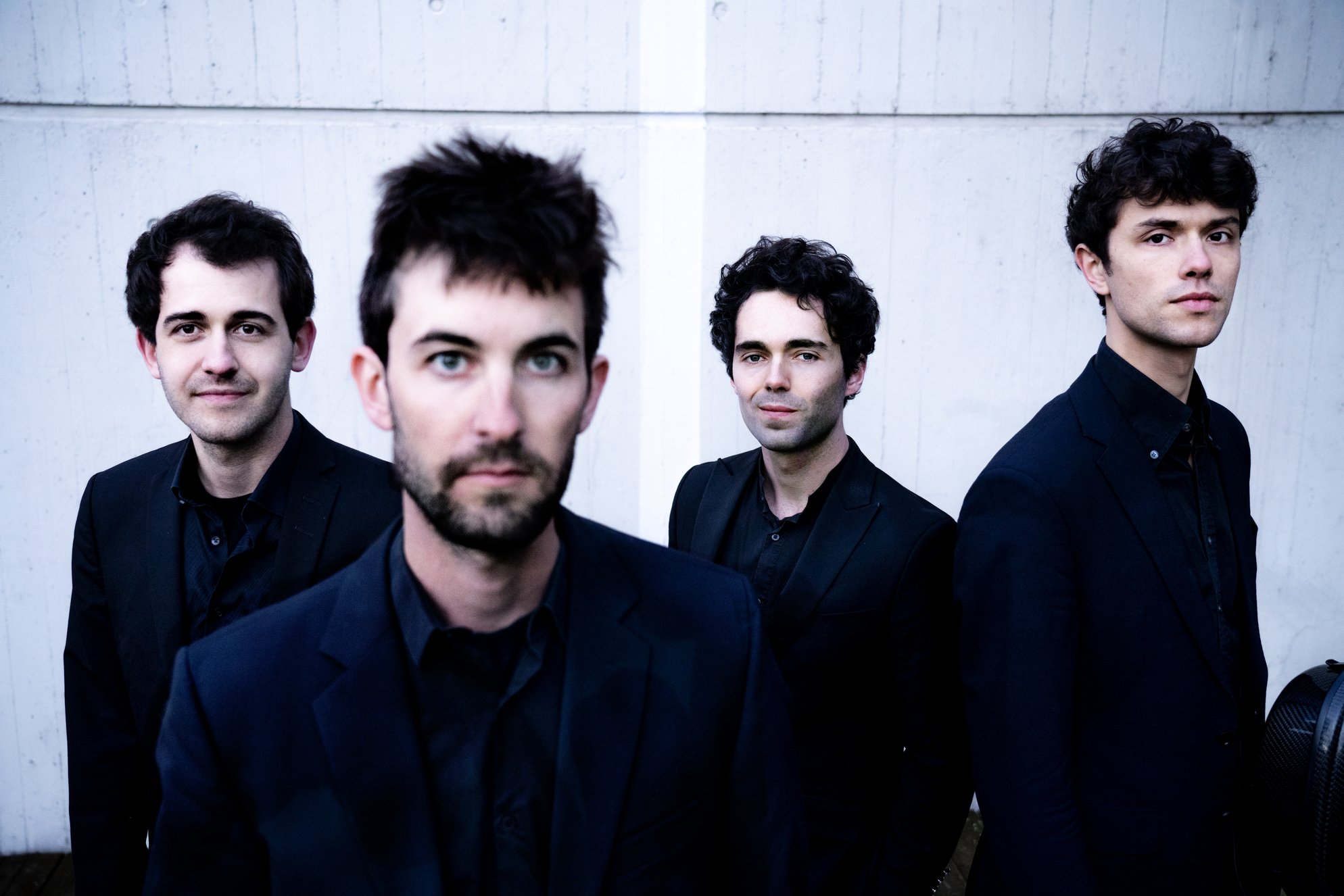
Vision String Quartet [(Florian Willeitner, Daniel Stoll (violins), Sander Stuart (viola), Leonard Disselhorst (cello)]

Shostakovich String Quartet No. 8 in C minor Op. 110
Mendelssohn String Quartet No. 2 in A minor Op. 13

Wigmore Hall, Monday 27 February 1pm

by Ben Hogwood

Vision String Quartet are a dynamic young ensemble based in Berlin, who play with great freedom – foregoing printed music and playing standing up (save for the cello of course). Neither of these attributes are gimmicks, for they suit an ensemble who have a charismatic presence and gave two performances of substantial minor key string quartets with passion and attention to detail. The program presented an interesting juxtaposition, the pieces written in very different circumstances but using the string quartet medium to air very private thoughts.

The String Quartet no.8 is the most played in Shostakovich’s canon of 15 string quartets – and arguably receives a disproportionate coverage when compared to the other fine works in the cycle. Yet in a good performance it makes an extremely powerful connection with its audience, as they learn the circumstances in which the composer wrote it.

In 1960 Shostakovich was in fear of his life, and the Eighth Quartet was his unofficial epitaph. An autobiographical work, it contains quotes from some of his most successful and important earlier works, including the Piano Trio no.2, the First and Fifth Symphonies and the recently completed Cello Concerto no.1. It begins with a sombre Largo, which the ensemble played with great sincerity. It is sometimes argued that it takes a Russian quartet to fully understand these works, and certainly the Borodin String Quartet interpretations loom large over whoever dares to take them on, but this performance took the plunge with impressive surety.

Technically the quartet were superb, the lower parts of viola and cello driving the faster passages with obdurate figures. Meanwhile first violinist Florian Willeitner found a suitably plaintive tone over the held drone from the other three instruments when the music almost came to a standstill, a most moving part of the first movement. The torrid second movement gritted its teeth, while in the chilling fourth movement, the rat-a-tat motion (thought to depict gunfire or the Russian authorities knocking on the door) left a lasting impression. The Vision players were keen to emphasise the dissonances throughout, and this approach carried all the way through to the final resolution, which was all the more telling as a result.

After this performance Mendelssohn’s String Quartet no.2 in A minor was warm in comparison, yet this is not one of the composer’s sunniest works, written as it was in the grip of an unrequited love.

Affectionately played, the first movement caught the right tension between major and minor key, with an airy outlook from Willeitner’s first violin, but with the increasing incursion of the minor key something of a shadow fell over the music. The temperature warmed appreciably for the second movement, its figures delicately sung and balanced  with attractive countermelodies from around the quartet.

The third movement was a subtle charmer, its subject responding well to an unfussy presentation and subtle rubato, the Vision happy to manipulate the lilting dance rhythms rather tastefully. A skittish end cut to a vigorous, almost violent set of tremolos ushering in the presto finale, which fizzed with energy and enthusiastic interplay. The Vision Quartet secured a really nicely paced finish, winding down to a seraphic major key coda which was thoughtful and radiant.

As an encore the quartet delved into their new album Spectrum for Copenhagen, a collaborative work penned by the four instrumentalists themselves. A persuasive rhythm took shape over a cello ostinato figure, given out by the quartet with drive and passion. The piece had a rustic air which spoke of the outdoors, offering a promise of spring after two wintry works.

For more livestreamed concerts from the Wigmore Hall, click here – and for more about the artists, visit the Vision String Quartet website

Live review – Royal Philharmonic Society Awards 2023 @ Queen Elizabeth Hall

From left: RPS Awards winners Anna Lapwood, Abel Selaocoe, Leeds Piano Trail, The Endz, Manchester Collective

Queen Elizabeth Hall
2 March 2023

by Ben Hogwood

Timing is everything in music – and as the attendees of the Royal Philharmonic Society Awards unanimously agreed, both the show and its message at the Queen Elizabeth Hall were just what classical music needed.

As RPS chairman John Gilhooly emphasised in his no holds barred opening address, times in the industry are hard. Arts Council England have never been less connected with classical music than they are currently, looking past its versatility and potential to make increasingly bizarre funding decisions. All working in music are affected, from those starting out in education and learning their first instrument to those receiving music as therapy and stimulation for dementia and good mental health. Music, it is clear, should not be treated as a ‘nice to have’ extra. Rather, it is a galvanizing force bringing good into the lives of everyone ready to receive it, as we all saw during lockdown and as we experience from day to day.

Gilhooly’s passionate speech threw down a gauntlet to the government and Arts Council but did so in the spirit of collaboration and community. These two words appeared at regular intervals throughout the evening, which captured a wide range of heartwarming and inspirational work taking place around the country, in spite of these restrictions.

Winners included the Torbay Symphony Orchestra, representative of so many life-giving amateur ensembles around the UK in the joy they bring to so many who take part or spectate. Joy, too, is at the heart of Anna Lapwood’s tireless and effervescent work, the organist deservedly collecting the Gamechanger award for her achievements in bringing the instrument to a whole new audience. Put #playlikeagirl into TikTok or Instagram, and you’ll see what I mean!

The awards, stylishly presented by BBC Radio 3 anchors Petroc Trelawny and Hannah French, captured classical music in so many different forms. Timothy Ridout, a shining viola player of the present and future, credited his Luton and Bedfordshire musical roots as key to the Young Artist Award. Abel Selaocoe won the Instrumentalist Award, the cellist expanding the scope of his instrument to encapsulate non-Western musical traditions. How remarkable that an instrument with such a long history continues to develop.

There were even happy pandemic stories. Theatre of Sound won the Opera and Musical Theatre award, their production of Bartók’s Bluebeard’s Castle born during lockdown and executed in Stone Nest, just off Shaftesbury Avenue in London. Martyn Brabbins, music director of English National Opera, deservedly won the Conductor award for his fearless work with the beleaguered company, in which he continues to form strong connections with his musicians, old and new alike.

The Multi-Story Orchestra won the Impact Award for their searing production The Endz, expressing the feelings of a young Peckham group for the death of teenager Malcolm Mide-Madariola, killed while standing up for a friend in a knife fight. Even the brief excerpt we heard conveyed their strength of feeling, and their acceptance speech confirmed how cathartic music had been in expressing their feelings.

One of the most poignant moments of the night came when Manchester Camerata’s film Untold – Keith (above) earned them the Storytelling Award, confirming once again the power of music to help people cope better with dementia. Meanwhile on the streets Leeds Piano Trail won the Series and Events Award for their strategically placed pianos, bringing more than 200,000 aspiring musicians to the city centre, while composer Gavin Higgins took the Large-Scale Composition Award for his Concerto Grosso, a rousing success at the BBC Proms with the Tredegar Town Band and BBC National Orchestra of Wales under Ryan Bancroft.

The live music in the awards was astutely programmed. Sheku Kanneh-Mason gave a striking excerpt from the Cello Sonata no.2 by Leo Brouwer, written for him and fresh off the page in a first performance. Soprano Anna Dennis, winner of the Singer Award, sang a striking song of Elena Langer, Stay O Sweet beautifully weighted with beautifully floated counterpoint from oboist Nicholas Daniel.

The most distinctive musical voice of the night, however, was that of composer Ben Nobuto. Having won the Chamber-Scale Composition Award for the innovative SERENITY 2.0, and somehow achieving an authentic and wholly original balance between Frank Ocean and Caroline Shaw in the process, he joined Ensemble Award winners Manchester Collective for a performance of Danish folk song Old Reinlender. This was cleverly approached from the first movement of Bach’s Violin Concerto in A minor, the join between the two almost imperceptible but negotiated in joyful, songful music.

Sadly no members of Arts Council England were present to witness any of these musical tonics – it is to be hoped they will listen when the awards are aired on BBC Radio 3 on Monday 6 March. You should listen too, for you will find classical music, in spite of all its challenges, is swimming strongly against the tide.

You can watch the Royal Philharmonic Society Awards on the RPS website within the next week – while BBC Radio 3 will broadcast the ceremony, presented by Petroc Trelawny and Hannah French, on Monday 6 March. Click here to listen

In appreciation – Paul Westcott

by Ben Hogwood

Yesterday a memorial service was held for the much-loved and much-missed Paul Westcott, who sadly left us late last year.

Paul was for many best-known as the effervescent press officer for Chandos Records, a role he made his own. I think I speak for many of his friends, colleagues and associates when I say how grateful I am for his encouragement at every turn, his enthusiasm for the music he was working with, and his friendship.

The playlist below captures all the music either played or performed at the service, including several recordings either made or appreciated by Paul’s dear friend Richard Bonynge.

One notable omission from the playlist is Roger Webb‘s Theme from Hammer House of Horror – which is posted first to highlight Paul’s mischievous character!

Preview – Hastings International Piano Competition: Prize Winners’ Gala Concert

If you live in London or the south of England and love the piano, then consider this: Did you know there is a fully-fledged, international piano competition right on your doorstep?

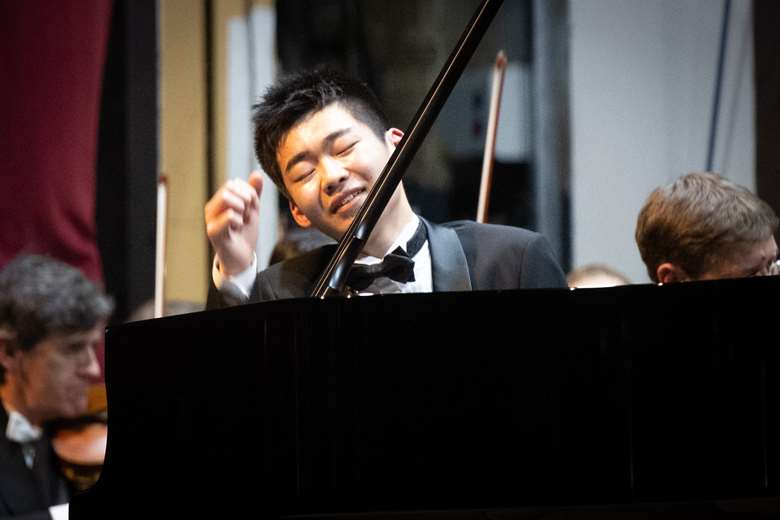
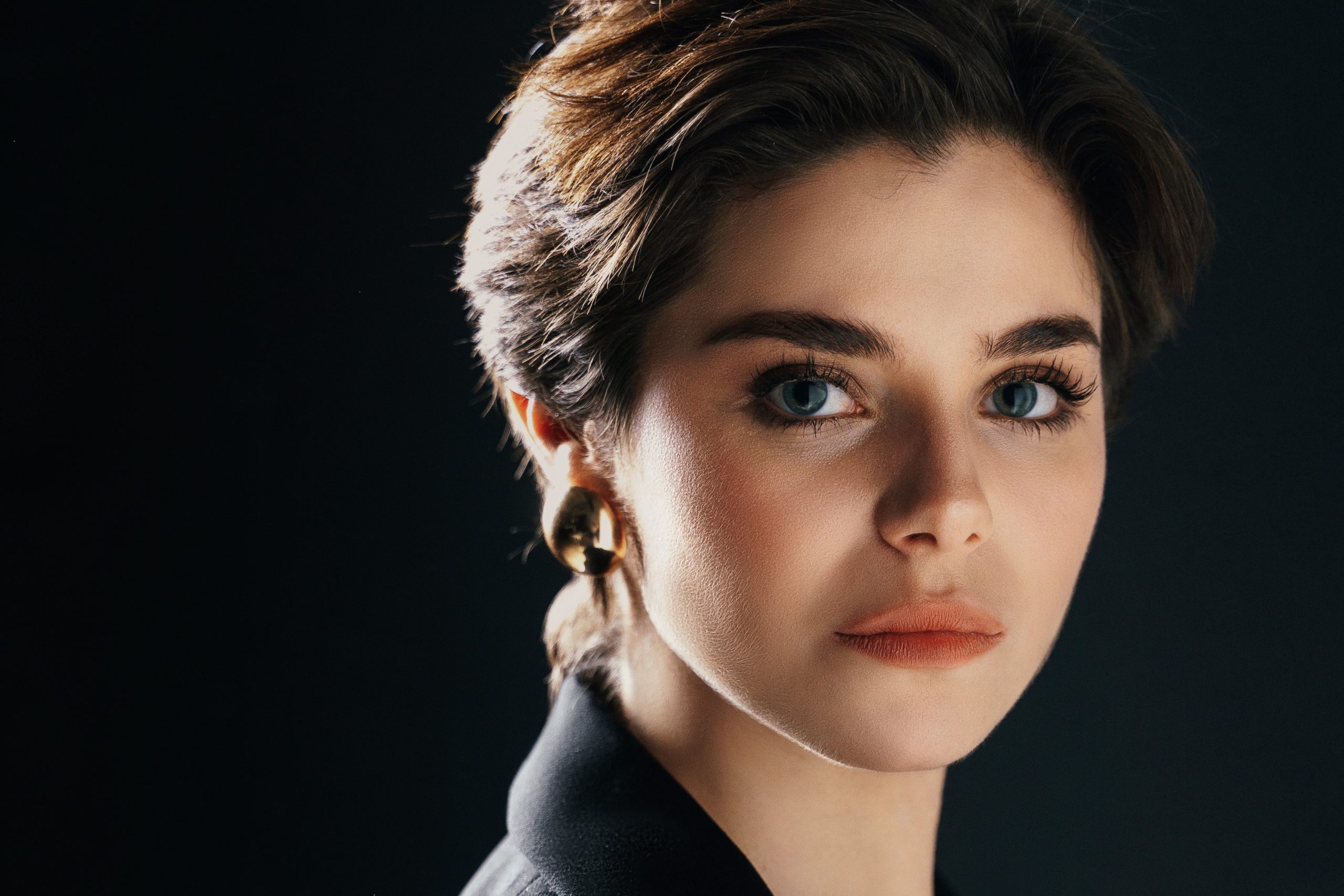
It is, of course, the Hastings International Piano Competition, hosting their Prize Winners’ Gala Concert at the White Rock Theatre in the town this Saturday 4 March. Performing at the concert, and accompanied by the Royal Philharmonic Orchestra under Rory Macdonald, will be two of the stars of last year’s competition. The winner, Japanese pianist Shunta Morimoto (above), will perform Beethoven’s Piano Concerto no.4, while third-placed Mariamna Sherling (below) will close the concert with Rachmaninov’s much-loved Rhapsody On A Theme of Paganini.

“It is a great honour for me to perform again on the historical stage of the White  Rock Theatre”, said Sherling. “The Royal Philharmonic Orchestra is absolutely incredible!  I was lucky to perform with this outstanding orchestra a year ago in the final of the Hastings International Piano Concerto Competition.  I can’t wait to collaborate with them again.”

Shunta, meanwhile, is similarly excited for his performance of the Beethoven. “It will be my greatest delight to bring to my performance with the Royal Philharmonic Orchestra all the beauties I have uncovered studying the 4th concerto of Beethoven. It will be my honour to share this with the public of my most beloved city in England.”

The Hastings International Piano Competition is under the authoritative guidance of Paul Hughes who moved to the role from his previous post as Director of the BBC Symphony Orchestra. The competition itself has its roots in the Hastings Music Festival, which dates all the way back to 1908 – and it evolved from the festival, growing at a startling rate. Last year’s competition, says Hughes, was its best yet. “Yes, very much so. We had a record number of applicants – 360 – and a truly international field.”

Morimoto’s winning concerto in the 2022 competition, says Hughes, “demonstrated his extraordinary musicality and the maturity of his playing, as well as meeting all the technical demands of that particular work. Beethoven’s Piano Concerto no.4 has parallels in that it requires a deep understanding of the music, exceptional phrasing and an appreciation of the architecture of the concerto; all qualities that Shunta has in abundance.”

The concerto will begin with Dvořák‘s effervescent Carnival Overture, while Tchaikovsky’s Romeo and Juliet Fantasy Overture opens the second half – a prelude to Sherling’s Rachmaninov. “Mariamna (above) is the possessor of a fabulous technique, a razor-sharp mind and a sense of fun”, says Hughes. “I am expecting she will employ all of this to demonstrate many facets of Rachmaninov’s set of variations.”

Hastings has a reputation of being ‘The Friendly Competition’, which Hughes attributes to “a combination of the efficient organisation of HIPCC combined with the warmth of the community whose hospitality in looking after and supporting the young pianists at every stage of their progress through the competition makes such a difference. It is also the friendliness and openness of the jury who share insights and give constructive feedback to the competitors.”  

Following the contestants after the competition has finished is imperative. “That is an important part of the Hastings International Piano experience”, he stresses. “We follow, support and offer performance opportunities to our pianists, and not just the finalists.” When choosing the winners, he says that “formally we don’t discuss the artists as a group of jurors.  The range of experience within the jury means we are all looking for different aspects of a performance, and make our selections individually.”

Hughes (above) considers the future of the competition to be rosy. “Professor Vanessa Latarche was President of the jury in 2022 and fulfilled that role magnificently.  She is now Artistic Director of Hastings International Piano and so I am confident we will attract an even wider range of pianists from across the world. One of the elements of the competition that distinguishes it from many others is that it focuses predominantly on the piano concerto; to that end we have conductor Rory Macdonald returning to conduct not just the finals,  but also the semi-final round.   One further innovation new to the Hastings competition is that we are commissioning a new piano solo work that each competitor will be required to perform in their solo recital round.”

These exciting developments are a natural progression from Paul’s previous role with the BBC Symphony Orchestra. “In my role there I have worked with and presented very many pianists, from early career new generation artists to the most distinguished pianists working today.    I have commissioned new work for them, supported and developed long term relationships with these amazing artists and fostered a sense of loyalty that I believe is so important in our profession. I am calling on all those experiences in Hastings to create a platform where we can discover, support and nurture young pianists and engage the Hastings community in the wonderfully exciting journey of a young pianist from competition to the very top of the profession.”

You can book tickets for The Hastings International Piano Competition Prize Winners’ Gala Concert by clicking on the link. Meanwhile the Piano Concerto Competition will return in February-March 2024 – with updates appearing on the competition website

Online concert – Daniel Rowland, Maja Bogdanović, English Symphony Orchestra / Kenneth Woods: Sawyers: Concerti

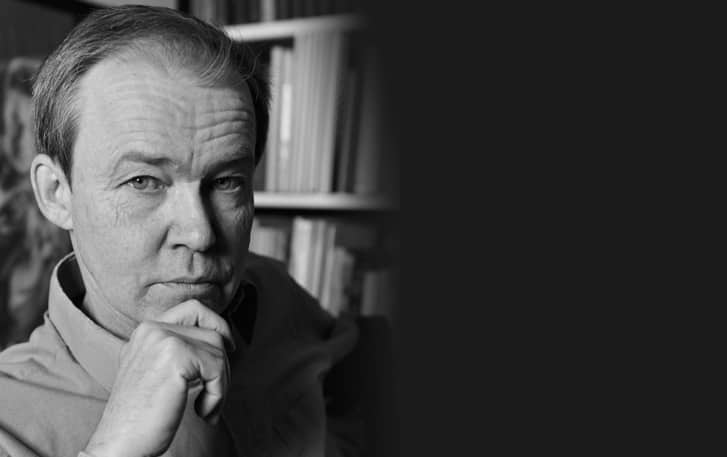
Philip Sawyers (above)
Double Concerto for Violin and Cello (2020)
Viola Concerto (2020)

Daniel Rowland (violin, viola), Maja Bogdanović (cello), English Symphony Orchestra / Kenneth Woods

Filmed at the Wyastone Concert Hall, Monmouth, Thursday 3 March 2022. Producer Phil Rowlands / Videographer Tim Burton

by Richard Whitehouse. Photo of Daniel Rowland and Maja Bogdanović (c) Stefan Bremer

Since returning to composition with a vengeance almost two decades ago, Philip Sawyers has created a varied output dominated by six symphonies along with five concertos that between them confirm the professionalism of his writing and a sensitivity to the instrument(s) at hand. Two of them were written, one after the other, in 2020 and received their public premieres at Hereford and Great Malvern in March last year.

Daniel Rowland (violin), Maja Bogdanović (cello)

Before that, they were recorded at one of the English Symphony Orchestra’s Wyastone sessions and it is these accounts which feature here. The live performances were covered when part of their respective concerts (see the reviews of the Double Concerto and Viola Concerto respectively), hence it only needs to be added that the studio recordings more than compensate for any lack of spontaneity with what they gain in subtlety of characterization.

The conviction of these readings should only be abetted when they are commercially issued on 6th March, as part of the ESO’s latest Sawyers release which also features his Octet for ensemble and Remembrance for strings (its public premiere to be given by the Leamington Chamber Orchestra at Holy Trinity Church, Leamington Spa on Sunday March 26th). Good news, moreover, that his oratorio Mayflower on the Sea of Time, whose premiere at the 2020 Three Choirs Festival fell victim to the pandemic, is to receive its first hearing later this year.

This concert can be accessed free until 28 February 2023 at the English Symphony Orchestra website, but remains available through ESO Digital by way of a subscription. Meanwhile click on the names for more on the English Symphony Orchestra and Kenneth Woods, or on composer Philip Sawyers. Meanwhile the new recording release mentioned above can be viewed and purchased in advance here