Yesterday we learned of the almost incomprehensible decision by the BBC that they were planning to close the BBC Singers. The choir is one of the leading ensembles of its type in the UK – if not the leading example – and have been responsible for many important premieres and landmark concerts over their 99-year existence.
Only in 2020 they were on stage as the Proms concerts returned, with a memorable performance of Eric Whitacre‘s Sleep, while if you want proof of their versatility from this year, watch this video of an arrangement of ABBA‘s Little Things:
The Spotify playlist below celebrates just some of the recordings made by the BBC Singers, in the hope that they will somehow be able to continue their invaluable service to British music. Included are shorter works by John McCabe, Sir Michael Tippett, Elizabeth Maconchy and Diana Burrell, alongside excerpts from Mozart’s Requiem, under Jane Glover, Janáček’s The Excursions Of Mr. Brouček, in a Proms performance under Jiří Bělohlávek, and the same forces at work in Smetana’s large scale opera Dalibor.
Finally the Singers can be heard in the striking Moth Requiem by Sir Harrison Birtwistle, which they premiered at the Proms in 2013.
John Foxx is very much back on the radar. His musical activity for 2023 begins with a limited edition, album length release. Avenham is documented as being ‘inspired by a place he knew as a young man but it’s more than a location. It’s less defined, more dispersed and mysterious than that’.
This intriguing text that will draw in fans of the instrumentalist and one-time Ultravox member, who has in his solo career shown himself to be a multi-disciplined musician. Avenham fits into a line of releases including London Overgrown, My Lost City, the revered Drift Music with Harold Budd and the Codex album as part of the Ghost Harmonic trio.
“Avenham is a real place”, says Foxx, “that’s also as mythical as the gates of Eden. So the music is likewise nebulous and impressionistic – a view from here to a time which occurs in almost everyone’s life, when the world becomes a radiant place of infinite mystery and promise – and everything seems possible.”
What’s the music like?
A mixture of serenity and activity. The relatively ambiguous accompanying text is helpful, for it means the listener can create their own Avenham. For this particular listener it feels like a green space, rich in both light and shade, a place of fertile ground but also slow-moving growth – all things that are reflected in the cover image.
Regular Foxx listeners will feel at home in the elegant lines of On Waking, a timeless evocation – unlike Ampurias to Ithaka, which is more obviously a distant relation of 1980s synthesizer music, with a slightly manipulated treble sound complemented by piano. Dream Through Trees is particularly lovely, a string-based composition with dappled textures, while time stands still as the single melodic lines of The Best Of Us spin silvery webs. Avenham itself carries more weight, while A Murmuration provides one of several moments where the influence on Moby’s longer ambient music can be discerned.
Does it all work?
Yes. Avenham is the ideal accompaniment for meditative thoughts and exercises, and is confident enough in its own abilities to often operate completely without a bass part. As a result it offers a uniquely weightless sound.
Is it recommended?
It is. As we eagerly anticipate Foxx’s first ever solo piano album, The Arcades Project, here is a more familiar side to his work. Avenham is a restful place for recharge and reparation.
Nordheim Den første sommerfugl (1982) Martinů Sonatina for trumpet and piano (1956) Shostakovich 4 Romances on Poems by Alexander Pushkin Op. 46 (1936-7) Piazzolla Café 1930 from Histoire du Tango (1986) Grieg 6 Songs Op. 48 (1884-8) Gershwin Prelude No. 2 in C sharp minor (c1923-6); By Strauss (1936) Weill Youkali (1934) Kreisler Toy Soldiers March (1917)
Wigmore Hall, Monday 6 March 1pm
by Ben Hogwood
What a joy to see the partnership of trumpeter Tine Thing Helseth and pianist Kathryn Stott renewed at Wigmore Hall, united in an original program of trumpet originals and imaginative arrangements from vocal sources.
Dreamy lines from the piano introduced the concert’s first item, Arne Nordheim’s Den første sommerfugl (The First Butterfly), full of spring promise as the insect’s flight gracefully orbited the hall. Helseth’s trumpet line was a lyrical one, speaking faintly of folk song. From here the pair moved straight into the compact and winsome Sonatina for trumpet and piano, one of the Czech composer Martinů’s miniature gems. Written while experiencing homesickness in New York, the work began with a gruff introduction from the piano, its repeated note figurations taken up by the trumpet in fanfare-like salvos generating a good deal of energy. Gradually this subsided into more poignant thoughts, the composer revealing his softer centre, and by the bittersweet chorale with which the work ends the sense was that of a composer looking for his fortunes to change. Both performers caught that shift of focus.
Next up was an imaginative choice, an arrangement of Shostakovich’s Four Pushkin Songs. The vocal lines transfer to the trumpet with surprising accuracy, both artists playing in such a way that the original spirit of the songs was fully maintained. Regeneration, the first song, was thoughtfully done, held notes on the trumpet carrying above delicate figuration on the piano. Premonition was an easy amble in triple time, but the fourth song, Stanzas, held the cycle’s emotional centre. A substantial song, as long as the other three combined, it began with a stern introduction from Stott before a compelling dialogue unfolded.
Complementing this was a beautifully floated account of Piazzolla’s Café 1930, tastefully augmented by Stott’s rhythmic attention to detail. The melodies really sang from Helseth’s trumpet, any breathing challenges overcome with deceptive ease. As she said at the end, a bit of Piazzolla is never wrong!
Helseth’s announcements between the groups of pieces were nicely done, with an easy charm that also showed how much the two artists were enjoying themselves. This much was clear again in six songs by Grieg, grouped together as Op.48 but once again transcribing with relative ease for the trumpet. Gruss (Greeting) featured a lovely depiction of bells, an outdoor scene, while Lauf der Welt was a rustic march. Helseth’s characterisation of Die verschwiegene Nachtigall (The secretive nightingale) was nicely done. Zur Rosenzeit (Time of roses) presented bright colours, while the final Ein Traum (A dream) was especially full of feeling.
We moved to a stylish Gershwin duo, starting with an account of Prelude no.2 that was especially enjoyable when the main theme returned with the mute in the trumpet. By Strauss was also a highlight, enjoying the Viennese waltz send-up, while Weill’s Youkali was a soave tango. Finally Kreisler’s Toy Soldiers March was a perky account, led off by the piano with crisp fanfares. Topping a highly enjoyable concert was an encore of Piazzolla’s Libertango, led off with a swing by Stott and played with great panache by Helseth, including pitch slides to perfection.
For more livestreamed concerts from the Wigmore Hall, click here
This is a second album for the Munich-based, Chinese-German musician Robin Wang, who records under the name Sam Goku.
Goku is reaching a lot of admirers, his eclectic approach to electronic music reaching the DJ sets of Four Tet and Ben UFO among many others. For this second album he switches to a ‘home’ label, the acclaimed Munich imprint Permanent Vacation.
What’s the music like?
A notch up from the average. Goku’s music continues to use attractive textures and loops with something a little different or distinctive added.
This can be heard in the lush title track, rich in Eastern promise, or the ambience of distracted voices and busy, watery loops on Mangrove Railways. He also works different tempo variations into the mix, with Libellenflug a nippy, percussive track that still retains its ambience, and the busy Orchids. The album evolves gradually, the quiet Yellow River Drone picking up more momentum as Goku moves into Cycles, with its softly resonating melodic nuggets. The momentum builds further, the album progressing as a strongly unified single composition, but also rewarding more fragmented listening.
Does it all work?
It does, convincingly – Goku securing a colourful canvas and plenty of musical interest.
Is it recommended?
Yes. Goku’s beat making skills and ability for creating colourful scenes in his music are a great match, and listening on headphones only opens out the possibilities. A fine sequel to his promising East Dimensional Riddims debut.
Alice Coote (mezzo-soprano), Brenden Gunnell (tenor), Ashley Riches (bass-baritone), CBSO Chorus, City of Birmingham Symphony Orchestra / Ryan Wigglesworth
Elgar The Dream of Gerontius Op.38 (1899-1900)
Symphony Hall, Birmingham Thursday 2 March 2023
Reviewed by Richard Whitehouse
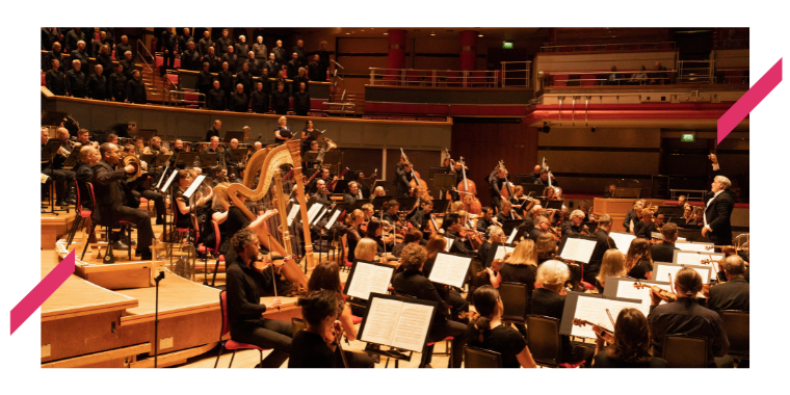
It may have had a disastrous premiere here in October 1900, but Birmingham has more than made amends to The Dream of Gerontius through many subsequent performances by the City of Birmingham Symphony Orchestra with conductors ranging from Vernon Handley to John Eliot Gardiner, two recordings from its previous chief conductors (Simon Rattle and Sakari Oramo), and tonight a reading which more than confirmed that this ground-breaking piece remains a touchstone of the choral repertoire almost 125 years on from that initial failure.
Although the innate Catholicism of John Henry Newman’s text no longer presents obstacles, the work’s technical demands remain considerable. Not least the characterizing of Gerontius himself, in which Brenden Gunnell acquitted himself with conviction – whether his wearied pallor then combative reckoning with Sancta fortis in Part One, or his wonderous musings then anguished acceptance of his purgatorial fate with Take me away in the longer second part. This role was consequently more believable and more empathetic because more human.
Not a little of that impression was abetted by Alice Coote’s contribution as the Angel. Less imperious than many predecessors (or contemporaries), the extent of her involvement only deepened as Part Two unfolded – the restraint, even reticence, of My work is done taking on heightened eloquence during There was a Mortal, before the Softly and gently of her farewell brought with it a transfiguring radiance as carried through to the close. This was a thoughtful and, increasingly, affecting approach to some of this work’s musical highpoints.
Nor should the contribution of Ashley Riches be underestimated, even though this is limited to two, albeit crucial, appearances in either part. Arresting and suitably proclamatory at the Priest in Proficisere, anima Christiana, he brought unfailing gravity and powerfully wrought rhetoric to Angel of the Agony – the substance of whose musical presentation can be heard in Elgar’s music across the decades to come, whatever the extent to which the composer moved away from accepting those tenets of Catholic orthodoxy that are set out in Newman’s poem.
One of several works to which it has returned regularly over its half-century of existence, the CBSO Chorus brought its wealth of experience to a piece whose difficulties of ensemble and intonation cannot be gainsaid. From the halting appearances of the Assistants, through to the intricate polyphony of the Demons then cumulative grandeur of the Choir of Angelicals and distanced poise of the Souls in Purgatory, the authority of its contribution – prepared on this occasion by Julian Wilkins – added in no small measure to the impact of the performance.
As, of course, did that of the CBSO. Any regret over Andrew Davis’s indisposition was duly tempered by Ryan Wigglesworth’s tangible immersion and belief in this score – to which he brought a composer’s concern for clarity and cohesion, with a sense of pacing and a placing of its emotional climaxes which made appreciate anew the ambition and audacity of Elgar’s overall conception. Birmingham will doubtless hear many more performances of Gerontius over ensuing decades, with this one a marker as to what the work can and should represent.



 Arcana.fm