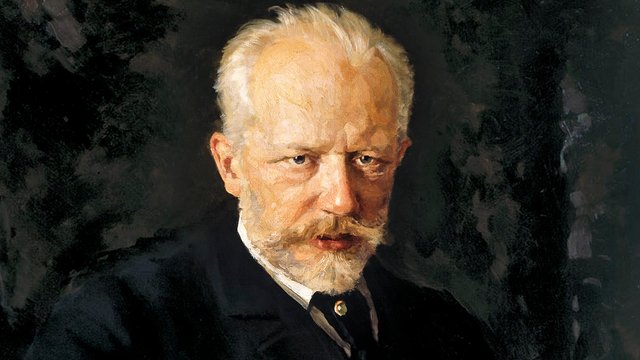
With the weather taking a sharp turn for the colder in the UK today, thoughts turn to wintry music. An underrated gem in this area is the first symphony of Tchaikovsky, which the composer subtitled Winter Daydreams.
This is a tuneful and highly appealing work from 1866, showing the influence of Mendelssohn but also revealing Tchaikovsky’s own individual grasp of symphonic form, and his aptitude for writing programme music.
The full subtitle of the first movement is Dreams of a Winter Journey, while the second movement, Land of Desolation, Land of Mists, is the emotional heart of the symphony with a yearning slow theme. The cool, slight melancholy of the untitled third movement Scherzo is swept away by a jubilant Finale, bringing Tchaikovsky’s first symphonic structure to a satisfying end.
There was much more to come, of course! You can enjoy the symphony in a performance from the Berlin Philharmoniker and Herbert von Karajan below:
Haydn Symphony No. 45 in F sharp minor, Hob.I:45 ‘Farewell’ (1772) David Matthews Le Lac Op.146 (2018) Barber Knoxville: Summer of 1915 Op.24 (1947) Mozart Symphony no.36 in C major K425 ‘Linz’
April Fredrick (soprano), English Symphony Orchestra / Kenneth Woods
Great Malvern Priory, Malvern Wednesday 23 November 2022
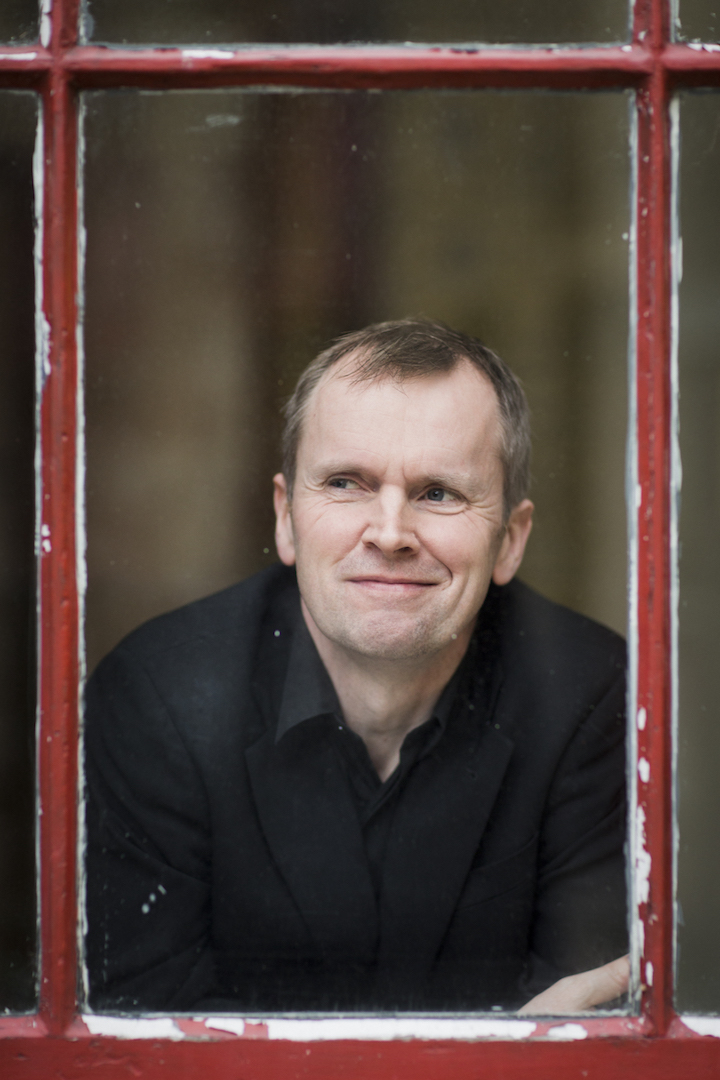
Reviewed by Richard Whitehouse
The English Symphony Orchestra’s season really hit its stride this evening with a programme featuring two major vocal works of the 20th and 21st centuries, heard alongside two notable while very different symphonies from near the start and towards the end of the Classical era.
As Kenneth Woods indicated, Haydn’s ‘Farewell’ Symphony would have been determinedly avant-garde to early listeners, and much of that innovative quality came over here. Not least in the initial Allegro, its jagged course and disjunctive tonal shifts only nominally countered by the Adagio’s increasingly fraught introspection. With its stark alternations in motion and phrasing, the Menuetto proved a telling foil to a finale where a turbulent Presto precedes an Adagio whose eloquence was sustained as the music subsides and musicians vacate the stage.
Whether or not this symphony would have been better placed at the end of this concert, it set up productive contrast with David Matthews’s Le Lac. Remembered more as statesman than poet, Alphonse de Lamartine was a crucial figure in French literature of the early Romantic period – his lengthy 1820 poem a remembrance of lost love comparable to verse by Shelley and Heine, and one whose slowly intensifying rapture is to the fore in this evocative scena. Two orchestral interludes aside, its formal and emotional progress is essentially determined by the vocal line; with which April Fredrick was at one in conveying the wistfulness but also anguish inherent of this music. The fastidious textures were no less finely delineated by the ESO, Woods sustaining a cohesive overall trajectory from earlier promise to ultimate loss.
Evidently it was Fredrick who had suggested juxtaposing this piece with Barber’s Knoxville: Summer of 1915, which pairing succeeded admirably in terms of underlining conceptual and expressive links between them. Its sense of loss may be psychological rather than personal, but an emotional force comes over tangibly for all this music’s overt restraint: James Agee’s poetic reportage summoning a response the more affecting for its restraint and in whose vocal part Fredrick was never less than attuned. Woods brought no mean sensitivity or character to orchestral writing such as eschews the rhetoric found in many of Barber’s earlier scores and so foreshadows the subtlety of those two decades hence. This is a work with few significant precursors or successors, and the present reading made the most of its singular atmosphere.
The evening concluded with the relative extroversion of Mozart’s ‘Linz’ Symphony – a piece whose having been written in four days doubtless occasioned its technical brilliance, yet also a formulaic quality to its actual substance. Not, however, in an Andante whose gentle pathos was to the fore, or a Menuetto whose brevity belies its resourceful use of woodwind. Woods found a winning effervescence in the initial Allegro, and if the second-half repeat in the final Presto may be one such too far, this music’s Haydnesque wit was never less than appealing.
It set the seal on a well-conceived and finely executed concert that, in pivoting between the established and unfamiliar (not only between but also within works) typifies thr resourceful approach to programming with which Woods and the ESO have now become synonymous.
Debussy Études Book 1 (1915) Berceuse héroïque (1914) Étude retrouvée (1915) Études Book 2 (1915)
Wigmore Hall, London Monday 6 December 2022 (BBC Radio 3 Lunchtime Concert)
Reviewed by Ben Hogwood Photo (c) Ben Ealovega
Steven Osborne is in a ‘Debussy phase’. The renowned pianist has recently released an album of Early and late piano pieces for Hyperion, and commendably this concert added a further string to his bow with a collection of late works, principally the two books of Études. These substantial collections represented the end of a year of compositional famine for Debussy, his creativity reignited for the piano and as he began his late trio of published sonatas. Blighted by illness, he nonetheless found the focus to write increasingly economical but outwardly expressive music.
Typically Debussy did not write these pieces as downtrodden exercises for the classroom. Instead, as a recent biography by Stephen Walsh point out, he wrote ‘tests of the pianist’s ability to climb technical mountains while engaging with the musical scenery’. Osborne certainly achieved both objectives in this BBC Radio 3 lunchtime concert. His technical control was well-nigh flawless but at times daring, pushing these pieces to the limit while remaining sensitive to the natural phrasing of the cells of melody with which Debussy works.
He executed each piece with a compelling characterisation, allowing us to admire Debussy’s craft and texture but also creating remarkable images in spite of the discipline required within each study. Each of the two books of Études contains six pieces, and Osborne began with Book 1 in its entirety. The restless Pour les ‘cinq doigts’ (d’après Monsieur Czerny) began, immediately showing off the pianist’s control and natural affinity with Debussy’s melodic writing. Ending with a flourish, he moved to a picturesque Pour les tierces, portraying in aural terms the equivalent of focussing in on a particular part of a fast flowing stream. Pour les quartes moves the musical language in an Eastern direction, moving between evocative scenes, while Osborne enjoyed linking the character episodes of Pour les sixtes with fearsome playing. Pour les octaves was notable for its clarity and power, while the final Pour les huit doigts hurried forward, changing shape continuously like the centre of a lava lamp.
Book 2 was similarly impressive. The right hand in Pour les degrés chromatiques was like a strong wind, with room retained for its recurring melody, while the open textures of Pour les agréments reminded us just how forward looking these pieces are, Osborne giving the music plenty of room for expression. The circus was memorably evoked in the chase sequences of Pour les notes répétées, before Pour les sonorités opposes became a compelling study in musical perspective, its happenings near and far giving an exquisite sense of distance. The rippling figures of Pour les arpèges composes contrasted with trippy, playful syncopations, before finally we heard contrasts between the assertive and the deeply mysterious in a fully voiced account of Pour les accords.
Between Books 1 and 2 of the Études, Osborne found time for two more late pieces, beginning with the curious Berceuse héroïque, where a solemn left-hand figure grew into an imposing presence, then following with the Étude retrouvée from a year later. Here the suggestive chromatic intervals were persuasive, complemented by a ticklish figure in the right hand.
Completing this memorable concert was an encore of the early Rêverie, written in 1890. By showing us how far the composer had advanced in his musical style, Osborne also illustrated the seeds that were there at the beginning, in a piece whose sustaining calm cast a spell on audience and pianist alike.
Whilst preparing for the next in Arcana’s Listening to Beethoven series – the 216th instalment, all told! – I have become more acutely aware of just how effective the Beethoven piano sonatas are for after hours listening.
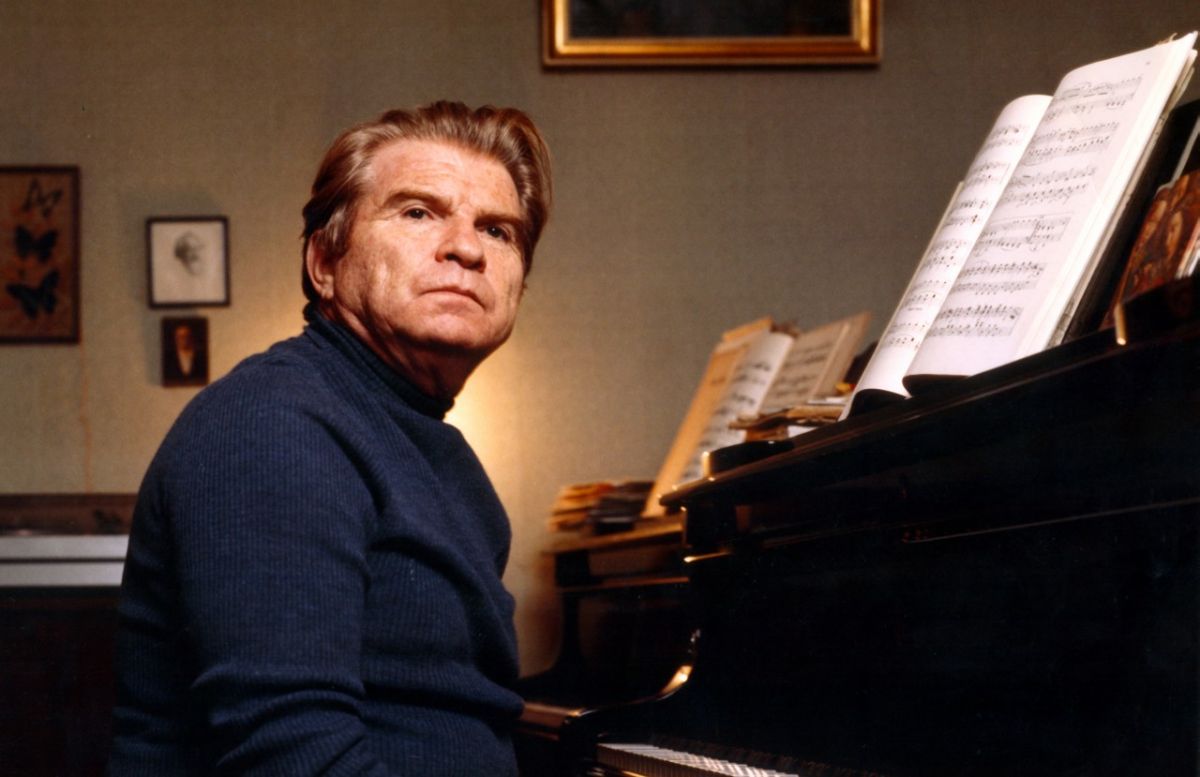
Without further ado, then, here is the Appassionata Sonata in a commanding recording made by Emil Gilels (above), part of the wonderful collection of Beethoven sonatas he made for Deutsche Grammophon. It is quite an experience:
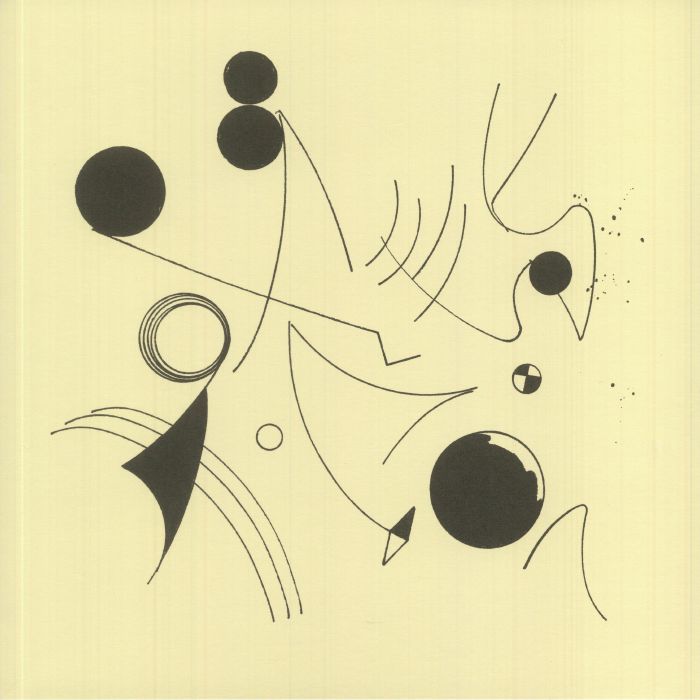
Martin Buttrich is known primarily for the ability to deliver a dancefloor belter, whether in a solo capacity for labels such as Planet E, Cocoon, Poker Flat and Four:Twenty, or in collaboration with fellow producers such as Timo Maas and Loco Dice.
His new alias Stoned Autopilot might come as a surprise, then, for fans of the Los Angeles-based producer. Under its umbrella he casts the net wider, including firm nods towards jazz and chill out music, all the while making an album that hangs together as a single structure just as well as it does at being a collection of 13 tracks.
What’s the music like?
Both assured and extremely listenable. Buttrich has clearly honed his craft in the down tempo area, and these productions show an original thought process and a really impressive mastery of the sounds and textures at his disposal.
On occasion you can feel the warm Californian climate coming through – it does so immediately in the dreamy June, Flawless and the dappled light evoked through Sun Of Sunshine, and also Purple Jack which makes a strong impression later in the album.
Other productions are more cinematic, and on the superb Ending For Us, Buttrich uses descriptive cello lines and vocals to make a track full of character. Better Days draws out a leading piano line to really good effect, while Jazzalude really enjoys its percussive excursions and freedom over a longer structure.
Perhaps most importantly, Light Vessel Automatic doesn’t take itself too seriously, and through the album you get touches of humour, irreverence and a lighter mood that makes Buttrich’s music work on several levels. Lighter tracks such as Indecisive breeze past attractively, needing little effort but maintaining the warm temperature.
Does it all work?
It does – a really rewarding mixture of serious and lighter tracks brought together as a convincing chill out album. It works just as well in the foreground as it does in the background.
Is it recommended?
It is, a really enjoyable album proving Martin Buttrich’s versatility as a producer, and his refusal to play along with established formulas. Well worth getting!


 Arcana.fm