This is the first album from Pye Corner Audio – aka Martin Jenkins – for the Sonic Cathedral label. It is a wholly logical move, given the producer’s work with Ride guitarist Andy Bell on Social Dissonance, a live recording he made at a Sonic Cathedral night at The Social back in 2019.
It was the first meeting for the pair, and it ticked a lot of musical boxes which lead to the collaboration on this album, where Bell plays guitar on five of the ten tracks. The impetus for this long player is markedly different from Pye Corner Audio’s last in 2021, which was inspired by the underground fungal pathways where plants communicate. This one reaches for the sun, bathing in the summer heat – which makes its release into the middle of a UK heatwave all the more pertinent.
As a bonus, Let’s Emerge! is fronted by vibrant artwork from Marc Jones, consciously drawing on sleeves from LFO, Spaceman 3 and early Stereolab in his vivid colouring.
What’s the music like?
As warm as the cover suggests it should be. Jenkins’ slight adaptation of his music for Sonic Cathedral does indeed take it closer to ‘shoegaze’ if we are looking for a musical label, but it means the music he produces is full of rich colour and dreamlike possibility.
De-Hibernate acts as an awakening, introducing the big sonic backdrop with which Jenkins operates, but also showing how closer inspection reveals studied details in the work of Andy Bell. Broad brush chords from the keyboards, then, are complemented by more intricate guitar work, a blueprint that works extremely well as the album progresses.
The wash of sound on Lyracal confirms the temperature, bathing in consonant harmonies and shimmering textures, while Does It Go Dark shifts to lower pitched drones, its woozy outlines gradually revealing a chord progression of poise and power.
Haze Loops is a rich tapestry of warm sounds, more of a poolside chillout number, before some slightly smaller tracks link seamlessly together as part of a bigger suite. Let’s Emerge Part One breaks like a wave into the ears, retreating to the deeper colours of Saturation Point. Sun Stroke (so appropriate as I type this on the hottest day in UK history!) is thick with humidity, and then after the brief Let’s Emerge Part Two, Luminescence harnesses more rhythmic drive, synths bubbling just below the surface. Finally Warmth Of The Sun, the musical culmination of the album, brings the guitar to its greatest prominence yet, shimmering on the surface with fuzzy vocals and supportive percussion.
It says much that Andy Bell’s contributions are subtly integrated into the music. Not for him the posturing of a typical ‘featured guitarist’ – he gets the mood of Jenkins’ writing and adds his own subtleties to complement it, rather than going for standout melodies each time. It is to his enormous credit that the two work as equals and achieve something far more meaningful.
Does it all work?
It does. Music evokes time and place better than almost anything, and Let’s Emerge! certainly does that with its hot weather soundscapes.
Is it recommended?
Yes – a rather special addition to Martin Jenkins’ work until now as Pye Corner Audio, taking him in the direction of sunnier climes while reminding us of his capacity to evoke images and moods through his electronic music. Andy Bell’s guitar work is the icing on the cake.
After yesterday’s languid summer overtones made by Debussy, I have opted for a very different portrayal of heat in today’s selection. The Danish composer Poul Ruders wrote his celebrated Solar Trilogy between 1992 and 1995, describing in it the life and behaviour of the Sun.
This time we get an immediate sense of the overwhelming heat generated by our nearest star from the off. It is fascinating to compare Ruders’ writing with that of Holst in The Planets. Here Ruders portrays the sheer solar energy at work, using all corners of the orchestra to create some truly vast sounds. This is modern music that responds really well to repeated listening, and could easily be used as part of a film or game soundtrack.
The trilogy begins with a stunning stroke in the form of Gong, a piece that seethes with activity and rhythmic drive, before moving onto the central Zenith, whose atmosphere grows very gradually but with considerable tension.
Finally Corona describes an eclipse of the sun, with a ‘sizzling’ start, to quote the composer, before running off at a terrific pace. With an insistent drive it radiates outwards, the orchestra effectively a supergiant star.
Danish composer Ruders continues to write a great deal of music with orchestra, and his work is incredibly descriptive and rewarding. To find out more and to hear more of his music, visit his website here – while at the bottom of this page you will find a dedicated Spotify playlist including the Solar Trilogy and the most recent recording of Ruders’ music, with Mahan Esfahani in the recent Harpsichord Concerto. In contrast, the orchestral piece Nightshade of 1986 completes the selection:
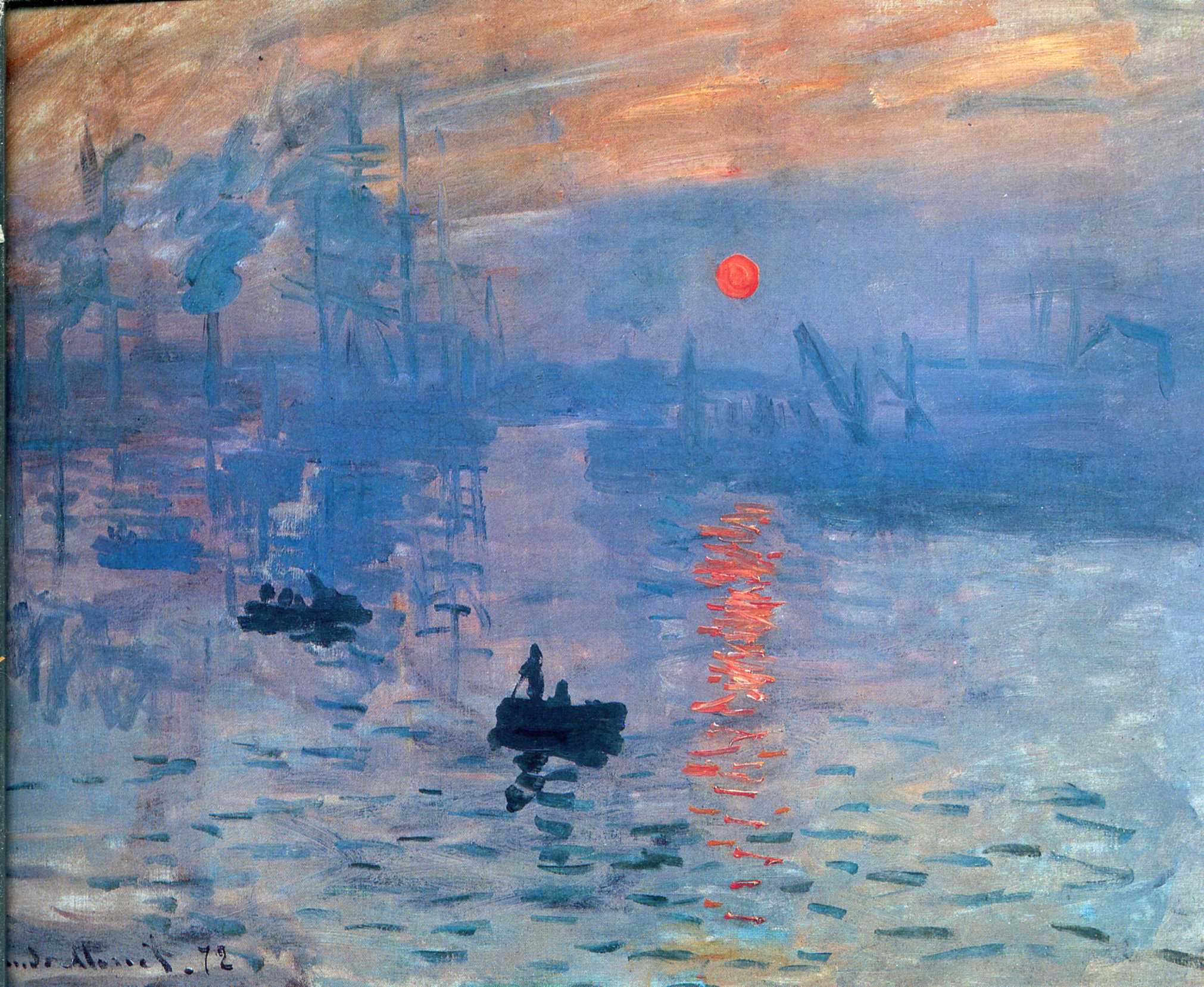
by Ben Hogwood Picture – Impression: Sunrise by Claude Monet
As our UK-based readers will know, England is bracing itself for what could be the hottest week on record. With that in mind, I began thinking of musical evocation of hot weather, and each time I kept on coming back to Debussy‘s influential masterpiece of 1894, the Preludeà l’après-midi d’un faune.
Few orchestral works create such an immediate heat haze, but with one deceptively languid flute solo Debussy set the scene, against a cushion of sunbathed strings and soporific, enchanting woodwind.
I remember playing this piece as an orchestral cellist and falling under the spell of the music, with its rich harmonies and persuasive melodies. Debussy’s mature style was established here – revealing an uncommon ability to tug at the senses and lull the brain at his command. Bask in the sunshine and enjoy!
Fierrabras D796 – Overture (1823); Symphony no.1 in D major D82 (1813); Symphony no.4 in C minor D417 ‘Tragic’ (1816)
City of Birmingham Symphony Orchestra / Edward Gardner
Town Hall, Birmingham Thursday 14 July 2022
Written by Richard Whitehouse
One of many projects left in abeyance by the pandemic, the City of Birmingham Symphony Orchestra’s Schubert cycle with its former principal guest conductor Edward Gardner duly continued this evening with a programme of that composer’s First and Fourth Symphonies.
Schubert may have been barely 16 when he essayed his First Symphony, but its confident if quirky assimilation of traits as derived from Haydn and Beethoven is more than a statement of intent – not least with an opening Allegro whose imposing introduction returns after the development to broaden the movement’s emotional scope. Gardner realized this unerringly, while drawing an incisive response from the CBSO in the first theme and winsome elegance in its successor as subsequently headed into a coda of bracing if not overly insistent finality.
For all its Mozartian gracefulness, the Andante yields an emotional ambivalence most notable in the plangent exchanges of woodwind and string towards its centre. These were enticingly conveyed, as was that contrast between rhythmic trenchancy in the Menuetto’s outer sections with its trio’s more affable demeanour. Precision of ensemble meant the final Allegro never risked seeming repetitious, Gardner steering it with assurance and not a little flexibility to a coda that emerged as never less than entertaining in its forceful reiterations of the home key.
Three years on, the Fourth Symphony confirms a greater formal and expressive breadth – not least in the first movement’s introductory Adagio whose underlying portentousness makes its contrast with an impulsive and often anxious Allegro more acute. Gardner and the CBSO had its measure, as they did the ensuing Andante in which Schubert’s woodwind writing is heard at its most felicitous. Any contrived distinction between the hymnic main theme and its more volatile alternate episodes was hardly in evidence as this movement drew to its easeful close.
For all its brevity, the Menuetto (a scherzo in all but name) can be rhythmically treacherous in its syncopation, but there was no lack of focus here or in the trio’s folk-like lyricism. Nor did the moto perpetuo underpinning the final Allegro run out of steam – Gardner sustaining a cumulative momentum across the exposition’s repeat then into an intensive development which brought an opening-out of mood through to those decisive closing chords. Its ‘tragic’ connotations may be tangential, but the teenager’s seriousness of purpose cannot be denied.
Opening the programme was a relatively rare revival of the overture to Fierrabras, the last of Schubert’s ill-fated attempts at grand opera – even though time and subsequent stagings have largely vindicated his efforts. Gardner drew palpable expectation from its introduction, and if what ensues seemed a little stolid rhythmically, the dramatic flair of the composer’s orchestral writing was not in doubt. A pity the even less often heard Overture in E minor (1819) did not open the second half, as its abstract drama would have prefaced the Fourth Symphony ideally.
In any case, this was a welcome addendum to the CBSO’s current season and not least for an opportunity to hear the orchestra playing at its former venue of Town Hall. Hopefully another such concert, featuring Schubert’s Great Symphony, can be scheduled sometime next year.
For more information on the CBSO and their 2022-23 season, visit the dedicated page on their website. Meanwhile click here for more on conductor Edward Gardner.
Garsington Opera has had a brilliant summer. With stellar reviews for its productions of Orfeo, Così fan tutte, Rusalka and The Turn of the Screw, the festival has further cemented its status as an unmissable part of the British classical music calendar. And yet there is one more ace up the sleeve in the form of Dalia, a community cricket opera from composer Roxanna Panufnik and librettist Jessica Duchen about a Syrian girl who triumphs over adversity to follow her dream. The opera engages local participants of all ages from diverse backgrounds, including choirs from Syria and Palestine.
The parallels between opera and the most English of sports are surprisingly logical. Test cricket, it could be argued, becomes a four act drama – one for each innings – while the relatively recent phenomenon of 20-20 cricket pivots effortlessly to a pacey, two-act thriller. For some reason composers have tended to shy away from the stumps in creating works with bat and ball, but under Panufnik’s guidance Dalia strides confidently out to bat. As the composer arrives at the batting crease to receive an over of questions from Arcana (enough cricketing puns! – Ed) she takes up the story of what is by all accounts an amazing project.
“Thank you”, she says modestly, “and without wanting to sound too egotistical, I agree! It’s grown so much, beyond what we could have imagined with this involvement from with the choirs from Syria and Palestine. It’s just been extraordinary. We never dreamed it would reach the parts that is already has.”
This is not the first time Panufnik and Duchen have worked together on the Garsington stage and pit. “These are always large affairs”, says the composer, “and for the last one we did, Silver Birch, there were 180 people on stage! It was always going to be big, because if you’re going to do something that’s all inclusive, then it’s got to be inclusive for all. That’s the principle behind it.”
The issues at the heart of Dalia (above) could hardly be more relevant to today’s world. “When it was commissioned, and the concept evolved two years ago, there was a refugee crisis but now it has been hugely magnified, with Afghanistan and Ukraine. It just seems even more relevant.”
The collaboration with Jessica Duchen was a natural fit. “Jess and I are old, old friends, possibly reaching 30 years!” she says warmly. “We’ve done lots together. She’s not just my opera librettist, I can count on her for translations of poetic text too. She is very much my writing partner, although she has done other operas for Garsington. This is only my second but she has a fourth on the way I think. That’s another thing that’s mushroomed!”
Rehearsing with the choirs began on Zoom. “I wasn’t involved with the early rehearsals, they were led by our director Karen Gillingham”, she explains. “I haven’t been directly involved in rehearsing them, but the initial contact with the Amwaj Choir in Palestine came from a friend of mine who runs the Bethlehem Culture Festival, which has just had its second season in London. She was saying that I must hear this choir, and was there anything they could do? It couldn’t be more perfect, and I had an arrangement of Dalia’s main song, which I distilled for them. In the opera it is spread out over various parts, but they performed it absolutely beautifully! They were rehearsed by their music directors in Palestine, and they sent me an edit, but other than commenting on balance my input was minimal. It’s really wonderful what they came up with.”
The musical language of Dalia’s Song is striking and moving, an indication of the composer’s aim to bring forward the positive identifying aspects of faith and culture. “The principle behind a lot of the multi-faith and multicultural work that I’ve done over the last 20 years or so has been that whenever we hear about these other cultures or these faiths it’s usually in the context of conflict, especially on the news and in social media. I’ve really been on a mission to show that there are such beautiful aspects of these cultures and faiths and so much that we have in common. I think it’s really, really important to keep reminding people of that.”
As a lighter aside, could this be the first ever opera we about cricket? “Well, as my husband says, and he is a cricket lover – cricket is an opera!” She reveals several first-hand inspirations from the England touring party. “I have had fantastic help and support from a couple of members of the Barmy Army, including Billy the trumpeter. He let me use his mariachi motif in the cricket song and dance number. The pianist Anna Tillbrook is also a Barmy Army member, and she has been brilliant – and another person who has been a key consultant is the BBC cricket commentator Eleanor Oldroyd. She was very involved in the libretto with Jess. She lives near me, and we became great friends a few years ago. She has been very involved in making sure we have all the right terminology and that the cricket action scenes make sense and are all correct.”
Roxanna relished the challenges of writing for the assembled forces. “Every commission that I fulfill, whether it’s for people that are 100% professional and very experienced or if it’s for amateurs, is absolutely tailor made for the people that I’m writing it for. I’ve done an opera for Garsington before, and so I had an idea of the community and youth elements here. Throughout the piece, and I do this with every commission, I send sketches and MIDI files to the people I’m writing for, for constant input and collaboration. That way there are no nasty surprises at the end, and everybody knows that they’re getting something that they are not going to be struggling with.”
Panufnik was not beyond stretching her performers, however. “Having said that, it is a little bit challenging for our community chorus, but when I did that for Silver Birch they rose magnificently to the challenge. We also have these incredible people training them, fantastic coaches who are so talented. It’s a great position to be in. Lea Cornthwaite, who’s coaching the chorus made MIDI files of all the parts, so everybody had stuff to listen to and learn before they actually come to rehearsal.
The effect on the performers is clear from the video. “It is, and it has been emotional for me too. Sometimes I think, “What am I doing with my career; am I doing anything remotely useful? It feels like navel gazing, but when you see the effect on people who are either moved by it or who gain confidence through doing this it’s really gratifying. I’m really grateful to be able to do that. I also hope it will give the performers confidence to try other things they wouldn’t normally do. They might say, “I didn’t know anything about opera, but I went for it and succeeded. So let’s have a go at this!”
It was important for Panufnik to integrate Syrian modes into her musical language. “Dalia’s Song is actually a very well known Syrian folk song, Hal Asmar Ellon. Most of the people in the Palestinian and Syrian choirs knew that tune, and it immediately gave them something to sit between this completely new musical experience and what they know. That mode really influenced the rest of the piece. It was the first song I wrote in the opera, and everything grew out of that.”
Roxanna herself has had a varied musical upbringing, well beyond that handed down to her as daughter of the Polish composer Sir Andrezj Panufnik, who took up British citizenship in the 1950s. “I’ve always loved Middle Eastern music, South Asian music and African music”, she explains. “I did one of those ancestral DNA tests, and discovered that I am actually 1% Egyptian, which explains my love of that kind of music. The test also said I had 1.8% from the Levant region, which is probably through my mother’s Jewish heritage. I also love Balkan music, and I have Balkan DNA as well. I’m a bit of a musical nomad!”
It is gratifying to see her channelling this unique DNA and those influences into a stage work. “The thing about this opera and the people is that I think it’s a good reflection of the cultural mix in the UK today. I think it’s really important that we mirror that.” The opera addresses racism, too. “There is no shying away from that.”
With the current plight of Ukraine, it feels valuable to have such a vivid reminder of the plight of Afghanistan and Syria too. “I am very worried”, she confesses. “It was amazing, the outpouring of sympathy for Afghans fleeing Afghanistan last August, and for Ukraine now, but I worry that people are forgetting that there are still something like 11,500 Afghans here still waiting to be housed, and languishing as one family to one hotel room. I would really want that to be visible still.”
Panufnik is a busy composer. “I’m very excited that having written so much in the last 20 years for Christian worship, I’m just finishing off a commission for the Liberal Jewish synagogue, a piece for their Yom Kippur service in October, so that’s my first Jewish liturgical commission. I’m also writing a piano piece which will take its inspiration from Iraqi Jewish music, for the pianist Margaret Fingerhut. The Jewish stuff is coming up quite a bit. Although I’m a practising Catholic, because my mother is Jewish I am technically Jewish, and feel those roots very strongly. I’m really excited about that.”
How refreshing it is to have a positive discussion about religion. “It’s great to be talking about religion, like you say, in a celebratory way rather than talking about conflicts. I’m sure one of the biggest things about religion is being mindful of other people’s beliefs, isn’t it? It’s just nice to be thinking about that, and also being aware of all the things we have in common. During Lent, I remember some lovely nun friends who suggested taking something up rather than stopping anything. Thanks to their inspiration I took up reading scriptures from other faiths. Last year I read the Quran, and this Lent I’ve read the Hindu scriptures, the Bhagavad Gita. It’s so exciting to see how much there is in common with our faith, in the moral principles especially. I find it incredibly uplifting, and I want other people to be aware of that, which is why I try and put it in my work.”
Panufnik’s eclecticism as a composer is illustrated by her recent projects, including a commission from the City of Birmingham Symphony Orchestra and Youth Chorus. “I took a piece of my father’s, the Five Polish Peasant Songs, for unison upper voices and a few wind instruments, and I orchestrated it with some new translations of the words. They’re funny folk tales, with little twists, all based on Polish folk songs. Then just recently I have had the premiere of a new work (God’s Mirror) in Bath Abbey, which they commissioned for the 25th anniversary of their Girls Choir. Then there is the premiere of the new piece I wrote for Margaret Fingerhut, Babylonia, at Ryedale Festival on 20 July.“ After that, of course, the baton – or should we say, cricket ball – passes to Dalia.
Dalia looks set to be a wonderfully uplifting and thought provoking work for Garsington, not to mention an important milestone in the careers of its performers. More details on the work and its performances, which take place at 7.30pm on 28, 30 and 31 July (which includes a 3pm matinee), can be found at the Garsington Opera website, while to book directly click here






 Arcana.fm