
BBC Proms #7 – Soloists, La Nuova Musica / David Bates: Purcell Dido and Aeneas

Purcell Dido and Aeneas (c1689)

Dido – Alice Coote (mezzo-soprano)
Aeneas – James Newby (baritone)
Belinda – Gemma Summerfield (soprano)
Sorceress – Madeleine Shaw (mezzo-soprano)
Second Woman – Nardus Williams (soprano)
Sailor – Nicky Spence (tenor)
Spirit – Tim Mead (countertenor)
First Witch – Helen Charleston (mezzo-soprano)
Second Witch – Martha McLorinan (mezzo-soprano)

La Nuova Musica / David Bates (harpsichord)

Royal Albert Hall, London
Tuesday 19 July 2022 (late night)

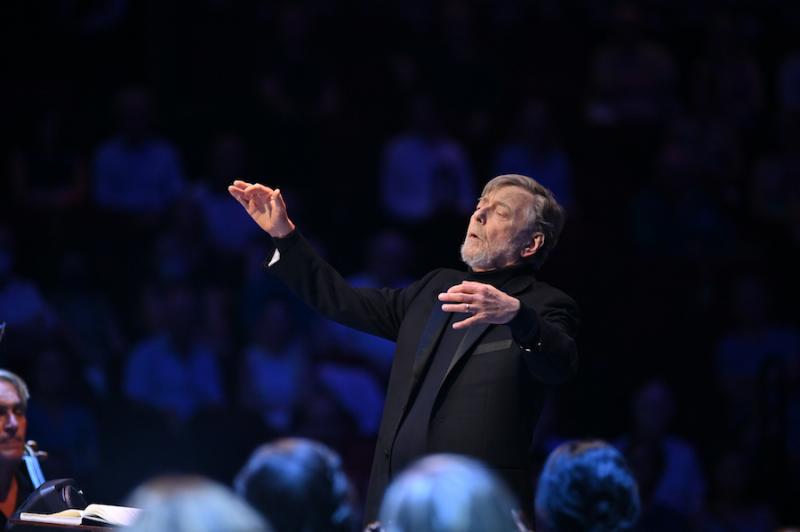
Reviewed by Richard Whitehouse Photo (c) Chris Christodoulou

After the existential confrontations of Vaughan Williams and Tippett earlier this evening, the more restrained yet no less acute expression of Dido and Aeneas came as a necessary tonic – with Purcell’s only through-composed work for the stage leaving a memorable impression.

The nature of its conception might remain as conjectural as the circumstances of its premiere, but there can be no doubt that this opera’s blazed a trail over the centuries that followed. Not the least of its attributes is a formal economy and a tensile dramatic trajectory whose ‘less is more’ aspect could scarcely be more evident. Neither is there any lack of expressive diversity in a score where elements of levity, even slapstick are aligned with a dramatic acuity which draws the three short but judiciously balanced acts into a cohesive and inevitable continuity.

Tonight’s concert performance manifestly played to these strengths. For the title-roles, Alice Coote brought gravitas and nobility of spirit to that of Dido, with James Newby an impulsive while knowingly fickle Aeneas. It was, however, Gemma Summerfield who stole the show as Belinda in rendering this most dramatically fluid of the opera’s parts with an emotional force, latterly foreboding, that was never less than captivating. Madeleine Shaw was larger than life if never overly parodic as the Sorceress, with Tim Mead a plangent Spirit whose intervention (from the organ console) seals the fate of the main protagonists. Credit, too, to Nicky Spence for an uproarious yet winning cameo as the Sailor in a scene whose Village People campery seemed entirely apposite in context and hence made this opera’s outcome the more affecting.

Directing La Nova Musica from the harpsichord, David Bates never lost sight of the dramatic continuity while ensuring an exemplary balance between chorus and ensemble. The former responded with a judicious combination of eloquence and discipline, whereas the emphasis on a continuo section of theorbos, harps and even guitar opened out but never obliterated the bracing string sonorities. Tempos were almost invariably well chosen, and though the final chorus was undeniably drawn out, this reinforced its postludial function to the work overall.

The past 58 seasons have since Dido and Aeneas given complete on four previous occasions, each time reflecting on how the opera was perceived at the time. Tonight’s performance was such a statement, and one as reaffirmed its greatness some 333 years after the first staging.

For more information on the 2022 BBC Proms season, you can visit the festival website. For more on the artists, click on the names for La Nuova Musica and David Bates.
BBC Proms #6 – BBC Philharmonic Orchestra / Sir Andrew Davis: Vaughan Williams & Tippett Fourth Symphonies

Prom 6 – BBC Philharmonic Orchestra / Sir Andrew Davis

Vaughan Williams Symphony no.4 in F minor (1931-4)
Tippett Symphony no.4 (1976-7)

Royal Albert Hall, London
Tuesday 19 July 2022

Reviewed by Richard Whitehouse Photo (c) Chris Christodoulou

Whether or not the Fourth Symphonies by Vaughan Williams and Tippett had previously been scheduled together, they made for a striking and provocative programme such as was its own justification. Omer Meir Wellber clearly thought so when this concert was planned and, even though indisposition had led to withdrawing from this year’s Proms, the presence of Sir Andrew Davis on the podium could hardly have been more conducive to the BBC Philharmonic Orchestra giving performances of the interpretive insight and technical conviction as were evident this evening.

Admittedly the Albert Hall’s opulent acoustic is never the best setting for VW4, the visceral impact of whose opening was inevitably diluted. Allowing for rather more expressive leeway than he might otherwise have done, Davis paced this explosive movement securely with just a slightly listless take on its coda detracting from the whole. The Andante was the highlight here – its fatalistic course exuding gravitas but never dragging, with the tritonal plangency of its main climaxes palpably in evidence and pathos of its final bars enhanced by an affecting contribution from flautist Alex Jakeman. This acoustic may have obscured something of the Scherzo’s contrapuntal ingenuity but not its sardonic humour or, in the trio, didactic coyness. The stealthy transition into the Finale could have had even greater cumulative focus, but what followed had all the requisite impetus – its central interlude raptly delineated, then the drama of its ‘epilogo fugato’ conveying increasing velocity through to the starkly inevitable return of the opening gesture and what is the most unequivocal four-letter ending of any symphony.

Interesting to recall the temporal distance between these pieces is now less than that between the Tippett and the present. Enthusiastically received at its Chicago premiere and one among a handful of his works still revived following his death, Tippett’s Fourth Symphony evinces  a ‘birth to death’ trajectory that differs – crucially so – from its assumed model of Sibelius’s Seventh in not being a cumulative design; its climax being rather the kinetic developmental paragraph at its centre and from where the piece fans out, in a sequence of evolving episodes, back to the launching of its introduction and onward to the passing of its coda. Although he may have directed performances of greater tautness, Davis here secured a persuasive balance between unity and diversity – bringing a metaphysical poise to its ‘slow movement’ then a deft whimsicality to its ‘scherzo’, whose respective qualities underlined the confrontational drama elsewhere. Lavish writing for brass and percussion helps makes this Tippett’s most virtuosic such statement, in which the BBC Philharmonic was rarely to be found wanting.

A less successful component of this reading was the latest attempt to represent the ‘breathing effect’ specified by the score, in which the real-time voice of CJ Neale seemed hardly more successful than those attempts of wind machine, sampler et al to realize Tippett’s speculative imagery. No matter – any such overreaching was part and parcel of this composer’s inherent ambition; an ambition, moreover, which his present-day successors would do well to emulate. Almost a century and half-century on, both these works pose challenges constantly to be met.

Summer heat – Josef Suk’s A Summer’s Tale

by Ben Hogwood

As you will no doubt be aware, this week has seen record breaking temperatures in the UK, which has inspired something of a hot weather classical music sequence.

After works from Debussy and the Danish composer Poul Ruders, I have been reminded of this substantial orchestral piece A Summer’s Tale, by the Czech composer Josef Suk.

Suk, the son-in-law of Antonin Dvořák, has been given greater appreciation in the last few decades for an orchestral output notable for its descriptive and emotional powers. Perhaps his best known work is the tragic symphony Asrael, mourning the loss of both his wife and father-in-law. Operating on a very large scale (lasting 70 minutes in most performances) it is an incredibly powerful work of Mahlerian dimensions. A Summer’s Tale is the work that builds on the hope offered by the end of Asrael, becoming a positive celebration of our sunniest season.

Certainly the first movement, Voices of life and consolation, becomes a heady exultation with full orchestra, a true celebration of nature. The small scale third movement, Blind Musicians, is an account of the composer’s encounter with a small-scale band, playing repetitive folk music – and he sets it for smaller orchestral forces here. Meanwhile the fourth movement, In the Power of Phantoms, is a joyous and almost riotous affirmation. For the fifth movement, Night, Suk employs a sultry nocturne, the music finding rest from the sun but also exploring the richness of the lower strings in a surging chorale episode.

You cab listen to A Summer’s Tale below in a particularly fine version from the Czech Philharmonic Orchestra conducted by Sir Charles Mackerras:

New music – Mark Peters feat. Dot Allison: Switch On The Sky

Some more good news from Sonic Cathedral. If you are a regular visitor to Arcana you will have seen our praise for the new Pye Corner Audio album Let’s Emerge, released on the label last Friday. Now we can bring confirmation of new music from Mark Peters, whose rather wonderful Innerland album provided a geographical record of his move back to Wigan in 2018.

The new album, Red Sunset Dreams, looks much further afield for its inspiration, casting longing eyes across the Atlantic in fact. It features contributions from pedal steel guitar legend B J Cole and vocalist Dot Allison, who sings on two tracks including the single released today, Switch on the Sky. They both appear as part of Peters’ fascination with the ambient side of country music, with Cole’s legendary steel guitar work becoming something of a healthy obsession.

The press release takes up the story, talking of ‘an incredibly evocative trip through the landscapes of old Western movies, exploring their links with the North West of England while touching on wider themes such as isolation, freedom and dementia. Sonically, it builds on the palette of the previous record with instrumentation equally inspired by the ascendant ambient Americana movement and classic country-rock. As a result it ends up somewhere between Acetone’s peerless I Guess I Would, Diamond Head-era Phil Manzanera and the dusty instrumentals on the second disc of David Sylvian’s 1986 classic Gone To Earth.

Switched On – Pye Corner Audio – Let’s Emerge! (Sonic Cathedral)

reviewed by Ben Hogwood

What’s the story?

This is the first album from Pye Corner Audio – aka Martin Jenkins – for the Sonic Cathedral label. It is a wholly logical move, given the producer’s work with Ride guitarist Andy Bell on Social Dissonance, a live recording he made at a Sonic Cathedral night at The Social back in 2019.

It was the first meeting for the pair, and it ticked a lot of musical boxes which lead to the collaboration on this album, where Bell plays guitar on five of the ten tracks. The impetus for this long player is markedly different from Pye Corner Audio’s last in 2021, which was inspired by the underground fungal pathways where plants communicate. This one reaches for the sun, bathing in the summer heat – which makes its release into the middle of a UK heatwave all the more pertinent.

As a bonus, Let’s Emerge! is fronted by vibrant artwork from Marc Jones, consciously drawing on sleeves from LFO, Spaceman 3 and early Stereolab in his vivid colouring.

What’s the music like?

As warm as the cover suggests it should be. Jenkins’ slight adaptation of his music for Sonic Cathedral does indeed take it closer to ‘shoegaze’ if we are looking for a musical label, but it means the music he produces is full of rich colour and dreamlike possibility.

De-Hibernate acts as an awakening, introducing the big sonic backdrop with which Jenkins operates, but also showing how closer inspection reveals studied details in the work of Andy Bell. Broad brush chords from the keyboards, then, are complemented by more intricate guitar work, a blueprint that works extremely well as the album progresses.

The wash of sound on Lyracal confirms the temperature, bathing in consonant harmonies and shimmering textures, while Does It Go Dark shifts to lower pitched drones, its woozy outlines gradually revealing a chord progression of poise and power.

Haze Loops is a rich tapestry of warm sounds, more of a poolside chillout number, before some slightly smaller tracks link seamlessly together as part of a bigger suite. Let’s Emerge Part One breaks like a wave into the ears, retreating to the deeper colours of Saturation Point. Sun Stroke (so appropriate as I type this on the hottest day in UK history!) is thick with humidity, and then after the brief Let’s Emerge Part Two, Luminescence harnesses more rhythmic drive, synths bubbling just below the surface. Finally Warmth Of The Sun, the musical culmination of the album, brings the guitar to its greatest prominence yet, shimmering on the surface with fuzzy vocals and supportive percussion.

It says much that Andy Bell’s contributions are subtly integrated into the music. Not for him the posturing of a typical ‘featured guitarist’ – he gets the mood of Jenkins’ writing and adds his own subtleties to complement it, rather than going for standout melodies each time. It is to his enormous credit that the two work as equals and achieve something far more meaningful.

Does it all work?

It does. Music evokes time and place better than almost anything, and Let’s Emerge! certainly does that with its hot weather soundscapes.

Is it recommended?

Yes – a rather special addition to Martin Jenkins’ work until now as Pye Corner Audio, taking him in the direction of sunnier climes while reminding us of his capacity to evoke images and moods through his electronic music. Andy Bell’s guitar work is the icing on the cake.

Listen

Buy