BBC Proms 2022 – a return to full fitness

by Ben Hogwood

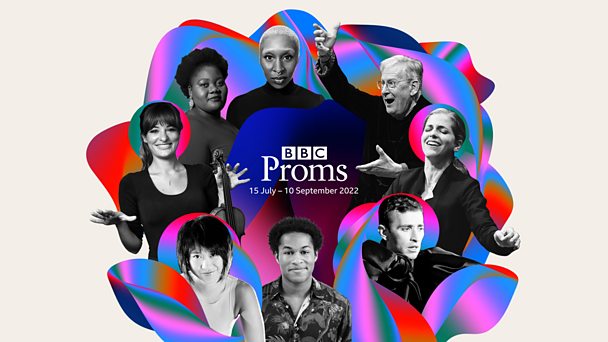
How heartening it is to report on the announcement of a full-to-bursting BBC Proms season once again. The festival, now in its 127th year, is able to spread its wings post-pandemic, reaching out to the four corners of the British Isles to include large orchestral concerts and overseas artists once again.

There are of course far too many concerts to mention in full here, but some deserve an extra thick highlighter pen. From the small scale (Sir András Schiff playing Beethoven‘s last three piano sonatas) to the large (Sir Simon Rattle leading us and the London Symphony Orchestra from death to life in Mahler’s Resurrection Symphony) there looks to be something for almost everyone.

Concerts are spread much further afield this year, and an especially welcome move is the multi-region approach to the weekly chamber concerts, which will be broadcast from Belfast, Birmingham, Bristol, Cardiff, Glasgow, Liverpool, London and Truro. Outside of those appealing concerts, there really is such a huge variety

At a glance, the most appealing events include a tribute to Aretha Franklin curated by Jules Buckley, the wholly appropriate choice of Public Service Broadcasting to celebrate the centenary of the BBC in a newly commissioned piece, This New Noise, and concerts that bring centurion George Walker to the fore.

Lovers of British music will not be disappointed either. John Wilson conducts his Sinfonia of London band in Bax, Walton, Vaughan Williams, Elgar and the new Flute Concerto by Huw Watkins. The BBC Philharmonic Orchestra and Omer Meir Wellber will compare and contrast the Fourth Symphonies by Tippett and Vaughan Williams. Dame Ethel Smyth and Doreen Carwithen will get long-overdue appraisals – the Glyndebourne production of Smyth’s opera The Wreckers looks set to be essential, but so does her Mass in D major and Concerto for horn and violin. Meanwhile Carwithen’s String Quartet no.2 and Bishop Rock are welcome, though we could perhaps have done with one more piece from her.

Visitors from Germany (Berlin Philharmoniker), Austria (Vienna Radio Symphony Orchestra), Finland (Finnish Radio Symphony Orchestra) and Norway (Oslo Philharmonic Orchestra) provide four must-see concerts. To them we can add the Philadelphia Orchestra and Yannick Nézet-Séguin, who will perform Florence Price‘s Symphony no.1.

The music of Shostakovich will surely take on greater poignancy this season in the light of the awful tragedies unfolding in Ukraine – the Fifth, Tenth and Fifteenth Symphonies will all be loaded with extra meaning. The establishment of the Ukrainian Freedom Orchestra, however, will trump even these when they play the music of recently exiled composer Valentin Silvestrov, his Symphony no.7. Brought together by the Metropolitan Opera, New York, and the Polish National Opera, the brand new orchestra will by led by Canadian-Ukrainian conductor Keri-Lynn Wilson and will include recently refugeed Ukrainian musicians, Ukrainian members of European orchestras and leading musicians from Kyiv, Lviv, Kharkiv, Odesa and elsewhere in Ukraine.

This is just a flavour of the season, from which you will see that from first night Verdi to final night Sheku Kanneh-Mason and Lise Davidsen, there is so much to appreciate. Get over to the BBC Proms website and start planning!

On Record – Orchestre National des Pays de la Loire / Pascal Rophé: Debussy Orchestrated (BIS)

Debussy Orchestrated

Debussy arr. Büsser Petite Suite; Debussy arr. Caplet La boîte à joujoux (1919), Children’s Corner (1911)

What’s the story?

This beautifully packaged collection from BIS brings together a trio of Debussy pieces arranged for orchestra. There are two characterful suites whose cleaner lines look back to classical and baroque forms, beginning with the four-movement Petite Suite, originally for two pianos and arranged for orchestra by Henri Büsser.

The central work of the three is La boîte à joujoux (The toy box). This surprisingly substantial piece was written by Debussy in 1913 as a piano score, but due to the first World War was not performed until 1919, after the composer’s death, by which time it had been orchestrated by André Caplet. The ballet tells in miniature detail of a toy soldier falling in love with a doll protected by a polichinelle, who will not give her up. The two fight and the soldier is wounded, but is nursed back to health by the doll, and they fall in love.

Caplet was a trusted collaborator, having already arranged Debussy’s Children’s Corner suite for orchestra in 1911. The composer wrote the piano version for his daughter Claude-Emma, nicknamed ‘Chou-Chou’, in 1908.

What’s the music like?

As attractive as the cover! What is abundantly clear from each of the three scores is that even in his keyboard music Debussy had orchestral designs – which Caplet and Büsser bring to fruition.

The Petite Suite is a charmer in this performance, from the languid En bateau to the brisk, bracing Ballet. The phrasing is especially beautiful in the winds towards the end of the former, while there is an attractive lilt to the Cortège and a light bounce to the rhythms of the Menuet.

La boîte à joujoux features some exquisite storytelling and wind playing. There is a beautiful oboe solo as the scene isset in the toy shop, the music hanging mysteriously. The lovely clarinet in The doll’s waltz is complemented by detailed shading in the strings. There are stylish contributions from the orchestral pianist too, especially at the very end where the orchestra hang on every note. The bluster of battle and The sheepfold for sale leads to a translucent coda. Here a tender, slightly mournful finish from piano is trumped by an emphatic sign off from the orchestra

Children’s Corner is similarly colourful. The Berceuse has long shadows enhanced by the bass strings, but the Serenade for the Doll is delightful. The Snow Is Dancing is appropriately mysterious, and there is a poignant oboe solo for The Little Shepherd. Finally the Golliwogg’s Cake Walk is a brilliant study of light and shade, with the ebullient theme a treat.

Does it all work?

It does. Pascal Rophé brings great detail to Debussy’s storytelling, and while the orchestral playing is of an extremely high standard the wind section deserve special mention for the way in which they inhabit the characters of each tale. The BIS recording captures every detail. There are also reminders that in spite of these colourful stories the spectre of World War One lies in the shadows.

Is it recommended?

Heartily. This is a colourful and thoroughly enjoyable album, lovingly realised and beautifully played. An essential addition to any Debussy collection.

Listen

In concert – Paul Lewis, CBSO / Christoph König: Mozart & Mahler

Paul Lewis (piano), City of Birmingham Symphony Orchestra / Christoph König

Mozart Piano Concerto No. 27 in B flat major, K595 (1788-91)

Mahler Symphony No. 5 in C sharp minor (1901-02)

Symphony Hall, Birmingham
Wednesday 21 April 2022, 2.15pm

Written by Richard Whitehouse

Back from a first European tour since the pandemic and following the Easter break, the City of Birmingham Symphony Orchestra hit the ground running with a programme of contrasts featuring Mozart’s last piano concerto and what is likely Mahler’s most popular symphony.

It may have been finished early during his final year, but Mozart’s 27th Piano Concerto was drafted several years earlier, while its relative inwardness as compared to those from 1785-6 need not be read as fatalistic; still less be taken for valediction. This was certainly how Paul Lewis approached it with a poised but never flaccid opening Allegro – its subtle contrasts of themes and dynamics creating their own, discreet momentum with an eloquent rendering of the development then a lucid cadenza such as brought the whole movement deftly full circle.

Might it be that this concerto is only as good as the best performances? Thanks to Lewis the central Larghetto never risked seeming plain spun or uniform, piano dovetailing into strings and woodwind to ingratiating effect. In the closing Allegro, Christoph König pointed up the dance-like robustness of its rondo theme with a lilting impetus as never faltered. This is one of Mozart’s few concertos where his own cadenzas survive; Lewis’s probing manner in the finale setting the seal on a reading as thoughtfully conceived as it was insightfully realized.

His recent recordings of Louise Farrenc having gained widespread praise, König is evidently a conductor in demand and his account of Mahler’s Fifth Symphony provided a decisive, no-nonsense take on this much-played piece. Not least an initial Funeral March whose bracing objectivity did not preclude a more visceral response to its frenzied climax or ominous close. Its successor’s competing strands of violence and resignation were purposefully juxtaposed, through to the as-yet provisional emergence of the chorale then a tellingly speculative coda.

Time and again the central Scherzo fails to fulfil its role as this work’s formal or expressive crux, and if König’s approach fell short of the ultimate conviction, it was more than usually cohesive – whether in the discursive unfolding of its ländler-informed sections or the central trio with its rustically evocative overtones. Equally persuasive were those transitions either side, thereby endowing the movement with a cohesive follow-through which paid dividends during a coda whose unalloyed ebullience more than usually indicated what was to follow.

Most conductors now make the famous Adagietto a soulful interlude rather than full-blown slow movement, König going further by making it an extended introduction to the closing Rondo. This evolved almost seamlessly through the gradual intensification of ideas already heard towards the re-emergence of that chorale, here blazing forth with an affirmation that did not pre-empt those final bars in their almost nonchalant affirmation. Mahler might have written deeper finales, but not one whose triumph over adversity was so potently achieved.

An impressive demonstration, too, of the CBSO’s collective prowess (while not neglecting that of trumpeter Matthew Williams) for what is well worth catching in Saturday’s repeat performance; before this orchestra offers ‘something completely different’ next Thursday.

For more information on the CBSO’s 2021-22 season, click here

Meanwhile for more information on the artists, click on the names to access the websites of Paul Lewis and Christoph König

Let’s Dance – Various Artists: DJ Kicks: Cinthie (!K7)

cinthie

written by Ben Hogwood

What’s the story?

Berlin DJ Cinthie steps up to take the baton for the latest in !K7’s ever-successful DJ Kicks series. She has been busy of late as a producer, releasing her debut album Citylights, under the Skylines alias, on Will Saul’s Aus label in 2020. Since then she has been producing a wealth of excellent house music singles on her own labels.

Her aim with this generous 24-track selection was to bring together a sequence including her old heroes but also new house music sounds. In her words, the music ranges from ‘deep to Detroit, from banging to smooth, from jazzy to stomping, from Disco to Chicago, from dubby to big room’.

That means big names from Chicago, New York and Detroit – including Paul Johnson, Boo Williams, Amir Alexander and Spencer Parker – and new ones too, such as Amy Dabbs, Logic1000, Lis Sarocca, Anna Wall and Cinthie herself.

What’s the music like?

Hugely enjoyable. From the moment Terence Parker’s I Love The Way You Hold Me bursts out of the blocks, the mood is set for over an hour of good, uptempo grooves, and Cinthie gets a brilliant mix together to ensure the momentum is never broken.

Highlights include the bouncy, vibrant start from Parker which gets a complement from the suitably uplifting Oldtown Dub from Niles Cooper and Shinichiro Yokota’s Time Lapse. The home-style piano and springy beats of Sandilé‘s Jammin and Slammin work well, while  Amir Alexander‘s Blessed Are The Meek is really good, transitioning beautifully into UC BeatzCrash Nerd. Later on the heavier, rolling beats of Adryiano’s Non___Stop lead into a brilliant choice, Paul Johnson’s Y All Stole Them Dances. The music is motoring now, the beats broken up more for selections such as the funky Logic1000 selection I Won’t Forget, the momentum carrying through a fine finishing pay-off of Amy Dabbs, Chevals and Anna Wall.

Does it all work?

Yes, so much so that you’ll be more than happy to go round again. The ratio between old and new feels just right, and Cinthie’s enjoyment throughout is clear as day.

Is it recommended?

With gusto! A feelgood selection celebrating house music’s power to inspire, and acknowledging along the way the part disco has played in its evolution. Absolutely top stuff.

Stream

Buy

Harrison Birtwistle – some thoughts

by Ben Hogwood

I can well remember my first encounter with the music of Sir Harrison Birtwistle, as it left me with a headache. It was part of Sir Simon Rattle’s groundbreaking Towards The Millennium series with the City of Birmingham Symphony Orchestra, back in the 1990s at the Royal Festival Hall.

After a first half of Gubaidulina’s Offertorium had moved me to tears, I was not quite prepared for the sheer force of Sir Harrison’s Earth Dances. The work hit me square in the face, and not in a good way – I found it industrial to the point of confrontation, and could not see a way in to liking his music in spite of many admirable qualities.

More fool me. As time has gone on I have realised how it is possible to respect a composer’s music without necessarily liking it. I could sense the craftsmanship running through Birtwistle’s work, the expert hand in knowing the forces he was writing for, the drama unravelling in each of his pieces. More and more, I realised respect was turning into admiration and – in some cases – appreciation.

An encounter with Silbury Air at the Proms was a memorably mysterious occasion, falling under the spell of some beautifully written music – as English as Vaughan Williams, it seemed to me, and wholly descriptive of the countryside in a very different way to what we usually call ‘pastoral’. Verses, too, I found to be intensely dramatic, full of interesting event and persuasive musical phrase.

I also warmed to the Moth Requiem, premiered at Cadogan Hall in the same year, a touching piece with remarkably pictorial textures. To me it implied a slight mellowing of older age.

At this point I sense I have not yet spent enough time or effort with the music of Birtwistle to fully appreciate it, but it is clear that this is not music that gives up its treasures easily. Its respect has to be earned. I am full of admiration for Birtwistle, and can see how he has come to be revered in the way he has. I look forward to the penny dropping in the future.