Live review – April Fredrick, David Stout, English Symphony Orchestra / Kenneth Woods: Bartók – Bluebeard’s Castle

mahler-9-woods

April Fredrick (soprano, Judith), David Stout [baritone (Bluebeard) / speaker (Prologue)], English Symphony Orchestra / Kenneth Woods

Bartók arr. van Tuinen / Karcher-Young Bluebeard’s Castle (1911/12)

Wyastone Concert Hall, Monmouth
Recorded June 16-17 2021 for online broadcast, premieres 13 August 2021

Written by Richard Whitehouse

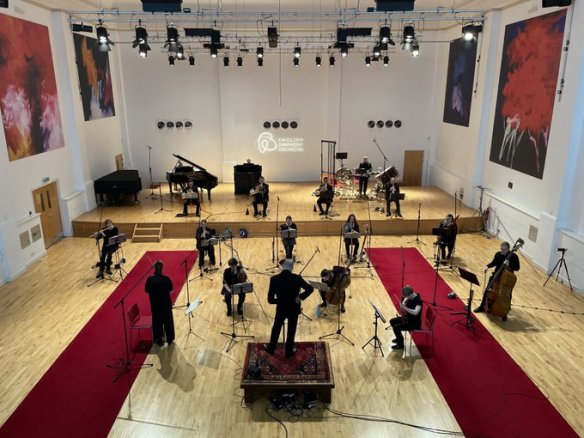
The English Symphony Orchestra’s season of online concerts drew to its close tonight with a performance of Duke Bluebeard’s Castle, the only opera by Bartók and seminal work on the cusp between the late-Romanticism and nascent Modernism from the early twentieth century.

While its libretto by Béla Balázs is susceptible to interpretation, that concerning the ultimate impossibility of meaningful human communication is surely the decisive factor for Bartók’s setting of what became his longest work and his most explicitly personal statement. Yet this emotional scope never results in a lack of formal cohesion or expressive focus, ensuring that the duo-drama unfolds both inevitably and inexorably towards a fateful denouement that – by no means coincidentally – brings the piece full circle in terms of its underlying introspection.

A piece, then, of epic sweep but whose climactic moments only rarely dominate music that is (surprisingly?) well suited to reduction of a kind undertaken here by Christopher van Tuinen and revised by Michael Karcher-Young. The 25-strong ESO copes ably with those undulating contrasts in mood and texture that underpin the traversal of the protagonists through the castle and its environs, through to a culmination whose outcome feels no less tragic for having been ordained almost from the outset – a fable of disillusion whose impact comes across unscathed.

Of course, such considerations are relative to the success of the two singers in conveying the range of their respective roles. Whether or not she had previously sung that of Judith, April Fredrick has its full measure as she moves from confidence, via wariness and imploration, to reluctant acceptance of the part she must play in the completion of a journey that other wives have undergone before her. Rendered with vibrancy but no lack of finesse, this is a perceptive assumption, and one which Fredrick will hopefully be able to repeat on stage before too long.

Not that David Stout is necessarily upstaged in his portrayal of Bluebeard – emerging here as no misogynist, still less a murderer, than a conflicted figure whose avowals of love can never outweigh those inherent failings of self that have led to his repeating the same pattern of loss as before. Having previously taken on the spoken Prologue with thoughtful anticipation, Stout projects the role with no mean impetus as well as a keen eloquence that comes to the fore in those fateful later episodes when the sixth and seventh doors have almost to be prized open.

Otherwise, the ESO plays to its customary high standards throughout a score which, if never as radical as works of this period by Schoenberg or Stravinsky, remains a testing assignment with the integration of overtly expressionist tendencies into music of a Straussian opulence. This reduction loses little in either respect, due notably to a piano part as achieves more than textural filling-in then a harmonium part adding substance and atmosphere in equal measure. Kenneth Woods paces these 65 minutes with an acute sense of where the drama is headed.

Indeed, the only real proviso is the end-credits being accompanying by music from earlier in the opera. Surely it would be possible to have silence for the one minute it takes for these to ‘roll’? Otherwise, this is an excellent conclusion to a worthwhile season of online concerts.

You can watch the concert on the English Symphony Orchestra website here

For further information on future English Symphony Orchestra concerts, click here. ‘Fiddles, Forests and Fowl Fables’ is now available from the English Symphony Orchestra Website.

Switched On – DJ Food: Kaleidoscope Companion (Ninja Tune)

dj-food-kaleidoscope

reviewed by Ben Hogwood

What’s the story?

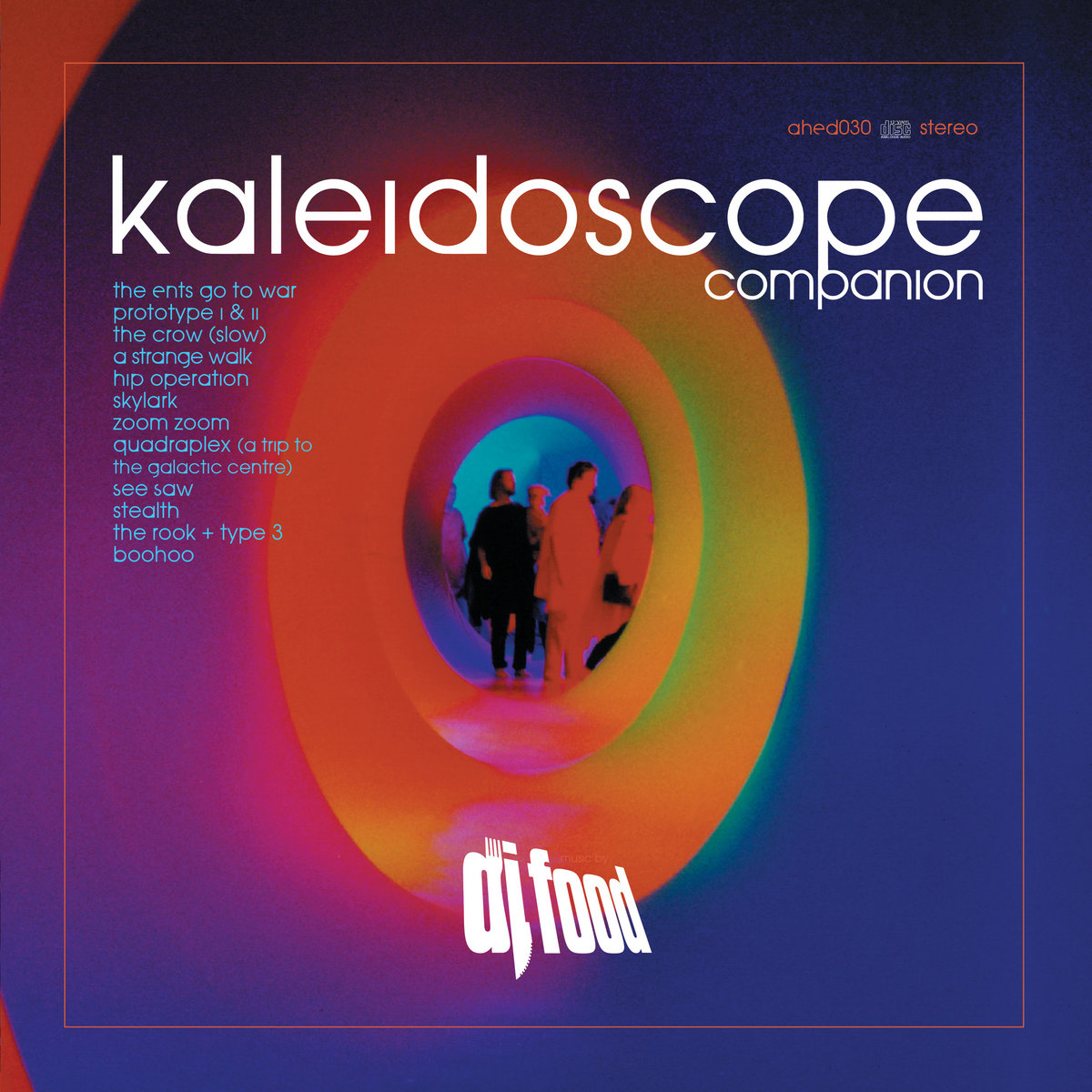
Strictly Kev and PC, the men behind DJ Food, can reveal just how productively they spent last year’s lockdown. Aware that it marked two decades since the release of Kaleidoscope, when DJ Food was a mysterious incarnation conceived by Ninja Tune founders Coldcut, the two rounded up music from their archives of the recording sessions. To their surprise the volume and quality of the material was such that Kaleidoscope Companion became possible. It is a collection of unreleased tracks, remixes and alternate versions, all closely related to the album but structured in such a way that a whole new opus has been created. Kev explains it best, as ‘not a new DJ Food album’, more ‘an old one that never was’.

What’s the music like?

Given that this electronic music is essentially 20 years old, Kaleidoscope Companion could have been written yesterday. That says much for the staying power of DJ Food, and how inventive the beats and sound pictures were in the year they were released. Here the quality of the compositions is immediately evident.

Take Skylark, exposed as a mini-masterpiece. With the crackling of the outdoors effectively evoked, an elastic bass line is established before a stringed instrument climbs through the textures and floats on the air effortlessly.

The Crow (Slow) is one of the welcome alternate versions, stretching its material into a gorgeous panoramic view that could easily last double the length it is given here. See Saw also offers reassuringly thick textures of an ambient persuasion, as does the closing Boohoo, with a serene string line that segues into softly humourous pitch bends at the end.

There are elements of spatial jazz here. Hip Operation (great title!) is an active story, building with white noise beats and detective-drama trumpets. Stealth, an alternative version of the Gentle Cruelty remix of The Ageing Young Rebel, is a nocturnal scene with a mellow but quite mournful flute tone. Its spoken word vocal, telling of self-obsession, is remarkably prescient for today’s times. The Rook + Type 3 takes a more cinematic turn, with another flexible bass and brief figures from strings and clarinet, while offbeat percussion flickers and flares in the background.

The collection’s centrepiece is Quadraplex (A Trip to the Galactic Centre), which starts without beats but then wanders seemingly into the middle of a clearing and a meditation in full swing, with thrumming percussion and a series of spatial effects. Blended from several different takes, it is a mesmerising piece of work.

Does it all work?

It does. The structure of Kaleidoscope Companion has been carefully thought through, and the positioning of Quadraplex in the middle splits the collection into three parts, with a meditative quarter of an hour at its heart.

The analogue clicks and crackles around the edges of many of the tracks are welcome, and the refusal of the music to comply to stricter digital confines serves it well too.

Is it recommended?

Yes. If you listened to this without knowing the author, you would bookmark it as a talent to keep an eye on, a source of new and exciting electronica. The fact that it is a companion to an already excellent and revered album only heightens the appeal, showing just how durable electronic music has proved to be. Fans of the Ninja Tune label will love it.

Stream

Buy


Listening to Beethoven #180 – Silvio, amante disperato, WoO 99/12

beethoven-fragment

Peanuts comic strip, drawn by Charles M. Schulz (c)PNTS

Silvio, amante disperato WoO 99/120 for soprano, alto, tenor and bass (1801-02, Beethoven aged 31)

Text Metastasio
Duration 10″

Listen

You can hear this fragment on the excellent site The Unheard Beethoven

Background and Critical Reception

This entry is more of a placeholder for a short song (26 bars) written by Beethoven as a product of his studies with Salieri. There seems to be some contention on when it would have been written – the IMSLP list of works, which this study has been using, says 1801-02 while the Unheard Beethoven resource speculates at 1795.

Thoughts

Although there is very little to listen to here, the existence of this piece is well worth noting, as we have had very little music for unaccompanied voices from Beethoven up to this time. From this fragment the mood seems downcast.

Recordings used

None as yet, other than the fragment heard from Unheard Beethoven – this link will download the small file

Also written in 1802 Zeller Sammlung kleiner Balladen und Lieder Z123

Next up 7 Bagatelles Op.33

Switched On: John Sellekaers: Observer Effect (Glacial Movements)

john-sellekaers

reviewed by Ben Hogwood

What’s the story?

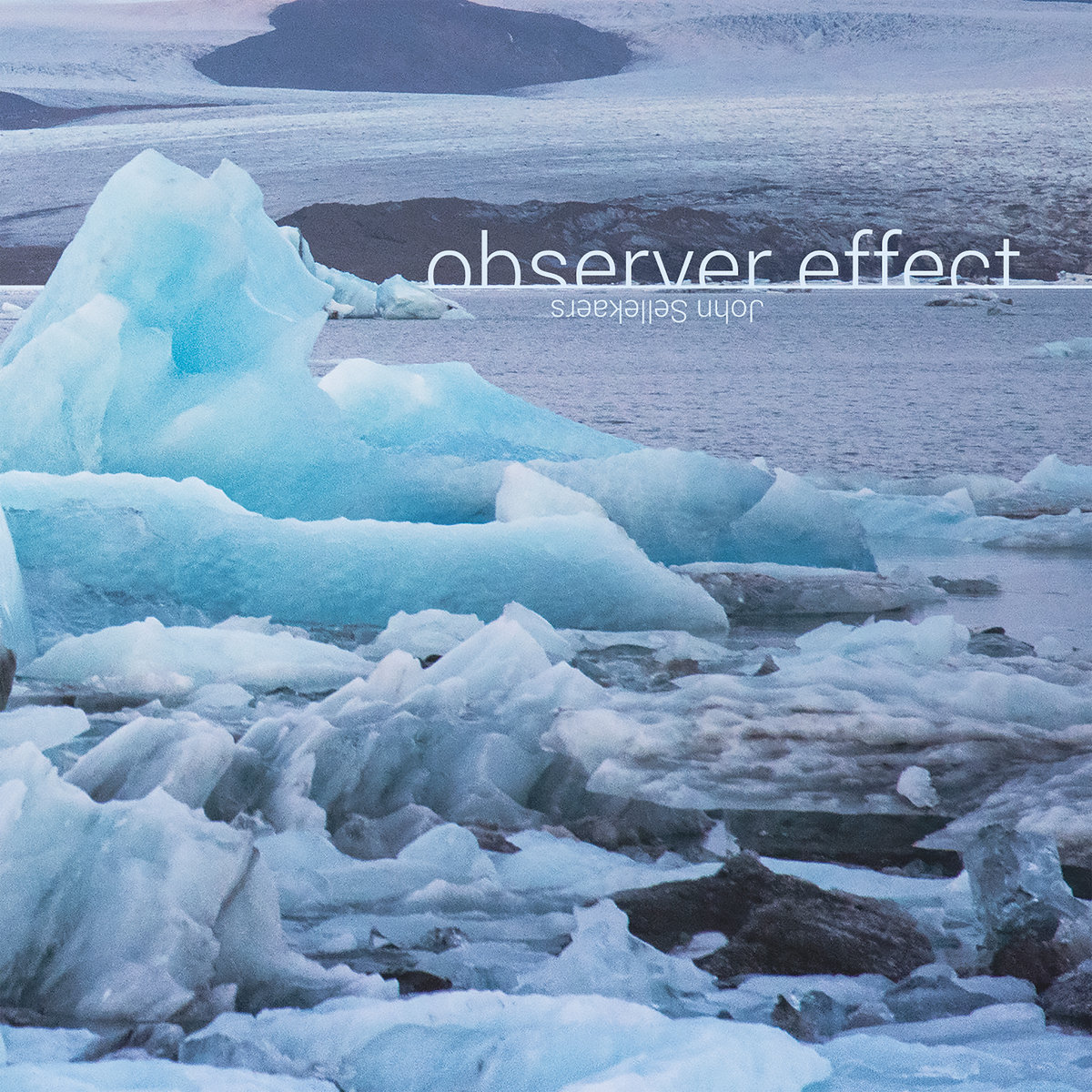
Observer Effect is an album fed by history, countless stories and books’, reports John Sellekaers. The Brussels-based musician, who also works in other art forms as an engineer, photographer and designer, is approaching this album through the view of a pioneer explorer. He is imagining the experience of visiting a new region for the first time in history, pondering how his arrival in an undiscovered area changes the previously unseen habitat – and exploring the effect it has on him. Given Glacial Movements‘ musical history the points of reference that come to mind are the North and South poles, and the remote areas on their approach – or even another planet entirely.

What’s the music like?

Observer Effect starts like an extended tidal system. Big, single chords ebb and flow with a reassuring regularity. Occasionally a less certain sound imposes on the cycle but generally the outlook is one of vast ambience. Slowly the landscape passes by, the listener seemingly positioned on a slow moving method of transport with the scope to take in wide vistas. Gradually the scenes change over time, but occasionally a darker side is revealed, as though the introduction of man-made elements is threatening the natural change.

A thicker treble pitch makes itself known at the start of On The Trail, an intense and sustained note, and as this track evolves a more distorted sound, like a long guitar note, creeps into the consciousness. After this burst of intensity, a dense blanket of sound descends for Shelter, which takes on more definitive brush strokes. In The Lightest Night takes on eerie harmonies and a strong current of uncertainty, heightened by the displaced harmonies of Optical Haze Pt. 1, which plays with the listener’s perspective, especially on headphones, before charting a much deeper course towards the end.

Parasomnia creaks as though under stress from something, before the substantial Water Sky takes a repeated phrase of one note and runs with it, the tidal system returning to the listener’s consciousness. Finally Optical Haze Pt. 2 offers a calmer scene and ultimately rest.

Does it all work?

It does – and is most effective when listened to as a whole. Sellekaer’s music is unusual, for it manages to imply melodies while using very few notes, and emotions are portrayed through texture just as much as harmony. It is coldly effective, difficult to always relate to on a human level but compelling all the same.

Is it recommended?

Yes. Observer Effect proves a worthy addition to the Glacial Movements canon of immersive ambience, telling a powerful story in its relatively few notes. Fans of the label need not hesitate.

Stream

Buy

On Record – Dot Allison: Heart-Shaped Scars (SA Recordings)

dot-allison

reviewed by Ben Hogwood

What’s the story?

The return of Dot Allison is big news indeed. Heart-Shaped Scars is her first album release since 2009, a follow-up of sorts to that year’s Room 7 1/2. Allison secured something of a cult following for her work in the early 1990s with Andrew Weatherall as part of dance band One Dove, before moving onto a solo career with the Afterglow album in 1999. For her new work, however, Allison has more or less pressed pause on the electronic side of things, removing drums too, working with producer Fiona Cruickshank and with several songs orchestrated by Hannah Peel.

It is, she says, a record about ‘love, loss and a universal longing for union that seems to go with the human condition’. Ideal, then, for a generation emerging from more than a year of lockdown conditions.

What’s the music like?

‘Ethereal’ is an over-used word in music reviews, but it is wholly applicable here. Allison’s voice is the principle reason, delivering the words in hushed tones but wholly immersed in the stories she has to tell. Hannah Peel’s orchestrations are another, sensitively complementing the melodies with thoughtful additions of their own, knowing when to hang back so that music keeps its concentrated intimacy.

The music often feels sparse and ‘old’ – in the sense that the melodies feel like part of a land with a great deal of history. Long Exposure embodies this approach, while Can You Hear Nature Sing does so with its lyrics, celebrating the natural world as many more of us have done during the pandemic.

Lyrically, Allison paints vivid pictures and emotions. One Love – which would surely have been a dance anthem with that title 30 years ago – is now a vulnerable soul at the start of a relationship, two cellos dovetailing as Allison tells the story. The Haunted draws the ear closer. ‘Step inside this haunted house’, sings Allison in lower tones at the start, the melody resembling a slower folk tune while the string harmonics shimmer in the middle ground.

Constellations tells of a wide-open freedom, the author lying ‘still in the lake, floating on my back, gazing up at all the stars’ – painted by a twinkling piano figure and shimmering strings. While this has a certain reassuring quality, Forever’s Not Much Time is truly haunting. ‘I miss you, like a dead man recalls life’, sings Allison, as a shiver passes over the face of the music. Cue The Tears has a similar chill. ‘Did we shut out the sun?’, asks the chorus.

Does it all work?

It does. Some of the songs are longer structures, and most are slow in their movement, but Allison makes them work, the music drawn out exquisitely with sensitive orchestration and backing vocals. Listening conditions will make a big difference to your enjoyment of the album, though – with a quiet room or headphones advised for maximum impact.

Is it recommended?

Wholly. If you have Dot Allison’s body of work already, then this will mark the start of a new chapter in the story of her music. If you are new to her sound, then it is a great place to start, a place of storytelling through simple and directly effective means – just like the best folk music.

Stream

Buy