On record: Wooden Elephant: Landscapes, Knives & Glue – Radiohead’s Kid A Recycled

wooden-elephant

Wooden Elephant [Aiofe Ní Bhriain, Hulda Jónsdóttir (violins), Ian Anderson (viola, arrangements), Stefan Hadjiev (cello), Nikolai Matthews (double bass)

Backlash Music [59’29”]

Reviewed by Richard Whitehouse

What’s the story?

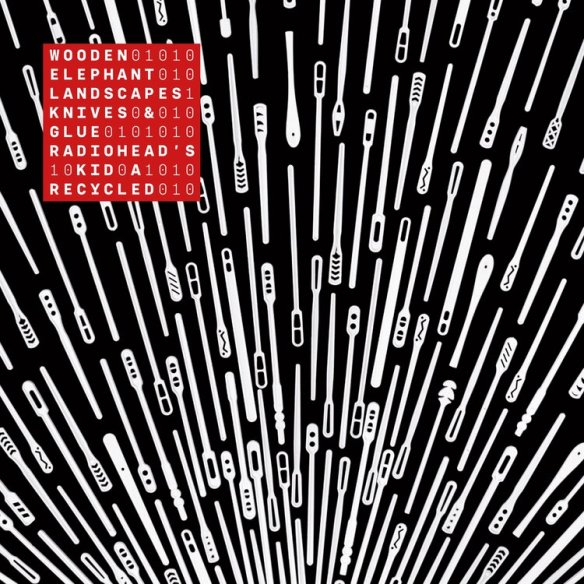
The quintet Wooden Elephant releases its take on Radiohead’s seminal album Kid A, second in its reworking of game-changing albums that commenced in 2016 with Björk’s Homogenic then continued in 2018 with Beyoncé’s Lemonade, on the enterprising Backlash Music label.

What’s the music like?

When it appeared in autumn 2000, Kid A not only redefined what even as forward-thinking a rock band as Radiohead was capable of, but also topped the mainstream charts on both sides of the Atlantic. Thus, an album as artistically radical as it is commercially successful such as violist Ian Anderson has made it his mission to reassess. Each of the musicians plays a range of sundry instruments (what improviser Jamie Muir would have deemed ‘allsorts’), yet they are extensions to the already inclusive string sound on which these ‘arrangements’ are based.

After the gradual merging into focus then rhythmic and melodic clarifying of Everything in Its Right Place, the subdued moodiness of Kid A is afforded a ruminative treatment which reveals an unsuspected poise in the melodic line and whimsical twist to the accompaniment. The rhythmic obsessiveness of The National Anthem gives rise to an invigorating textural workout that spills over into mayhem towards the close (who needs an orchestra?) – and to which the video’s Jarmusch-like interplay of drink-stirrers with woodland inhabitants offers an intriguing complement. A siren-song reverb from wine glasses then segues into How to Disappear Completely whose brooding eloquence and lilting gait make it a highlight now as then, while Treefingers is no less arresting given its ethereal emergence and timbral finesse.

The propulsive syncopation of Optimistic effects a vibrant and soulful – if, in this context, relatively straightforward – response, with the hymnic preamble then stealthy integrating of rhythmic and melodic elements across the course of In Limbo satisfying in its immediacy. Nor is there anything predictable about Idioteque with its plaintive unfolding set against a pulsating undertow that drives towards a febrile close, out of which the lucid melodic profile of Morning Bell is maintained from its tentative arrival to its sudden disintegration. It duly remains for the aching pathos of Motion Picture Soundtrack to provide a heartfelt ending; here with its (unintended?) postlude, which is often tracked as Untitled on digital versions of the original album, serenely dissolving into a melange of ricocheting chordal patterns.

Does it all work?

Almost always. Something that was never quite a rock album has provided ideal material for an ensemble that is not quite a string quintet, Wooden Elephant taking full advantage of this stretching of musical and conceptual boundaries to come up with what is an absorbing listen in its own right. Just occasionally the ensemble’s interplay evokes those bluesy harmonies of Quintette de Hot Club de France, but this serves to throw the more experimental aspects of its approach into provocative relief. Nor does the vividly defined sound leave anything to chance.

Is it recommended?

It is. This is an ideal opportunity to reconsider a key album from the turn of the Millennium, finely interpreted by a sympathetic and resourceful ensemble. Wooden Elephant is giving a performance in Potsdam this November, with hopefully further hearings to follow in the UK.

Stream

Buy

Further information

For more on Wooden Elephant, click here, and for more on Backlash Music, click here
Listening to Beethoven #181 – 7 Bagatelles Op.33

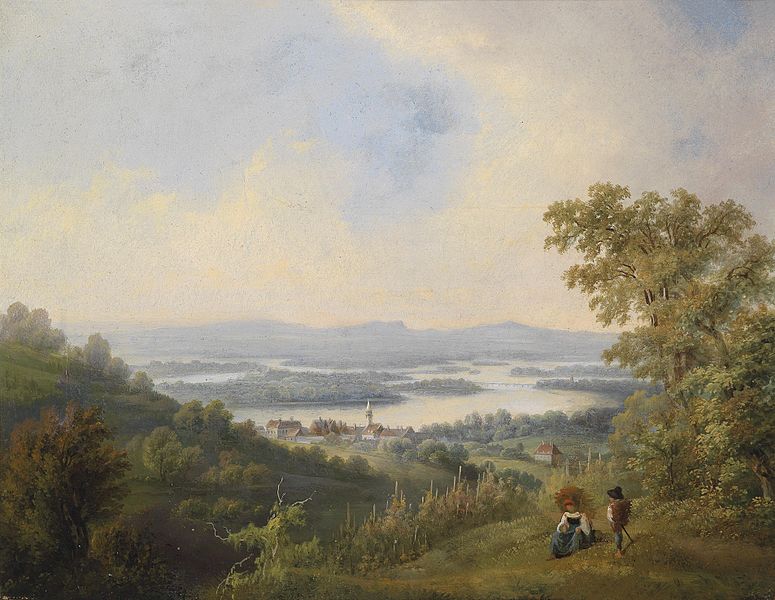
Heiligenstadt 19th century by Anon

7 Bagatelles Op.33 for piano (1802, Beethoven aged 31)

1. Andante grazioso quasi allegretto (E♭ major)
2. Scherzo – Allegro (C major)
3. Allegretto (F major)
4. Andante (A major)
5. Allegro ma non troppo (C major)
6. Allegretto quasi andante (D major)
7. Presto (A♭ major)

Dedication not known
Duration 20′

Listen

written by Ben Hogwood

Background and Critical Reception

1802 was a key year for Beethoven. Suffering from ill health and from the disintegration of his hearing, he was instructed by his doctor to leave Vienna for the nearby village of Heiligenstadt, to aid his convalescence.

Sadly his health did not improve, giving to the famous Heiligenstadt Testament, where the composer bared his soul in a letter to his brothers. The correspondence was sealed but not delivered or seen until after Beethoven’s death.

Despite (or in spite of) going through such a tragic time, Beethoven redoubled his efforts as a composer, focusing all his energies into new work. Around this time he turned to the Bagatelle, a short form of piano piece, collecting his first volume of seven miniatures in a folder and publishing them as Op.33 in 1803. Each lasts two or three minutes.

The collection consists of ideas going right back to the composer’s early music from Bonn, and may (writes Misha Donat for Hyperion) include music written as long ago as 1782, used for the first piece of the seven. ‘Perhaps the intricate, improvisatory runs that embellish the main theme (they become more elaborate with each appearance) were a later addition’, he says. Summing up, ‘the two jewels of the set are, perhaps, the much more relaxed and lyrical fourth and sixth numbers.’

Thoughts

The Bagatelles are great fun. The first piece enjoys leaning on its dissonances – a friendly, welcoming way in. It also hangs around in the listener’s head, its main tune being unexpectedly catchy. The second is lively too, firstly adopting the profile of an offbeat march, but then rumbling into A minor for a fulsome second idea. Beethoven is enjoying himself – and continues to do so more subtly in no.3. This is a popular student piece (which I have had the joy of playing) and is simple but wonderfully effective, springing a subtle surprise when the music suddenly but effortlessly turns the music from F major into D major.

The fourth bagatelle is indeed more relaxed, bringing reminders of Mozart with its graceful air, though clouds appear briefly in the minor key middle section. By contrast the fifth is a torrent of notes, asking questions when it pauses but emphatically answering them with a cascade down the keyboard. The sixth relaxes a bit more, an appealing conversational piece. Finally we get a sneak preview of the figuration Beethoven is to return to in the Waldstein sonata, the last bagatelle generating manic energy.

Recordings used and Spotify playlist

Alfred Brendel (Philips)
John Lill (Chandos)
Paul Lewis (Harmonia Mundi)
Glenn Gould (Sony Classical)
Ronald Brautigam (BIS)

A wide range of approaches here, from Ronald Brautigam’s crisp staccato on the fortepiano to Alfred Brendel’s peerless phrasing and poise. Outside of these lies Glenn Gould, a fascinating and engaging listen. His style sounds very prim and proper to begin with but once the ear adjusts it is actually very appealing, and he lingers lovingly over the dissonances of no.1. John Lill and Paul Lewis, last but certainly not least, enjoy the music greatly.

You can also hear clips of Steven Osborne’s recording at the Hyperion website

You can chart the Arcana Beethoven playlist as it grows, with one recommended version of each piece we listen to. Catch up here!

Also written in 1802 Titz 3 String Quartets

Next up Romance no.1 in G major Op.40

BBC Proms – Dame Sarah Connolly, BBC SO / Brabbins: Berlioz, Payne & Beethoven

sarah-connolly

Dame Sarah Connolly (mezzo-soprano, above), BBC Symphony Orchestra / Martyn Brabbins (below)

Payne Spring’s Shining Wake (1980-81) (Proms premiere)
Berlioz Les nuits d’été Op.7 (1840-41, orch. 1856)
Beethoven
Symphony no.6 in F major Op.68 ‘Pastoral’ (1808)

Royal Albert Hall, London
Friday 13 August 2021

Written by Richard Whitehouse

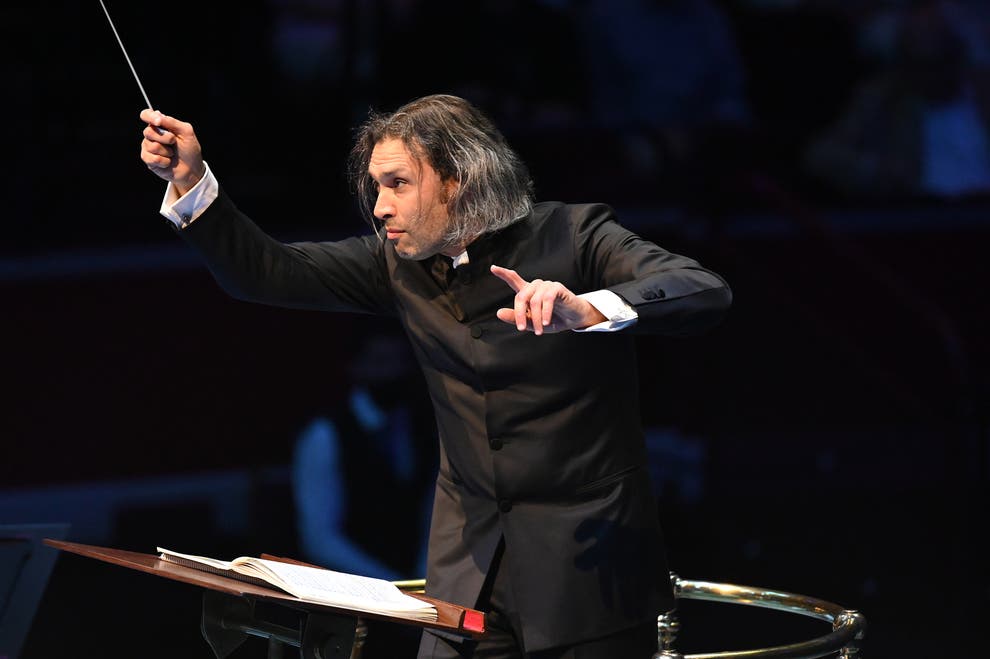
A family bereavement meant that Sir Andrew Davis was unable to conduct this Prom, the baton having been taken up by Martyn Brabbins – whose currently in-demand status is a reflection not least of his broad range of musical sympathies and an inherent ability to ‘get things done’.

Not too many conductors would have taken on at relatively short notice a long-unheard piece by the late lamented Anthony Payne then render it with the familiarity of a repertoire staple. Seemingly unheard for 15 years, Spring’s Shining Wake was a breakthrough piece in several respects: the composer fashioning a ‘contemporary’ yet never esoteric idiom, unencumbered by stylistic precedent, as reflected his love of an earlier generation of English music. Delius’s In a Summer Garden is a focal-point in several respects, but what comes over most strongly in its modest scoring (seven wind, one percussionist and strings) is a sense of organic growth from the overtly static formal framework; textures diversifying and intensifying, yet without changing as to their essential features, in music exemplifying the ‘same yet different’ maxim.

From there to the limpid Romanticism of Berlioz’s song-cycle Les nuits d’été is nearer than might be imagined, this latter being notable for its range of expressive nuance despite (even because of) its pervasive restraint. Certainly, there was no uniformity of response from Dame Sarah Connolly – whose whimsical response to Villanelle contrasting with the wide-eyed fantasy of Le spectre de la rose, and becalmed rapture of Sur les lagunes thrown into relief by the fervent heartache of Absence then the spectral imaginings of Au cimetière; itself finding purposeful response in the animated L’île inconnue with its vouchsafing new imaginative realms. Coordination between soloist and orchestra is paramount throughout, and there was no lack of that in a reading as conveyed this music’s potent sensibilities with acute insight.

Nor was there anything routine about Beethoven’s Pastoral after the interval. Readers may remember a cycle of all nine symphonies which Brabbins (above) gave with the Salomon Orchestra just over a decade ago, and his purposeful if never inflexible take on the opening movement left room for its reflective asides and heady flights of fancy. This was no less evident in the Scene by the brook, with its emphasis on seamlessness of transition and unity of content – not least in the way those bird-calls of the coda were integrated into their textural context.

Unfolding with consistency of pulse, the remaining three movements yielded few surprises but no failings. A touch of blandness in the scherzo was duly countered with the immediacy   of the Thunderstorm and its nexus of accrued emotion whose dispersal makes possible the Shepherd’s Song – less cumulative in its eloquence than others have made it, perhaps, but whose inevitability of progress was sustained through to a close of serene poise; underlining the degree to which any trace of ego has been sublimated in the enveloping cosmic dance.

Some elegant and characterful playing from the woodwind of the BBC Symphony Orchestra was a highlight of this performance, a reminder that even a work with a Proms tally running to several dozen never need sound routine when approached with such unaffected reverence.

For further information on the music of Anthony Payne, visit the composer’s website. You can find more information on the BBC Proms at the festival’s homepage

BBC Proms – Steven Isserlis, LPO / Jurowski: Stravinsky, Bach, Walton & Hindemith

jurowski-proms

Steven Isserlis (cello, below), London Philharmonic Orchestra / Vladimir Jurowski (above)

Stravinsky Jeu de cartes (1935-6)
Walton
Cello Concerto (1955-6)
Bach (arr. Goldmann)
14 ‘Goldberg’ Canons BWV1087 (1742-4 arr. 1977)
Hindemith
Symphony ‘Mathis der Maler’ (1933-4)

Royal Albert Hall, London
Thursday 12 August 2021

Written by Richard Whitehouse; pictures (c) Chris Christodoulou

Vladimir Jurowski this evening concluded his highly impressive 14-year tenure as Principal Conductor of the London Philharmonic Orchestra with a thoughtfully conceived and well-proportioned programme; one which typically played to this orchestra’s strengths as much as to his own.

Although it can seem something of an ‘also-ran’ in the context of his compositions from the period, Stravinsky’s Jeu de cartes lacks for little in terms of that rhythmic effervescence as was engagingly evident in this performance – Jurowski pointing up the humour and even occasional glimmers of pathos that inform what can easily seem music written on autopilot. The LPO responded with a trenchancy and alacrity as held good throughout this ‘ballet in three deals’, the tonal punning of whose culmination at least ensures a humorous outcome.

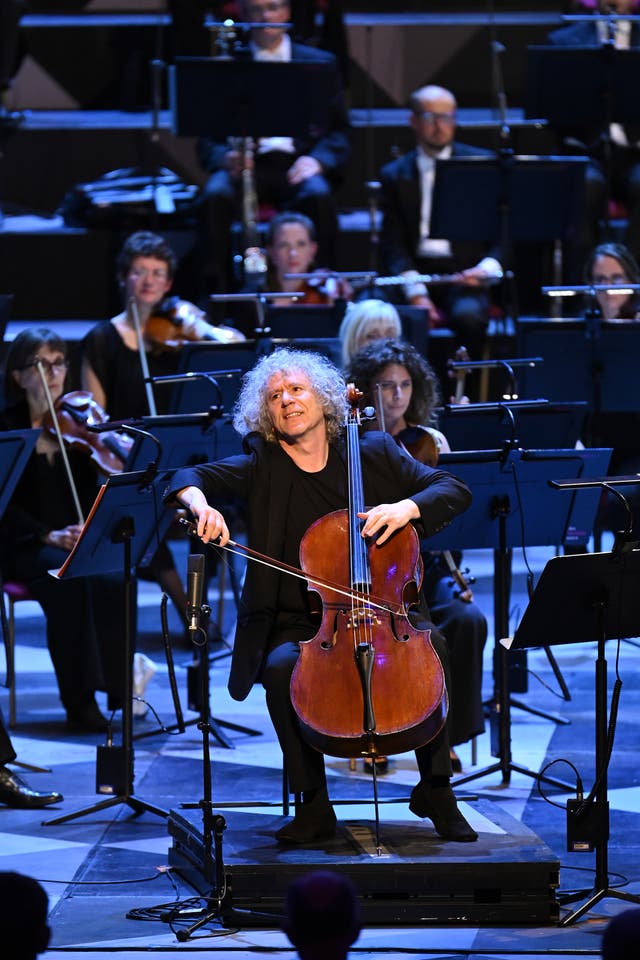
Walton’s Cello Concerto used to be regarded with even less favour than Stravinsky’s ballet, but this piece (written by its composer at much the same age) is now seen as more than the enervated recycling of past success. Steven Isserlis (above) has long advocated its cause, and there was little doubting his commitment in a reading of perceptiveness and finesse. At times his spare and even fragile tone tended to recede into even so restrained and transparent as this, Jurowski mindful to rein in those brief climactic moments of the outer movements, but the artful interplay of the central scherzo did not lack for incisiveness or irony. Nor, after the second of the solo variations in the finale, was there any absence of rapture as soloist and orchestra are reconciled in drawing the music through to its close of fatalistic acceptance.

After the interval, a novelty in an arrangement by composer-conductor Friedrich Goldmann (1941-2009) of the 14 canons latterly identified from Bach’s printed copy of his Goldberg Variations. Arranged for a Stravinskian post-classical orchestra, these intricate and arcane studies in canonic dexterity emerge from gentle aridity to luminous elaboration with spare, methodical elegance such as intrigues and disengages in equal measure. Hardly something one expected to hear at such an occasion or this venue, though worth hearing all the same.

In its reiterating the values of Enlightenment humanism, moreover, this prepared admirably for Hindemith’s Symphony ‘Mathis der Maler’; premiered on the cusp of Germany’s descent into barbarous self-destruction, and a plea from the committed – however reluctantly – artist for a rational response as might be worth emulating today. The alternately radiant and tensile unfolding of Concert of Angels was perfectly judged, as too the plaintive resignation of the brief if affecting Entombment. The Temptation of St Anthony then made for an elaborate finale, but Jurowski paced it superbly – the plangent central interlude thrown into relief by the impassioned episodes on either side, then its anguished introduction by an apotheosis whose ultimate wresting of triumph from adversity remains thrilling as a statement of artistic intent.

A performance to savour, then, not least as John Gilhooly presented Jurowski with the Gold Medal of the Royal Philharmonic Society in recognition of services to music – an accolade with an illustrious history, which can rarely have been more deserved than on this occasion.

You can find more information on the BBC Proms at the festival’s homepage

New music: Poppy Ackroyd

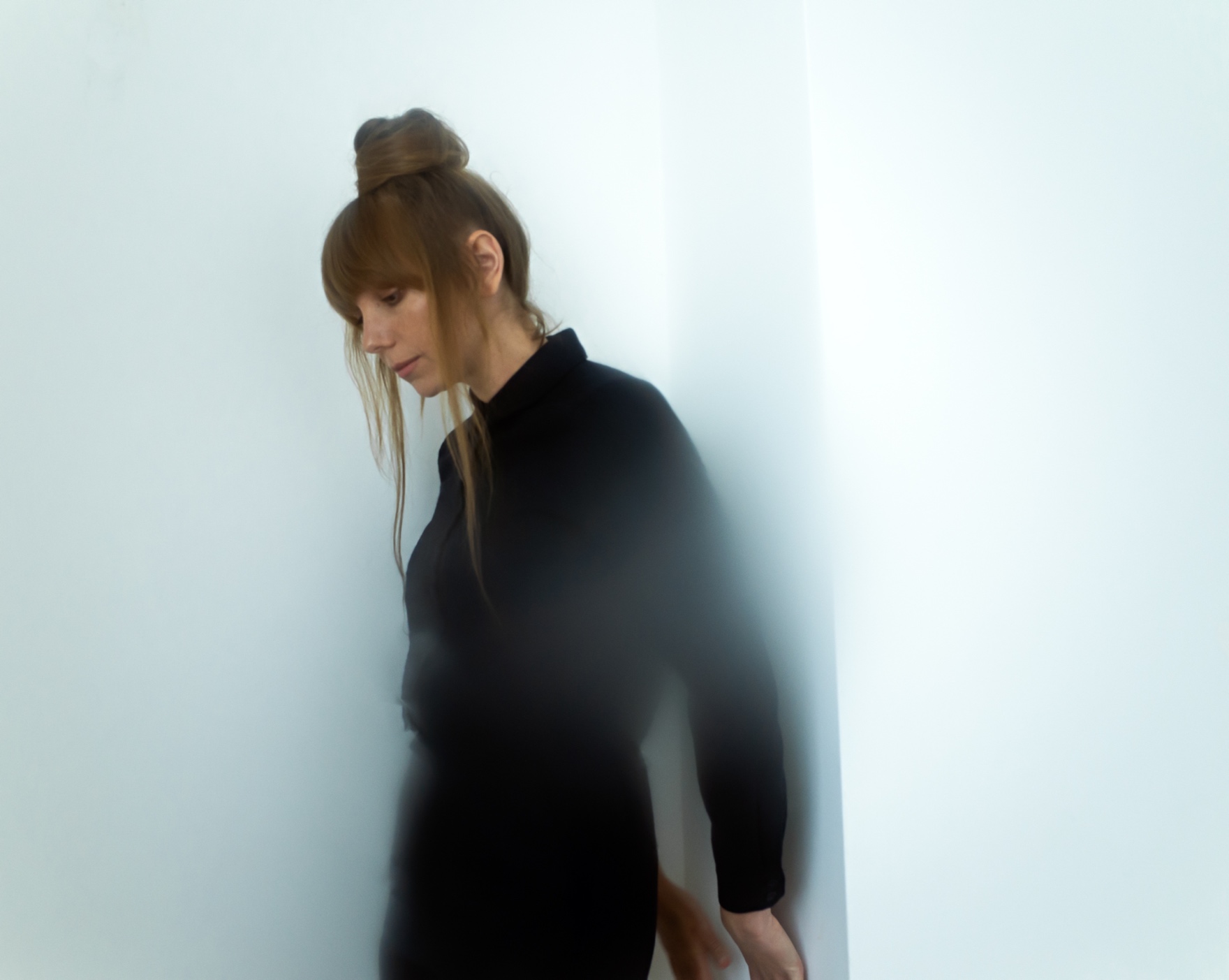
One Little Independent have today announced the return of Poppy Ackroyd with new music for piano. Her fourth album Pause, set to be released in November, is a collection of ten pieces for the keyboard which, in the label’s words, ‘utilize the full instrument, with a mixture of inside piano strumming and playing the keys’.

Evidence of this can be seen in the new track Seedling, and its accompanying video directed by Jola Kudela. She collected small pieces of plants and leaves, submerged them in water and put them in her freezer, then observed the process of defrosting, filming it in time-lapse. The second part of the video was filmed with infrared camera. “I was trying to imagine the process of nature waking up, beginning with a seed, that then slowly transforms itself into a seedling”, says Kudela. “So, we begin with a frozen environment that encapsulates the seed – it seems trapped and immobilised by the icy world. Then gradually it starts to warm up and defrost, fighting with the power that has been holding it frozen.”

Poppy gave some background to Pause. “For previous albums almost as much of the creative process was spent editing and manipulating recordings as it was composing at the piano, however after having my son, I struggled to spend time sat in front of a computer. The only thing I wanted to do while he was still small, if I wasn’t with him, was to play the piano. In fact, much of the album was written with him asleep on me in a sling as I used any quiet moment to compose.

It therefore made sense that this album should be a solo piano album. I used extended technique – playing with sounds from inside the instrument – like I do in my multi-tracked recordings, however it was important to me that every track on the album could be entirely performed with just two hands on the piano.”

Watch and enjoy below…while looking forward to Poppy’s full-length return.