Listening to Beethoven #167 – Piano Sonata no.12 in A flat major Op.26

Abend (Sonnenuntergang hinter der Dresdener Hofkirche) (Evening (Sunset behind Dresden’s Hofkirche) by Caspar David Friedrich (1824)

Piano Sonata no.12 in A flat major Op.26 for piano (1801, Beethoven aged 30)

1. Andante con variazioni
2. Scherzo, allegro molto
3. Maestoso andante, marcia funebre sulla morte
4. Rondo

Dedication Prince Karl von Lichnowsky
Duration 27′

Listen

written by Ben Hogwood

Background and Critical Reception

Beethoven was enjoying one of the most productive periods of his life as a composer, yet conversely his health was worsening. He had chronic bouts of diarrhoea and a buzzing in his ears that was gaining in intensity as the years went on – this was the onset of his deafness which sadly was never to leave him.

His response, as Angela Hewitt says in her booklet notes for this piece on Hyperion, was to work hard – and the resultant piano sonatas leave biographer Jan Swafford in no doubt. In The Grand Sonata in A-flat major Op.26, Beethoven fully possessed the voice history would know him by, and at age 30 he was writing music that would place him once and for all in the history of his art. Everything about this sonata seems to be more than anything in the works before: more personal; more innovative in the approach to form (there are no movements in sonata form); more varied in the expressive scope, with fresh kinds of unity. Not least, starting from the gentle beginning, the A-flat major finds heights of individuality and sheer beauty of expression beyond anything he had reached before.’

Hewitt describes Op.26 as ‘a collection of four character pieces put together more under the lines of a divertimento (a title under which many of Haydn’s early sonatas were published)’. Its innovations begin with a theme and variations movement, which Hewitt sees as ‘more than just a show of compositional and technical virtuosity. Without straying far from the theme, Beethoven gives us a satisfying ‘introduction’ to the other movements.’

A ‘lively scherzo’ is next, then a funeral march, Hewitt observing that ‘Chopin loved this Beethoven sonata more than any other and played it frequently. This movement probably inspired him to write his own funeral march, which became the central focus of his Piano Sonata Op.35.’ The march was played at Beethoven’s own funeral in an arrangement.

The last movement is in a rondo form. ‘Instead of going for a brilliant finish’, writes Hewitt, ‘the work simply dissolves into thin air – a remarkable end to a remarkable piece.’

Thoughts

1801 appears to have seen a decisive shift for Beethoven. In pieces like the Serenade in D major he was clearly taking inspiration from the past, enjoying the chance to write in homage to Mozart and to some extent to Haydn. Yet as we move forward one opus number, here is a piece looking only in one direction – forwards.

The twelfth published piano sonata begins a run in this form of four consecutive works, all of them exploring new ways of presenting Beethoven’s ideas. The shock of the new is evident right from the start of this piano sonata,which begins with a theme and variations movement. Not only that, the theme carries a weighty emotional presence, and the subsequent departures from it are tightly but beautifully worked.

A quicker movement follows, with Beethoven in largely ebullient mood. The main melody is catchy, appearing in both higher and lower parts, and is only briefly displaced by a short trio section.

The funeral march, placed third, explores similar emotional depths to the slow movement of the Pathétique sonata, in the same key, but if anything goes for a more sustained darkness and greater tension than that movement. Here is an intensely dramatic passage of play, yet in the middle section Beethoven gives us a darkness to light moment, a glimpse of heaven from the turmoil. The clouds return, but the hope of transformation remains.

After these highs and lows, as Angela Hewitt notes, it is difficult to know what to expect next – so the fourth and final movement feels apt in its ‘straight down the middle’ approach. It is in fact a beautifully worked study of counterpoint that builds up a good deal of momentum

This is by some distance the most emotionally affecting piano piece we have yet heard from Beethoven, a noticeable change in tack from his previous works. The shift is decisive and will, as Jan Swafford says, affect the rest of his output. A willingness to embrace the new and to wear his heart on his sleeve pays many dividends here.

Recordings used and Spotify links

Emil Gilels (Deutsche Grammophon)
Alfred Brendel (Philips)
András Schiff (ECM)
Angela Hewitt (Hyperion)
Paul Badura-Skoda (Arcana)
Stephen Kovacevich (EMI)
Igor Levit (Sony Classical)
Claudio Arrau (Philips)
Rudolf Serkin (Sony)

Angela Hewitt gives the theme plenty of space to start with, and her reading of the sonata is beautifully weighted, taking its lead from the freedom in which Beethoven is operating. Schiff is superb, going at a daringly slow tempo in the first movement before giving it great guns in the faster music. Of the many other fine versions Rudolf Serkin left a lasting impression with his dramatic account.

You can hear clips of Hewitt’s recording at the Hyperion website

You can chart the Arcana Beethoven playlist as it grows, with one recommended version of each piece we listen to. Catch up here!

Also written in 1801 Field Piano Sonata in E flat major Op.1/1

Next up Piano Sonata no.13 in E flat major Op.27/1 ‘Quasi una fantasia’

Switched On: Alessandro Cortini: Scuro Chiaro (Mute)

alessandro-cortini

reviewed by Ben Hogwood

What’s the story?

A new album from Nine Inch Nails’ multi-instrumentalist Alessandro Cortini, Scuro Chiaro is a play on the word ‘chiaroscuro’, which means ‘the use of light and shadow to give strong contrast’.

As he did on previous solo opus Volume Massimo, Cortini has revisited old personal recordings for the building blocks for a new piece of work. Using these sounds and elements in a new context has enabled him to compose eight dramatic pieces using the contrast of the title to powerful effect.

What’s the music like?

Cortini’s music is compelling from the off, operating in long phrases that seem quite relaxed to start with, but actually build up a good deal of tension. This is heightened by the use of contrasting tones – some harsh distortion is involved, but that is complemented and often cushioned by soft synth pads. The long, sustained notes of Ecco set the scene over the steady heartbeat of a bass drum, after which Chiaroscuro itself stretches over a wide canvas, the music slowly shifting in a gorgeous chorale.

The pace of the album is refreshing, Cortini unwilling to put too much on the palette when the colours in place are already striking. Sempre is a great example of this, creating great tension with the slightest of pitch shifts that puts it in and out of harmony. Verde also has minimal roots, growing from primitive beginnings to a powerful whole, all the while using the same loop.

A few earlier influences creep into Cortini’s work, notably early Jean Michel Jarre in Lo Specchio, while the work of German pioneers of the 1970s are also visible at times. Yet this is music with a deeply personal resonance too.

Does it all work?

Yes. The colours Cortini uses are striking, and the structuring of his tracks is beautifully achieved. Not a note is wasted.

Is it recommended?

It is – an album of electronica with real conviction and depth. Scuro Chiaro is ambient music, but not without scenes of tension and drama.

Stream

Buy

Listening to Beethoven #166 – Serenade in D major Op.25

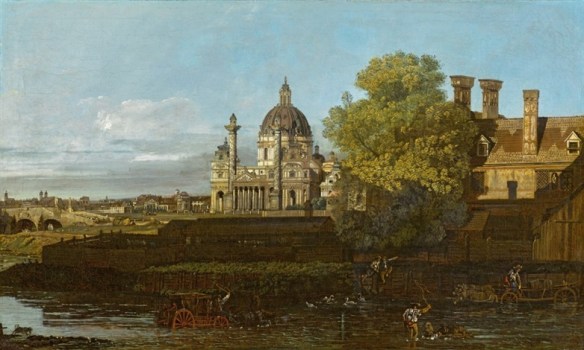
A View of the Karlskirche, Vienna by Bernardo Bellotto

Serenade in D major Op.25 for flute, violin and viola (1801, Beethoven aged 30)

Dedication Countess Maria Wilhelmine von Thun
Duration 22′

1. Entrata, Allegro
2. Tempo ordinario d’un Menuetto
3. Allegro molto
4. Andante con Variazioni
5. Allegro scherzando e vivace
6. Adagio – Allegro vivace e disinvolto

Listen

Background and Critical Reception

This attractive trio was initially thought to have been written around the same time as Beethoven’s Trio for clarinet, cello and piano – but as Richard Wigmore observes, writing in a booklet note for Hyperion, its actual date is three years later.

The flute was a very bankable instrument thanks to Frederick The Great, and Wigmore describes how ‘the Serenade, like the Septet, is a delightful late offshoot of the eighteenth-century divertimento tradition’.

There are six movements in a piece which appears not to have been written with any particular person in mind, more for the Viennese domestic market.

Thoughts

Beethoven looks back to Mozart and Haydn with this piece, using the form of a Serenade to its full potential. Like Mozart he brings the most out of seemingly small forces. On the face of it the combination of flute, violin and viola is relatively slight, but not in Beethoven’s hands. Each of the instruments gets a thorough workout in music that is both vivacious and touching.

The air of Spring, so prevalent in the sonata for piano and violin of the same name, is here in abundance too. The bright sound of the flute is one of the reasons for this, but so are the busy parts Beethoven assigns to violin and viola. There are few if any breaks for the instruments, and because of the almost complete lack of a bass instrument the piece has the lightest of textures.

The first movement is fun, the flute imitating a piper with the catchy main theme, but in the second movement Beethoven brings through a number of dance rhythms, with a minuet and two contrasting trio sections. The third movement is a rustic dance, with busy strings and lively flute.

The centrepiece, however, is the theme and variations movement, the strings introducing the theme with double stopping that makes them sound like a full quartet. As the music progresses each of the three protagonists gets their turn in the spotlight, which the audience would have enjoyed.

There is more, too – a scherzo where the instrumentalists are all at play, and a final Rondo where Beethoven heightens the folksy mood with the use of open strings on the violin and viola. The abundance of tunes and good humour in this piece make it a treat for audiences and listeners alike.

Recordings used and Spotify links

Gaudier Ensemble (Jaime Martin (flute), Marieke Blankestijn (violin), Iris Juda (viola) (Hyperion)
Members of the Berliner Philharmoniker (Karlheinz Zoeller (flute), Thomas Brandis (violin), Siegbert Uebershaer (viola) (Deutsche Grammophon)
James Galway (flute), Joseph Swensen (violin), Paul Neubauer (viola) (RCA)
Emmanuel Pahud (flute), Daishin Kashimoto (violin), Amihai Grosz (viola) (Warner Classics)
Melos Ensemble of London (Richard Adeney (flute), Emmanuel Hurwitz (violin), Cecil Aronowitz (viola) (Eloquence)

There are some fine versions of this piece available, the musicians clearly enjoying Beethoven’s high spirits throughout. The two I enjoyed most are from members of the Gaudier Ensemble on Hyperion, beautifully recorded, and the bright tones of three members of the Berliner Philharmoniker on Deutsche Grammophon, a recording made in 1969 that stands up very well.

You can listen to these versions on the playlist below:

You can chart the Arcana Beethoven playlist as it grows, with one recommended version of each piece we listen to. Catch up here!

Also written in 1801 Wranitzky 3 String Quintets Op.8

Next up Piano Sonata no.12 in A flat major Op.26

Switched On: Blank Gloss: Melt (Kompakt)

blank-gloss

reviewed by Ben Hogwood

What’s the story?

Sacramento duo Blank Gloss met through a shared love of punk and experimental music, but their output is the polar opposite – a blissful musical ambience which has drawn the attention of Kompakt. Their track Of A Vessel was used on the Cologne label’s Pop Ambient 2021 compilation, and it features towards the end of Melt, their debut album.

What’s the music like?

Weightless and blissful, but also subtly animated. At no point does Melt feel like musical wallpaper – instead, it takes the listener outside and places them under the stars of the night sky. It is easy to imagine a wide open vista with the music they make, the scene immediately set from the first track Those Who PlantOf A Vessel makes the same understated and soothing impression as it did first time around, but sounds even better in this context.

There are some nice guitar fragments on Virga, and on Speaking Quietly too, where a dialogue emerges between soft piano and a thoughtful line on steel guitar. Almost Home shimmers in the half light, before Stained Glass reaches the album’s restful destination.

Does it all work?

Yes. If you liked Of A Vessel then you will certainly enjoy Melt, with its very gradual and enjoyable twists and turns. Blank Gloss never restrict themselves to one formula or musical language, and the subtle inventiveness at work here keeps the music in the foreground.

Is it recommended?

It is indeed. If you are in any way acquainted with the output of Kompakt’s ambient stable, you will be glad to know that Blank Gloss have seamlessly become a part of it. Melt is a soft-hued antidote to the pace and stress of modern life.

Stream & Buy

In concert – Karen Cargill, CBSO / Mirga Gražinytė-Tyla: Mirga conducts Weinberg

Mirga

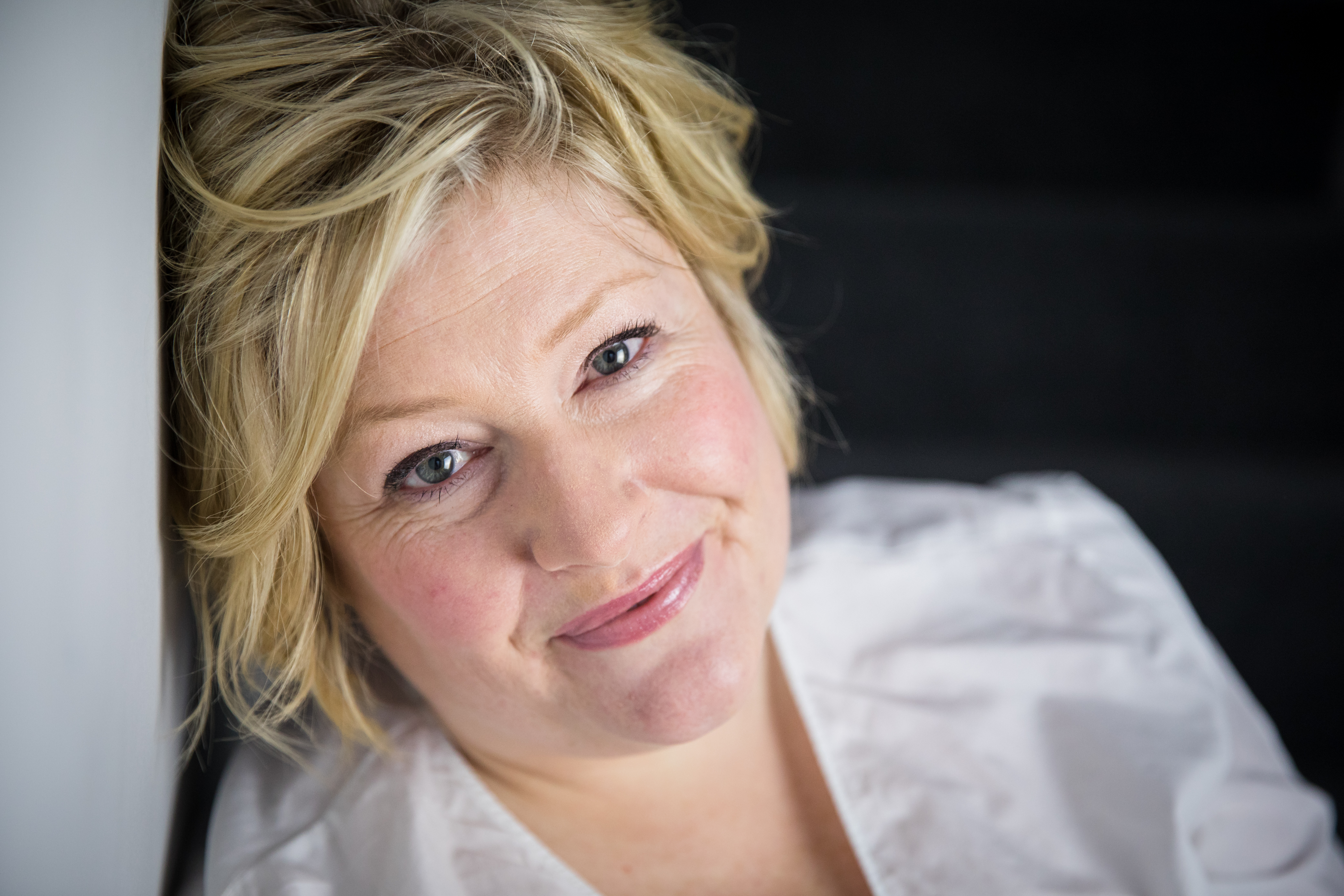
Karen Cargill (mezzo-soprano, below), City of Birmingham Symphony Orchestra / Mirga Gražinytė-Tyla (above)

Weinberg Rhapsody on Moldavian Themes Op.47/1 (1949)
Mahler Rückert-Lieder (1901-02)
Weinberg Symphony no.3 in B minor Op.45 (1949-50, rev. 1960)

Symphony Hall, Birmingham
Wednesday 23 June 2021 (6.30pm)

Written by Richard Whitehouse Photo of Karen Cargill courtesy of Nadine Boyd Photography

The music of Mieczysław Weinberg has been a prominent feature in the City of Birmingham Symphony Orchestra’s programmes with its music director Mirga Gražinytė-Tyla, and the Rhapsody on Moldavian Themes duly started this latest of the orchestra’s concerts in impressive fashion.

Written when Soviet composers were under intense pressure to create music of a populist – or rather, nationalistic – nature, its recourse to melodies emanating from the region of Bessarabia (from where the composer’s parents hailed) draws directly on a lineage from Liszt to Bartók and Kodály. Weinberg’s handling of these, in its subtle take on a slow-fast trajectory, is never less than assured. MGT undoubtedly had its measure, whether in the ruminative opening with its plangent woodwind or the boisterous later stages when brass comes irresistibly to the fore.

Itself a revival (having been played at Symphony Hall in 2019 then at that year’s Proms), the Third Symphony is a more considered response to the anti-formalist campaign spearheaded by Andrei Zhdanov with the intention of making Soviet music more accountable to its public. Hence the inclusion of Belorussian and Polish folksong, though Weinberg is mindful to offset these with a formal rigour as, in the initial Allegro, ensures an emotionally restless unfolding to a coda shot-through with foreboding – one of several passages likely made more explicit in the subsequent revision. Here, as in the wistful second theme (akin to what Malcolm Arnold was writing around this time) then a climactic transition heading into the reprise, the CBSO’s playing underlined its ongoing affinity with this music which held good through to the close.

Hardly less idiomatic was the scherzo’s interplay of capricious with a more sardonic humour, then the Adagio’s sustained yet cumulative progress towards a climax of stark tragedy – only slightly pacified in the inward closing phase. If the animated finale strives to secure an overly affirmative ending, it was a measure of this account that any such optimism was held in check until the peremptory last bars. Weinberg could scarcely have hoped to hear a more perceptive performance: good to hear both this and the Rhapsody were being recorded for future release.

Between these pieces, Karen Cargill joined the CBSO for Mahler’s Rückert-Lieder (evidently the first time the orchestra has given them since baritone Olaf Bär with Simon Rattle in 1992). She drew a keen irony from Blicke mir nicht in die Lieder, then rendered Ich atmet’ einen linden Duft with appealing deftness. With its fugitive writing for woodwind and brass, and a fervent climax capped by garish arabesques from piano, Um Mitternacht is a difficult song to bring off but was notably effective, and the only disappointment was a rather inert take on Liebst du um Schönheit – Max Puttmann’s sub-Léhar orchestration at least partly to blame. Nor was Ich bin der Welt abhanden gekommen ideally transcendent, yet the eloquence of Cargill’s response left no doubt concerning its status as arguably the greatest orchestral Lied.

A judiciously planned concert, then, in which the rapport between orchestra and conductor came through these past 15 months unscathed. The CBSO returns next Wednesday with its principal guest conductor Kazuki Yamada in a programme of Julian Anderson and Dvorák.

You can find information on the CBSO’s next concert at their website