Switched On: Matthew Dear: Preacher’s Sigh & Potion: Lost Album (Ghostly International)

matthew-dear

reviewed by Ben Hogwood

What’s the story?

Matthew Dear has shown himself to be an incredibly versatile electronic music artist over the years. His distinctive baritone has powered a number of successful song-based albums, while on the instrumental side his Audion alias has shown him to be a techno producer of some repute. Preacher’s Sigh & Potion comes to light twelve years after its composition, at a point where the success of his Asa Breed album was pushing Dear in a more electronic direction.

This opus, entertainingly described as ‘a spirited country romp in the techno barn’ in the press release, was shelved as Dear followed his ‘switched on’ path, but its finger-picked guitar roots can now be revealed in songs that trace back to the music his father was making in the late 1960s. Dear wrote the music in Texas, and something of the wide open spaces works its way into the music.

What’s the music like?

A fascinating blend of influences and styles. As Dear himself notes, the production is not at all fussy, leaving rough edges and raw vocals that work really well given the musical styles at play. Those who are only familiar with Dear’s sleek electro pop might be surprised at the twanging guitar sound on Crash And Burn, which brings Beck’s Devil’s Haircut to mind, and also on Heart To Sing, where the instrument twangs against a murmured vocal. It appears right from the start, too, powering the easy paced Muscle Beach.

Despite the guitar craft the main pull for this album is once again Dear’s voice, the key instrument. He has a tone similar to Depeche Mode’s Dave Gahan in its midrange, but at the same time he is capable of plumbing the depths alongside the bass, not to mention the occasional falsetto.

The highly expressive vocals power some excellent songs. Hikers Y is the most meaningful, Dear placed against a lone beat as he finds solace alone, admitting ‘I’m through with all the conversation, I was never good with conversations’. Sow Down has a familiar chugging rhythm but a full acoustic guitar sound, while All Her Fits has a softer centre, cushioned by slow moving string lines. The dappled electronics of Supper Times continue this thread.

Does it all work?

Largely. The uncluttered production is a plus, speaking of an instinctive recording process, though there are some song structures Dear might have changed and stretched. Less is definitely more in this instance though, as the shorter songs still leave their mark.

Is it recommended?

Yes. For fans, this will be an important piece of the Matthew Dear jigsaw, left incomplete until now. It also places the excellent Asa Breed and Black City in context, illustrating in the process just what a versatile producer and vocalist he continues to be.

Stream

Buy

Listening to Beethoven #168 – Piano Sonata no.13 in E flat major Op.27/1 ‘Sonata Quasi una fantasia’

Frau vor untergehender Sonne (Woman before the Rising Sun) by Caspar David Friedrich (1818)

Piano Sonata no.13 in E flat major Op.27/1 ‘Quasi una fantasia’ for piano (1801, Beethoven aged 30)

1. Andante – Allegro – Andante
2. Allegro molto e vivace
3. Adagio con espressione
4. Allegro vivace

Dedication Princess Josephine von Liechtenstein
Duration 16′

Listen

written by Ben Hogwood

Background and Critical Reception

The year 1801 was all about the piano sonata for Beethoven, who expanded the form with each of the four pieces completed in that year. Having stretched formal and expressive boundaries with Op.26, he moved on to a pair of sonatas published as Op.27. Both bore the inscription ‘Sonata quasi una fantasia’, recognising their experimental approach and formal ambiguity. The form was becoming less conventional and more emotional in his hands, and the first of the Op.27 pieces made several new advances.

Unfortunately for the E flat major piece, its neighbour – the rather well-known Moonlight sonata – has stolen all the thunder. Yet as Jan Swafford writes, it is deserving of much higher exposure and regard. ‘Like all his sonatas it has a singular personality, from stately to haunted to ebullient’, he declares. ‘Its opening Andante is something of a blank sheet, offering little in the way of melody or passion but a great deal of pregnant material’. The four movements last around 17 minutes, and are played without a break.

Sir András Schiff, in the notes accompanying his recording on ECM, holds the piece in high esteem. ‘In its freedom, this sonata points the way forward much more clearly than Op.26’, he writes. ‘In its moods it is a psychological piece, but from the point of view of its formal criteria it shows an astonishing interweaving of sonata and fantasy’. He draws a link between this work and later pieces from the Romantic era such as Schubert’s Wanderer Fantasy, Schumann’s Fantasie in C and the Liszt Piano Sonata in B minor. For him it shows ‘a master of experimentation at work’. Angela Hewitt describes it simply as ‘wonderful’.

Thoughts

Beethoven is by now the master of starting a piece with what feels like minimal, inconsequential material. So it is with the measured start to this piece, but soon the deeply expressive side is clear. In it we hear an approach similar to that taken up by Schubert in his Impromptus, and Schumann in his character pieces.

The deceptively gentle start has moments of light when the music moves unexpectedly to C major, but the opening movement is largely thoughtful. Soon, however, we are in a grittier second section, before the slow movement returns us to A flat major, a similar, deeply thoughtful mood to the Op.26 funeral march. The final movement is a celebration, taking off at quite a pace, but just when it seems about to slam into the buffers Beethoven brings back the music of the opening, which is a masterstroke. With some really striking dissonances that only just resolve, this slow music feels more profound the second time around, before the piece signs off with a rush to the finish.

This work benefits from several listens to reveal its workings, but it is a model of economy and, ultimately, genius. Emotive and forward-looking, Beethoven is on a roll.

Recordings used and Spotify links

Emil Gilels (Deutsche Grammophon)
Alfred Brendel (Philips)
András Schiff (ECM)
Angela Hewitt (Hyperion)
Paul Badura-Skoda (Arcana)
Stephen Kovacevich (EMI)
Igor Levit (Sony Classical)
Claudio Arrau (Philips)
Rudolf Serkin (Sony)

This piece works well on the 1790 instrument used by Paul Badura-Skoda. Some of the faster music can sound quite cluttered but it communicates the rush of discovery, linking Beethoven back to the freeform music of C.P.E. Bach.’ Emil Gilels takes the second part of the first movement at a terrific pace, not so much a stream of consciousness as a raging torrent – which contrasts with the return to the soft melody of before. Schiff and Hewitt contribute two of the best versions here – of which there are many.

You can hear clips of Hewitt’s recording at the Hyperion website

You can chart the Arcana Beethoven playlist as it grows, with one recommended version of each piece we listen to. Catch up here!

Also written in 1801 Field Piano Sonata in A major Op.1/2

Next up Piano Sonata no.14 in C sharp minor Op.27/2 ‘Quasi una fantasia’ (‘Moonlight’)

In concert – Alban Gerhardt, CBSO / Kazuki Yamada: Straight from the Heart

kazuki-yamada

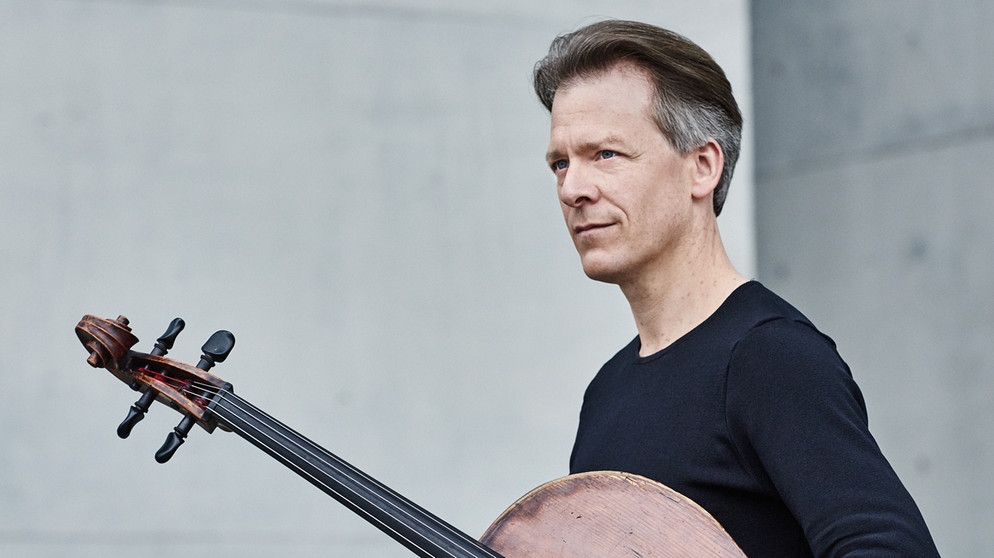
Alban Gerhardt (cello, below), City of Birmingham Symphony Orchestra / Kazuki Yamada (above)

Anderson Litanies (2018-19) [CBSO Centenary Commission: UK premiere]
Dvořák Symphony no.7 in D minor Op.70 (1884-5)

Symphony Hall, Birmingham
Wednesday 30 June 2021 (6.30pm)

Written by Richard Whitehouse Photo of Alban Gerhardt courtesy of Kaupo Kikkias

Losing the greater part of the City of Birmingham Symphony Orchestra’s schedule across the past two seasons has meant postponing many of its ‘Centenary Commissions’, but of those which have been rescheduled, none was more keenly anticipated than that of Julian Anderson’s Litanies.

Anderson produced four works during his tenure as the CBSO’s Composer-in-Residence over 2001-5, this new piece renewing its formal and expressive archetypes by fresh and intriguing means. The first of three continuous sections presents cello and orchestra – its modest forces including double wind, harp and piano, their pitches modified by a quarter-tone – as sparring partners in propulsive, toccata-like music. This gradually mutates into a central slow section, whose fraught lyricism intensifies (with unexpected if effective assistance from the orchestra) towards a chorale in memory of Oliver Knussen. From here an increasingly animated cadenza leads to a capricious, dance-like final section that culminates in a splenetic orchestral outburst; the soloist then resuming for a soulful postlude which brings about a calmly equivocal close.

Alban Gerhardt (below) made the most of some finely gauged technical challenges, as he overcame passing vagaries of sound-balance (and what appeared to be a leg injury) to give a confident realization of a piece already heard in Paris, Örebro and Lausanne. The CBSO was no less assured under Kazuki Yamada; if balance between strings and wind occasionally lost focus (second violins placed further to the rear of the platform than would normally be the case), this did little to offset the attractions of a notable addition to the contemporary repertoire.

During a break for platform rearrangement, the CBSO’s Principal Guest Conductor spoke of his gratitude that audiences were again able to attend live concerts. Something of this evident pleasure came through the ensuing performance of Dvořák’s Seventh Symphony – not least an opening Allegro that, despite a few tentative string entries, undoubtedly had the measure of its stoic defiance and underlying seriousness of purpose. Best was a coda whose dramatic initial stages subsided effortlessly and inevitably into sombre rumination towards the close.

The highlight, however, was a slow movement whose Poco adagio marking was studiously observed – Yamada infusing the emotional ebb and flow of a movement whose formal follow -through can seem fitful with unfailing poise, the CBSO wind eloquent in their contribution. Nor was anything amiss in the Scherzo, its ‘furiant’ rhythm audible not just in the trenchant outer sections but also the trio where its simmering presence ensured no let-up in tension on route to a subtly modified reprise then explosive coda. The final Allegro capped the reading accordingly – Yamada never rushing its stealthy alternation between starkness and lyricism, while ably negotiating several testing changes in tempo as the composer ratchets up tension going into an apotheosis whose inherent fatalism was enhanced by the resplendent playing.

A gripping performance, then, as was met with a suitably enthusiastic response. The CBSO is back this Friday with altogether lighter fare for a programme of Summer Classics (including The Lark Ascending), which is conducted by Michael Seal and presented by Andrew Collins.

You can find information on the CBSO’s Summer Classics concert at their website. For more information on composer Julian Anderson, click here – and for more on cellist Alban Gerhardt, visit his website here

On record – Param Vir: Wheeling Past the Stars (NMC Recordings)

param-vir

cPatricia Auchterlonie (soprano); cUlrich Heinen (cello); aSoumik Datta (sarod), aKlangforum Wien / Enno Poppe; bLondon Chamber Orchestra / Odaline de la Martínez dSchönberg Ensemble / Micha Hamel

Param Vir

Raga Fields (2014)a
Before Krishna (1987)b
Wheeling Past the Stars (2007)c
Hayagriva (2005)d

NMC Recordings NMC D265 [69’07”] 

Producers aFlorian Rosensteiner, bStephen Plaistow, cDavid Lefeber, dAnneke van Dulken, dWim Laman
Engineers aFritz Trondel, dDick Lucas

Recorded b14 December 1988 at BBC Studios, Maida Vale, London; d13 December 2005 at Muziekgebouw, Amsterdam; a23 May at Konzerthaus, Vienna; c10 October 2020 at Henry Wood Hall, London

Written by Richard Whitehouse

What’s the story?

Not a little surprisingly, this release from NMC is the first devoted to Param Vir (b1952), his music a welcome though undervalued presence in the UK over the almost four decades since relocating here from his native India and making for a ‘portrait’ whose appearance is timely.

What’s the music like?

Right from his earliest pieces written in the UK, Vir possessed a distinctive and engaging idiom – as can be heard in Before Krishna, subtitled an ‘Overture for Strings’, in which the narrative leading up to the deity’s birth is evoked through an intensive development of the ‘Krishna row’; heard in the context of string writing as is audibly influenced by (if never beholden to) the sonorist techniques from previous decades. Especially striking are those deftly enveloping chordal harmonics into which the music diffuses during the final bars.

Hayagriva is demonstrably more personal in approach – not least in its evoking the horse-headed being and mythological archetype behind a work whose headlong rhythmic energy gradually moves, via an intricately detailed transition, to a closing section whose subdued manner does not preclude music of fastidious textural variety and expressive nuance from emerging. The colour sequence ‘red/crimson-green/gold-blue’ evolves in parallel, but the aural trajectory pursued by this ‘mixed ensemble of 15 players’ is appreciably more subtle.

The song-cycle Wheeling Past the Stars draws on four poems by Rabindranath Tagore (sung in widely praised translations by William Radice). ‘Unending Love’ opens the sequence with its ecstatic vocal melisma and cello glissandi, while ‘Palm-tree’ portrays night-ride and storm with no mean resourcefulness. The unaffected charm and vivacity of ‘Grandfather’s Holiday’ then provides an admirable foil to ‘New Birth’, its frequently impassioned contemplation of those ‘who come later’ making for an earnest yet always eloquent conclusion to this cycle.

Raga Fields is outwardly a concerto for sarod but one where the orchestral contribution can be perceived as growing out of the soloist – whether in the gradual textural proliferation of ‘Void’; the comparable melodic interplay, notably through a variety of insinuating solos for woodwind, of ‘Tranquil’; then the stealthy rhythmic accumulation of ‘Vibrant’, in which the constant shifting between notated and improvisatory passages is heard at its most intensive. As the coming together of differing concepts, this is a productive and engrossing synthesis.

Does it all work?

Yes, in that Vir’s music exhibits its Indian antecedents distinctly yet always subtly. Allied to unforced harmonic clarity and a keen feeling for textural finesse is a sure sense of where each piece is headed formally, such that the considerable emotional intensity never risks becoming turgid or self-indulgent. It helps that these performances are attuned to the work at hand – not least Patricia Auchterlonie with Ulrich Heinen in the song-cycle, or the three ensembles that are heard in the remaining items. Whatever else, Vir has been well served by his performers.

Is it recommended?

Indeed. The sound has, in some cases, been remastered to mitigate the considerable time-span between performances, while Paul Conway pens his customary reliable notes. Hopefully, a follow-up release, maybe of Vir’s wide-ranging orchestral output, will not be long in coming.

Listen & Buy


You can get more information on the disc at the NMC website, where you can also purchase the album. For more on Param Vir, you can visit the composer’s website

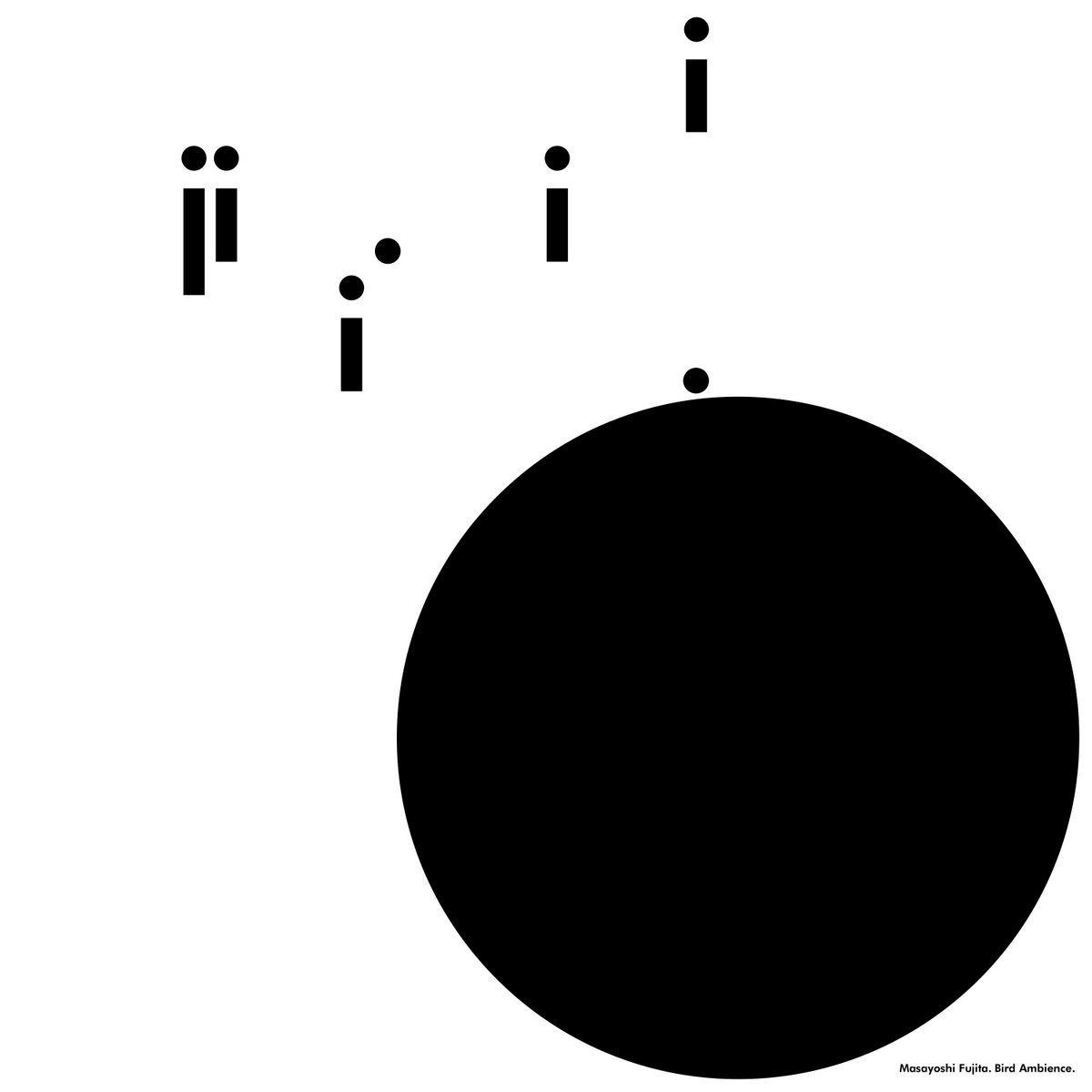
Switched On: Masayoshi Fujita: Bird Ambience (Erased Tapes)

masayoshi-fujita

reviewed by Ben Hogwood

What’s the story?

Until now, Japanese multi-instrumentalist Masayoshi Fujita could declare the vibraphone to be his ‘principal’ instrument. It would be top of a long list including drums, percussion, synths, effects and tape recorder. Fujita completed a triptych of vibraphone-based works for the Erased Tapes label in 2018, while continuing to record under his other alias El Fog, where he makes dub music, and in his improvisations with other artists such as Jan Jelinek.

Bird Ambience takes a decisive step to unify all those elements of his musical personality, but at the same time changes his principal instrument from the metallic vibraphone to the wooden percussion of the marimba.

What’s the music like?

Enchanting. Fujita’s ear for instrumental colour is once again immediately apparent when the music for this album begins, and he shows just how expressive the marimba can be, especially when played as softly as it is in Cumulonimbus Dream. He also shows the wide variety of sounds it is possible to coax from the instrument, using different levels of attack and sustain, both in real time and in production, to go with other pitched percussion, ambient melodic lines and carefully managed levels of distortion.

Often the music has an improvised quality, but the styles vary quite markedly. Thunder starts with crisp down beats applied to full chords, the track gradually expanding outwards to fill the headphone space. Stellar adds extra white noise to its beats, the raucous cymbals contrasting with the padded percussion elsewhere. Noise Marimba Tape goes a similar route, its ticking motif gradually taking on new lines and a firm beat, with the occasional distorted aside. Anakreon offers a complement, moving to gentle droplets of melody from the main instrument alone, while Nord Ambient and Pons remove the attack almost entirely for pure, glacial ambience.

Fujita’s judgment with the textures of his other instruments is unerring, and the music is always colourful but never crowded, and not afraid to turn towards discord and distortion as Gaia does. The lovely Morocco, meanwhile, contrasts the watery marimbas with a deep hum from a brass section, building small cells through a more classical method. Finally Fabric sets a lasting spell, sustaining bright textures in an exquisite orbit while time is marked by simple blocks.

Does it all work?

Yes. Bird Ambience is an album that demands your time as a listener for its spell to be wholly cast, since there is a lot going on here that you might miss if you choose the approach of a background listener. Only by listening closely will you appreciate the melodic cells Fujita works with, ranging from clipped marimba phrases to much longer sustained electronics. Each complements the other.

Is it recommended?

Highly. Masayoshi Fujita must have been a little anxious about moving over from the vibraphone, after such a thorough study of it over three albums, but his achievement here is rather special and often deeply moving. Bird Ambience can be relied upon as a cushion from a heavy day, an aid to thoughtful contemplation, or something to bask in as the different sources of sound rain gently on the listener’s parade.

Stream

Buy