posted by Ben Hogwood, incorporating text from the publicity material written by April Clare Welsh. Cover artwork by Bernd Kuchenbeiser
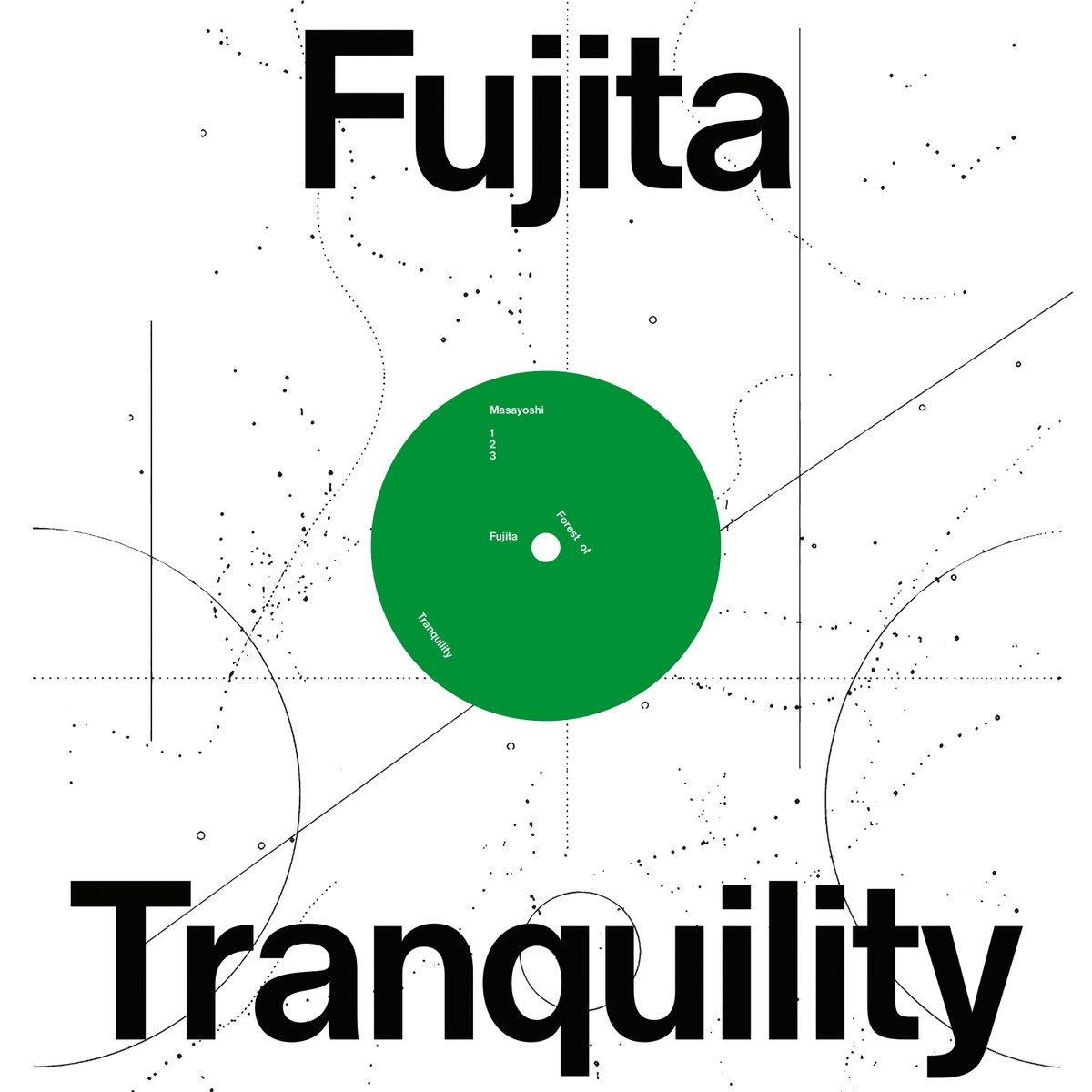
Japanese artist Masayoshi Fujita will release new album Forest of Tranquility on November 13th via Erased Tapes and is today sharing the first single from the record Portal To The Universe.
When Masayoshi Fujita was invited to create the soundtrack for Expo 2025’s vast living nature installation, he immediately envisioned a relaxing public space in which visitors could tune out the noise and restore their energies. Inside this green open-air sanctuary – visited by millions of people during the landmark Osaka event, which ran for six months – stood a central pond and 1,500 real trees, all rescued and repurposed from Expo’s former ‘70 site and other parks in Osaka. Fujita set about deepening the listener’s connection to the complementary ebbs and flows of the natural world using dynamic shifts and gentle arcs to shift the mood. The result was a living tapestry that mirrored the surrounding forest, with nonlinear patterns and textural twists and turns — creating a portal into the unexpected.
It’s from this honourable commission that Fujita’s new album for Erased Tapes, Forest of Tranquility, grew. Like the Japanese kankyō ongaku (environmental music) pioneers Hiroshi Yoshimura, Midori Takada and Haruomi Hosono before him, Fujita makes gentle, mind-massaging music intended to blend harmoniously with its environment. For Expo ‘25 visitors, this synchronicity – the forest setting intertwined with its associated sounds – would have bettered their experience of being outdoors; for at-home listeners, this synergy now takes the form of a serene transportive pod, capable of taking you anywhere you wish.
On first single Portal To The Universe Fujita said, “This song was made as the last song of a day. It feels like you are slowly drifting in the vast universe and the sea of memory.”
On the follow-up to 2024’s Migratory LP, the organic resonance of Fujita’s acoustic instruments – marimba, vibraphone, and percussion, with Armenian duduk from Hayk Karoyi and Japanese shō from Mattias Hållsten – acts as a showcase of nature’s design. Field recordings of birds and frogs make a hidden home among its branches and broad leaves, and bring the album’s biomimicry and ecological quality into even sharper focus. As do the atmospheric drones and burrs of white noise that evoke the wind whipping through the mountains. But, mainly, the objective was to carve out a roomy soundworld for reflective thought. “I wanted to have a lot of space in between the sounds,” says Fujita.
Having lived in Berlin for 13 years, Fujita moved to rural Japan in 2020, aiming to make music in nature. Now he is as close as one can be, living with his family high up in a mountain village along the coast of Kami-cho, Hyōgo, three hours west of Kyoto – surrounded by water and the occasional bear – and working out of a former kindergarten. For that reason, coursing through the leafy veins of Forest of Tranquility is the distinct feeling that you, too, might wander off into the wilderness someday and never return to the city.
Forest of Tranquility blooms across seven long-form trails; each shifting subtly in tone according to the time of day. “They had a biorhythm – in the morning you start a little bit slowly and with a little bit more space, and then around noon you get a little bit more active. Then in the afternoon you get more settled and calm, and around 6 o’clock you are more active, before revisiting calm,” explains Fujita of the concept behind the original commission.
Early morning reveries, characterised by brighter mallet percussion, and afternoon pick-me-ups sit alongside quieter nocturnes, while every hour on the clock is guided by the hand of something bigger than ourselves. “I had this image of nature being a portal to the universe,” says Fujita. “The idea I have lately about nature is that it makes us aware of the universe that exists beyond it.”
Themed around this idea, Portal to the Universe is an immersive listen, building its own sound journey from a toolkit of cicadas, chimes, and woodwinds – strewn with the distant chatter of children – all while coaxing the brain into thinking relaxation is attainable. The track was intended to work as the very last song of the day. “I had the image of a very dark night sky in my head for that one… It feels like you are slowly drifting in the vast universe and the sea of memory”, says Fujita. Iterations of this emerge throughout the record, which is where you can hear the artist’s bucolic dream come to life over and over: on the title track – true to its namesake in its embrace of stillness, rooted in “a feeling of birth, the soft beginning of a day in the forest”, according to Fujita – on the duduk-steeped Light, Wind, and Water – a paean to the elemental forces, gently dappled with marimba and flute – and on All Creatures Bow to Evening – a track leavened with hand percussion, unfurling itself as languidly as a cat stretching out in the golden-hour sun: comfortable tiredness, if you like.
Fujita paints other points of the record with bolder strokes of the marimba, pairing its subtle sustain with blankets of starry synths or sparkling idiophone on ‘Departure’ and ‘Komorebi Dance’, the latter referencing a Japanese word that loosely translates to “sunlight filtering through the leaves of trees.” For the original commission, Fujita was tasked with making compositions that react to the weather using a sensor system installed at the exhibit. This meant creating three versions of each two-hour piece – sunny, cloudy and rainy – with the textures modified depending on the climate, and with frog calls representing the rain.
But whatever the weather, whatever the time of day, or wherever you are in the world, Forest of Tranquility places value on silence, offering a break from the noise and a blank canvas for filling with your own thoughts – or for simply gazing into the cosmos.
Published post no.3,017 – Tuesday 15 September 2026