In concert – Alina Ibragimova, CBSO / Joshua Weilerstein: Weir, Prokofiev & Beethoven

Joshua Weilerstein 58_credit Sim Canetty-Clark

Alina Ibragimova (violin, below), City of Birmingham Symphony Orchestra / Joshua Weilerstein

Weir Heroic Strokes of the Bow (1992)
Prokofiev
Violin Concerto no.1 in D major Op.19 (1915-17)
Beethoven
Symphony no.7 in A major Op.92 (1811-12)

Symphony Hall, Birmingham
Wednesday 7 July 2021 (6.30pm)

Written by Richard Whitehouse Photo of Joshua Weilerstein courtesy of Sim Canetty-Clark; Alina Ibragimova courtesy of Giorgia Bertazzi

While not the centenary season as had been anticipated, the City of Birmingham Symphony Orchestra’s current run of live concerts has nevertheless found the orchestra in great shape, reinforced by the final event that marked an equally unexpected if auspicious debut for Joshua Weilerstein.

He may have substituted the planned account of Schubert’s Fourth Symphony, but Weilerstein retained Judith Weir’s Heroic Strokes of the Bow to begin the programme. Although written before her spell as the CBSO’s Composer-in-Residence (1995-8), the present piece is among her most characteristic larger works – taking its cue from Paul Klee’s similarly titled painting for a 15-minute study in frustrated momentum, whereby violins pursue an eventful trajectory constantly undermined by rhythmic discontinuity. A belated coming to the fore of woodwind propels this music towards a peroration which never quite materializes prior to its subsiding then terse pay-off. Not a straightforward or necessarily rewarding piece to tackle, the CBSO strings still sounded engaged throughout a piece typical in its sense of ultimate anti-climax.

Alina Ibragimova then joined the orchestra for Prokofiev’s First Violin Concerto, its modest scale and prevailing inwardness only partly belying technical demands that were confidently surmounted here. The partnership with Weilerstein, moreover, was a good one – whether in the first movement’s gradual expressive opening-out from, then retreating-back to sustained lyricism, or the Scherzo’s cavorting high-jinx and playful nonchalance. Ibragimova’s tempo for the finale seemed initially a little too deliberate, but the panache of those brief orchestral tuttis then stealthy intensification to the rapturous return of the opening theme left no doubt as to either soloist’s or conductor’s sense of exactly where the music was going – the violin’s airy arabesques melding into the deftest of orchestral textures for the spellbinding final bars.

The inclusion of Beethoven’s Seventh Symphony made for a near full-length concert which, being given twice, says much for the CBSO’s collective stamina. Ensemble faltered slightly in the first movement’s introduction, relatively weighty as Weilerstein heard it, but the main Vivace proved unanimous in response as it was trenchant in conception – highlights being an uninhibited transition to the reprise, then inexorable build-up toward a coda whose clinching of the overall design felt more potent through a slight if perceptible acceleration at the close.

Weilerstein (rightly) went directly into the Allegretto, its alternation of pathos and sanguinity ideally gauged, then the scherzo exuded a joyous animation and its trio an eloquence which was no less apposite. The finale may have lacked its exposition repeat, but the seamlessness with which this movement unfolded left no feeling of its being sold short – not least through an astute judging of dynamic contrasts then a final peroration which, if it lacked for a degree of visceral excitement, none the less concluded this symphony with unwavering affirmation. Hopefully, Weilerstein will soon be returning to this orchestra. Next month, though, the CBSO heads to the Proms for a programme featuring Ruth Gipps’s Second Symphony and Brahms’s Third, along with a delayed premiere for Thomas Adès’s The Exterminating Angel Symphony.

You can find information on the CBSO’s appearance at the Proms at the festival’s website.
Listening to Beethoven #170 – Piano Sonata no.15 in D major Op.28 ‘Pastoral’

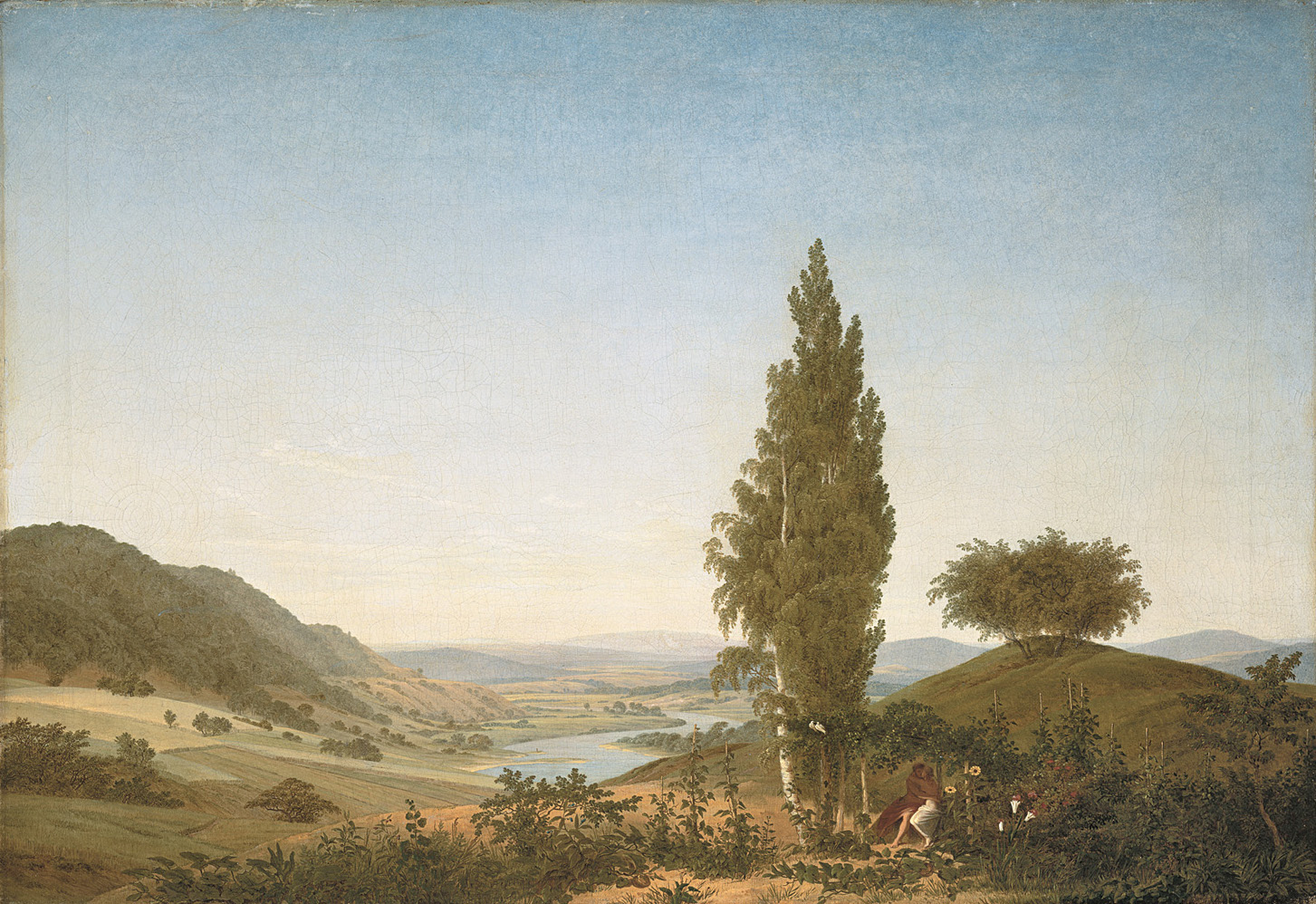
Der Sommer (Landschaft mit Liebespaar) The summer (Landscape with lovers) by Caspar David Friedrich (1807)

Piano Sonata no.15 in D major Op.28 ‘Pastoral’ for piano (1801, Beethoven aged 30)

1. Allegro
2. Andante in D minor
3. Scherzo: Allegro vivace
4. Rondo: Allegro ma non troppo

Dedication Count Joseph von Sonnenfels
Duration 25′

Listen

written by Ben Hogwood

Background and Critical Reception

The fourth piano sonata from Beethoven in the year 1801 is every bit as remarkable as the other three. Having experimented with free forms in the two three-movement works labelled ‘quasi una fantasia’, Beethoven reverts to what initially seems a traditional four-movement format.

In spite of the quiet beginning to the Pastoral, however, commentators are quick to note its poetic qualities and the more radical aspects of its design. Angela Hewitt calls it ‘one of the most beautiful of all beginnings’, observing that the work gained its nickname through a publisher’s reference to the bagpipe-like drones from the start.

‘In the first movement, though it is outwardly so tranquil and friendly, Beethoven is still concerned with construction and conciseness’, writes Hewitt. The contemporary composer Carl Czerny described it as one of Beethoven’s own favourite pieces – and especially the second movement Andante, a solemn march-like movement.

András Schiff is also fulsome in his praise. ‘This is a work that pulsates, it’s full of inner voices, opens up huge spaces of sound, and yet does without any dramatic outbursts throughout’. He draws out several anticipations of Schubert in the third movement, particularly in the way ‘the trio wavers between major and minor’.

On the finale, he writes, ‘To me, the finale has traces of a barcarolle, even though it’s constructed as a genuine sonata-rondo’. Hewitt says how Beethoven ‘preferred a bravura ending…it’s as if he can’t contain his joy’. In conclusion she writes, ‘Beethoven’s love of nature is well documented, and it was his most comforting source of nourishment. In this Pastoral sonata he seems to express his thankfulness for all it gave him’.

Thoughts

If anyone asks you for a definition of serenity in music you could easily play them the first minute of Beethoven’s Pastoral sonata. This is a lovely passage of music, every bit as calm as the close of the Moonlight sonata was turbulent. Yet as the first movement progresses it is clear this is not light music, for as Angela Hewitt observes Beethoven brings in several motifs that contrast with the flowing main subject, helping us appreciate it all the more.

The second movement switches to the minor key and spends more time in the shadows as a result, a slow-ish dance with a steady, march-like tread that gradually reels the listener in. The third movement throws off the shackles and also shows off how Beethoven could make musical motifs out of almost nothing. It is simply a set of repeated F# notes in different octaves of the piano, but is made into a humourous phrase that carries a true scherzo.

The finale brings in reminders of the opening with its flowing discourse, almost like running water, with music of pure exuberance. Again the tune is deceptively simple, but it travels through some impressive and pretty complex development, which can be seen if the listener examines closely – but is not essential to enjoyment.

Small wonder that the Pastoral is one of Beethoven’s most popular piano works. It has an enduring happiness made all the more remarkable given the composer’s health issues at the time, but it shows – as all the sonatas of 1801 do – a renewed mastery of the piano and its power to express.

Recordings used and Spotify links

Emil Gilels (Deutsche Grammophon)
Alfred Brendel (Philips)
András Schiff (ECM)
Angela Hewitt (Hyperion)
Paul Badura-Skoda (Arcana)
Stephen Kovacevich (EMI)
Igor Levit (Sony Classical)
Claudio Arrau (Philips)
Daniel Barenboim (Deutsche Grammophon)

Pianists clearly love this work, and among the very fine versions it was difficult to deviate from the versions by Gilels, Brendel, Schiff and Daniel Barenboim. Paul Badura-Skoda also radiates pure enjoyment in his version using a Viennese piano of the time.

You can hear clips of Hewitt’s recording at the Hyperion website

You can chart the Arcana Beethoven playlist as it grows, with one recommended version of each piece we listen to. Catch up here!

Also written in 1801 Cramer Piano Sonatas Op.25

Next up String Quintet in C major Op.29

Live review – English Symphony Orchestra / Kenneth Woods: Mahler Symphony no.9

mahler-9-woods

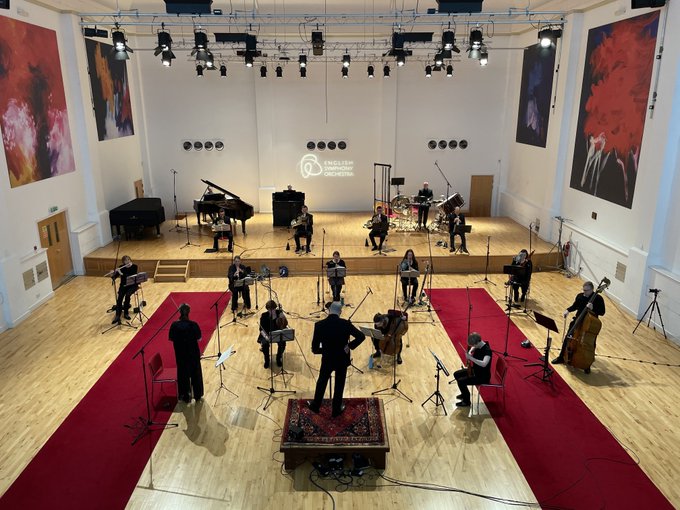
Members of the English Symphony Orchestra / Kenneth Woods

Mahler arr. Simon Symphony no.9 in D major (1908-10, arr. 2011)

Wyastone Concert Hall, Monmouth
Recorded March 23-25 2021 for online broadcast, premieres 7 July 2021

Written by Richard Whitehouse

The chamber reductions of orchestral works, as pioneered by the Society for Private Musical Performances founded by Schoenberg after the First World War, has gained renewed impetus these past 15 months given the unfeasibility of full-scale performances. Few can have been as ambitious as Mahler’s Ninth Symphony – arranged by pianist and conductor Klaus Simon for an ensemble of single strings and woodwind (with doublings), two horns, trumpet, percussion (one player), piano and harmonium; its textural and motivic content thereby remaining intact.

This is evident in the opening Andante, arguably Mahler’s most perfectly realized symphonic movement, whose formal trajectory of interlocking arcs is made explicit so that its long-term expressive intensification and release become no less tangible. To this end, the roles of piano and harmonium are much more than the mere filling-out of texture – respectively articulating and reinforcing the harmonic profile through to a coda which more than usually clinches the overall tonal journey with a serenity the more poignant for its remaining, as yet, unfulfilled.

The ensuing Ländler was no less lucid in terms of its unfolding, Kenneth Woods resisting any temptation to play up the emotional contrasts across a movement whose deceptive blitheness of spirit is only gradually undermined (and a quality this music shares, doubtless unbeknown to the younger composer, with Ravel’s La valse). Equally significant is the way that Simon’s arrangement discreetly emphasizes disparities of timbre and texture, on the way to a closing section where the music only too audibly fragments into a bemused parody of how it began.

More questionable is the Rondo-Burleske – Woods’s underlying tempo for the outer sections, while enabling the music’s contrapuntal intricacy to emerge unimpeded, feeling too dogged to convey its frequently assaultive manner to the degree that the composer surely intended. This is less of an issue in a trio section whose aching regret was potently conveyed, with the stealthy regaining of tension no less in evidence. Animated and accurate, this final section again lacked that seething energy which propels the movement towards its anguished close.

No such questions affect the final Adagio – only equivocally conclusive now that the Tenth Symphony has all but been accepted into the Mahler canon, yet remaining a test of all-round cohesion such as this account rendered with unwavering conviction. Having thus gauged the balance between its alternate paragraphs, Woods assuredly controlled the winding down of tension towards a coda of inward rapture despite its sparseness of gesture – while affording the speculative dialogue between solo strings the necessary temporal and emotional space.

It hardly needs to be said that the playing of this 15-strong ensemble drawn from the English Symphony Orchestra was consistently attuned to the spirit of this music – as, too, is Simon’s methodical and apposite arrangement. Whether such reductions can continue to be relevant in the (presumed) aftermath of the pandemic, it would be a pity were these not to enjoy revival in their own right: revival, moreover, out of aesthetic rather than just didactic considerations, as this impressively conceived and executed rendition demonstrated to often moving effect.

You can watch the concert on the English Symphony Orchestra website here

Further information on Klaus Simon is here, while for further information on the Music from Wyastone series, you can click here. ‘Fiddles, Forests and Fowl Fables’ is now available from the English Symphony Orchestra Website.

Listening to Beethoven #169 – Piano Sonata no.14 in C sharp minor Op.27/2 ‘Sonata Quasi una fantasia’ (‘Moonlight’)

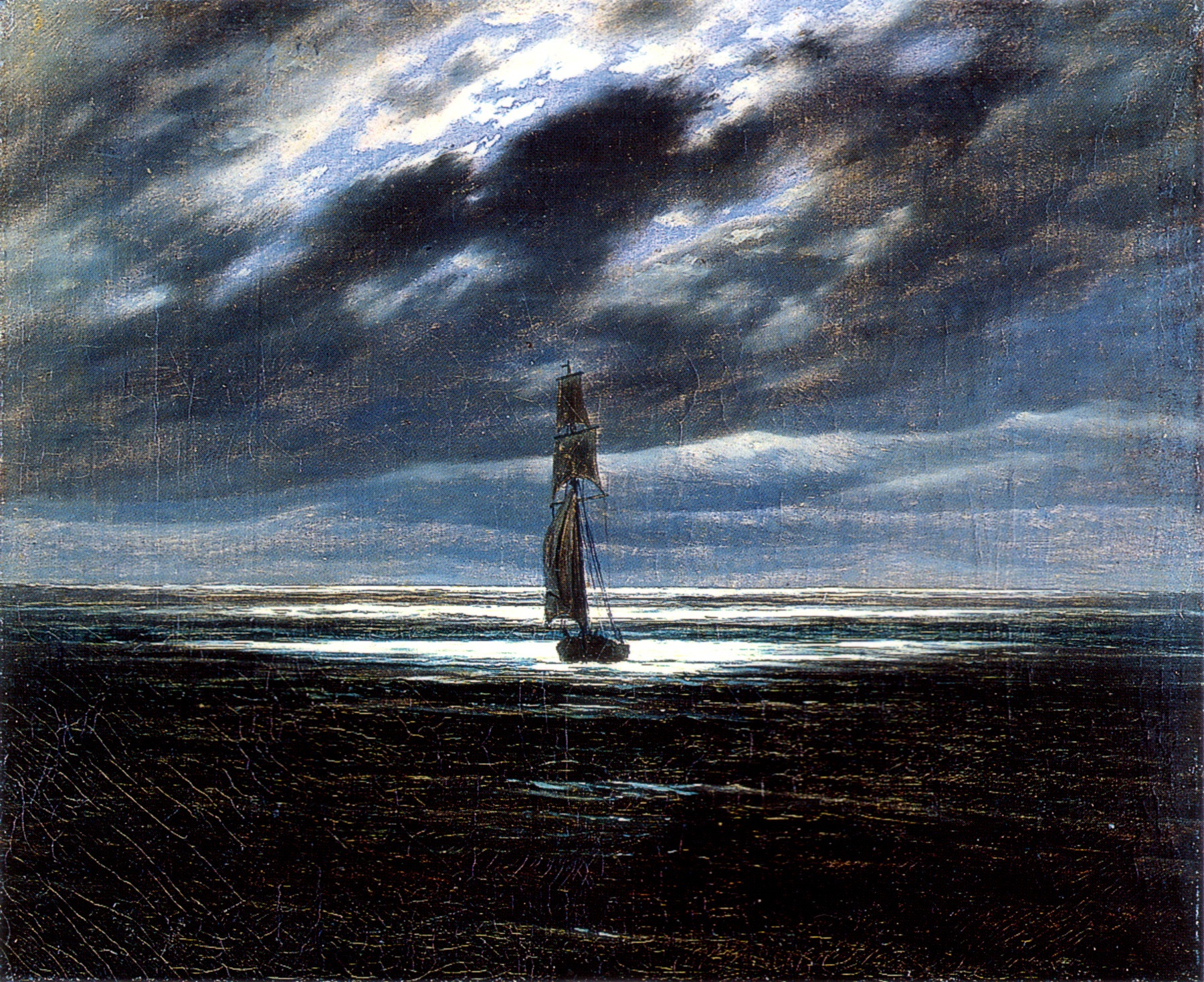
Seascape by Moonlight) by Caspar David Friedrich (c1835)

Piano Sonata no.14 in C sharp minor Op.27/2 ‘Quasi una fantasia’ (‘Moonlight’) for piano (1801, Beethoven aged 30)

1. Adagio sostenuto
2. Allegretto
3. Presto agitato

Dedication Countess Giulietta Guicciardi
Duration 16′

Listen

written by Ben Hogwood

Background and Critical Reception

And so we reach one of the most famous pieces in classical music. The second of Beethoven’s Op.27 sonatas, the Moonlight is the second piece to be published with the qualifying title of Sonata quasi una fantasia, reminding us of Beethoven’s intention to move away from the conventional sonata form.

He did not provide the Moonlight nickname, which was suggested by poet and critic Ludwig Rellstab. For him the first movement represented ‘a boat, visiting, by moonlight, the primitive landscapes of Lake Lucerne’. The dedication, to Countess Giulietta Guicciardi, has prompted much speculation – but although Beethoven was in love with her at the time, the dedication, as Angela Hewitt writes, was ‘an afterthought when another piece he had dedicated to her had to be given to somebody else’.

Critics and musicologists note the power of Beethoven’s writing, from the restraint of the first movement to the turbulent storm of the finale. In between these two lies a balletic central movement set in the major key, described by Liszt as ‘a flower between two abysses’. When it comes to the famous opening movement, Hewitt writes about the importance of refreshing the sustain pedal with each bass note on a modern piano, to avoid clouding the harmonies. On an older instrument this would not be necessary, but ‘the most important thing’, she says, ‘is to capture a magical mood’. But then, ‘all hell breaks loose in the final Presto agitato’.

It was not long before Beethoven was tiring of the airtime his most famous piece was getting. ‘People are always talking about the C sharp minor Sonata’, he said. ‘Really, I have written better things!’

Thoughts

What is there left to say about the Moonlight sonata that hasn’t been said already? It is surely one of the most written-about pieces in musical history, and certainly one of the most famous piano pieces there is – made all the more accessible because the relative beginner can play its most famous theme.

Yet the Moonlight sonata is a vital cog in the 32-strong output of Beethoven’s published piano sonatas. It is another step away from the classical tradition towards a free and much more emotive approach, and it could even be said to contain the first notes of the so-called ‘Romantic’ period in classical music.

It is Beethoven’s first published piece in C sharp minor, a key Mozart did not use for a single published work, and Haydn very little. That is perhaps part of why the music sounds so striking from the start, when the bare arpeggios set the nocturnal scene. No matter how slowly this passage is played it is laden with feeling, and the enchanted atmosphere only deepens as the music progresses.

The second movement is a beautiful contrast, a poised and relatively carefree dance with an attractive lilt. It is the light to the first movement’s shade and points towards something more positive…until we arrive at the gates of the last movement. What an incredible passage of music this is, especially in concert, where you get to witness the pianists’ arms whirring up and down the keyboard as the whirlwind arpeggios take effect. With the suddenly loud interjections from the first movement it must have had an alarming impact on its first audience, by far the most dramatic sonata they had seen. The enchantment of the first movement had been swapped for something altogether more terrifying.

How remarkable that Beethoven could write such music as part of a piano sonata, scaling emotions and technical feats that were out of bounds. Yet it all works within those confines, with music of great tension and drama that is somehow wrapped up in 15 minutes. The composer has scaled new heights.

Recordings used and Spotify links

Emil Gilels (Deutsche Grammophon)
Alfred Brendel (Philips)
András Schiff (ECM)
Angela Hewitt (Hyperion)
Paul Badura-Skoda (Arcana)
Stephen Kovacevich (EMI)
Igor Levit (Sony Classical)
Claudio Arrau (Philips)
Rudolf Serkin (Sony)

Paul Badura-Skoda is very subdued in the first movement but gets the level of sustain just right, helped by his 1790 Viennese instrument. The second movement is a bit laboured, but the third tears along. Sir András Schiff, playing a dfgd, is a full 100 seconds quicker than Emil Gilels in the first movement, a little rushed for some tastes – while Gilels creates an atmosphere where the listener hangs on every note.

Angela Hewitt finds a really nice turn of phrase in the second movement, with a balletic poise, while interpretations of the third movement range from a race to the finish to a stark evocation of terror. Both Hewitt and Schiff are terrific with the dynamic contrasts.

You can hear clips of Hewitt’s recording at the Hyperion website

You can chart the Arcana Beethoven playlist as it grows, with one recommended version of each piece we listen to. Catch up here!

Also written in 1801 Field Piano Sonata in C minor Op.1/3

Next up Piano Sonata no.15 in D major Op.28 ‘Pastoral’

In concert – Jonathan Martindale, CBSO / Michael Seal: Summer Classics

michael-seal

Jonathan Martindale (violin, below), City of Birmingham Symphony Orchestra / Michael Seal (above)

Dvořák Carnival Op.92 (1891)
Vaughan Williams
The Lark Ascending (1914/20)
Elgar
Chanson de matin Op.15/2 (1889)
Grieg
Peer Gynt Suite no.1 Op.46 (1875/88) – no.1, Morning; no.4, In the Hall of the Mountain King
Mendelssohn
A Midsummer Night’s Dream Op.21 (1826)
Vivaldi
The Four Seasons Op.8 (1718/20) – no.2 in G minor RV315 ‘Summer’
Price
Symphony no.1 in E minor (1931-2) – Juba Dance
Tchaikovsky
The Nutcracker Op.71 (1892) – Waltz of the Flowers

Symphony Hall, Birmingham
Friday 2 July 2021 (2pm)

Written by Richard Whitehouse Photo of Jonathan Martindale courtesy of Upstream Photography

The penultimate event in the City of Birmingham Symphony Orchestra’s current season, this afternoon’s Summer Classics featured a wide-ranging selection of pieces that between them spanned over two centuries, and whose ‘feel good’ factor at no time precluded stylish or committed playing.

With longstanding associate director Michael Seal at the helm, the orchestra made the most of Dvořák’s effervescent Carnival overture; the alluring pathos of its central interlude accorded due emphasis, and with some eloquent woodwind solos. Its popularity during recent years has made Vaughan Williams’s The Lark Ascending a regular inclusion in such programmes, and Jonathan Martindale (below, who also led the concert) gave a thoughtful while never flaccid reading – most perceptive in the middle section with its folk-like whimsy and fanciful evocations of birdsong. The CBSO responded with limpid dexterity, the whole performance a reminder that this work is best tackled as a concertante piece and by a player (recalling such as Hugh Bean, Iona Brown and, more recently, Richard Tognetti) who knows the orchestra from the inside.

Next came an ingratiating take on Elgar evergreen Chanson de matin, then excerpts from the First Suite of Grieg’s incidental music to Peer Gynt – a rapturous Morning and stealthy In the Hall of the Mountain King skirting headlong terror at the close. Mendelssohn’s overture to A Midsummer Night’s Dream made for an unlikely but effective centrepiece – the highlight being those fugitive imaginings towards its centre, along with the disarming eloquence of its final bars where the teenage composer conjures a fulfilment he was only rarely to recapture.

The Summer concerto from Vivaldi’s The Four Seasons again saw Martindale as soloist in an account that lacked little of that rhythmic vitality his contemporaries (notably Bach) seized on with alacrity; nor was there any absence of poise in its atmospheric second movement. One who has come in from the cold partly through the recovery of her manuscripts, Chicago-based Florence Price broke with convention by introducing the Juba Dance into her symphonies in lieu of a scherzo; the CBSO responding in full measure to its rhythmic verve. A winning harp solo from Katherine Thomas launched Waltz of the Flowers from Tchaikovsky’s ballet The Nutcracker and ended the main programme in fine style – Seal and the CBSO acknowledging the applause with the final ‘galop’ from Rossini’s William Tell overture as a dashing encore.

Throughout the concert, film expert Andrew Collins interspersed proceedings with his remarks and recollections (not least on that seminal 1970s supergroup The Wombles). The music itself was accompanied by varying shades and colours of lighting, but these rarely seemed intrusive – not least compared to the garish ‘Moulin Rouge’ effects routinely encountered nowadays at the Proms. Certainly, anyone in the process of getting the know just what classical music was all about, and those merely in search of a pleasurable afternoon’s listening, were well served.

Next Wednesday brings the last in this current series of concerts, the CBSO being conducted by Joshua Weilerstein (who is replacing an ‘unable to travel’ Edward Gardner) in an enticing programme of Judith Weir, Prokofiev (with the violinist Alina Ibragimova) and Beethoven.

You can find information on the final concert in the CBSO’s season at their website. For more information on composer Florence Price, click here