In concert – English Music Festival Day Four: Gareth Brynmor John & Christopher Glynn; Roderick Williams & Michael Dussek; Ensemble Hesperi

banner-2019-text-D2861E

11.00am – Songs by Bax, Delius, Moeran and Warlock
Gareth Brynmor John (baritone); Christopher Glynn (piano)

2.30pm – Songs by Finzi, Gurney, Parry and Stanford
Roderick Williams (baritone); Michael Dussek (piano)
String Quartet music by Delius, Holst and Parry
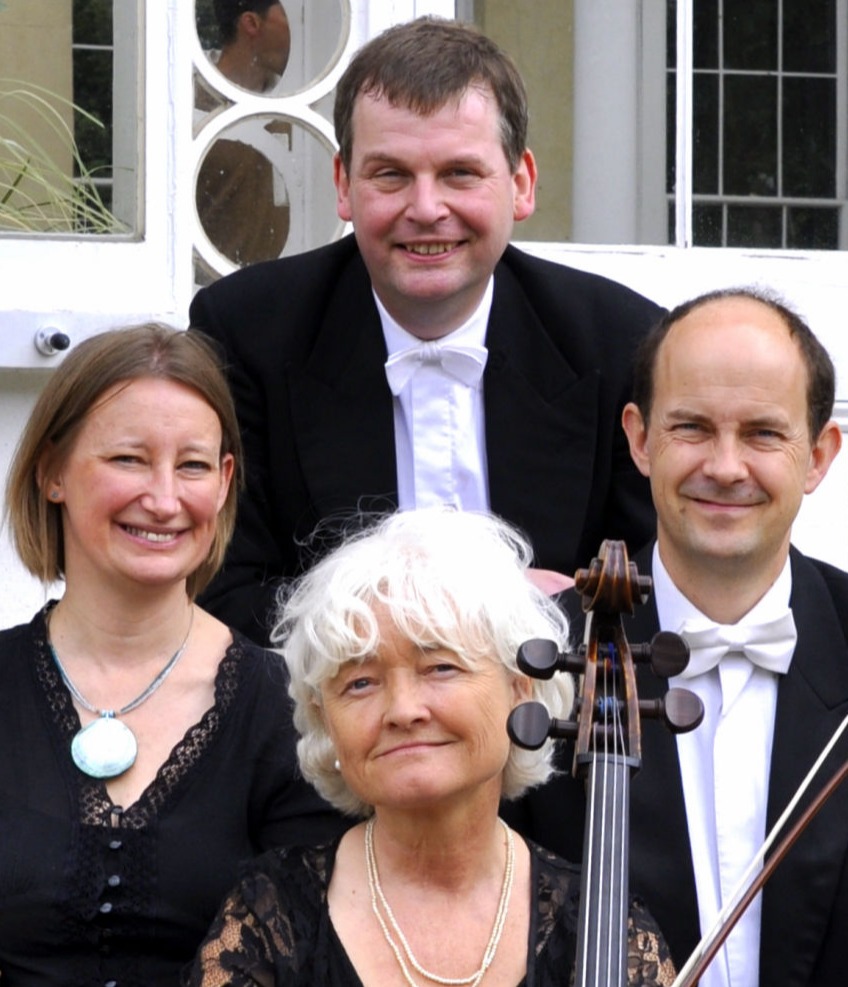
Bridge Quartet [Colin Twigg, Catherine Schofield (violins), Michael Schofield (viola). Lucy Wilding (cello)]

7.30pm – Eighteenth Century music from London and Edinburgh
Ensemble Hesperi [Mary-Jannet Leith (recorders) Magdalena Loth-Hill (Baroque violin), Florence Pitt (Baroque cello), Thomas Allery (harpsichord)]

St Mary’s Church, Horsham, Sussex
Monday 31 May

Written by Richard Whitehouse

It may have operated under ongoing conditions brought about by the need of social distancing in the (hopefully) last stages of the pandemic, but this fourteenth edition of the English Music Festival was no less successful because of it. Indeed, the decision to hold most of these events at St. Mary’s Church in Horsham, following on from the notably successful Christmas season last year, saw a focus on vocal and instrumental music that brought a wealth of unfamiliar or neglected pieces into the spotlight, with an informal atmosphere transcending the restrictions.

The final day’s activities began with a recital by Gareth Brynmor John (above) and Christopher Glynn, dominated by an overview of songs by Peter Warlock (Philip Heseltine) – not unreasonably so, given the variety of his response to a bewildering range of English verse. Almost all the phases and styles of his writing were featured – from such gauche but endearing songs as A Lake and A Fairy Boat, through such striking items as Mourn no more and Sweet Content, to the plethora of songs from 1922 (equivalent to Schubert’s 1815) of which The Bachelor and Sleep are just two of the most striking. Also here were several of Warlock’s ‘send-ups’ such as Mr Belloc’s Fancy and the Moeran collaboration Maltworms, whereas his stark setting of Bruce Blunt’s The Fox typifies that enveloping introspection Warlock was unable to escape.

Brynmor John was a sensitive guide to this music, Glynn no less sensitive in accompaniment. Interspersed among the Warlock were settings by composers who influenced him at various stages – hence Five Songs from the Norwegian where Delius takes the lyrical idiom of Grieg as a starting-point for his own increasingly personal expression, and four songs by Bax – not least the statement of identity that is To Eire and the wistful rumination of The White Peace – that remind one of the importance of this genre during his formative years. Most distinctive, though, were Moeran’s Seven Poems by James Joyce whose understatement, even reticence belies the keen formal subtlety or the expressive acuity brought to some frequently taciturn verse, and which were rendered with considerable insight by these finely attuned musicians.
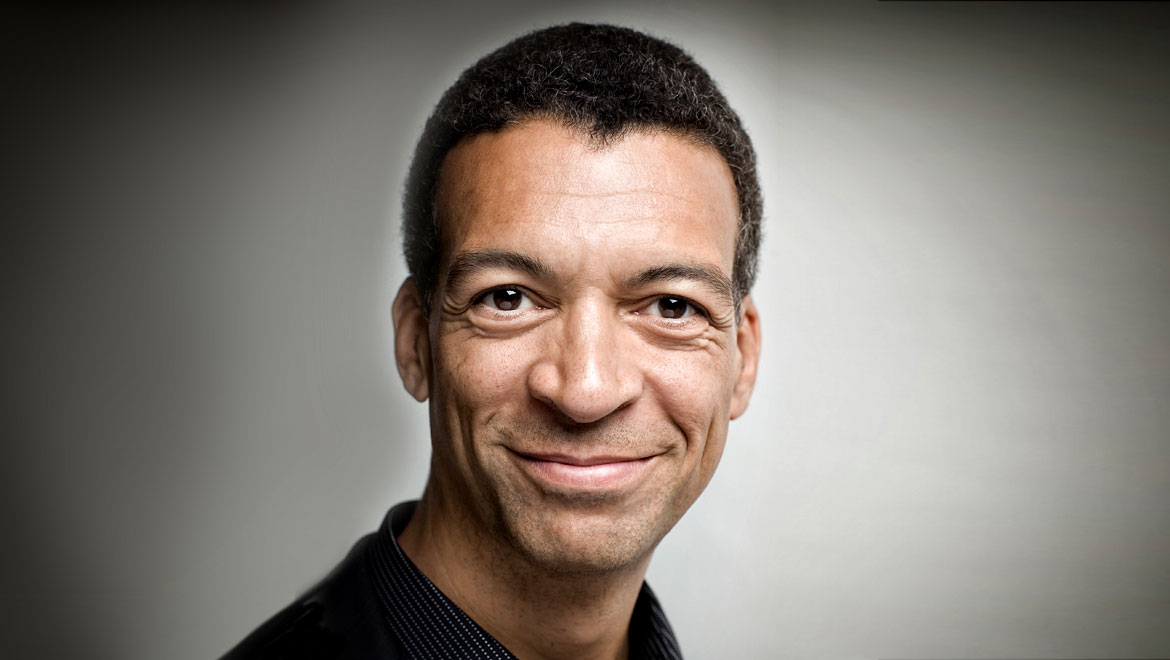
The afternoon recital brought an equally wide-ranging programme from Roderick Williams (above) and Michael Dussek, opening with Three Poems by Robert Bridges as find Stanford’s word-setting at his most mellifluous and unaffected. Three often animated items derived from his Seventh Set of English Lyrics were a reminder that Parry made no less a contribution to the song than to the choral and chamber genres. Interspersed between these groups, Holst’s still little-known yet ingenious Phantasy on British Folk-Songs saw a trenchant response by the Bridge Quartet (below), but the Scherzo from Parry’s Third Quartet required a defter approach. The first half ended with I said to Love – last of Finzi’s song-cycles with texts by Thomas Hardy, whose eponymous final song summoned an eloquent response from Williams and Dussek.
After the interval, the Bridge Quartet returned for the slow movement – aka Late Swallows – from Delius’s solitary mature String Quartet. This made for a tranquil if by no means passive entree into the second of Gurney’s song-cycles after A. E. Housman, The Western Playland. The eight songs traverse a wide expressive range, with such as a limpid setting of Loveliest of Trees and a purposeful take on Is my Team Ploughing radically different in manner yet comparable in quality to those by Butterworth or Vaughan Williams. If the forced jollity of the initial Reveille strikes a jarring note, the final March conjures a luminous poise as is enhanced by its instrumental postlude. Having made the definitive recording (EMRCD065), Williams and Dussek conveyed this music’s often plangent emotion with unwavering resolve.
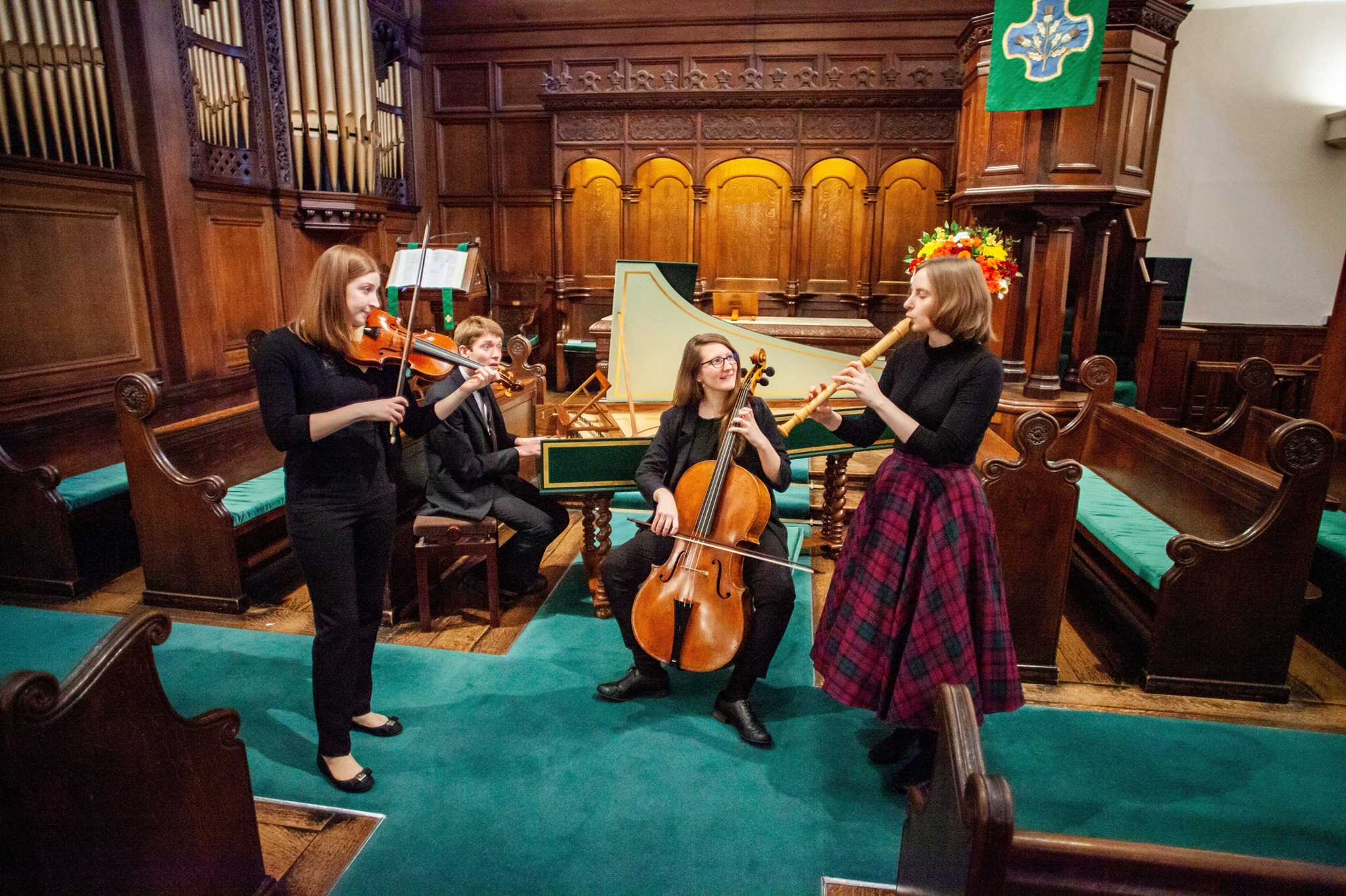
The evening recital saw a welcome return of Ensemble Hesperi (above) for an enterprising selection from the Baroque and early Classical eras, drawn from those musical centres of London and Edinburgh. Alongside trio sonatas by Purcell, Geminiani and Handel – also the latter’s Third Harpsichord Suite – came extracts from the compendious Airs for the Seasons by Fife-born James Oswald, the Second Harpsichord Suite by Londoner Abiel Whichello, a chromatically questing Solo Violin Sonata in B minor from Birmingham musician Barnabus Gunn and the rhythmically engaging Variations on a Scots Theme by the Edinburgh-born publisher Robert Bremner. All rendered with agility and resource by these excellent musicians, and a welcome ending to the festival for those staying in Horsham or able to take a late train back to London.

The Fifteenth Edition of this festival is scheduled for next May 27th-29th, with venues once again around the imposing edifice of Dorchester Abbey in Oxfordshire. Beforehand, events at Truro in July and an autumn weekend in Horsham are sure to keep the EMF before the public.

Further information on English Music Festival performances and recordings can be found at their website
Switched On – GusGus: Mobile Home (Oroom)

gus-gus

reviewed by Ben Hogwood

What’s the story?

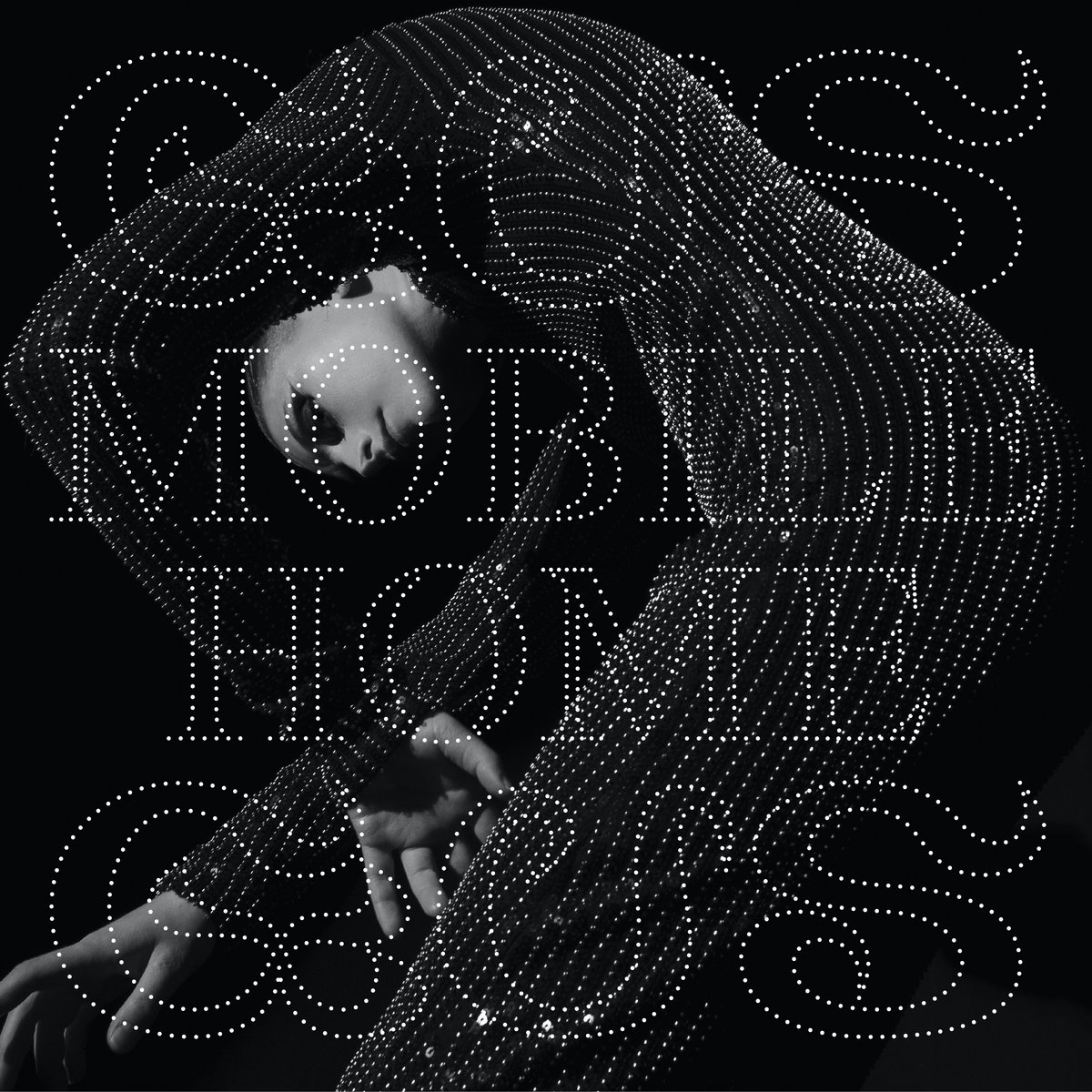
Icelandic band GusGus are electronic music royalty, but although Mobile Home is their eleventh studio album, it is the first one for three years. In keeping with the band’s fluid personnel roster, they welcome fellow-Icelandic singer Margrét Rán, from Reykjavík band VÖK – and chart a quarter of a century making music as they do so.

This album has a concept – the mobile home in question is Earth, but it is a futuristic world run by machines, a concept not too difficult to grasp as the advance of technology hurtles ever onwards. The main protagonist is experiencing very strong feelings of disconnection with the world, sharpened by lengthy bouts of solitude and alienation – again, a concept we can all identify with in some way after the events of the last year and a half.

What’s the music like?

Moody, but typically concentrated. The challenge for GusGus is to portray the heightened feelings of their concept without losing sight of their club roots, especially given the fact that most nightclubs remain resolutely shut. For much of Mobile Home they succeed in their aim, as the familiar cool beats and unhurried keyboard lines teaming up to great effect.

Higher is terrific, a solid four to the floor beat backing Rán’s continued assertion that ‘I need to get higher’, with pulsing keyboards swirling around like dry ice. Simple Tuesday is cut from similar cloth and written in the same key – as is Our World. On both tracks the vulnerable lyrics are now at odds with the heady music, creating a powerful and unresolved tension which is heightened by the offbeat stress in the latter track, where Rán and Daníel Haraldsson duet effectively.

Does it all work?

It does, but with considerably more tension and with a less instinctive approach than previous albums Lies Are More Flexible, Mexico and Arabian Horse. This time the lyrical content and vocals do not feel quite as inspired, though they do realise the album’s concept very effectively. Much of the album is at the same pitch – G – which may be a tactic to portray the feelings of isolation, but the ‘tingle factor’ is less than on each of the three albums mentioned above. That said, there is still plenty to enjoy, the beats are sleek and the keyboard lines effortlessly cool.

Is it recommended?

Yes. Mobile Home might not carry as much of a punch as some previous GusGus releases but it still has plenty to commend it.

Stream

Buy

You can listen to clips from Mobile Home and purchase via the Kompakt website


Live review – Ealing Symphony Orchestra / John Gibbons: Stanford: Symphony no.6

ealing-symphony-orchestra

Ealing Symphony Orchestra / John Gibbons

St Barnabas Church, Pitshanger Lane, London

Broadcast Thursday 10 June 2021, available online

Stanford Symphony no.6 in E flat major Op.94 ‘In honour of the life-work of a great artist: George Frederick Watts (1905)

Written by Ben Hogwood

Next year will be the centenary of the independent Ealing Symphony Orchestra, one of the leading voluntary ensembles in London. In more recent years the group have built a reputation for deviating from ‘normal’ repertoire, and their return from a tortuous year-and-a-half of lockdown saw an immediate return to that approach.

It came in the form of a welcome reappraisal of the Sixth symphony of Charles Villiers Stanford. Stanford occupies a godfather-like position in British music, credited with the instruction of many leading composers (Vaughan Williams, Holst, Coleridge Taylor and Ireland to name but a few), but his music tends to be admired rather than deeply loved. Stanford acknowledges the influence of continental Romantic composers in his music, with hints of Mendelssohn, Brahms and Wagner to be found, but in the course of this symphony closer parallels emerge to the music of Elgar, whose own first symphony was still three years away.

Conductor John Gibbons gave a heartfelt introduction from the podium at St Barnabas Church, where the orchestra are based, and the online pictures illustrated a wide spacing between the instruments, with many players wearing masks. Through necessity the strings were further apart, the cellos particularly far back, with the brass on the conductor’s far left. None of these unconventional placings harmed the performance, however, and there was a very strong sense of joyful homecoming, the opening of a new chapter.

physical energy

A good deal of this was due to Stanford’s music. The sixth symphony celebrates sculptor and artist George Frederic Watts, and in the first movement takes inspiration by Watts’ Physical Energy sculpture, now in Hyde Park (above, picture by David Hawgood). Stanford begins with the most positive and exultant music, played with appropriate gusto here. There were occasional lapses in the strings’ turning early on, but it bears remembering that amateur players in particular have been devoid of ensemble practice for so long, and such moments are inevitable as part of the ‘reawakening’ process. In any case the music powered forward with increasing conviction, its prevailing mood of strength and resolve in keeping with the players’ emergence from lockdown. A particularly fulsome solo from the orchestra’s leader (uncredited) was in keeping with the sunny disposition all around.

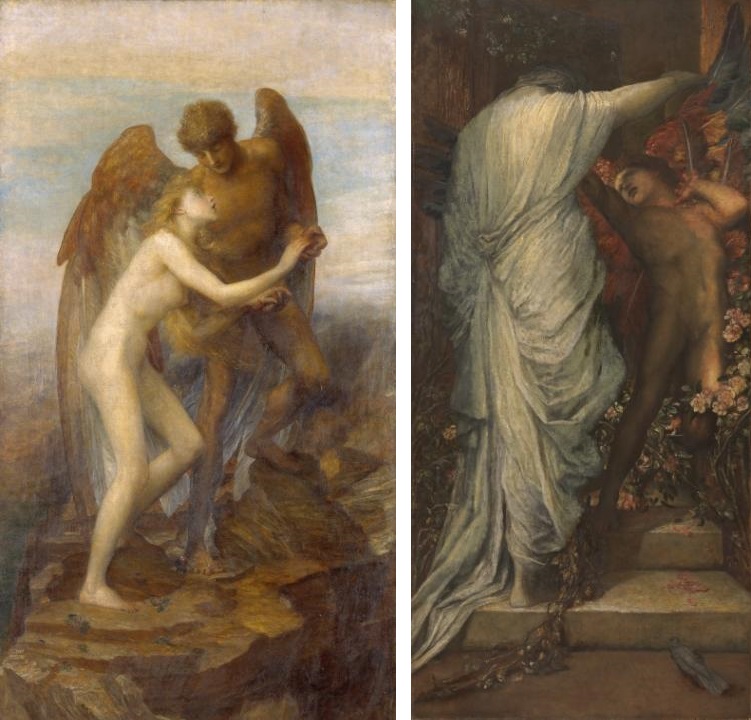
Love and Life c.1884-5 by George Frederic Watts 1817-1904

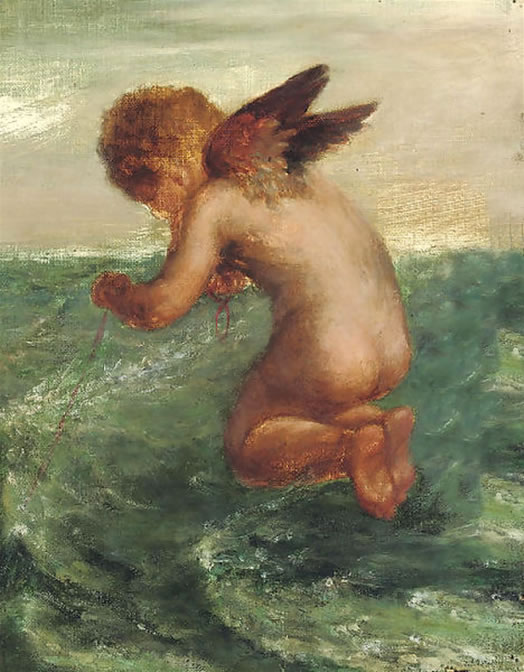
The heart of Stanford’s Sixth lies in the slow movement, where a soulful cor anglais solo sets the tone but long phrases were expertly paced towards the big climax. Based on Watts’ paintings Love and Life and Love and Death (both above), there was an appropriate romanticism near the surface throughout. The scherzo of light and shade was elusive, portraying the movement of water as depicted by Watts in Good Luck to your Fishing (below).

Good_Luck_to_your_Fishing_by_George_Frederick_Watts
This third movement would have benefited from a bit more rhythmic definition, but was still a n engaging account, especially as Gibbons plotted a smooth transition to the finale, where the drama heightened further. The venue proved its worth here, with just the right amount of reverb – and as all passion was spent towards the end the music slowed slightly, giving plenty of room for some excellent woodwind playing.

This was a fine and extremely enjoyable performance, passionate and concentrated – a persuasive advocate for Stanford’s music. His voice is all too seldom heard in this country, but performances like this ought to ensure greater coverage. It was the ideal choice for the Ealing Symphony Orchestra to reassert their identity after lockdown, and the enthusiasm and optimism throughout were uplifting. Watch it if you can.

For more information on the Ealing Symphony Orchestra’s return from lockdown on Saturday 10 July, and further events, visit the orchestra website

In concert – Ian Bostridge, CBSO / Michael Seal: Britten Nocturne & Malcolm Arnold Symphony no.5

michael-seal

Ian Bostridge (tenor), City of Birmingham Symphony Orchestra / Michael Seal (above)

Britten Nocturne Op.60 (1958)
Arnold Symphony no.5 Op.74 (1961)

Symphony Hall, Birmingham
Wednesday 9 June 2pm

Written by Richard Whitehouse

It may have been centred on ‘England’s dreaming’, but there is surely a future for such astute juxtapositions of works by British composers as that heard in this latest concert by the City of Birmingham Symphony Orchestra; two pieces separated by just three years but poles apart stylistically.

The fourth and last of Britten’s orchestral song-cycles, Nocturne is a sequence with emphasis very much on the cyclical aspect. Its eight settings each features an obbligato instrument heard alongside string orchestra, the tenor adopting a flexible arioso manner with which to deliver a range of texts across centuries of English poetry. After a somnolent initial setting of Shelley – strings introducing a spectral rhythmic figure acting as a ritornello across the work – the bassoon emerges for an ominous setting of Tennyson, then the harp for a jejune rendering of Coleridge.

Notably restrained with his characterization thus far, Ian Bostridge upped the expressive ante when horn came to the fore in an evocative treatment of Middleton; the more so as timpani entered for Wordsworth’s troubled verses on the aftermath of revolution. Accrued tension spilled over to a plangent setting of Owen with cor anglais in attendance, then flute and clarinet joined the voice in a rapt take on Keats. All seven instruments duly reappeared for the final setting of Shakespeare – complementing tenor and strings when they arrived at a barely tangible repose.

Throughout, Michael Seal was typically alert and sensitive in accompaniment – before letting the CBSO off its collective leash for Malcolm Arnold’s Fifth Symphony. If not the finest of his cycle (which accolade would likely go to the Seventh), the Fifth is the most representative in its disjunct contrasts and fraught emotions – not least in an opening Tempestuoso whose pivoting between stark irony and consoling empathy results in several assaultive climaxes as were fearlessly delivered. In his pointedly succinct note for the premiere, Arnold confessed himself ‘‘unable to distinguish between sentiment and sentimentality’’ – a disingenuity that made possible the Andante with its aching main melody and soulful secondary theme which between them engender a baleful culmination before the earlier raptness is fitfully regained.

In his unequalled 1973 recording with this orchestra, Arnold secured playing of transcendent poise from the strings in this movement, but Seal was not far behind in the sustained intensity he drew from the present-day CBSO. Nor was there any lack of sarcasm in the scherzo which follows – wind and brass exchanging gestures either side of the clarinets’ freewheeling tune in the trio, then an abrasively confrontational coda. It remains for the Risoluto finale to attempt a summation with elements from the earlier movements thrown together in an atmosphere of martial volatility; climaxing in a restatement of the slow movement’s main theme resplendent but, ultimately, futile – the music collapsing into a void in which bells echo forlornly against fading lower strings. The CBSO imbued these closing minutes with truly graphic immediacy.

This instructive and cathartic programme brought a (rightly) enthusiastic response from those present. Next week features another British symphony, the first by Thomas Adès, alongside music by Purcell and Mozart for what should be a no less provocative and absorbing concert.

For further information about the CBSO’s current series of concerts, head to the orchestra’s website

For further information about the next concert of Purcell, Mozart and Adès on Wednesday 16 June, click here, and for more on Sir Malcolm Arnold you can visit the website dedicated to the composer.

Switched On – Feiertag: Time To Recover (Sonar Kollektiv)

feiertag

reviewed by Ben Hogwood

What’s the story?

Dutch musician Joris Feiertag has a number of impressive disciplines on his CV, from drumming and production, but until now he had not delivered a long player. Time To Recover puts that right, released on Jazzanova’s Sonar Kollektiv label, and on the evidence of the music artist and imprint are an ideal match.

The 50-minute album has 16 tracks, three of which are cinematic interludes showing off Feiertag’s musical versatility. This extends to the songs themselves, a mixture of instrumental and vocal numbers. Guests include Tessa Rose Jackson, Oli Hannaford, Pete Josef and James Alexander Bright.

What’s the music like?

Cool and summery – ideal for a poolside soundtrack but never in danger of sinking into the background. That is because Feiertag’s songwriting and structures are tight, with plenty of riffs to hang on to and some bright, airy textures. The breezy It’s Alright is a lovely pop-infused number, an ideal match of James Alexander Bright’s vocals and the airy production. Yearn, meanwhile, is a softly affecting song where Tessa Rose Jackson and Oli Hannaford team up to pull the heartstrings. Jackson also features on Follow, a really nice bit of low-slung electro funk.

The instrumental Pretend shows off Feiertag’s ability to get a lovely blend of outdoor, blue sky vibes and intimate, indoor club music. There is a twist of jazz, too, a technique the excellent Saccharine uses more explicitly, constructing a sound and an approach Bonobo would be proud of.

The interludes are good but could easily be used as fully-fledged tracks themselves, especially the satisfying thrum of the flamenco guitar on Bilbao.

Does it all work?

Yes. Time To Recover doesn’t have any tracks worth skipping, the album hanging together logically and beautifully. Its hot weather vibes pull the listener in, while the vocal tracks are presented as meaningful songs. Only the interludes could do with extending further – which is a compliment in itself, as it is rare for a review to ask for a longer album!

Is it recommended?

Yes. Time To Recover is a summery album with a good deal of class.

Stream

Buy