In concert – Jess Gillam, CBSO / Jaume Santoja Espinós: Jess Gillam’s American Roadtrip

Jess-Gillam

Gershwin Cuban Overture (1932)
Villa-Lobos
Fantasia for Saxophone W490 (1948)
Copland
Danzón cubano (1942)
Milhaud
Scaramouche Op.165c (1937/9)
Copland
Appalachian Spring – Suite (1944/5)
Barber
Symphony No. 1, Op. 9 (1935-6, rev, 1942-3)

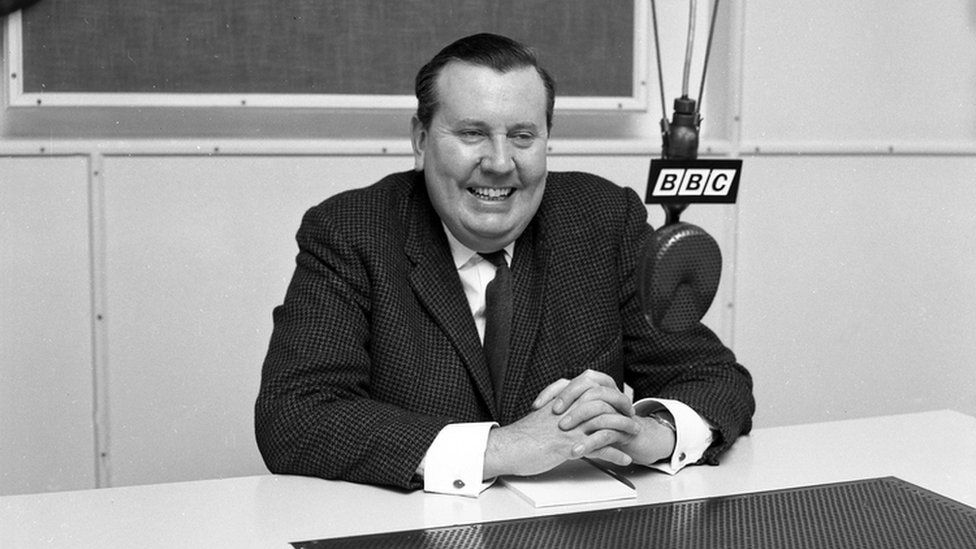
Jess Gillam (saxophones, above), City of Birmingham Symphony Orchestra / Jaume Santoja Espinós (below)

Symphony Hall, Birmingham
Wednesday 20 October 2021

Written by Richard Whitehouse

This evening’s concert by the City of Birmingham Symphony Orchestra took a break from ‘standard’ repertoire to focus on music by composers either American or with an American focus, in a programme which rung the changes to often vibrant and always appealing effect.

A familiar radio presence, Jess Gillam has already encouraged renewed interest in the music for classical saxophone, as her contributions amply demonstrated. Little heard in his lifetime, the Fantasia by Villa-Lobos is among those more modest creations of a composer known for his (over-reaching) ambition – its three short movements drawing animated and ruminative responses from the soloist enhanced by a restrained orchestration. Swapping soprano for the alto instrument, Gillam returned for Milhaud’s Scaramouche which was no less engaging in this arrangement than the original for two pianos; whether in its incisive opening movement, soulful central interlude or its final Brazileira which could hardly fail to provoke a response from orchestra and audience – the latter evidently appreciative of such an infectious display.

The CBSO captured the spirit of both pieces, thanks not least to former assistant conductor Jaume Santoja Espinós, who had opened the concert with Gershwin’s Cuban Overture – the percussion-clad exuberance of its outer sections a telling foil to the haunting pathos of those canonic textures at its centre. Copland’s Danzón Cubano can seem irritating in its rhythmic over-insistence, but Espinós brought an unsuspected wit and subtlety to this amalgam of coy nonchalance with an orchestration recalling Stravinsky’s forays into ‘crossover’ at this time.

Latin-American traits made way for those of a Europeanized East Coast after the interval, Espinós directing the suite from Copland’s Appalachian Spring with a cohesion as brought out expressive contrasts between the various sections without these becoming too episodic. The idealization inherent in this ‘Ballet for Martha’ can hardly be gainsaid, yet the chaste eloquence of its musical content came through no less affectingly – not least as the familiar ‘Variations on a Shaker Hymn’ subsided into the serene inevitability of the final evocation.

The highlight was a welcome revival for Barber’s First Symphony, whose continuous design marries Sibelian formal precision with that unabashed emotionalism closer to Russian music from this period, with a cumulative impact to its four-in-one trajectory which was palpably in evidence. From the stark foreboding with which it begins, through the relentless impetus of its ‘scherzo’ and consoling poise of its ‘slow movement’ (felicitous oboe playing by Emmet Byrne), to the inexorable force of its closing passacaglia, this was a performance to savour.

An eventful evening, then, and was more to come with a post-concert informal performance from the quintet El Ultimo Tango, familiar from its several recordings and here providing a 30-minute overview of Astor Piazzolla for what was a – necessarily – belated tribute in the year of his centenary. Those wanting a longer selection can hear this group at CBSO Centre next February, while the CBSO returns next week for a programme of mainly French music from conductor Kevin John Edusei with Kirill Gerstein in both of Ravel’s piano concertos.

Further information on the CBSO’s current season can be found at the orchestra’s website. For more on Jess Gillam, click here – and for more on El Ultimo Tango, here. For more information on Jaume Santoja Espinós, head to the conductor’s website

On the airwaves: Erland Cooper

For Saturday, a listening recommendation for you – from the very top of the British Isles. Thanks to the BBC you can spend half an hour on the Orkney islands right now, in the company of Erland Cooper.

The prolific Cooper has enjoyed a rich run of creativity since writing in a solo capacity about the island of his birth. A trilogy of albums based around the elements, begun with Solan Goose and working through Sule Skerry and Hether Blether, have themselves led to fruitful collaborations with the likes of Leo Abrahams, Hannah Peel and Paul Weller.

This programme finds Cooper journeying back to Orkney for the first time since lockdown, in the company of violinist Daniel Pioro, to celebrate the work of poet George Mackay Brown, a family friend of the Coopers. The two musicians have recorded a substantial three-movement work for violin and strings, but only one reel-to-reel recording exists, and the programme, while celebrating Mackay Brown’s book An Orkney Tapestry, documents its burial in the Orcadian soil. If it is not found beforehand, the piece will be released in 2024 on the Mercury KX label, where Cooper now resides.

For more behind that and many more stories, listen below!

https://www.bbc.co.uk/sounds/play/m0010fy8

Listening to Malcolm Arnold – some reflections

Yesterday we marked 100 years since the birth of English composer Sir Malcolm Arnold, and today I wanted to lift the lid on just a handful of his lesser known orchestral works, which I have been listening to while holidaying in Cornwall – just a few miles from St Merryn, where the composer lived from 1965 to 1972.

The first piece to catch my ear is an early one, however. Arnold wrote the short tone poem Larch Trees in his late teens, when he had just become principal trumpet player for the London Philharmonic Orchestra. He introduced it to them in 1943 but it lay unperformed until 1984. It is as evocative as the title implies, a moody piece creating a colourful autumnal atmosphere but finding darker, more craggy harmonies. As it evolves, Arnold reveals the influence of Sibelius on his early musical thoughts, in particular The late masterpiece Tapiola. There are also hints of Moeran in the slower music, and vivid imagery of the wind sighing in the branches of the trees.

In contrast, the Serenade for Small Orchestra is a pocket dynamo of a piece. It’s bright and breezy first movement makes full use of the smaller forces, with impudent humour and a surprisingly big sound from the small forces. Arnold always has melodic interest in this music, and the soft second movement, followed by a brash third, are packed with ideas.

The Clarinet Concerto no.2, written for Benny Goodman in 1974, is also a loud piece at times – but carries a very different message. Infused with jazz, and channeling the spirit of New York, it has a riotous third movement in the form of a rag – The Pre-Goodman Rag, as titled by Arnold. Composer and performers throw caution to the wind here, improvising and revelling in free musical form. The cadenza of the first movement does the same, the clarinet stepping up with a full repertoire of brays and swoons. Just as revealing is the second movement, turning icy cold with its awkward harmonies. As Arnold’s biographer Piers Burton-Page notes, it is revealing of the composer’s increasing creative and ultimately mental turmoil.

The Viola Concerto has made an equally strong impression. It was written in St Merryn, Cornwall, in response to a commission from Roger Best and the Northern Sinfonia. It has a really strong first movement, the soloist ascending from the busy activity of the orchestra with a melody of power and poise. It is difficult not to equate this with the windswept Cornish Coast. The solo instrument retreats a little in the second movement, sharing the stage with some profound thoughts from the orchestra, and then a vibrant finale exchanges quirky ideas and syncopation. It is a fine vehicle for the viola, proving its strength and versatility.

These are just four pieces from an extensive and sadly underperformed body of work. They show off Arnold’s sense of humour and his gift as a tunesmith but also the depth of feeling lying just beneath the surface. He is an enormously approachable composer, and when could be better than his anniversary year to get acquainted with his music?

Malcolm Arnold at 100 – The Padstow Lifeboat

written by Ben Hogwood

Today marks 100 years since the birthday of English composer Sir Malcolm Arnold.

Arnold has always had a chequered relationship with the concert-going and record-buying public. He was too often seen as a vulgar composer, or someone who couldn’t resist a musical prank, which his work with Deep Purple, in the Concerto for Group and Orchestra of 1969, and his involvement in the Gerard Hoffnung concerts did little to dispel. Writing a piece that included parts for three vacuum cleaners (A Grand, Grand Overture) was a bridge too far for some. His personality is often cited too, for Arnold – who suffered consistently from poor mental health – gained a bad reputation amid his struggles with alcohol and financial problems.

Yet beneath the humour beat a deeply caring musical heart that revealed itself in a myriad of different compositions. The nine symphonies speak with power and concentrated thought of his struggles, and though many still lie dormant the success of the Fifth at the BBC Proms this year said much for the musical quality in the mind behind it.

Arnold mastered many forms, writing concertos for most of the principal orchestral instruments, chamber music that is still all too rarely heard, and stage works that are only just being properly discovered. The Dancing Master, winner of a BBC Music Magazine award this year thanks to a recent recording on Resonus, is testament to that, while the film music has started to get its due reward. The Bridge On The River Kwai, The Inn of the Sixth Happiness and Hobson’s Choice are all fine scores.

Since I am writing this from holiday in Cornwall, I have chosen to focus on some of the pieces Arnold wrote in his time living at St Merryn. The first one is a light-hearted treasure, The Padstow Lifeboat – with a striking written-out part intended to include the foghorn.

The piece was written in 1967 to commemorate the lifeboat’s inauguration, with Arnold still discovering more local musical appeal having not long moved from London. Due in part to the success of the piece, it was not long before he was made Bard of the Cornish Gorsedd in 1968. It is a lively, humourous march that can’t help but raise a smile!

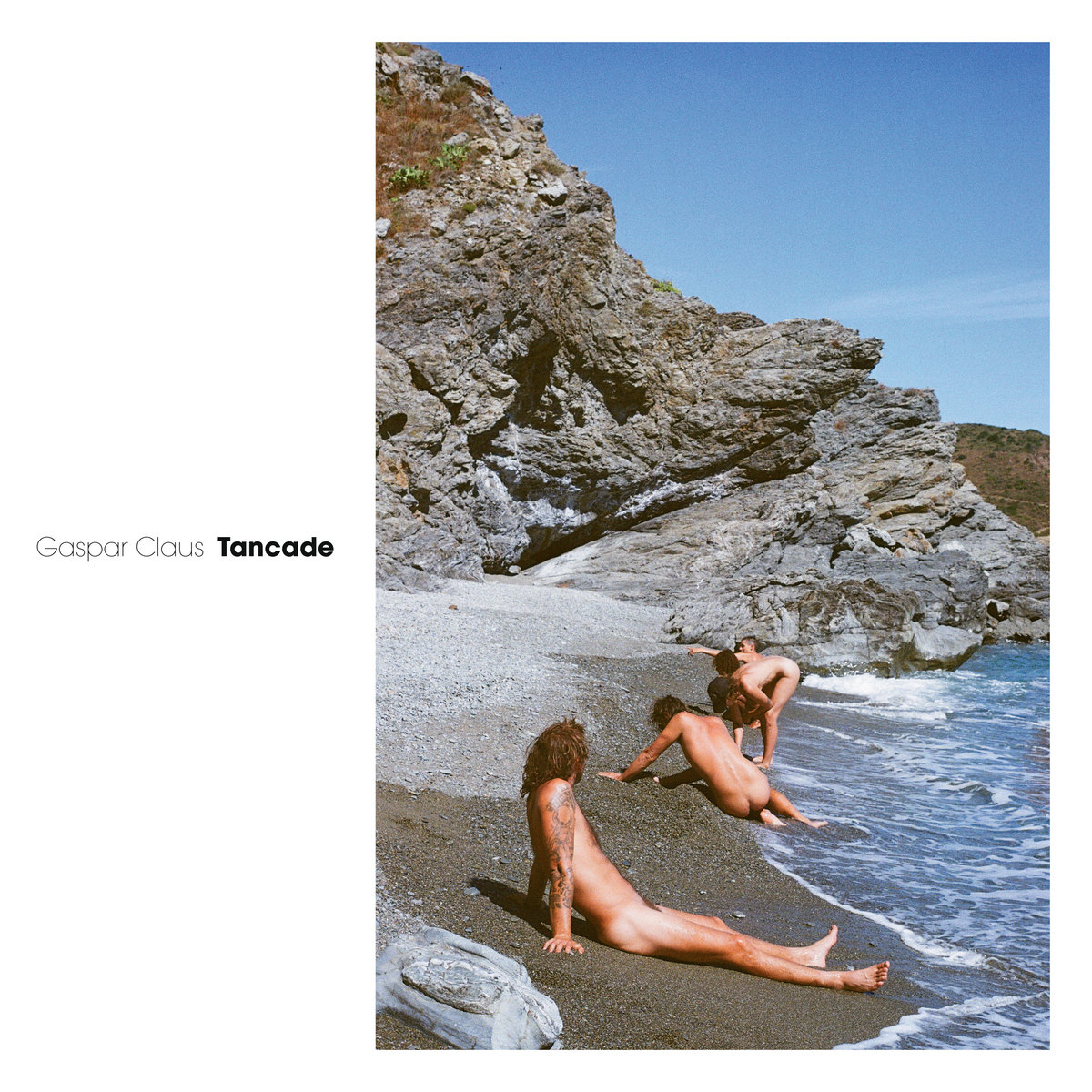
Switched On – Gaspar Claus: Tancade (InFiné)

What’s the story?

Tancade is an imaginary beach, portrayed here by a single instrument – the cello of Gaspar Claus. With technical imagination and a little bit of electronic trickery he has made an entire album with the cello, using every millimetre to conjure up wooden and metallic sounds to add depth and shade to his musical pictures.

What’s the music like?

Ghostly harmonics and trills on the outer reaches of the cello usher in Une île, which is a brief contemplation in front of the waves. Un rivage portrays the gentle lapping of water through the pizzicato (plucking) across the strings, with a slow, lamenting figure that plays out in several parts.

These first two tracks are an indication of the powerful, meditative qualities Claus brings to his work, employing great imagination to get the sounds he wants.

2359 is a great example, playing out like a game of pinball with small musical ideas pinging across the sound picture as bigger, distorted waves threaten disruption. Meanwhile E.T. (Extra Terre Version) has a ghostly presence, with Claus playing two short fragments of arpeggios together but at a distance of a microtone, creating a disquieting mood in spite of the birdsong in the background.

1999 is a foreboding presence, Claus expanding the intimacy of the solo cello into quasi-orchestral sounds. Ô Sélénites goes a step further, using a wide array of textures to portray a lunar environment. Finally Mor des mystères amoureux finds relative stillness, with sustained harmonics and pizzicato flicking lazily in the breeze before a brief but affecting spoken word passage from Lyna Zouaoui.

Does it all work?

Yes, thanks to Claus’s imagination and deep knowledge of the capabilities of the cello. He creates very personal and meaningful ideas, but against bigger backdrops the listener can dive into.

Is it recommended?

It is, especially for lovers of solo cello music by Bach – Claus offers an interesting and viable alternative for the instrument as it is now.

Stream

Buy